


Hafez Fortune Telling Cards
Fortune Tellers use the Hafez Cards by interpreting the Hāfez poems printed on the card backs when cards are selected randomly by their consultants.
Hafez Fortune Telling Cards
“Omens of Hafez” from the collection of Rex Pitts
Khwāja Shams-ud-Dīn Muhammad Hāfez-e Shīrāzī, generally known by his pen name of Hāfez, was a 14th Century Persian Sufi mystic and poet. He is much revered in present day Iran and most people there would be able to quote him to you.
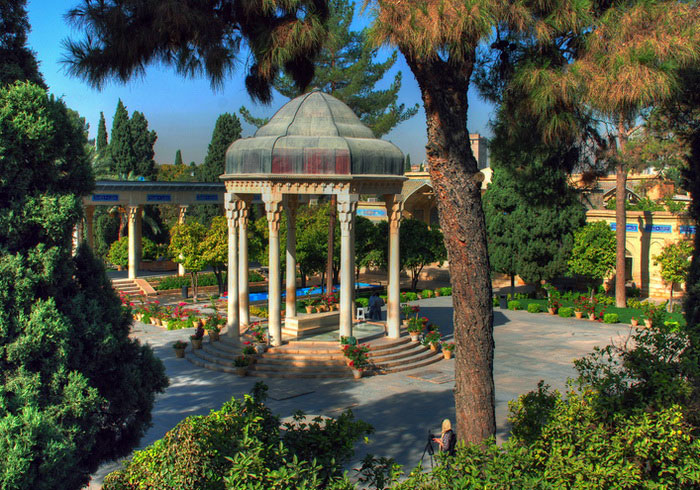
He was famous in his own lifetime. He is supposed to have learned the Qur’an by heart when he was a teenager (Hāfez is the title given to someone who has achieved this feat) which he did by listening to his father reading it to him. In his twenties he was making a delivery from the bakery where he worked when he saw a beautiful young high class girl called Shakh-e Nabat in a wealthy district. For the rest of his life he wrote some of his poetry to this girl even though he never met her nor would it have been a suitable match if he had. Hāfez became a teacher of the Qur’an in his native town of Shiraz but when the town was captured by an invading army he was forced to flee. He was exiled for 5 years before he was recalled by a new Shah and returned to his teaching post. At age 48 he had to flee again and was away for another 4 years. Life was complicated in Persia in those days. He remained in Shiraz for the rest of his life. Some 20 years later a tomb was erected in his honour and is still a place that Iranians visit today.
Fortune Tellers use the Hafez Cards by interpreting the Hāfez poems printed on the card backs when cards are selected randomly by their consultants. The believers say that when the consultant turns over a randomly drawn card (or chooses a design that is most appealing at the moment), the first line that catches their eye is the answer to the question of the moment.
After the Iranian Revolution in 1979 when the Shah fled into exile and the Islamic Republic was established there was a strict ban on anything sexually suggestive. Although many of Hafez's poems deal with love and wine, perhaps as an allegory for divine love, after the revolution this sort of illustration with semi-nudity was banned. A new version was introduced with a lot more clothing involved. This version of the cards must be difficult to obtain now.
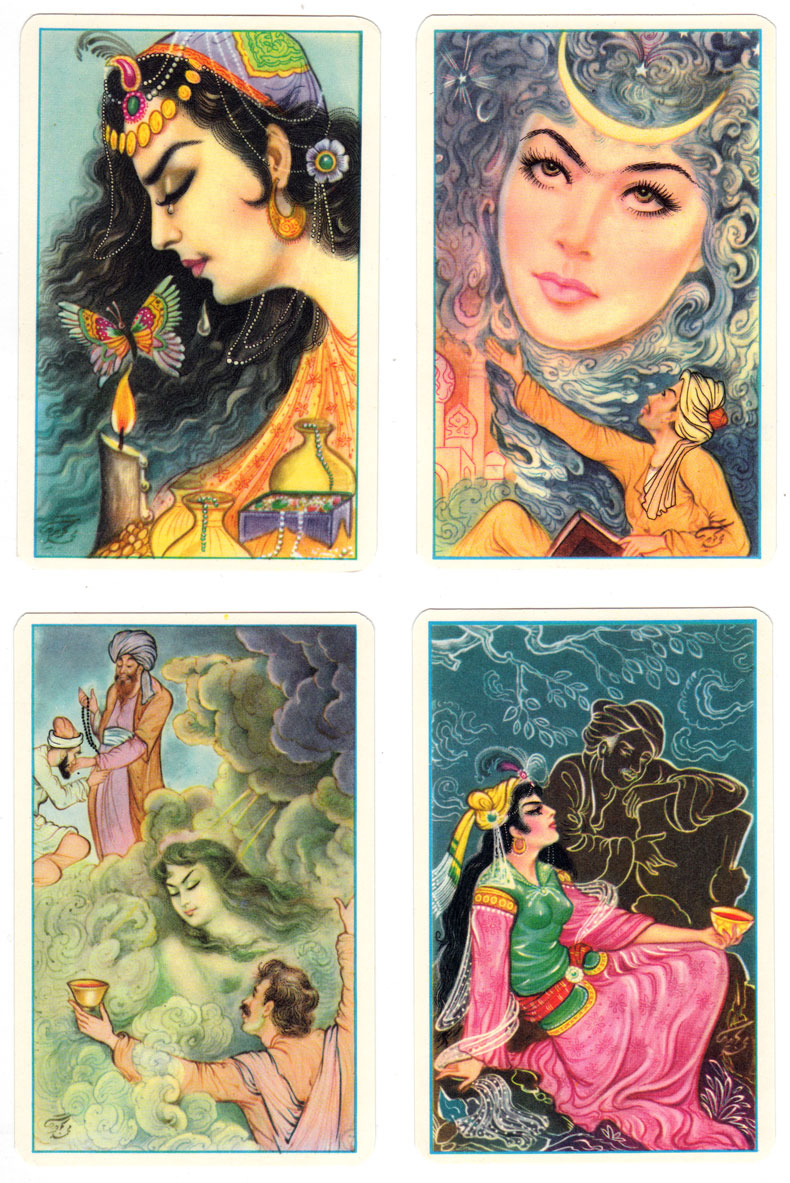
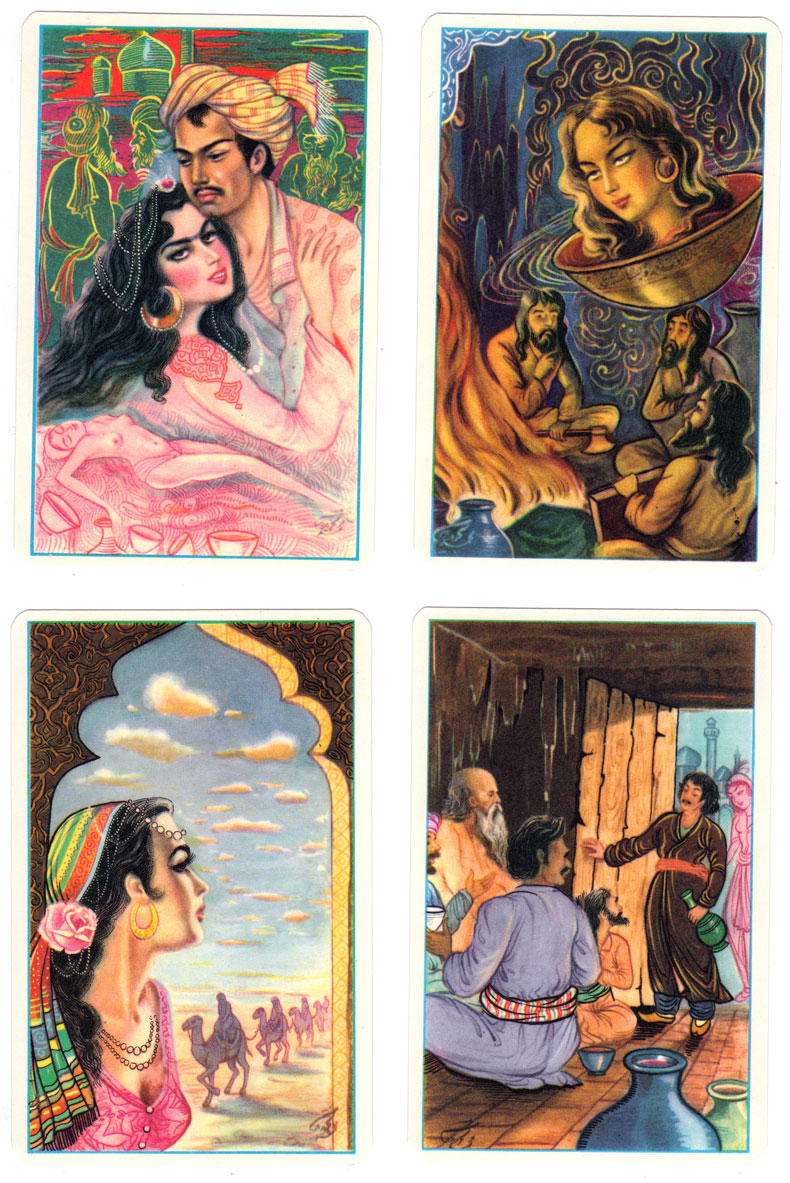
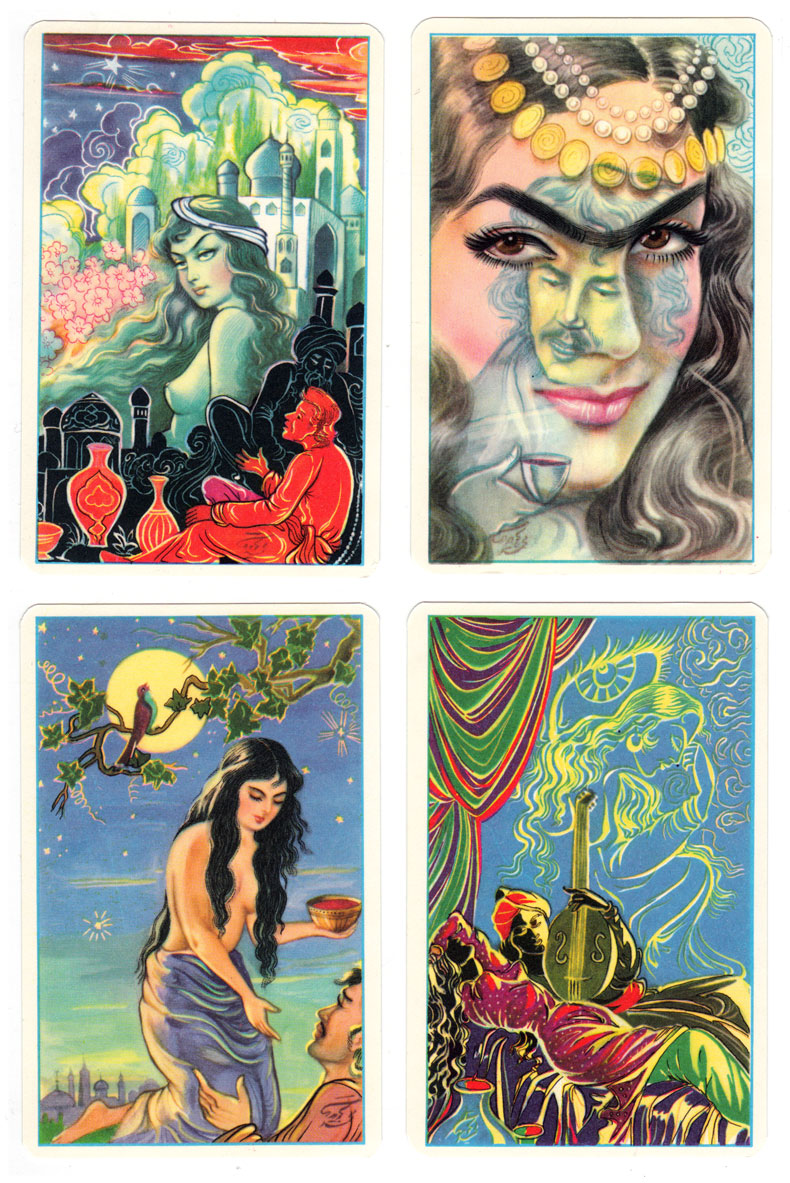
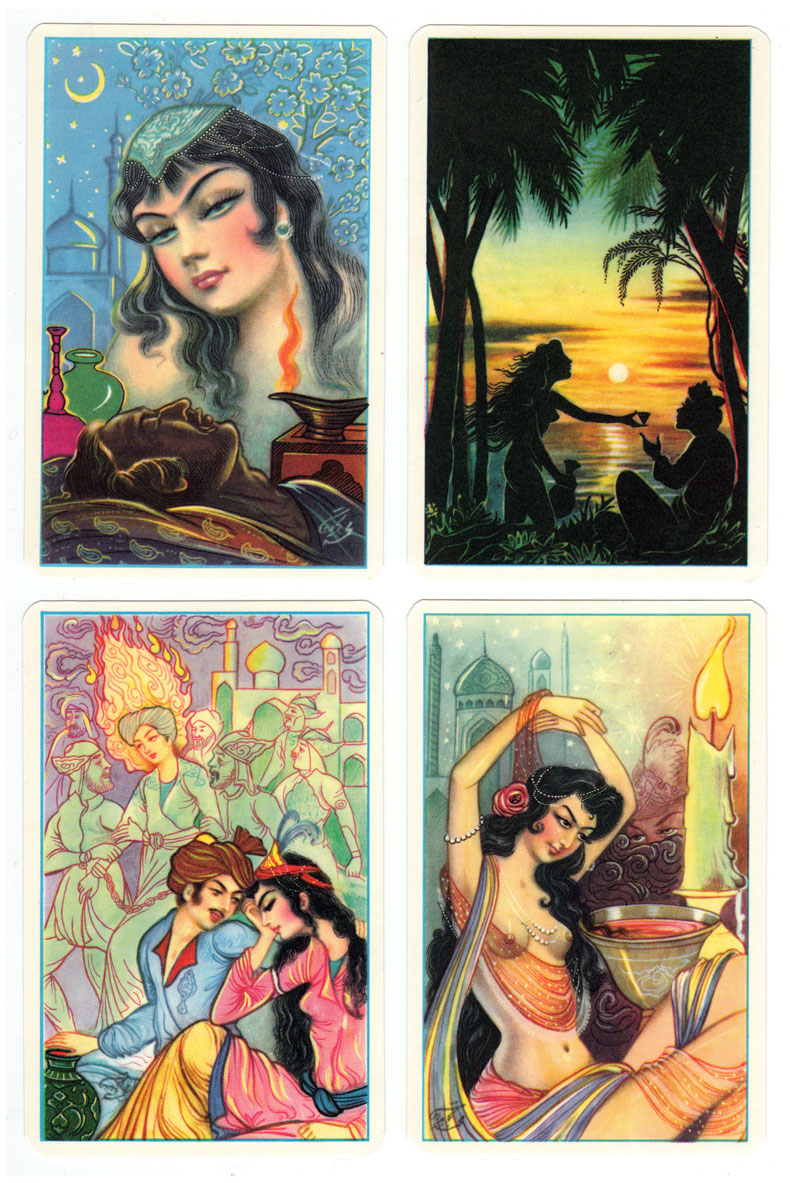
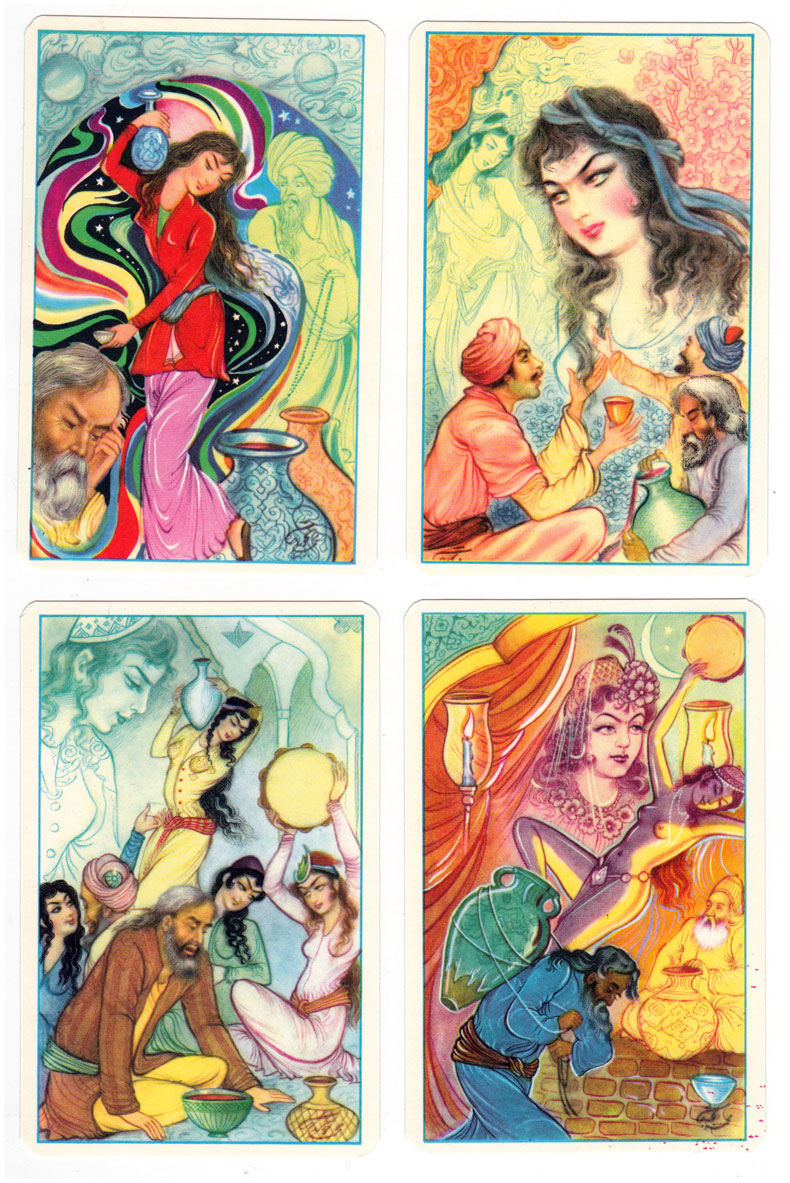
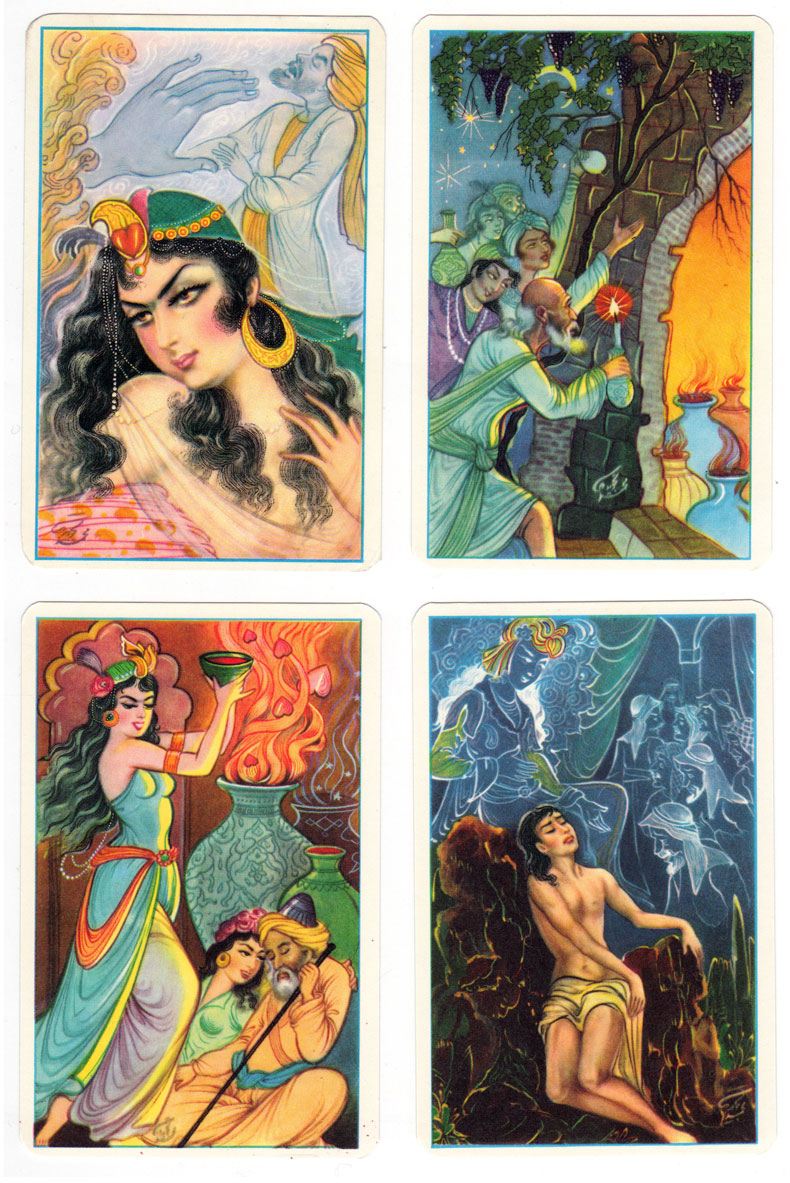
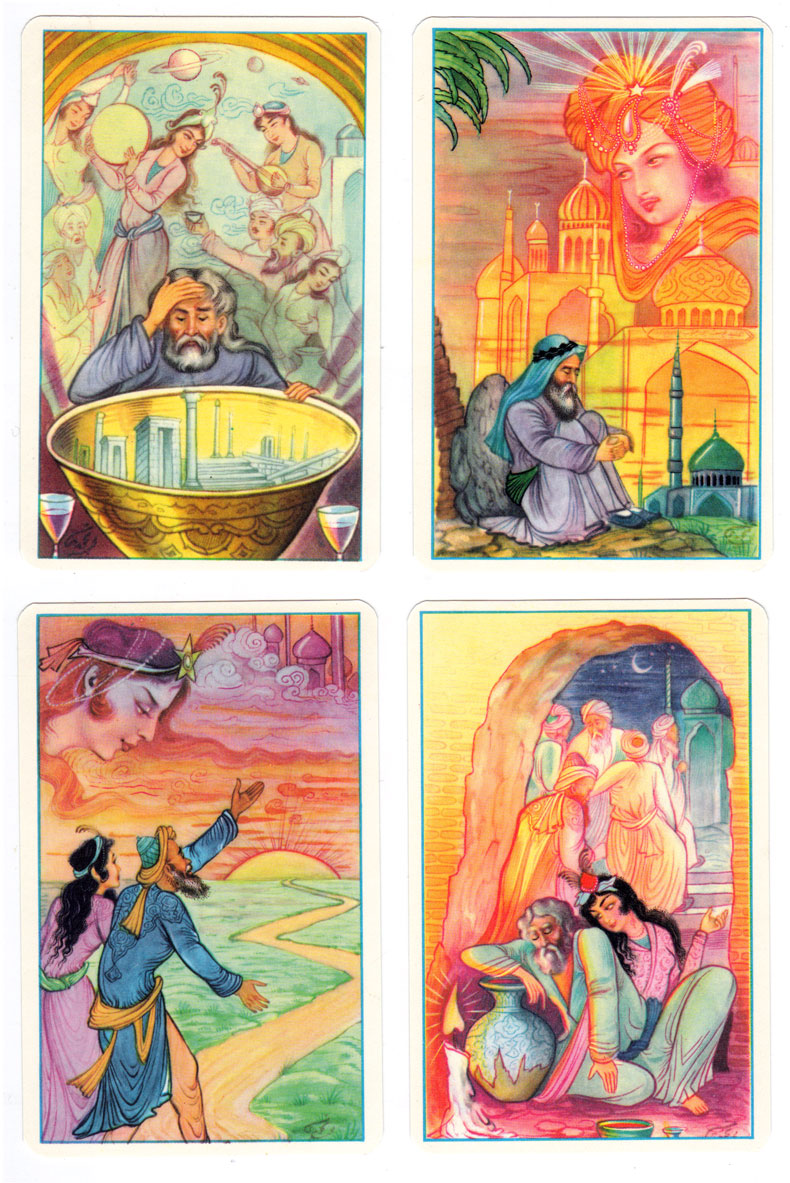
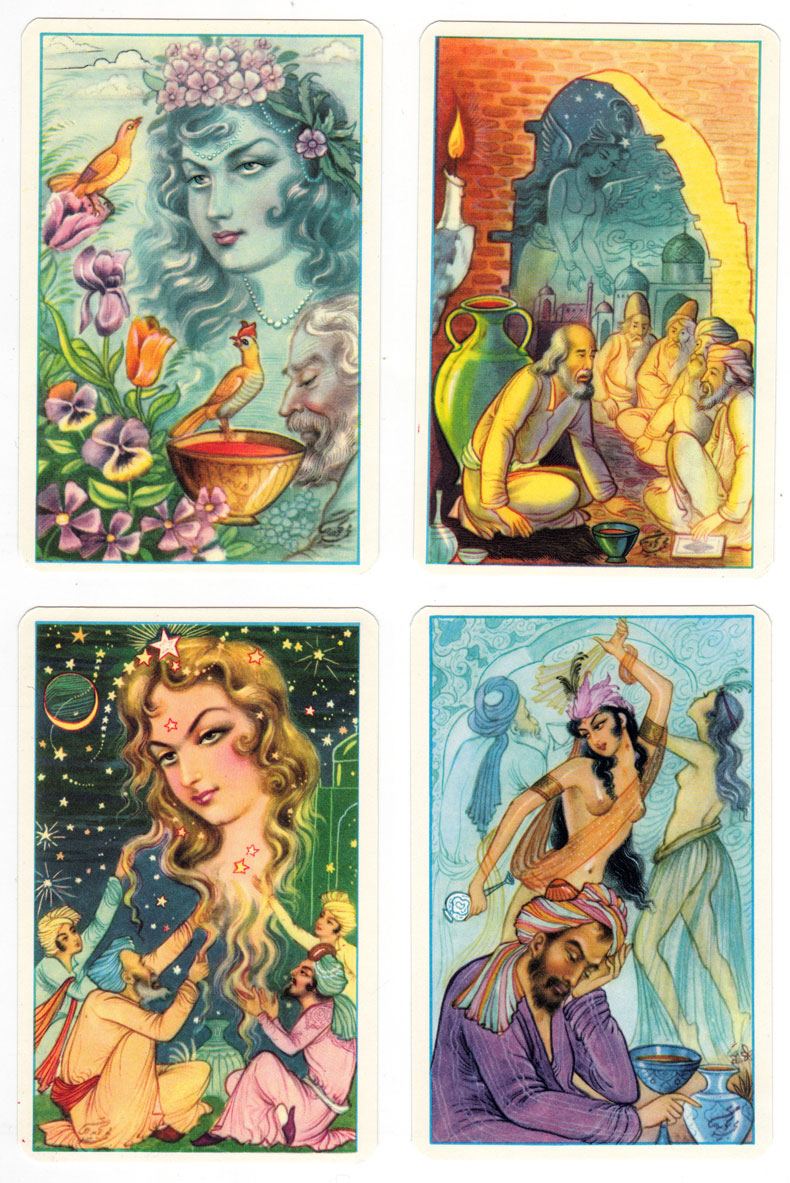
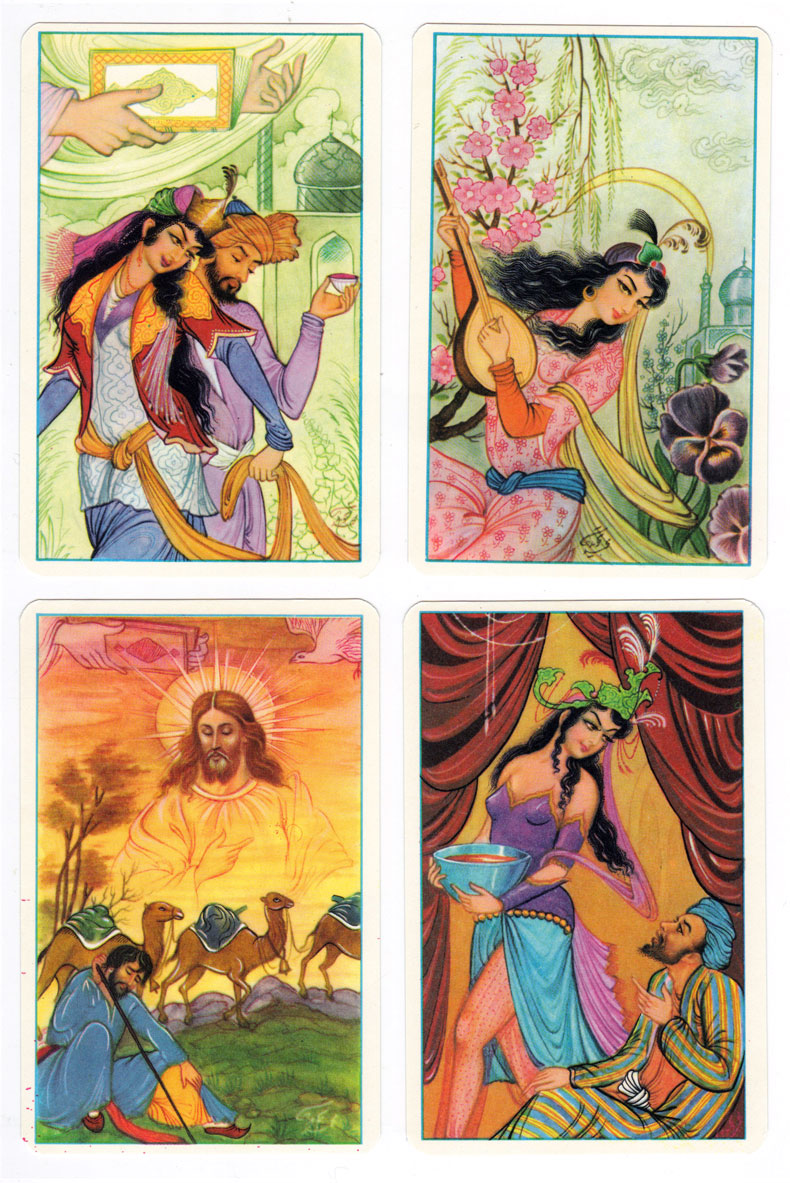
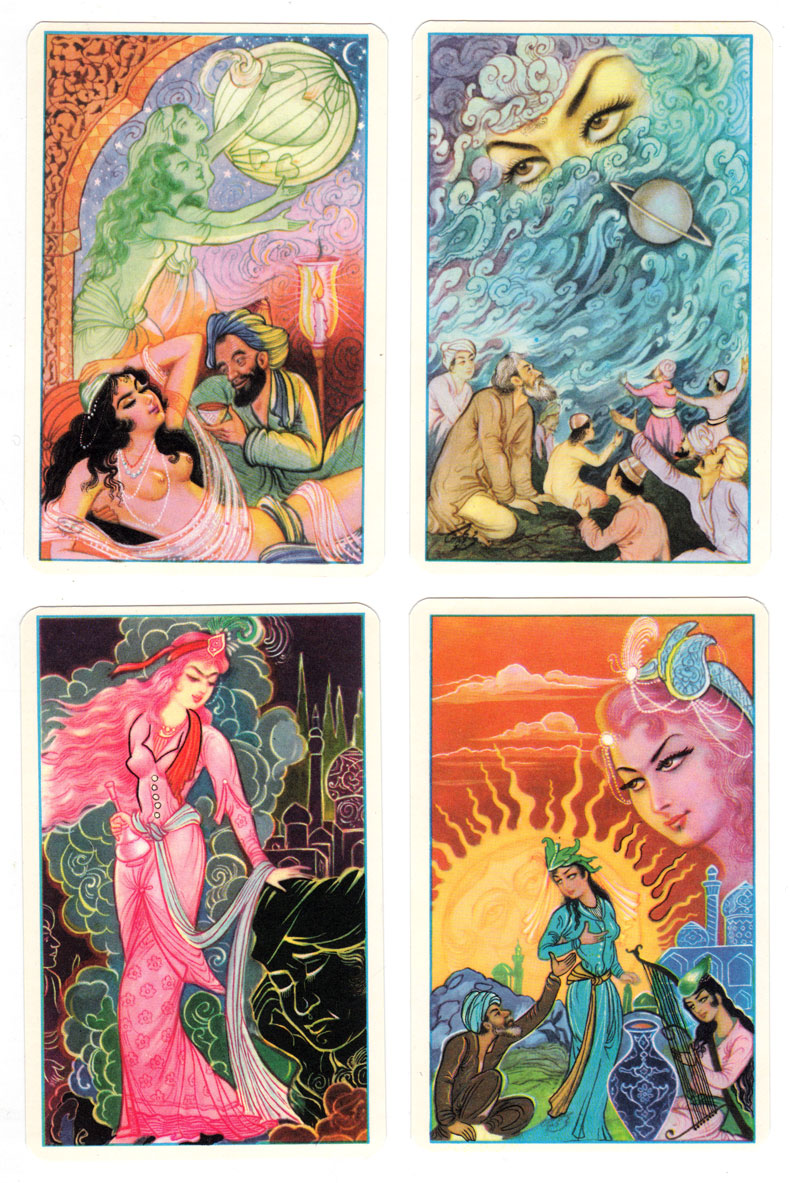
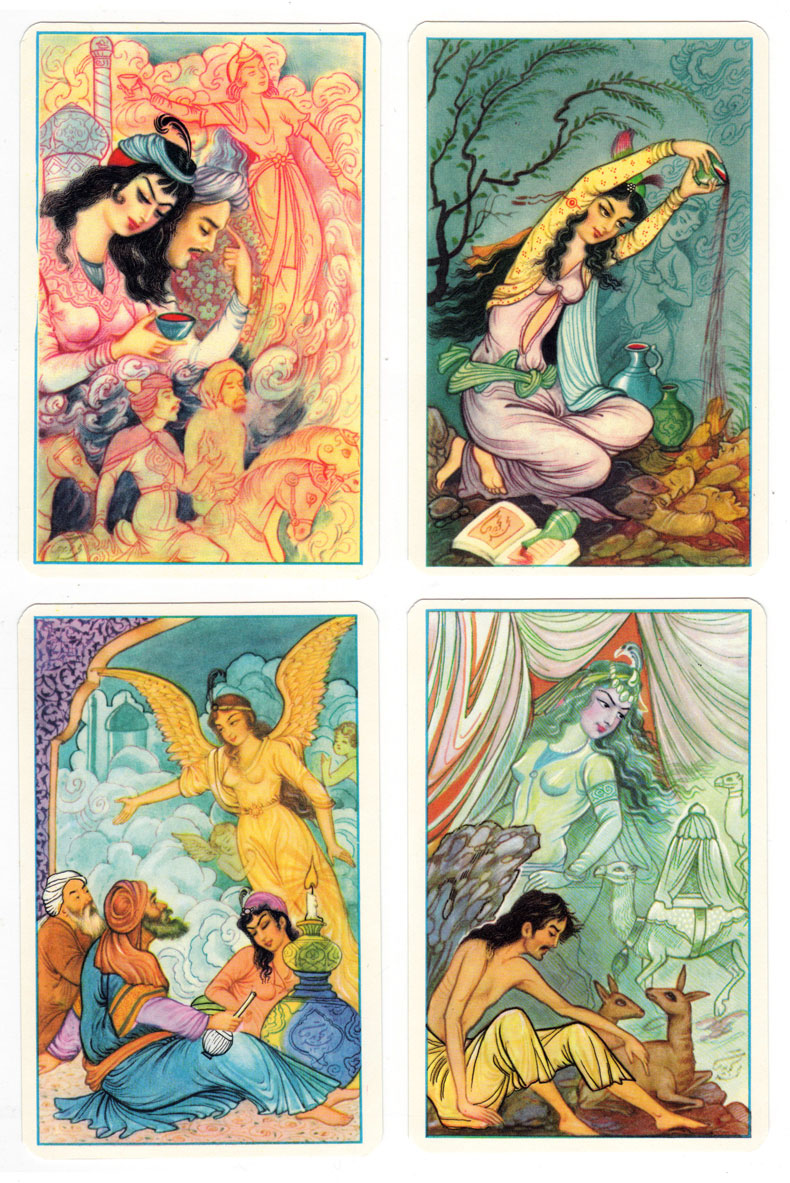
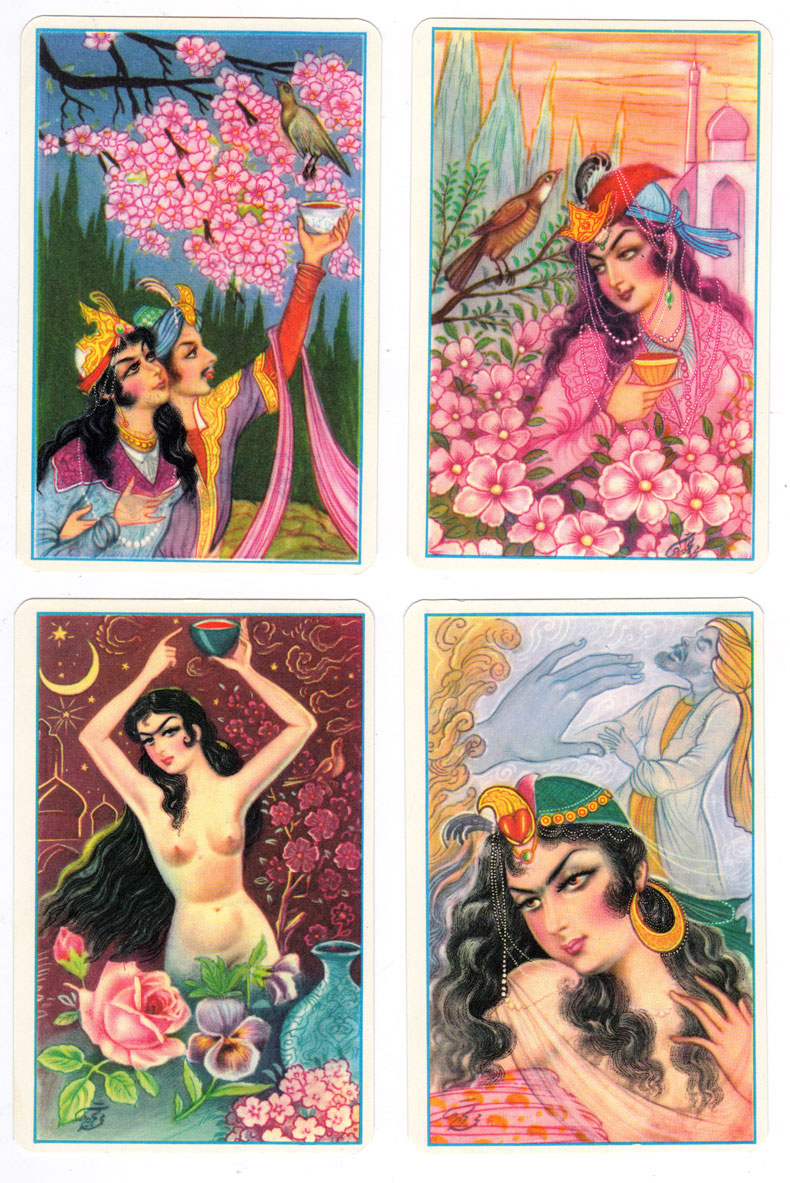
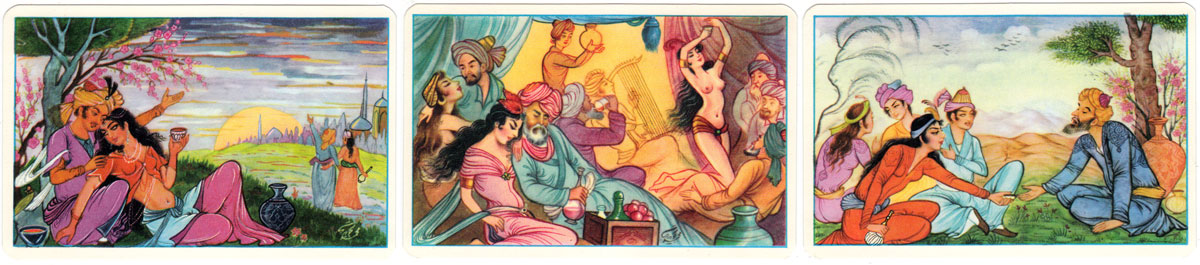
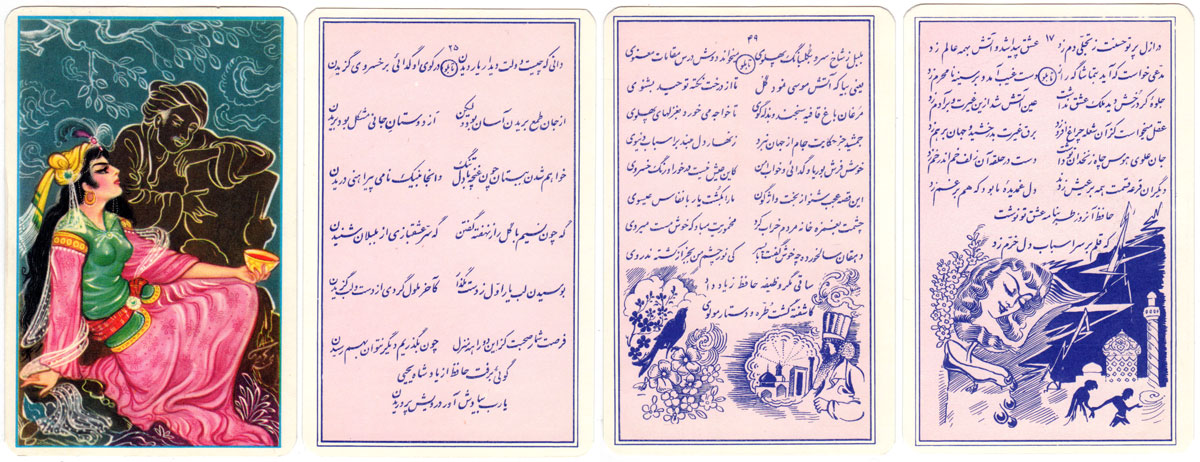
Above: Persian Fortune Telling Cards, c.1975. On about 3/4 of the cards the back includes a verse (which is where the actual fortune-telling happens) along with small illustrations or "omens" at the bottom to assist with intuitive reading. Although clerics in the Islamic Republic of Iran frown on the practice, many people feel insecure and want their fortunes told. Some modern day fortune tellers predict the future based on knowledge of "jyotish" - the science of light - a practice related to astrology which is thought to have originated in ancient Persia. Images courtesy Rex Pitts.
• See Hafez's tomb→

By Rex Pitts (1940-2021)
United Kingdom • Member since January 30, 2009
Rex's main interest was in card games, because, he said, they were cheap and easy to get hold of in his early days of collecting. He is well known for his extensive knowledge of Pepys games and his book is on the bookshelves of many. His other interest was non-standard playing cards. He also had collections of sheet music, music CDs, models of London buses, London Transport timetables and maps and other objects that intrigued him.
Rex had a chequered career at school. He was expelled twice, on one occasion for smoking! Despite this he trained as a radio engineer and worked for the BBC in the World Service. Later he moved into sales and worked for a firm that made all kinds of packaging, a job he enjoyed until his retirement. He became an expert on boxes and would always investigate those that held his cards. He could always recognize a box made for Pepys, which were the same as those of Alf Cooke’s Universal Playing Card Company, who printed the card games. This interest changed into an ability to make and mend boxes, which he did with great dexterity. He loved this kind of handicraft work.
His dexterity of hand and eye soon led to his making card games of his own design. He spent hours and hours carefully cutting them out and colouring them by hand.

Activity for Hafez Fortune Telling Cards
Sign in to comment or save this article.

Related Articles
Âs Nas
Âs Nas type playing cards from Persia.
Fortune Telling
Fortune Telling cards by Whitman Publishing Co., 1940.
La Sibylle des Salons
La Sibylle des Salons facsimile of 19th century deck published by J M Simon, 1979.
The Art of Pin-Up decks
Feminine beauty has been appreciated since prehistory.
Le Destin Antique
Le Jeu du Destin Antique, originally published by Grimaud in XIX c., republished many times since......
Eroticartes
Eroticartes with drawings by Pino Zac, 1983.
Persian Miniatures
Persian Miniatures, made in Hungary c.1990.
Playtex
Playtex - le jeu de la beauté et du destin, Grimaud, 1971.
54 Pin-up Motivs
Hungarian pin-up deck illustrated by Imre Sebök, c.1960.
Qajar dynasty playing cards at the British Museum
Two small groups of Qajar-period playing cards from Iran (Persia), photographed in 2017 in the Briti...
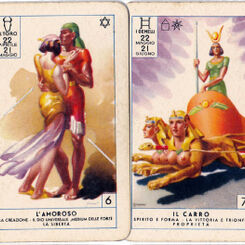
Il Destino Svelato Dal Tarocco
The Cagliostro Tarot was first published in 1912 as “Il Destino Svelato Dal Tarocco”.
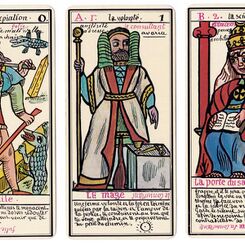
Le Grand Tarot Belline
“Le Grand Tarot Belline” after drawings by Edmond Billaudot (1829-1881).
The ‘Mystic’
The ‘Mystic’ Fortune Teller card game by Clifford Toys.
Gipsy Fortune Telling Cards
“Gipsy” fortune-telling cards with original artwork by Hylton Cock, published by Thomas de la Rue & ...
Boutros Arabic Playing Cards
Arabic playing cards designed by Evy Maros & Mourad Boutros.
Shapely
“Shapely” non-standard adult playing cards manufactured by Angel Playing Cards Co., Japan, 1980
Japanese Women
Japanese Women playing cards in an idealised and erotic style by Keiichi Takasawa (1914-1984).
Austrian Cartomancy Cards
During the 19th century a system of fortune telling arose in Europe using unnumbered, pictorial card...
Art Deco Gypsy Oracle
Art Deco fortune telling deck published by Piatnik, 1936.
Significado de los Naipes Españoles
Cartomantic meanings of Spanish playing cards by Benita the Witch (XVI century), published by Chocol...
Most Popular
Our top articles from the past 60 days


Victoria Celeste
26 April 2026, 17:56SavedSaved this article to vix likes!