

Moroccan pattern by Camoin & Cie.
Spanish Moroccan pattern by J.B. Camoin and A. Camoin & Cie, Casablanca & Marseille.
Jean Bte CAMOIN, Marseille
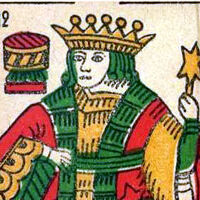
Jean-Baptiste Camoin of Marseille produced a simple, somewhat rudimentary hand-drawn version of the Spanish National pattern for export to Morocco. None of the characters have beards or moustaches. The manufacturer’s name appears on the four aces but there are no inscriptions on any of the court cards apart from “Ahi-va” on the cavalier of cups. This pattern was produced primarily for North African markets, and it combines the familiar Spanish card designs with aspects tailored to local tastes. The tethered goat on the jack of coins is a characteristic feature.
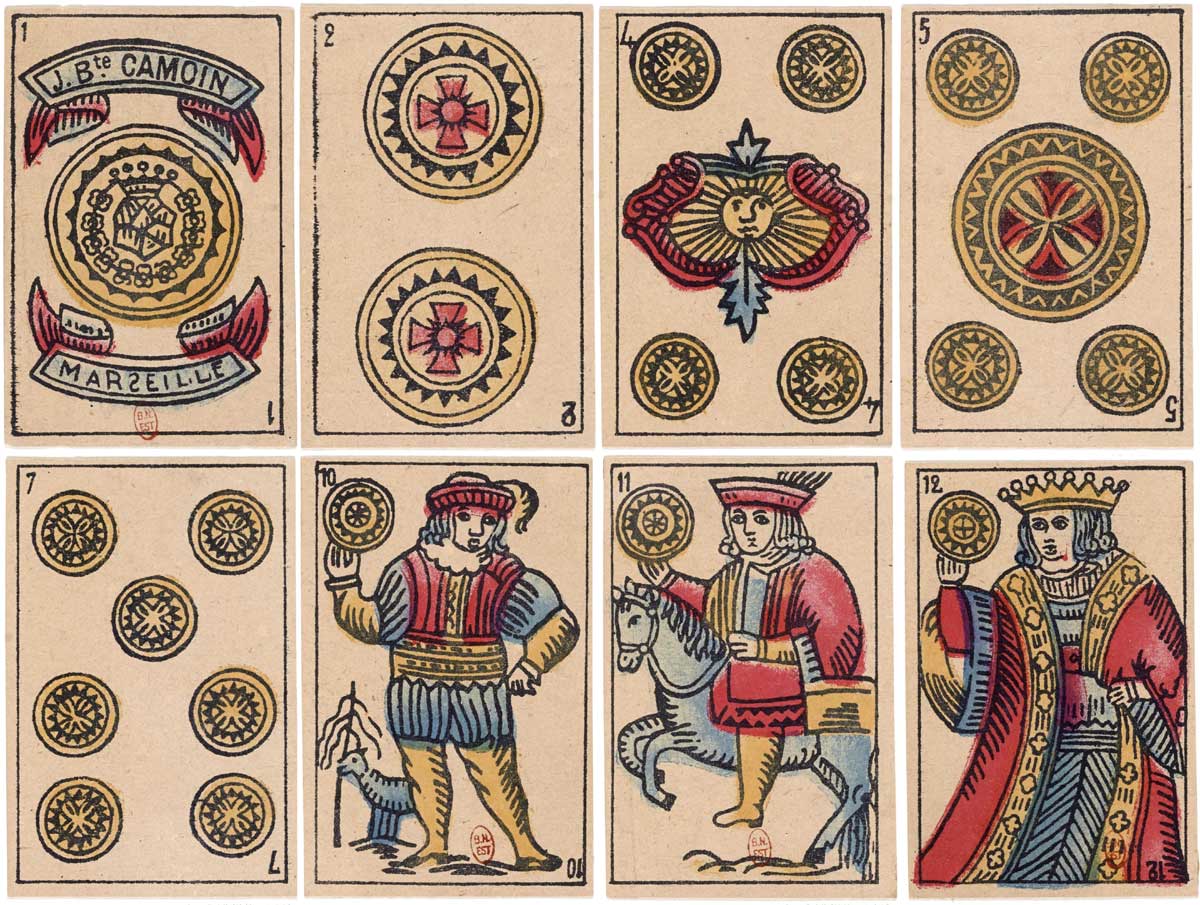
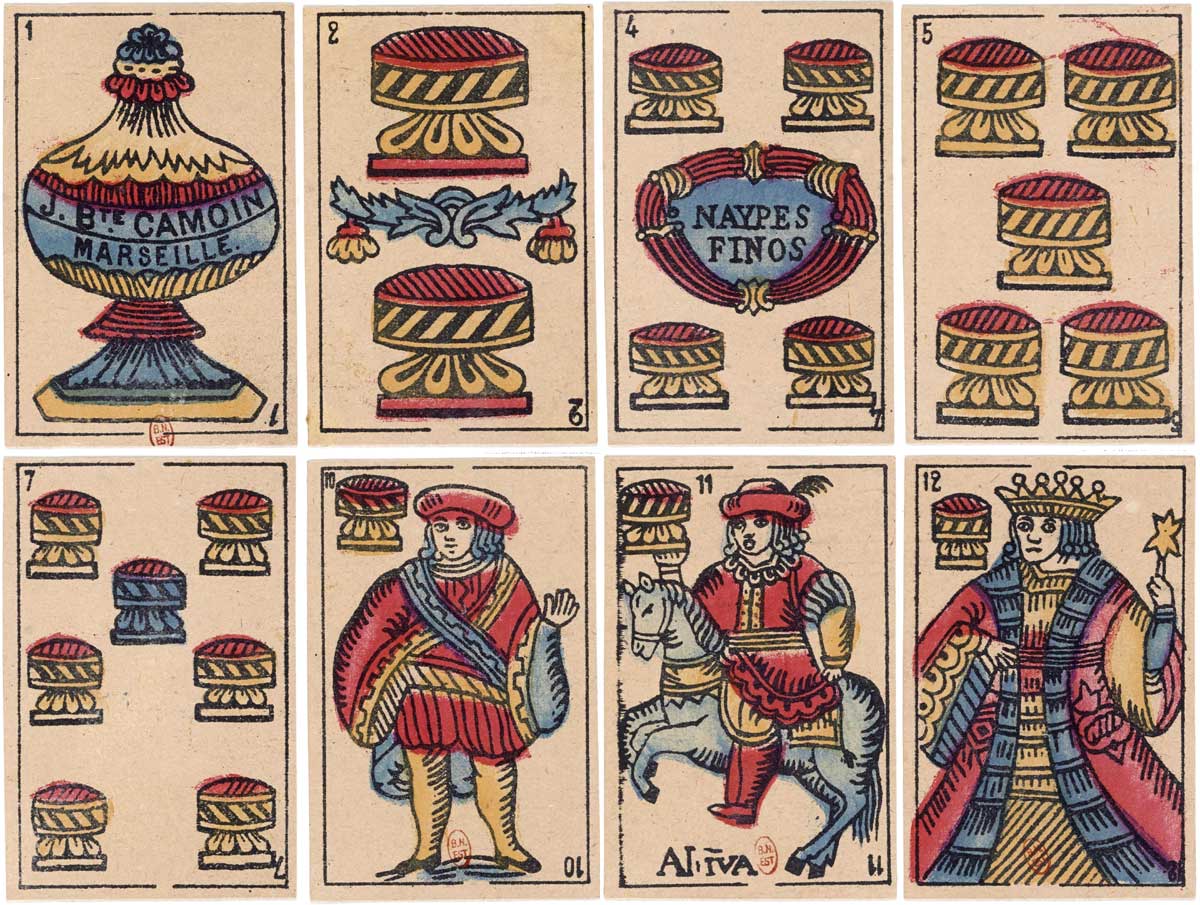
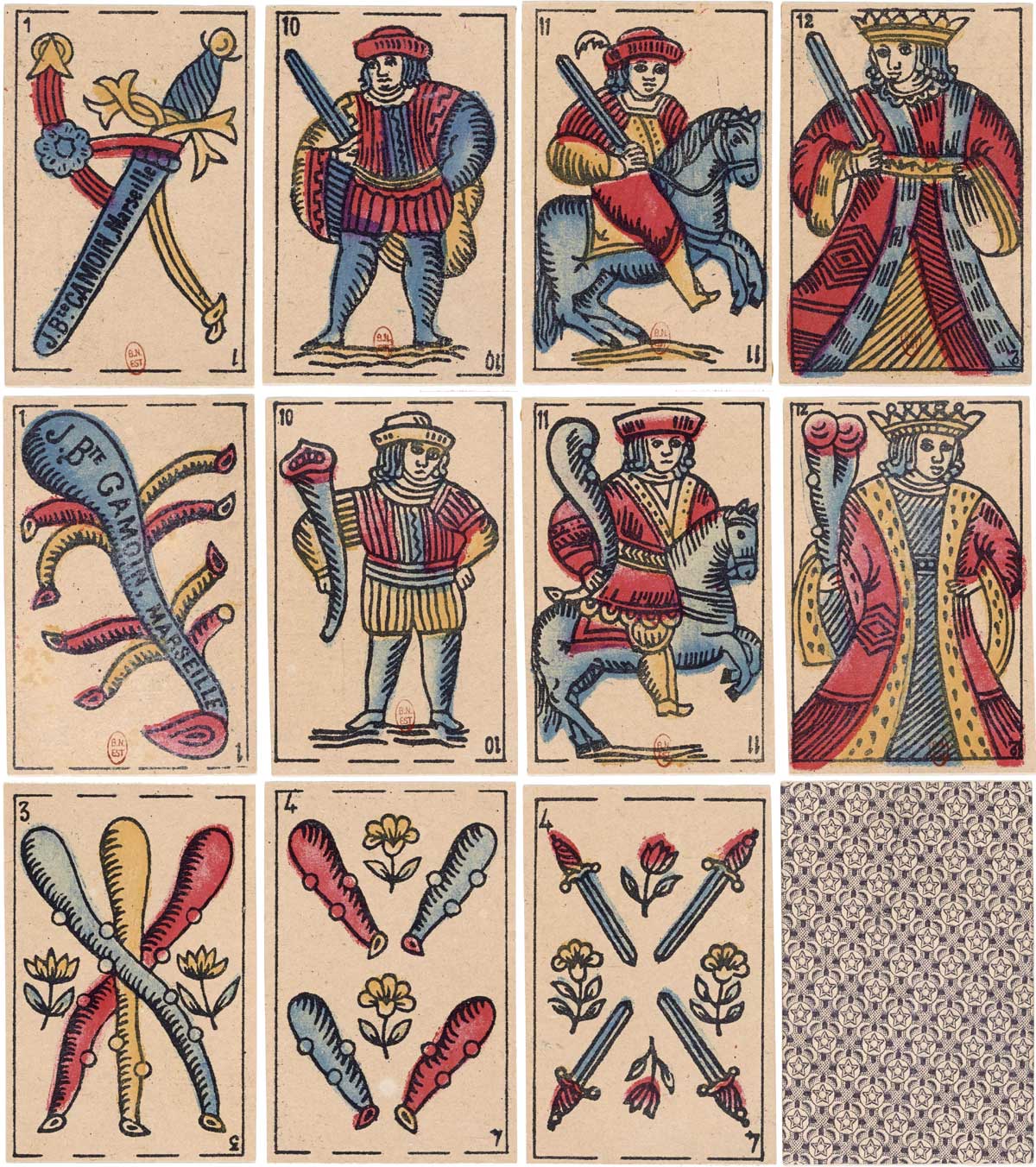
Above: early edition of Spanish National pattern for Morocco by Jean-Baptiste Camoin c.1863, 40 cards, square corners, small corner indices, stencil-coloured lithograph, intricate back design with stars; 8.5 x 5.7 cm. Source gallica.bnf.fr / Bibliothèque nationale de France • Jeu de cartes à enseignes espagnoles►
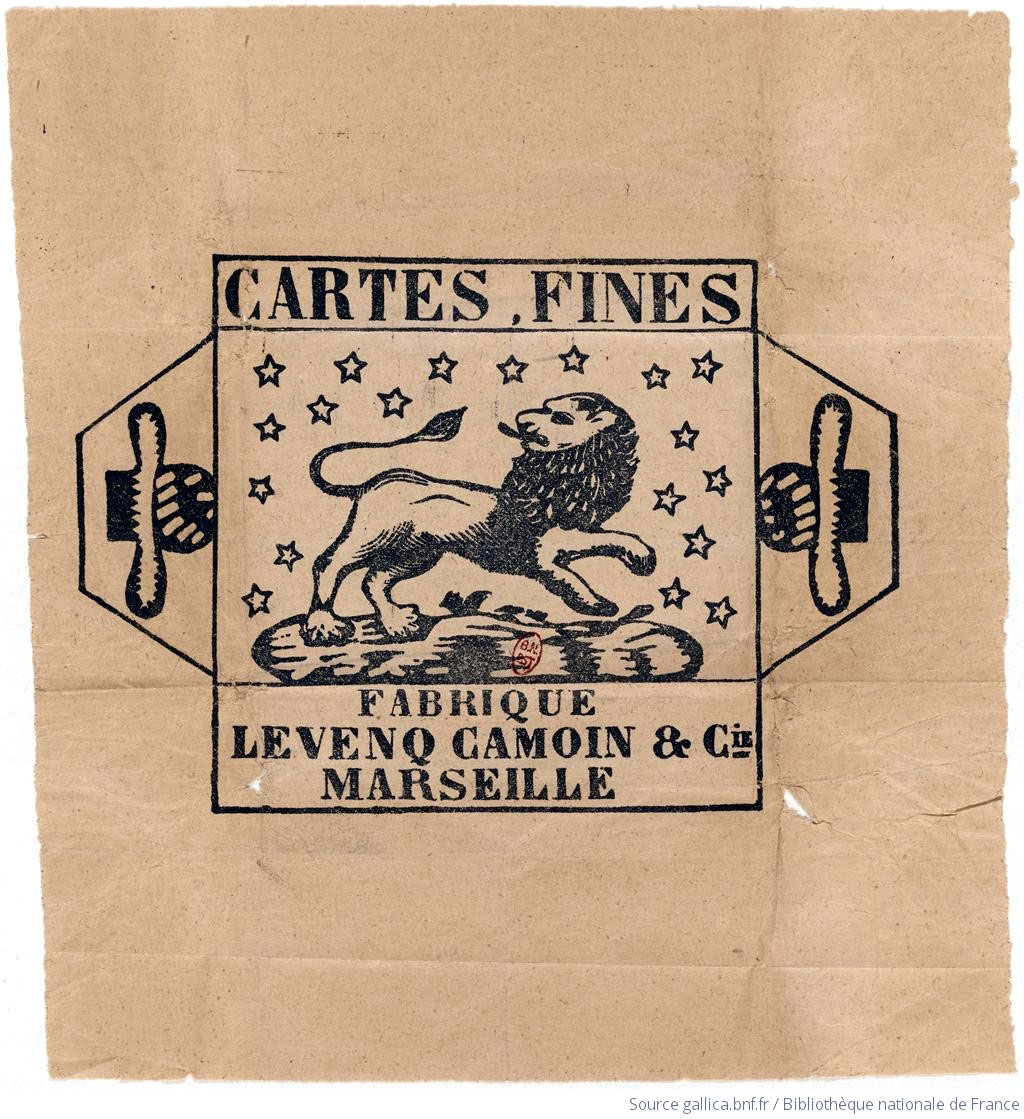
Next came a redrawn version. The maker’s name “Jn Bte Camoin Marseille” now appears on each court card as well as the four aces. All the artwork has been tidied up, but the back pattern remains the same • See the wrapper
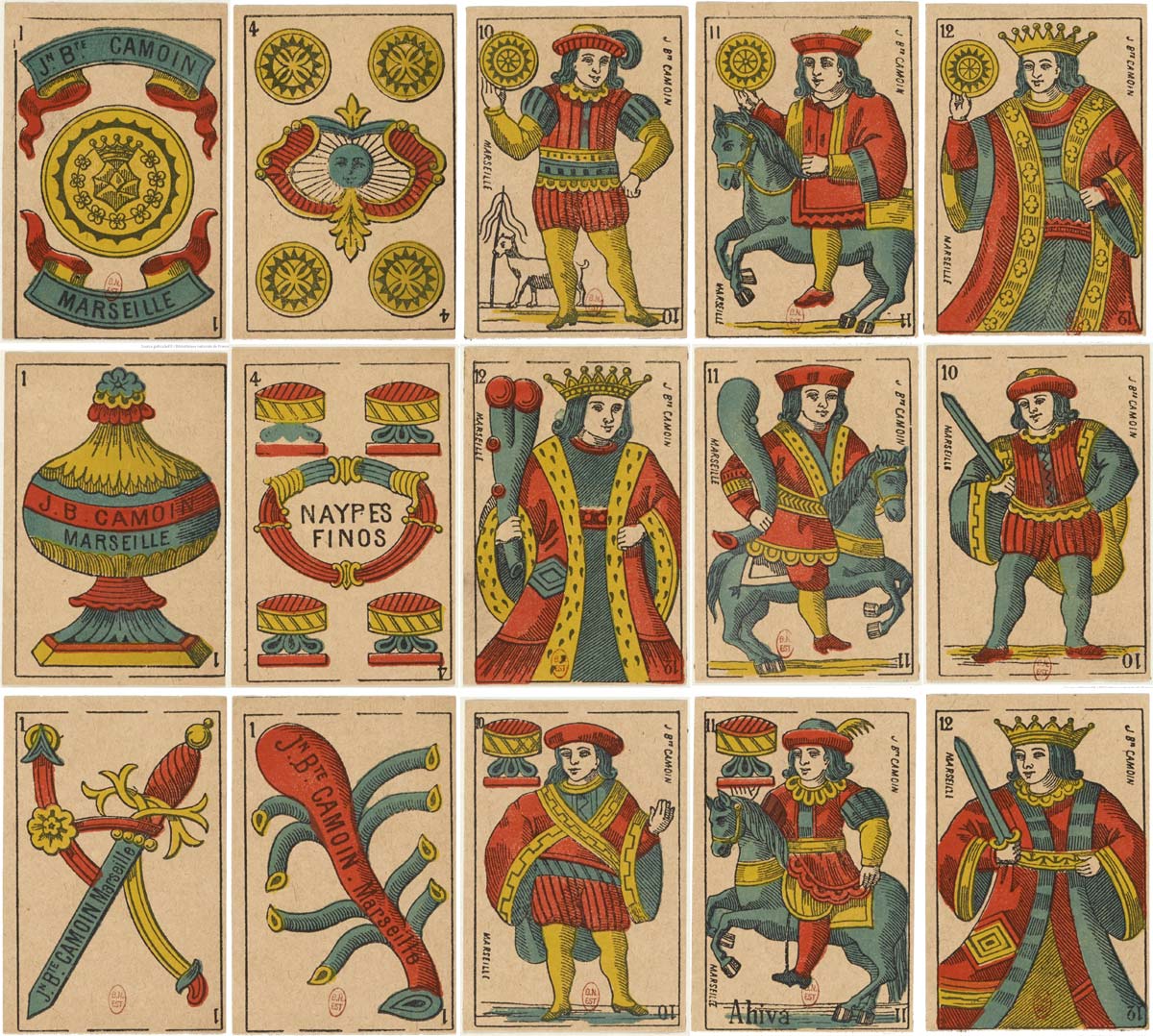
Above: re-drawn Spanish Moroccan pattern printed by Jean-Baptiste Camoin, Marseille, c.1870. 40 playing cards, colour lithograph; 8.4 x 5.7 cm. Source gallica.bnf.fr / Bibliothèque nationale de France • Jeu de cartes à enseignes espagnoles►
A. CAMOIN & Cie
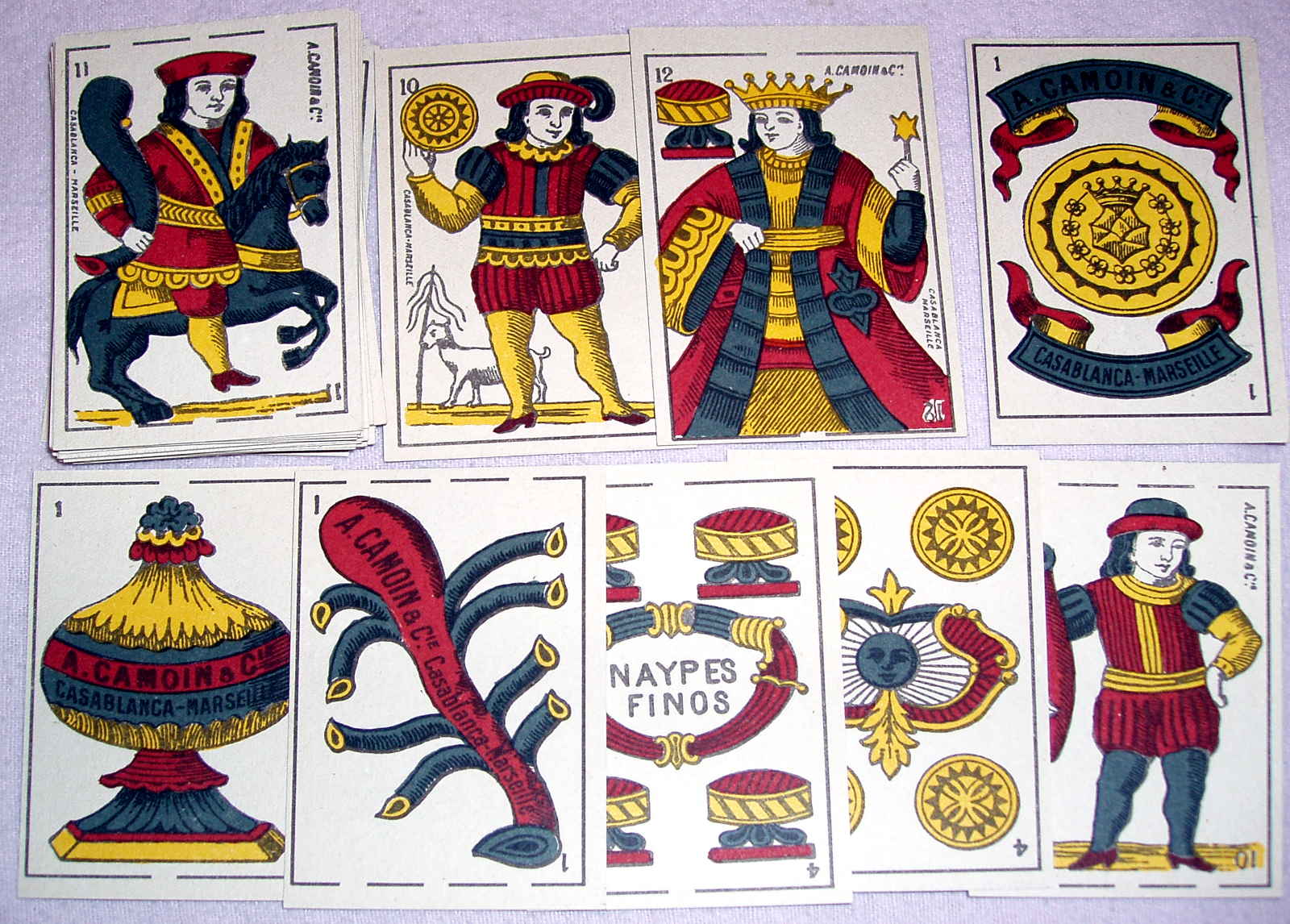
Cards like those shown above were later produced by A. Camoin & Cie in Casablanca and Marseille until 1971. More recently, the same designs have been, and are currently being produced by local Moroccan manufacturers more →
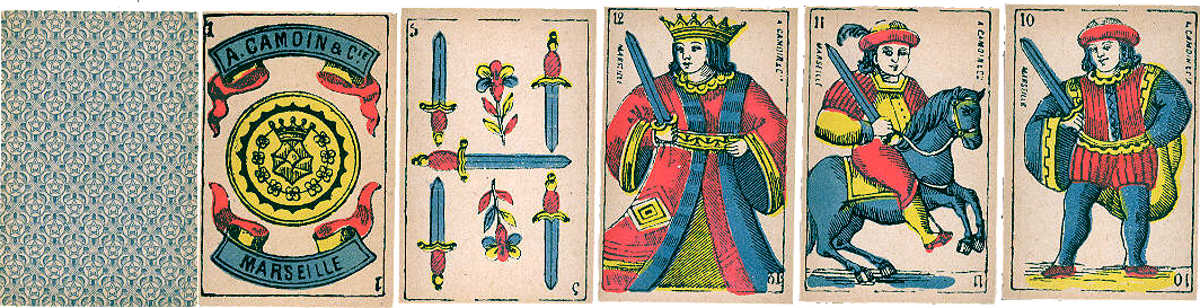
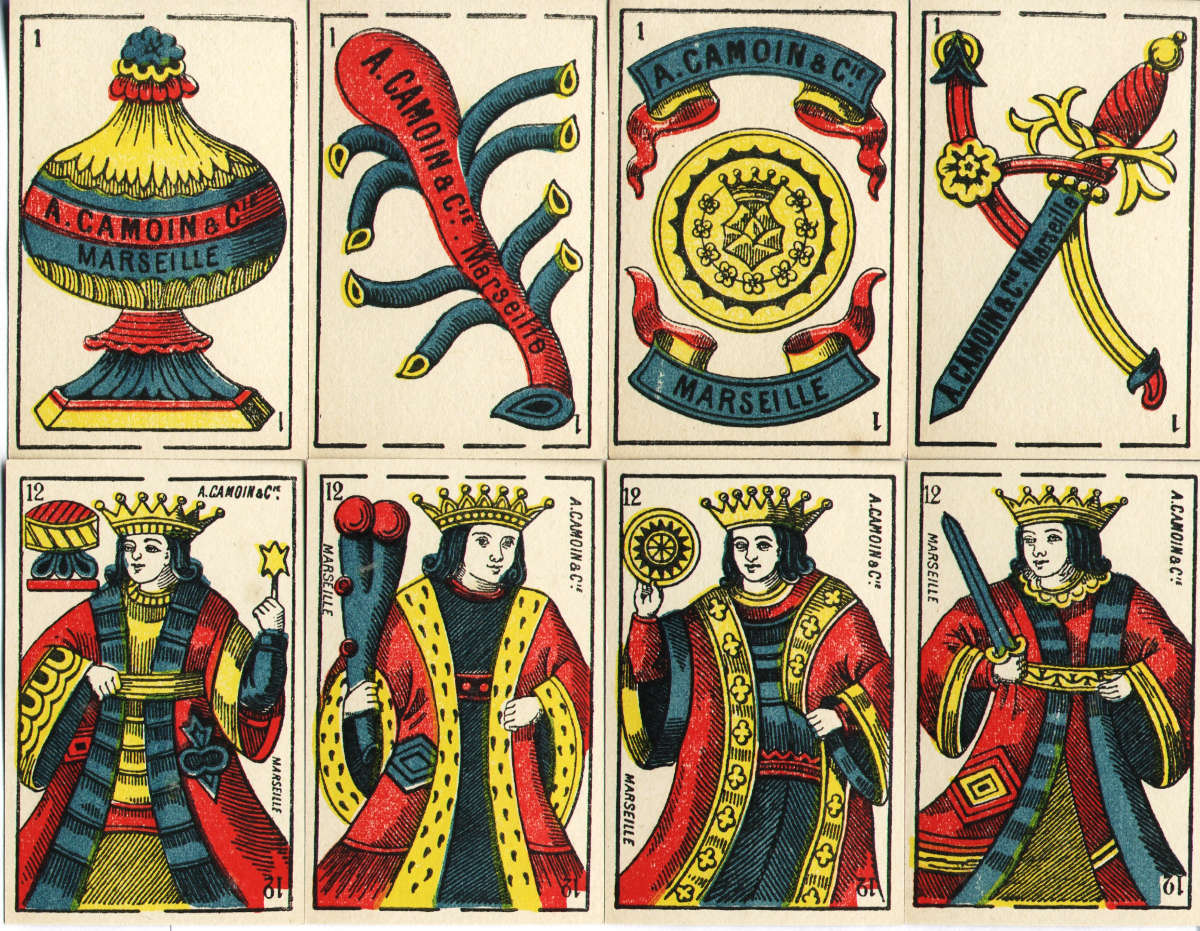
Above: Cartes Espagnoles No.484 by A. Camoin & Cie, Marseille, c.1890.
This version of the Spanish National pattern was produced mainly for North Africa but it is also known in Ecuador. The Kings' feet are hidden beneath their robes and there are no beards or moustaches. All the horses are rearing.
Vito Arienti re-print
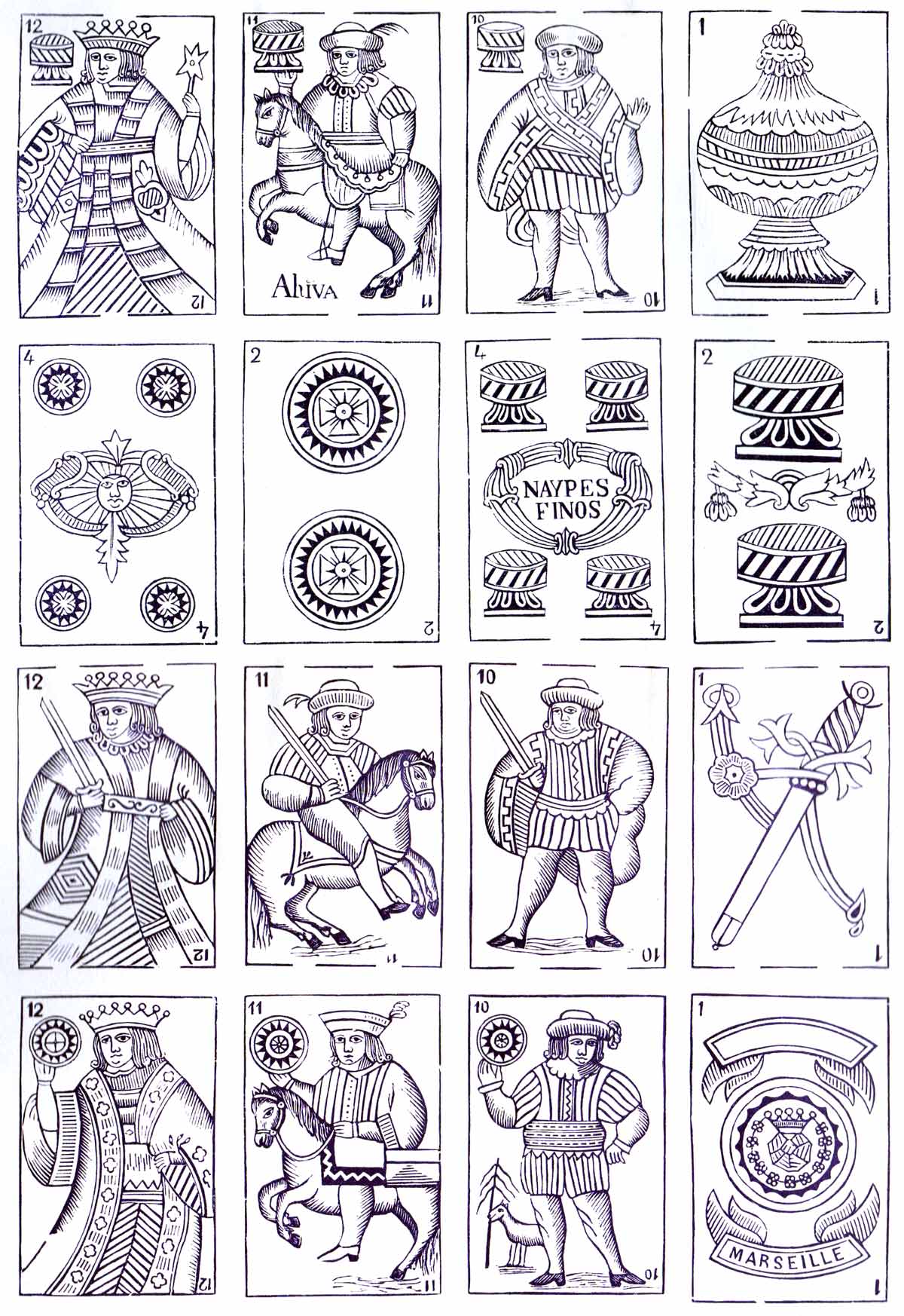
Above: Spanish Moroccan patttern, 19th century, facsimile edition reprinted from original woodblocks by Vito Arienti, Edizioni del Solleone, 1978.

By Simon Wintle
Spain • Member since February 01, 1996
I am the founder of The World of Playing Cards (est. 1996), a website dedicated to the history, artistry and cultural significance of playing cards and tarot. Over the years I have researched various areas of the subject, acquired and traded collections and contributed as a committee member of the IPCS and graphics editor of The Playing-Card journal. Having lived in Chile, England, Wales, and now Spain, these experiences have shaped my work and passion for playing cards. Amongst my achievements is producing a limited-edition replica of a 17th-century English pack using woodblocks and stencils—a labour of love. Today, the World of Playing Cards is a global collaborative project, with my son Adam serving as the technical driving force behind its development. His innovative efforts have helped shape the site into the thriving hub it is today. You are warmly invited to become a contributor and share your enthusiasm.

Activity for Moroccan pattern by Camoin & Cie.
Sign in to comment or save this article.

Related Articles
Hector de Trois
A 1963 facsimile of a seventeenth-century Portrait of Paris pack preserved by the Bibliothèque natio...
Carte Romantiche Italiane
Scenes of life and the theatre in Milan towards the second half of the 19th century.
Schwarze Katze (or Gioco del Gatto Nero)
Reproduction of a 40-card transformation pack with designs by “WS”, adapted for the game of Black Ca...
Minchiate Fiorentine
Minchiate Fiorentine created by Costante Costantini, published by Edizioni del Solleone.
Il Mercante in Fiera del Solleone
Traditional Italian card game with bold designs by Costante Costantini.
Italia playing cards
Small, narrow cards designed by Osvaldo Menegazzi, bearing a strong resemblance to a Swedish pattern...
Carte Méthodique
Reproduction of a French pack by François Silvestre intended to teach heraldry, produced in Paris in...
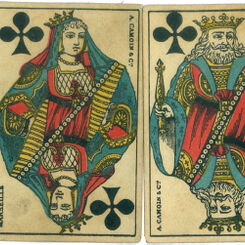
A. Camoin & Cie
This deck was inherited from ancestors, it has has a family history surrounding it. Details of the l...
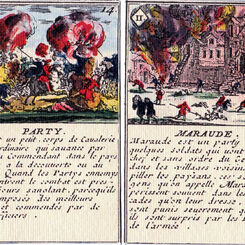
Le Jeu de la Guerre
Facsimile of “Le Jeu de la Guerre” designed by Gilles de la Boissière in 1698.
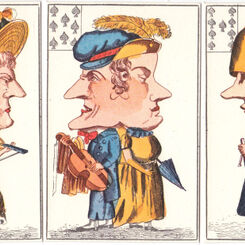
Jeu Grotesque
Jeu Grotesque was first published in France c.1800.
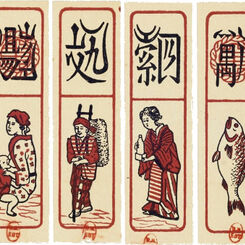
Tô Tôm № 1204
Tô Tôm is played with a 120-card Chinese-style deck.
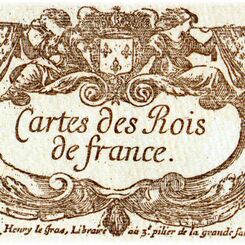
Rois de France
Cartes des Rois de France (1644) facsimile edition by Edizioni del Solleone, 1986.
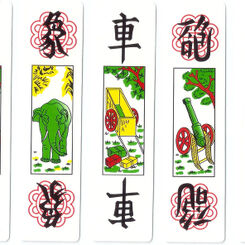
Tam Cúc 三菊
Tam Cúc playing cards from Vietnam (Việt Nam), based on Chinese chess, 2016
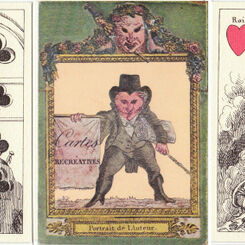
Cartes Recréatives
Cartes Recréatives is a set of Transformed playing cards designed by Armand-Gustave Houbigant (1790-...
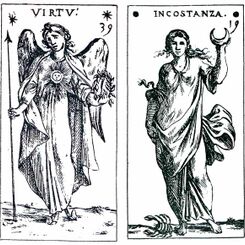
Mitelli ‘Gioco di Passatempo’
Il Gioco di Passatempo contains 40 figurative playing cards depicting moral virtues and vices, dated...
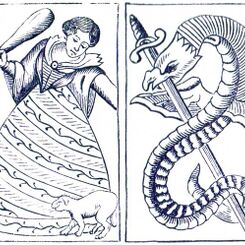
Portuguese pattern
19th century Portuguese pattern, re-printed from original woodblocks.
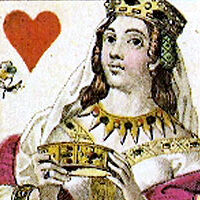
Corona Ferrea
Trumps depict historical scenes primarily of the political period known as the Holy Roman Empire fro...
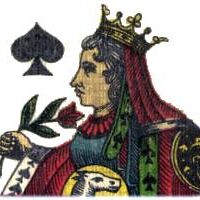
Piedmont Pattern
The Piedmont pattern is a very close relative to the French 'Paris' pattern. The courts are not name...
Neapolitan Pattern
Cartine da Gioco Vesuvio miniature Neapolitan pattern.
Algeria
Spanish suited playing cards produced by B. P. Grimaud (Paris) for Algeria.
Most Popular
Our top articles from the past 60 days