


Cartomancy, Oracle and Divination Cards
Playing cards are used for fortune-telling - turning another card illumines the moment and a new perspective emerges.

Some believe that cards drawn in a reading are somehow reflective of the individual's current situation and state of mind, with a meaningful connection that can offer insights... as though there was an organising force behind events, a mystical or a “spiritual” meaning that can be intuited from the layout of the cards.
Divination was practised by the ancient Greeks and by the druids, the Celtic priestly class of the Iron Age, who sought guidance through the interpretation of omens, natural signs, ritual practices and the observation of birds, in order to discern the will of the gods or other supernatural forces. Early European colonisers in the New World likewise observed that Indigenous peoples made use of tobacco leaves as a stimulant, a practice rooted in immemorial tradition. Shamans and priests inhaled the smoke through long tubes when seeking to divine the outcome of an undertaking, deliberately inducing altered states of consciousness as a means of prophecy and spiritual insight.
Although divination was increasingly condemned as a pagan practice and formally prohibited by the early Christian Church, many divinatory traditions persisted. Early scientific and medical notebooks frequently combined alchemical and medicinal recipes with texts on geomancy and divination—often translated from Arabic sources or attributed to ‘ancient physicians in Babylon’—alongside writings on natural philosophy, astrology and dream interpretation.


Above: two examples of early 18th century Fortune-Telling cards. 1. English Oracle cards, 1714; 2. 'Geistliche Karten', Germany, 1718, based upon Biblical counsel.
Cartomancy
Knowledge of cartomancy developed largely through informal and oral traditions, often circulating outside learned or institutional frameworks. From the early modern period onwards, fortune-telling practices using playing cards became closely associated in popular imagination with Romani communities, whose mobility and marginal social position contributed to this reputation. Although the Romani people ultimately trace their origins to South Asia, claims that European cartomancy derives directly from Indian mystical systems remain speculative and unproven.
During the eighteenth and nineteenth centuries, divinatory and occult practices were frequently and erroneously attributed to “ancient Egypt”, reflecting a broader European fascination with imagined Eastern antiquity rather than historical reality. Fortune-telling with playing cards - cartomancy - gained wider visibility in Europe during this period, shaped as much by printed manuals and urban popular culture as by oral transmission [Keizer, 1999].
From the sixteenth to the eighteenth centuries, Spanish sources provide valuable evidence for magical and divinatory uses of playing cards. An early example appears in Pedro Ciruelo’s Reprobación de las supersticiones y hechicerías (1538), where he refers to fortune-telling carried out with dice, playing cards or handwritten slips of paper (“Estas suertes se echan en muchas maneras; o con dados o con cartas de naipes o con cédulas escritas”). European practices also spread into Spanish-speaking America, where playing cards were widely used for fortune-telling, prognosis, and as a symbolic or psychological aid within folk medicine.
Early uses of playing cards for divinatory purposes should be understood, therefore, as plural and overlapping, rather than as a single point of origin. By the sixteenth century, cards were already being used across parts of Europe for sortilege or to make predictions, often in popular or healing contexts and without any fixed system. These informal practices coexisted with, and were later shaped by, the reputations of particular communities, most notably Romani fortune-tellers, whose visibility in early modern Europe helped cement the widespread association of cartomancy with oral transmission, divinatory insight (later called clairvoyance) or esoteric knowledge. By the eighteenth and nineteenth centuries, such practices were increasingly codified, theorised and often retrospectively linked to imagined ancient sources, giving rise to the structured systems of cartomancy familiar today.
Etteilla’s book on cartomancy, published in 1770, introduces cartomancy as a form of entertainment which alleviates boredom and stimulates reflection as one seeks answers to issues such as marriage or romance. He also points out that it is a relatively safe activity with less financial risks than gambling , and also cautions readers to be sceptical in that the outcomes are subject to chance.• See excerpt►
Queen of Hearts
“Lady Coventry’s Card”. The said Lady Coventry visited a fortune-teller who drew this card from the pack three times running. The first time the seer said “You will be rich,” the second time “You will marry a lord” and the third time “You will die young”. She did all three.
Playing cards were used in England for fortune telling in the middle of the 17th century, if not earlier. Cartomancy seems to have been practiced elsewhere much earlier, particularly France, where there had been a revival of interest in fortune-telling, the occult, prophecy, clairvoyance, etc., perhaps inspired by the prophecies of Nostradamus (1503-1566) in the 16th century. By the end of the 17th century Britain's Renaissance had reached its zenith. The world was fraught with wonders, and the learned men of the day were constructing elaborate new schemes to encompass the whole of knowledge. There was a society of fortune tellers in London who called themselves the Mercurii of London.

The cards shown right were published in the second half of the seventeenth century and are an example of English Divination or Oracle cards from this period. They involve looking up the prophecy by following a series of rules, reminiscent of numerology and dice throws, so that the answer is read on a specific card read more →
Dr. Flamstead’s and Mr. Patridge’s New Fortune-Book containing their new-invented method of knowing one’s fortune by a pack of cards (1729) appears to be the oldest book with instructions on fortune-telling-with-cards in the English language more →
The cards shown below appear to follow Flamstead and Patridge’s system.

Above: Fortune Telling cards, probably published in London, c.1770. Images courtesy John Sings see more →

The cards shown below are from an English Fortune Telling pack of c.1800 by an unknown artist / engraver with a distictive repertoire of imagery resembling the sets of proverbial cards which were aids to wisdom more →


Generally, that is to say in a large majority of packs, the 'fortune' is printed at the bottom of the card, beneath an allegorical illustration depicting the predestined outcome. Some packs are more engaging than others. The fortunes in the deck shown above appear to derive from the text of “Every Lady’s Own Fortune-Teller” 1793► (See p.54 onwards).


John Wallis published “The Gypsy's Last Legecy” or “New Pack of Fortune Telling Cards” in c.1806. This was republished c.1820/30 by his son Edward Wallis with the title “Cards of Destiny” or “Gipsey Predictions”. There are two sets of cards, one for ladies and one for gentlemen and an instruction card. The participants use the cards to ask questions of the opposite sex about the future.
Cartomancy was very popular in Spain.

Above: 1) Trío Palos, Cartomancia, showing gypsies, c.1910. 2) Arte de echar las Cartas, Saturnino Calleja, Madrid, depicting an alchemist, c.1910-1915. Biblioteca Nacional de España.
• Moreno Durán, Teodomiro (1864-1933): “Los maravillosos secretos de los naipes: arte completo de echar las cartas” (BNE) contains interpretations for all 78 esoteric tarot cards.
• Baraja cartomántica Chocolates Nelia, c.1932.
“Arte de echar las cartas por medio de la baraja española: seguido de las profecías gitanas y de una detallada explicación de cada uno de los naipes”, Saturnino Calleja, Madrid, 1876. Biblioteca Digital Híspanica: Arte de echar las cartas►

Above: Le Jeu du Destin Antique fortune-telling cards published by Piatnik in 1986, based on 19th century originals by Grimaud more →
Patent Applications
A number of speculative “useful improvements in playing cards” were invented and patented over the years, presumably granting exclusive rights but not necessarily ever getting published, incorporating aspects of palmistry or cartomancy with interesting symbols and design layouts.
In 1873 Hammatt Billings, of Boston, Massachusetts, submitted a patent application for a set of Cabalistic Playing Cards►

Above: Cabalistic playing cards invented and patented by Hammatt Billings, 1873. “My invention consists in a playing card which not only bears the sign indicating its ordinary name when used in the more common games, but also a sign, whether letters or figures, or both, indicating its name and signification when used in the game of fortune telling.” see more►
In 1903 Sarah A. Moulton and Luther V. Moulton, of Grand Rapids, Michigan, submitted a patent application for a set of Cartomancy Cards►

Above: cartomancy playing cards invented and patented by Sarah A. Moulton, 1903. “The object of my invention is to provide playing cards with a single series of symbols adapted to serve in place of the symbols of the ordinary cards and at the same time well adapted for educational purposes and for cartomancy.” see more►
In 1903 A. J. Seymour, of Buffalo, New York, submitted a patent application for a set of Palmistry Cards►

Above: playing cards depicting aspects of Palmistry invented and patented by A. J. Seymour of Buffalo, New York, 1903. “This invention relates to a card game which embodies in a fanciful and amusing manner some of the features or characteristics upon which chirognomy or palmistry is based. The object of my invention is to provide a novel deck of playing-cards which renders card games more interesting and entertaining.” more►
|
|
|
 rtists and seers are drawn to design even more compelling fortune telling and tarot packs, drawing upon esoteric philosophies,
  est known amongst the French cartomantic fortune tellers of the revolution era was Madame Lenormand, who had designed her own variant version of the tarot, and was said to have been consulted by Napoleon and predicted military disaster. There are several popular fortune telling narratives similar to the Madame Lenormand account found in booklets. It usually runs like this:
|
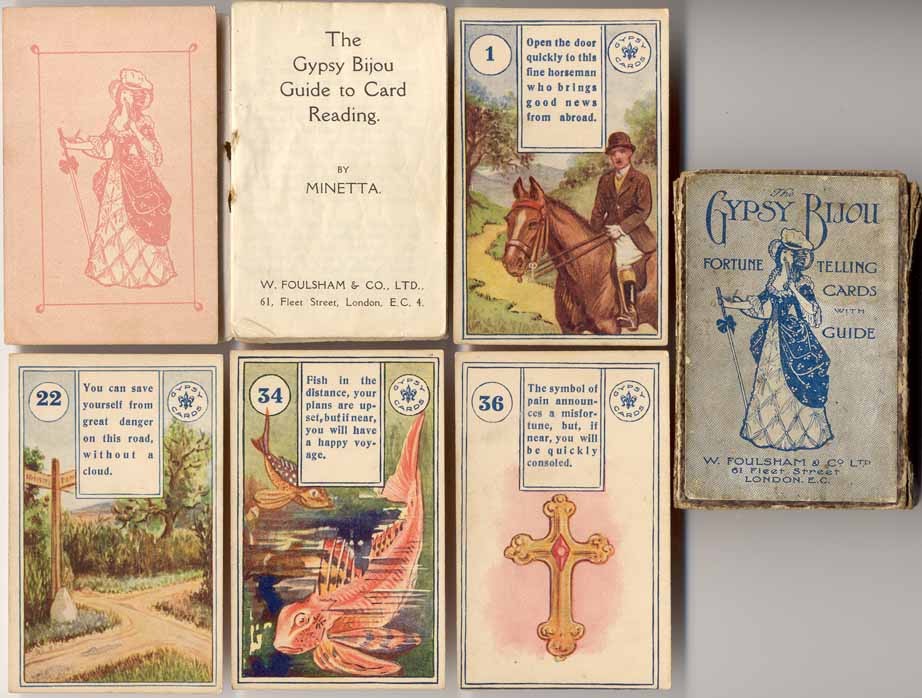
[From "The Gypsy Bijou Fortune Telling Cards" guide, by Minetta. Published by Foulsham & Co., London, c.1910 (36 cards)]. Illustration right: card no.6: "Clear clouds a sign of contentment. Dark clouds announce trouble." Minetta was the author of another published work on the 'Science of Card Fortune Telling' which claims to make the reader become an adept. A crystal ball is also advertised in the booklet, to be sold separately. Click here to see Lenormand pack by Müller See also: Cartes Lenormand by H.P. Gibson. Note: Mary Greer has shown that the earliest forerunner of the Lenormand cards is a 1796 book in English. See her blog: Mary K. Greer's Tarot Blog→ |
Carreras Fortune Telling Cards, 1926
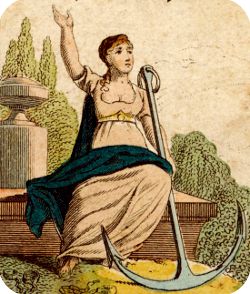
The Carreras Fortune Telling Cards (36 cards) were published in 1926 for W.D. & H.O. Wills, Bristol, and issued by Carreras Ltd in various sizes and formats, and are of the same type as the above example. The cards were printed by chromo-lithography by B. Dondorf in Germany. A single card was enclosed inside every packet of “Black Cat” cigarettes. See also: Cartes Lenormand by H.P. Gibson. Right: cards no. 36, 35 & 34 from the narrow size edition with figure inserts. According to the guide booklet, which could be obtained separately, the Cross is always a bad foreboding and warns of bad luck. The Anchor is a favourable sign suggesting fidelity in love, profitable business and an overseas undertaking. The Fish predict good fortune and luck in your undertaking abroad. The booklet accompanying the pack describes the cards as “those used by Mlle Silvia d'Arville's grandmother, who predicted Napoleon's victories, and his ruin…”. |
|
Jack of Diamonds: For reasons apparently no longer known, in the 18th century the English referred to this card as “Jack Shepherd”. In fortune-telling circles the card usually indicates events involving someone who is very rich. Roddy Somerville comments: “As a result of a visit to the Executions exhibition at the Museum of London Docklands last Saturday (visit website), I may be able to solve this mystery. Jack Sheppard (note the spelling) was a notorious, daring and much talked about criminal executed in 1724. He was also known as "Honest Jack". There is an extensive entry about him in Wikipedia: Jack Sheppard. It seems quite likely that the Jack of Diamonds got its nickname from him”. - RS Picture Show Fortune Telling Cards, 1930
Left: King of Diamonds/Lewis Stone: "… a kind hearted, loving man of fair complexion considering marriage or some important change.". Eight of Clubs/Cancer (The Crab): "People born under the sign of cancer are very difficult to understand…" The pack comes as a series of uncut sheets of 16 cards each, printed in red and black only. The full divinatory interpretation for each card - upright and reversed - is printed on the back of the cards. See more → |
Rameses Fortune Telling Cards, 1910
Left: back design from "The Rameses Fortune telling Cards" showing an Egyptian scene. Jack of Hearts: "Your dearest friend (pay attention to the cards nearest)" Reverse: "A pleasure loving bachelor; a fickle lover". The pack comprises an ordinary pack of 52 cards, plus one Joker or 'Subject' card, with interpretations printed at the top and foot of each playing card. An Instructions leaflet contains a treatise on how to give readings. |
Romany Fortune Telling Cards, 1935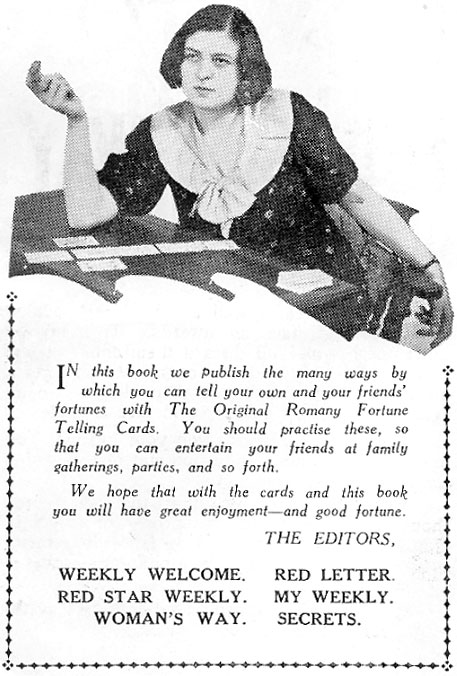
Above Left: box from "The Original ROMANY Fortune telling Cards" showing a gypsy by a campfire, reading cards. Jack of Hearts: "A fair man will bring you much happiness" Reverse: "Someone interested in you is fickle". The pack comprises an ordinary pack of 52 cards, plus one Joker, with normal and reversed interpretations printed at the top and foot of each playing card. The extra card accompanying the pack describes the "Original Romany Way of Fortune Telling". |


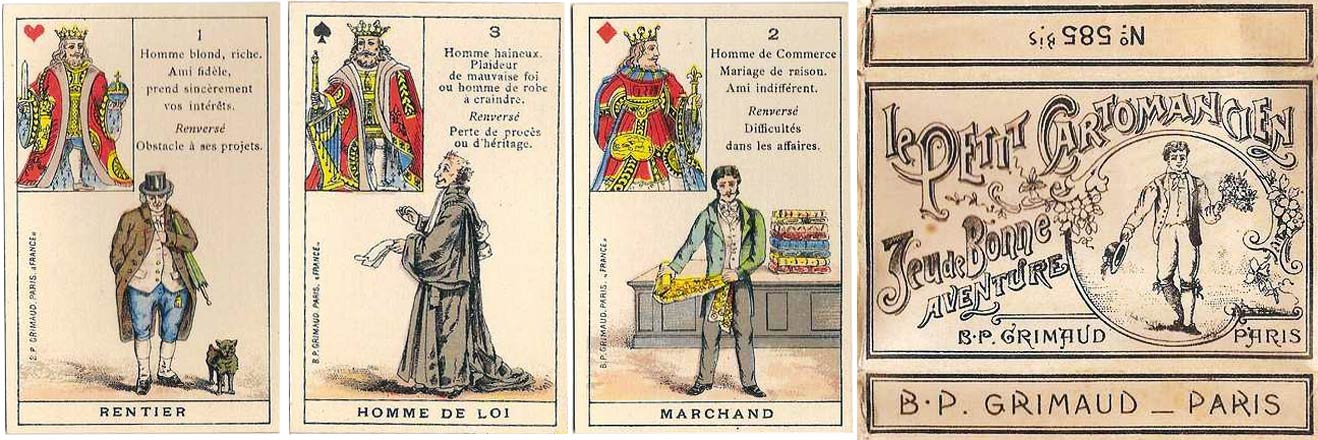
Above: three cards and wrapper from "Le Petit Cartomancien" fortune-telling cards manufactured by B.P. Grimaud, Paris. The miniature playing cards in the top corners depict full-length 'Paris' type courts, alongside contain divinatory interpretations with images of different personalities below. See more →
If you would like to produce a home-made deck of Fortune-telling cards, download: Livre du Destin or Book of Fate a nineteenth century French Cartomancy deck, with titles in French and English, published in Paris, c.1890. 32 cards. Download the entire deck (21 MB) as large size images, suitable for desk-top publishing into hand-made pack. Images courtesy Gilles Daigle.
REFERENCES & RESOURCES
See Mary Greer's Tarot Blog for more details and references about divination with cards.
Etteilla: “Maniere de se recreer avec un jeu de cartes”, Amsterdam & Paris, 1770. Digital copy at Bibliothèque nationale de France►
Keizer, Lewis: The Esoteric Origins of Tarot: more than a wicked pack of cards, included in The Underground Stream by Christine Payne Towler, Noreah Press, 1999. Can be found online►

By Simon Wintle
Spain • Member since February 01, 1996
I am the founder of The World of Playing Cards (est. 1996), a website dedicated to the history, artistry and cultural significance of playing cards and tarot. Over the years I have researched various areas of the subject, acquired and traded collections and contributed as a committee member of the IPCS and graphics editor of The Playing-Card journal. Having lived in Chile, England, Wales, and now Spain, these experiences have shaped my work and passion for playing cards. Amongst my achievements is producing a limited-edition replica of a 17th-century English pack using woodblocks and stencils—a labour of love. Today, the World of Playing Cards is a global collaborative project, with my son Adam serving as the technical driving force behind its development. His innovative efforts have helped shape the site into the thriving hub it is today. You are warmly invited to become a contributor and share your enthusiasm.

Activity for Cartomancy, Oracle and Divination Cards
Sign in to comment or save this article.

Related Articles
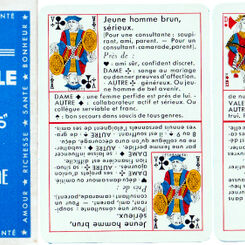
Cartes Oracle or La Voyante
Comparing three editions of a French cartomantic pack by Héron.

Zdeněk Mézl's Fortune Telling cards
A thematic deck from Czechoslovakia.
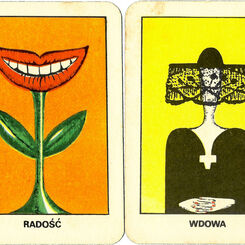
Karty Do Wróżb
Fortune Telling Cards from Poland by Ewa Hadydoń.
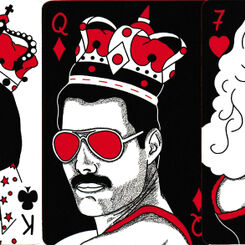
Oracle Rock
Cartomantic set depicting rock and pop stars, designed by La Rata, with a book by Virginie Despentes...
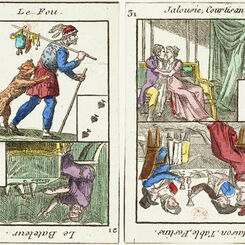
Le Petit Oracle des Dames
Le Petit Oracle des Dames ou Récréation des Curieux, Paris, 1807.
El Oráculo de la Bruja
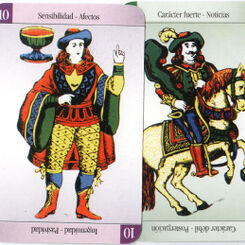
“El Oráculo de la Bruja” fortune-telling cards, 2003.
Georgian Fortune Telling Cards
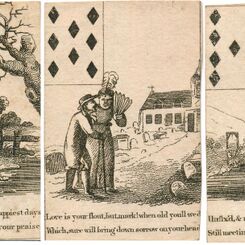
Georgian Fortune Telling Cards, c.1800.
Le Grand Tarot Belline
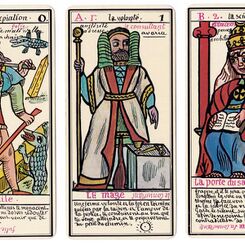
“Le Grand Tarot Belline” after drawings by Edmond Billaudot (1829-1881).
The Playing Card Oracles
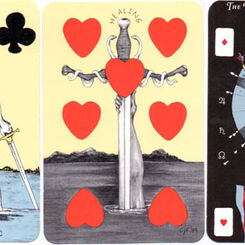
The Picture Book of Ana Cortez is an original work of art designed to facilitate Divination.
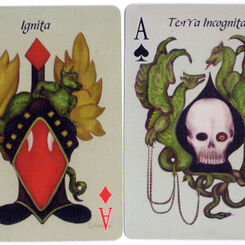
Playing Card Oracles - Alchemy Edition
Playing Card Oracles - Alchemy Edition - by Charles J. Freeman and Ana Cortez
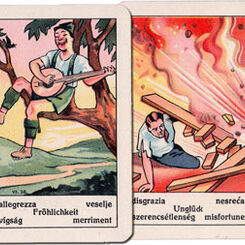
Art Deco Gypsy Oracle
Art Deco fortune telling deck published by Piatnik, 1936.
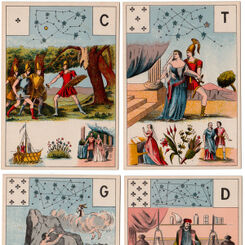
Grand Jeu Lenormand
Chaotic Grandeur in a collage of astrology, folklore and mythology from Parisian salons.

Cartomancia Astrología Quirologia Tests
A set of rather unusual and non-standard cartomancy cards from Argentina with religious connotations...
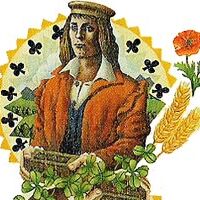
The Fortune Teller's Deck
The Fortune Teller’s Deck was published in 1995 in conjunction with a book written by Jane Lyle. The...
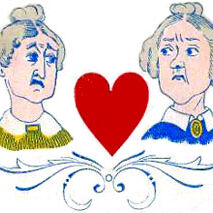
Ye Witches’ No.62 Fortune Cards
Ye Witches Fortune Telling Cards published by the United States Playing Card Co., 1896. 52 cards + J...
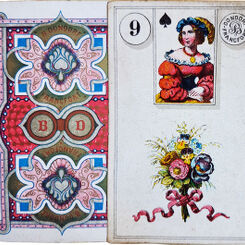
Wahrsage-Karten
In this version an explanatory verse is printed at the top of each card.
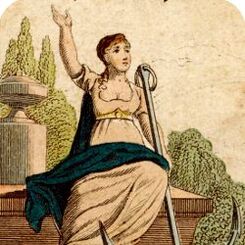
Fortune Telling Deck, c.1818
Fortune Telling Deck by Industrie Comptoir, Leipzig c.1818.
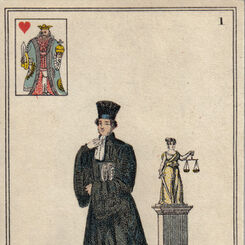
Livre du Destin
Livre du Destin / The Book of Fate, c.1900, entire deck (32 cards)
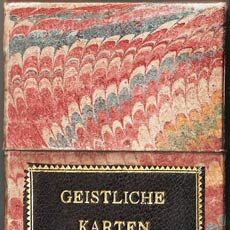
Geistliche Karten
Geistliche Karten, Augsburg, 1718. Each card carries a text in Gothic typeface giving advice regardi...
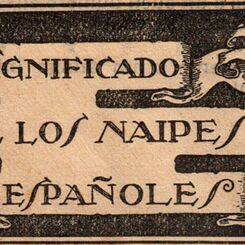
Significado de los Naipes Españoles
Cartomantic meanings of Spanish playing cards by Benita the Witch (XVI century), published by Chocol...
Most Popular
Our top articles from the past 60 days


Courtney Rider
22 February 2026, 18:09SavedSaved this article to Divination
Louise Donnelly
20 March 2026, 04:48SavedSaved this article to Louise Donnelly's Collection 1
Dario Andros
13 May 2026, 17:18SavedSaved this article to Dario Andros's Collection
Fanyi Hou
19 June 2026, 15:05SavedSaved this article to Fanyi Hou's Collection