


Art Deco Gypsy Oracle
Art Deco fortune telling deck published by Piatnik, 1936.
Art Deco-styled fortune telling deck dated 1936, published by Piatnik. In contrast to overly mystical or esoteric packs, these cards are refreshingly direct and portray everyday life situations familiar to us all. What you see is what you get, and although the cards are read in pairs or in relationship to each other, and have no numbers or suits, just pictures and names, they are more or less self-interpreting. There doesn't appear to be any deep mystery to life.
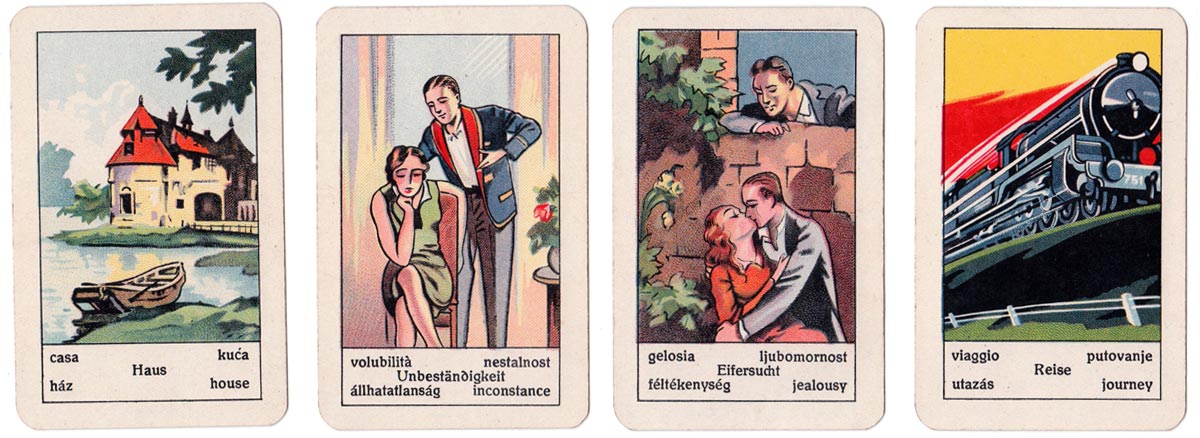
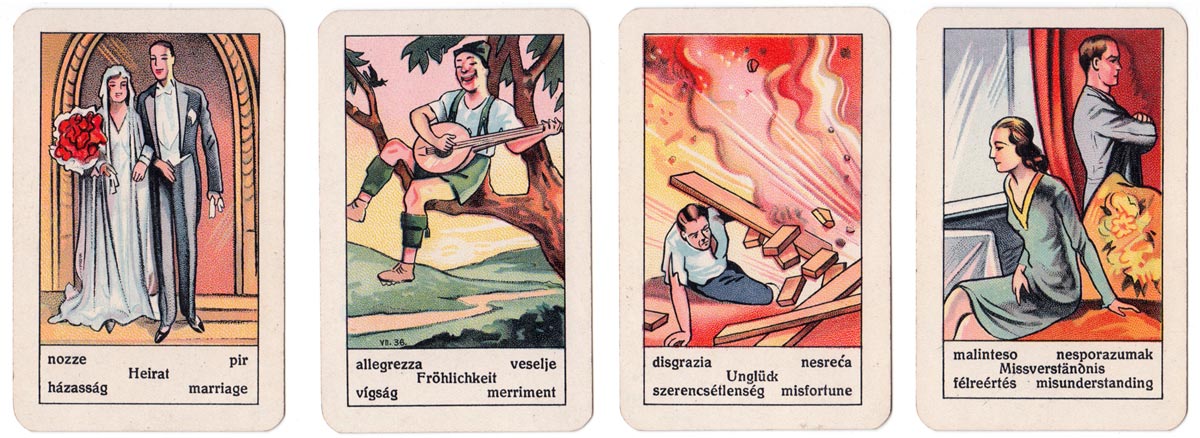
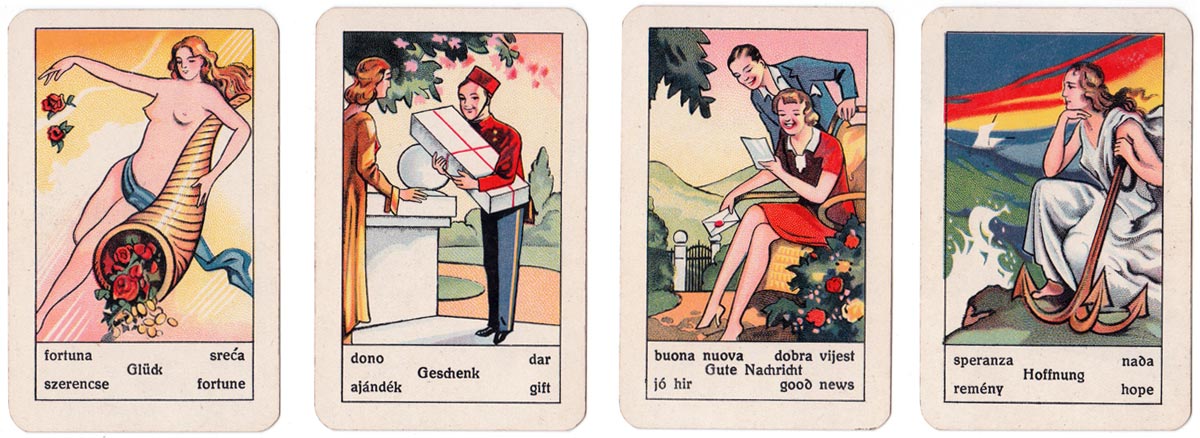
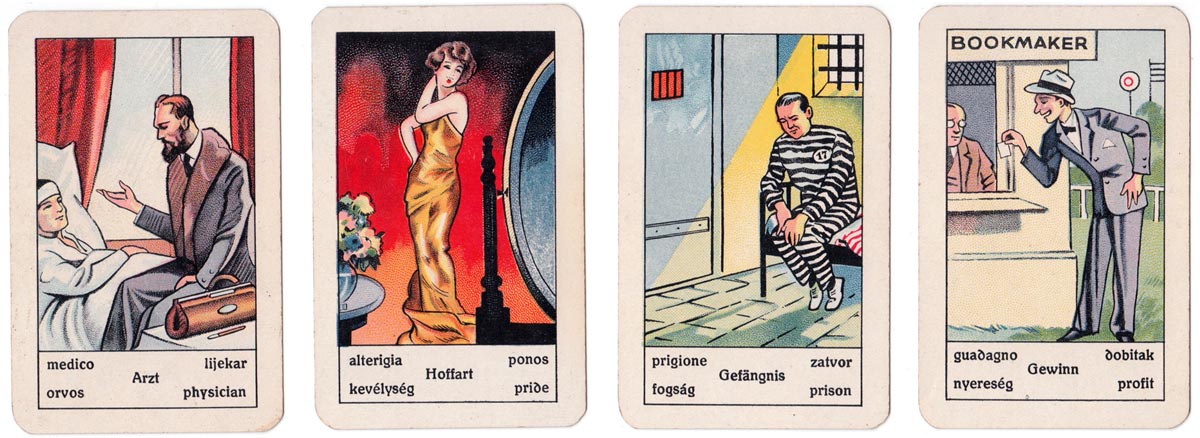
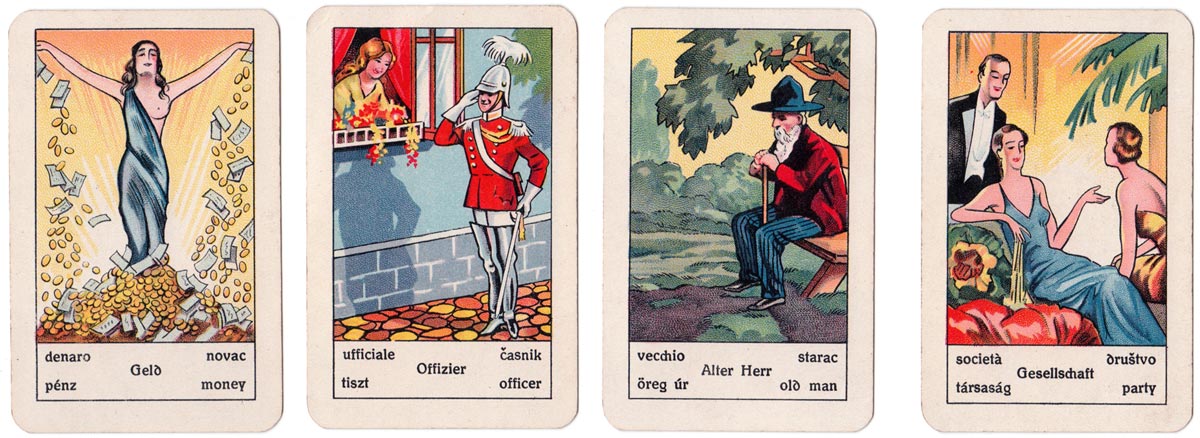
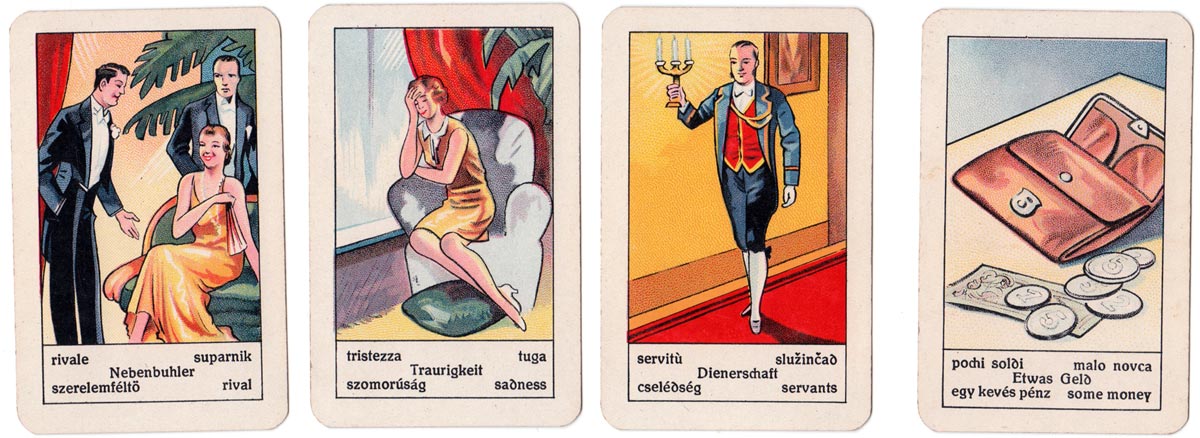
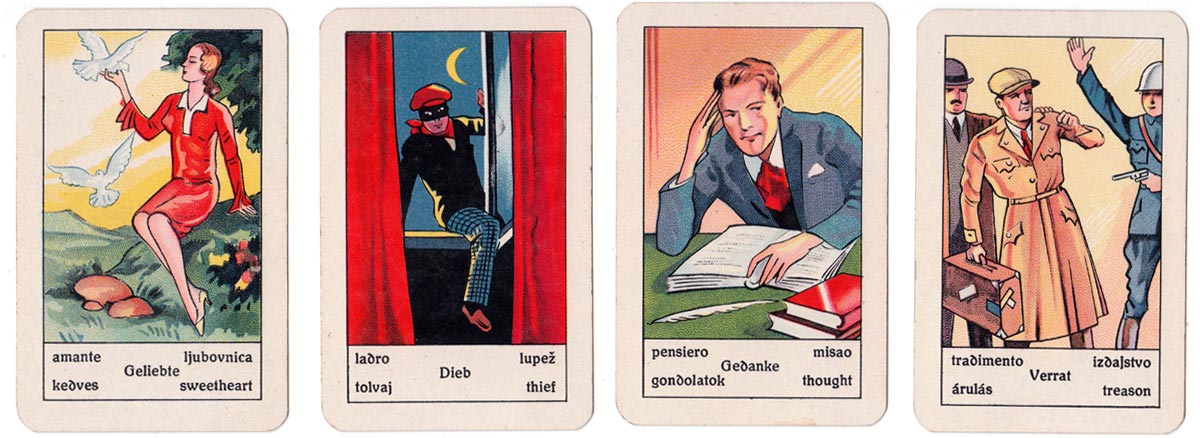
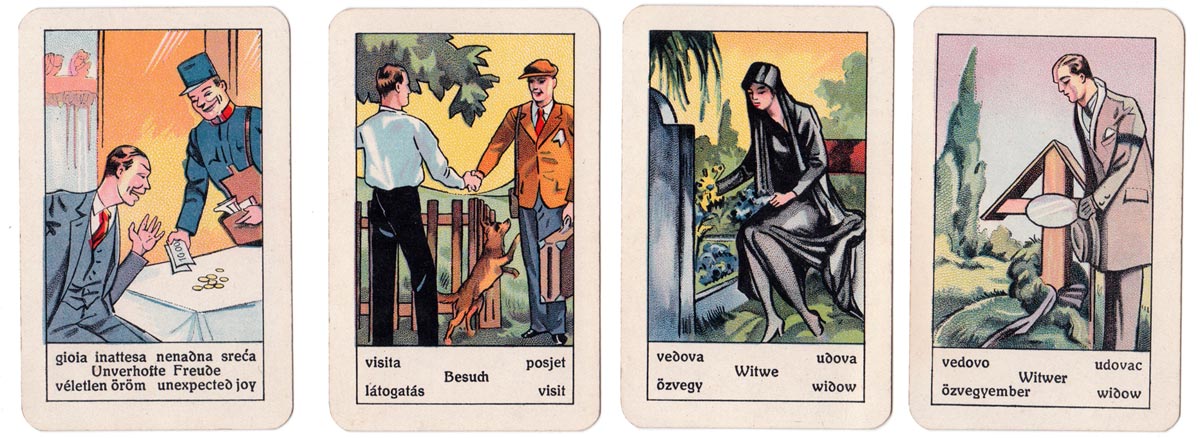
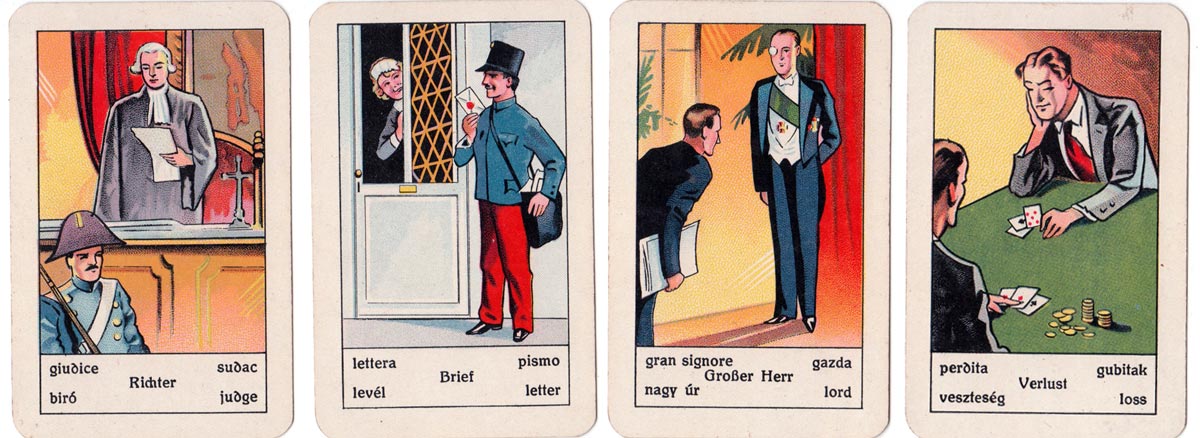
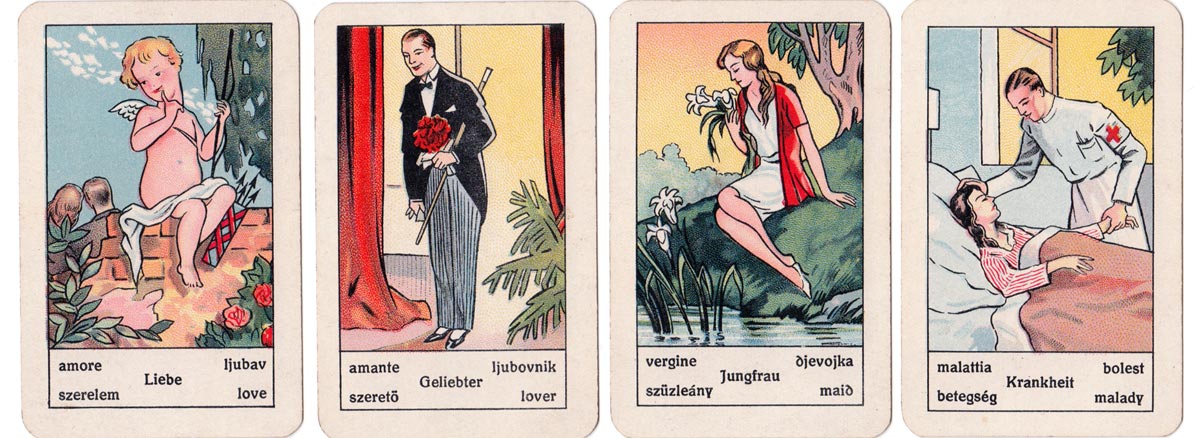
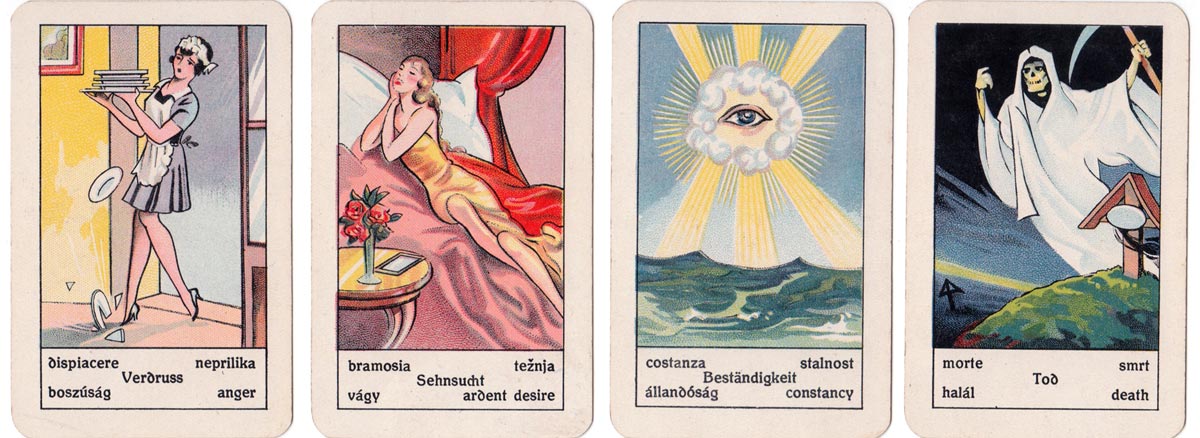
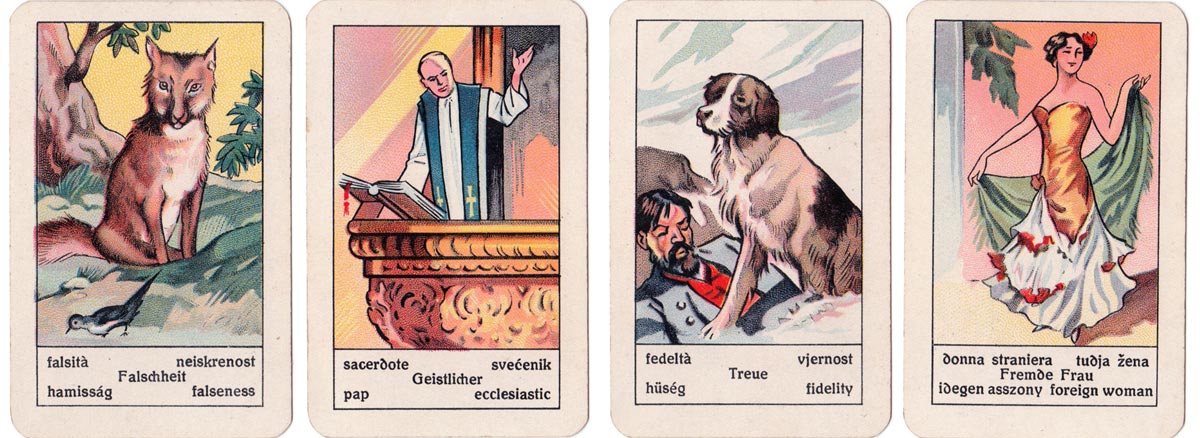
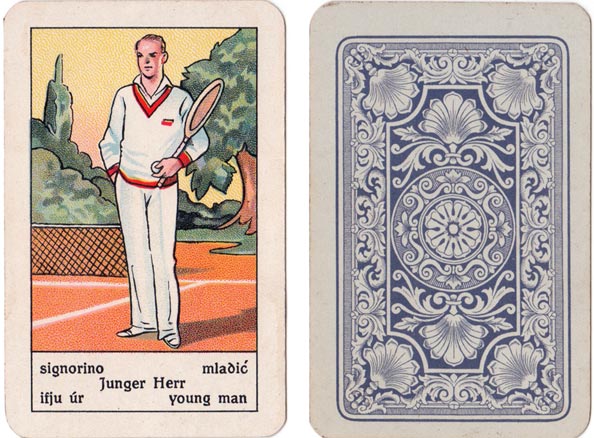
Above: Art Deco fortune telling deck with captions in five languages, published by Piatnik, dated 1936. 52 cards.
The Art Deco fortune telling card is an expansion of the Viennese Biedermeier and "Gypsy" Cartomancy sets to a full complement of 52 cards. The colourful poster-style, period graphics imbue these cards with a retro feel and are arguably an improvement on the more traditional Gypsy or Lenormand fortune teller cards. Also new images relating to 20th century social concerns have been added to the old ones. Some spreads or styles of reading might lend themselves better to this type of card that predicts good or bad news without any mumbo-jumbo. Images courtesy Rex Pitts.
See also: Austrian Cartomancy Decks→

By Rex Pitts (1940-2021)
United Kingdom • Member since January 30, 2009
Rex's main interest was in card games, because, he said, they were cheap and easy to get hold of in his early days of collecting. He is well known for his extensive knowledge of Pepys games and his book is on the bookshelves of many. His other interest was non-standard playing cards. He also had collections of sheet music, music CDs, models of London buses, London Transport timetables and maps and other objects that intrigued him.
Rex had a chequered career at school. He was expelled twice, on one occasion for smoking! Despite this he trained as a radio engineer and worked for the BBC in the World Service. Later he moved into sales and worked for a firm that made all kinds of packaging, a job he enjoyed until his retirement. He became an expert on boxes and would always investigate those that held his cards. He could always recognize a box made for Pepys, which were the same as those of Alf Cooke’s Universal Playing Card Company, who printed the card games. This interest changed into an ability to make and mend boxes, which he did with great dexterity. He loved this kind of handicraft work.
His dexterity of hand and eye soon led to his making card games of his own design. He spent hours and hours carefully cutting them out and colouring them by hand.

Activity for Art Deco Gypsy Oracle
Sign in to comment or save this article.

Related Articles
Luxury No. 2167
A Piatnik classic that lives up to its title.
Art pack I
Art pack featuring Old Masters, including Bruegel, Vermeer, Titian, Raphael, Caravaggio, Canaletto, ...
Lenormand Wahrsage-Karten No. 55
Conventional Lenormand designs on a pack from Piatnik but with unconventional numbering.
Rika playing cards
Playing cards depicting famous Austrian skiers of the 1970s.
Cartomancy, Oracle and Divination Cards
Playing cards are used for fortune-telling - turning another card illumines the moment and a new per...
Österreichisches Trachten-quartett
Österreichisches Trachten-quartett Nr.282 published by Ferd Piatnik & Söhne.
Piatnik No.97
Non-standard French-suited cards published by Ferd Piatnik & Sõhne, Vienna, c.1940s.
Vienna (ex-Lyon) pattern
‘Vienna pattern’ derived from archaic Lyon pattern by Ferd Piatnik & Söhne A.G., c.1926-1934.
48: Ferdinand Piatnik & Sons
Ferd. Piatnik produced a very large range of cards with many different standard and non-standard pat...
Popular No.257
Piatnik’s “Popular Playing Cards” No.257
Salzburger Pattern
Salzburger pattern by Ferd. Piatnik & Söhne, Vienna
Die Neue ÖVP
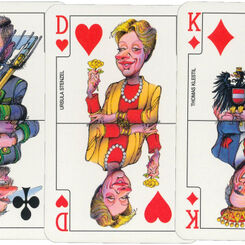
Promotional deck for the Austrian People’s Party (ÖVP) printed by Piatnik, 1996.
Vienna Melange
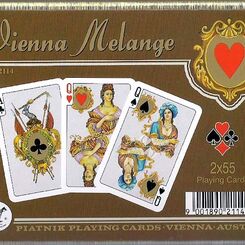
“Vienna Melange” Playing Cards by Piatnik with a historical feel representing the four races that ma...
Austrian Cartomancy Cards
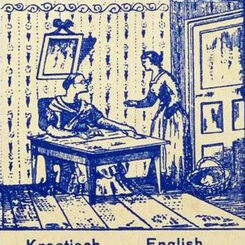
During the 19th century a system of fortune telling arose in Europe using unnumbered, pictorial card...
Rummy No.210
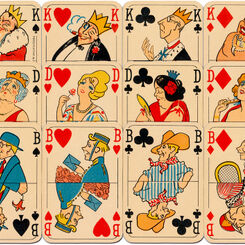
Period cartoon images from the 1930s. The Kings are in fancy dress ready to party, the Queens appear...
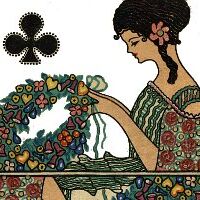
Waisenfond
Intended to attract donations on behalf of the Imperial Royal Austrian Military Widows’ and Orphans’...
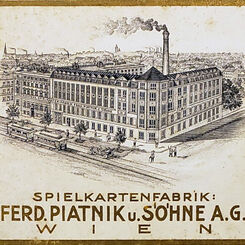
Ferd. Piatnik & Söhne
Ferdinand Piatnik was born in Ofen on October 14, 1819.
Piatnik Tarock
Deck of "Industrie und Glück" or "Rural Scenes" tarock cards manufactured by Ferd Piatnik & Söhne, V...
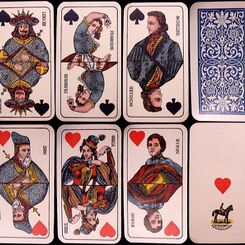
Literary Figures
Non-Standard Literary Figures playing cards manufactured by Ferd. Piatnik & Söhne A.G., Vienna, 1924...
Significado de los Naipes Españoles
Cartomantic meanings of Spanish playing cards by Benita the Witch (XVI century), published by Chocol...
Most Popular
Our top articles from the past 60 days


Ваня Козлов (Vanya Kozlov)
19 November 2025, 09:47SavedSaved this article to Ваня Козлов's Collection