Playing Cards and Religion
Early engravers and print makers made devotional images for pilgrims and people who could not afford paintings or books. Many of these craftsmen turned their hand to manufacturing playing cards to earn extra income.

Wherever in Western Europe man turned his eyes, he was confronted by the majesty of the church. Everything he did was approved or disapproved, blessed or cursed, interpreted and solemnised by the Church. He was baptised by it, married by it and buried by it. He called on angels, saints and martyrs for help, visited shrines and holy wells, made oaths on sacred relics. The Church dominated men's minds and imagination.
Generally-speaking, all the different religions prohibited what they saw as sinful games, idolatory, alcohol, etc but people got around it privately. For example the situation in Muslim Spain seems to have been the same as in Far Eastern countries, in that gambling games were officially forbidden but were enjoyed in private, and so weren't documented in history because the scribes were devout observers of the religious injunctions.
When playing cards arrived in Europe in the late 14th century, the Church took a strict, prejudicial view on what it saw as lewd, frivolous, fickle or dishonest behaviour. Members of the clergy would certainly not approve of card playing if it had anything to do with gambling or fortune telling. Moralising tracts were published expressing disapproval of gambling as a mortal sin which might offend God and destroy lives, sometimes reaching the invective of fundamentalism.
The early engravers and print makers made devotional images for pilgrims as a cheaper alternative to paintings or books. Many of these craftsmen also turned their hand to manufacturing playing cards to earn extra income. Stock images from the repertoire of devotional imagery might be adapted to serve as playing card symbols. However, playing cards have not always been amicable bedfellows with the church.
Scandalous moral corruption

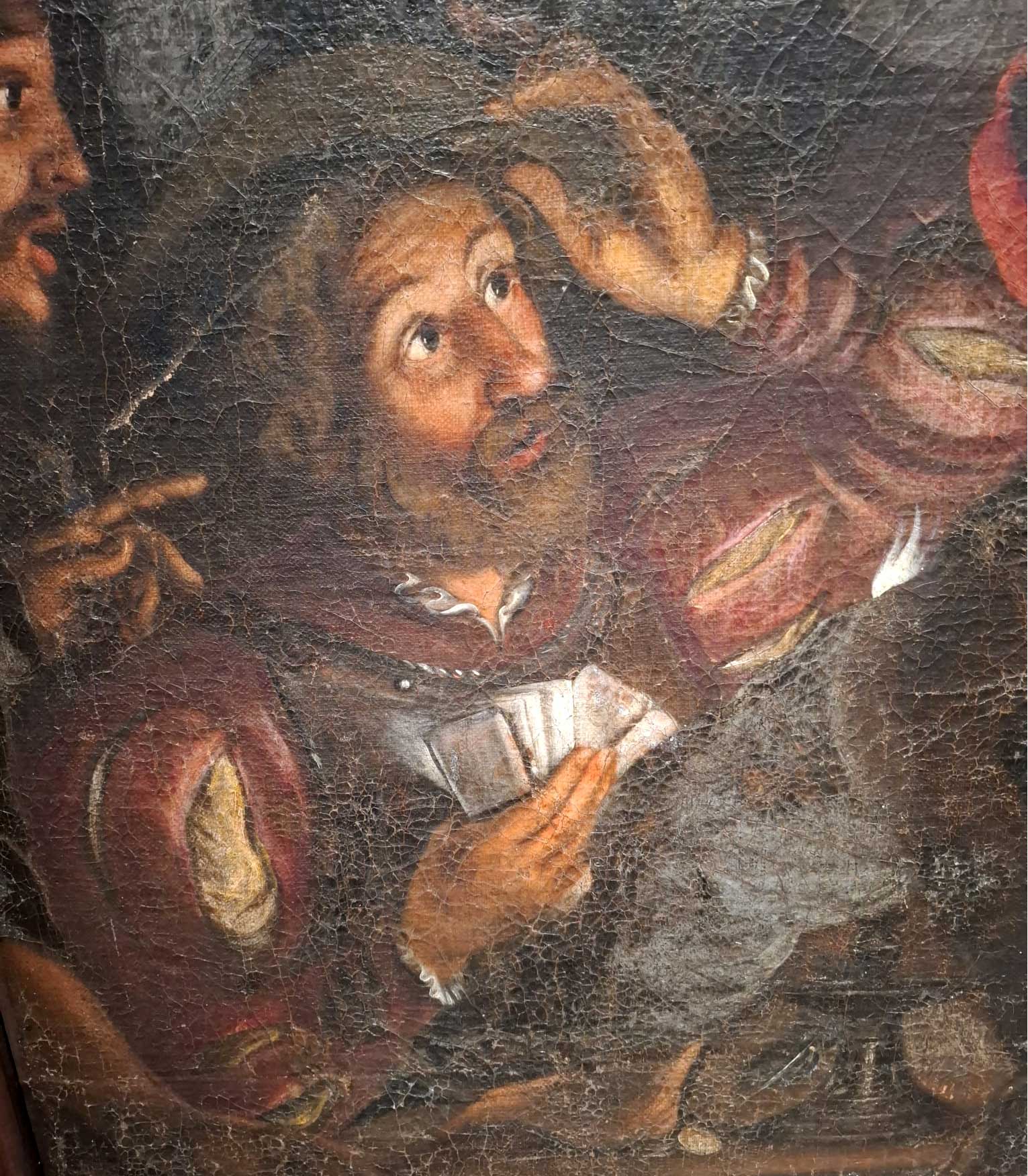
Above: a Dominican monk disturbing a party of card players and upsetting their table in moral disapproval; painting by Giuseppe Turchi (Florence) 1785-1845 (?). The players, accompanied by their families, are portrayed as carelessly slouched around a table with cards and money scattered on the floor. Onlookers watch in dismay. © The Trustees of the British Museum • number 1858,0626.215►
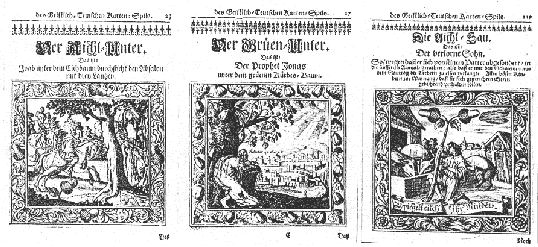

Left: Unter of Acorns, Unter of Leaves and the Deuce of Acorns from The Spiritual Deck of Cards published in Germany as a book, c.1545. The suit suits and values are related to spiritual interpretations: "Abimelech / son of Gidion / crowned to be King under an oak tree", and on the Unter of Leaves, which suit is also called 'Green' in German: "The prophet Jonas below a green tree of pumpkins", or in the third example, the Deuce of Acorns: "The lost son who came into extreme poverty because he left his father, so that he desired to eat the swill from the sows' trough together with the pigs… as a warning for all bad children to behave properly for their parents". The pictures are not always sensitive, and the sermon book also contains bad anti-semitism, as the Deuces, with a sow on all cards, give reason to make comparisons with the "Jewish People in the New Testament". On the Deuce of Bells, a sow, the 'Jewish Sow', is butchered, and the comment is "Hasn't deserved anything else".
If we search on the Internet for topics such as “the devil's bible” or “the devil's picture book” there will be many pages expressing a wide range of opinions and viewpoints concerning dangers of playing cards, including in some instances false information without any factual basis. We hear about religious groups holding intense emotional beliefs regarding their chosen faith; playing cards or tarot cards can antagonise or anger some people.
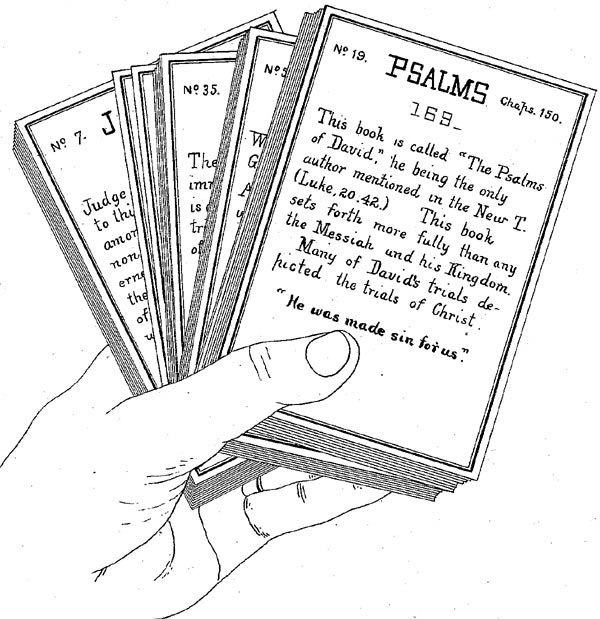
In 1894 William Ramsay designed playing cards to impart religious instruction, “designed to supersede useless card-playing” and “fastening the great truths of the Bible ... in the minds of the players.”
The original patent specification can be viewed here►
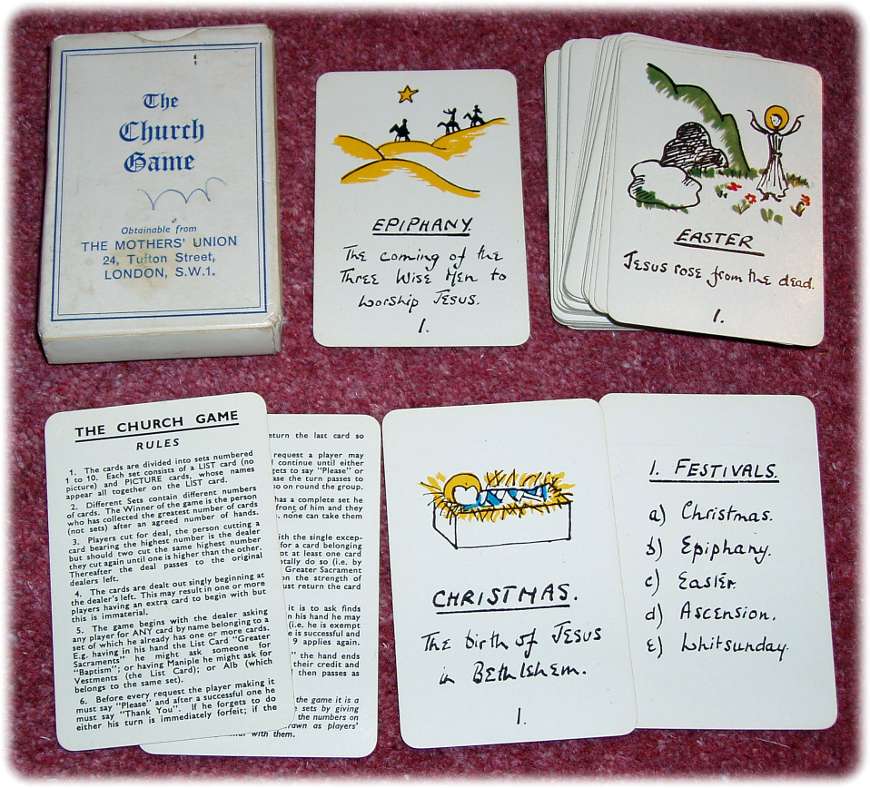
More religion decks on this site: Geistliche Karten • Russian Anti-Religions • Master of the Banderoles • Tarot Cards • Cartomancy • The Church Game • Grace Scripture cards

By Simon Wintle
Spain • Member since February 01, 1996
I am the founder of The World of Playing Cards (est. 1996), a website dedicated to the history, artistry and cultural significance of playing cards and tarot. Over the years I have researched various areas of the subject, acquired and traded collections and contributed as a committee member of the IPCS and graphics editor of The Playing-Card journal. Having lived in Chile, England, Wales, and now Spain, these experiences have shaped my work and passion for playing cards. Amongst my achievements is producing a limited-edition replica of a 17th-century English pack using woodblocks and stencils—a labour of love. Today, the World of Playing Cards is a global collaborative project, with my son Adam serving as the technical driving force behind its development. His innovative efforts have helped shape the site into the thriving hub it is today. You are warmly invited to become a contributor and share your enthusiasm.

Activity for Playing Cards and Religion
Sign in to comment or save this article.

Related Articles
Emoji Playing Card
Emoji suits in a Bicycle pack designed by Randy Butterfield.
Tarot de los Angeles
Tarot de los Angeles is a 78-card pack featuring angels and other celestial beings, which works more...
Baraja Mexicana Calendárica
Scholarly Mexican playing cards with Aztec and Maya calendar motifs.
Cathedrals, Abbeys & Minsters playing cards
54 pictures of different famous cathedrals, abbeys and minsters in England and Wales.
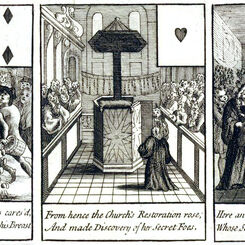
Dr Sacheverell
Dr. Henry Sacheverell's impeachment in 1710 sparked widespread public unrest and political upheaval,...
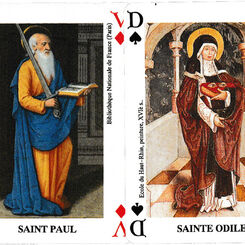
Les Saints Guérisseurs et Protecteurs
Healing and patron saints portrayed in paintings, manuscripts, altarpieces and statuary.
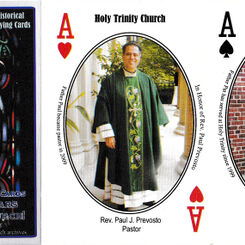
Holy Trinity Church playing cards
Holy Trinity Church commemoration playing cards, USA, 2011.
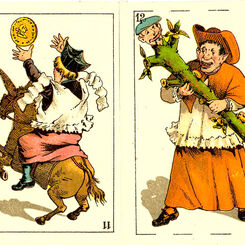
Baraja Mística
‘Baraja Mística’ satirical playing-cards featuring revelling clergy published by Litografía Fernánde...
Psychology, Numerology and playing cards
Numerology assigns significance to individual digits and their combinations, considering them as sym...
Les Chemins de Saint-Jacques
Paintings, statues, monuments and maps associated with different routes to Compostela.
Papst Quartett
A quartet game featuring a selection of popes up to Benedict XVI.
Bible playing cards featuring the life of Jesus
Bible playing cards featuring the life of Jesus, USA, 2008.
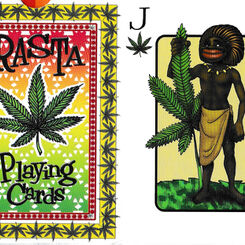
Rasta playing cards
Rasta playing cards celebrating the Rastafari religion.
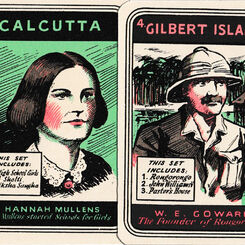
Round the World Families
Round the World Families published by the London Missionary Society, c.1945.
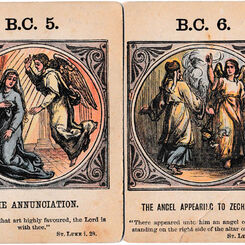
Anno Domini
Anno Domini biblical card game depicting New Testament history, published by John Jaques & Son, c.18...
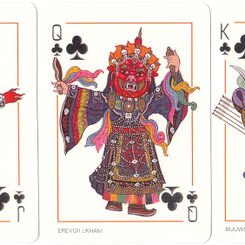
Mongolian Mask Dancing
Mongolian Religious Mask Dancing playing cards, c.2010
Snapshots
Snapshots, a Missionary Card Game depicting people from different cultural contexts engaged in their...
Logica Memorativa
Logica Memorativa playing cards by Thomas Murner, Brussels, 1507.
The History of Playing Cards
Playing cards appear in European records in the late 14th century, but their earlier history lies fu...

Grace Cards
My creativity proved useful in the Primary School classroom and children's clubs I run at Brooke Bap...
Most Popular
Our top articles from the past 60 days