


Le Destin Antique
Le Jeu du Destin Antique, originally published by Grimaud in XIX c., republished many times since...
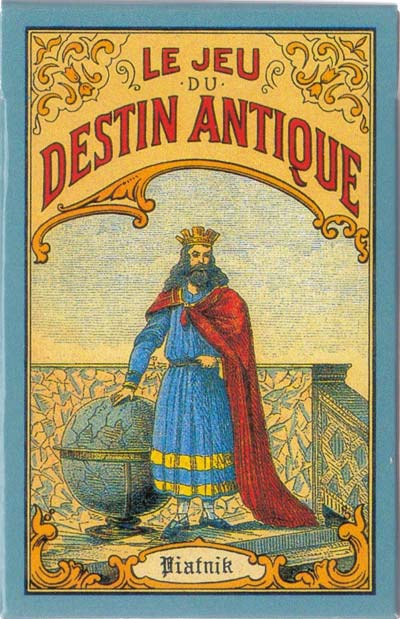
Le Destin Antique was first published in Paris in 1868 by Eugène D’Auriac as a booklet titled “Le Destin Antique rétabli d’après les anciens manuscrits Chaldaïques, Syriaques et autres avec une introduction historique sur le jeu de cartes”, accompanied by a 32-card cartomantic deck printed lithographically by Grimaud and hand-coloured, titled: “Le Destin Antique” with plain pink backs.
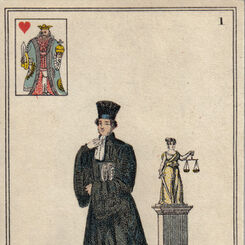
The originals may be viewed on the Bibliothèque Nationale de France website here and here whence it can be seen that all later editions of the deck, including other 19th and 20th century ones, like the one shown here published by Piatnik in 1986, are based on this original version, inspired by Eugène D’Auriac’s study of ancient divinatory sciences more →
I love the little vignettes in the top RH corner. Each card is numbered and has a miniature playing card in the corner, but no title. The small vignettes provide additional nuances to the cartomantic interpretation.

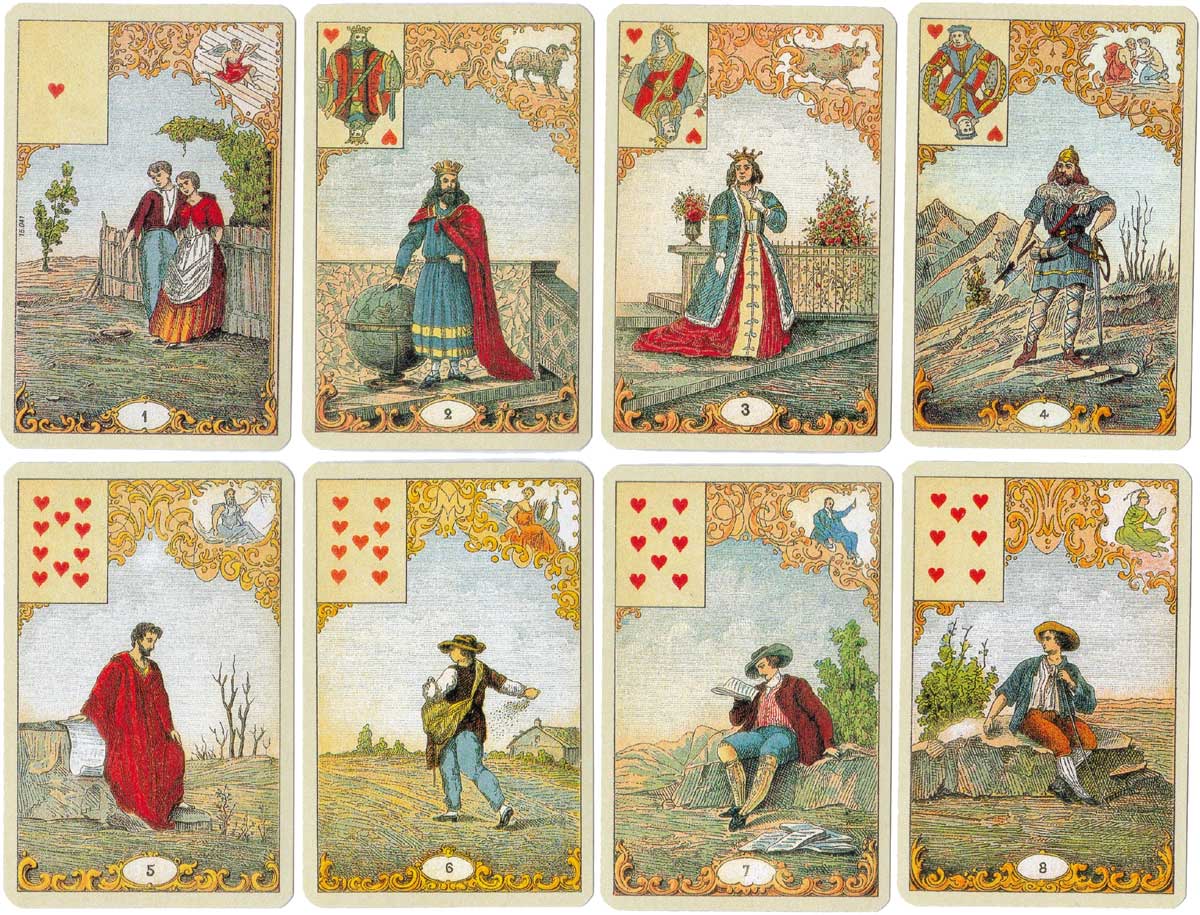
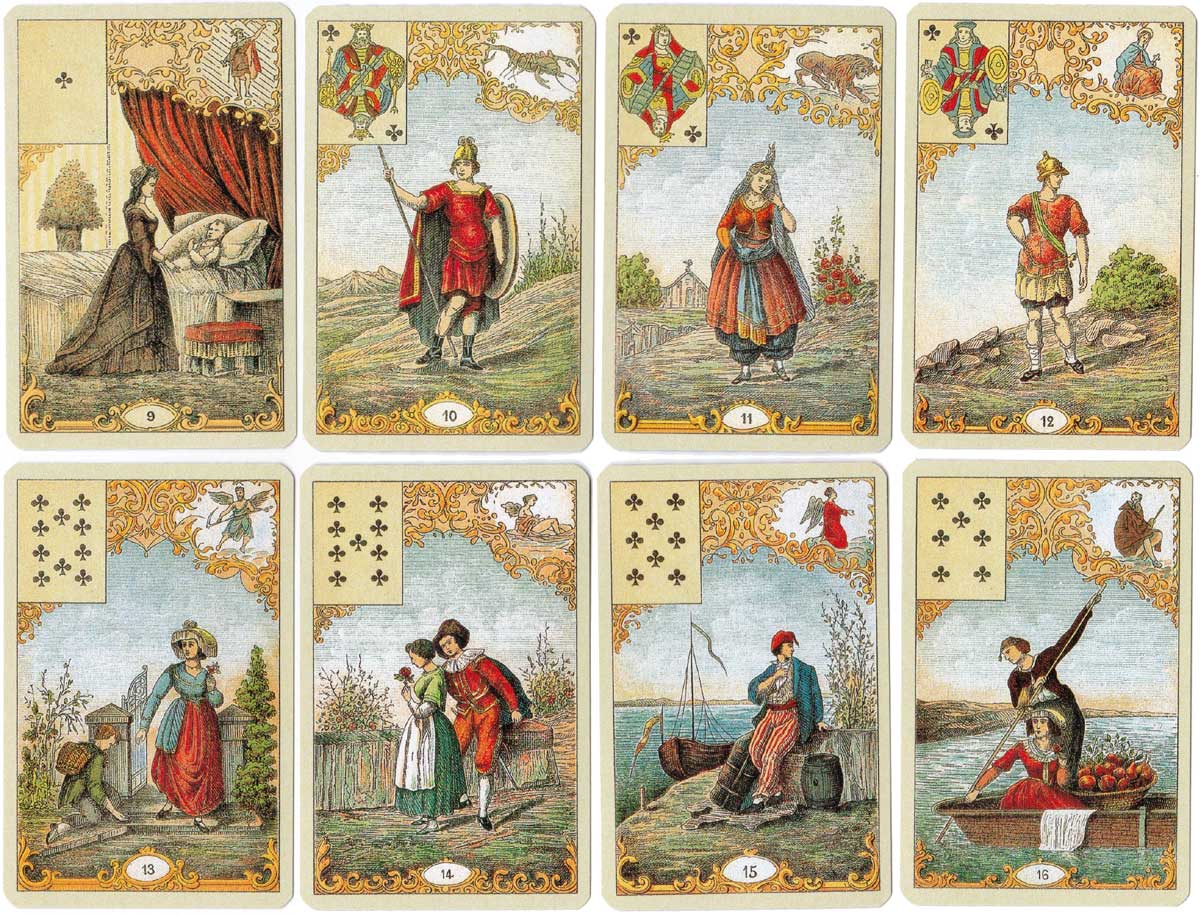
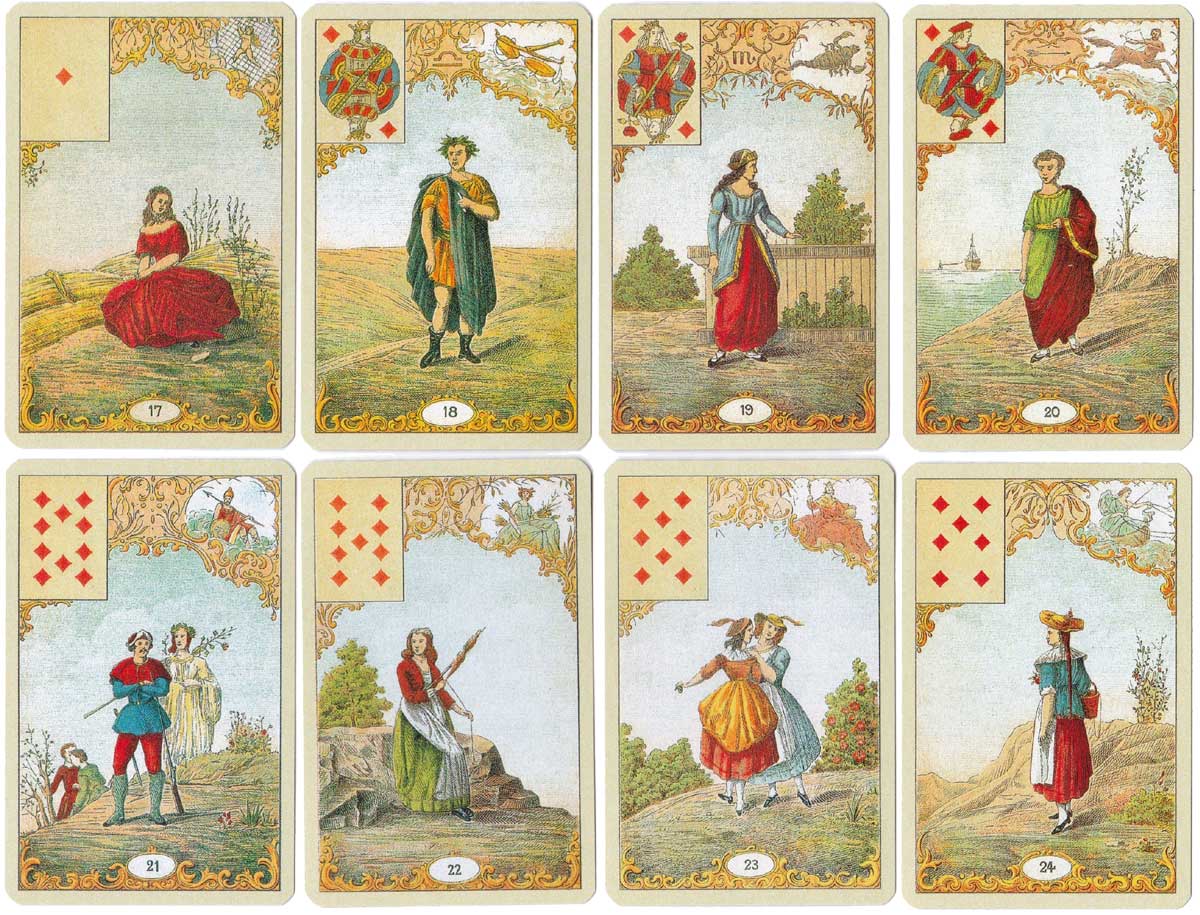
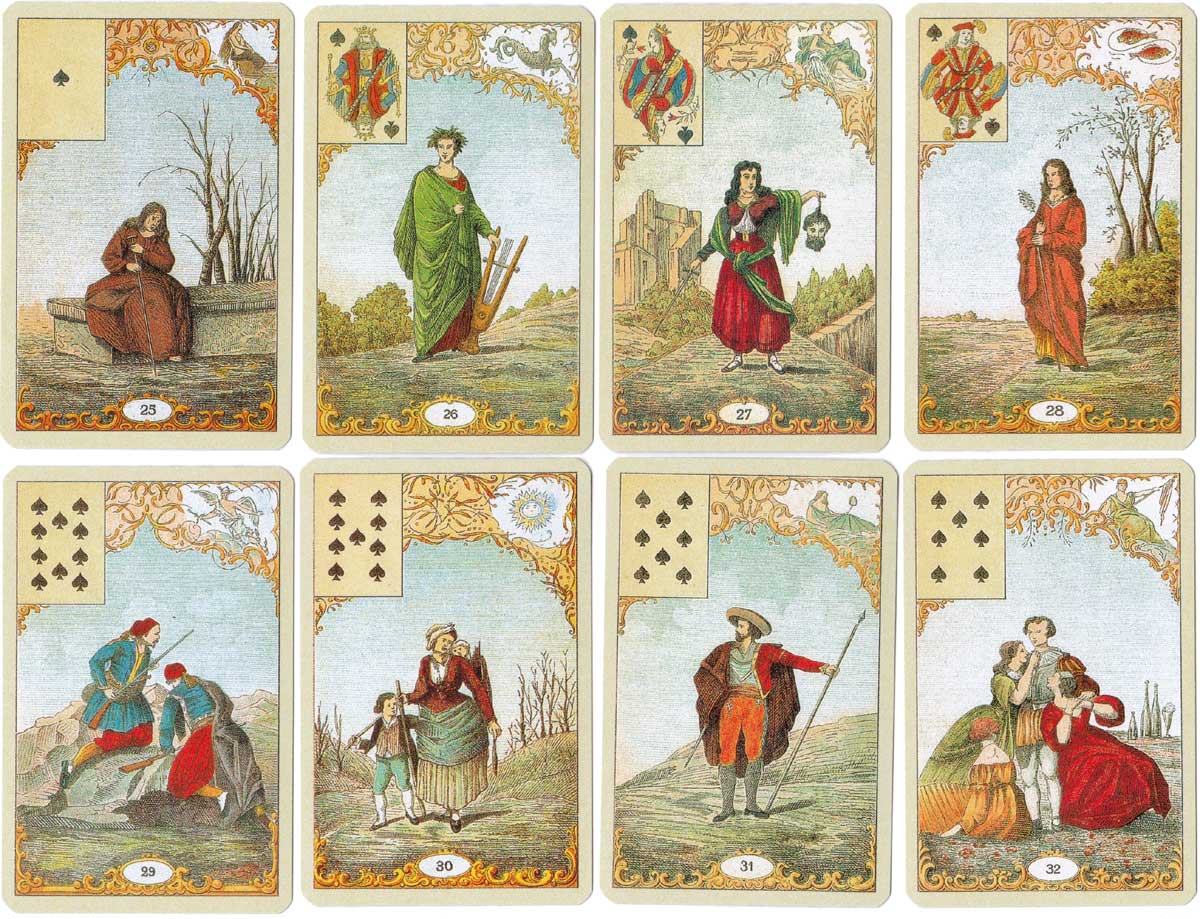
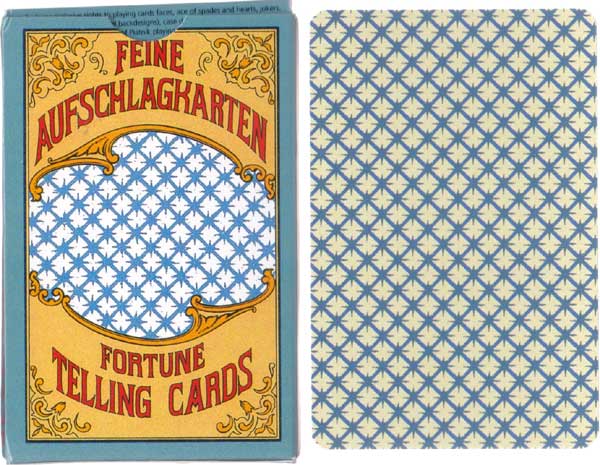
Above: Le Jeu du Destin Antique fortune-telling cards published by Piatnik in 1986, based on 19th century originals by Grimaud. 32 cards + booklet in box.
Card games in general and tarot/cartomancy cards in particular, like children’s and adult games, make a particularly strong appeal to the symbolic imagination. Whereas the standard pack of cards has been able to serve as a tool for divination mainly by combining the interpretation of signs with chance procedures, cartomancy cards have added to this function the desire to tap the secrets of the gods, by including a system of references and symbolic connections of an esoteric type, correlated with the planets and the cosmic hierarchies. Jean-Pierre Laurant: Dictionary of Gnosis & Western Esotericism.

By Rex Pitts (1940-2021)
United Kingdom • Member since January 30, 2009
Rex's main interest was in card games, because, he said, they were cheap and easy to get hold of in his early days of collecting. He is well known for his extensive knowledge of Pepys games and his book is on the bookshelves of many. His other interest was non-standard playing cards. He also had collections of sheet music, music CDs, models of London buses, London Transport timetables and maps and other objects that intrigued him.
Rex had a chequered career at school. He was expelled twice, on one occasion for smoking! Despite this he trained as a radio engineer and worked for the BBC in the World Service. Later he moved into sales and worked for a firm that made all kinds of packaging, a job he enjoyed until his retirement. He became an expert on boxes and would always investigate those that held his cards. He could always recognize a box made for Pepys, which were the same as those of Alf Cooke’s Universal Playing Card Company, who printed the card games. This interest changed into an ability to make and mend boxes, which he did with great dexterity. He loved this kind of handicraft work.
His dexterity of hand and eye soon led to his making card games of his own design. He spent hours and hours carefully cutting them out and colouring them by hand.

Activity for Le Destin Antique
Sign in to comment or save this article.

Related Articles
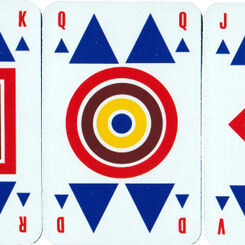
Pierre Cardin
Geometric designs in a futurist style by Jean Garçon for the couturier Pierre Cardin.
Grand jeu de la main
"Chiromancie Nouvelle" by the reputed pupil of Mlle Lenormand.
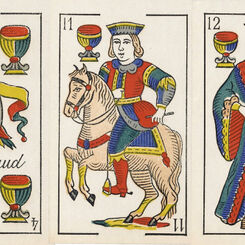
Catalan pattern by B.P Grimaud
Standard Spanish Catalan pattern deck made in Paris by B.P Grimaud.
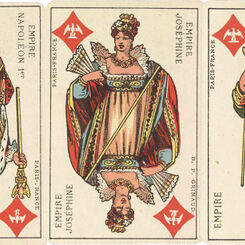
Cartes politiques : Jeu d'actualité
Political playing cards published by Grimaud et Chartier, Paris, 1872.
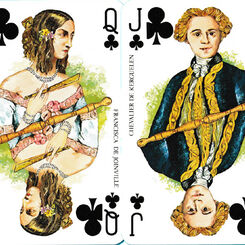
Compagnie Maritime des Chargeurs Réunis
French navigators and explorers on a promotional pack for the C.M.C.R shipping company.
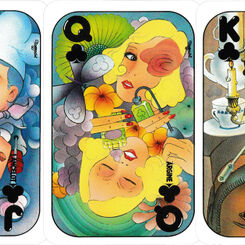
French External Trade Organization
Promoting the elegance and quality of a range of French products.
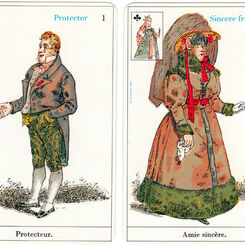
La Sibylle des Salons
La Sibylle des Salons facsimile of 19th century deck published by J M Simon, 1979.
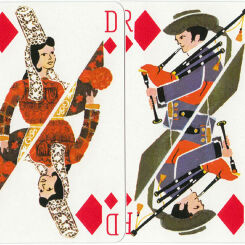
Bretagne
Bretagne (Brittany) playing cards, Grimaud, c.1970.
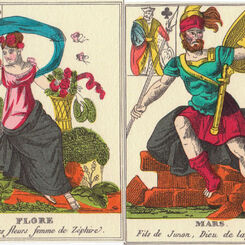
Jeu Mythologique
“Jeu Mythologique” facsimile 18th century pack by J M Simon, 1983.

Playtex
Playtex - le jeu de la beauté et du destin, Grimaud, 1971.
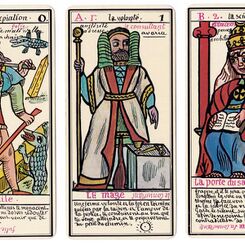
Le Grand Tarot Belline
“Le Grand Tarot Belline” after drawings by Edmond Billaudot (1829-1881).
Dames de France
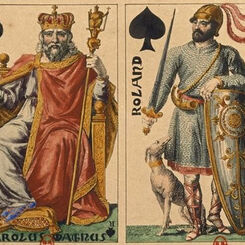
“Dames de France” published by J-M Simon based on originals by Armand Gustave Houbigant, Paris, c.18...
Jeu de l’an 2
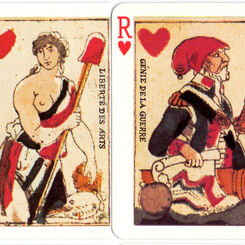
“Jeu de l’an 2” by Grimaud is a facsimile of French Revolutionary cards first published by Veuve Mou...
Grand Jeu Lenormand
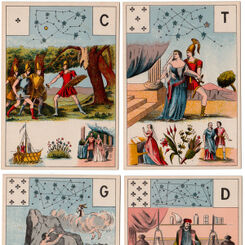
Chaotic Grandeur in a collage of astrology, folklore and mythology from Parisian salons.
Jeu Louis XV
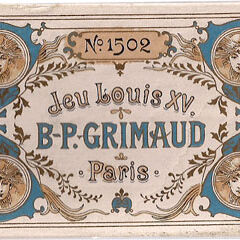
B.P. Grimaud of Paris issued this very ornate costume deck called “Jeu Louis XV No.1502” in c.1895. ...
Livre du Destin
Livre du Destin / The Book of Fate, c.1900, entire deck (32 cards)
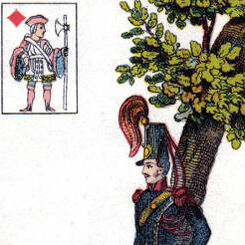
Livre du Destin
Livre du Destin or Book of Fate, printed by B.P.Grimaud, Paris, c.1900.

French Playing Cards
Some of the oldest cards still in existence come from France. During the 16th and 17th centuries Fra...
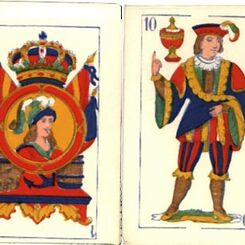
Grimaud Spanish pattern
Grimaud Spanish pattern, c.1880
Significado de los Naipes Españoles
Cartomantic meanings of Spanish playing cards by Benita the Witch (XVI century), published by Chocol...
Most Popular
Our top articles from the past 60 days


Stephen Scharber
06 March 2026, 21:31SavedSaved this article to Stephen Scharber's Collection
Tarot corner Of dew
24 March 2026, 16:51SavedSaved this article to Vintage fortune telling cards