


Grand Jeu Lenormand
Chaotic Grandeur in a collage of astrology, folklore and mythology from Parisian salons.
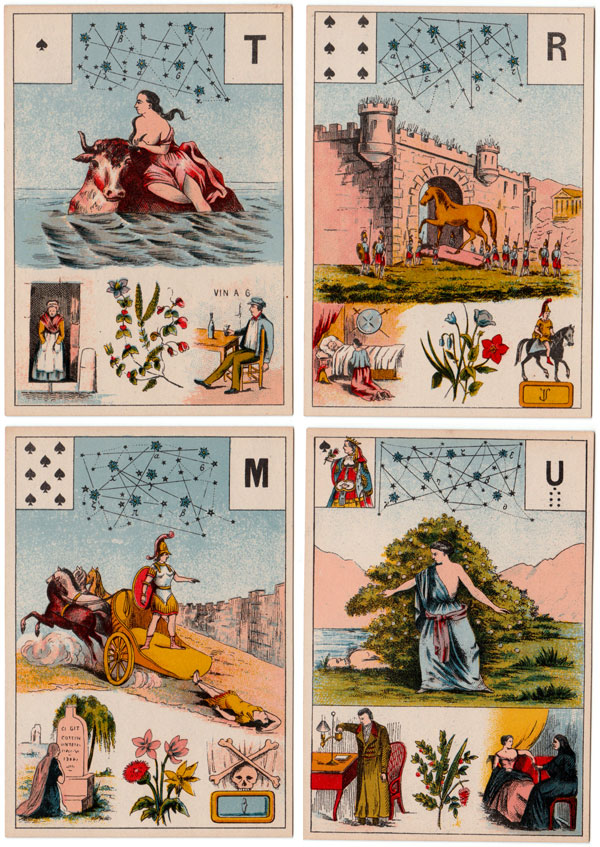
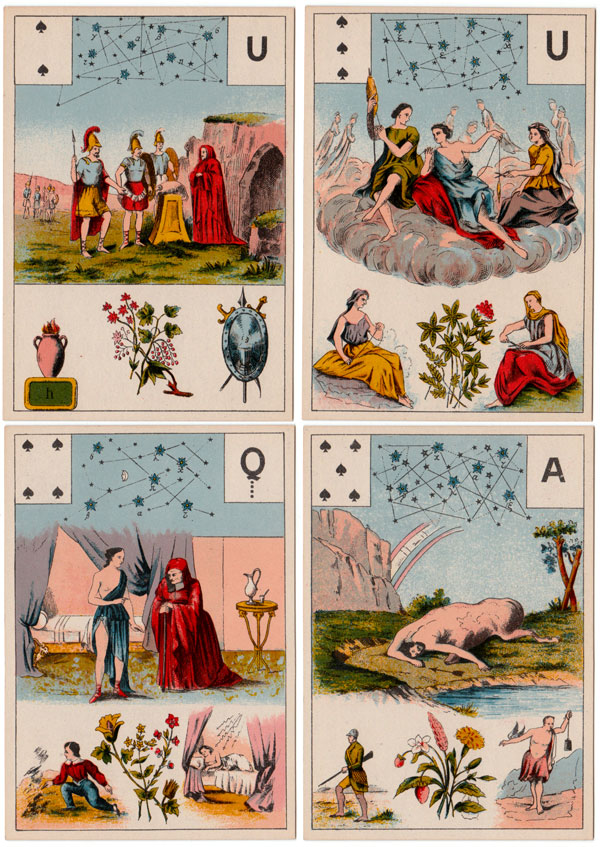
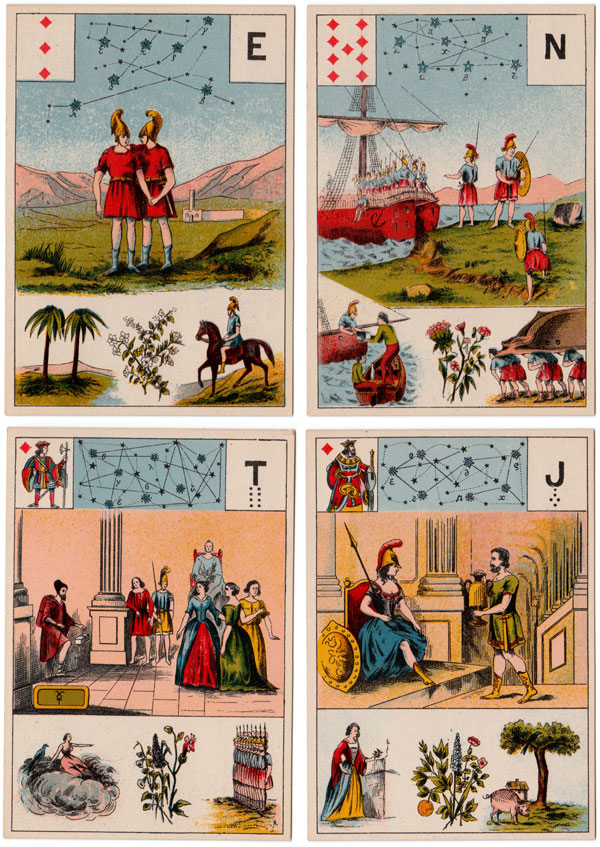
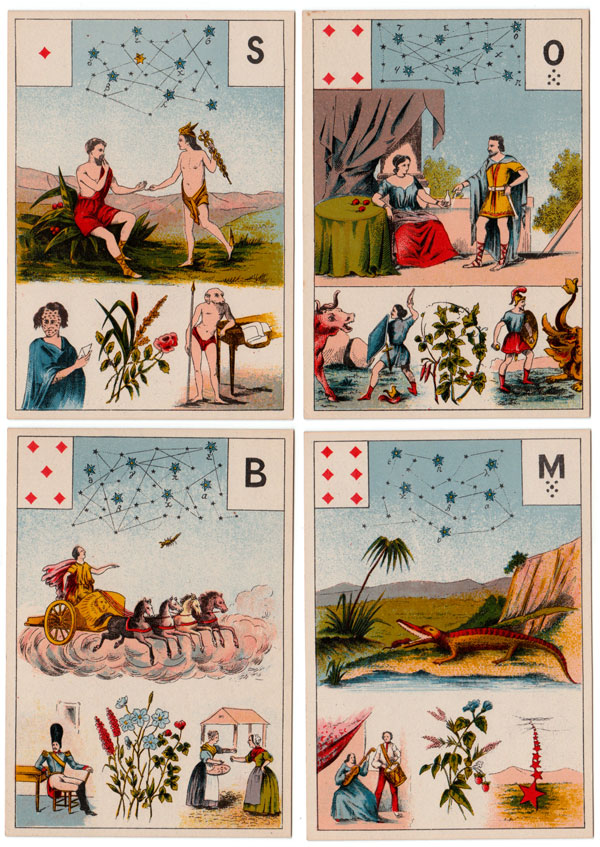
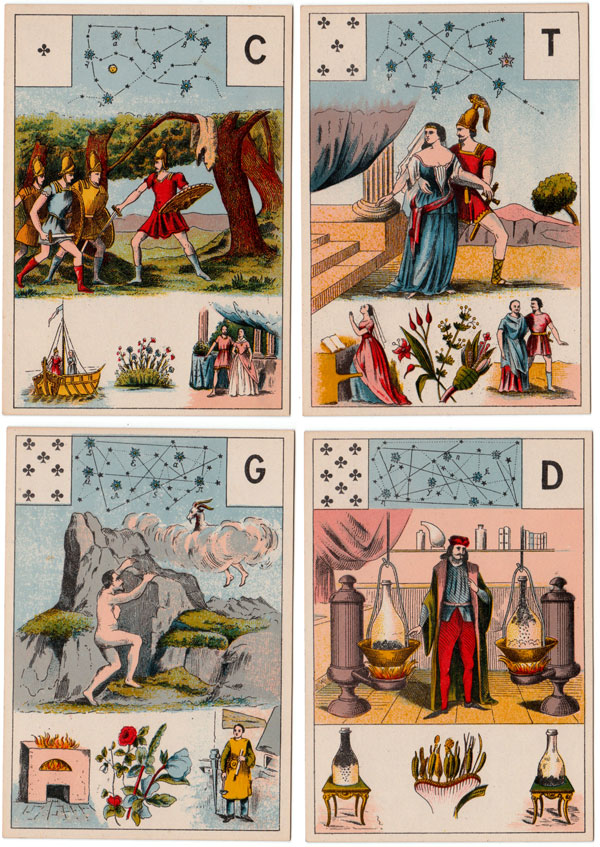
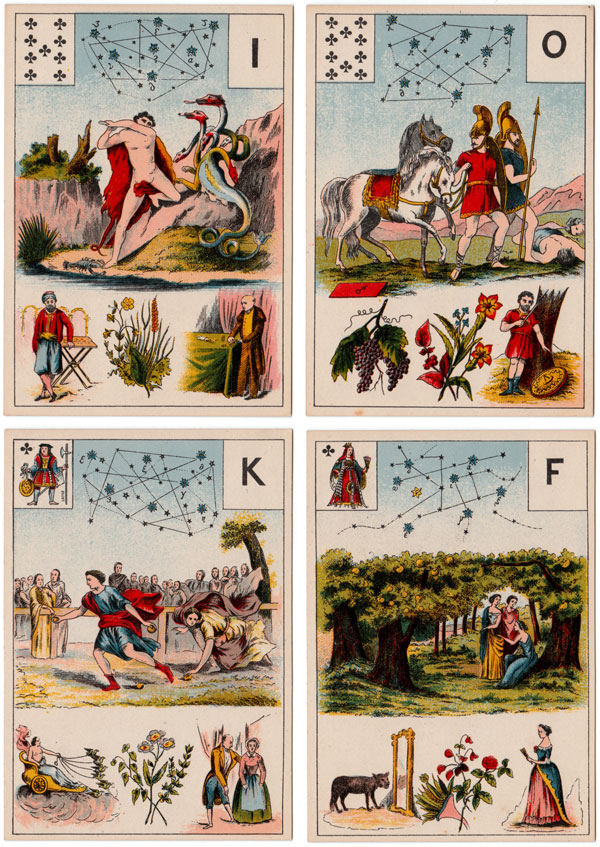
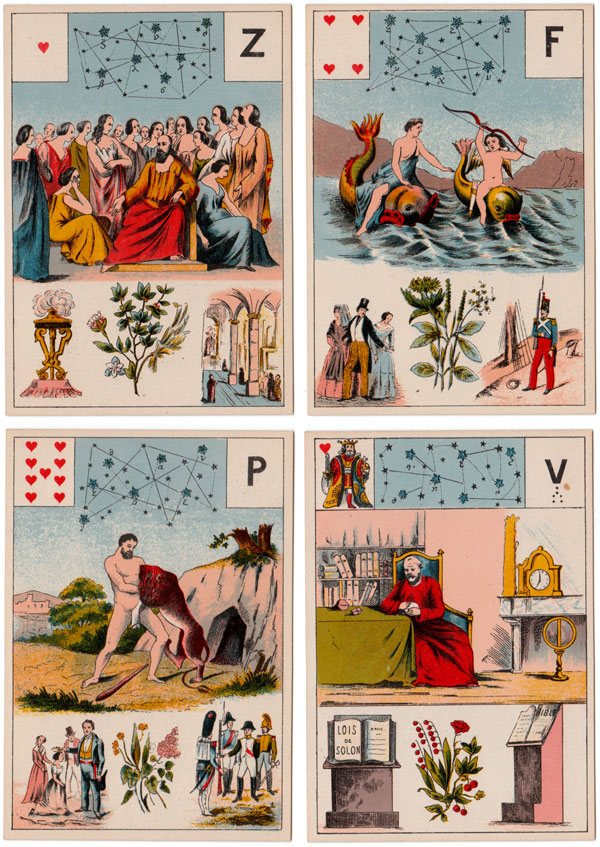
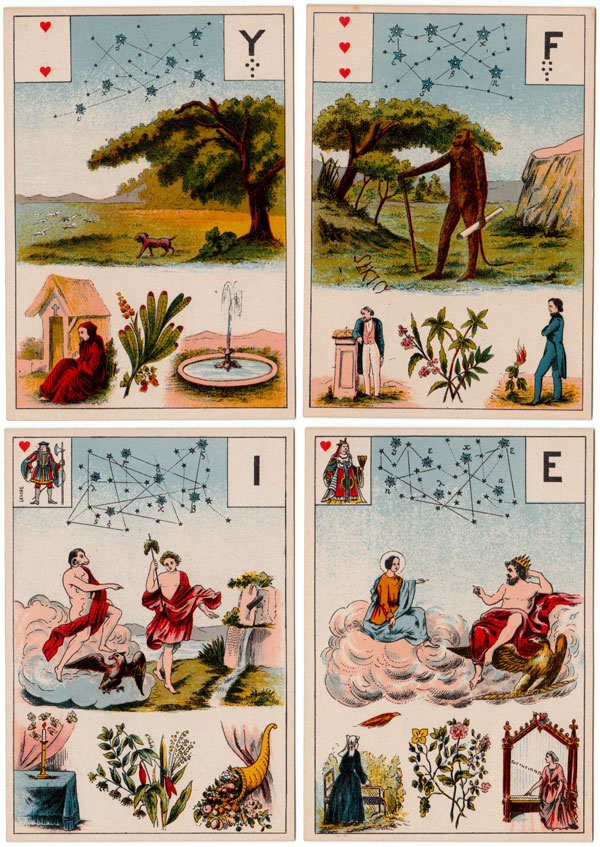
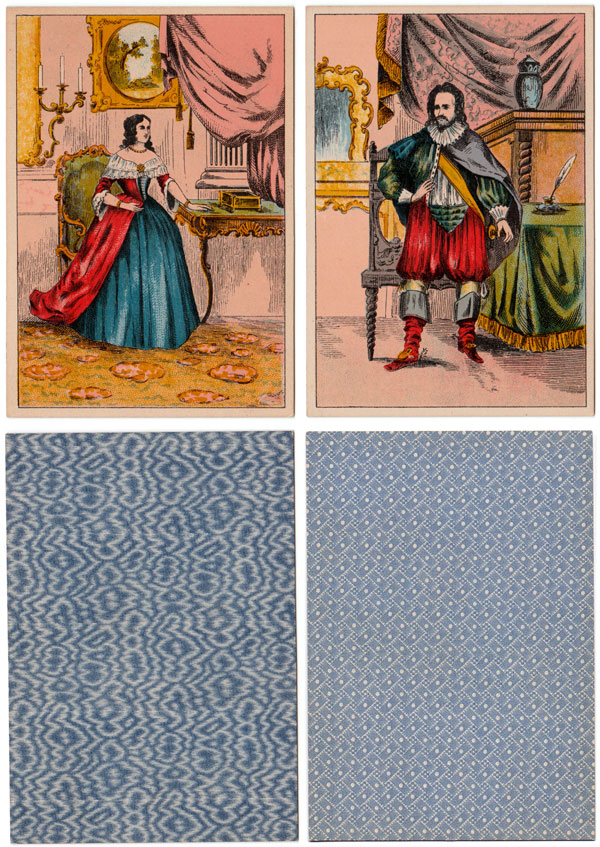
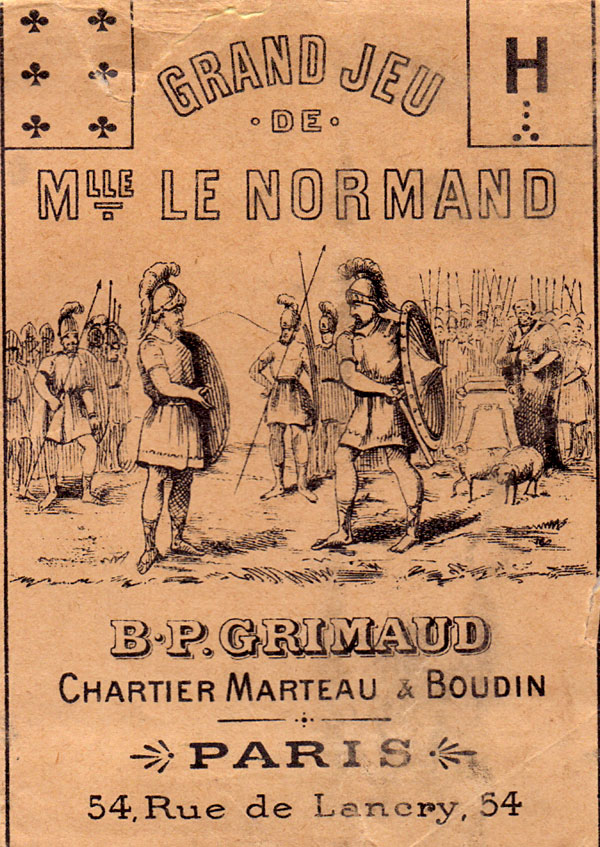
Above: the Grand Jeu de Mlle Le Normand has been published by B-P Grimaud since c.1860, also subtitled “Grand jeu de société. Cartes astro-mytho-hermétiques”, more or less unchanged but with different back designs occurring over the years. It appears to have been first published in Paris in 1845 (shortly after Mme Lenormand's death in 1843). See: https://forum.tarothistory.com (about half-way down the page).
Images and notes courtesy Rex Pitts with extra research by Anthony Lee and Emanuel Santos.
Grand Jeu de Mlle Le Normand
Mademoiselle Marie-Anne Adelaide Lenormand was born in Normandy, France in 1772. She was the daughter of a draper and his wife but was left an orphan at 5 years old when they both died. She claimed that she was given her first pack of cards by a Gipsy when she was very young and taught how to read them. Despite being brought up by foster parents she was well educated and by the age of 18 was becoming well known as a fortune teller.
At this time in France cartomancy was forbidden and so from time to time she was arrested and spent a short time in prison. As her fame grew she told fortunes for the revolutionary leaders Marat, St. Juste and Robespierre among others. Later she did the same for the Emperor Napoleon and Empress Josephine as well as the Tsar of Russia, Alexander I. She wrote many books during her lifetime on cartomancy but the famous Petit Lenormand fortune telling pack was only published a few years after she died in 1843.
This pack of 52 large divination cards, plus a male and female consultant, is illustrated with an eclectic mixture of Greek gods, goddesses, myths, allegories (including timeless mysticism, alchemy and astrology), folk legends, herbalism, popular occultism and so on. There are not necessarily any connections between the various symbols, except that they increased commercial appeal by catering to multiple interests. This cultural collage was perhaps a result of industrialisation, occult revival, nostalgia for the past and Romantic longing for enchantment. There are no references to Far Eastern beliefs such as Buddhism or Vedanta. Cards measure 90mm x 129mm.
See the card descriptions from the booklet that accompanies the deck.
Original early editions can be viewed on the Bibliothèque Nationale de France website here and here►
Astro-Mythological published by Grimaud, 1970 from the collection of Sean Comstock.
Here we have a deck originally created by the most famous fortune teller of all time, Marie Anne Adelaide Lenormand, more commonly known as Madame (or Mademoiselle) Lenormand.
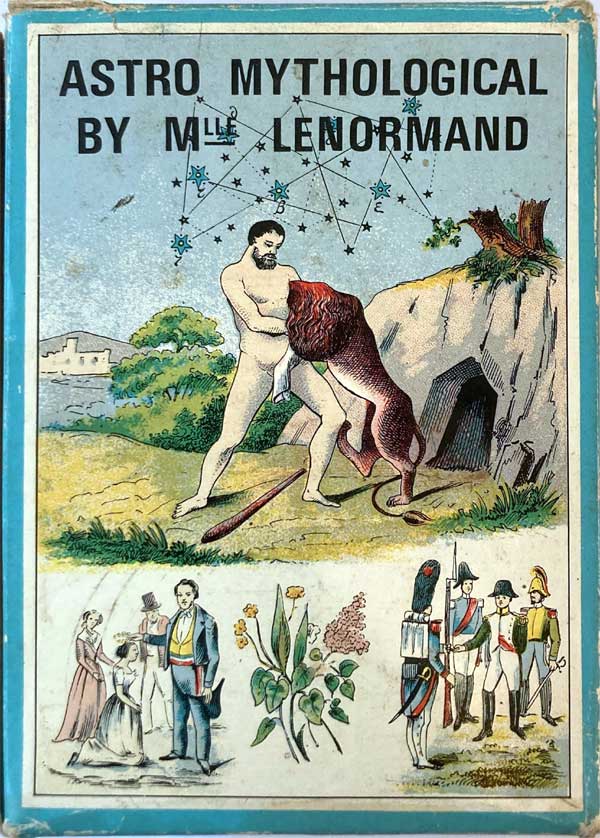
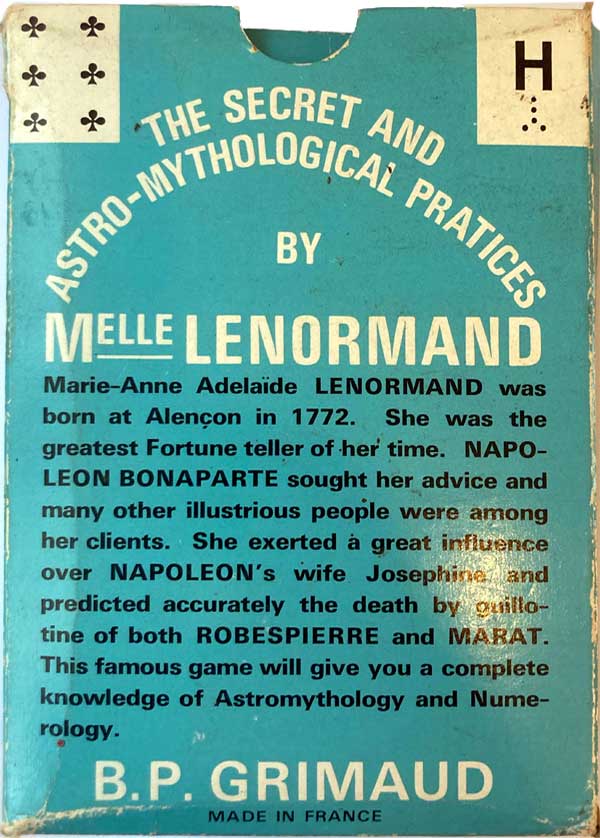
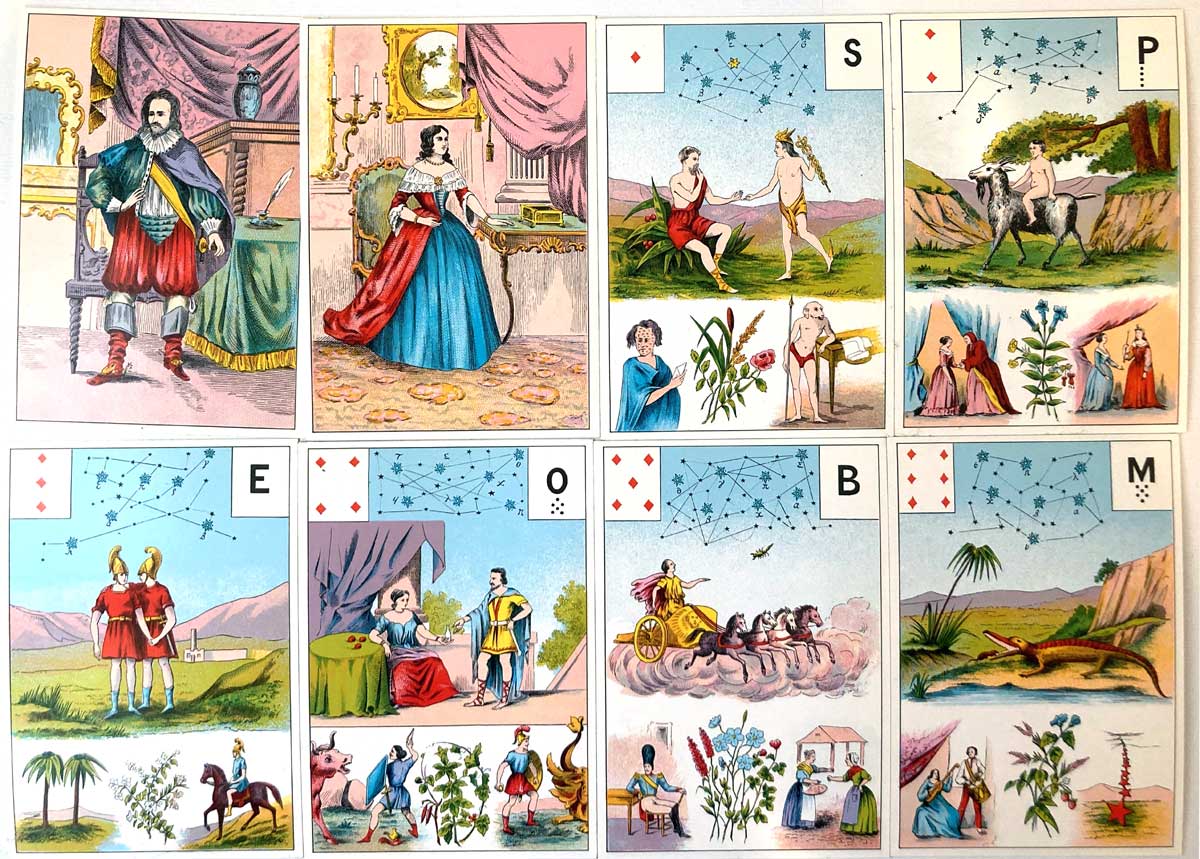
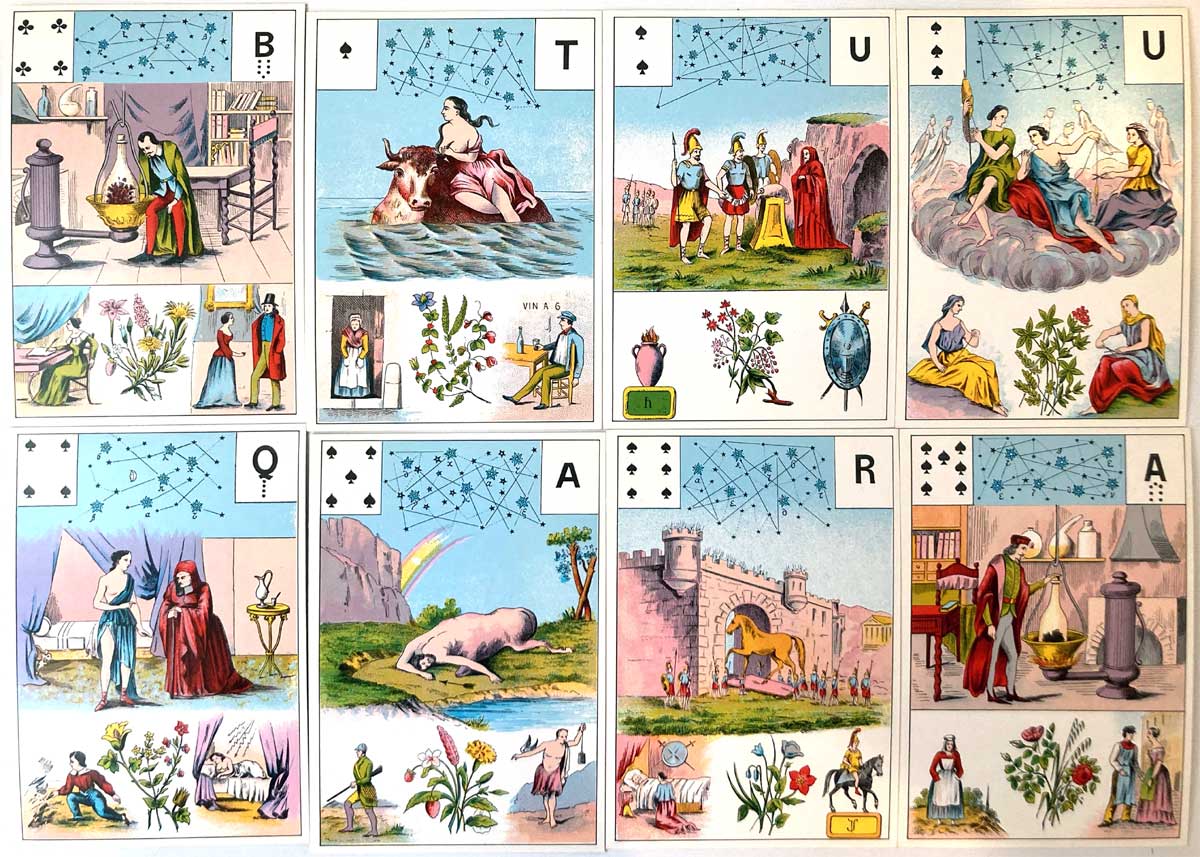
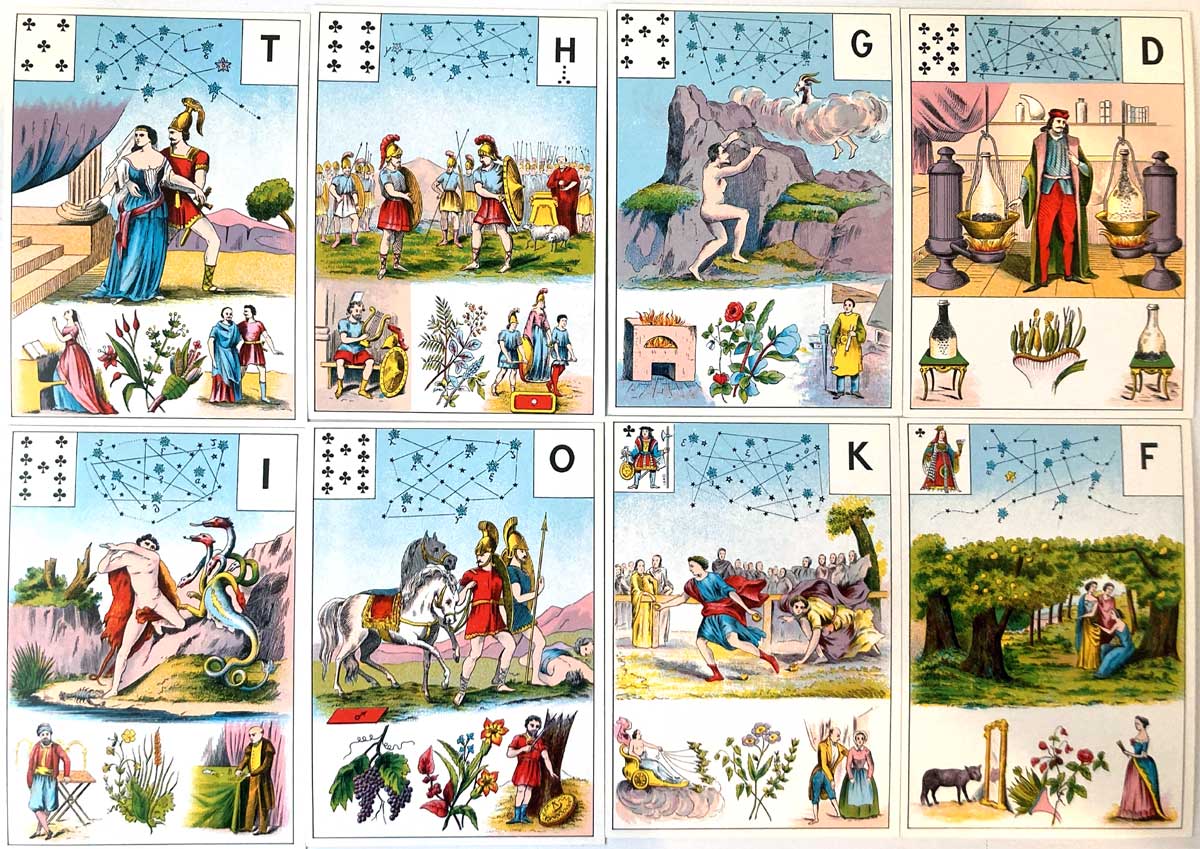
Above: Astro-Mythological published by Grimaud, 1970, copyrighted 1969. Complete set in it's original tuck style box, with 176 page booklet and all 54 cards. Images courtesy Sean Comstock.
Madame Lenormand is a fascinating historical figure who influenced card reading as we know it. Coinciding with a rise in popular occultism, Madame Lenormand was fascinated by many things: Palmistry, Numerology, Astrology, Alchemy and Greek Mythology. At the same time, literary salons and secret societies flourished, blending poetry, mysticism and politics. Artists and occultists exchanged ideas leading to hybrid symbolism.
The Fortune Teller
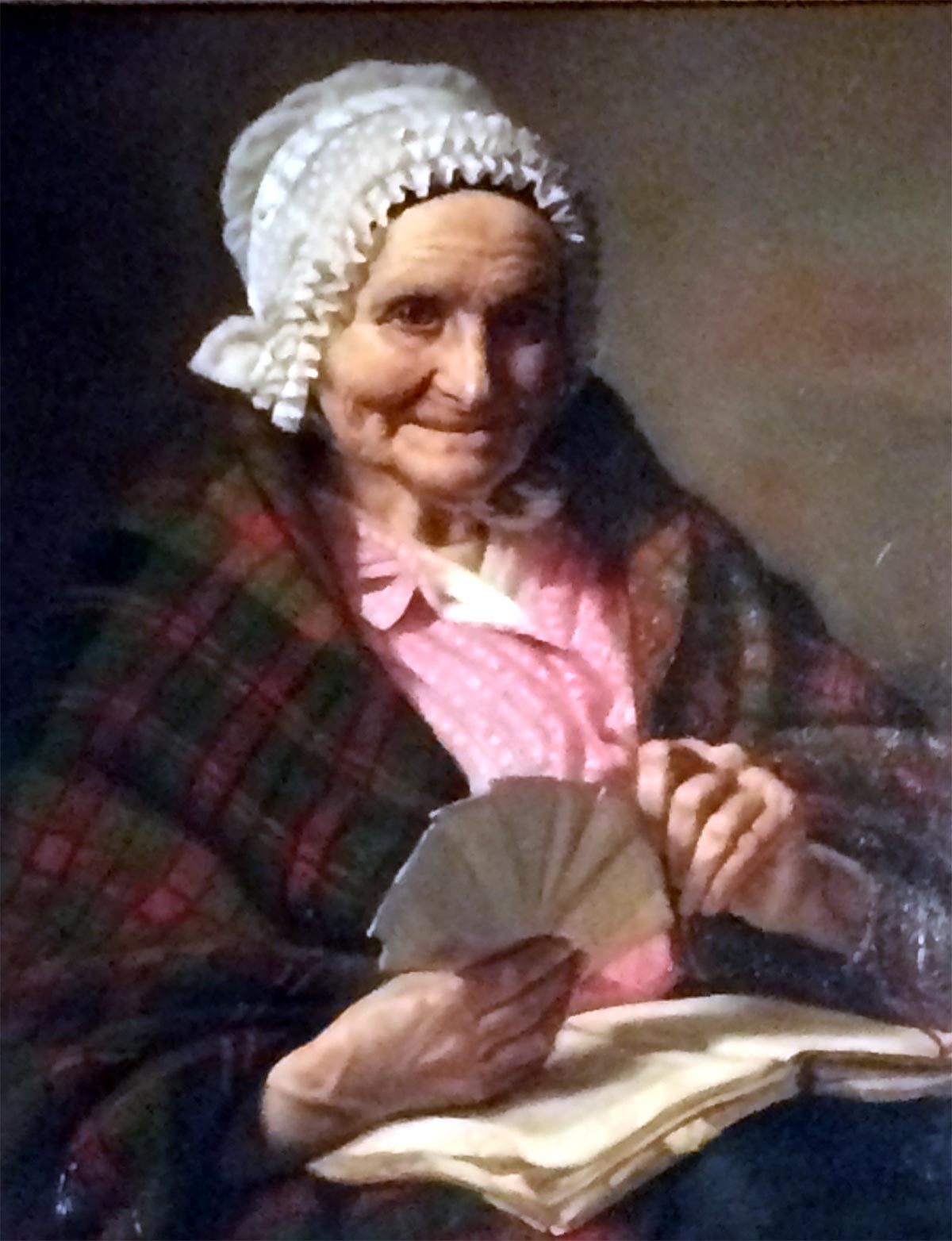
Above: The Fortune Teller by August Allebé, 1859. The traditional practice of card-reading involved using a so-called book of fate. Cards are drawn at random and their meaning is looked up in the book so that predictions are given using the text. Nationaal Museum van de Speelkaart, Turnhout.

By Simon Wintle
Spain • Member since February 01, 1996
I am the founder of The World of Playing Cards (est. 1996), a website dedicated to the history, artistry and cultural significance of playing cards and tarot. Over the years I have researched various areas of the subject, acquired and traded collections and contributed as a committee member of the IPCS and graphics editor of The Playing-Card journal. Having lived in Chile, England, Wales, and now Spain, these experiences have shaped my work and passion for playing cards. Amongst my achievements is producing a limited-edition replica of a 17th-century English pack using woodblocks and stencils—a labour of love. Today, the World of Playing Cards is a global collaborative project, with my son Adam serving as the technical driving force behind its development. His innovative efforts have helped shape the site into the thriving hub it is today. You are warmly invited to become a contributor and share your enthusiasm.

Activity for Grand Jeu Lenormand
Sign in to comment or save this article.

Related Articles
Pierre Cardin
Geometric designs in a futurist style by Jean Garçon for the couturier Pierre Cardin.
Cartes Oracle or La Voyante
Comparing three editions of a French cartomantic pack by Héron.
Grand jeu de la main
"Chiromancie Nouvelle" by the reputed pupil of Mlle Lenormand.
Le jeu de cartes des Croisades
Venture into the Crusades in the style of medieval manuscript art.
Oracle Rock
Cartomantic set depicting rock and pop stars, designed by La Rata, with a book by Virginie Despentes...
Zodiaque
“Les Signes du Zodiaque” playing cards designed by Youdi des Aubrys.
Jeu de Cartomancie pour l’amusement des Dames
Early French Cartomancy deck "for the amusement of Ladies" but also referred to as "Jeu divinatoire ...
Cartomancy, Oracle and Divination Cards
Playing cards are used for fortune-telling - turning another card illumines the moment and a new per...
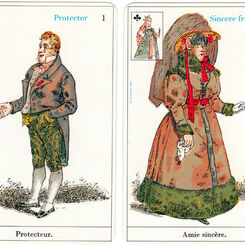
La Sibylle des Salons
La Sibylle des Salons facsimile of 19th century deck published by J M Simon, 1979.
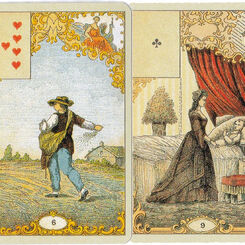
Le Destin Antique
Le Jeu du Destin Antique, originally published by Grimaud in XIX c., republished many times since......
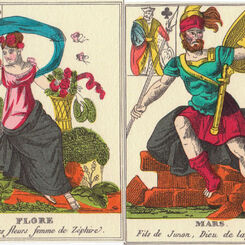
Jeu Mythologique
“Jeu Mythologique” facsimile 18th century pack by J M Simon, 1983.
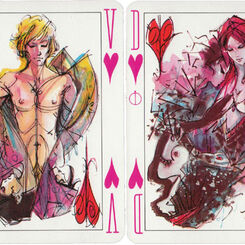
Playtex
Playtex - le jeu de la beauté et du destin, Grimaud, 1971.
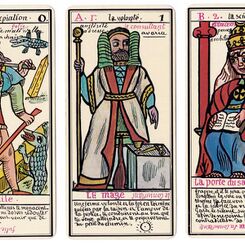
Le Grand Tarot Belline
“Le Grand Tarot Belline” after drawings by Edmond Billaudot (1829-1881).

Cartomancia Astrología Quirologia Tests
A set of rather unusual and non-standard cartomancy cards from Argentina with religious connotations...
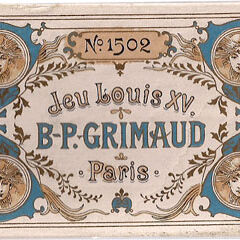
Jeu Louis XV
B.P. Grimaud of Paris issued this very ornate costume deck called “Jeu Louis XV No.1502” in c.1895. ...
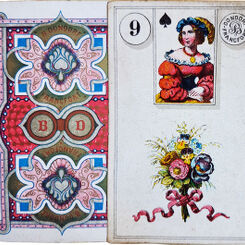
Wahrsage-Karten
In this version an explanatory verse is printed at the top of each card.
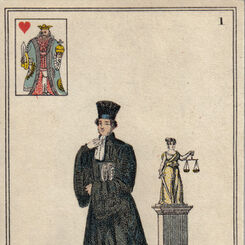
Livre du Destin
Livre du Destin / The Book of Fate, c.1900, entire deck (32 cards)
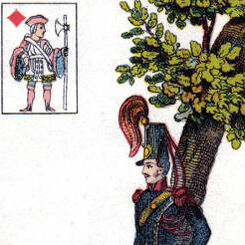
Livre du Destin
Livre du Destin or Book of Fate, printed by B.P.Grimaud, Paris, c.1900.

French Playing Cards
Some of the oldest cards still in existence come from France. During the 16th and 17th centuries Fra...
Significado de los Naipes Españoles
Cartomantic meanings of Spanish playing cards by Benita the Witch (XVI century), published by Chocol...
Most Popular
Our top articles from the past 60 days


Mia Owen
19 November 2025, 09:47SavedSaved this article to Mia Owen's Collection
Dri Coñde
08 May 2026, 03:06SavedSaved this article to Dri Coñde's Collection
Jordan Hauser
21 June 2026, 01:59SavedSaved this article to Lenormand