


Studydrive Student Cards
Minimalist playing cards from the “Ace your studies” Studydrive learning campaign.
This 32-card French-suited deck (7 through Ace, without Jokers) was produced by the Cologne based student learning platform Studydrive as part of its promotional campaign “Ace your studies”. The decks were distributed as giveaways at partner universities in Germany and Austria.
The design was created in-house by graphic designer Nicoletta Lacour, featuring a minimalist aesthetic expressed through modernist abstract design principles. In addition to the abstract forms, she assigned distinctive colours to the suits: Hearts in red, clubs in green, spades in blue and diamonds in neon yellow. Printing was carried out by the promotional goods manufacturer Promostore GmbH. The cards are an example of contemporary graphic design.
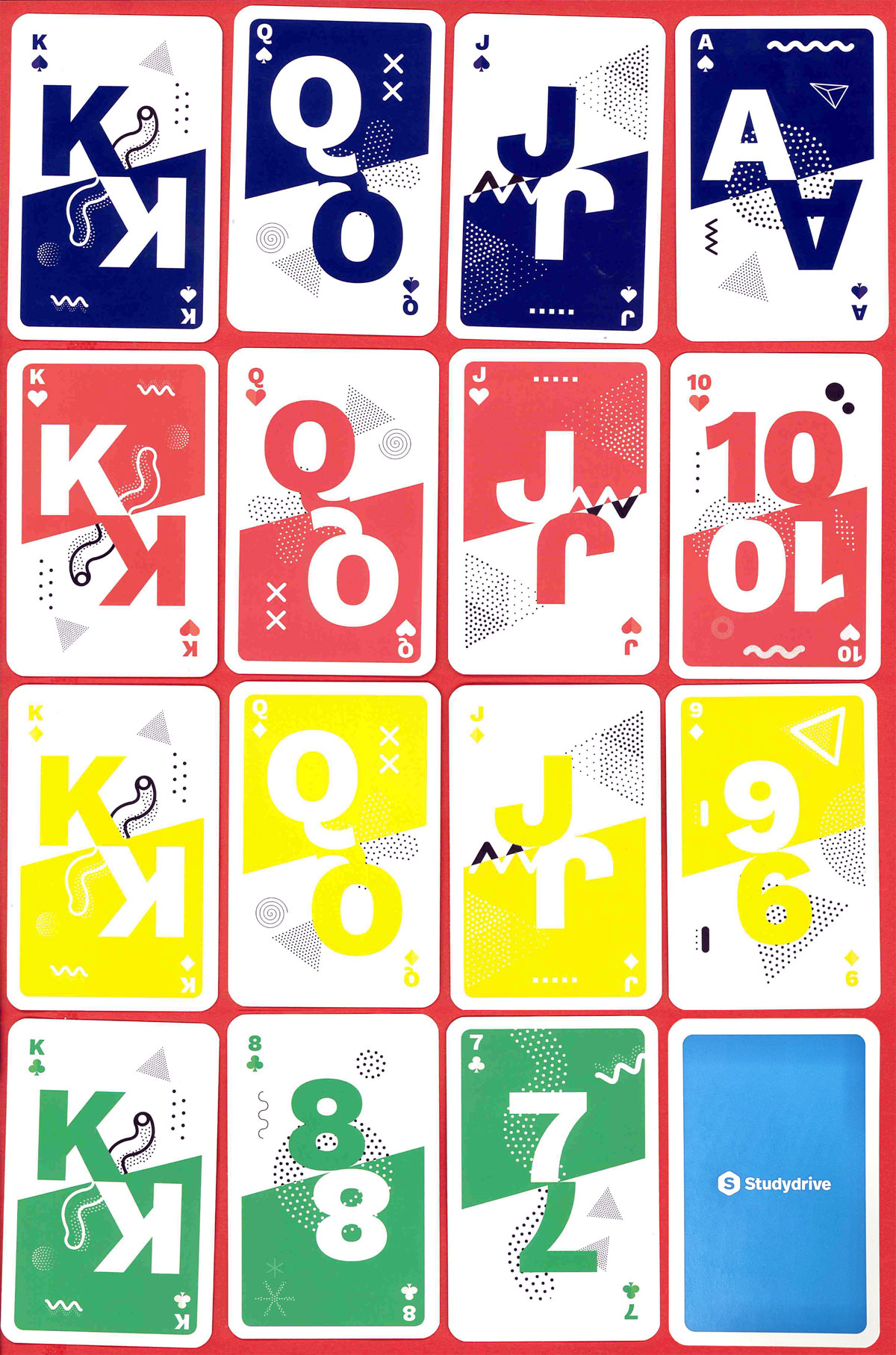
Above: Studydrive Student Cards designed by Nicoletta Lacour and printed by Promostore GmbH, September 2020, 32 cards, no jokers.
Alongside the campaign, Studydrive published game instructions on its website, including the drinking game Kings Cup and several other unconventional games. Studydrive Card Games►
Author’s Note: As a student, I received this deck myself as part of Studydrive’s promotional campaign. Curious about its background, I contacted Studydrive via e-mail, and they kindly provided me with further information about the design and production.

By Konrad Hämmerle
Austria • Member since December 04, 2024
Konrad Hämmerle is a student and card artist from Vorarlberg, the westernmost region of Austria. He founded his own company with his deck Vorarlberger Büschel: a unique reinterpretation of traditional Jass cards. His deck showcases Vorarlberg’s rich cultural heritage, featuring detailed illustrations of traditional clothing, mythical creatures, and real historical figures from the region. Through this project, Konrad has become a true card enthusiast, particularly fascinated by playing cards that represent countries, regions, or historical themes. His passion lies in blending storytelling with design to keep cultural heritage and identity alive in the world of playing cards.

Activity for Studydrive Student Cards
Sign in to comment or save this article.

Related Articles
Hallmark
A folksy take on playing card courts.
Learning to play Cribbage
I learned to pay cribbage when I was very young, aged around six or seven.
Feine Quitli Karten
A living fossil - typographic minimalism from Vienna, c.1900.
Musical playing cards
German song texts for domestic music-making on attractive early 19th-century playing cards.
Ampelmann Poker
Berlin’s little traffic light man, Ampelmännchen, dressed up ready for card play.
OH Cards
A Series of Metaphoric Cards to unlock your story, conceived and designed by Ely Raman
German Travel Cards
A travel-themed educational deck helping American tourists visiting Germany.
escART, ec-ART, SKAT
Fully illustrated pack printed from etchings by Johannes Vennekamp.
Postgeschichte
A celebration of different postal systems in Germany from 1630 to 1850, with designs by Volker Hartm...
Trappola pack by Joseph Fetscher
Trappola pack published by Joseph Fetscher, Graz, 1739.
Reo Rex Luxus bild
Celluloid playing cards made in Vienna
So Fängt Es An
“So Fängt Es An” beautifully illustrated by M. Neugebauer, published by Helingsche Verlagsanstalt.
Bedeutende Erfindungen im Alltag
‘Significant Inventions in Everyday Life’ quartet game published by Verlag für Lehrmittel, Pössneck,...
Deutsche Geschichte
German History Quartet published by Otto Maier Verlag Ravensburg, c.1930-35.
Klipp Klapp Karten
“Klipp Klapp Karten” printed by KZWP-Trefl (Poland) for Kindermuseum Oelde (Germany) in 2004
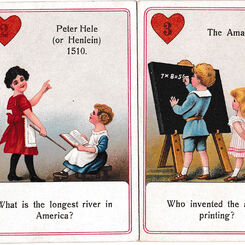
Who Knows?
Who Knows? game of questions and answers produced by Adolf Sala Games, Berlin, c.1900.
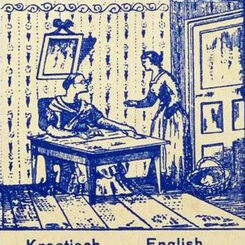
Austrian Cartomancy Cards
During the 19th century a system of fortune telling arose in Europe using unnumbered, pictorial card...
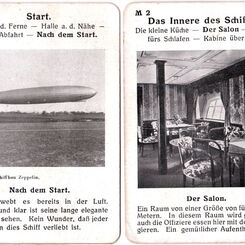
Graf Zeppelin
A card game commemorating the first round the world flight by the Graf Zeppelin, published by J.W. S...
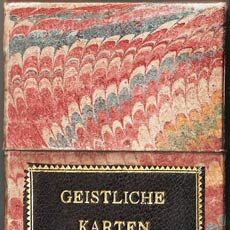
Geistliche Karten
Geistliche Karten, Augsburg, 1718. Each card carries a text in Gothic typeface giving advice regardi...
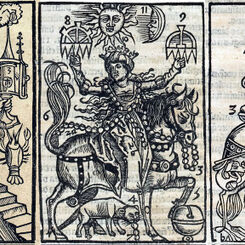
Logica Memorativa
Logica Memorativa playing cards by Thomas Murner, Brussels, 1507.
Most Popular
Our top articles from the past 60 days


