


Trappola pack by Joseph Fetscher
Trappola pack published by Joseph Fetscher, Graz, 1739.
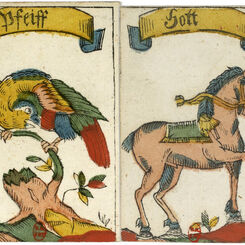
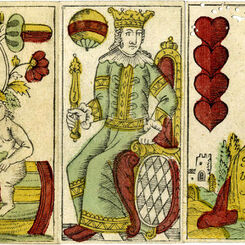
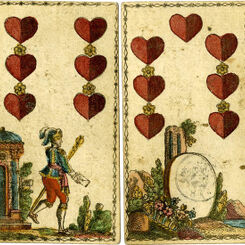
A full-figure Italian-suited Trappola pack published by Joseph Fetscher in Graz, 1739. Trappola is a trick-taking game which had its origins in Venice (Italy) during the 16th century from where it travelled to central Europe, but thereafter it declined in popularity and today is more or less obsolete. The last Trappola pack to be manufactured was made in Prague in 1944. The cards are elongated and run: ace (high), king, knight, jack, 2 and 7-10: a shortened pack of 36 cards which omits the 3 to 6 from each suit.
The 2 of swords has the inscription “1739 Joseph Fetscher Burger in Graz" with a coat of arms of Graz; the king of swords has the inscription “I.S.T.F. 1741"; the king of cups “In Stat Gratz" and the ace of clubs reads “In Graz bey Joseph Fetscher Burger". The cavalier of coins has a small dog running alongside
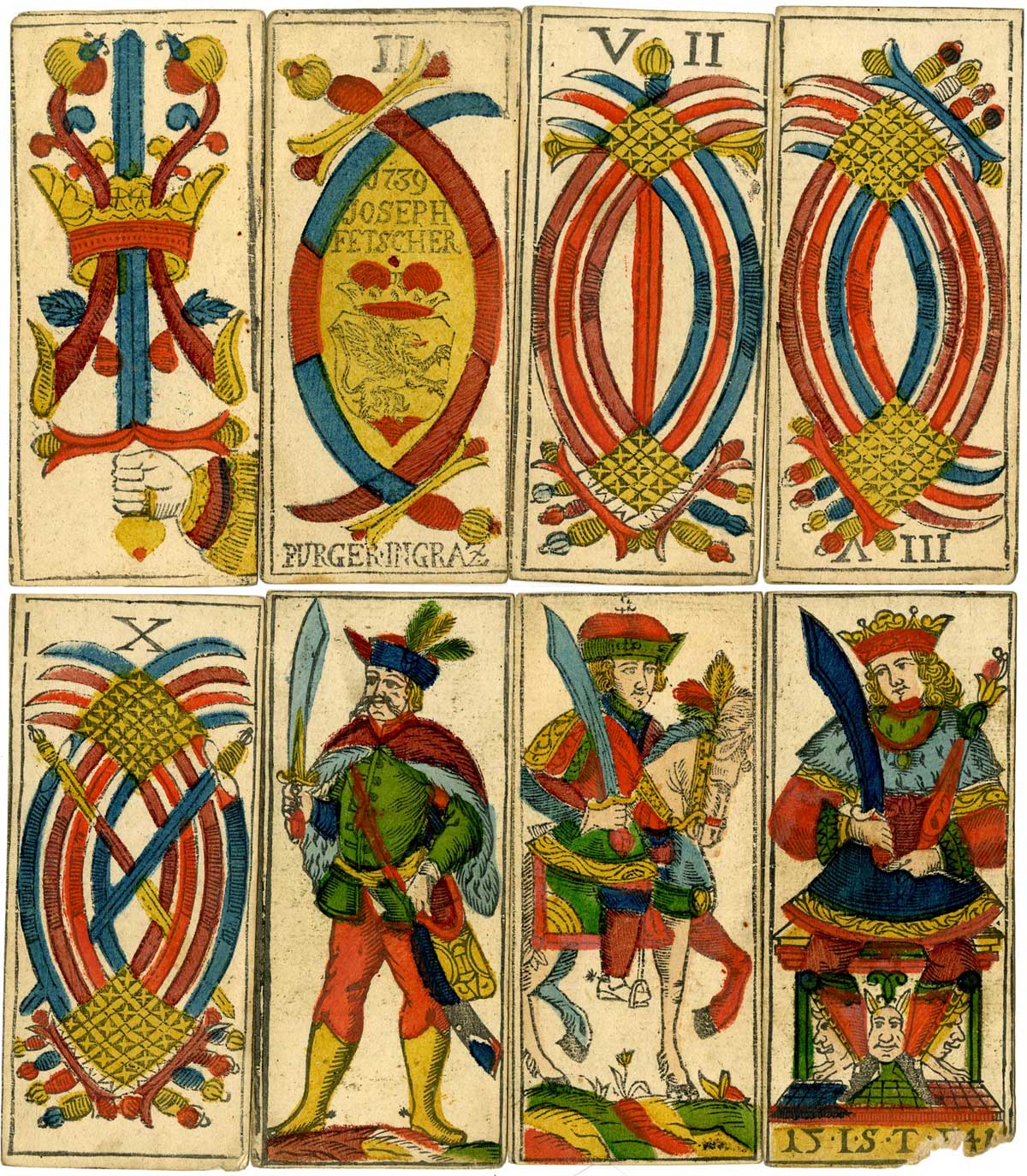
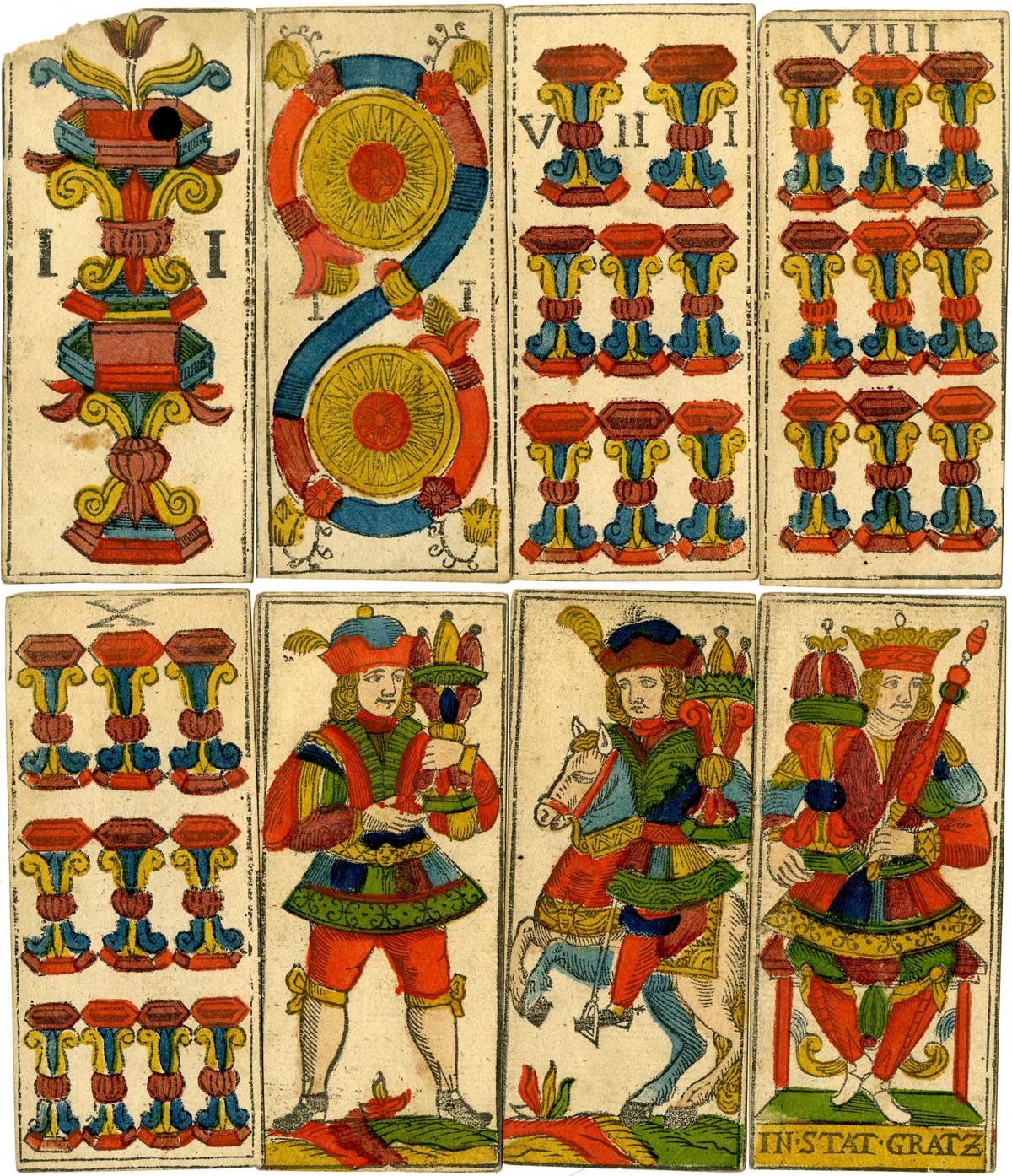
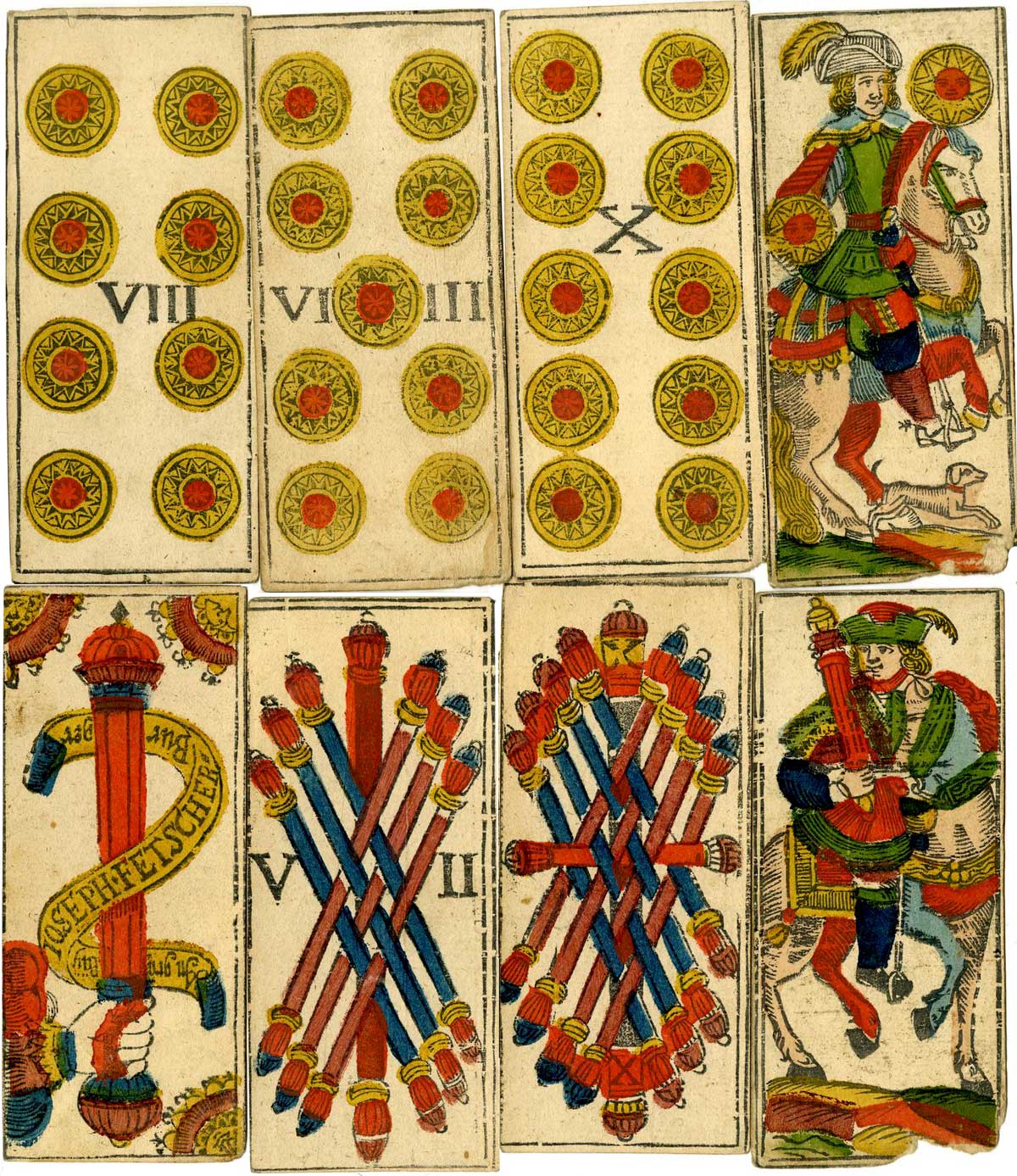
Above: cards from a 36-card Trappola deck published by Joseph Fetscher, Graz, 1739. Hand-coloured woodcut, backs printed with a black diaper. © The Trustees of the British Museum • Museum number 1896,0501.337►
References
O’Donoghue, Freeman M: Catalogue of the collection of playing cards bequeathed by Lady Charlotte Schreiber (German 303), Trustees of the British Museum, London, 1901 [digital version here]

By Simon Wintle
Spain • Member since February 01, 1996
I am the founder of The World of Playing Cards (est. 1996), a website dedicated to the history, artistry and cultural significance of playing cards and tarot. Over the years I have researched various areas of the subject, acquired and traded collections and contributed as a committee member of the IPCS and graphics editor of The Playing-Card journal. Having lived in Chile, England, Wales, and now Spain, these experiences have shaped my work and passion for playing cards. Amongst my achievements is producing a limited-edition replica of a 17th-century English pack using woodblocks and stencils—a labour of love. Today, the World of Playing Cards is a global collaborative project, with my son Adam serving as the technical driving force behind its development. His innovative efforts have helped shape the site into the thriving hub it is today. You are warmly invited to become a contributor and share your enthusiasm.

Activity for Trappola pack by Joseph Fetscher
Sign in to comment or save this article.

Related Articles
Saga aka King Arthur
Capturing the spirit of medieval legend on playing cards.
Warrior from Cattaro
A typology of Austrian Tarock documented through the evolution of one of its motifs.
Ethnological Tarot by Joseph Fetscher
Joseph Fetscher's inventive, ethnographic tarot from Munich c.1820.
Studydrive Student Cards
Minimalist playing cards from the “Ace your studies” Studydrive learning campaign.
Animal Tarot by Joseph Fetscher
French-suited Natural History Tarot deck by Joseph Fetscher, Munich, c.1820.
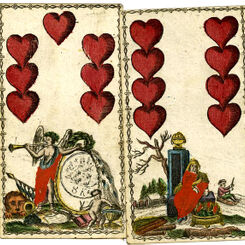
Heathen Wars
German-suited ‘Heathen War’ playing cards published by Joseph Fetscher, Munich, c.1820.
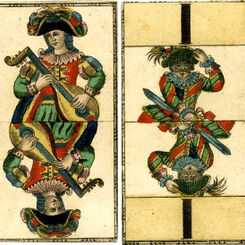
Mythological and Allegorical tarot
Mythological and Allegorical tarot produced by Peter Paul Fetscher junior, Munich.
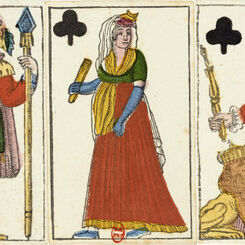
Fantasy deck by Joseph Fetscher
Fantasy French-suited pack produced by Joseph Fetscher, Munich, c.1825.
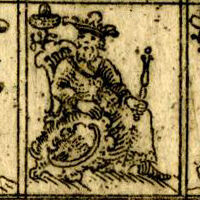
Miniature playing cards by Joseph Fetscher
Uncut sheet of miniature Bavarian playing cards by Joseph Fetscher.
Vogelspiel
Vogelspiel, a German card game known as the “cuckoo game” also known as “Gnau”.
Bavaria pattern
Classic German-suited Bavarian pattern by Joseph Fetscher, Munich, early 19th century.
Historical playing cards by Joseph Fetscher
Historical playing cards by Joseph Fetscher, Munich, c.1820.
Reo Rex Luxus bild
Celluloid playing cards made in Vienna
Notgeld - Emergen¢y Money
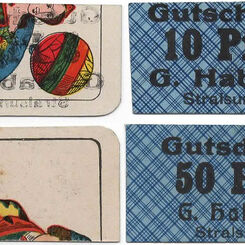
Notgeld - Emergency Money - was in rare cases issued on playing cards.
Austrian Cartomancy Cards
During the 19th century a system of fortune telling arose in Europe using unnumbered, pictorial card...
Most Popular
Our top articles from the past 60 days


