


Divine Art
Divine Art Playing Cards by Sunish Chabba & Guru Playing Card Company, 2016.
Divine Art Playing Cards is a limited edition produced by Sunish Chabba & Guru Playing Card Company, 2016, inspired by Hindu mythology. Because of the cultural ties to India, the deck aims to keep alive the visions of traditional art forms and will appeal to a wide range of tastes. Showcasing precision and technically exquisite detail, design credits are also due to Anaya Purandare & Anjali D'Souza.
The Project was relaunched in a White Gold edition on kickstarter►
The Court Cards
The basis of the Indian world view is of Cosmic unity underlying the physical diversity of the world, through which man transcends himself. Since almost every Indian folk art form is based on Hindu mythology, the jacks, queens and kings of each suit depict various Gods and Goddesses as well as their mounts (vahanas/vehicles). The coherent colour palette also has an underlying symbolic meaning.
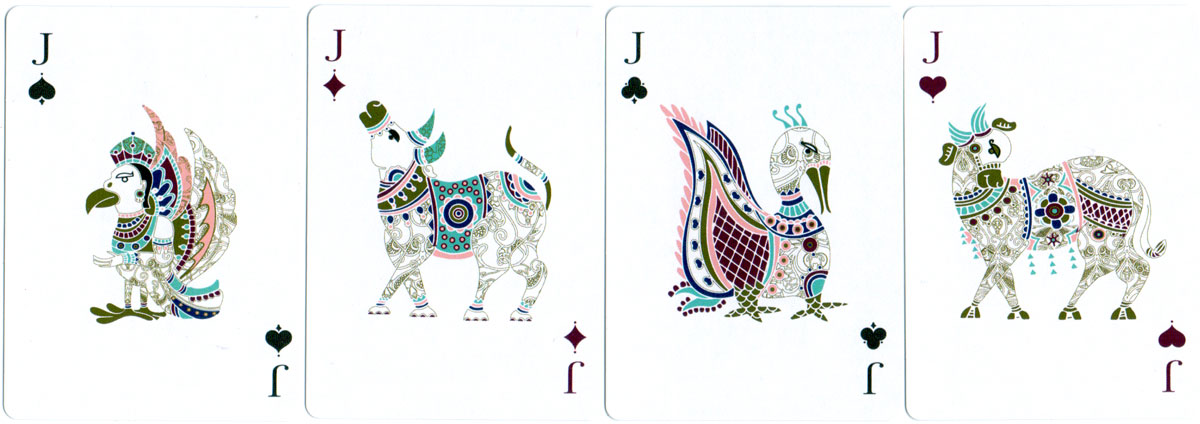
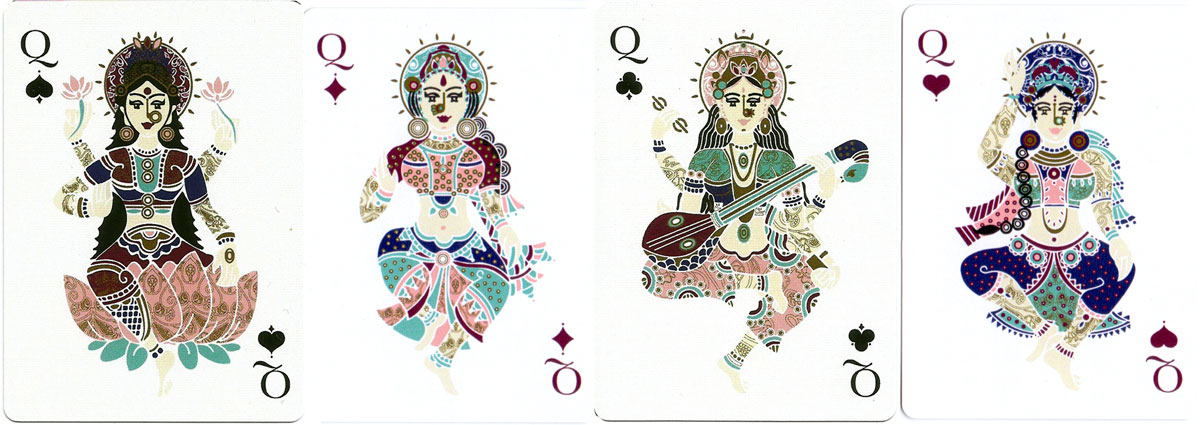
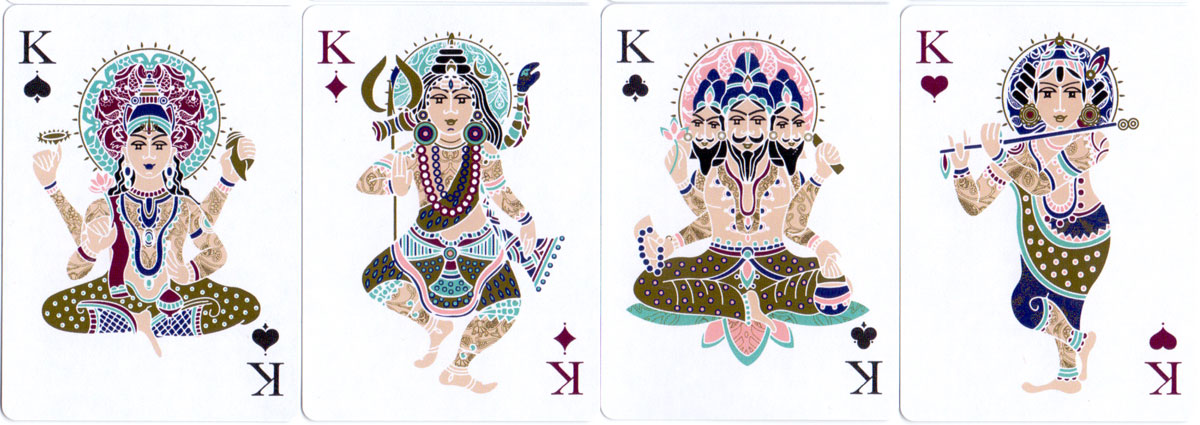
Above: the court cards have the quality of a block print, which is commonly known to leave white spaces between different parts of a pattern or illustration. Visnu, Shiva, Brahma, Krishna... the deities depicted on the court cards, along with their respective consorts, evoke man’s relatedness to the cosmos.
The Four Aces
Four Custom Aces also incorporate symbolism from Indian mythology and follow the same sequence as the courts. Concentric lines define volume and create a rhythmic unity, and the underlying geometrical forms generate a pleasing multi-dimensional effect.
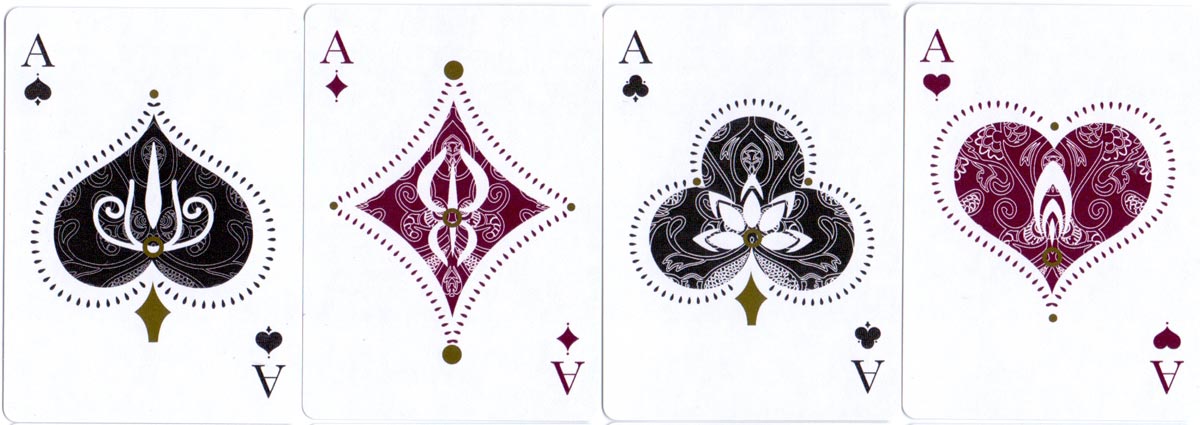
Above: the ace of spades represents Vishnu's forehead adornment; the ace of diamonds is the trident symbol of Lord Shiva; the ace of clubs is the Lotus of Lord Brahma upon which he sits; the ace of hearts is the peacock feather, symbol of Krishna.
The Numeral Cards
The original designs for the number cards include a hint of a hidden mathematical order, giving a universal appeal at the level of archetypes, which completely transcends the usual mundane arrangement of pips. The contrasting pale and dark pip colours are very clear and enhance the legibility of the design.
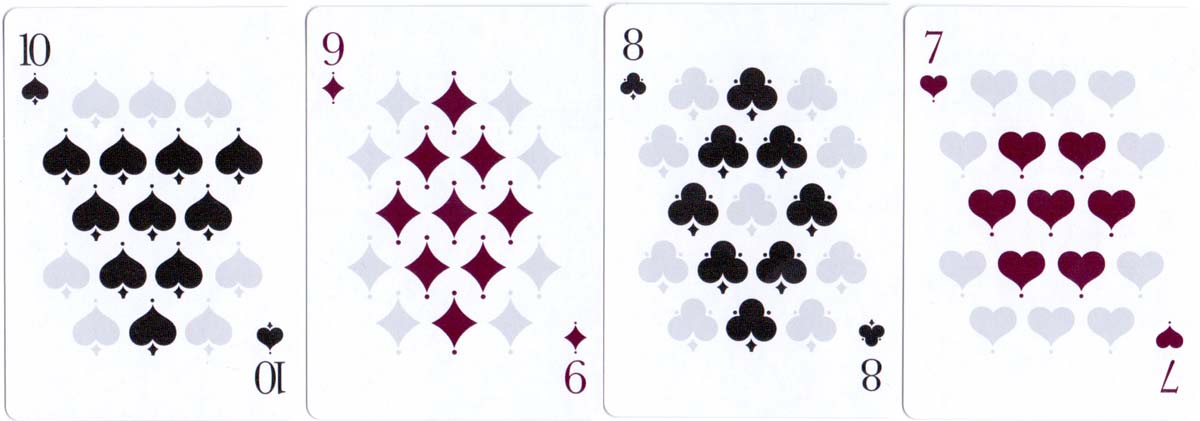
Above: the curved forms and detached elements in the pip motifs are inspired by traditional Indian art. The elementary geometrical forms generate multi-dimensional figures, like patterns of forces, which suggest a hidden mystery.
And Finally...
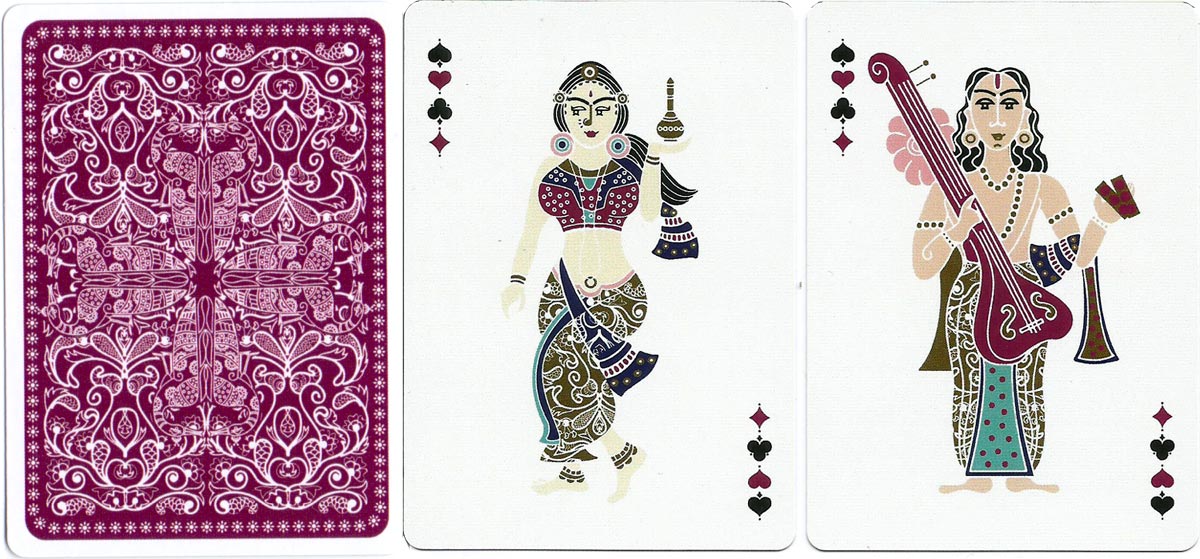
Above: this classic back is inspired by Mehndi/Henna designs. The two tricksters – Mohini (femme fatale, enchantress) and Narada (Vedic sage, traveling musician and storyteller) disobey the normal rules of accepted conventional behaviour and may even use secret knowledge to play tricks. The prototype deck is printed by MPC, Hong Kong. The main production will be done by Expert Playing Card Co if Kickstarter succeeds.
The Project has been relaunched here on kickstarter►

By Simon Wintle
Spain • Member since February 01, 1996
I am the founder of The World of Playing Cards (est. 1996), a website dedicated to the history, artistry and cultural significance of playing cards and tarot. Over the years I have researched various areas of the subject, acquired and traded collections and contributed as a committee member of the IPCS and graphics editor of The Playing-Card journal. Having lived in Chile, England, Wales, and now Spain, these experiences have shaped my work and passion for playing cards. Amongst my achievements is producing a limited-edition replica of a 17th-century English pack using woodblocks and stencils—a labour of love. Today, the World of Playing Cards is a global collaborative project, with my son Adam serving as the technical driving force behind its development. His innovative efforts have helped shape the site into the thriving hub it is today. You are warmly invited to become a contributor and share your enthusiasm.

Activity for Divine Art
Sign in to comment or save this article.

Related Articles
Emoji Playing Card
Emoji suits in a Bicycle pack designed by Randy Butterfield.

The Wildwood Tarot
The Wildwood Tarot replaces the familiar suits and Major Arcana with a woodland world of animals, to...
La Provence
A Piatnik pack drawing on Provençal heraldry and local legend.
Saga aka King Arthur
Capturing the spirit of medieval legend on playing cards.
Allegories and Myths
Semi-transformation playing cards from artist Violeta Monreal.
Nabagunjara Ganjifa
An ancient game from the Puri region of India.
Mythological Zoo
An extraordinary collection of fabulous beasts.

Latvian Mythological Cards ~ Latju Mītoloģiskās Kārtis
A loving and well-researched celebration of Latvian mythology and culture based around the four seas...
Khajuraho playing cards, India
Sacred erotic sculpture from the temple walls captured in a modern souvenir deck.
Calon Arang • Калон Аранг - Бали
Calon Arang, a figure from 12th-century Javanese and Balinese folklore known as a witch skilled in b...
Palekh and Kholui lacquer miniatures
Palekh and Kholui lacquer miniatures.
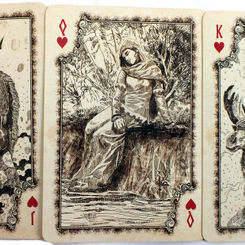
Kalevala
Kalevala playing cards by Sunish Chabba and Ishan Trivedi inspired by ancient Finnish mythology.
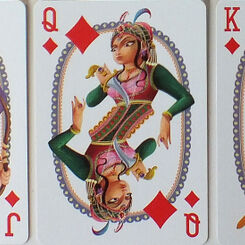
Bharata Playing Cards
Bharata Playing Cards - Series 2, based on Indian folk art, published by Sunish Chabba, 2018.
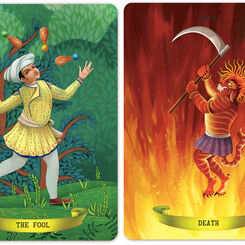
Bharata Major Arcana Tarot
Bharata Major Arcana Tarot inspired by Indian art forms by Ishan Trivedi & Sunish Chabba, 2018.
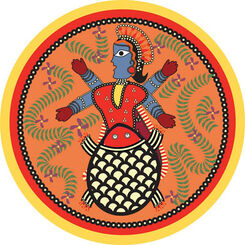
Guru Ganjifa
Sunish Chabba is working on an initiative to revive traditional Ganjifa, the card game most popular ...
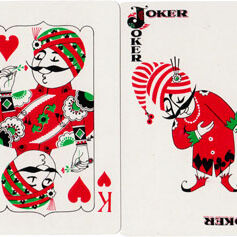
Air India
‘Air India’ playing cards, made in India.
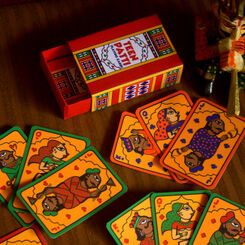
Teen Patti Playing Cards
Anjali DSouza, an illustrator from Chennai, India has designed a pack of cards using Indian truck ar...
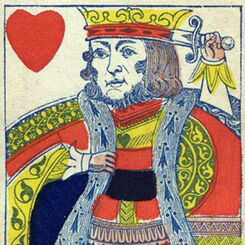
Suicide King
The King of Hearts, holding a sword behind his head, is sometimes nicknamed the “Suicide King”. He c...
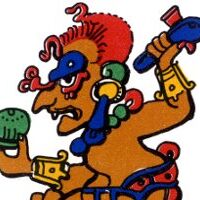
Mayan Cards
Mayan Playing Cards from Guatemala / Baraja Maya / containing illustrations of archaeology, art, fol...
The History of Playing Cards
Playing cards appear in European records in the late 14th century, but their earlier history lies fu...
Most Popular
Our top articles from the past 60 days


