


Jeu de Cartomancie pour l’amusement des Dames
Early French Cartomancy deck "for the amusement of Ladies" but also referred to as "Jeu divinatoire révolutionnaire", 1788.
This early French cartomancy deck was published in 1788, and contains 66 cards with a variety of everyday figures, domestic scenes, as well as mythological figures. The titles of the cards are inscribed in brown ink. Although the set is described as "Cartomancy game for the amusement of Ladies", it is more or less contemporary with Antoine Court de Gébelin’s claims for the Egyptian origins of Tarot (1781) and also Jean-Baptiste Alliette’s book about tarot divination (1770) and his series of tarot decks for that purpose, which aroused more interest in these topics. The repertoire of imagery can be traced back to a blend of allegories and symbols from various cultures and historical periods, which were familiar to people of the time and served for self-reflection and prophecy. Cartomancy was evolving into a new form of parlour entertainment, which progressed into Mlle. Lenormand decks of the 19th century, with which people began to enquire about their destinies.
Almost 250 years later, today's vast selection of cartomancy, oracle and tarot decks offer countless new creative ways to explore your identity and see what your luck might be in the future.
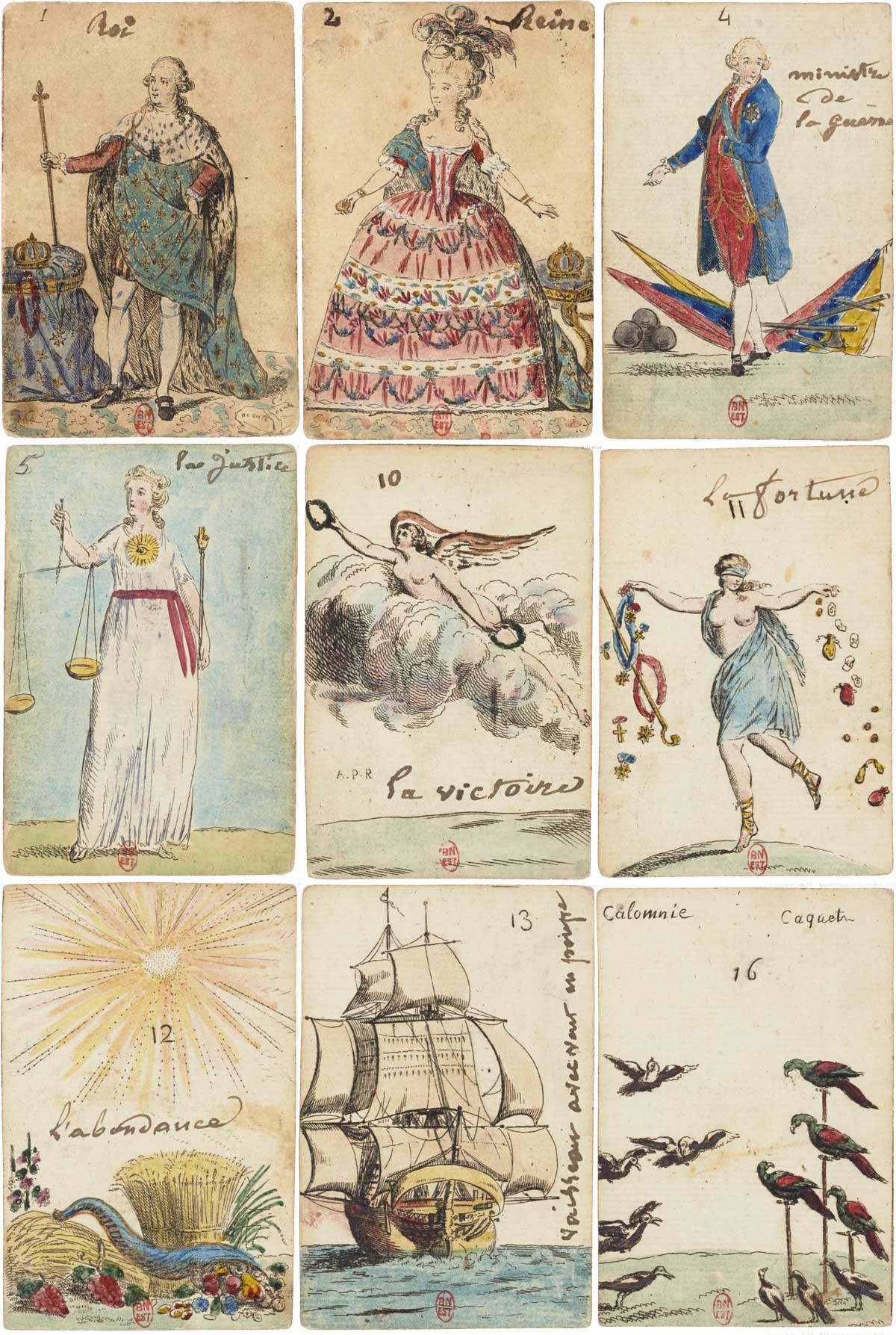
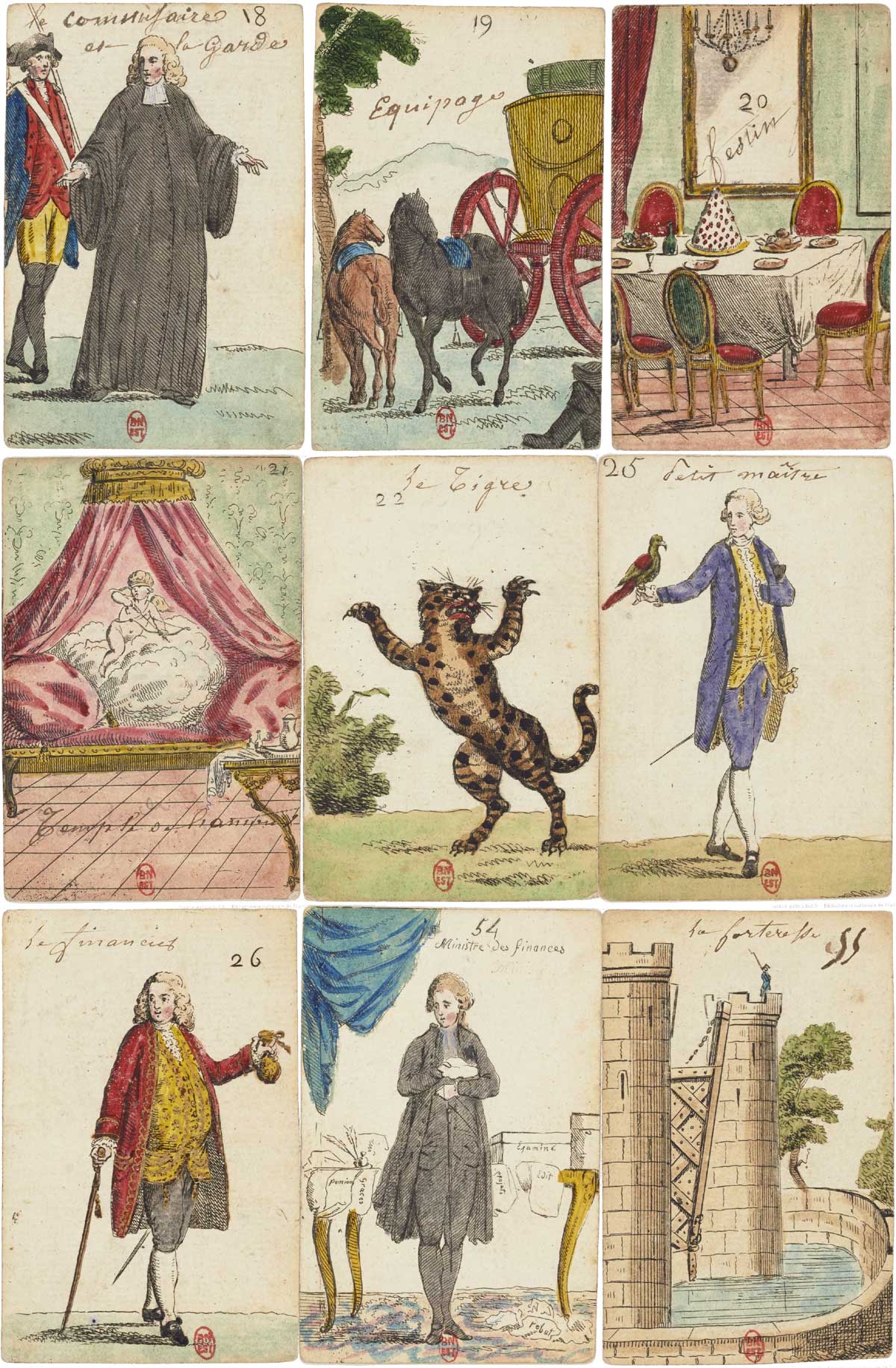
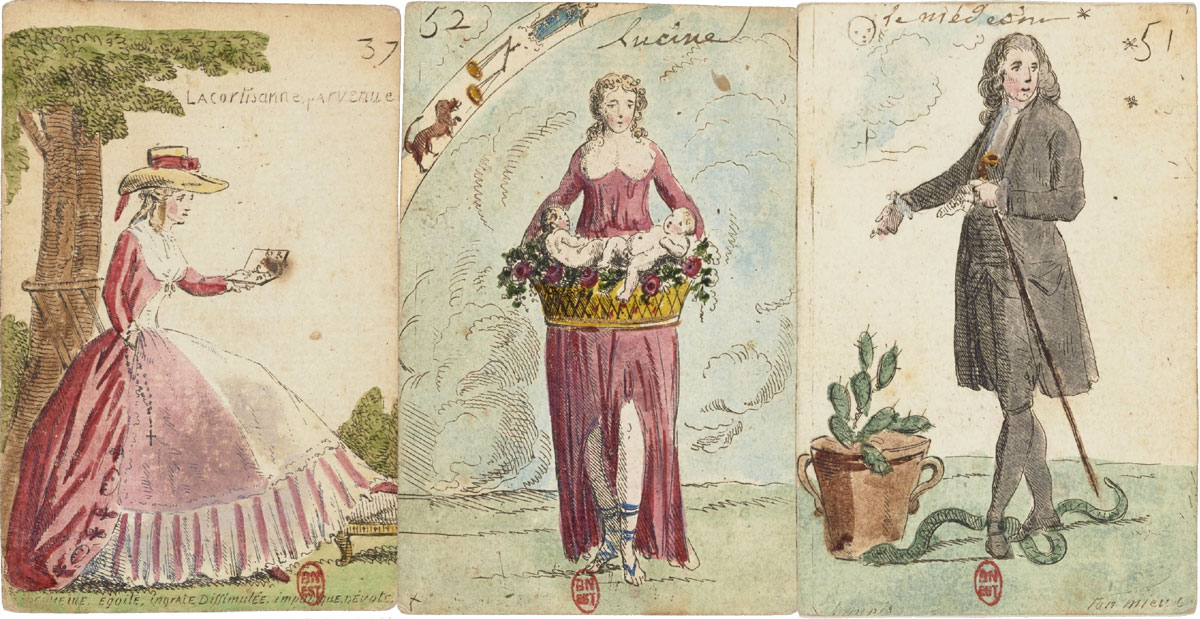
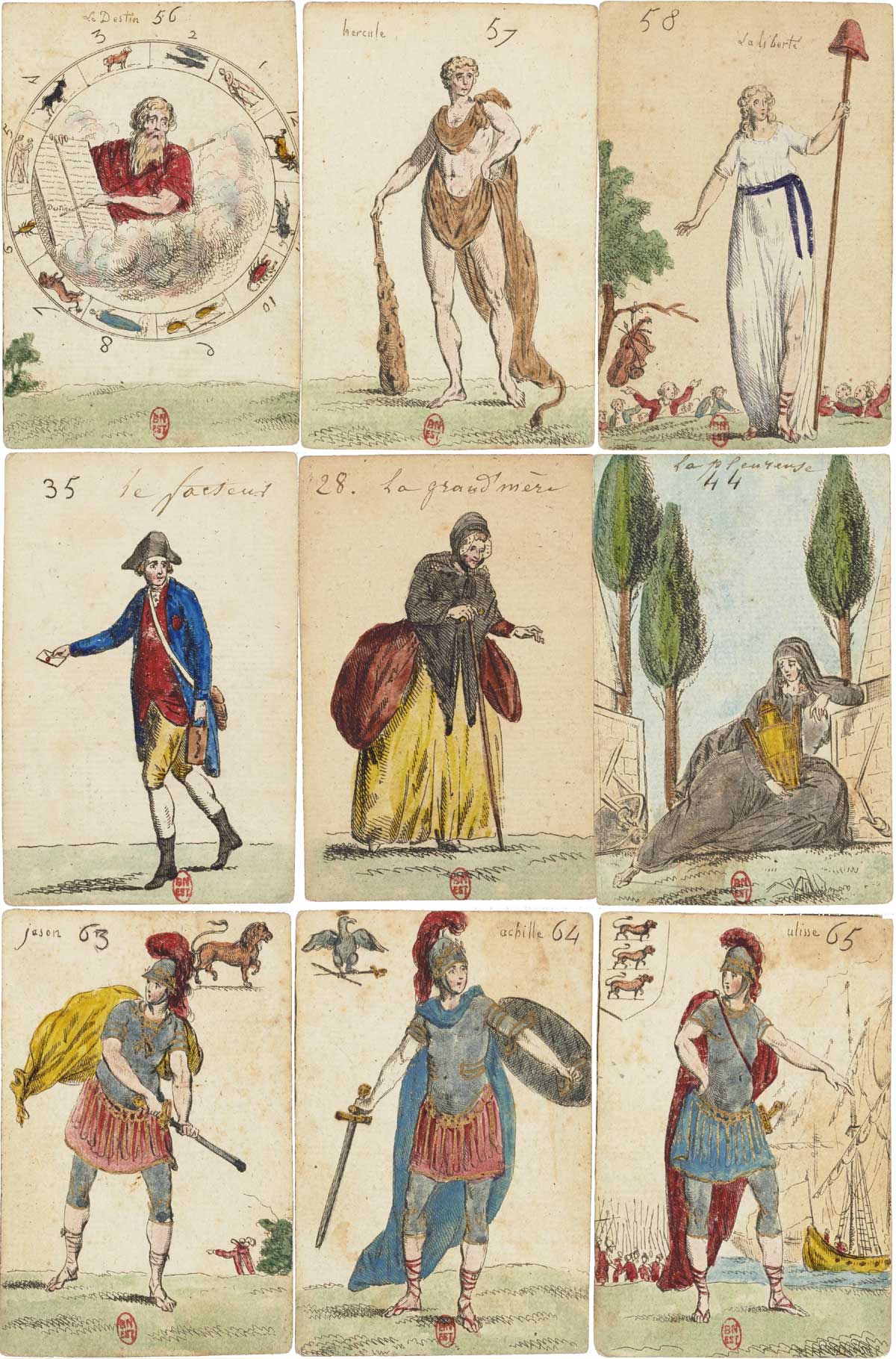
Above: cards from early French Cartomancy deck titled “Jeu de Cartomancie pour l'amusement des Dames" (also referred to as Jeu divinatoire révolutionnaire") published by M.Desforges, rue de Bourbon – Villeneuve, 1788. Total 66 cards: intaglio engraving, hand-coloured; 8.8 x 5.9 cm. White backs. The titles of the cards are mostly inscribed in brown ink but in more than one style of handwriting. The publication of the game was announced in the Gazette de France, September 30, 1788. Source gallica.bnf.fr / BnF
References
• Bibliothèque nationale de France Jeu de Cartomancie pour l'amusement des Dames►
• Jean-Baptiste Alliette, “Etteilla, ou Manière de se recréer avec un jeu de cartes”, Amsterdam, 1770
• Antoine Court de Gébelin, “Le Monde primitif analysé et comparé avec le monde moderne”, Paris, 1777-1781.

By Simon Wintle
Spain • Member since February 01, 1996
I am the founder of The World of Playing Cards (est. 1996), a website dedicated to the history, artistry and cultural significance of playing cards and tarot. Over the years I have researched various areas of the subject, acquired and traded collections and contributed as a committee member of the IPCS and graphics editor of The Playing-Card journal. Having lived in Chile, England, Wales, and now Spain, these experiences have shaped my work and passion for playing cards. Amongst my achievements is producing a limited-edition replica of a 17th-century English pack using woodblocks and stencils—a labour of love. Today, the World of Playing Cards is a global collaborative project, with my son Adam serving as the technical driving force behind its development. His innovative efforts have helped shape the site into the thriving hub it is today. You are warmly invited to become a contributor and share your enthusiasm.

Activity for Jeu de Cartomancie pour l’amusement des Dames
Sign in to comment or save this article.

Related Articles
Buffy the Vampire Slayer Tarot
A Buffy the Vampire Slayer tarot pack that replaces Swords with scythes and Wands with stakes.
Cartes Oracle or La Voyante
Comparing three editions of a French cartomantic pack by Héron.
History of Tarot and Playing Cards: Timeline & Origins
An alternative history of tarot and playing cards – from Mamluk Egypt to the invention of tarot in R...
David’s fortune-telling cards
Entertaining and easy-to-use fortune-telling cards published by David, Paris, c.1895.
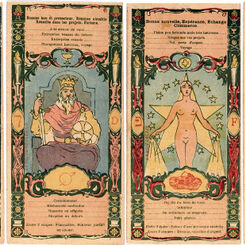
Tarot hiéroglyphique égyptien
The design of the cards draws inspiration from various religious and philosophical traditions merged...
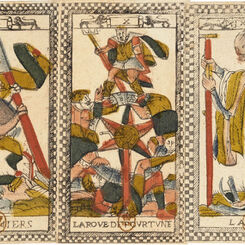
The Parisian Tarot
The “Parisian Tarot”, early 1600s, with imagery and design synthesizing several influences.
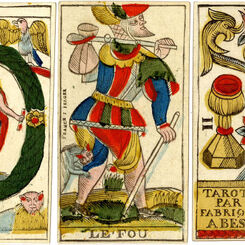
Besançon Tarot by Jacob Jerger
Besançon tarot published by Jacob Jerger, 18th century.
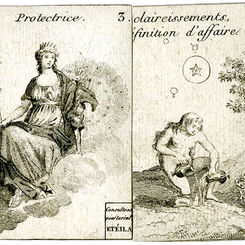
Nouvel Eteila ou le petit nécromancien
“Nouvel Eteila ou le petit nécromancien” cartomancy cards from France, late 18th century.
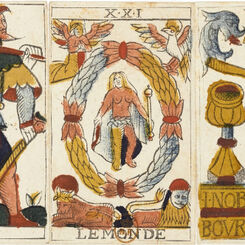
Jean Noblet Tarot de Marseille
Jean Noblet: the oldest known ‘Tarot de Marseille’ deck, Paris, c.1650.
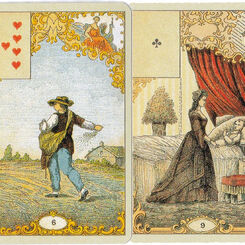
Le Destin Antique
Le Jeu du Destin Antique, originally published by Grimaud in XIX c., republished many times since......
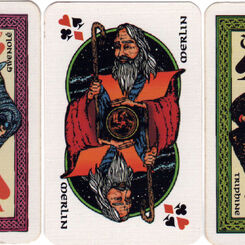
Les Grandes Figures de L’Histoire Bretonne
Les Grandes Figures de L’Histoire Bretonne
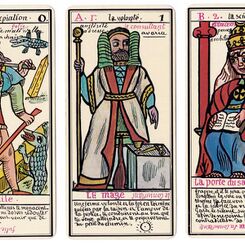
Le Grand Tarot Belline
“Le Grand Tarot Belline” after drawings by Edmond Billaudot (1829-1881).
Héron French tarot
French edition of the ‘Bourgeois’ Tarot by Héron.
Tarot des Sapeurs-Pompiers de Paris
Tarot des Sapeurs-Pompiers de Paris, a French Fire Brigade tarot deck published by Éditions Dusserre...
Grand Jeu Lenormand
Chaotic Grandeur in a collage of astrology, folklore and mythology from Parisian salons.
Charles Cheminade Tarot
Marseille Tarot cards by Charles Cheminade of Grenoble, France, early 18th century.
Linocut Printed Tarot Cards
Linocut is a printing technique similar to woodblock printing where a design is cut into linoleum (a...
Stairs of Gold Tarot
Whilst the titles of the cards are in Italian, the Hebrew and Sanskrit letters on the Trump cards de...
Livre du Destin
Livre du Destin or Book of Fate, printed by B.P.Grimaud, Paris, c.1900.
Significado de los Naipes Españoles
Cartomantic meanings of Spanish playing cards by Benita the Witch (XVI century), published by Chocol...
Most Popular
Our top articles from the past 60 days


Alannyë Daeris
19 November 2025, 09:47SavedSaved this article to Cartomancia Histórica
Maria Nick
21 February 2026, 10:40SavedSaved this article to Maria Nick's Collection
Dri Coñde
08 May 2026, 03:09SavedSaved this article to Dri Coñde's Collection