


Oracle Beirut
Cultural transmission and symbolic design in a contemporary oracle deck.
Oracle Beirut is a beautifully crafted oracle deck created by Lara Alameddine van der Vliet and Monique Bejjani, a tool to offer intuitive guidance, reflection and well-being. Conceived as a companion to their Tarot Beirut, the deck draws inspiration from the Oracle Belline¹ and reimagines its structure in a Middle Eastern and Levantine visual language. The ornate and elegant artwork blends classical Middle Eastern manuscript imagery, astrology, geometric ornamentation and symbolic architectural forms. The result bridges East and West: a deck that feels both timeless and contemporary, immediately accessible. See the box
Firstly the deck contains four Supreme Cards, without numbers, which embody timeless forces associated with Man, Woman and the path of Destiny:

The fourth Supreme Card, with no name and no number, represents the Celestial Sphere that is supposed to include all celestial bodies - this is why it is the strongest of all.
Secondly, the Oracle Beirut deck contains a further 49 numbered omen cards, both good and bad, with titles in five languages, including Arabic. As will be seen, they are structured into seven groups of 7 cards each, differentiated by border designs, colours and astrological glyphs in the artwork:


The 7 astrological groups are: Sun, Moon, Mercury, Venus, Mars, Jupiter & Saturn cards. Each group contains seven cards. The planets/Celestial bodies are represented by their symbols on the corners of the cards. Also, each of them has its own colour so people can recognise them visually (yellow for the sun, grey for the moon, green for mercury, pink for Venus, red for Mars, blue for Jupiter, and purple for Saturn). The scope of the Beirut Oracle is deepened by these additional esoteric and alchemical significators.
Below are six of the 7 Mercury cards in the deck, identified in this case by a predominance of green in the artwork, along with astrological glyphs for Mercury in the corners. These cards symbolize the opportunities associated with change, communication and practical intelligence. Note: in the «Intelligence» card, no.17 (green), Monique and Lara have signed the book to mark Oracle Beirut for eternity. They are hidden in the Arabic text on the left.

Below are 3 of the Sun cards: Elevation, Friendship and Gift. Peep inside the booklet

Above: Oracle Beirut, 2025. Created and produced by Lara Alameddine van der Vliet and graphic designer and illustrator Monique Bejjani. The deck’s artwork features intricate ornamental geometry informed by Middle Eastern visual traditions. Published by Vision Editions, Lebanon. 53 cards with a 125-page multilingual booklet, boxed.
Profoundly evocative and intuitively legible, Oracle Beirut leads the reader into a contemplative and uplifting divinatory experience. The deck opens a space where meaning unfolds gradually, encouraging quiet expansion of the creative imagination. Change your awareness and you live in a different world.
Further details on Oracle Beirut website►

Footnote
- Oracle Belline, the inspiration for Oracle Beirut, is a 53-card French divination deck whose imagery originated with the 19th-century seer Edmond Billaudot (known as Mage Edmond) around 1845. Its symbolism draws on French cartomantic traditions — notably the Tarot de Marseille and the early jeu d’Etteilla — and is structured around the seven classical planetary correspondences of traditional astrology. The deck remained largely unknown until the 1960s, when it was rediscovered, reinterpreted and published by the clairvoyant Marcel Belline, after whom it is named. Oracle Beirut, first published in 2025 by Lara Alameddine van der Vliet, reinterprets this legacy through a contemporary Levantine aesthetic.

By Simon Wintle
Spain • Member since February 01, 1996
I am the founder of The World of Playing Cards (est. 1996), a website dedicated to the history, artistry and cultural significance of playing cards and tarot. Over the years I have researched various areas of the subject, acquired and traded collections and contributed as a committee member of the IPCS and graphics editor of The Playing-Card journal. Having lived in Chile, England, Wales, and now Spain, these experiences have shaped my work and passion for playing cards. Amongst my achievements is producing a limited-edition replica of a 17th-century English pack using woodblocks and stencils—a labour of love. Today, the World of Playing Cards is a global collaborative project, with my son Adam serving as the technical driving force behind its development. His innovative efforts have helped shape the site into the thriving hub it is today. You are warmly invited to become a contributor and share your enthusiasm.

Activity for Oracle Beirut
Sign in to comment or save this article.

Related Articles

Arab No. 2141
Piatnik ventures into Orientalism.
Mamluk Cards and the Making of the European Deck
Mamluk “naib” cards — four suits with named courts — offer a persuasive clue to how playing c...
Tarot Beirut
A beautiful Arabic Tarot : a mystical tool for positive guidance and well-being.
Âs Nas playing cards with box
Hand made cards from Persia
Cartomancy, Oracle and Divination Cards
Playing cards are used for fortune-telling - turning another card illumines the moment and a new per...
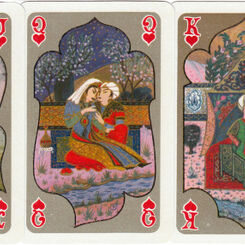
Persian Miniatures
Persian Miniatures, made in Hungary c.1990.
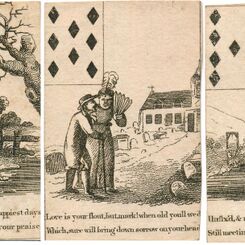
Georgian Fortune Telling Cards
Georgian Fortune Telling Cards, c.1800.
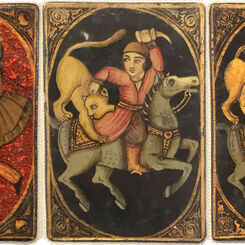
Qajar dynasty playing cards at the British Museum
Two small groups of Qajar-period playing cards from Iran (Persia), photographed in 2017 in the Briti...
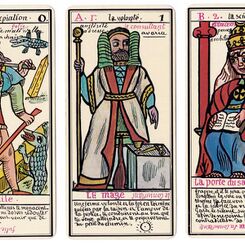
Le Grand Tarot Belline
“Le Grand Tarot Belline” after drawings by Edmond Billaudot (1829-1881).
Playing Card Oracles - Alchemy Edition
Playing Card Oracles - Alchemy Edition - by Charles J. Freeman and Ana Cortez
David Roberts
“David Robert” playing cards with artwork after Roberts’ Sketches in Egypt and Nubia.
Hafez Fortune Telling Cards
Fortune Tellers use the Hafez Cards by interpreting the Hāfez poems printed on the card backs when c...
Grand Jeu Lenormand
Chaotic Grandeur in a collage of astrology, folklore and mythology from Parisian salons.
Iranian Popular Art
Representing Iranian culture and history and intended for a Persian market, these playing cards were...
Fortune Telling Deck, c.1818
Fortune Telling Deck by Industrie Comptoir, Leipzig c.1818.
Livre du Destin
Livre du Destin / The Book of Fate, c.1900, entire deck (32 cards)
Mamluk Playing Cards
Nã'ib, the game of lieutenants... these cards are amongst the earliest Arabic playing cards ext...
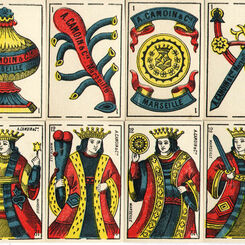
Playing cards in Morocco
The earliest literary references to playing cards in Europe refer to the game having been introduced...
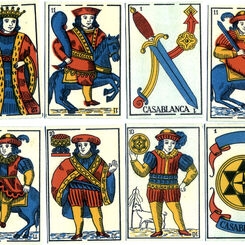
Casablanca playing cards from Morocco
Moroccan cards with the legend 'Casablanca'.
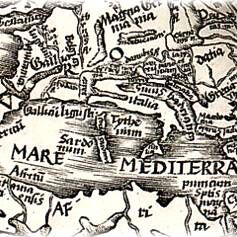
The History of Playing Cards
Playing cards appear in European records in the late 14th century, but their earlier history lies fu...
Most Popular
Our top articles from the past 60 days


Victoria Celeste
26 April 2026, 18:14SavedSaved this article to vix likes!