


48: Ferdinand Piatnik & Sons
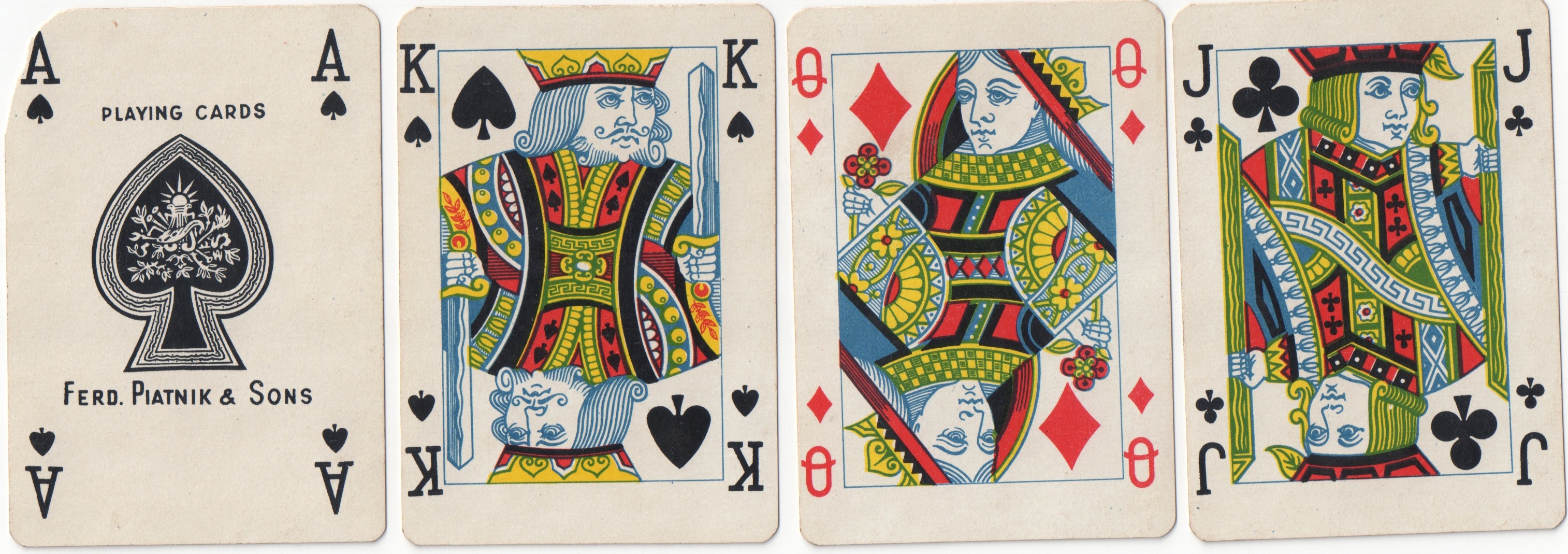
Ferd. Piatnik produced a very large range of cards with many different standard and non-standard patterns. This is a survey of his standard English output.
Ferdinand Piatnik & Sons of Vienna have used a number of different models for their standard English pattern cards. For a full list of my Piatnik cards, click here►
The earliest I know of are based on the courts of the New York Consolidated Card Co. from c.1910.
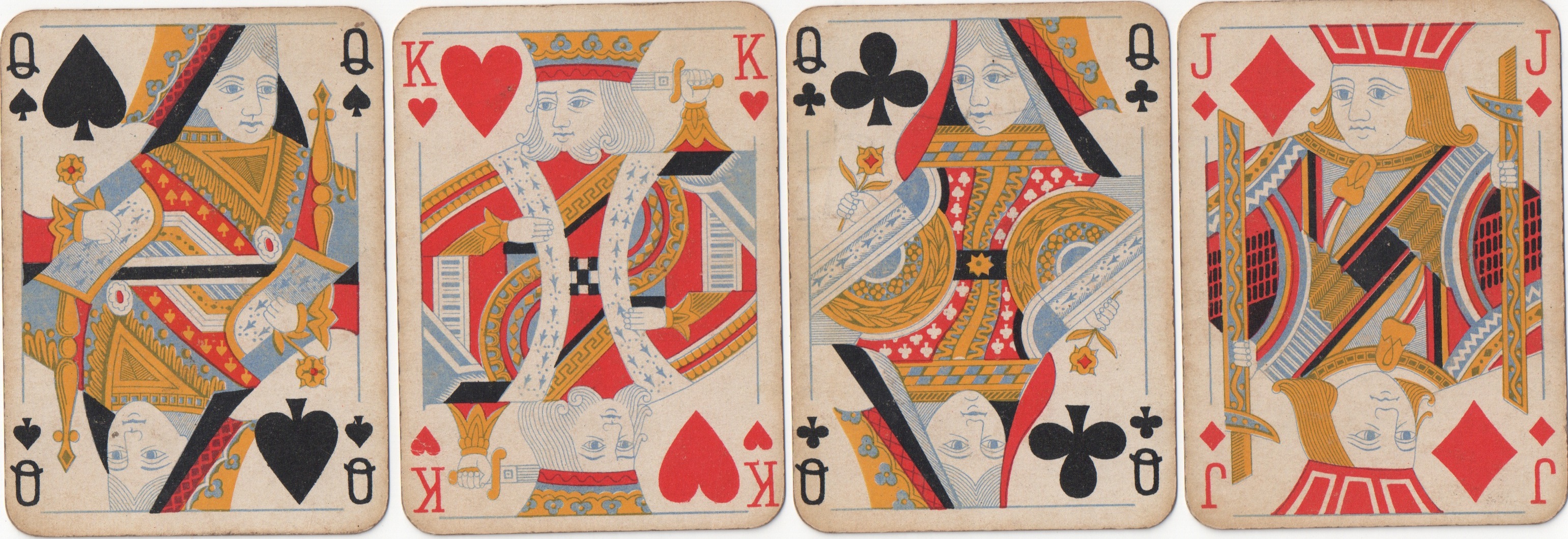
These courts were still in use (with redrawn plates) in the 1950s in their oversize Kaffeehaus Whist packs.
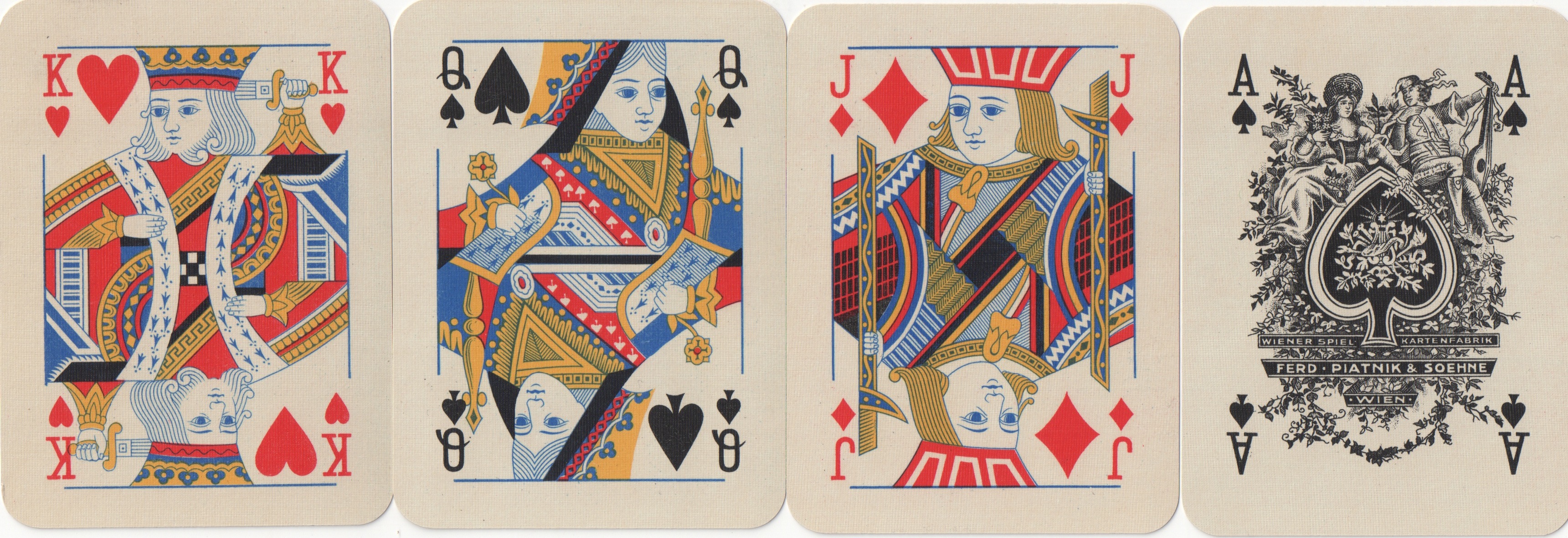
Between the two world wars they also used the United States PCCo unturned courts that USPCC used in their wide Congress cards. After WWII a turned version was used and it is still in use today. The
lower pack was bought in 2014.
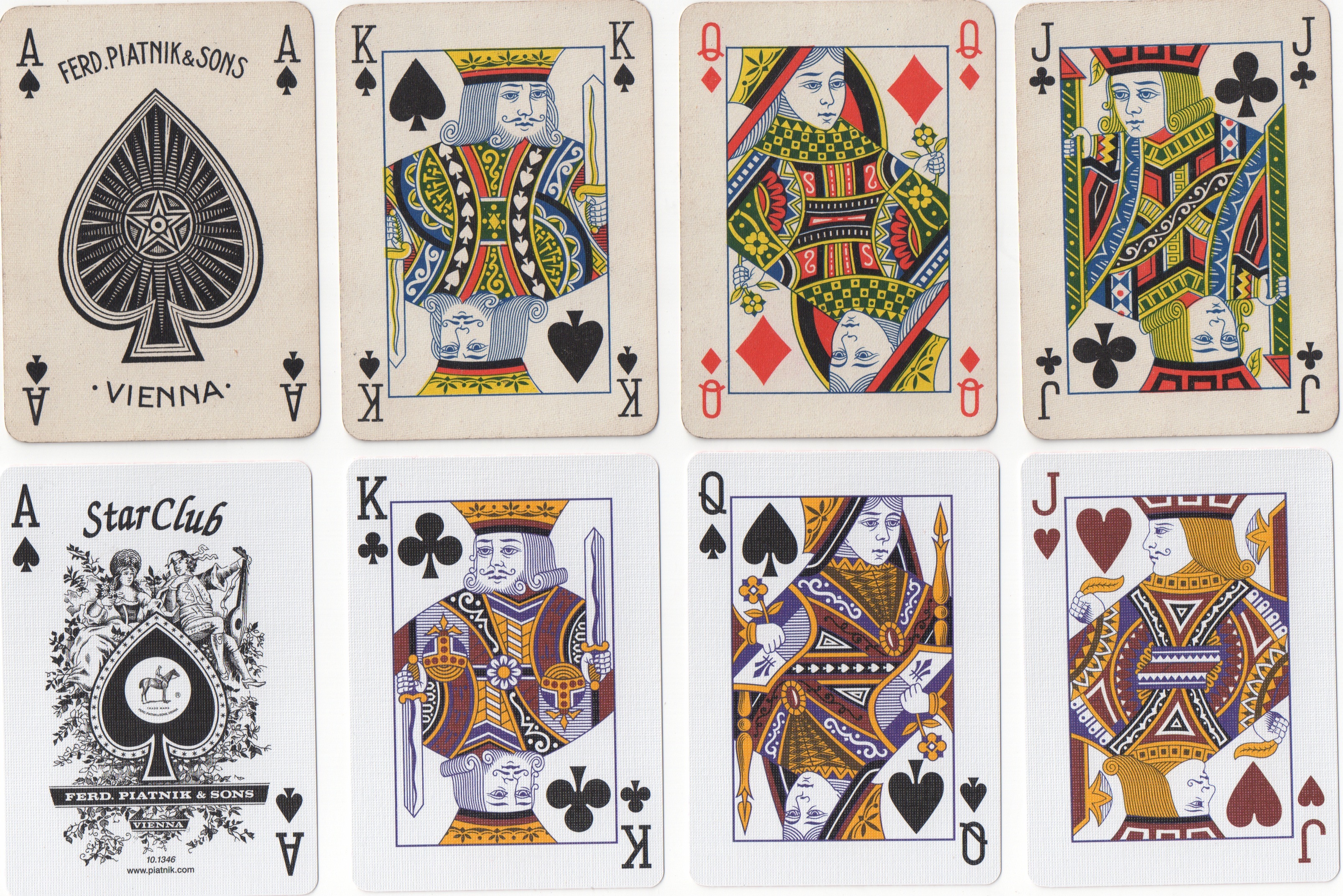
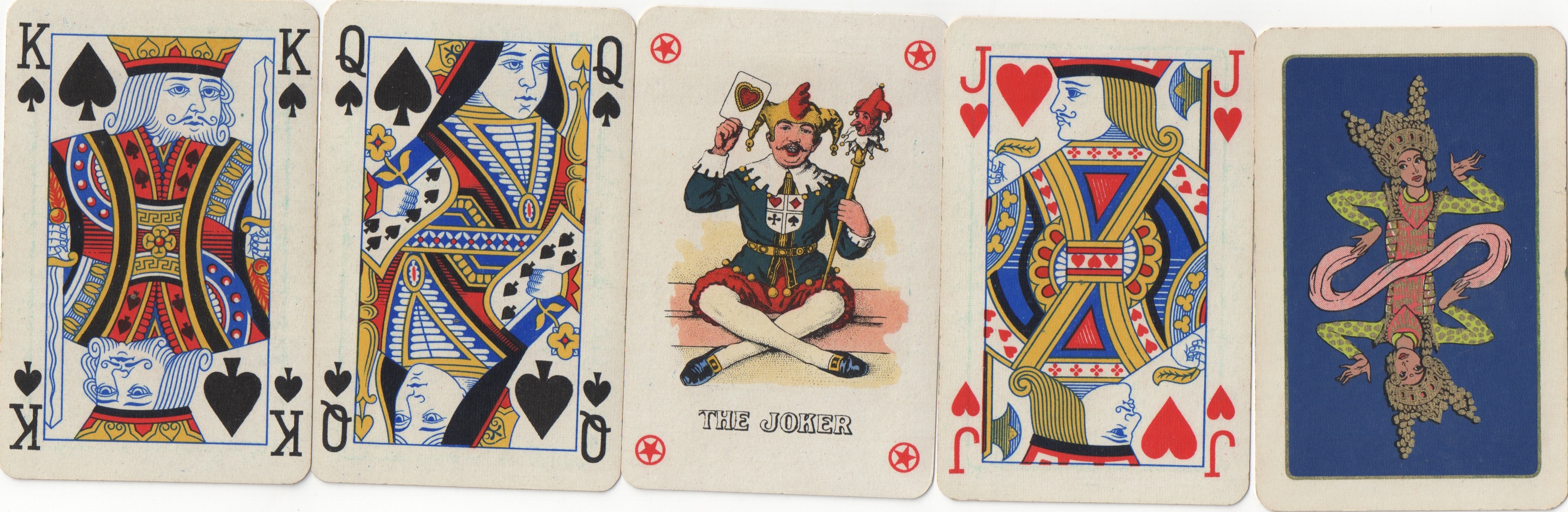
At the same time the De La Rue versions of Goodall courts, both wide and bridge size, were used as models. These are from the 1930s.
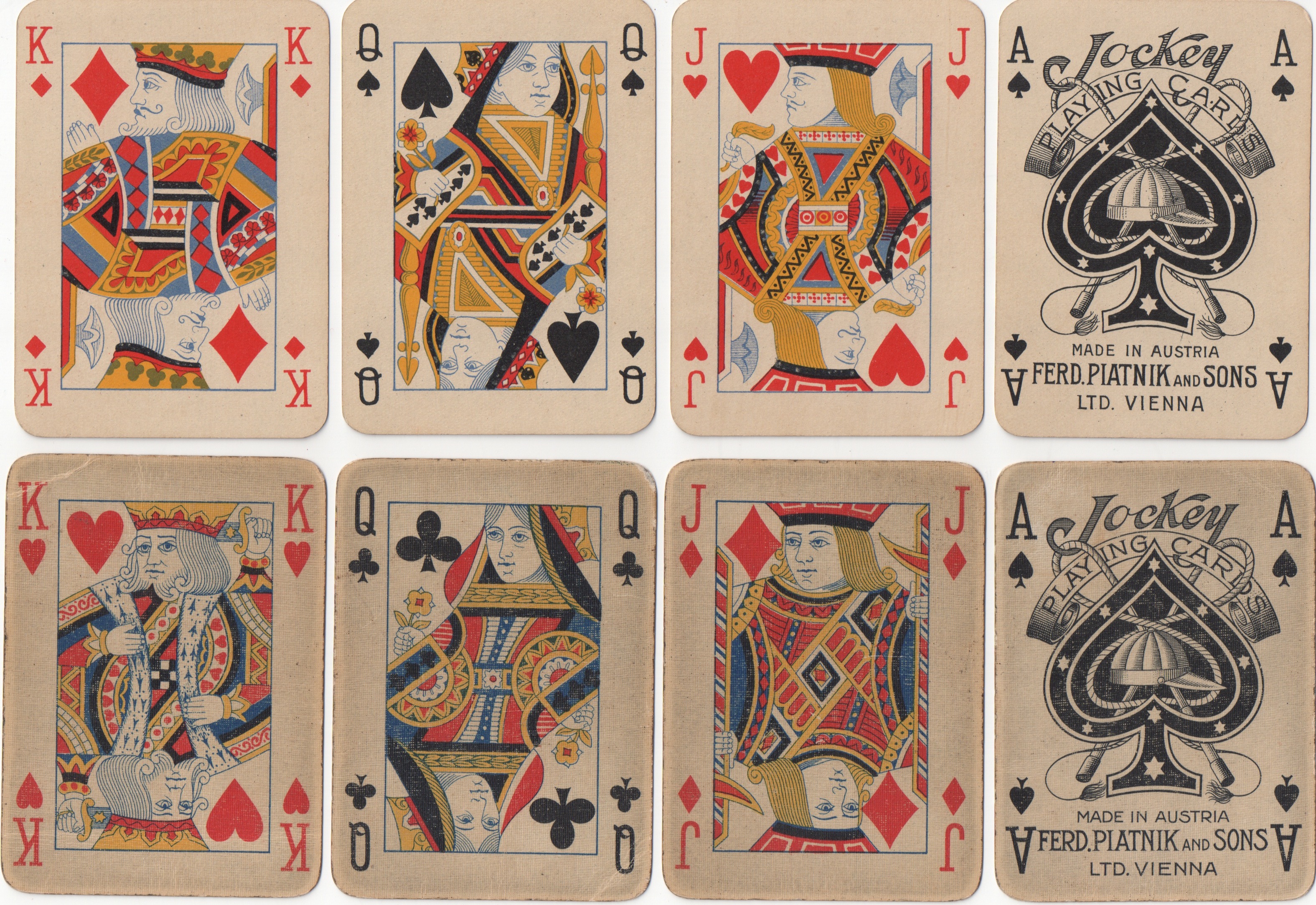
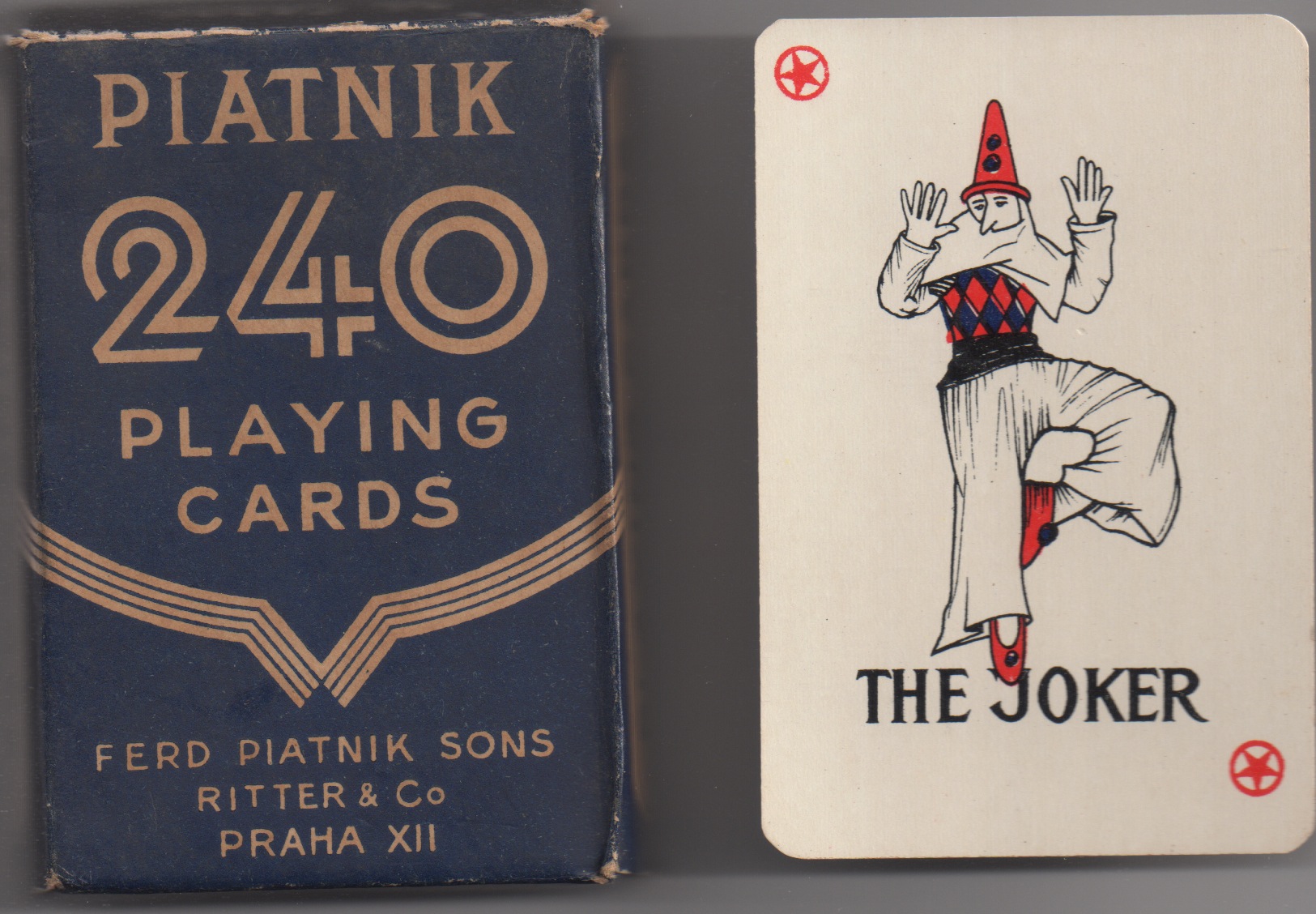
In 1898 the Austrian firm bought the Prague firm of Ritter & Cie, whose courts were later used by the Czech successor firm, Obchodni Tiskarny. Here are cards and the box from a late Piatnik edition of Casino 240 from c.1946.
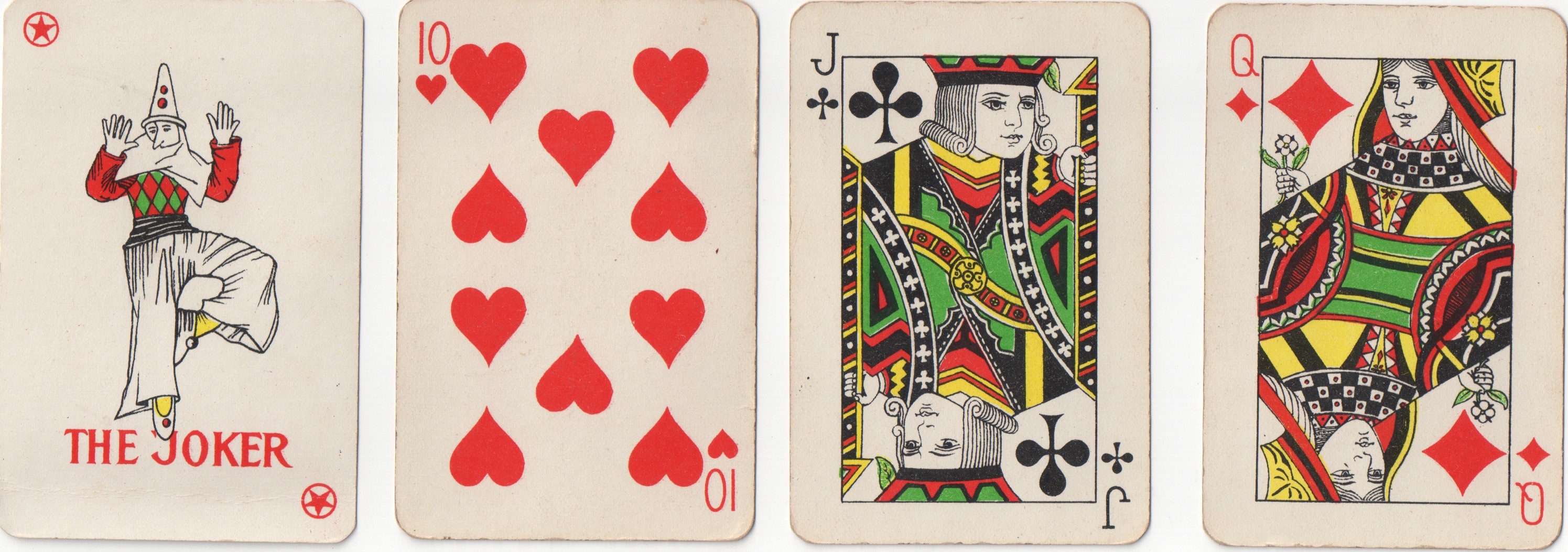
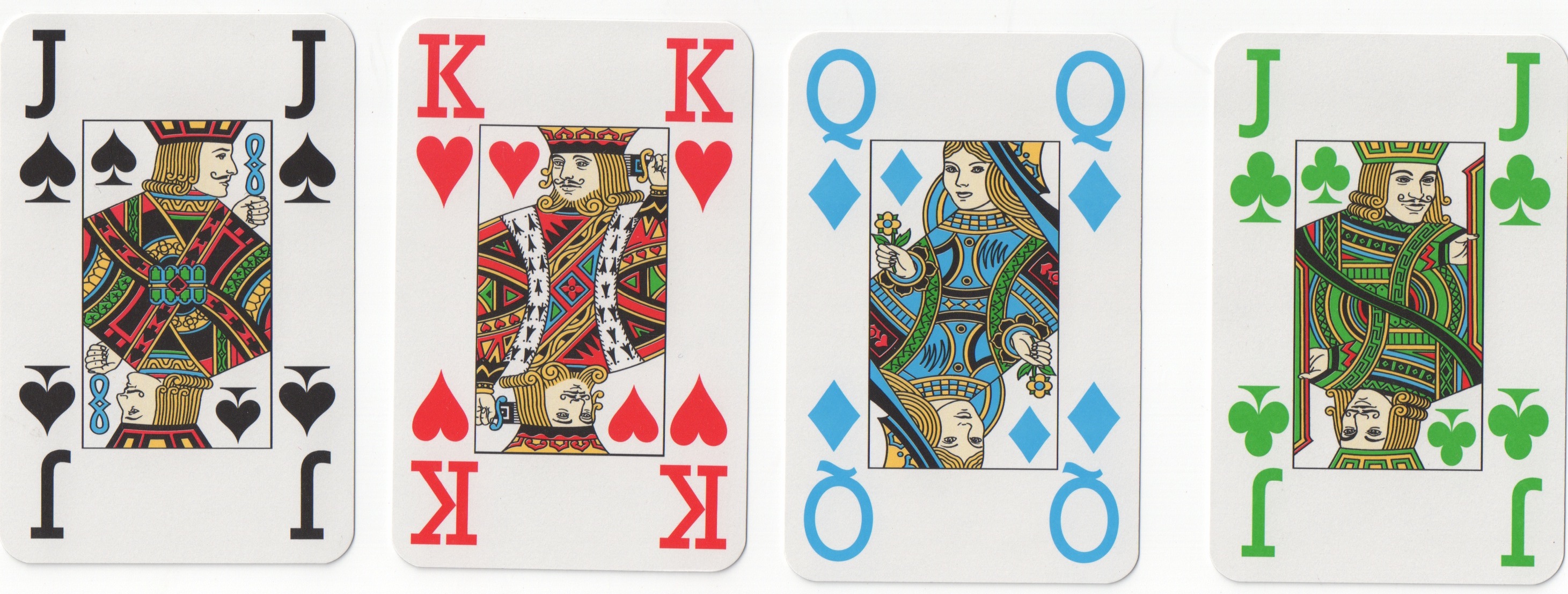
For their large index cards from c.1960 onwards they used a turned version of Waddington’s design with faces redrawn in their own style. These are also found in some of the Playboy packs.
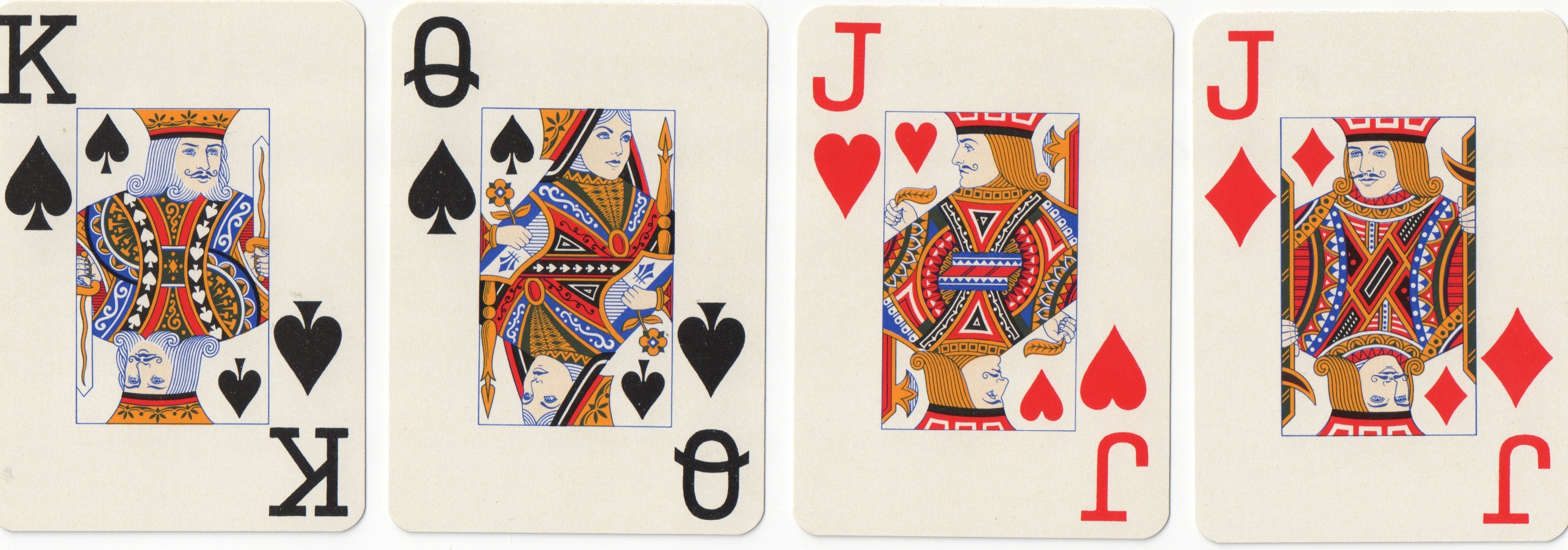
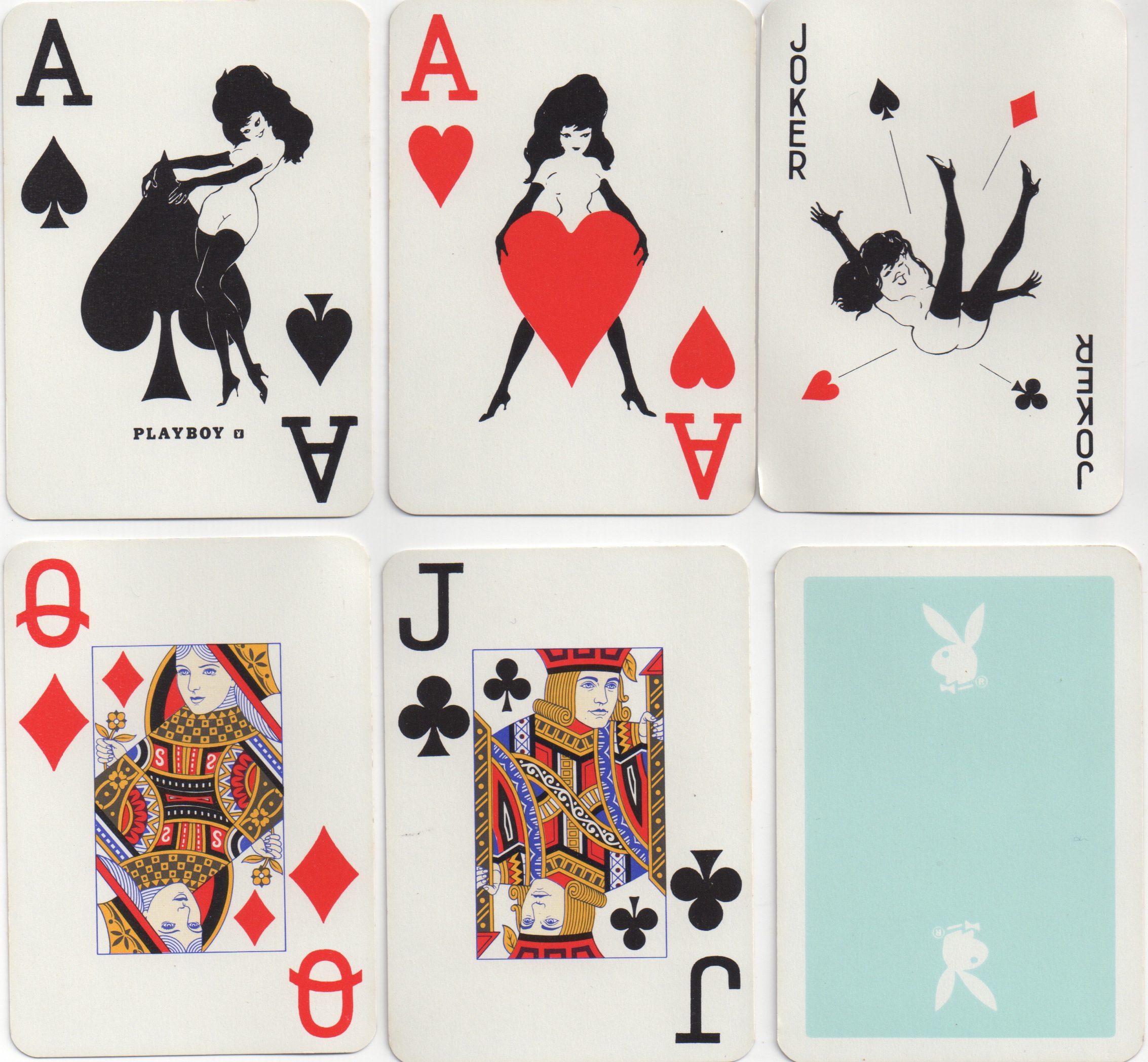
The design that they are most associated with appears to be related to a design used in NYCC bridge packs during the 1920s and 30s. It is not an exact copy, but has some of the idiosyncratic features of the design, such as the red queens’ hands poking out of circular openings in their clothing. In the more expensive packs they have coloured faces with a “film-star” appearance. (Not a very accurate description, but the style is modelled on the NYCC originals; see below.) There is a smaller version in slim-line packs.
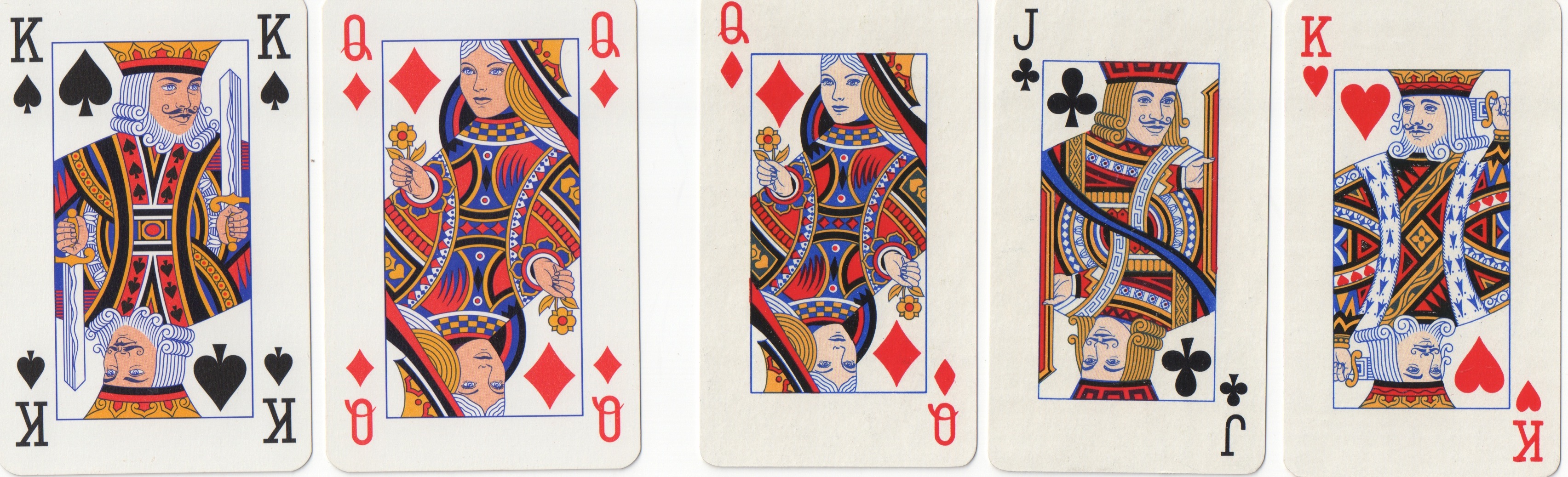
The NYCC original design is below.
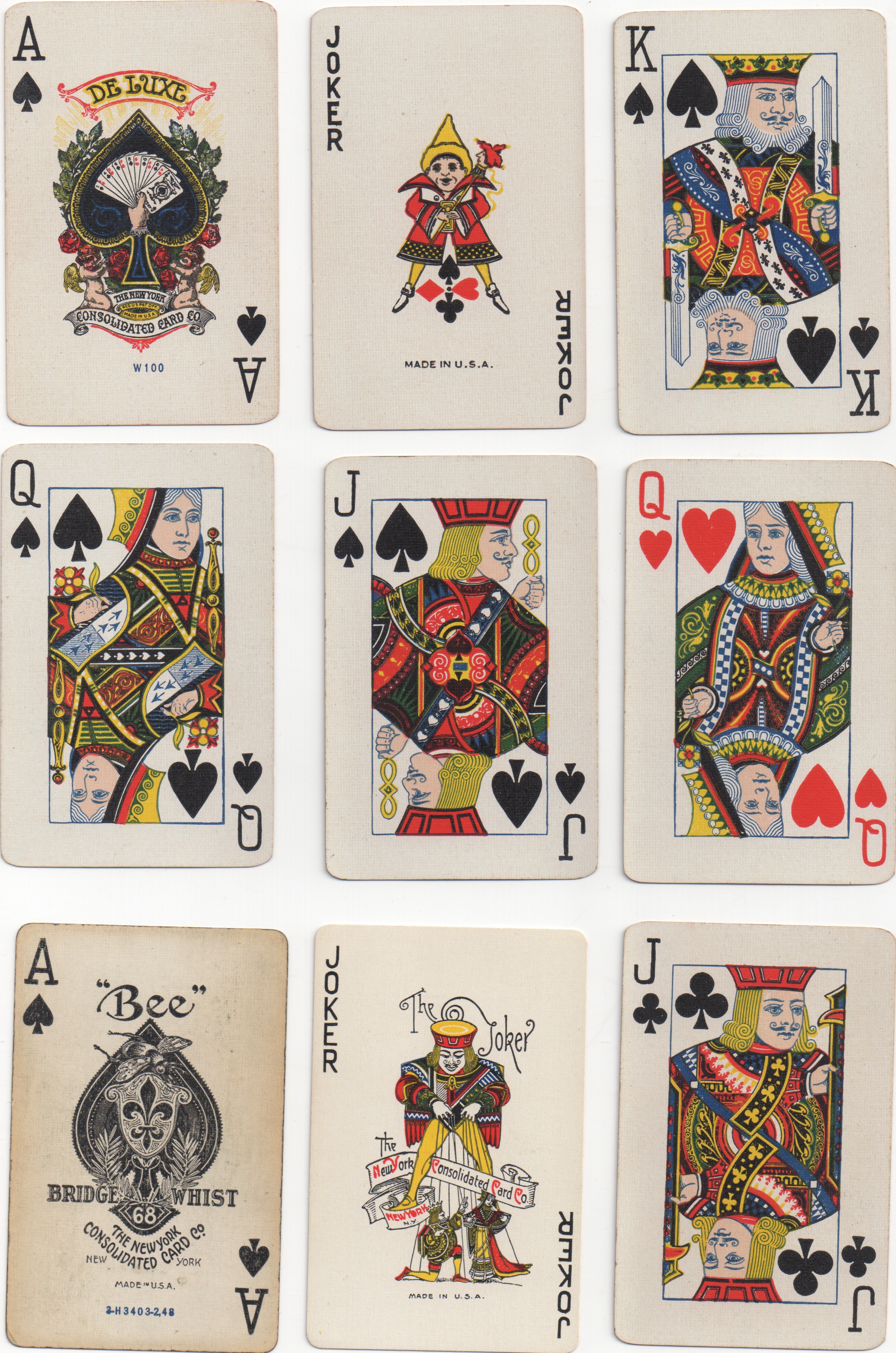
There are other versions of this design with somewhat more crudely drawn faces, sometimes coloured, sometimes not. The lower pack is from an early canasta set (No. 263) of c.1950: the black suit-signs are too large to fit between the heads and the frameline.
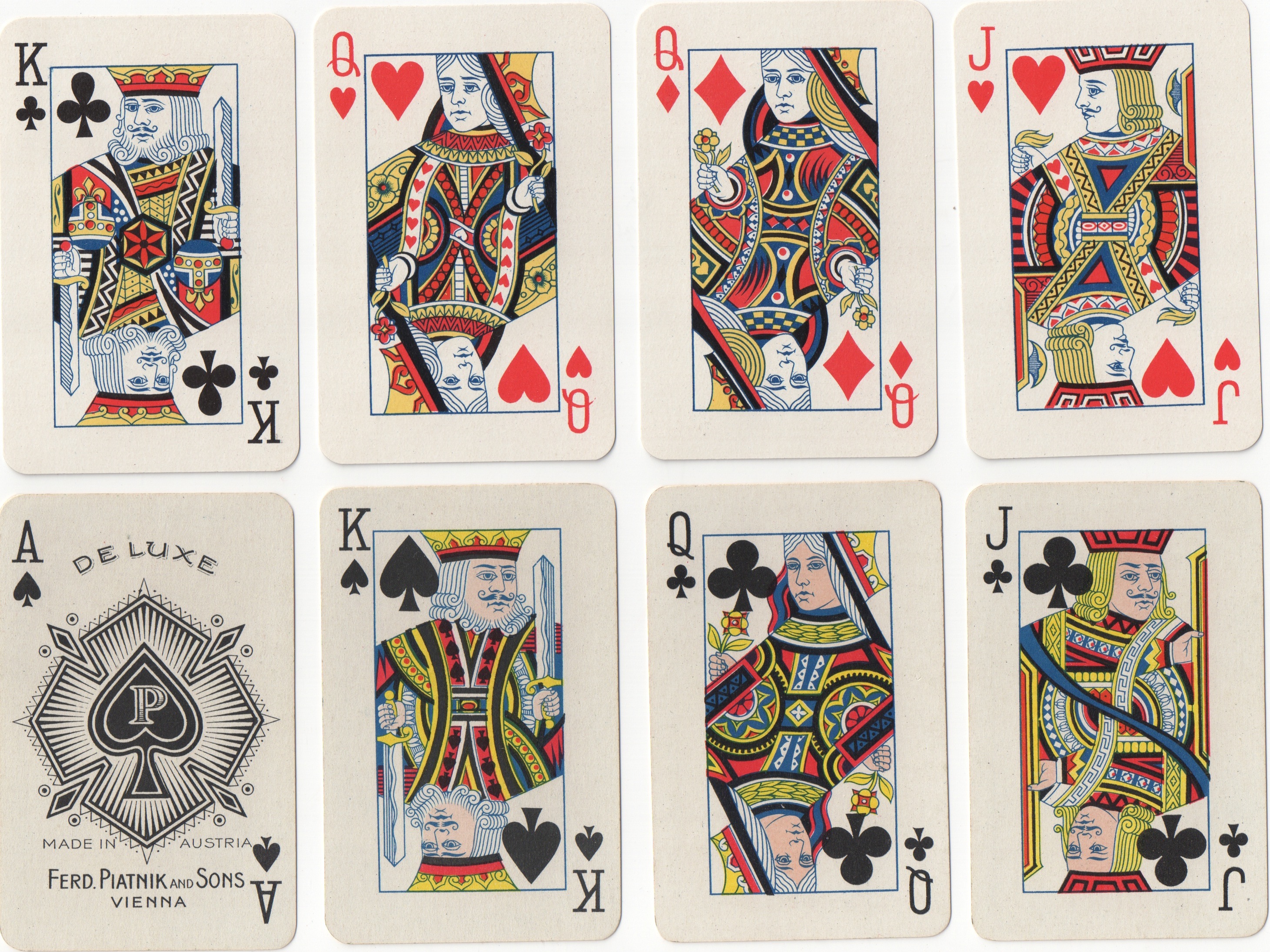
Redrawn plates: I have a pack of these with a De La Rue AS made during a printing strike in c.1968, and another with a Cambissa AS for the shipping line, Home Lines.
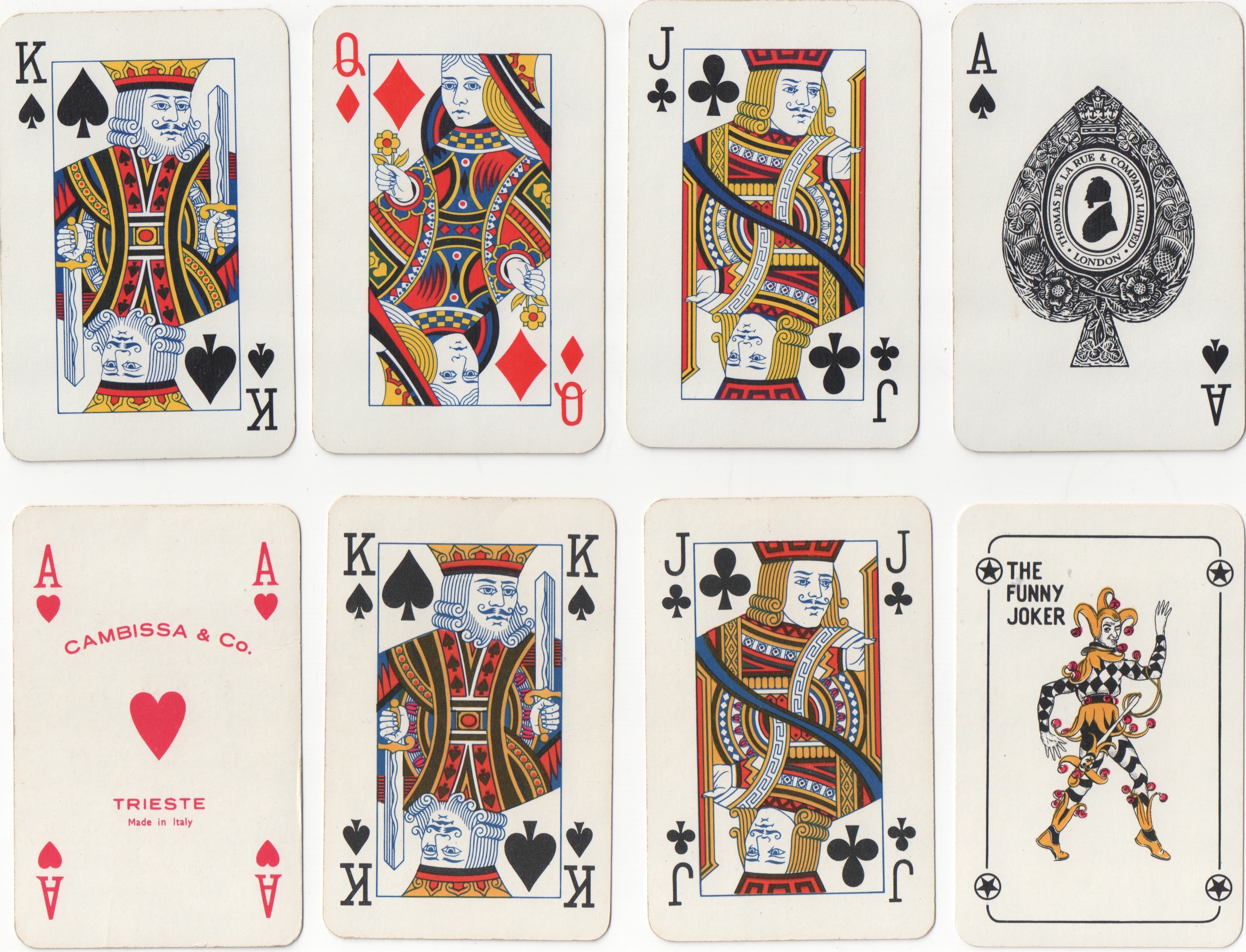
These courts are also to be found redrawn in a large-index, No-Revoke pack for John Newman, otherwise anonymous, 1999-2001. These may have been made by Piatnik or maybe even Richard Edward.

By Ken Lodge
United Kingdom • Member since May 14, 2012
I'm Ken Lodge and have been collecting playing cards since I was about eighteen months old (1945). I am also a trained academic, so I can observe and analyze reasonably well. I've applied these analytical techniques over a long period of time to the study of playing cards and have managed to assemble a large amount of information about them, especially those of the standard English pattern. About Ken Lodge →

Activity for 48: Ferdinand Piatnik & Sons
Sign in to comment or save this article.

Related Articles
Luxury No. 2167
A Piatnik classic that lives up to its title.
Art pack I
Art pack featuring Old Masters, including Bruegel, Vermeer, Titian, Raphael, Caravaggio, Canaletto, ...
Romania playing cards
Romanian voivodes and their wives from the 15th and 16th centuries.
Lenormand Wahrsage-Karten No. 55
Conventional Lenormand designs on a pack from Piatnik but with unconventional numbering.
Rika playing cards
Playing cards depicting famous Austrian skiers of the 1970s.
Bourgeois Tarot by Piatnik 1987
Piatnik’s ‘Bourgeois Tarot’ in a version published in 1987 with nice quality images, especially the ...
Piatnik No.97
Non-standard French-suited cards published by Ferd Piatnik & Sõhne, Vienna, c.1940s.
Austrian Wine
Skat deck for Austria’s excellent wines, Österreichischer Weinwirtschaftsfonds, c.1965
Vienna (ex-Lyon) pattern
‘Vienna pattern’ derived from archaic Lyon pattern by Ferd Piatnik & Söhne A.G., c.1926-1934.
Popular No.257
Piatnik’s “Popular Playing Cards” No.257
Salzburger Pattern
Salzburger pattern by Ferd. Piatnik & Söhne, Vienna
Die Neue ÖVP
Promotional deck for the Austrian People’s Party (ÖVP) printed by Piatnik, 1996.
Blue Playing Cards
“Blue Playing Cards” by Piatnik, 1960s, inspired by the Cubism art movement in which objects are ana...
El Jokey by Piatnik, 1990s
‘El Jokey’ Spanish-suited pack by Piatnik & Sons, Vienna, 1990s
Vienna Melange
“Vienna Melange” Playing Cards by Piatnik with a historical feel representing the four races that ma...
Ferd. Piatnik & Söhne
Ferdinand Piatnik was born in Ofen on October 14, 1819.
Piatnik Tarock
Deck of "Industrie und Glück" or "Rural Scenes" tarock cards manufactured by Ferd Piatnik & Söhne, V...
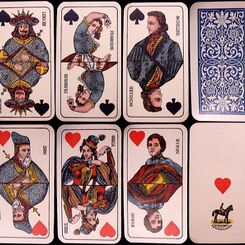
Literary Figures
Non-Standard Literary Figures playing cards manufactured by Ferd. Piatnik & Söhne A.G., Vienna, 1924...
Piatnik & Sons for the“Estanco de Naipes del Perú”
Playing Cards made by Piatnik & Sons for the“Estanco de Naipes del Perú”, c.1960.
Most Popular
Our top articles from the past 60 days


