


Fanning the Playing Cards
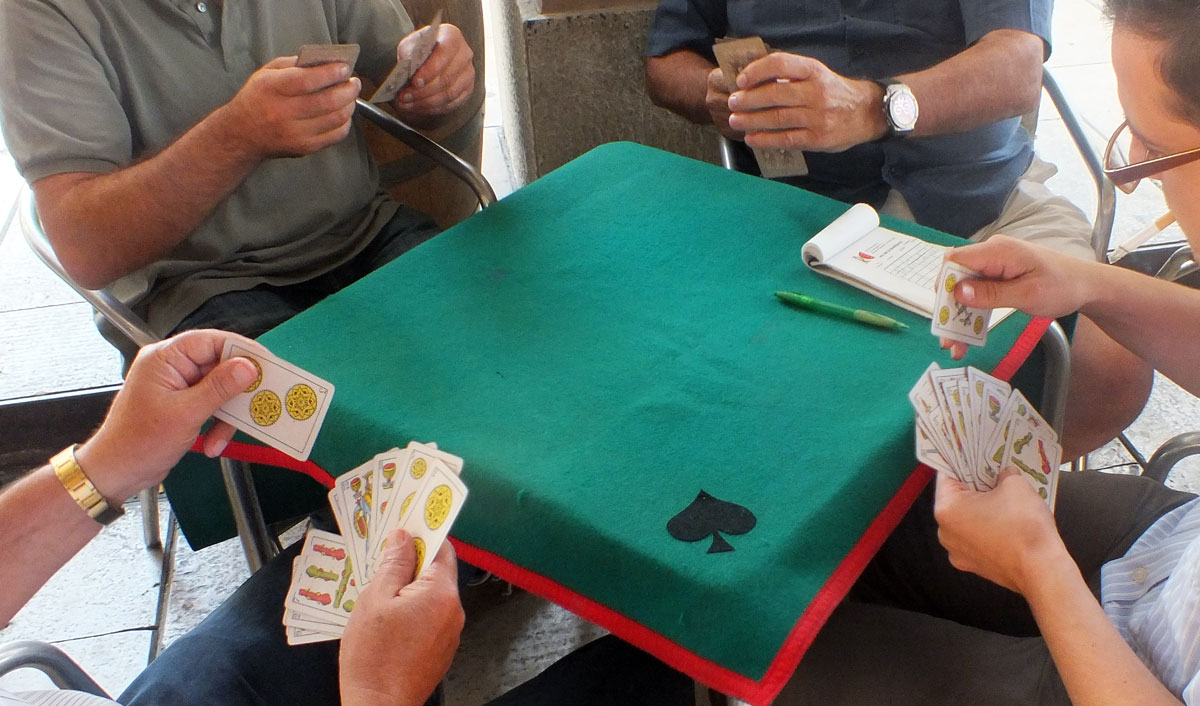
The manner of holding the cards in the hand is related to a player’s needs to view his/her hand in a logically organised way, perhaps categorised into sets or sequences, usually reading from left to right...
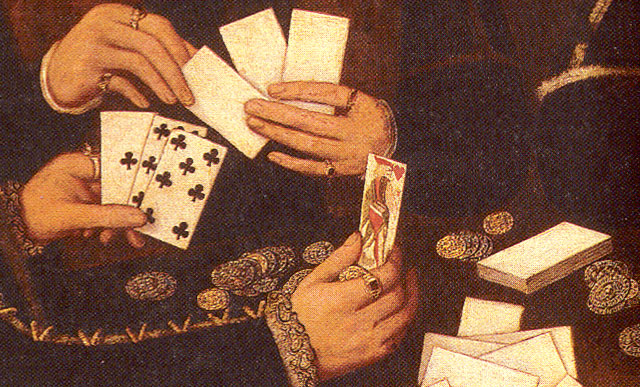
fig.1
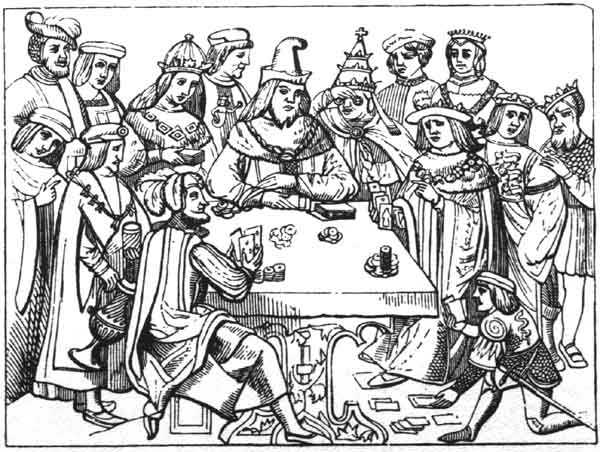
fig.3
fig.5
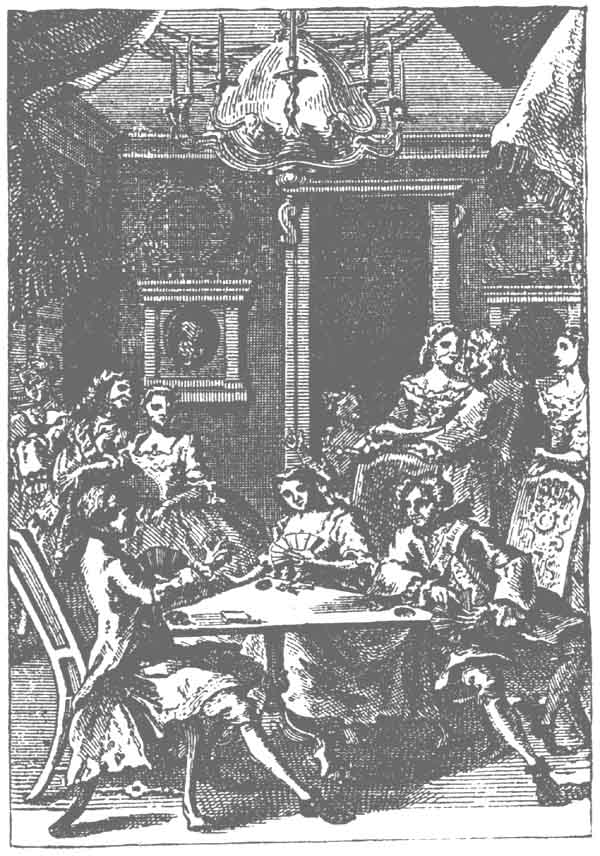
fig.7
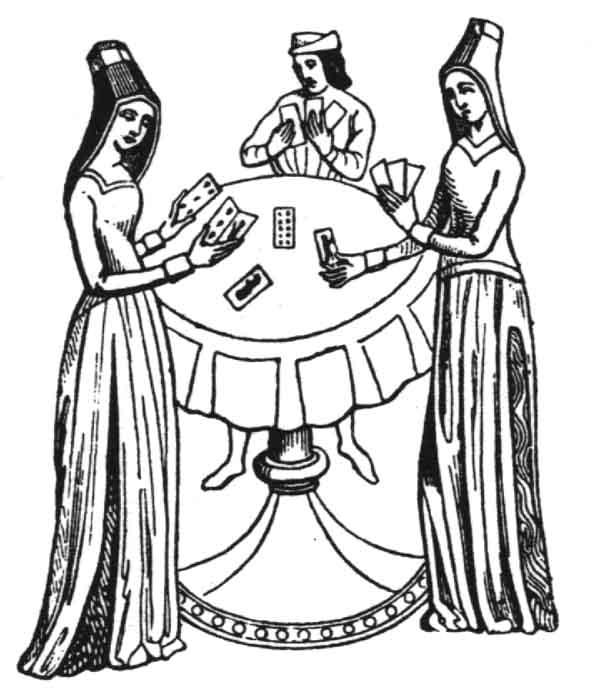
fig.9
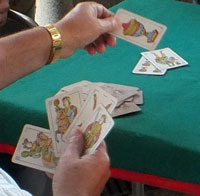
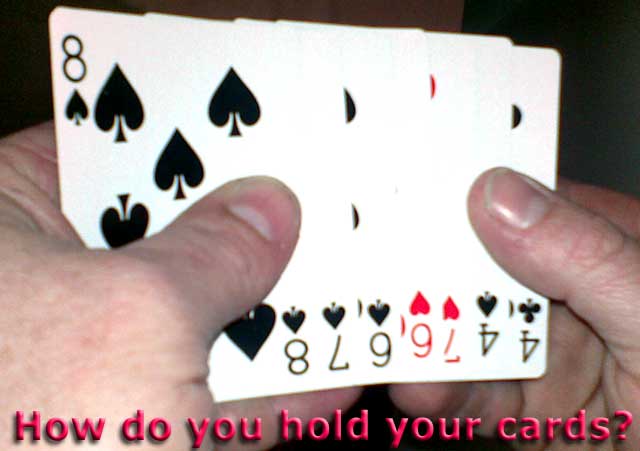
THE MANNER OF HOLDING CARDS in the hand is related to a card player’s needs to view his/her hand in a logically organised way, perhaps categorised into sets or sequences, usually reading from left to right.
In their early days, cards were introduced into a society with different levels and divisions of literacy than those which we take for granted today. Furthermore, early suit systems were not the abstract and logically categorised symbols we use today - two red and two black - but were everyday objects such as acorns, birds, flowers, wild animals, etc. relating to everyday experience. As soon as they were being mass produced by printing they appealed to a largely pre-literate, illiterate or lay population, unversed in the refinements of formal logic, grammar or acquired literacy.
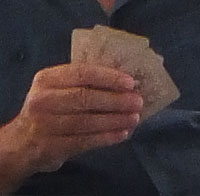
A glance through playing card books showing early prints of card players does not always suggest that neatly fanning the cards was the norm. For example, in the print of “The Duke and Duchess of Bavaria playing at cards” of c.1500 (see figs 4 & 6) the two aristocrats are shown holding their cards one just above the other, in a single pile. (A player in the top photo is doing the same.) They are also seen to be keeping a tally of the score with scratches or marks on the table, and a five of hearts is in play! (click on thumbnails to see whole picture).
However, early paper was often very thin, and players had to hold their cards carefully to prevent their opponents being able to see through the cards.
The Spanish practice of ‘pintas’, which would appear to facilitate identifying cards by their tops, as opposed to holding them fanned out is a relatively recent innovation. Nor did the early playing cards have index numbers, which is another logical refinement to satisfy a more ‘literate’ card player.
This all seems to imply that the manner of holding playing cards will reflect various cultural circumstances, such as levels of literacy, numeracy, modes of logical thought or categorisation, manual dexterity, secretiveness, skill at card-sharping, etc. Playing cards are a sort of language, with their own syntax, grammar and meanings, requiring mastery of the logic, the deductive procedures and use of the memory. Watch how different people hold their cards during play!
An example of oral expressions once made during play may still survive on Italian and Spanish playing cards, expressions which do not come from literary sources, but from the bar or café where card games were played.
Note: Click on any thumbnail image to see the entire picture.
fig.2
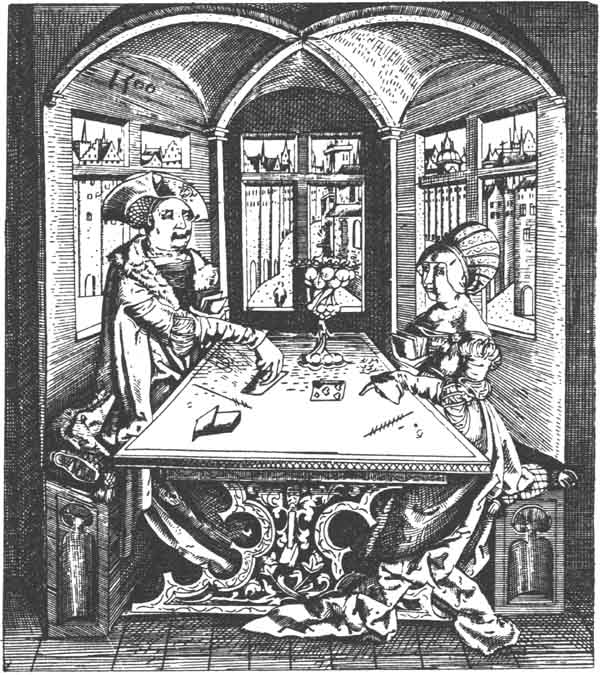
fig.4
fig.6
fig.8
fig.10
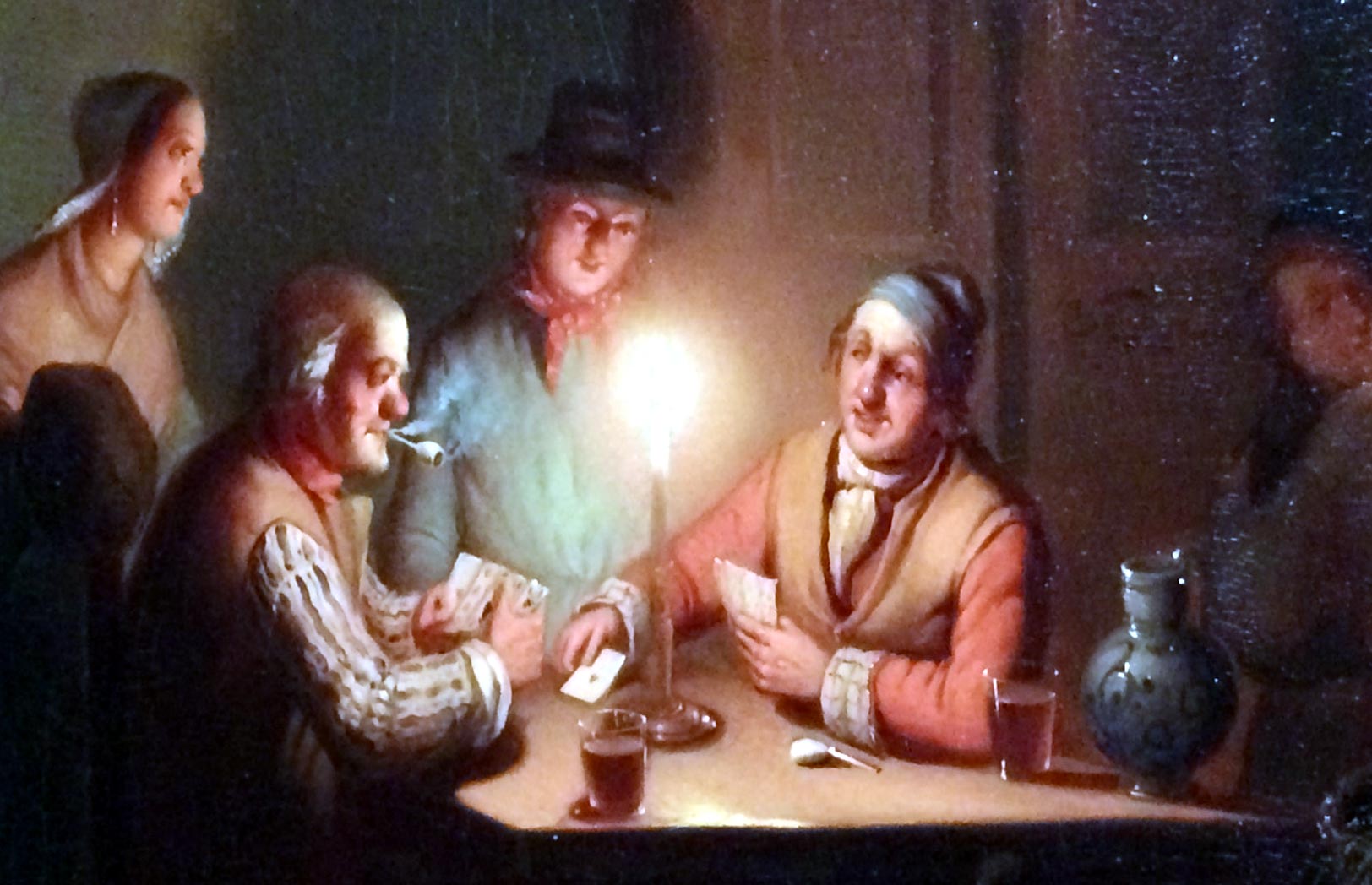
fig.12

By Simon Wintle
Spain • Member since February 01, 1996
I am the founder of The World of Playing Cards (est. 1996), a website dedicated to the history, artistry and cultural significance of playing cards and tarot. Over the years I have researched various areas of the subject, acquired and traded collections and contributed as a committee member of the IPCS and graphics editor of The Playing-Card journal. Having lived in Chile, England, Wales, and now Spain, these experiences have shaped my work and passion for playing cards. Amongst my achievements is producing a limited-edition replica of a 17th-century English pack using woodblocks and stencils—a labour of love. Today, the World of Playing Cards is a global collaborative project, with my son Adam serving as the technical driving force behind its development. His innovative efforts have helped shape the site into the thriving hub it is today. You are warmly invited to become a contributor and share your enthusiasm.

Activity for Fanning the Playing Cards
Sign in to comment or save this article.

Related Articles
OH Cards
A Series of Metaphoric Cards to unlock your story, conceived and designed by Ely Raman
Can You Believe Your Eyes?
“Can You Believe Your Eyes?” playing cards featuring visual illusions & other oddities.
The Playing-Card Industry & Its Relevance Today
This video explores the relevance of playing cards today, highlighting industry diversification, mod...
Managing cards without corner indices
For many hundreds of years cards had no corner indices, were square cut and mostly made from card wi...
Psychology, Numerology and playing cards
Numerology assigns significance to individual digits and their combinations, considering them as sym...
Geomancy and playing cards - a match meant to be
Playing cards are made of dualities...
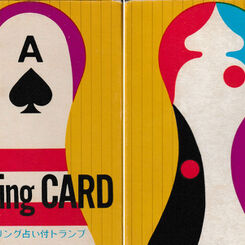
Fan DACK Playing CARD
Unusual cards in the shape of skittles, intended for fanning.
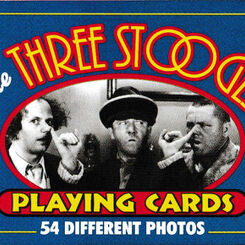
Three Stooges playing cards
54 different photos of the famous American vaudeville and comedy team.
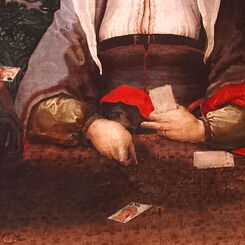
Playing Cards and Calendars
In this video Ana Cortez examines the relationship between ordinary playing cards and the calendar. ...
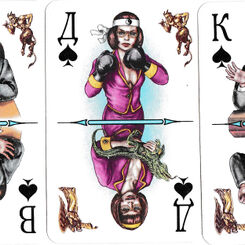
Madam Luck
“Madam Luck” playing cards designed by B. Adziev, 1998.
Playing Cards: A Secret History
Playing Cards: A Secret History
History of Playing Cards explained in 5 Minutes
Video by Art of Impossible. In this video you will get a short overview of the most important histor...
Nine Lives Tarot
Nine Lives Tarot by Annette Abolins represents the artist’s creative and spiritual perspective on li...
Piñón Fijo
“Piñón Fijo” is an Argentine clown, whose real name is Fabián Gómez. He is well-known on Argentine c...

Interview with Tom and Judy Dawson from 52 Plus Joker
Interview with Tom and Judy Dawson from 52 Plus Joker. Chatting about the history of playing cards, ...
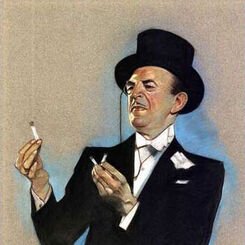
The Cardini Playing Cards
Richard Valentine Pitchford, better known as Cardini, is one of that select band of performers who b...
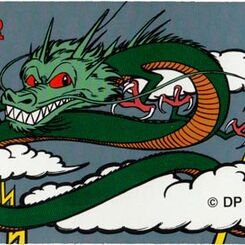
Dragon Fanning Deck
This set of cards published by DP Group Ltd (Japan) allows the performer to create different fans

Girls’ Generation
“Girls’ Generation” (Korean: 소녀시대; Sonyeo Shidae) is a nine-member South Korean pop girl group forme...
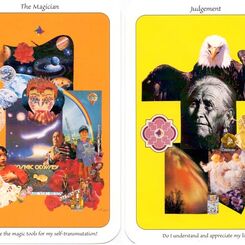
Self-Guided Tarot by Cameo Victor
Human beings have always yearned to understand the experience of life. The knowledge that we seek is...
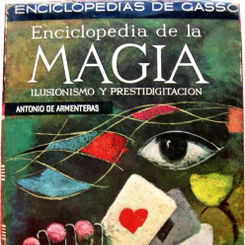
Conjuring and Magic
The art of mystifying people is very old indeed. The first conjurers were priests who obtained power...
Most Popular
Our top articles from the past 60 days


