


Pou y Cía
Catalan pattern made by Pou y Cía, Madrid c.1860.
This Spanish-suited pack made by Pou y Cía in Madrid, c.1860, in many ways anticipates what became known as the Modern Catalan pattern, and which was mostly produced in the Barcelona region. The postures of the court cards correspond to the Catalan pattern but the shape of the cups suit symbols are not yet like egg cups, and one or two other features, such as plumed hats on all the sotas and cavaliers, retain a more baroque or archaic style.
The four of cups has the inscription ‘de una hoja’ and ‘Pou y Cía Madrid’, with a sun rising above a cloud motif and a horse standing next to a well. The ace of cups is adorned with two serpents as handles. It is worth pondering whether it is merely coincidental that the Catalan word ‘pou’ translates to 'well,' hinting at the possibility that this Catalan card maker was based in Madrid rather than his native region, producing cards in the taste of his clients in Madrid. The four of coins contains the arms of Madrid city from that time, which include a gryphon and a bear at a strawberry tree (madroño) under a civic crown which was introduced in 1859 until 1873.
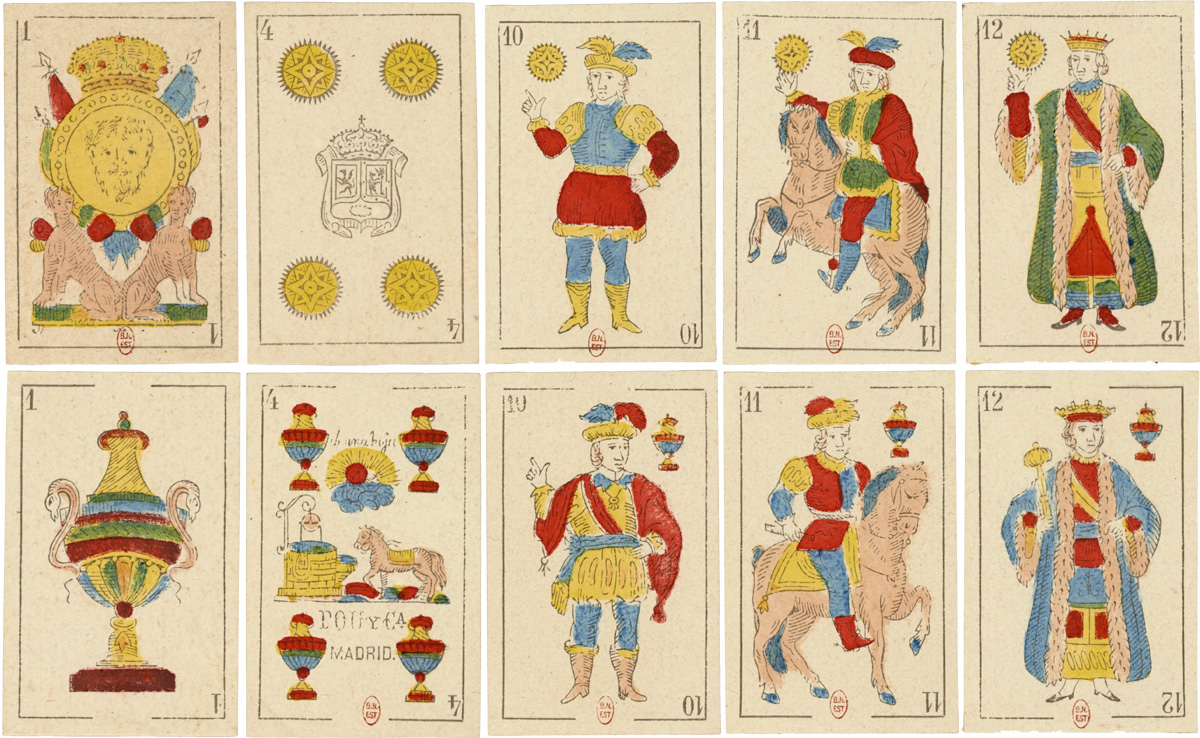
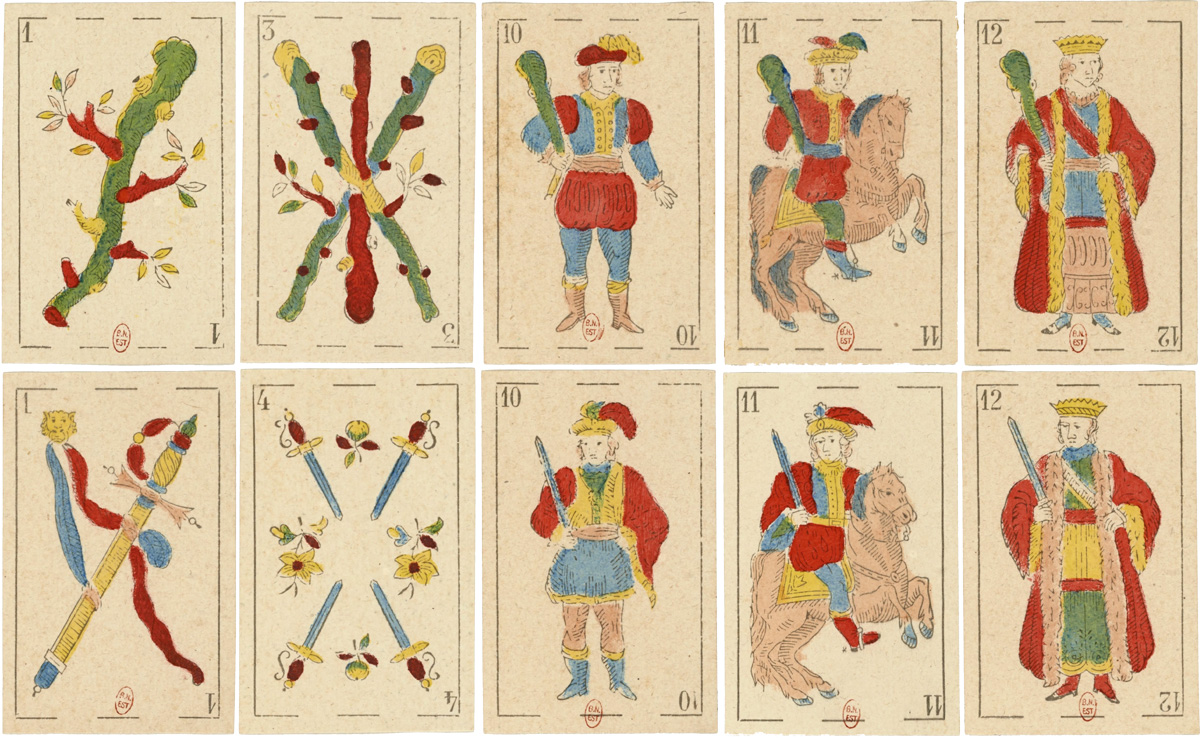
Above: Catalan pattern made by Pou y Cía, Madrid c.1860, stencil-coloured woodcut, 48 cards. Source gallica.bnf.fr / Bibliothèque nationale de France • Pou y Cía (Madrid)►

By Simon Wintle
Spain • Member since February 01, 1996
I am the founder of The World of Playing Cards (est. 1996), a website dedicated to the history, artistry and cultural significance of playing cards and tarot. Over the years I have researched various areas of the subject, acquired and traded collections and contributed as a committee member of the IPCS and graphics editor of The Playing-Card journal. Having lived in Chile, England, Wales, and now Spain, these experiences have shaped my work and passion for playing cards. Amongst my achievements is producing a limited-edition replica of a 17th-century English pack using woodblocks and stencils—a labour of love. Today, the World of Playing Cards is a global collaborative project, with my son Adam serving as the technical driving force behind its development. His innovative efforts have helped shape the site into the thriving hub it is today. You are warmly invited to become a contributor and share your enthusiasm.

Activity for Pou y Cía
Sign in to comment or save this article.

Related Articles
Most Popular
Our top articles from the past 60 days


