Aesop’s Fables
Aesop’s Fables playing cards by I. Kirk, c.1759.
Aesop was the most famous fable-teller of ancient Greece, over 2,500 years ago. He told fables on all matters where a moral could be added. Over the centuries these fables have been translated, re-told and presented in many different formats, registers and regional styles.
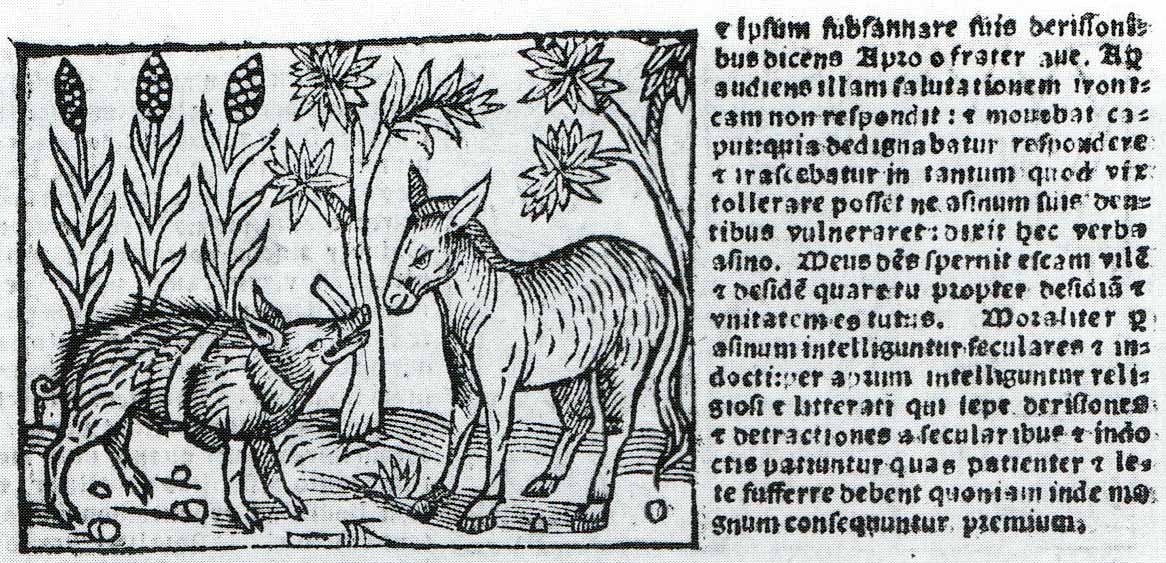
Above: the Boar and Ass illustration from a woodcut series of Aesop, Genoa, 1557.
Featured on this page are cards from the 1759 edition of Aesop's Fables playing cards by I. Kirk (St Paul’s Churchyard, London) based on drawings by Francis Barlow (c.1626–1704) and also from a facsimile edition of Aesop's Fable Cards published by Colonial Williamsburg Foundation (USA).
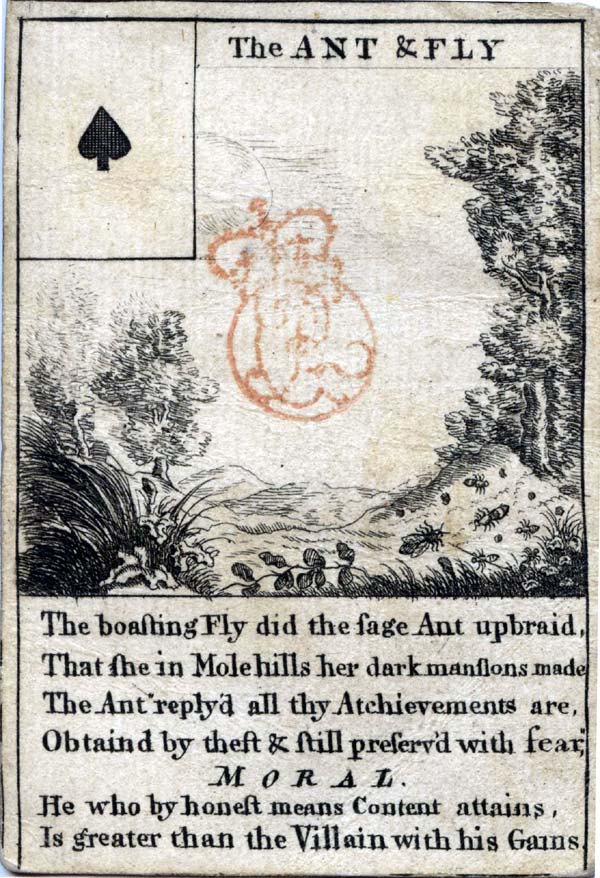
Above: Ace of Spades from the 1759 edition by I. Kirk (London) with the red tax stamp and ‘GR’ cypher. Image courtesy WCMPC►
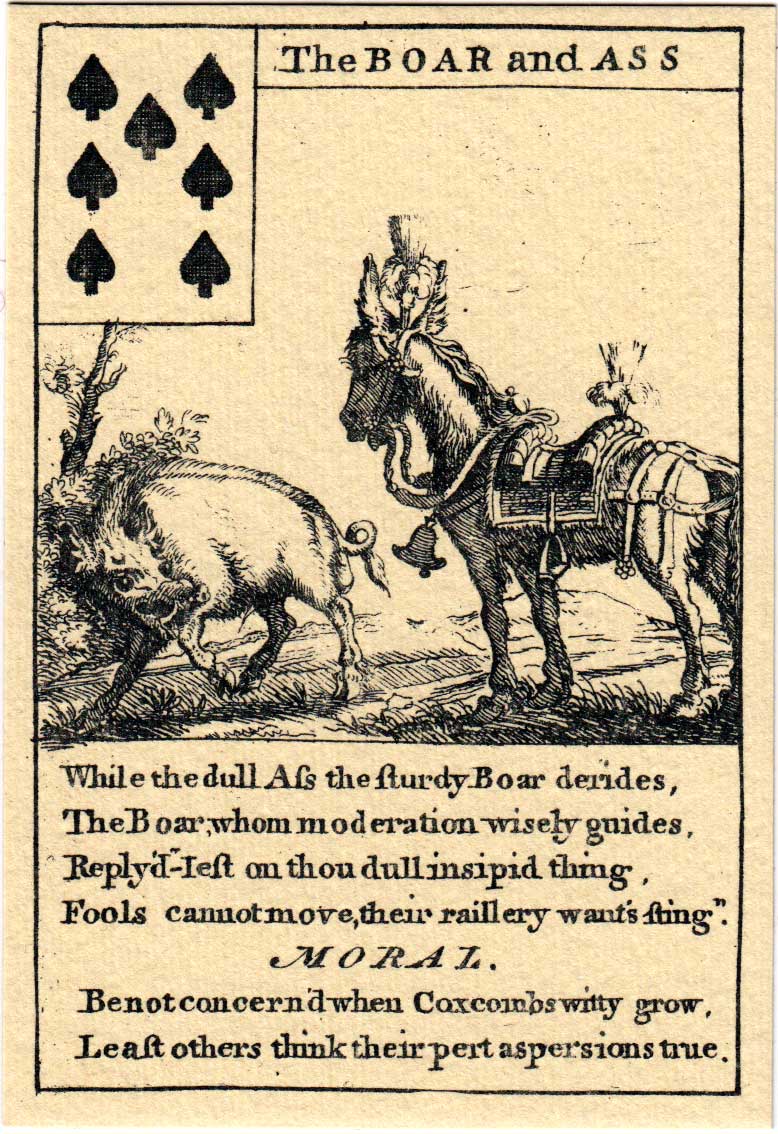
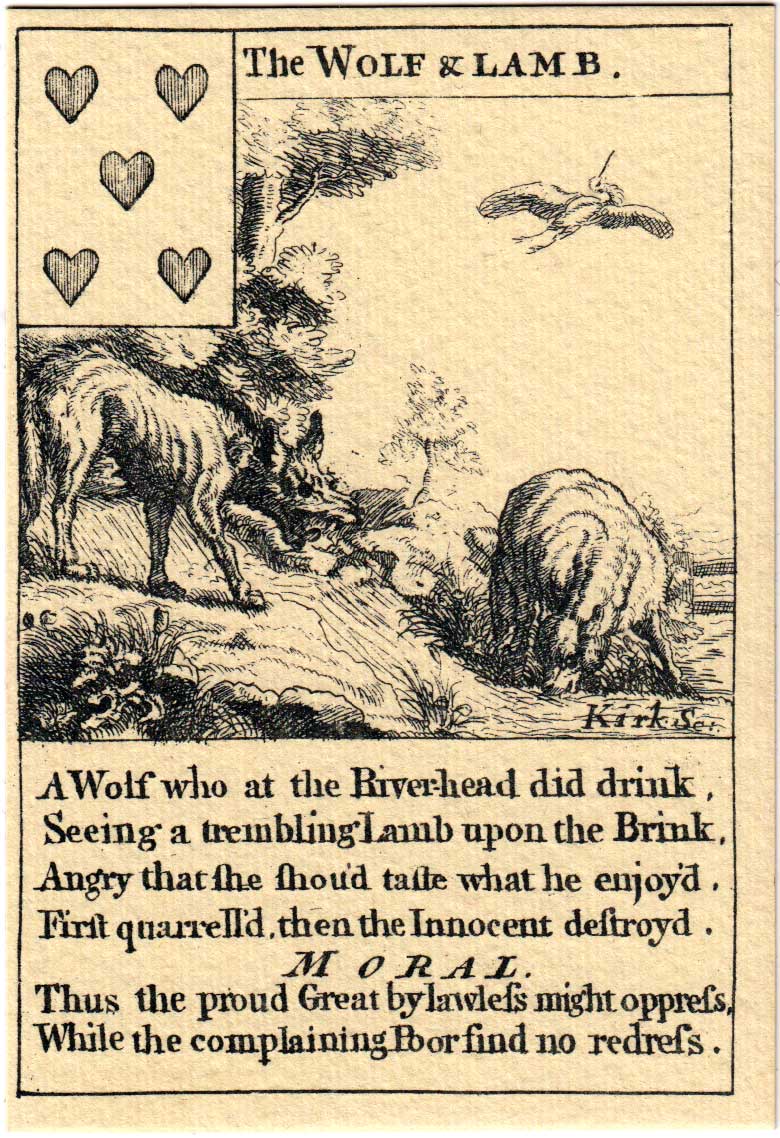
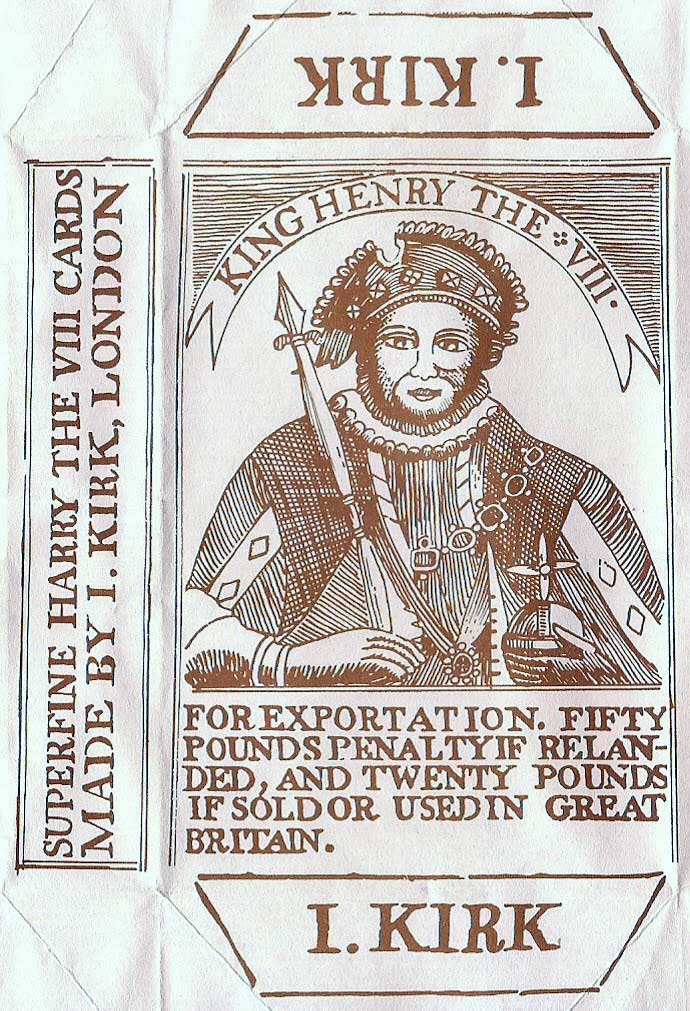
Above: two cards from uncoloured facsimile edition of I.Kirk’s Aesop’s Fables playing cards published by Colonial Williamsburg Foundation (USA). See the Wrapper►
More Original Cards
An advertisement in the Public Advertiser for December 17, 1759 reads “Æsop's Fables exactly copied after Barlow, with fables and morals in verse, to be had of the proprietor, I. Kirk at the Grotto Toy Shop in St Paul’s Churchyard.”
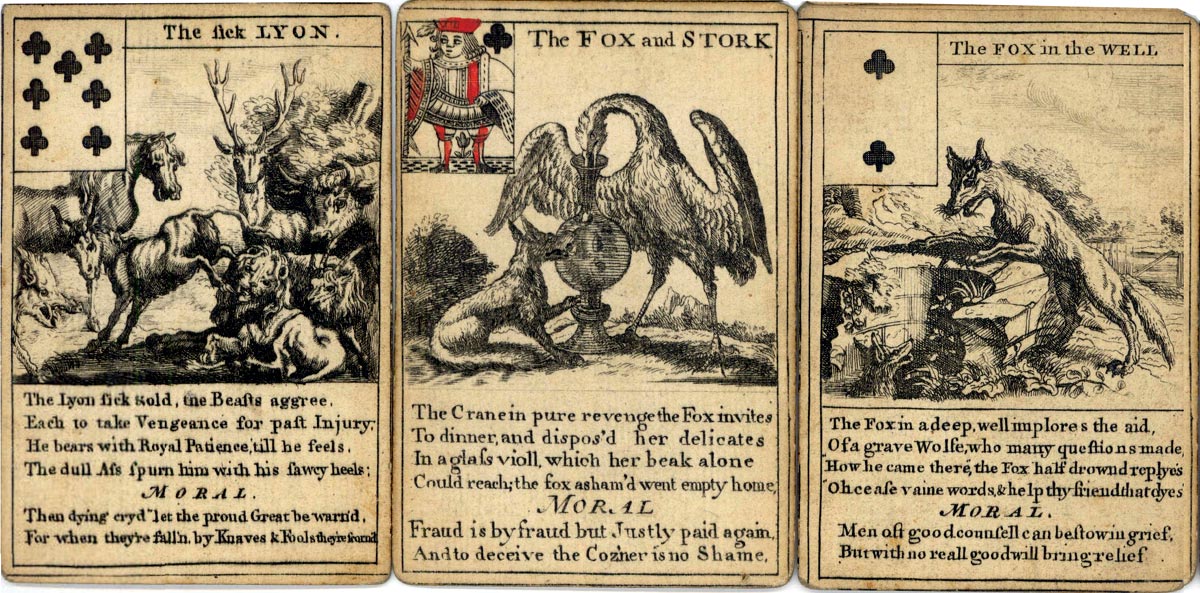
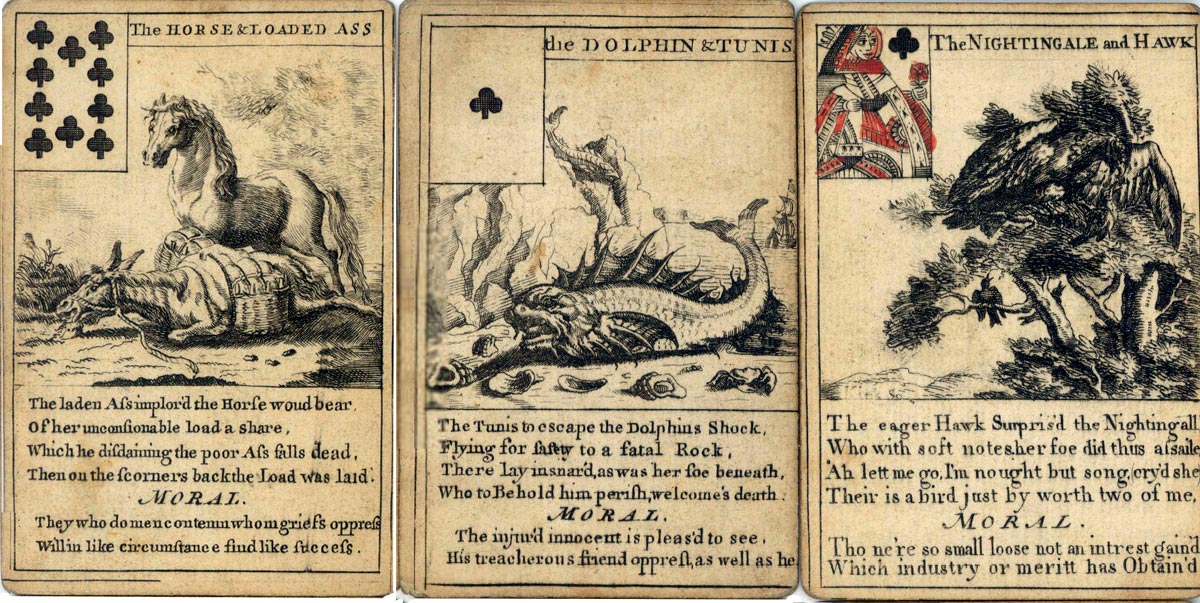
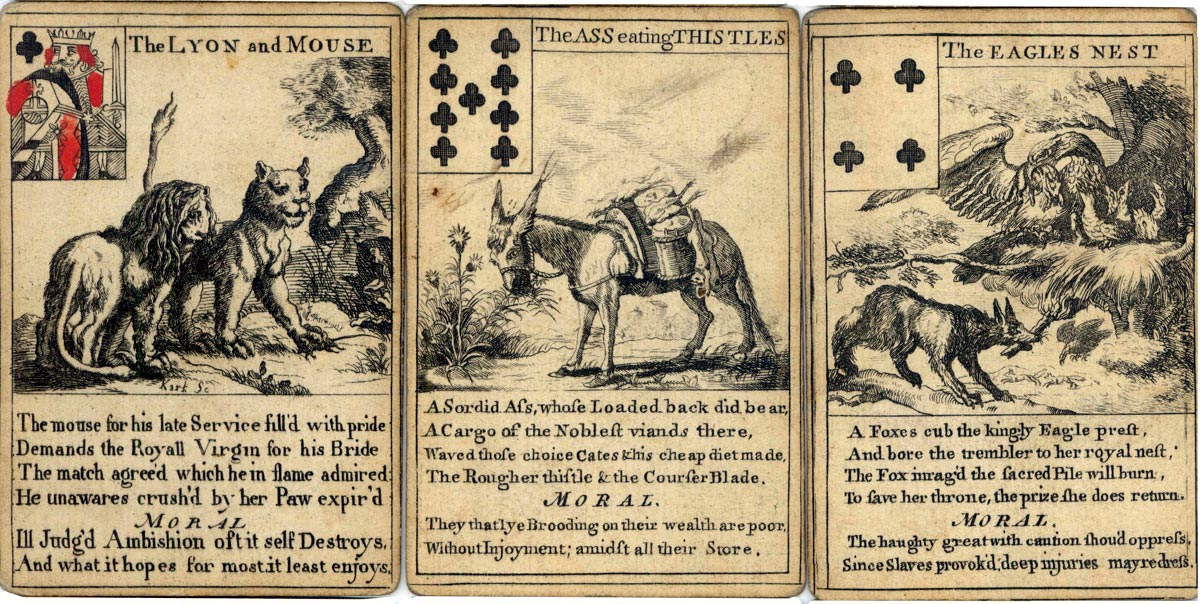
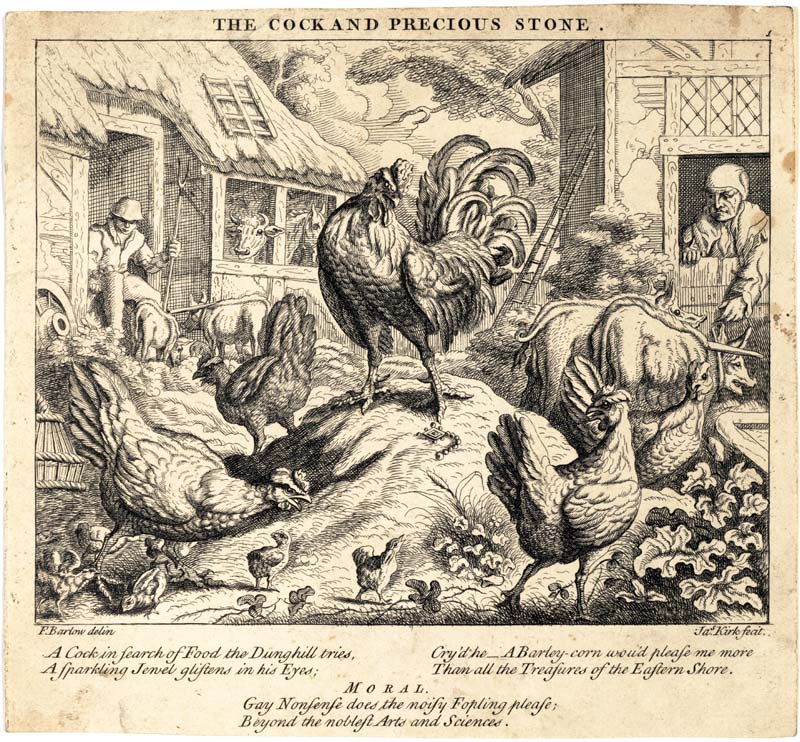
Above: etching by James Kirk after Francis Barlow, c.1760. 15.9 x 17.2 cm. Courtesy The Elisha Whittelsey Collection.
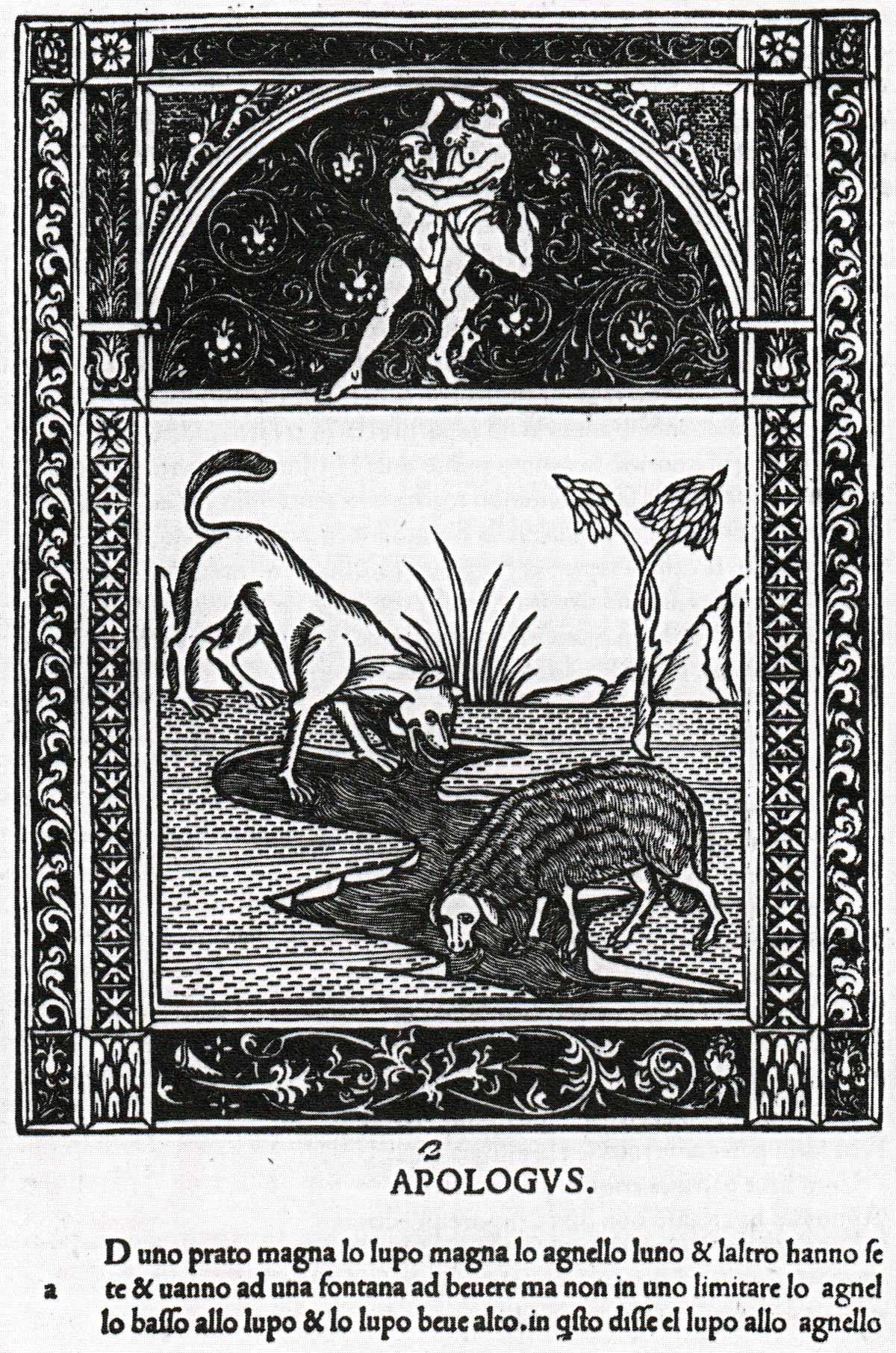
Above: The Wolf & Lamb woodcut illustration and text from “Aesop, Vita et Fabulae”, Naples, 1485.
REFERENCES
Hargrave, Catherine Perry: A History of Playing Cards and a Bibliography of Cards and Gaming, Dover Publications, New York, 1966
Mann, Sylvia: All Cards on the Table, Jonas Verlag/Deutsches Spielkarten-Museum, Leinfelden-Echterdingen, 1990
Christie’s, Illuminated Manuscripts & Valuable Printed Books auction catalogue, June 1991.
Sotheby’s, Valuable Printed Books and Manuscripts auction catalogue, September 1988.

By Simon Wintle
Spain • Member since February 01, 1996
I am the founder of The World of Playing Cards (est. 1996), a website dedicated to the history, artistry and cultural significance of playing cards and tarot. Over the years I have researched various areas of the subject, acquired and traded collections and contributed as a committee member of the IPCS and graphics editor of The Playing-Card journal. Having lived in Chile, England, Wales, and now Spain, these experiences have shaped my work and passion for playing cards. Amongst my achievements is producing a limited-edition replica of a 17th-century English pack using woodblocks and stencils—a labour of love. Today, the World of Playing Cards is a global collaborative project, with my son Adam serving as the technical driving force behind its development. His innovative efforts have helped shape the site into the thriving hub it is today. You are warmly invited to become a contributor and share your enthusiasm.

Activity for Aesop’s Fables
Sign in to comment or save this article.

Related Articles
Learning to play Cribbage
I learned to pay cribbage when I was very young, aged around six or seven.
Pictures of Early Whist writers and their stories
The Invisible Experts: Tracking the Elusive Faces of Whist History.
Solo Whist
A distinctive British trick-taking game that emerged in the mid-19th century.
Agatha Christie and Playing Cards revisited
Agatha Christie uses card-play as a primary focus of a story, and as a way of creating plots and mot...
Gone to Pot: Gardener’s playing cards
‘Gone to Pot’: special playing cards for keen gardeners, United Kingdom.
Dorset Dialect Trails
‘Dorset Dialect Trails’ playing cards, United Kingdom, 2015.
History of London illustrated playing cards
A catalogue in 54 cards of some of the treasures held within the Museum of London collections.
The Club Series by G. Bell & Sons
George Bell & Sons produced ‘The Club Series’ of books each specialising in one or more of the popul...
Whist writers and their pseudonyms
Why did so many early writers about whist and other card games feel the need to write under a pseudo...
Ethics Education playing cards
Ethics Education playing cards produced by the Centre for Military Ethics at King’s College London, ...

Night & Day playing cards
‘Night & Day’ playing cards produced by London Underground, United Kingdom
Tea & Coffee Lovers playing cards
Tea & Coffee Lovers playing cards produced by Cultzilla.
Library Lovers
Library Lovers playing cards published by Word Nerd Games, 2016.
Sixty Penguin Years Playing Cards
In celebration of 60 years of publishing Penguin Books Ltd, 1995.
House of Commons Playing Cards
House of Commons playing cards designed to serve as a civic guide to the UK Parliament.
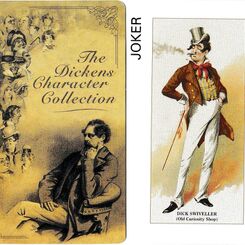
Dickens Character Collection
Dickens Character Collection published for a London Casino as a promotional gift.
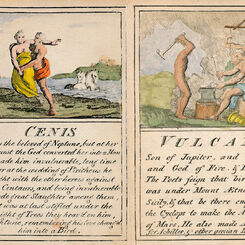
Pantheon or Heathen Mythology
Pantheon or Heathen Mythology cards for instruction of youth, c.1770.
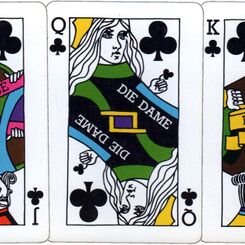
Desperanto
Desperanto language game by Qui Vive Ltd, c.1990.
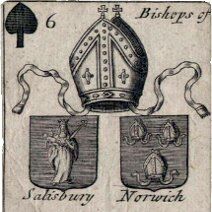
Arms of English Peers
The Arms of English Peers playing cards were first published in 1686. Heraldry, or a knowledge of th...

University of Essex
Playing Cards produced for the University of Essex during 2005-2007.
Most Popular
Our top articles from the past 60 days