


Arms of English Peers
The Arms of English Peers playing cards were first published in 1686. Heraldry, or a knowledge of the arms and blazons of royalty was an important part of a respectable education.
Arms of English Peers Playing Cards, 1686-88
A great fashion for educational playing cards had spread from France to Holland, Germany and England during the seventeenth century. The Arms of English Peers playing cards were first published in 1686. Three editions of the pack are known, each with some variations. Heraldry, or a knowledge of the arms and blazons of royalty and aristocracy, had become an important part of a respectable education. Each card gives the armorial shields of two, three or four of the Lords Spiritual and Temporal, surmounted by a large coronet or mitre. The value is indicated by a suitmark with a numeral or letter in the upper left corner. Backs plain.
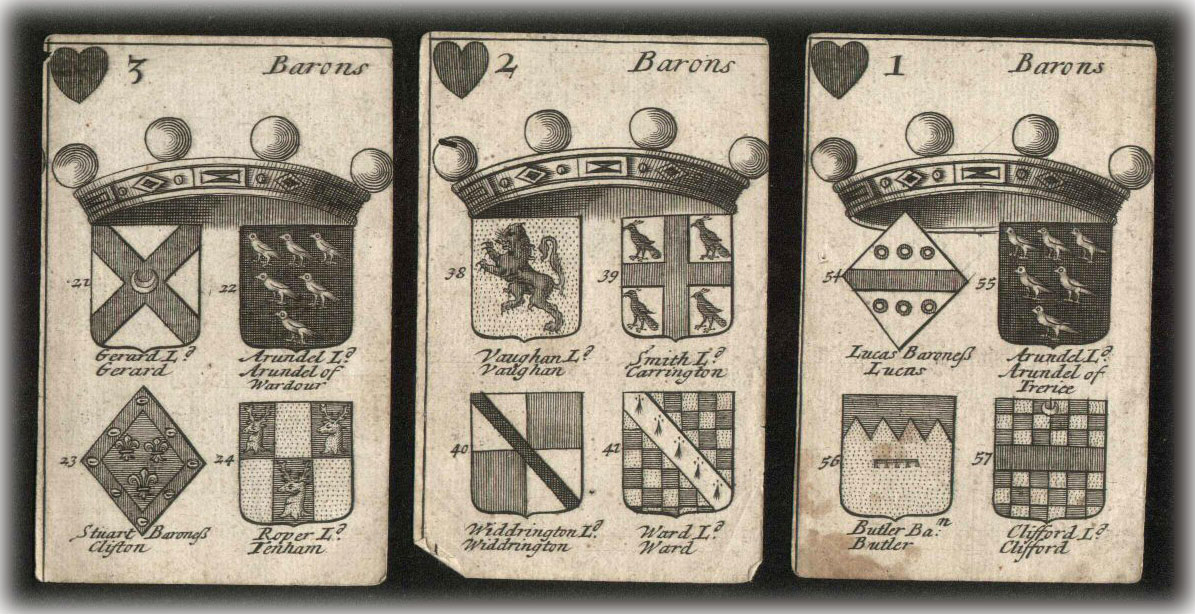
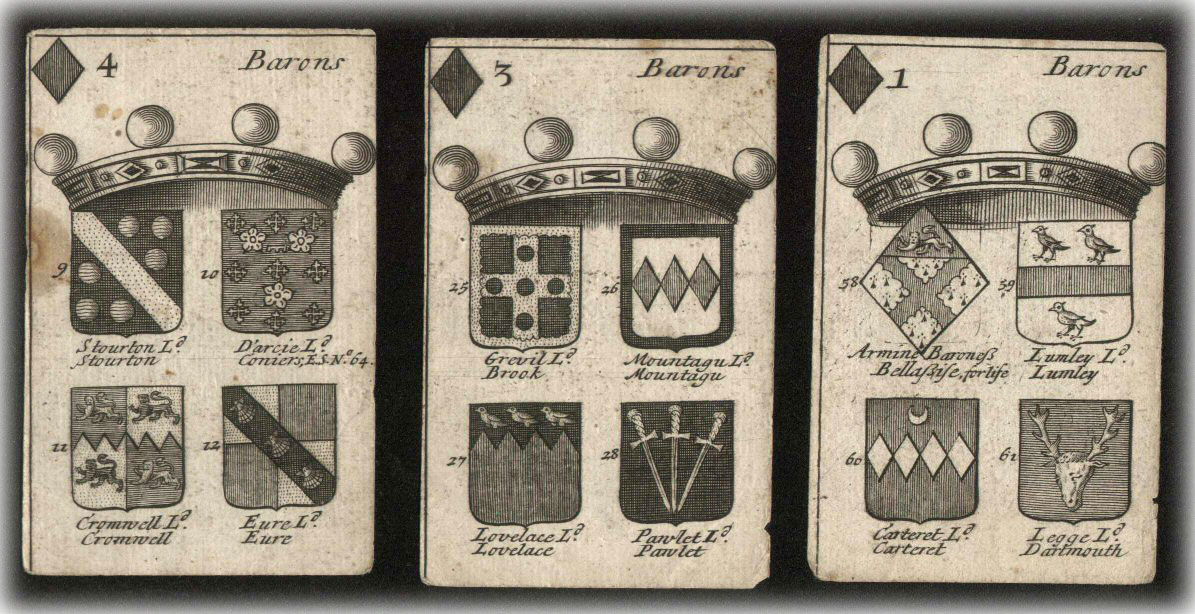
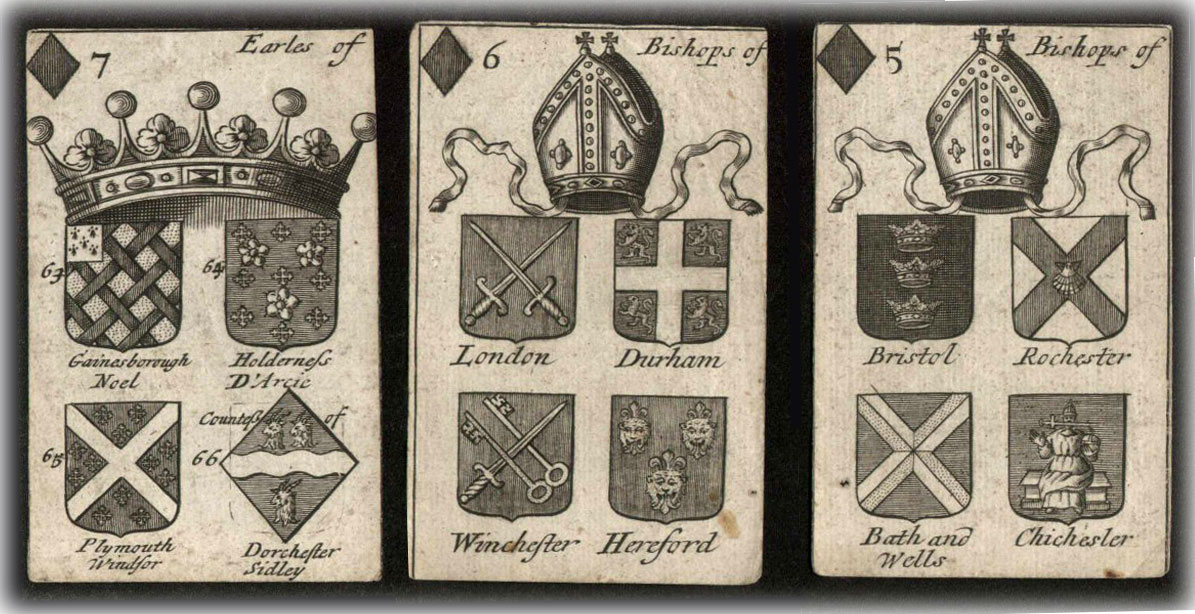
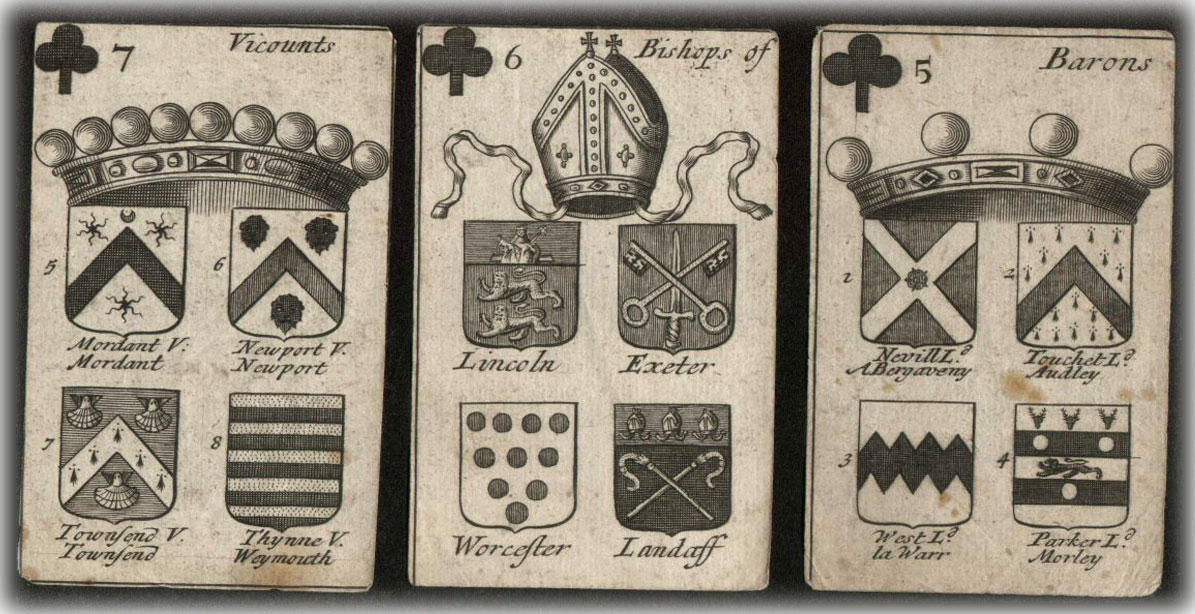
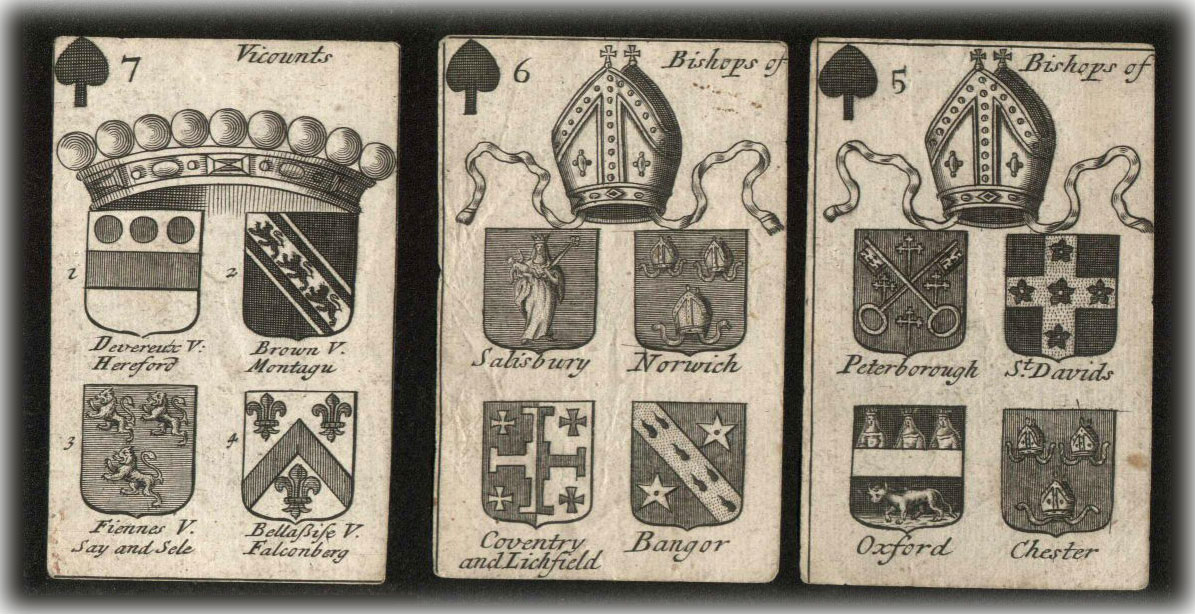
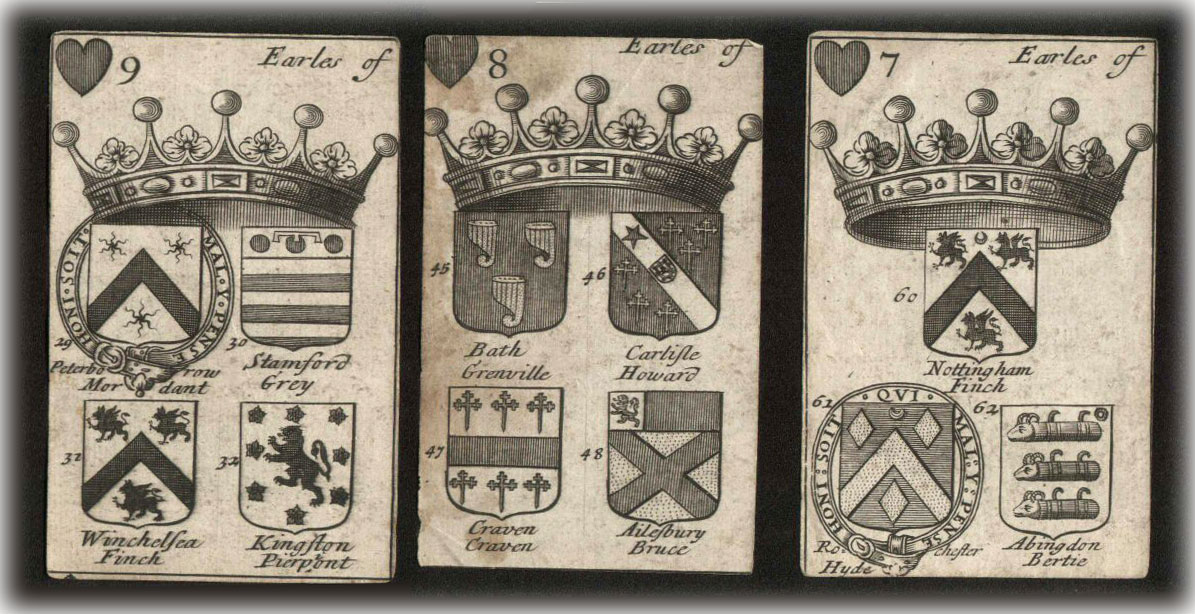
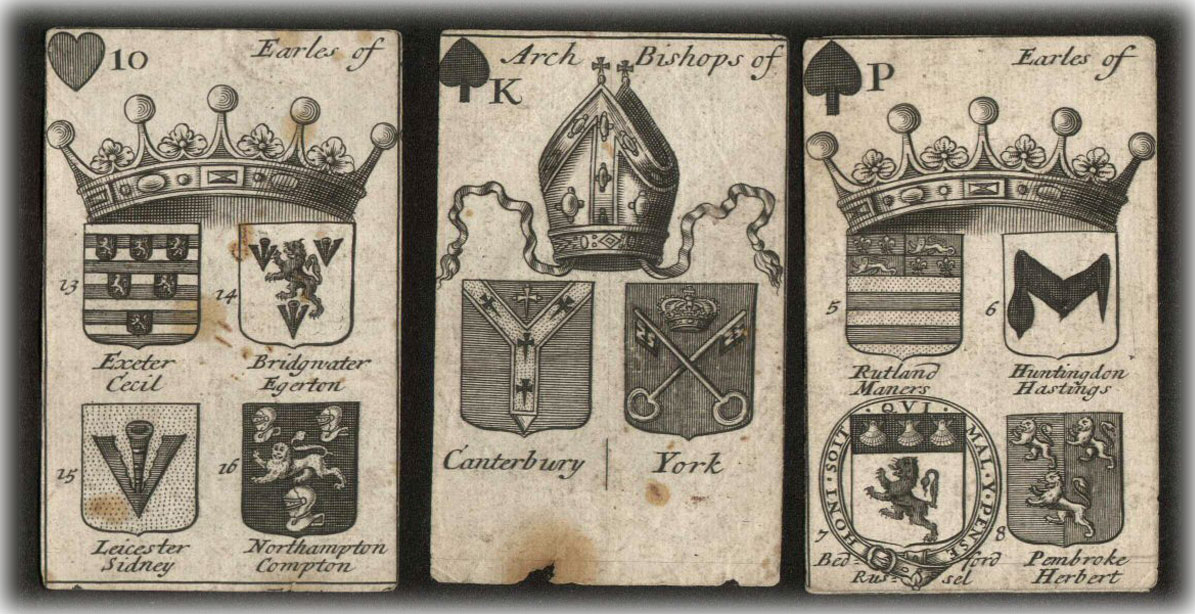
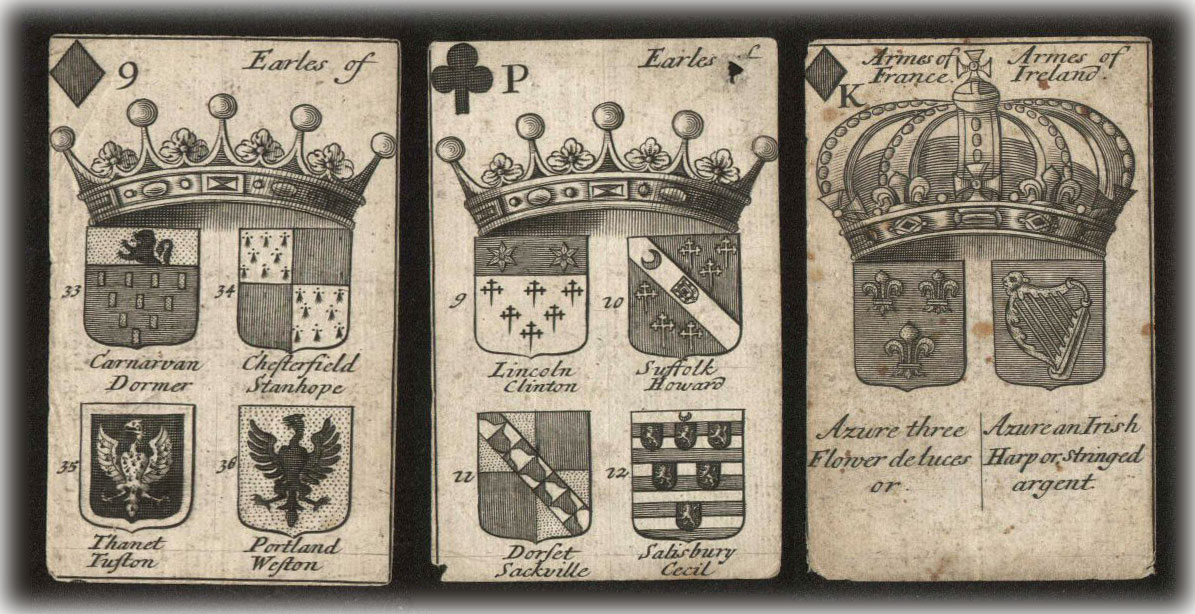
Above images kindly contributed by John Sings - www.gamesetal.net►
Facsimile Edition
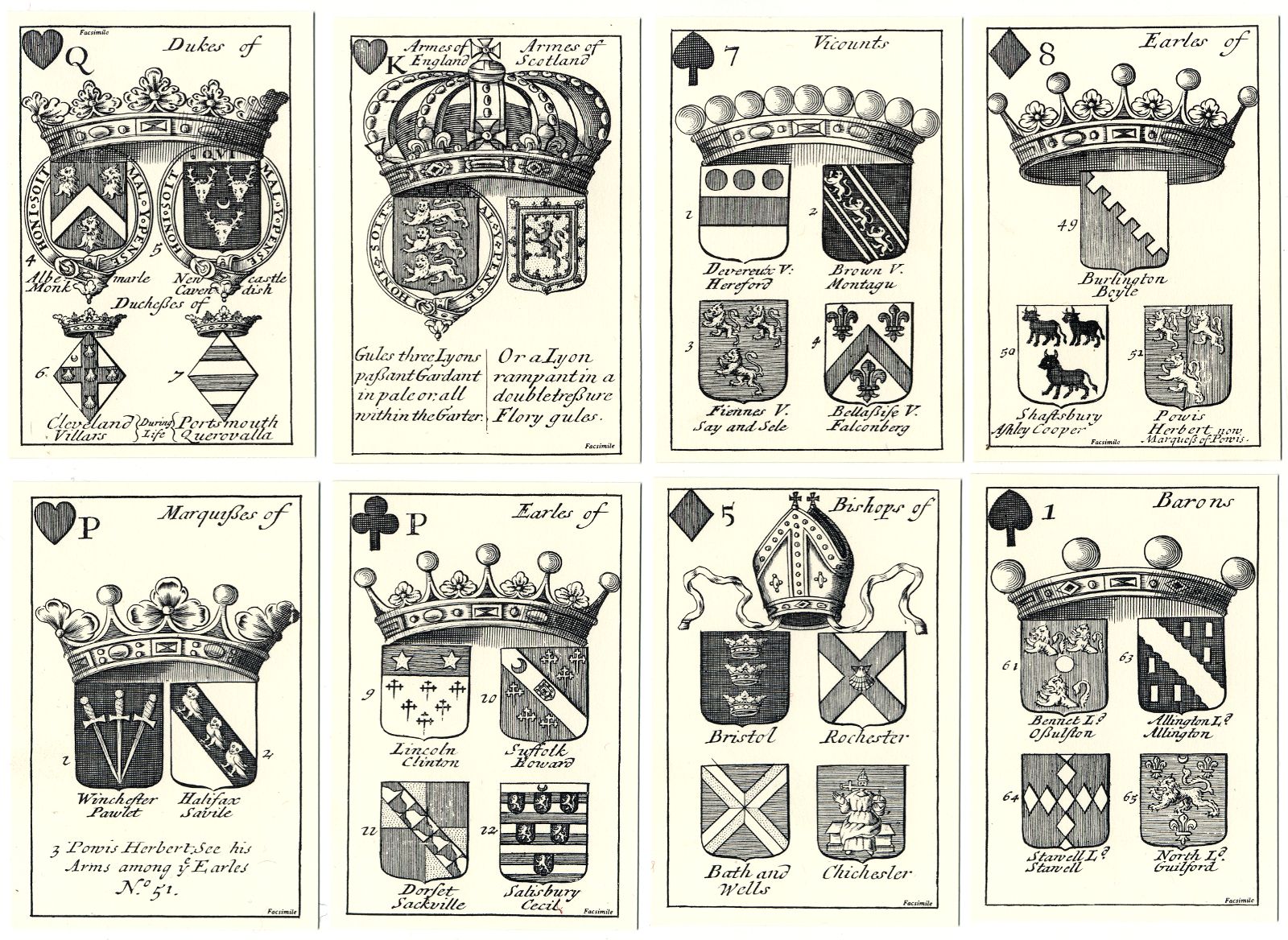
Above: cards from the facsimile edition courtesy Giles de Margary. Packs can be ordered directly from www.harrymargary.com►
The arms of the peers are arranged according to rank in each suit: archbishops and dukes are superior to earls and barons. It is obvious from the differences which can be observed in the different editions that every effort was made to keep up to date with deaths, successions and creations of titles, which is a measure of the importance attached at that time to having an exact knowledge of contemporary blazons. This facsimile edition is from the range published by Harry Margary►

By Simon Wintle
Spain • Member since February 01, 1996
I am the founder of The World of Playing Cards (est. 1996), a website dedicated to the history, artistry and cultural significance of playing cards and tarot. Over the years I have researched various areas of the subject, acquired and traded collections and contributed as a committee member of the IPCS and graphics editor of The Playing-Card journal. Having lived in Chile, England, Wales, and now Spain, these experiences have shaped my work and passion for playing cards. Amongst my achievements is producing a limited-edition replica of a 17th-century English pack using woodblocks and stencils—a labour of love. Today, the World of Playing Cards is a global collaborative project, with my son Adam serving as the technical driving force behind its development. His innovative efforts have helped shape the site into the thriving hub it is today. You are warmly invited to become a contributor and share your enthusiasm.

Activity for Arms of English Peers
Sign in to comment or save this article.

Related Articles
Les Chevaliers de la Toison d’Or
Medieval manuscript art at its finest.
Learning to play Cribbage
I learned to pay cribbage when I was very young, aged around six or seven.
Ethics Education playing cards
Ethics Education playing cards produced by the Centre for Military Ethics at King’s College London, ...
Playing Cards: A Secret History
Playing Cards: A Secret History
70: Woodblock and stencil : the spade courts
This is a presentation in a more straight forward fashion of the work done by Paul Bostock and me in...
Aesop’s Fables
Aesop’s Fables playing cards by I. Kirk, c.1759.
Pantheon or Heathen Mythology
Pantheon or Heathen Mythology cards for instruction of youth, c.1770.
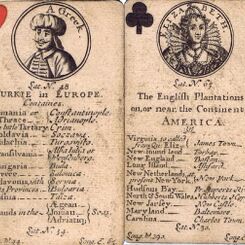
Geographical Playing Cards, c.1682
Geographical playing cards sold by Henry Brome, second edition, c.1682.
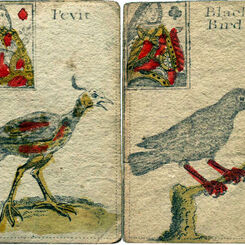
Forrest Cards, c.1750s
Hand-coloured Forrest Cards produced for “Young Gentlemen & Ladys who are Lovers of Ingenuity”, c.17...
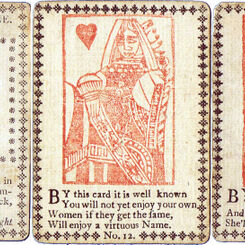
Fortune Telling playing cards
English Fortune Telling cards probably published c.1770.

University of Essex
Playing Cards produced for the University of Essex during 2005-2007.
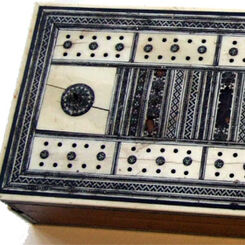
Cribbage Board Collection part 2
A collection of antique and vintage Cribbage Boards by Tony Hall, part 2
Suicide King
The King of Hearts, holding a sword behind his head, is sometimes nicknamed the “Suicide King”. He c...
William Warter
William Warter's Proverbial Cards, which carry illustrations of old English proverbs, were first pub...
Pope Joan Trays
Some traditional Pope Joan boards comprise a circular tray, others are square, divided into sections...
19: 19th Century Breaks with Tradition - Unusual versions of the Standard English Pattern
The centuries-long tradition of English court cards was subject to misinterpretation and in some cas...
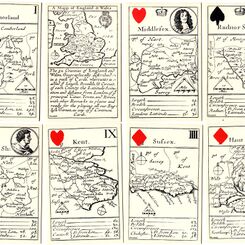
Robert Morden’s Playing Cards
The 52 Counties of England and Wales described as a pack of cards first published in London in 1676....
The History of Playing Cards
Playing cards appear in European records in the late 14th century, but their earlier history lies fu...
History of English Playing Cards & Games
The History of English Playing Cards dates probably from the mid 15th century
Early English Playing Cards
Early examples of traditional, standard English playing cards of which the best known are those of H...
Most Popular
Our top articles from the past 60 days


