


Secondary Uses of Playing Cards
The unprinted backs of playing cards have led people to use them for secondary purposes such as memorandum slips, bibliographic index cards, for declarations of love, rendezvous notes, emergency money, visiting cards and so on.
Is a Pack Only for Playing Games?
Playing cards have served many secondary purposes beyond a gaming device.
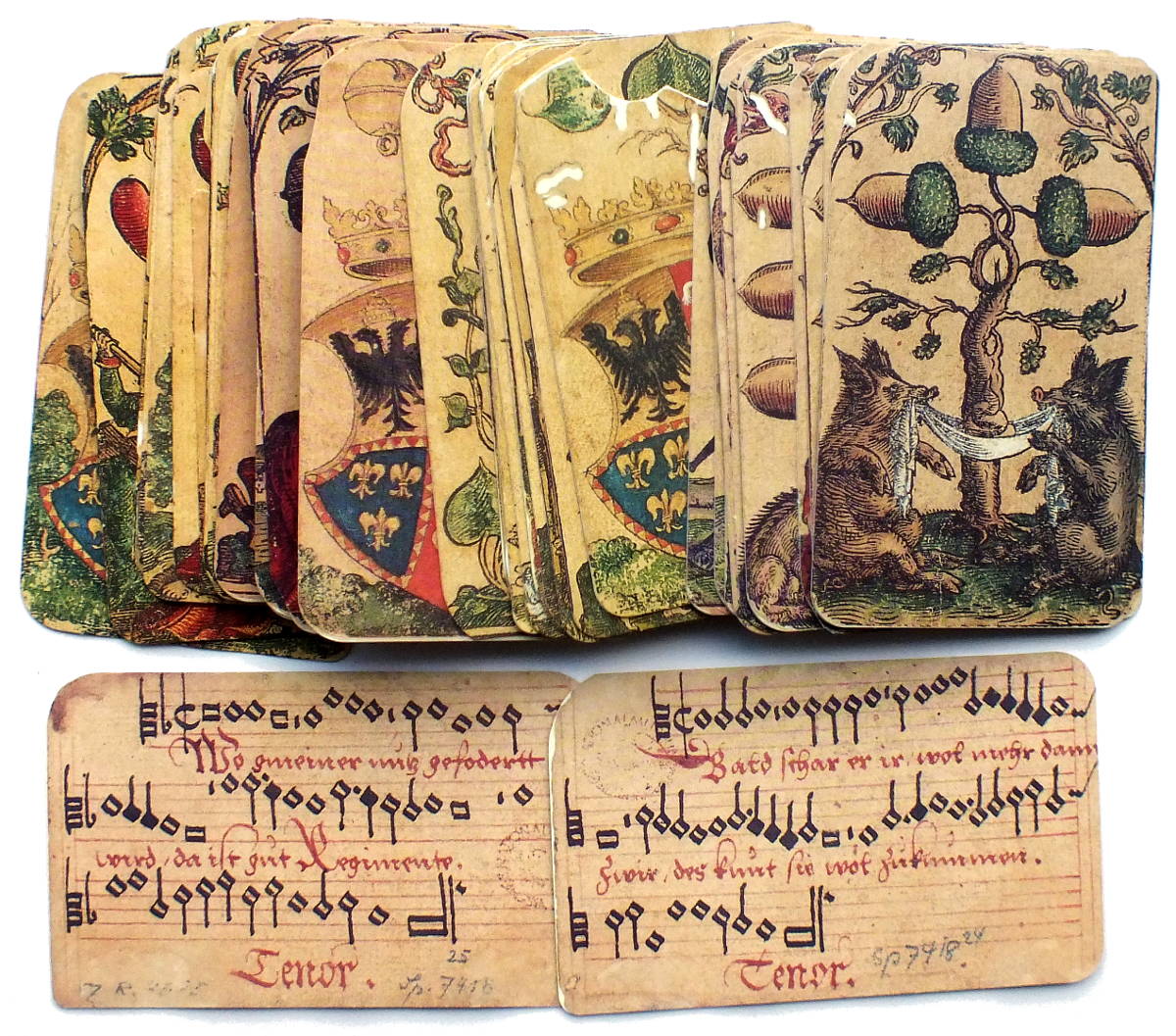
Above: cards from a satirical pack designed by Peter Flöttner of Nuremberg, c.1545. The backs of the cards contain the vocal scores for German songs. Cards from the facsimile edition published by Ferd Piatnik & Söhne, Vienna, 1993.
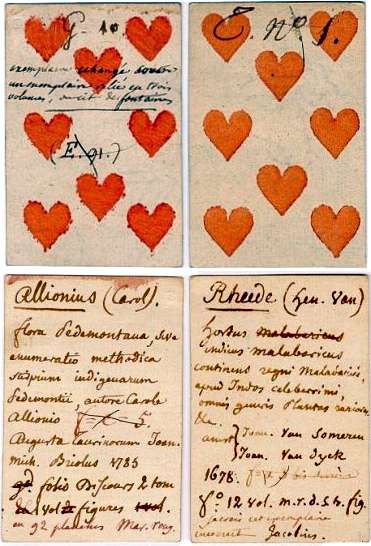
Above: repurposed playing cards with handwritten notes on the reverse.
Since their first appearance as printed artefacts, surplus or defective proof sheets of playing cards were re-used as stiffening material inside book covers. Some of the earliest playing cards have survived in this manner, having been discovered when the book cover needed repair. Sixteenth century miniatures were usually painted in body colour on playing cards or on vellum. More recently, the unprinted backs of playing cards have led people to use them for secondary purposes such as memorandum slips, bibliographic index cards, for declarations of love, rendezvous notes, credit notes, pass slips or emergency money►
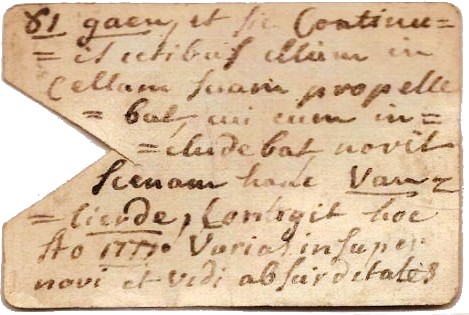
Above: reverse of 17th century French playing card with handwritten latin text see more →
Until the latter end of the 18th century playing card backs were left plain white. The problem with this was that card backs became easily marked during play, and would thereby become recognisable by an opponent. It was expensive to buy another new pack, so spoilt cards might be returned to the workshop for cleaning. Alternatively, the white backs of incomplete packs were often used for secondary purposes, from currency to visiting cards to library classification cards...
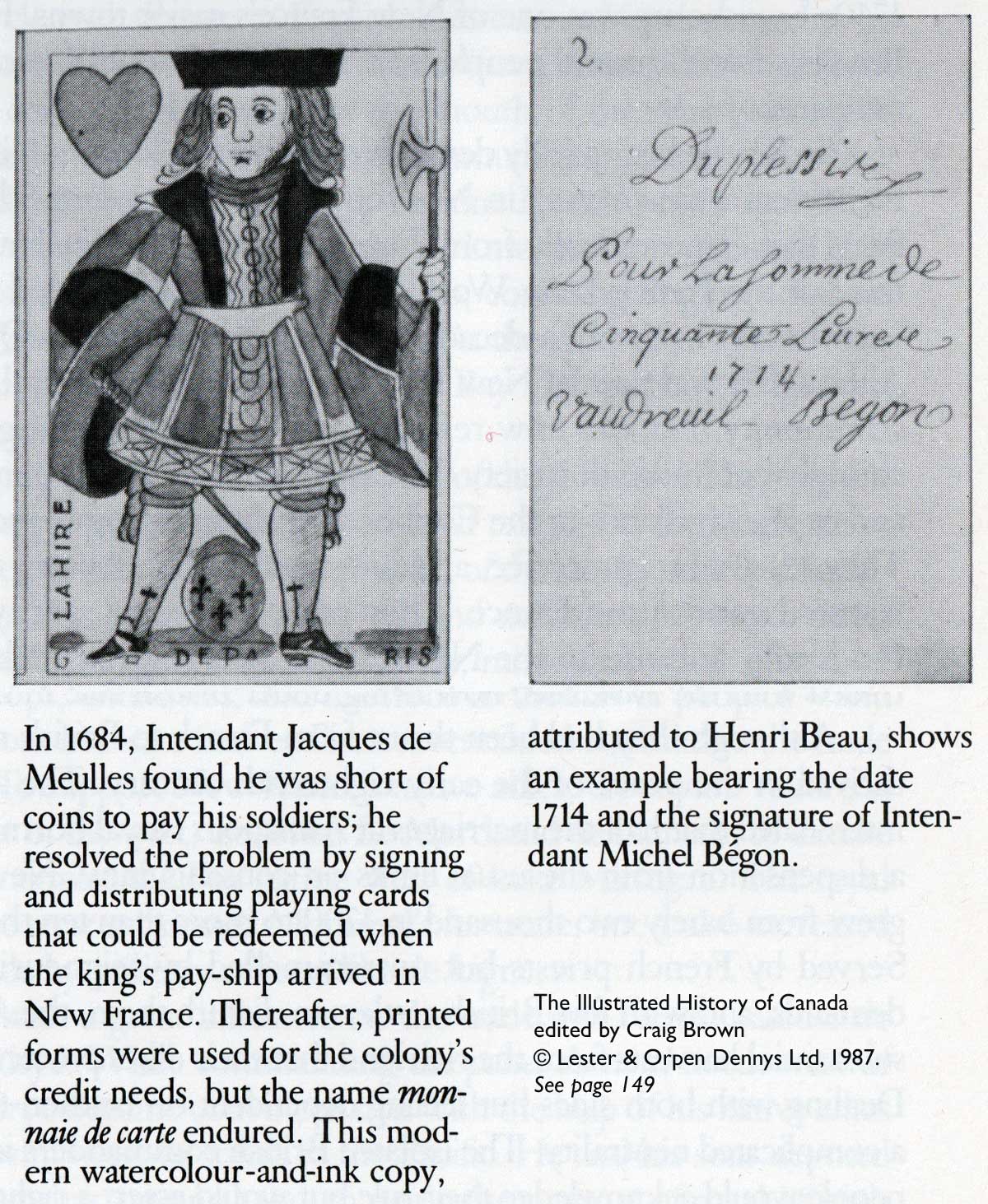
Above: from The Illustrated History of Canada edited by Craig Brown, © Lester & Orpen Dennys Ltd, 1987, page 149.
When the French in Canada were short of gold coins, they used the backs of playing cards as emergency money. Even such things as the tallying of compulsory labour were marked on playing cards. Some card backs have been found containing miniature watercolour or oil paintings, or hand-drawn musical notes in some cases amounting to several vocal parts divided between several cards. Yet another example is watercolour scenes on the drawer faces of late 17th and early 18th Catalan chests painted on the backs of playing cards.¹

Above: while restoring a desk with tortoiseshell inlays on the drawer fronts, several of these became detached. The restorer noted the traditional technique of inserting card between the wood and the shell. This served as a cushion, improving adhesion and preventing the brittle material from cracking due to natural movement of the wood. Beneath these inlays lay fragments of antique playing cards which helped to confirm date as late 17th / early 18th century. Image courtesy Maricruz Palacios, www.mericustom.es ►
In the eighteenth century Voltaire, having unsuccessfully called on an absent friend, ‘sur une carte à jouer très sale’ wrote crossly: ‘M. de Voltaire est venu quatre fois’. Because playing cards could be conveniently carried upon the person, and did not crumple like ordinary notepaper, they were found to be handy for jotting down messages, a necessary improvement on the garbled verbal messages of illiterate eighteenth century servants.
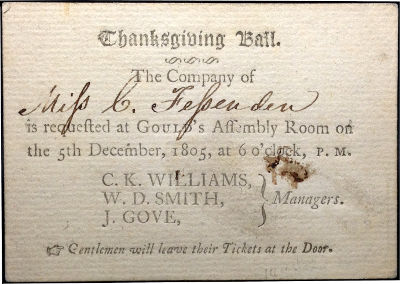
In 1749 a playing card was used as an invitation to a ball, and in 1765 playing cards were used as admission cards to the classes at the University of Pennsylvania.
According to Gejus van Diggele, secondary use is “a single playing card (or a few cards) that were produced to play games have been used for other purposes. These cards may be cut, trimmed, torn, folded, pinned, glued or pasted. On one or both sides there might be additional manuscript or printed text, drawings, paintings, doodles, musical notations or any other alteration of the original card.”
Six of Hearts: “Grace’s Card”. Baron Grace of Courtstown, in 1689, raised a regiment of foot and troop of horse for James II, at his own expense. When fighting for the King, he rejected an ultimatum from the enemy written on the Six of Hearts.
Ace of Clubs: It was on this card that Oliver Goldsmith inscribed an IOU to Sir Joshua Reynolds, intimating at the same time that this particular suitmark resembled nothing so much as the sign of a pawnbroker.
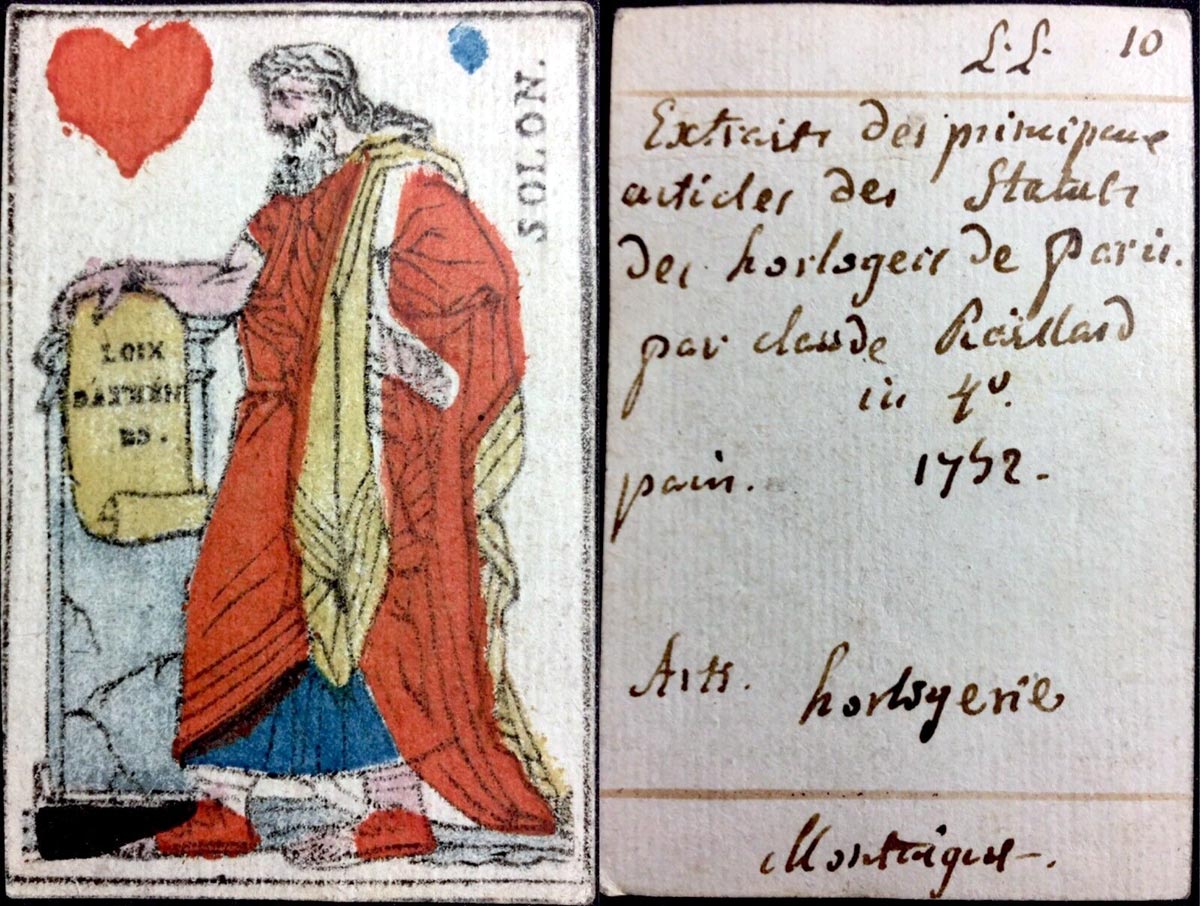
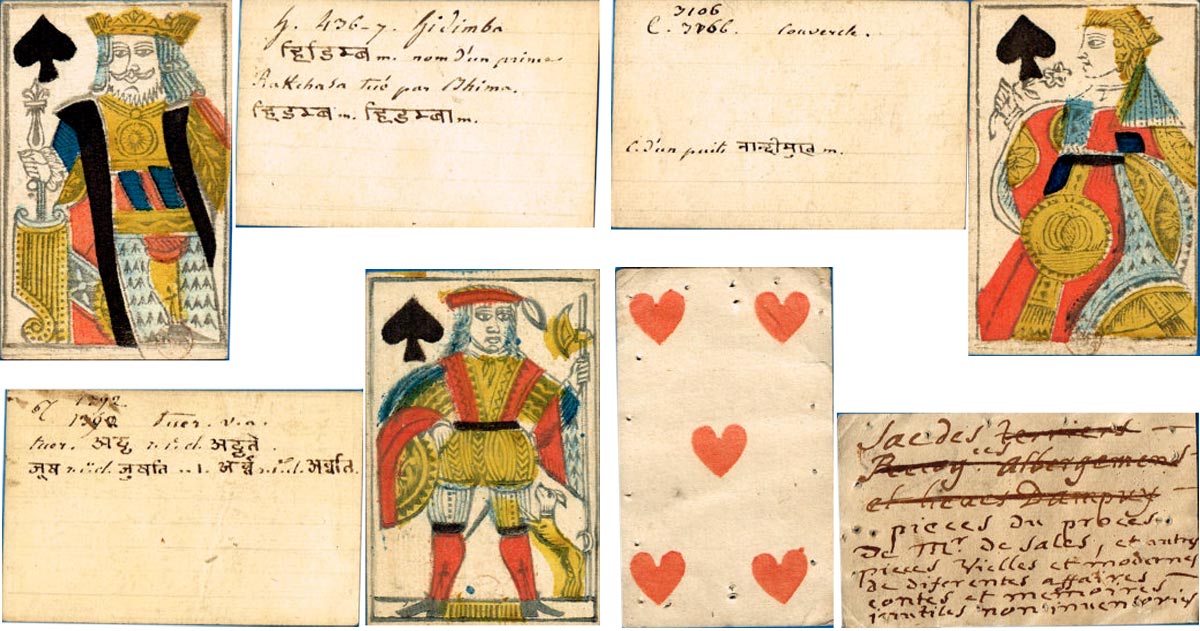
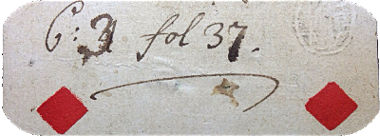
Above: four examples of playing cards where the backs have been repurposed. Images courtesy John Sings.
The link between the history of visiting cards and the secondary use of playing cards was exploited by Thomas de la Rue (see below). Other secondary uses of playing cards include bookmarks, stiffening material, transformation cards, and of course, a vehicle for fortune-telling, conjuring, taxation, education or political satire as well as advertising. (See another example here). During the 20th century advertising moved over from the backs of cards to the fronts so that we often find a King, Queen or Jack offering a drink or a cigarette →.
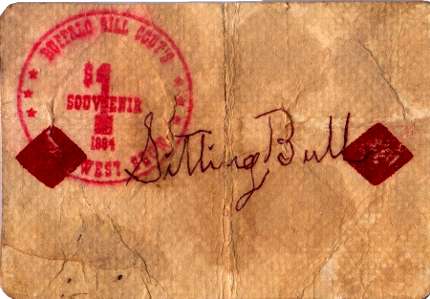
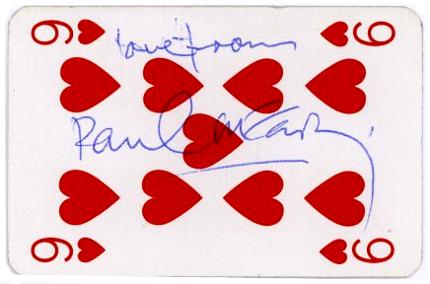
Above: two examples of playing cards used for autographs. Cases have been reported of fake "Sitting Bull" autographed playing cards.
The Invention of the Visiting Card
One of Thomas de la Rue's successful innovations to his playing card manufacturing enterprise was visiting cards. Thomas reduced the size of the cards, thereby rendering them more portable. He also used his enamelled playing-card paper which bent less easily than the flimsier, pre-De la Rue cards. Apart from inventing the modern English playing card Thomas could also be called ‘the father of the English visiting card’, or as Chambers’ called it, ‘the enamelled calling-card’.
References
- Mónica Piera Miquel: Arquillas barcelonesas de finales del siglo XVII, published in Estudi del Moble, 2005, 1, p.12-15. This article illustrates three card fragments by Barcelona card maker Juan Francisco Grosset (1690) found in the chest during restoration.

By Simon Wintle
Spain • Member since February 01, 1996
I am the founder of The World of Playing Cards (est. 1996), a website dedicated to the history, artistry and cultural significance of playing cards and tarot. Over the years I have researched various areas of the subject, acquired and traded collections and contributed as a committee member of the IPCS and graphics editor of The Playing-Card journal. Having lived in Chile, England, Wales, and now Spain, these experiences have shaped my work and passion for playing cards. Amongst my achievements is producing a limited-edition replica of a 17th-century English pack using woodblocks and stencils—a labour of love. Today, the World of Playing Cards is a global collaborative project, with my son Adam serving as the technical driving force behind its development. His innovative efforts have helped shape the site into the thriving hub it is today. You are warmly invited to become a contributor and share your enthusiasm.

Activity for Secondary Uses of Playing Cards
Sign in to comment or save this article.

Related Articles
La baraja de Almagro
De la chimenea al monumento nacional: la baraja de Almagro y el renacer del corral de comedias.
The Paraphernalia of Card Play
Innovation and novelties in the accessories on the card table.
History of Tarot and Playing Cards: Timeline & Origins
An alternative history of tarot and playing cards – from Mamluk Egypt to the invention of tarot in R...

Copechat Paramount Sorting System
Preserving the past: a specimen deck showcasing edge-notched cards and their ingenious sorting syste...
Why our playing-cards look the way they do
Analysis of early playing card designs: origins, suit differences, standardization, technological ad...
Early German playing cards
Some early examples of popular German playing cards from the XV and XVI centuries.
Foster’s Self-Playing Whist Cards
In 1890 R. F. Foster published the first edition of “Foster’s Whist Manual” which was to become the ...

Marie and Laurent’s Wedding
Wedding invitation and thank you card in the form of playing cards. France, 2019.
66: Adverts and related material 1862-1900
Some further material relating to cards from nineteenth and twentieth century periodicals.
64: The descendants of the French regional patterns: 2
A continuation oF the development of the off-spring of the Paris patterns and a few examples of how ...
Notgeld - Emergen¢y Money
Notgeld - Emergency Money - was in rare cases issued on playing cards.
Trentine Pattern
Trentine Pattern
Suicide King
The King of Hearts, holding a sword behind his head, is sometimes nicknamed the “Suicide King”. He c...
Pope Joan Trays
Some traditional Pope Joan boards comprise a circular tray, others are square, divided into sections...
Triplicate No.18
Dougherty first secured a patent for “Triplicates” in 1876, a novel type of indices with a miniature...
1: Playing Cards and their History: An Introduction and some links to other sites
What was considered the first mention of playing cards in England is in 1463 when Edward I banned th...
Mamluk Playing Cards
Nã'ib, the game of lieutenants... these cards are amongst the earliest Arabic playing cards ext...
Italian Playing Cards
The first reliable evidence that playing cards were being used in Italy is from 1376, when a game ca...
The History of Playing Cards
Playing cards appear in European records in the late 14th century, but their earlier history lies fu...

Playing Cards in other cards
Secondary applications of playing cards.
Most Popular
Our top articles from the past 60 days


Ваня Козлов (Vanya Kozlov)
19 November 2025, 09:47SavedSaved this article to Ваня Козлов's Collection