


Copag Baralho Espanhol
Copag Baralho Espanhol / Naipes Español.
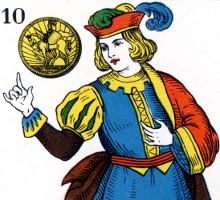
“Sevilha Tipo Espanhol” Spanish-suited cards from Brazil
COPAG's Spanish-suited deck, based on the Catalan pattern, was created around 1940 and is still in production. Some editions are called “Sevilha Tipo Espanhol,” others “Baralho Espanhol,” in both cases alluding to Spain rather than Portugal. Where once Brazil followed the Portuguese pattern of cards, in the 20th century the Spanish pattern was preferred, as shown here. An edition probably destined for Spanish-speaking markets such as Chile is called “Naipes Español Copihue.” Copag's Ace of Coins has a design with a central medallion showing a mounted knight in armour, with caduceus and cornucopia in the background on a small plinth.
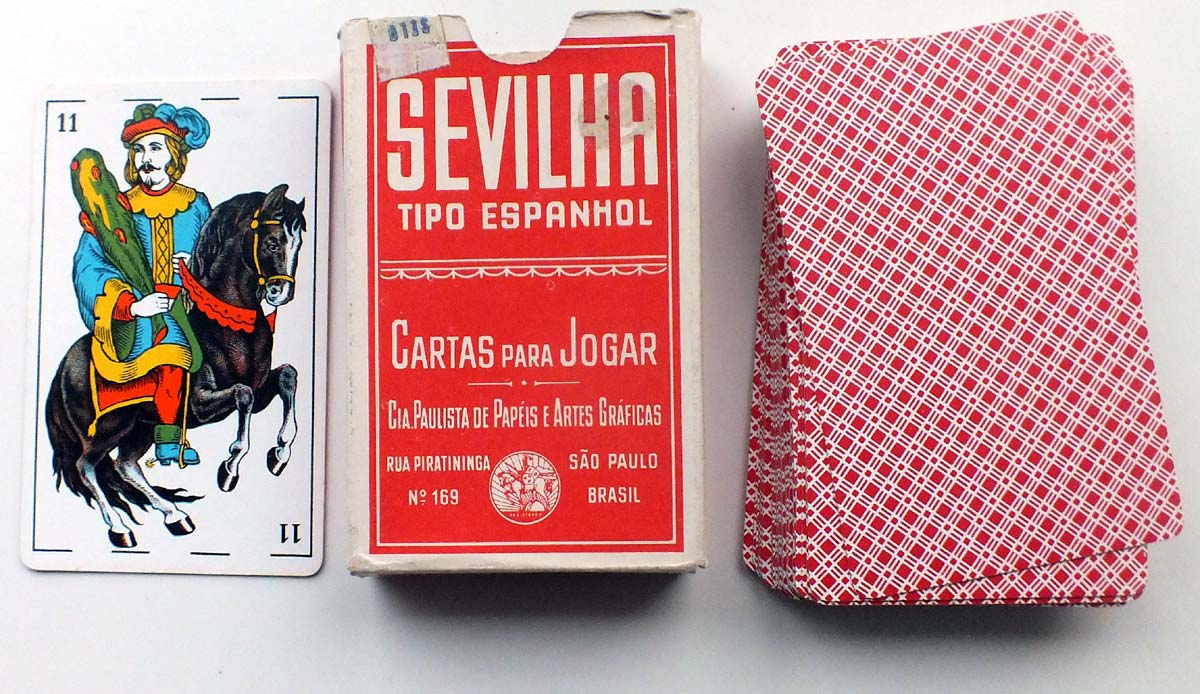
Above: 48-card “Sevilha Tipo Espanhol” Nº 169 Spanish-suited playing cards made by Cia Paulista de Papéis e Artes Gráficas, Rua Piratininga, São Paulo, Brazil, c.1960. The inscriptions on the cards are in Portuguese.
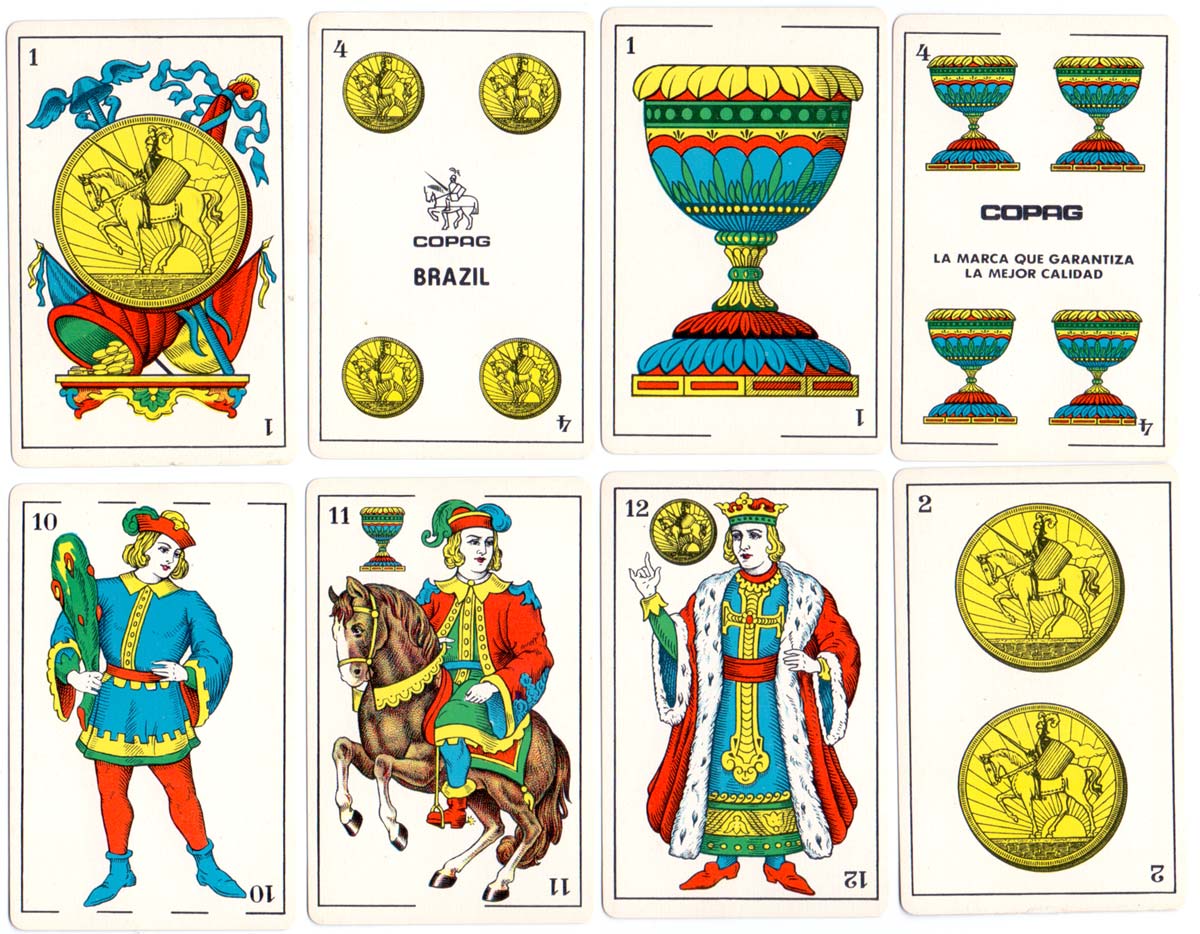
Above: box and four cards from “Naipes Español Copihue” 40-card Spanish-suited deck with a colour photograph of Chilean Huasos dancing on the box, probably for the Chilean market made by Cia Paulista de Papéis e Artes Gráficas, Rua Piratininga 169, São Paulo. All the inscriptions are in Spanish and the Copihue is the national flower of Chile. (Click to zoom).
In 1987 COPAG’s plant was moved to Manaus, in the Amazon region, a tax-free industrial district.
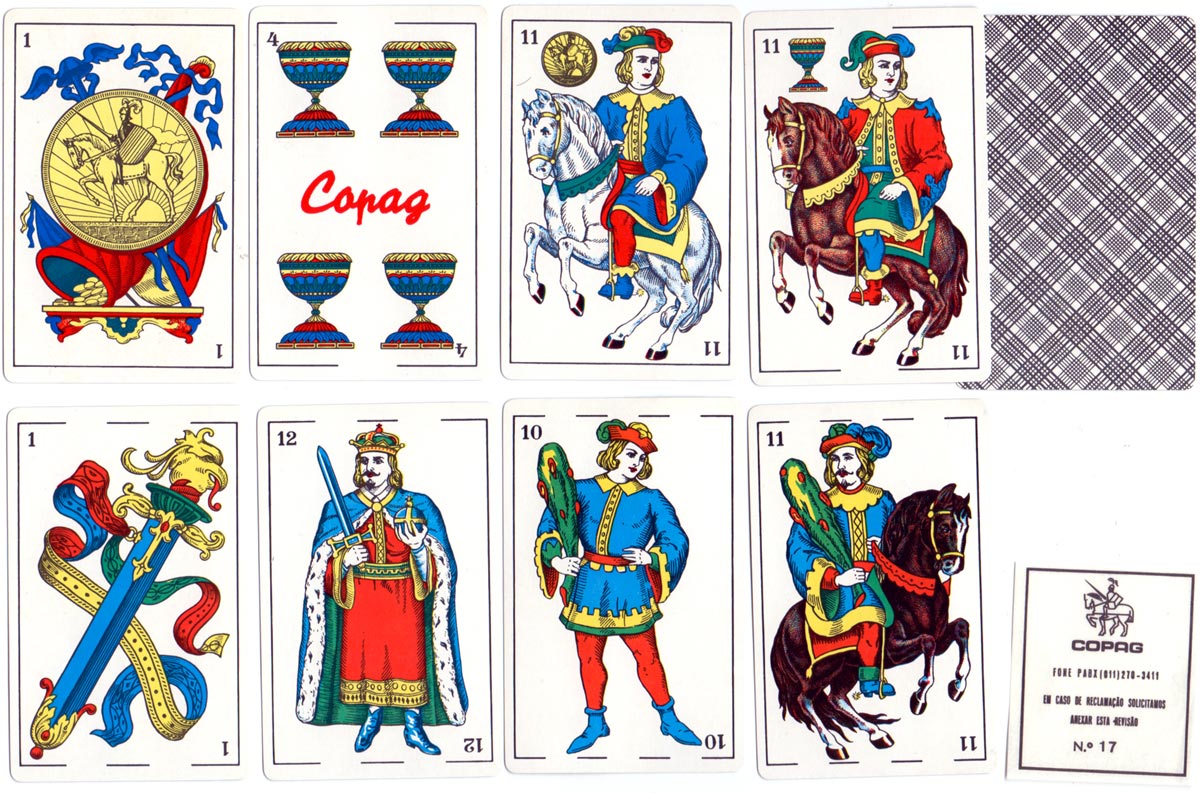
Above: 48-card “Baralho Espanhol” Spanish-suited playing cards with bullfight scene on the box made by Copag de Amazônia S/A, Av. Solimöes, nº 2200, Manaus, Brazil, 1990.

By Simon Wintle
Spain • Member since February 01, 1996
I am the founder of The World of Playing Cards (est. 1996), a website dedicated to the history, artistry and cultural significance of playing cards and tarot. Over the years I have researched various areas of the subject, acquired and traded collections and contributed as a committee member of the IPCS and graphics editor of The Playing-Card journal. Having lived in Chile, England, Wales, and now Spain, these experiences have shaped my work and passion for playing cards. Amongst my achievements is producing a limited-edition replica of a 17th-century English pack using woodblocks and stencils—a labour of love. Today, the World of Playing Cards is a global collaborative project, with my son Adam serving as the technical driving force behind its development. His innovative efforts have helped shape the site into the thriving hub it is today. You are warmly invited to become a contributor and share your enthusiasm.

Activity for Copag Baralho Espanhol
Sign in to comment or save this article.

Related Articles
EPOC playing cards
Modern designs by Brazilian artist Maria Leonor Décourt inspired by standard English pattern courts....
40: More on Design Copies and Fakes
The issue of design copies needs further consideration and when does a copy become a fake?
Brazil
Playing card production in Brazil was officially sanctioned by royal decree in 1770.
Chilean Playing Cards
Despite being a peripheral territory reliant on imported Spanish goods via Peru, colonial Chile had ...
Most Popular
Our top articles from the past 60 days


