


Chinese Money-Suited Playing Cards from the British Museum
This deck of Chinese playing cards, donated to the British Museum in 1896, is believed to have been popularised during the Qing era (1644-1911).
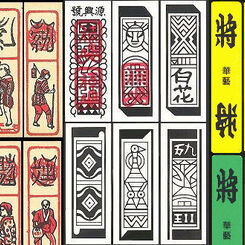
In 1896, Lady Charlotte Schreiber donated this deck of Chinese playing cards to the Trustees of the British Museum. It is thought that this design was popularised between 1644 and 1911, during the Qing era. The cards are made of paper and feature the Chinese money-suited pattern.
According to information provided by Mr. W.H. Wilkinson of the H.M. Consular Service cards like these were obtained in 1889 and 1890 from a variety of Chinese cities, including Canton, Swatow, Foochow, Ningbo, Shanghai, Peking, Kiukiang, Yichang, and Chungking.
This particular pack of Chinese money-suited playing cards represents nearly two hundred years of Chinese culture and history, with characters from a famous Chinese classic printed on the cards. This reflects the enormous popularity of playing cards in China during this period, as well as the novel The Water Margin. This deck of playing cards is an unique artefact that provides insight into Qing-dynasty China's games and hobbies.


Above: A rare deck of Chinese playing cards dating back to the Qing era (1644-1911)
References
- The British Museum Online Collection
- O’Donoghue, Freeman M: Catalogue of the collection of playing cards bequeathed by Lady Charlotte Schreiber, Trustees of the British Museum, London, 1901. See p.184 ff [digital version here]
- Thanks to George Pollard for additional research.

By Adam Wintle
Thailand • Member since March 15, 1997
Adam has been involved in developing the site as well as reviewing new decks and conducting research. He is particularly interested in innovation, Kickstarter and East Asian cards. He is a member of the IPCS, 52 Plus Joker, and webmaster of the EPCS.

Activity for Chinese Money-Suited Playing Cards from the British Museum
Sign in to comment or save this article.

Related Articles
French Spanish-suited cards for South America
Early example of the Parisian Spanish style before it became standardized by later Parisian publishe...
Illustrated Playing Cards
Illustrated (or “pictorial”) playing cards replace the standard faces with scenes and text, turning ...
Giovanni Battista Marcovich
An early example of the Triestine pattern.
Are Playing Cards a Good Investment?
Playing cards can appreciate modestly, with historical annual gains of 2-3%. Rare cards offer higher...
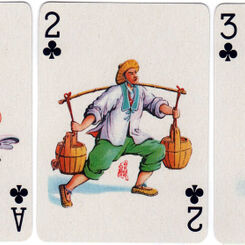
Characters of “The Water Margin”
Characters from the Chinese novel “The Water Margin” - 水滸撲克.
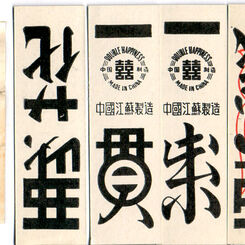
Hakka
“Double Happiness” brand Hakka [客家] playing cards used by Hakka ethnic communities who have a separa...
Ceki Cards
Indonesian Ceki cards
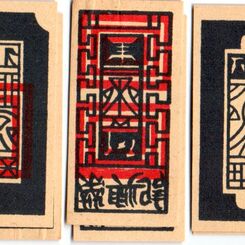
Chi Chi Pai
Chinese “Chi Chi Pai” Playing Cards by Mesmaekers Frères for Far East market.
Torras y Sanmartí
Torras y Sanmartí y Cía, Barcelona, 1830.
Playing Cards from Malaysia
Playing Cards from Malaysia.
Thai & Siamese Playing Cards
The Portuguese were the first Westerners to trade with Ayutthaya in Thailand in the 16th century. Tr...
Regional Cards: China and Hong Kong
Explore the history, patterns and designs of traditional Chinese playing cards, featuring unique reg...
Regional Cards: South-Eastern Asia
Indonesia • Malaysia • Singapore • Thailand • Vietnam
Chinese Playing Cards 中国纸牌
The Chinese took their cards with them wherever they travelled and traded in the East, and we find C...
Most Popular
Our top articles from the past 60 days


Adam Wintle
17 April 2026, 13:56SavedSaved this article to Strange Decks and Unusual Systems