


Playing card designs by Franz Exler
Reconstruction of playing cards from the original 1903 designs.
In 1903, the publishing house Verlag Anton Schroll und Co. in Vienna published a collection of graphic design works by students of the School of Applied Arts in Vienna and their professors. The collection presented contemporary graphic design typical of the production of the Viennese Art Nouveau and the operation of the Wiener Werkstaette workshops.
Among the designs for posters, wallpaper patterns, textiles and wrapping paper is a unique design for a set of double-headed cards by Franz Exler. It contains only 18 cards with values 7-10, Jack, Queen, King and Ace. It can be identified as a deck of 32 so-called piquet cards by the values given in the French suits. Nowadays, such a deck is commonly sold with the Vienna pattern for Belote or Preferance.
The pip cards are reduced to an artistically designed corner "index" of value with suit marks. The court cards are designed with a simple scheme differentiated only by colour. The original card design is also accompanied by a short review by Joseph Aug. Lux, who highlights the simple modern design serving the game without unnecessary graphic clutter. Under the care of the publisher Counter Clockwise, a reconstruction of the original design was published in 2022 with two versions of the reverse side and a cover description just for the above games.
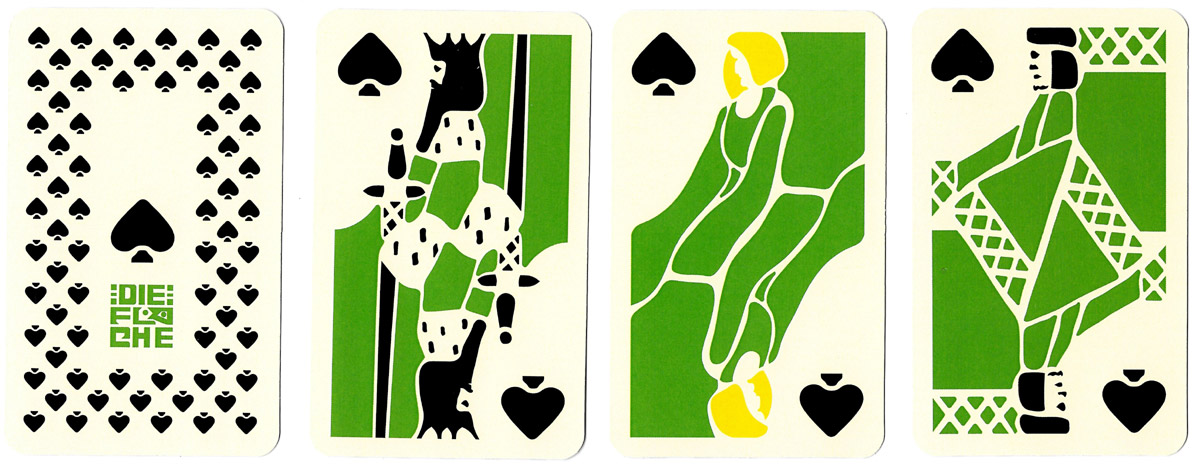
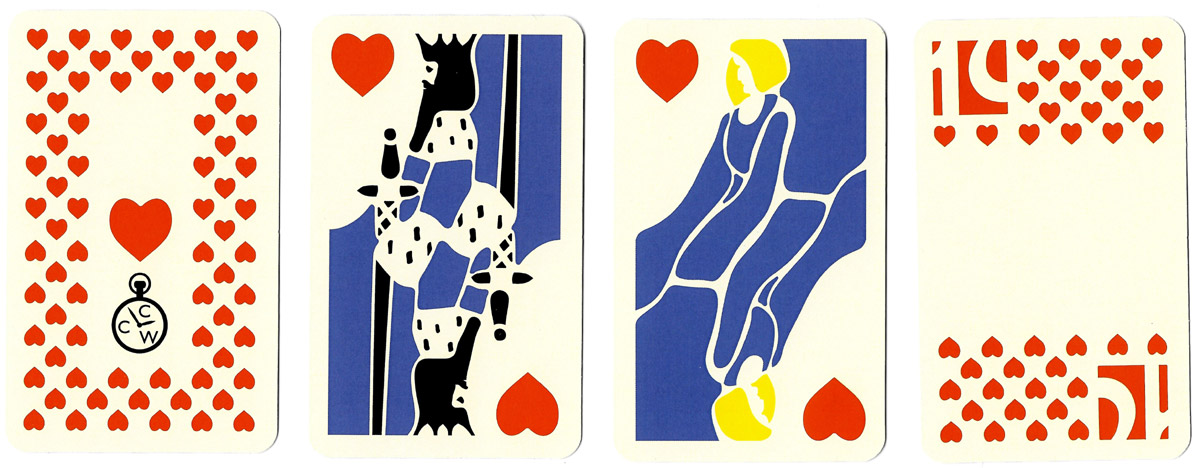
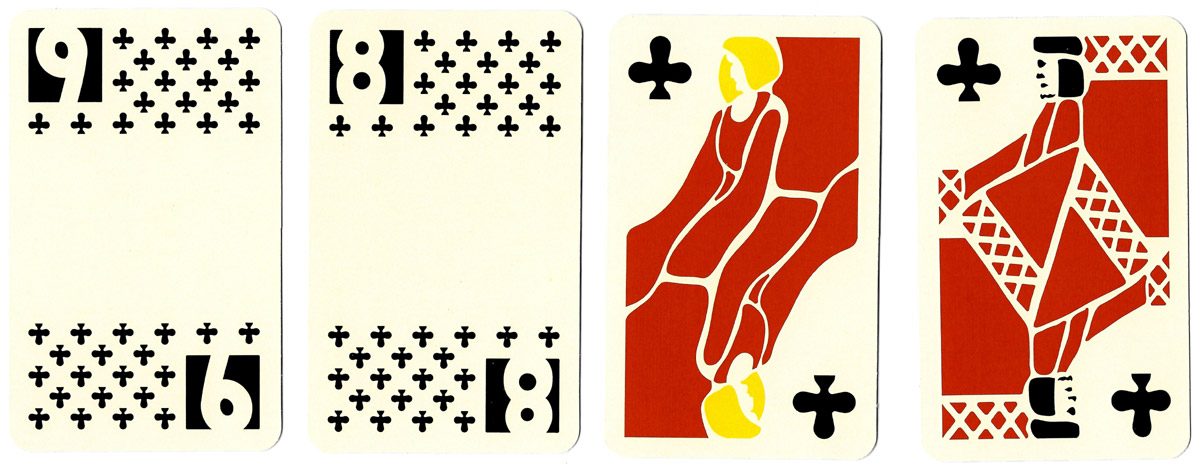
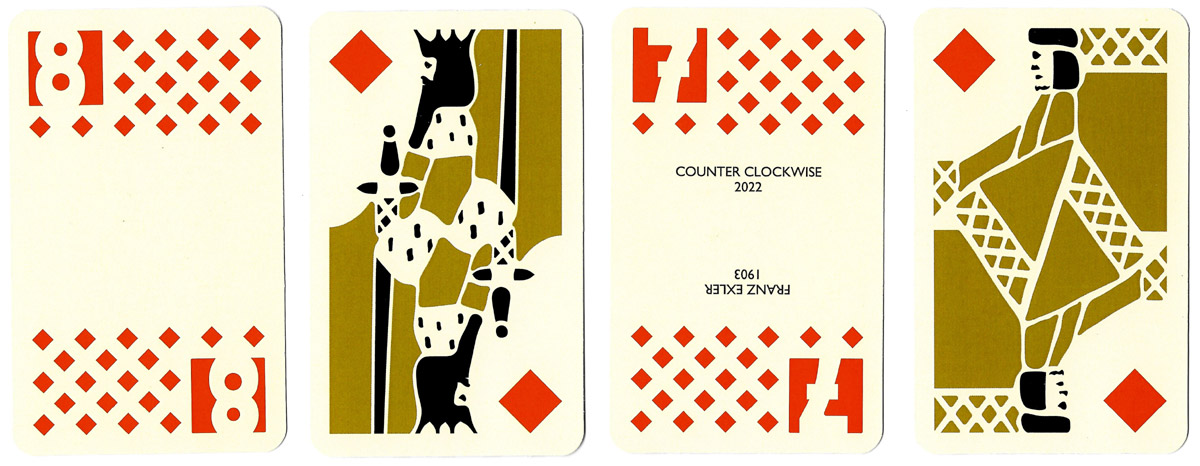
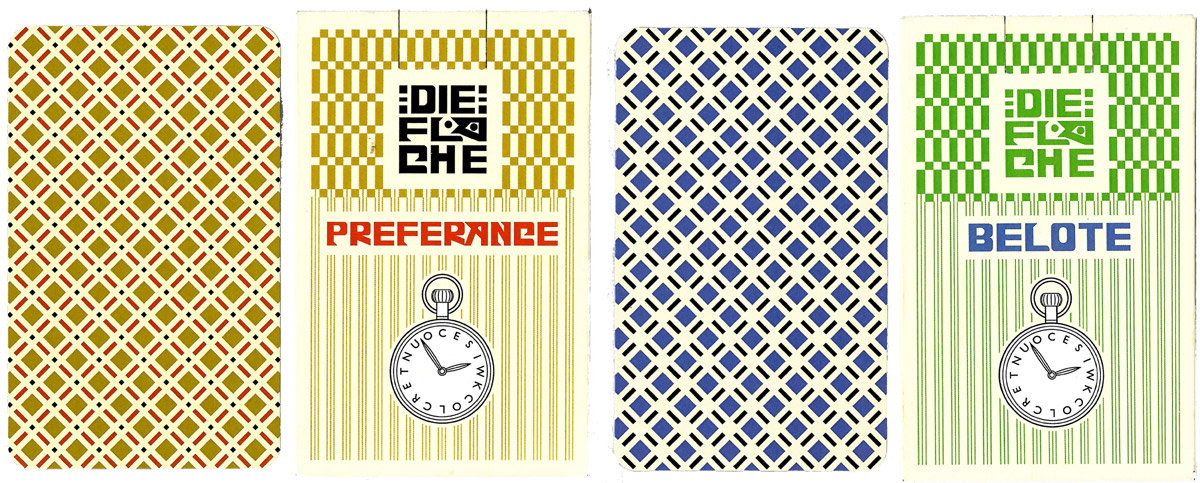
Above: original playing card designs by Franz Exler reconstructed and published by Counter Clockwise, Czech Republic, 2022.
Further work by Franz Exler is documented by interior designs published in 1902-3 in DAS INTERIEUR and in a convolume of work by Josef Hoffmann's students for the Louisiana Purchase Exposition in 1904.
References
Franz Exler's card designs: Page 1 • Page 2►
Franz Exler's interior designs►
By Marek Brejcha
Czech Republic • Member since June 13, 2024
My relationship with cards grew from playing to collecting and transformed into publishing as well. I am part of the team at Counter Clockwise, a small company that publishes traditional card games.

Activity for Playing card designs by Franz Exler
Sign in to comment or save this article.

Related Articles
Balearic Souvenir Cards
Mediterranean Souvenir deck by Rioba Studio, Pollença, Mallorca.
Hallmark
A folksy take on playing card courts.
Luditz Pattern by Counter Clockwise
An Attempt to Repatriate a Historic Card Design.
MAT by Counter Clockwise
Colourful deck inspired by chess for the game Mate.
Kvitlech cards
An Attempt to Revive a Central European Historical Game.
Tactics Design
Late modernist Japanese playing cards designed by Masayoshi Nakajo for Tactics Design.
The European Interchanges Quartets
A card game based around motorway intersections from European countries.
Never Mind the Belote
Limited edition Belote pack with designs by a collective of 24 street artists.
Whist by Ditha Moser
Ditha Moser created this minimalist Whist deck in 1905, in the style of the Vienna Secession art mov...
Museum of Modern Art
Museum of Modern Art playing cards designed by Takenobu Igarashi.
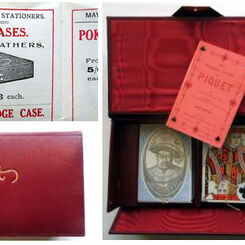
Piquet: the game and its artifacts
Piquet may be the oldest card game which is still played today with origins going back to early 16th...
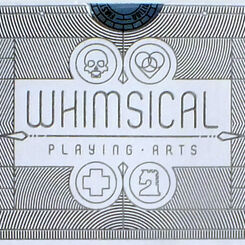
Whimsical Playing Cards
Whimsical Playing Cards by Turkish designer & illustrator Oksal Yesilok, 2016.
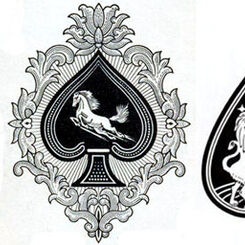
Modern Aces of Spades
Many modern aces of spades are anonymous so that, in the absence of any other information, the colle...
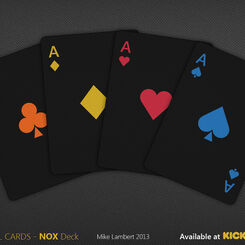
Metropol NOX Playing Cards
A custom deck of playing cards designed with a modern, minimalist flair.
Transformation of Playing Cards
The best-known fantasy playing cards are Transformation cards, in which figurative scenes are drawn ...
14: Back Designs
A few examples of the many interesting back designs.
Arnold Schönberg
In around 1909 he created three sets of playing cards. His inventiveness was driven by a passion for...
Karlis Padegs
Karlis Padegs (1911-1940) was a Latvian artist who designed 17 playing cards in 1936 - joker, aces, ...
Playing Card Design
The playing card calls for artistic treatment and although the constrained size imposes some limitat...
The History of Playing Cards
Playing cards appear in European records in the late 14th century, but their earlier history lies fu...
Most Popular
Our top articles from the past 60 days


