


Whist by Ditha Moser
Ditha Moser created this minimalist Whist deck in 1905, in the style of the Vienna Secession art movement.
Even before her Jugendstil Tarock, Ditha Moser created a deck of cards for the game of Whist in 1905. It was one of the luxury design products of the Wiener Werkstätte. The great minimalistic red’n’black solution corresponds to the current art trend of the time, which we now refer to as the Vienna Secession¹, especially its geometric lines, the leading representative of which was Josef Hoffmann. See the box prototype
Ditha Moser² (1883–1969)
Born as Edith Mautner Von Markhof to a wealthy Austrian industrial family (for example mustard production since 1841). From 1902 to 1905 she studied at the Academy for Applied Arts in Vienna as a guest student under Josef Hoffmann. In 1905, she married Viennese artist Koloman Moser, her professor.
I consider the oblique application of the graphic motif on the “shield” of the jack cards to be a truly masterful detail. Of course, the field on the ace of hearts for the tax stamp is omitted. However, the overall design of the cards is somewhat unfriendly to the player. Perhaps only suitable for slow, silent use in the game of whist. It would be advisable to verify this by playing.
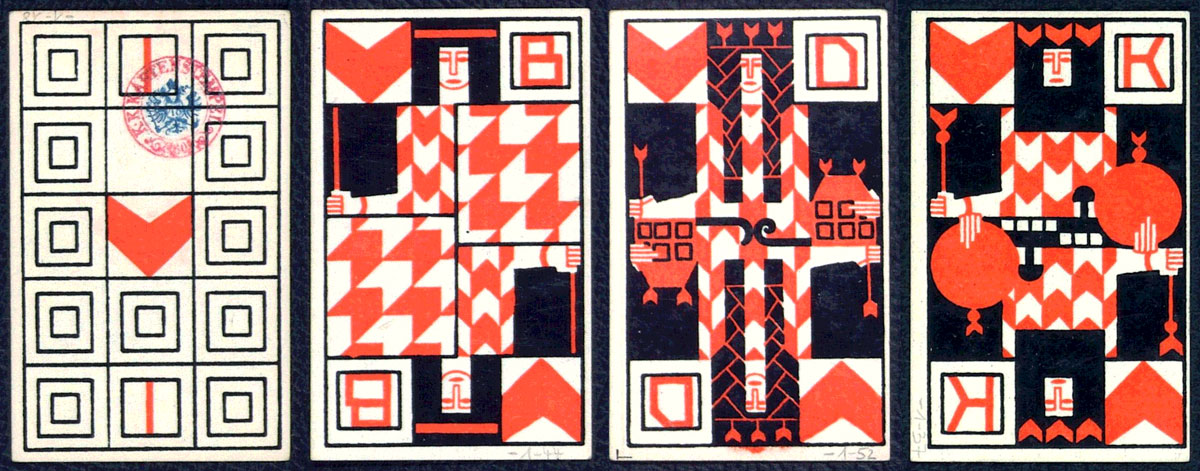
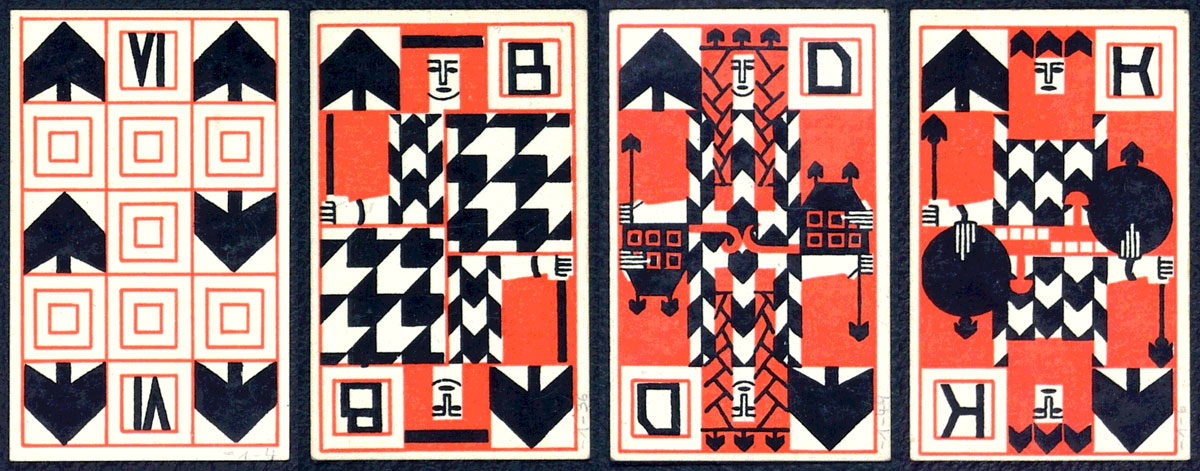
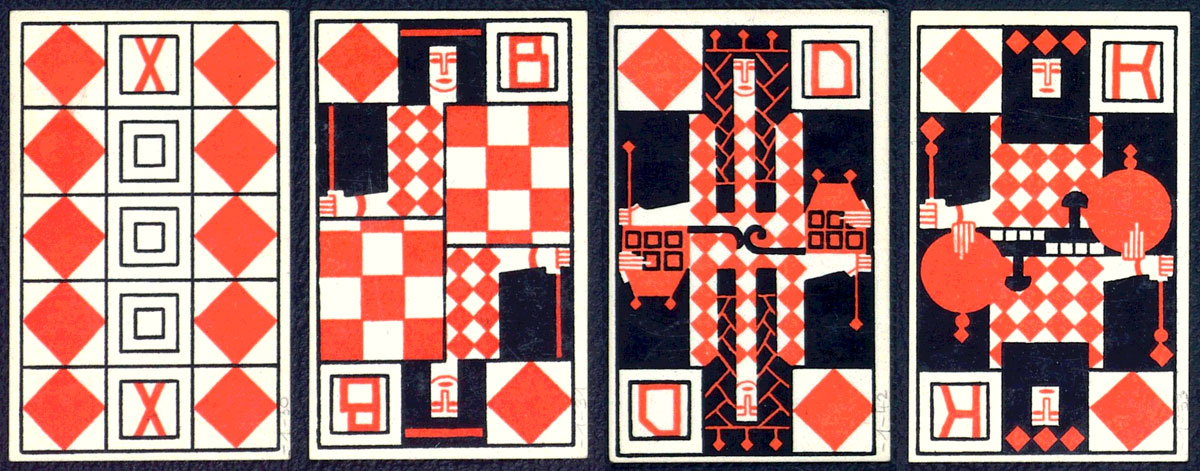
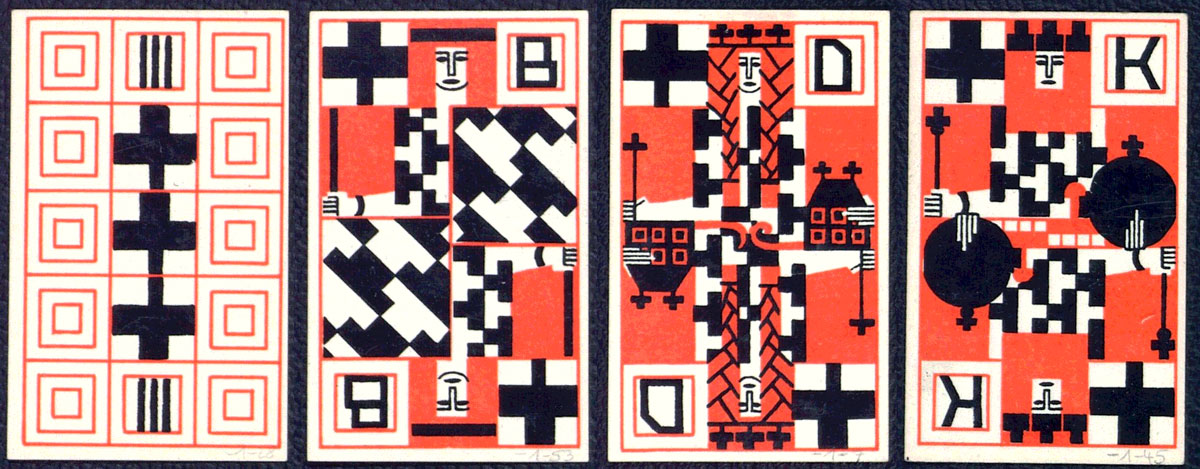
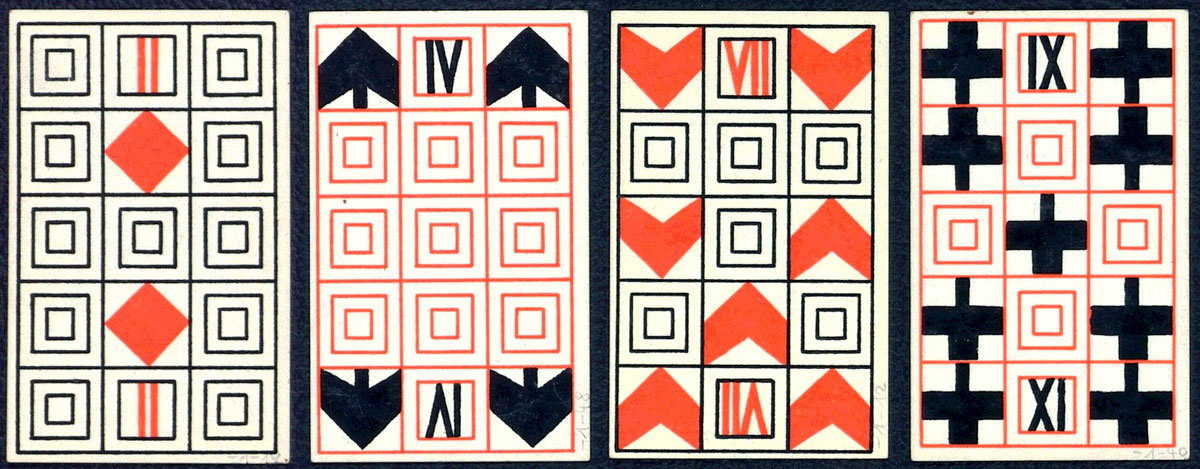
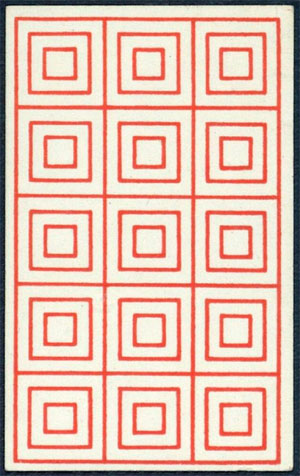
Above: Whist designed by Ditha Moser and produced Josef Glanz in cooperation with the printer Albert Berger, 1905. 52 cards measuring 45 x 75 mm. Cards from the collections of the MAK – Museum für angewandte Kunst / Museum of Applied Arts in Vienna
The original lithographic edition of 52 cards measuring 45 x 75 mm was produced by the established card company Josef Glanz in cooperation with the printer Albert Berger. It is part of the collections of the MAK – Museum für angewandte Kunst / Museum of Applied Arts in Vienna - available online³. A physical specimen can be seen in the permanent exhibition of the Leopold Museum in Vienna.
A modern re-edition of the deck was published in 1986 by Piatnik as Ditha Moser Whist-Spielkarten as part of its Piatnik Edition. This edition was made in the dimensions 51 x 82 mm.
References
- Wikipedia: Vienna Secession►
- Wikipedia: Ditha Moser►
- MAK Collection Online: Ditha Moser►
By Marek Brejcha
Czech Republic • Member since June 13, 2024
My relationship with cards grew from playing to collecting and transformed into publishing as well. I am part of the team at Counter Clockwise, a small company that publishes traditional card games.

Activity for Whist by Ditha Moser
Sign in to comment or save this article.

Related Articles
Hallmark
A folksy take on playing card courts.
Julius Berndl and his Austrian tarock
Josef Glanz's Tarock: a classic deck with artistic innovation by Julius Berndl.
Patience by Joseph Glanz
A refined and distinctly European Patience pack by Joseph Glanz from Austria.
Tactics Design
Late modernist Japanese playing cards designed by Masayoshi Nakajo for Tactics Design.
MITSCHKAtzen
Clever cat designs by the Austrian artist and illustrator Willi Mitschka.
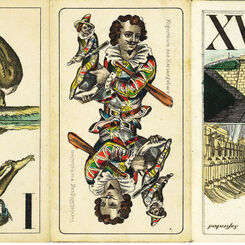
Joseph Sürch, Engraver
Joseph Sürch, a prominent Viennese engraver, made significant contributions to card sheet engraving ...
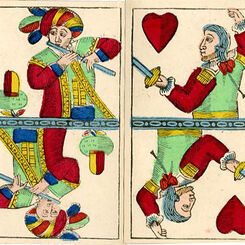
Double-ended German-suited pack by Josef Glanz, Vienna.
From the British Museum collection.
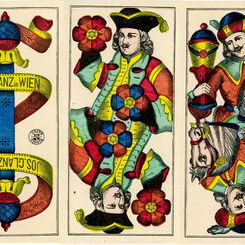
Trappola pack by Joseph Glanz
Double-ended Trappola pack by Joseph Glanz, Vienna, late 19th century.
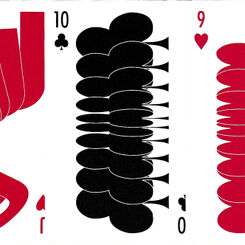
Museum of Modern Art
Museum of Modern Art playing cards designed by Takenobu Igarashi.
Lidia Schöffer art-deco playing cards
A prize winning design from The Netherlands
Baroque No.2118
“Baroque” by Ferd Piatnik & Sons, Vienna, reflecting a bygone era of fashion.
Blue Playing Cards
“Blue Playing Cards” by Piatnik, 1960s, inspired by the Cubism art movement in which objects are ana...
Jugendstil Tarock
‘Jugendstil Tarock’ was designed by Ditha Moser and first published by Albert Berger and Josef Glanz...
Jugendstil Art Nouveau Bridge
“Jugendstil Art Nouveau” Bridge Nr.2136 published by Piatnik, 1980.
J. Glanz Historical playing cards
Historical Theatrical playing cards manufactured by J. Glanz, c.1860.
Rummy No.210
Period cartoon images from the 1930s. The Kings are in fancy dress ready to party, the Queens appear...
Arnold Schönberg
In around 1909 he created three sets of playing cards. His inventiveness was driven by a passion for...
Waisenfond
Intended to attract donations on behalf of the Imperial Royal Austrian Military Widows’ and Orphans’...
Joseph Glanz, 1862
Playing cards depicting Turkish and Greek rulers manufactured by Joseph Glanz, Vienna, Austria, 1862...
The History of Playing Cards
Playing cards appear in European records in the late 14th century, but their earlier history lies fu...
Most Popular
Our top articles from the past 60 days


Zoyander Street
04 April 2026, 05:07SavedSaved this article to Bold graphics