


Doppel-Deutsche Karten by Bratří Willnerové, Teplice
This deck from local manufacturer Bratří Willnerová offers a standard version of the popular Central European card pattern.
This card pattern is known by various names such as Hungarian National (with respect to its origin), Four Seasons (according to the scenes depicted on the Aces), Schweizer Deutsche (according to the depicted characters from the legend of Wilhelm Tell). The best description is the name Tell pattern (the Swiss trace of its origin is really small and you will probably not encounter these cards in Switzerland). The characters on the Obers and Unters cards represent characters from the popular drama Wilhelm Tell by Friedrich Schiller from 1804. This play is also referred to by the usual small scenes on the pip cards.
At the time of its creation, the card pattern, like the game, referenced a significant political context. In the game, the local hero Tell can defeat the Habsburg governor Harras. This small revolution, which anyone can afford, spread throughout the Austro-Hungarian Empire.
The Willner Brothers are also known for their individual solutions to this pattern, but this deck presents a standard design corresponding to the IPCS description: The Tell pattern, Type 4. As is common for Czech editions, the cards do not include the names of the characters from Schiller's play. In this case, the description of the seasons on the aces is also missing.
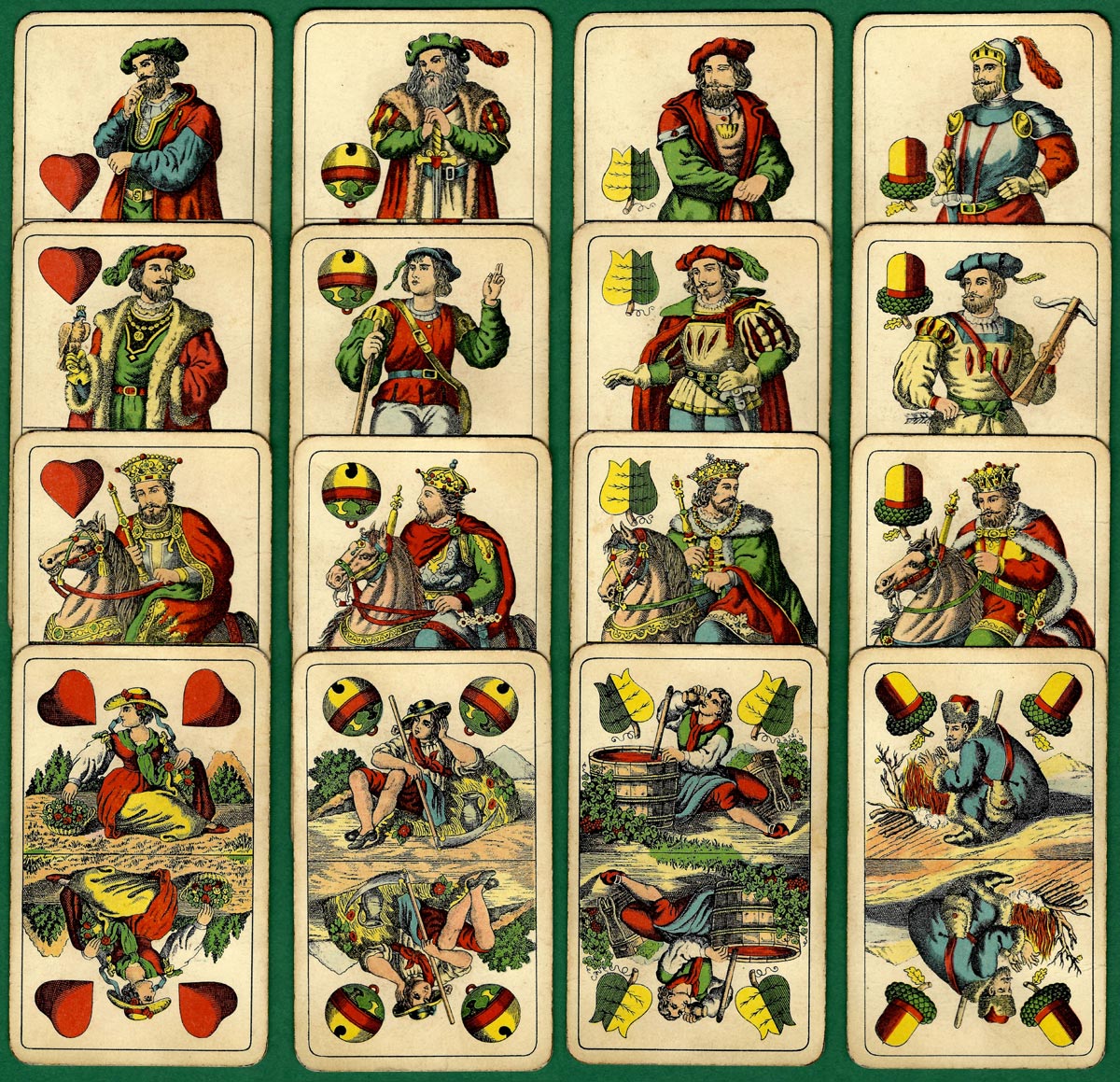
Above: Doppel-Deutsche Karten by Bratří Willnerové, 1940
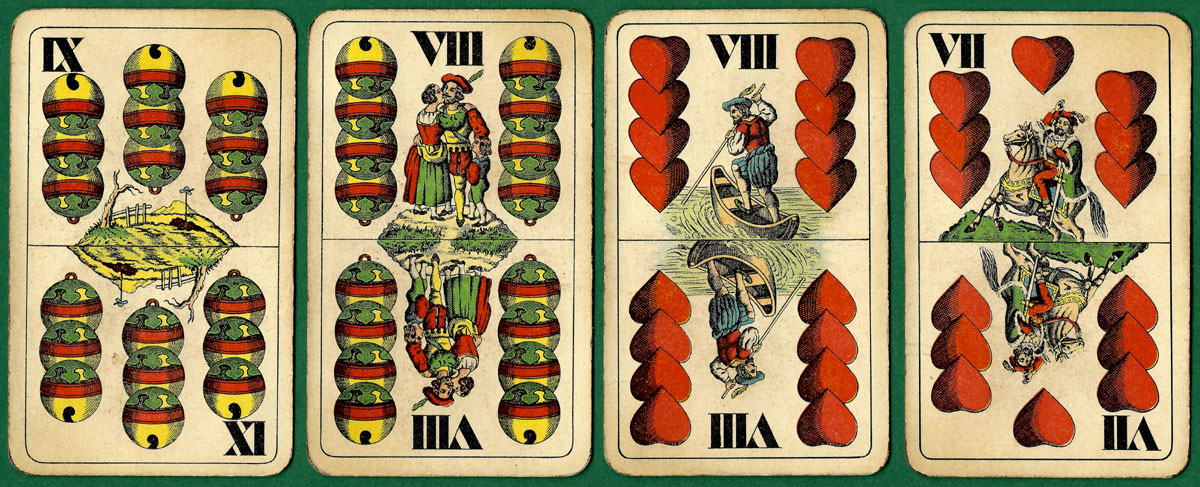
On the nine of bells, a hat is on a pole as a symbol of humiliation, to which the citizens had to bow during the absence of the governor Rudolf Harras (Ober of hearts). On the eight of bells, Wilhelm Tell (Ober of acorn) says goodbye to his family and on the eight of hearts, he flees in a boat across the lake. The seven of hearts presents the shooting of the governor Harras with an arrow by the legendary bowman Tell.
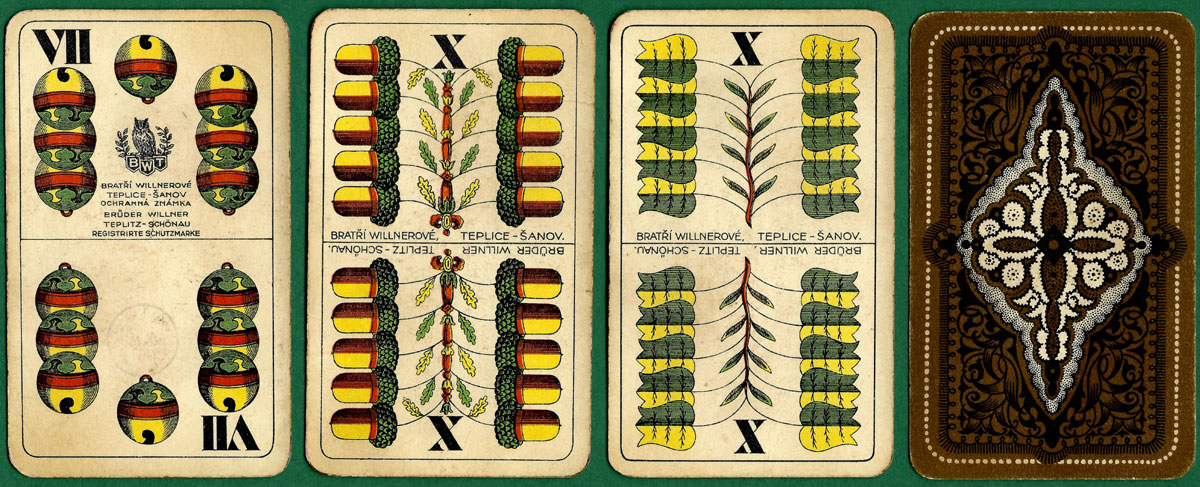
The (very feint) remains of a stamp announcing the fulfillment of the tax obligation on the seven of bells date the sale of this deck to the years of World War II. The same card also presents the usual manufacturer's trademark with an owl and the letters BWT. The company identification is bilingual - Czech and German. The ornamental reverse pattern of the cards is also typical, which has accompanied the company throughout its existence - compare Prager Pattern by Bratří Willnerové►
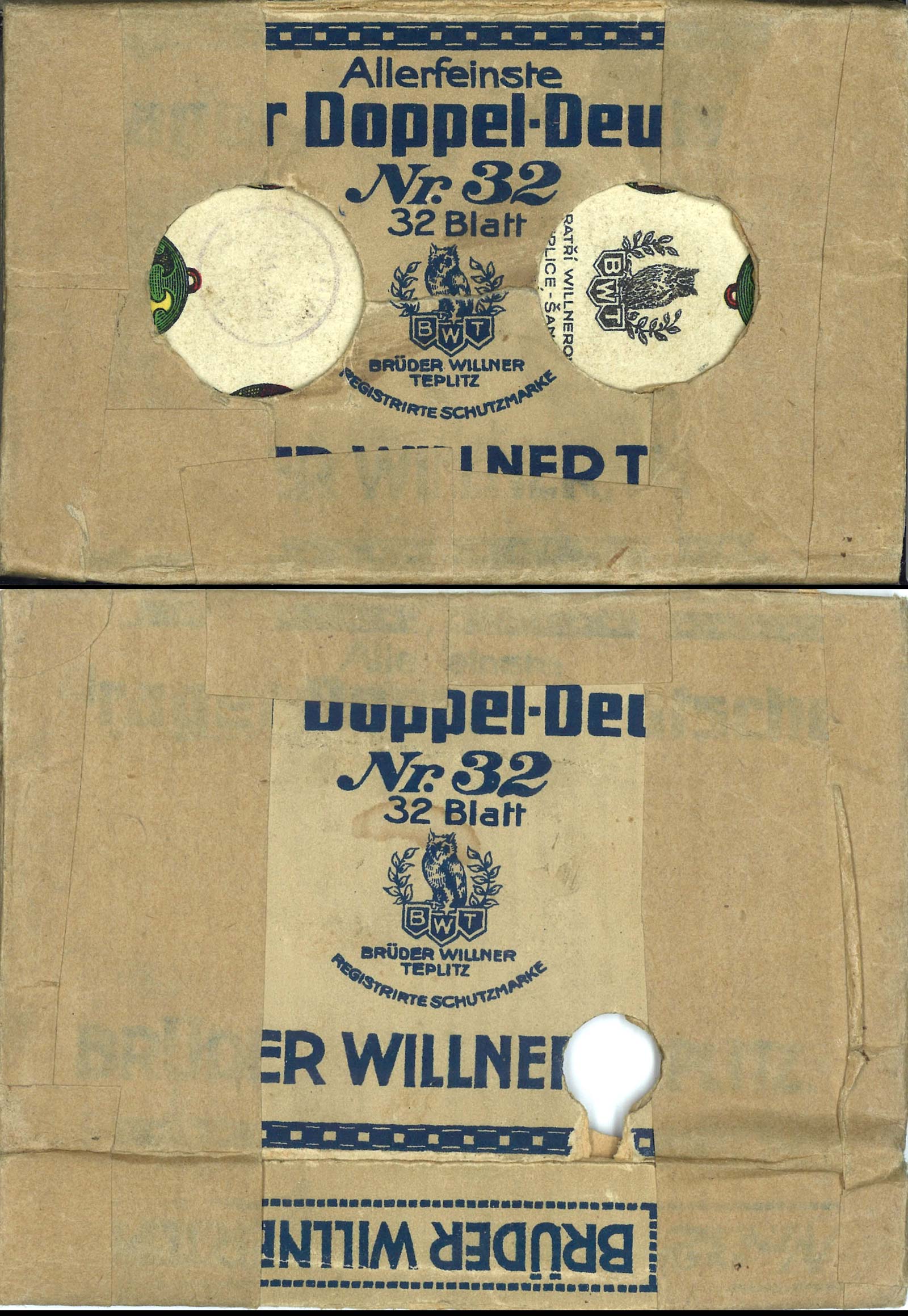
The remains of the packaging offer this deck as Doppel-Deutsche Karten (click to zoom).
References
IPCS: The Tell pattern, Type 4►
Wikipedia: The play William Tell►
By Marek Brejcha
Czech Republic • Member since June 13, 2024
My relationship with cards grew from playing to collecting and transformed into publishing as well. I am part of the team at Counter Clockwise, a small company that publishes traditional card games.

Activity for Doppel-Deutsche Karten by Bratří Willnerové, Teplice
Sign in to comment or save this article.

Related Articles
The Five of Hearts
A political hand badly played: Admiral Byng and the satire of failure, c.1756.
Pictures of Early Whist writers and their stories
The Invisible Experts: Tracking the Elusive Faces of Whist History.
Playing Card Books - References
A guide to reference books for playing-card collectors, focusing on museum catalogues, collection su...
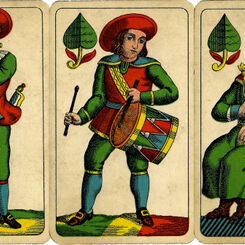
Prager Pattern by Bratří Willnerové, Teplice
Traditional single-ended Prager pattern by Willner Brothers from northern Bohemia.
Not the Iraqi Most Wanted playing cards
Fifty-five Irish heroes and villains, some ancient but mostly modern.
K Deck
“K Deck” political playing cards, USA, c. 2004.
Ms. playing cards
‘Ms. playing cards’ promoting votes for women, USA, 1975.
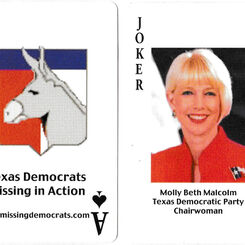
Texas Democrats Missing in Action
“Texas Democrats Missing in Action” playing cards published by Bernsen Consulting, Austin, Texas, 20...
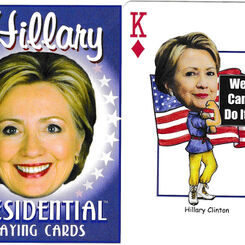
Hillary Presidential playing cards, 2016
Hillary Clinton Presidential playing cards, USA, 2016
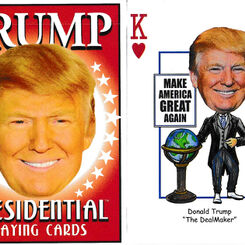
Trump Presidential playing cards
Trump Presidential playing cards by Parody Productions, USA, 2015.
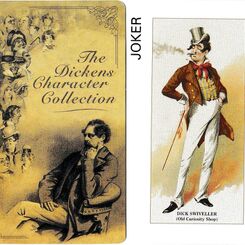
Dickens Character Collection
Dickens Character Collection published for a London Casino as a promotional gift.
Russian Federation
Russian Federation pack featuring leading political figures of the time, c.2000.
Swadeshi Playing Cards
Named after the first National movement in India
Aesop’s Fables
Aesop’s Fables playing cards by I. Kirk, c.1759.
Mao Zedong & International Friends
Playing cards celebrating the story of the Chinese leader and statesman Chairman Mao / Mao Zedong & ...
Tax Payers’ Alliance
The Tax Payers’ Alliance Political Trumps was first produced in 2007.
Perón political decks
La baraja ‘Popular’, featuring Juan Domingo Perón issued at the time of Perón's election campaign in...
Argentine Political Cards
Political Playing Cards, Buenos Aires, 1890.

Gironda
8 cards and two jokers from the 'Gironda' pack, showing eminent statesmen and politicians from Lithu...
Early History of Playing Cards & Timeline
Out of an apparent void, a constellation of references in early literature emerge pointing to the su...
Most Popular
Our top articles from the past 60 days


