

Jeu du Moulin
Jeu du Moulin by Watilliaux, Paris.
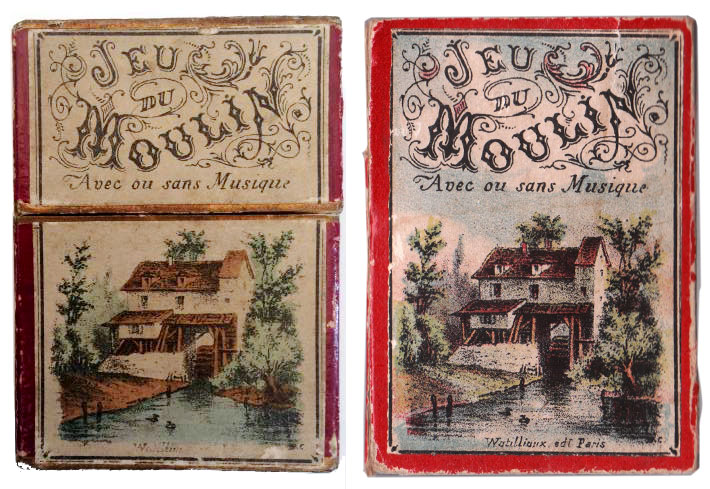
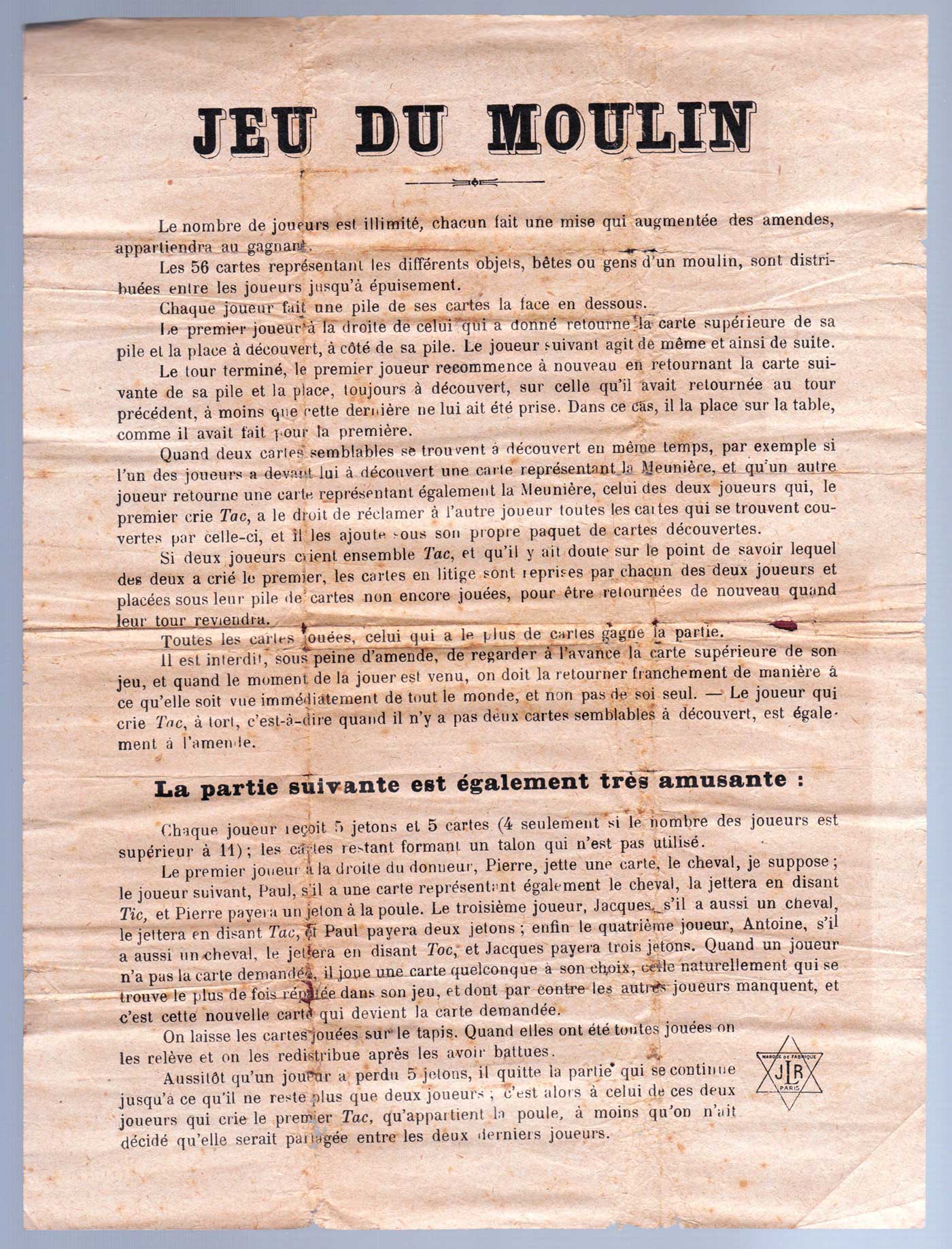
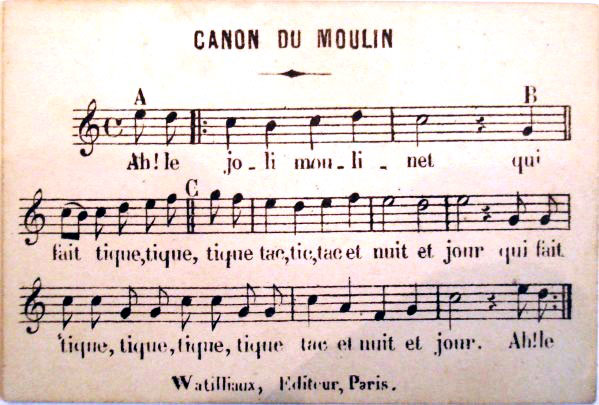
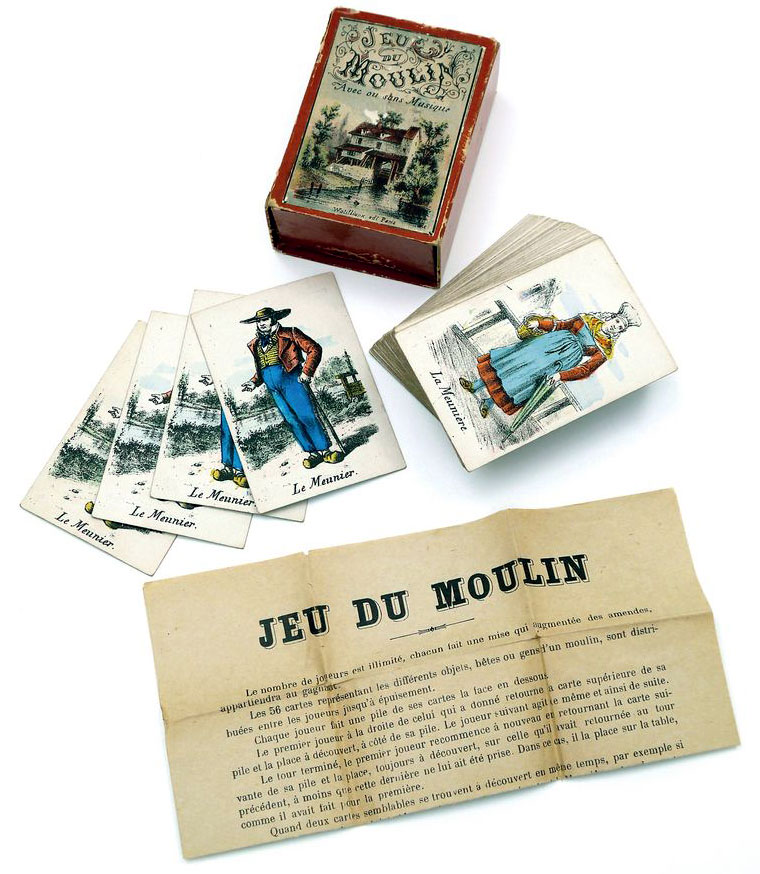
Jeu du Moulin, reminiscent of the old days of millers and water wheels, was designed by Bernard Coudert and first published by Jeux Watilliaux, Paris, in c.1880. Illustrations on the cards include the miller’s boy, the maid, millstones, sacks of flour, hens, ducks, the cat and so on... 14 in total. Watilliaux subsequently became part of Les Jeux Reunis group whose trade mark ‘LJR’ can be seen on the rules sheet in this edition. The card game is played similar to Snap. There is also a musical accompaniment►
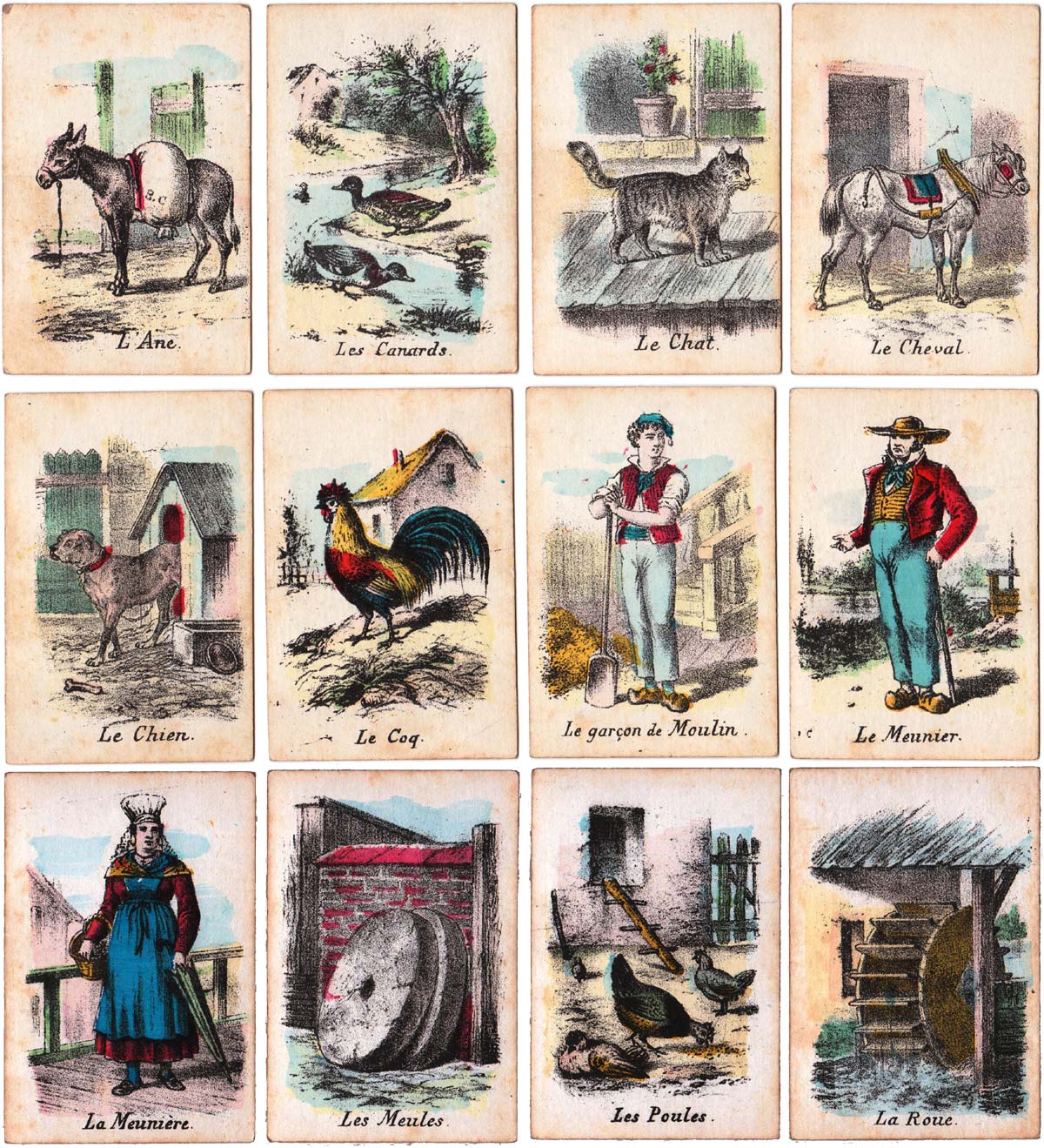
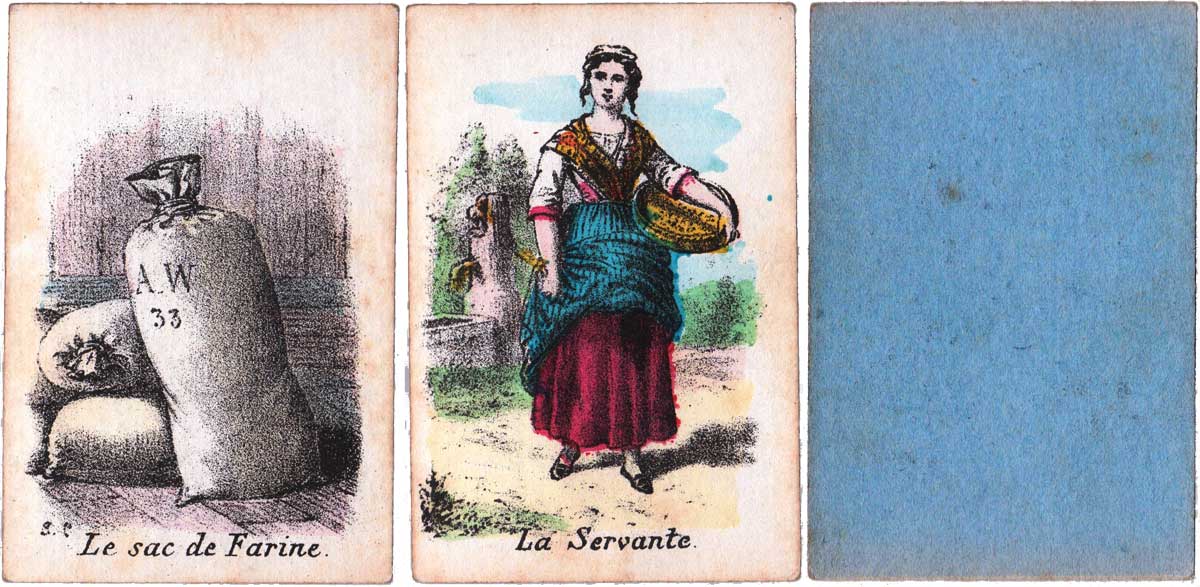

Above: Jeu du Moulin by Jeux Watilliaux, Paris c.1913. 56 lithographed cards; 14 x 4 pictures, hand coloured, blue backs.
In 1913 the company which had bought Jeux Watilliaux in 1907 became "LES JEUX REUNIS" identified by the acronym JLR. The company continued until 1946.
References
Jeux Revenaz Tabernat - LJR►
Jeux Watilliaux catalogue 1903► (see p.47).

By Rex Pitts (1940-2021)
United Kingdom • Member since January 30, 2009
Rex's main interest was in card games, because, he said, they were cheap and easy to get hold of in his early days of collecting. He is well known for his extensive knowledge of Pepys games and his book is on the bookshelves of many. His other interest was non-standard playing cards. He also had collections of sheet music, music CDs, models of London buses, London Transport timetables and maps and other objects that intrigued him.
Rex had a chequered career at school. He was expelled twice, on one occasion for smoking! Despite this he trained as a radio engineer and worked for the BBC in the World Service. Later he moved into sales and worked for a firm that made all kinds of packaging, a job he enjoyed until his retirement. He became an expert on boxes and would always investigate those that held his cards. He could always recognize a box made for Pepys, which were the same as those of Alf Cooke’s Universal Playing Card Company, who printed the card games. This interest changed into an ability to make and mend boxes, which he did with great dexterity. He loved this kind of handicraft work.
His dexterity of hand and eye soon led to his making card games of his own design. He spent hours and hours carefully cutting them out and colouring them by hand.

Activity for Jeu du Moulin
Sign in to comment or save this article.

Related Articles
Les 7 Familles Pyrénées
Mountains, flowers, animals, tourist sites of the Pyrenees, all drawn by the artist Pertuzé.
Snap
Anonymous Snap game, 1930s.
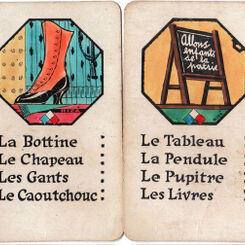
Jeu de Quaternes ‘Rizá’
Jeu de Quaternes ‘Rizá’
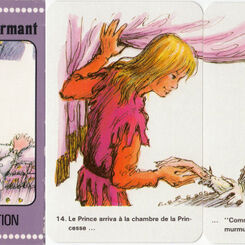
La Belle au bois dormant
Sleeping Beauty card game published in France, c.1980s.
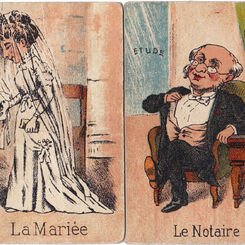
La Mariée du Mardi-Gras
La Mariée du Mardi-Gras, published by Jeux et Jouets Français. Paris, early 1900s.
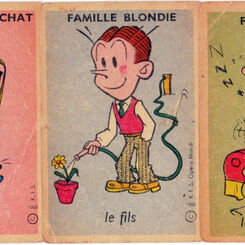
Jeu des 7 Familles
Jeu des 7 Familles © K.F.S. Opera Mundi c.1960.
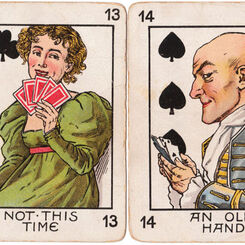
Bluffing
Bluffing published by C.W. Faulkner & Co, c.1896.
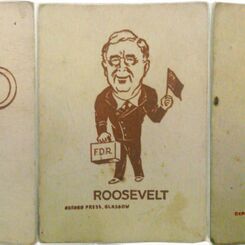
Victory Snap
Wartime Snap, a memoir of past times, c.1941.

World Leaders Snap
World Leaders Snap published around WW2, c.1940.
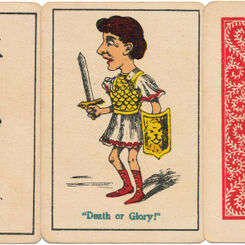
Snap
Spear’s “Snap” card game from the 1920s.
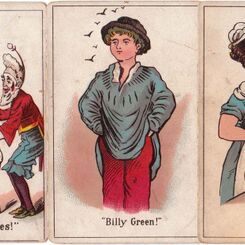
Anonymous Snap game
Anonymous “Snap” game from the late 19th century.
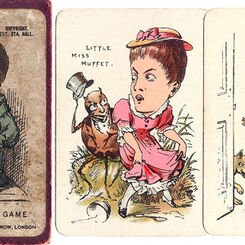
Jack Horner Snap
“Little Jack Horner” Snap made by Thomas De la Rue & Co Ltd, c.1890.
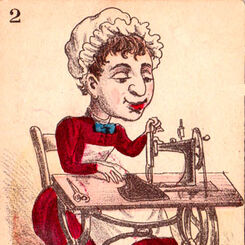
Mauclair Dacier Familles
This “Jeu de Sept Familles” was produced by Mauclair Dacier in the late 19th century.
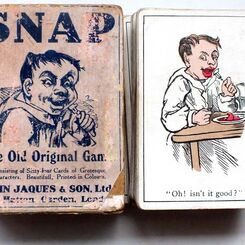
Snap
Snap, the Old Original Game, has captured the imaginations of children for over a century!
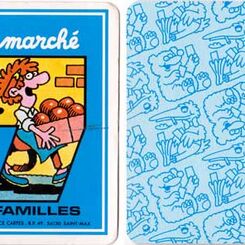
Marché 7 Familles
“Marché 7 Familles” Happy Families card game published by France Cartes
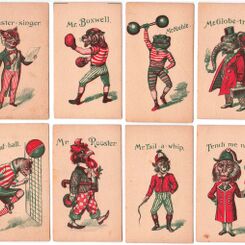
Animal Snap
The full set of this 'Snap' card game is believed to have 9 characters in sets of four, making a tot...
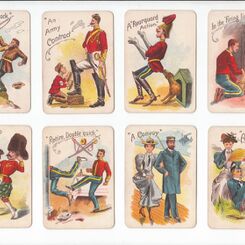
4: Some Card Games
Yet another strand of the playing card world is that of card games, packs of cards usually designed ...

Hee Trading Co
Hee Trading Co., Malaysia, manufacture board games, jig-saw puzzles, chess sets, games compendiums a...
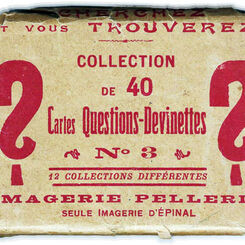
Cartes Questions-Devinettes
A “Questions & Answers” family game from France produced by Imagerie Pellerin.
Kay Snap
Kay Snap Children's Card Game, made in England, 1930s.
Most Popular
Our top articles from the past 60 days