


Matyó-Bridge No.50
The court cards in this delightful Art Deco pack represent persons in various colourfully embroidered folkloric costumes. Designed by Hungarian artist Ilona Radnainé Szöredi.
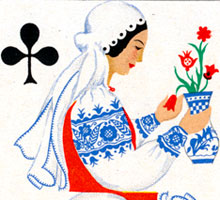
“Matyó-Bridge No.50”
The court cards in this delightful Art Deco pack represent persons in various colourfully embroidered folkloric costumes designed by Hungarian artist Ilona Radnainé Szöredi, who specialised in folk needlework. The cards were produced at Piatnik's Hungarian branch in Budapest, 1932.
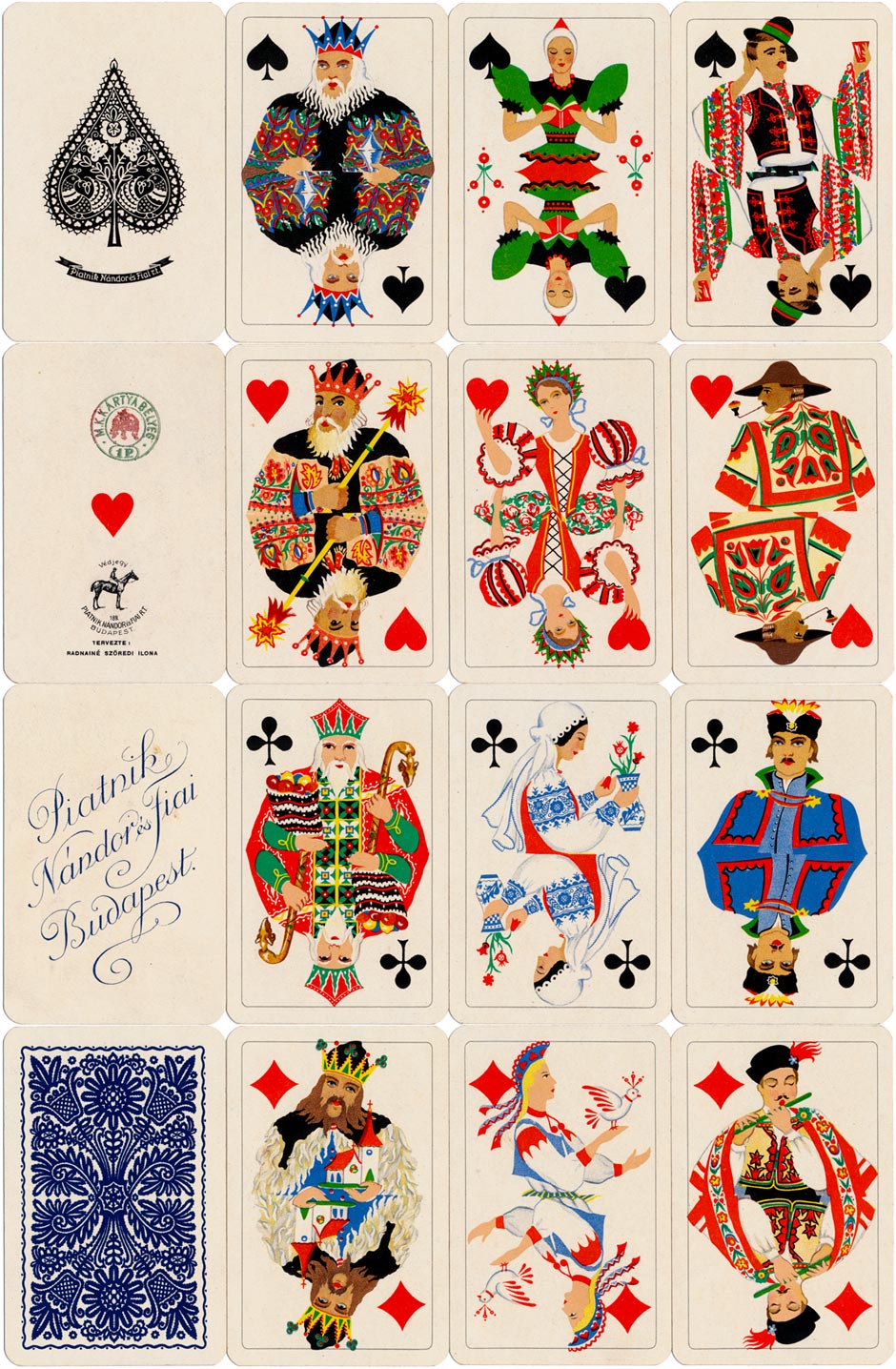
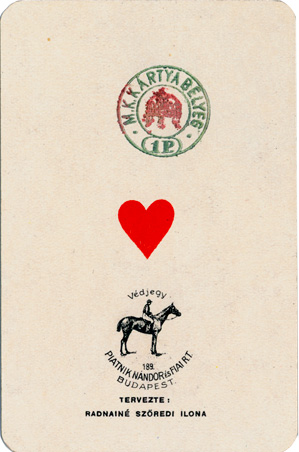
Above: Matyó-Bridge No.50 manufactured by F. Piatnik Nándor és Fiai, (Hungarian branch, 1896-1948), Budapest, 1932. 52 cards, printed by offset, in paper wrapper. The firm of Piatnik had several branches besides the main office in Vienna, which included Prague, Cracow and Budapest. Images courtesy Barney Townshend.
REFERENCES
Segeth, Uwe-Volker: Spielkarten Jugendstil und Art Déco, Edition Christian Brandstätter, Wien, 1994
See also:
Hungarian ‘Seasons‘ pattern by Piatnik, c.1991 • Hungarian War Aid pack • Balázs Pál Nagy's playing cards • Hungarian 'Seasons' playing cards by G. Berger, Buenos Aires c.1940 • Hungarian Playing Cards made in Argentina.

By Barney Townshend
United Kingdom • Member since October 06, 2015
Retired Airline Pilot, interested in: Transformation Playing Cards, Karl Gerich and Elaine Lewis. Secretary of the EPCS. Treasurer of the IPCS.

Activity for Matyó-Bridge No.50
Sign in to comment or save this article.

Related Articles
Zodiac No. 1182
Constellations captured on cards.
Vorarlberg Büschel Jasskarten
“Vorarlberg Büschel Jasskarten” designed by Austrian artist and typographer Konrad Hämmerle.
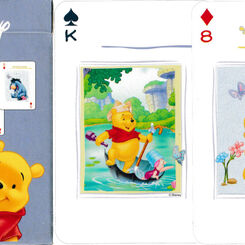
Winnie the Pooh Rummy
Disney’s Winnie the Pooh and friends on a pack made for Eastern Europe.
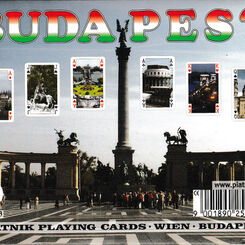
Budapest souvenir
Colour views of the Hungarian capital, Budapest, on all the courts and Aces.
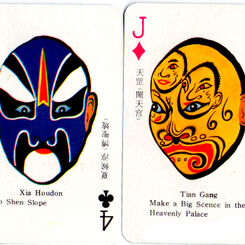
Chinese Opera Masks Playing Cards 脸谱
Three different packs of cards featuring traditional Chinese face painting and Chinese opera masks.
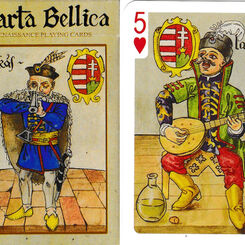
Charta Bellica
“Charta Bellica” playing cards produced by Piatnik, Budapest in 2009.
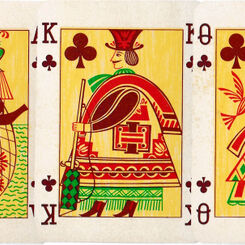
IBUSZ folklore playing cards
Hungarian folklore pack produced by IBUSZ travel agency, c. 1965.
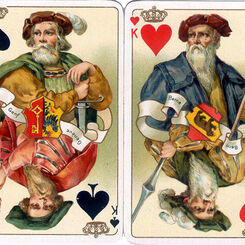
Schweizer Trachten
Schweizer Trachten No.174 (Costumes Suisses) by Dondorf.
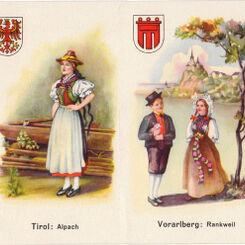
Österreichisches Trachten-quartett
Österreichisches Trachten-quartett Nr.282 published by Ferd Piatnik & Söhne.
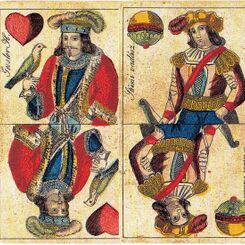
Tell Wilmoś
Facsimile of ‘Wilhelm Tell’ Hungarian deck by Salamon Antal, Keczkemét, 1860.
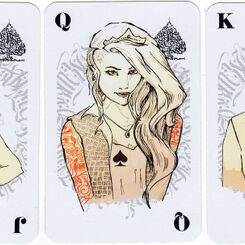
Ken McCarthy
An unknown deck by Ken McCarthy, c.2018.
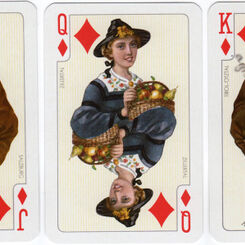
Folklore No.169
Austrian Folklore deck first published by Piatnik in 1934.
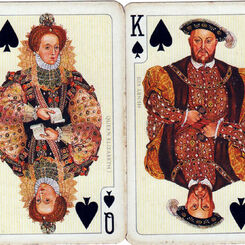
Mary Queen of Scots
Mary Queen of Scots and other Tudor period dignitaries, published by Piatnik, 1990.
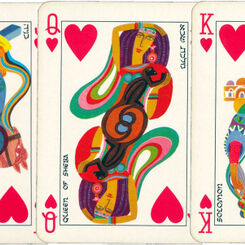
New Jacob’s Bible Cards
New Jacob’s Bible Cards published by Lion Playing Cards, Tel Aviv
Rococo Playing Cards
Piatnik’s Rococo style playing cards issued as “Rococo Patience”, “Luxus-Patience”, “Empire Patience...
Baroque No.2118
“Baroque” by Ferd Piatnik & Sons, Vienna, reflecting a bygone era of fashion.
Blue Playing Cards
“Blue Playing Cards” by Piatnik, 1960s, inspired by the Cubism art movement in which objects are ana...
Balázs Pál Nagy's Tell No. 3306 Playing Cards
Balázs Pál Nagy Tell 3306
Balázs Pál Nagy's Playing Cards
Balázs Pál Nagy's Playing Cards
The History of Playing Cards
Playing cards appear in European records in the late 14th century, but their earlier history lies fu...
Most Popular
Our top articles from the past 60 days


Maria Nick
21 February 2026, 10:15SavedSaved this article to Maria Nick's Collection