


Alan Tarot Deck
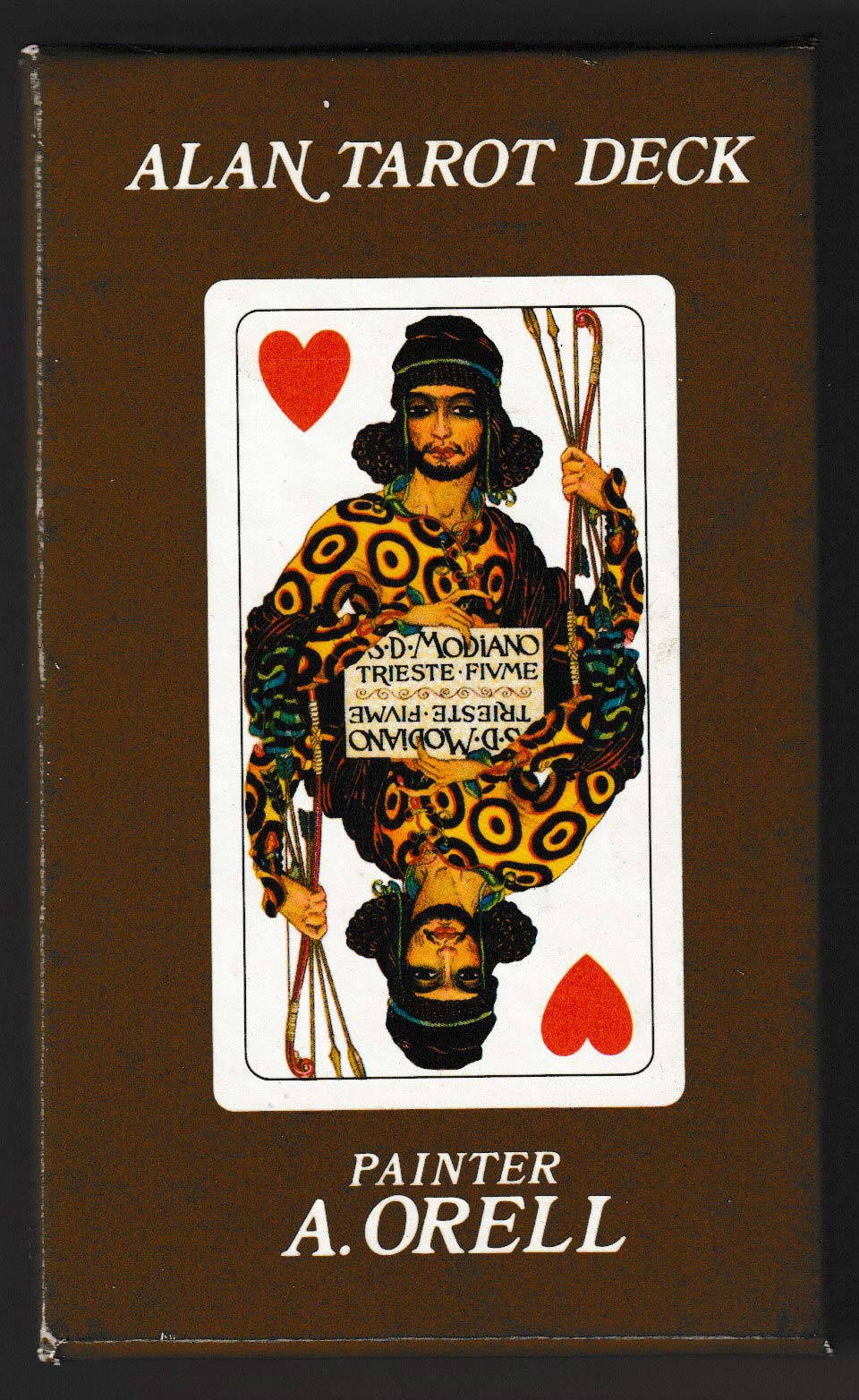
Reprint of a Tarock pack originally designed by Argio Orell for the Austrian Lloyd shipping company.
The artist who designed these cards, Argio Orell (1884-1942), apparently said of them, “These are the finest cards in the world, because all the others are ugly”. It is difficult to argue with that statement when one looks at the colours, the detail, and the context in which they were created. The original designs date from about 1914 and are in the late Art Nouveau style (called “Floreale” or “Liberty” in Italy). The courts are decidedly exotic and extremely stylish, as are the double-ended trumps. Together they represent the native peoples and places where the ships of the Austrian Lloyd company used to call. Orell particularly appreciated Japanese art and culture, both of which are strongly represented here. Further details about the artist can be found on the extra cards (one in Italian, one in English). The reverse no longer carries publicity for the shipping line • See the box
The court cards, minus the cavaliers, were later reduced in size to create a bridge pack generally known as “World Bridge”►
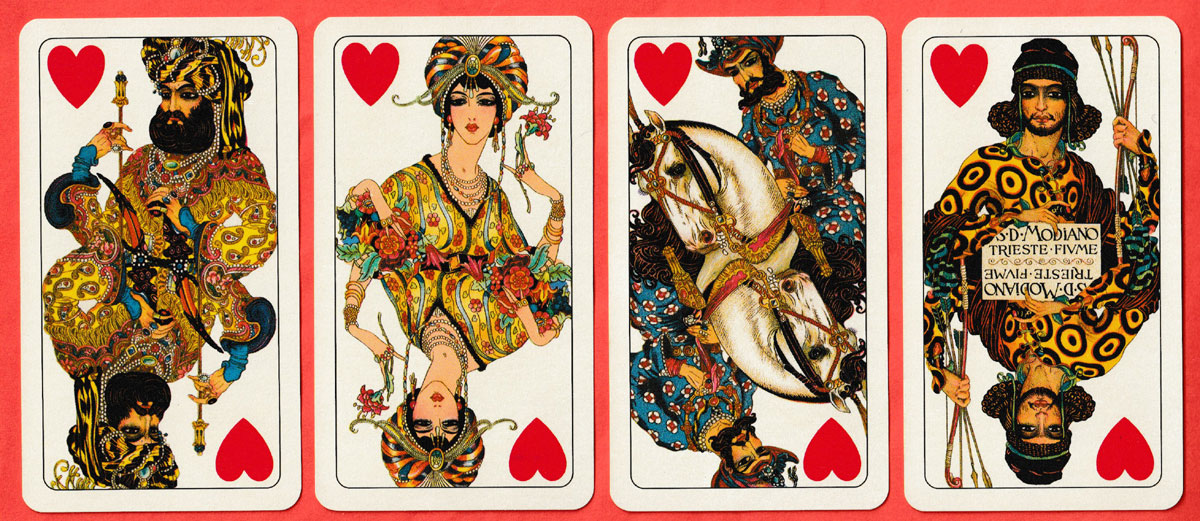
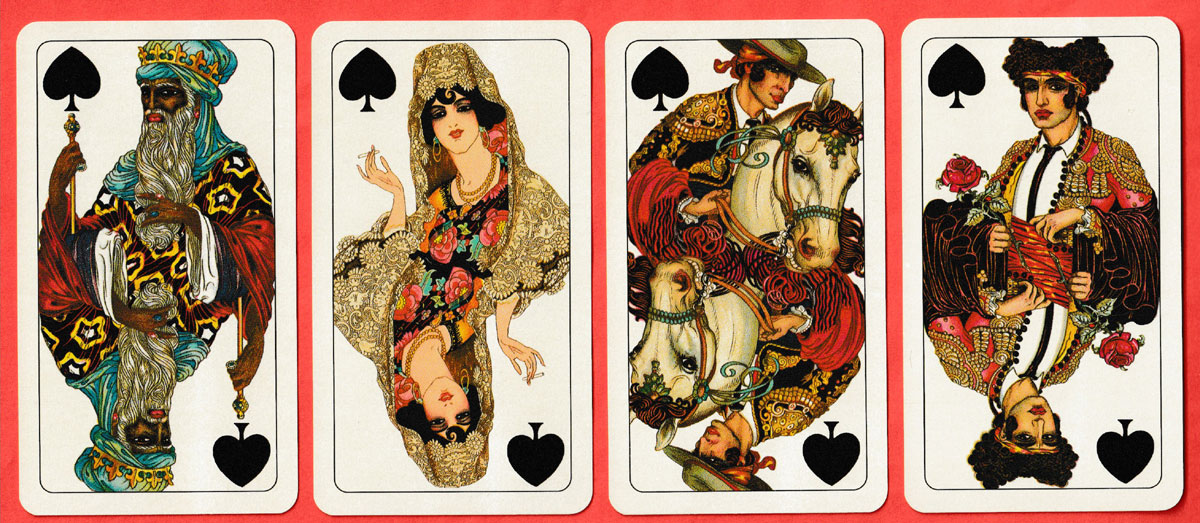
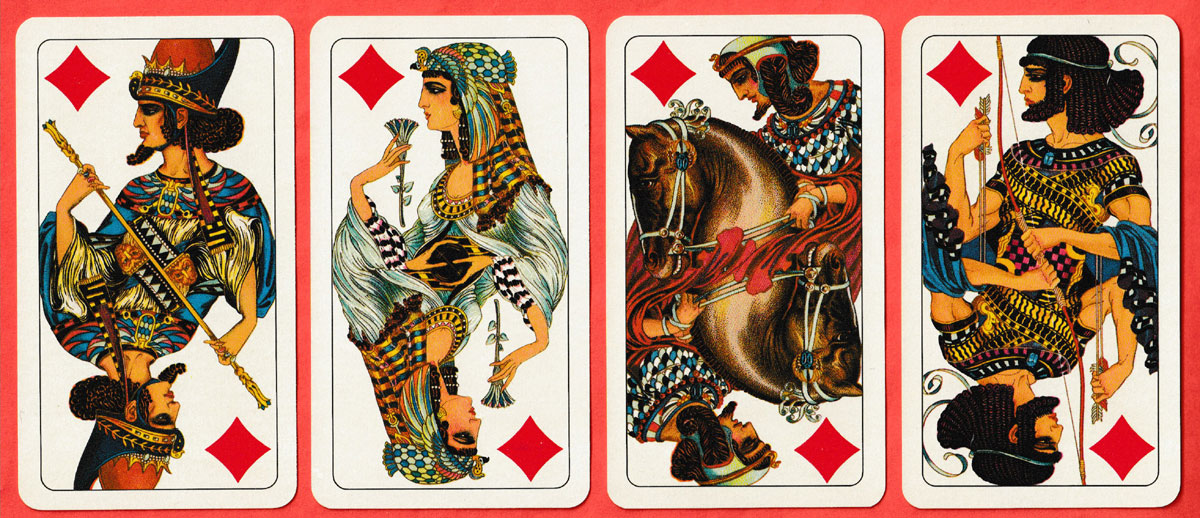
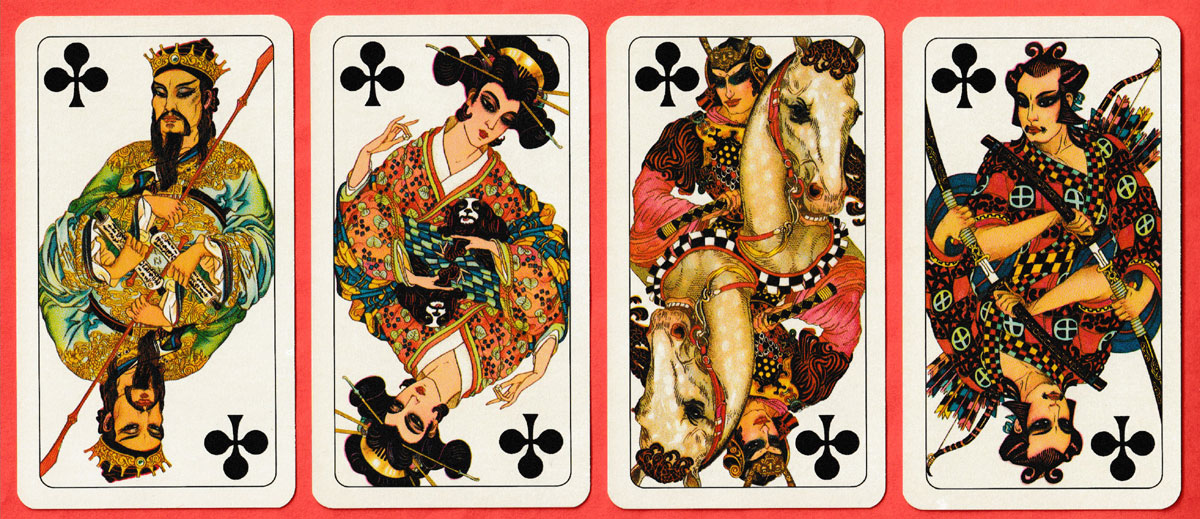
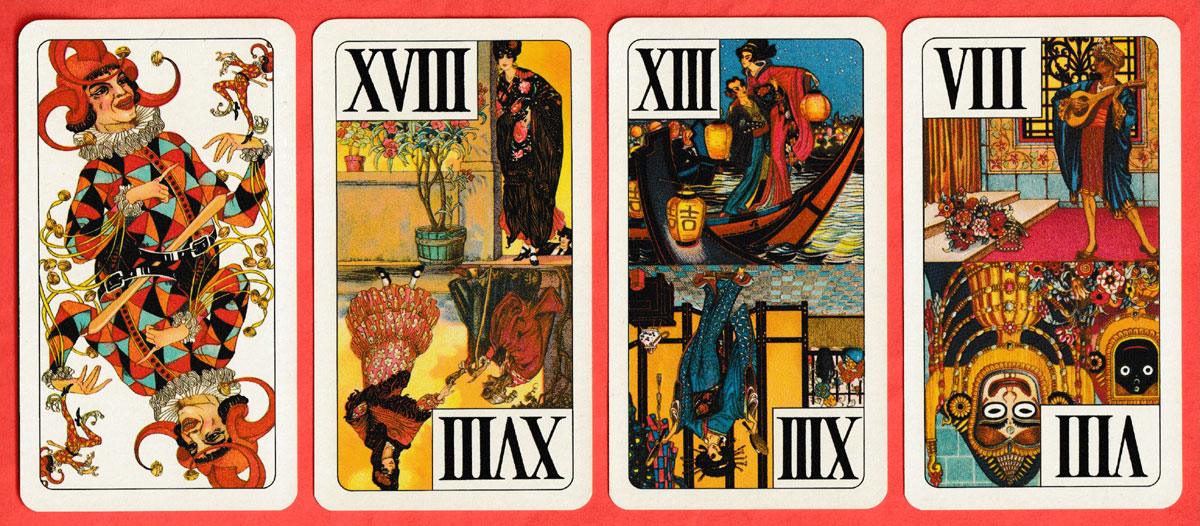
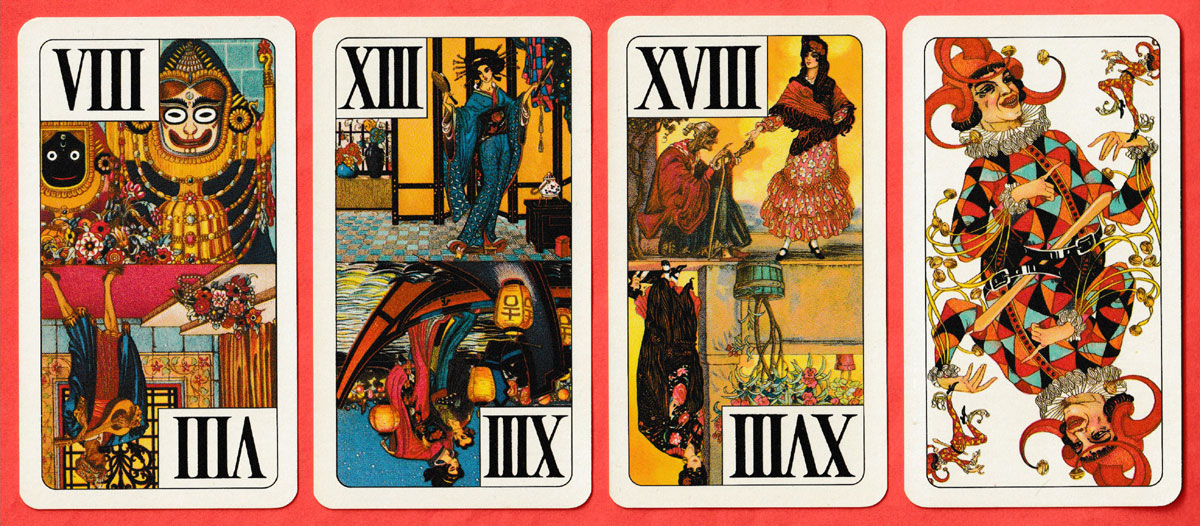
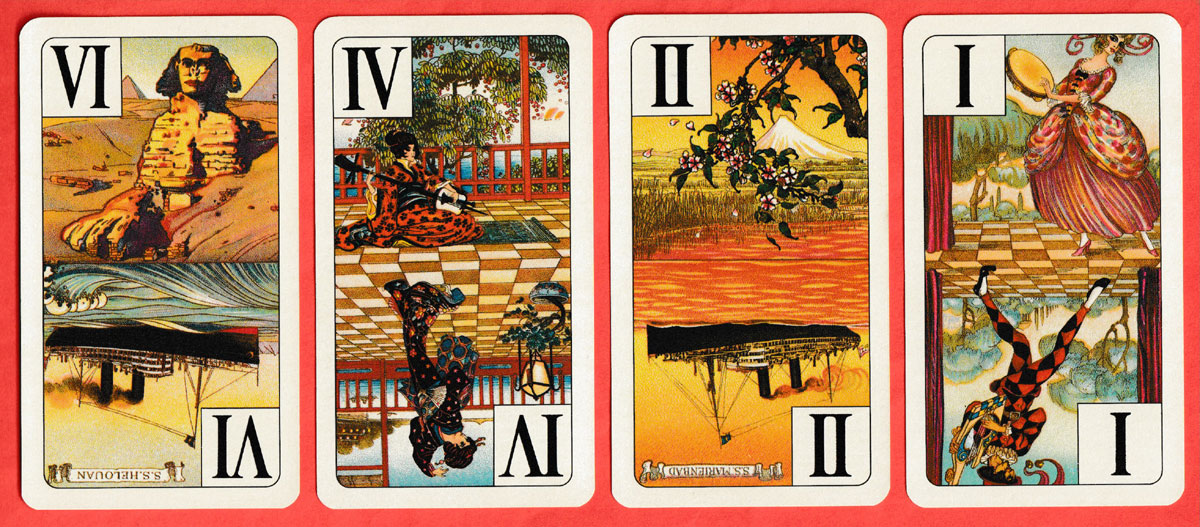
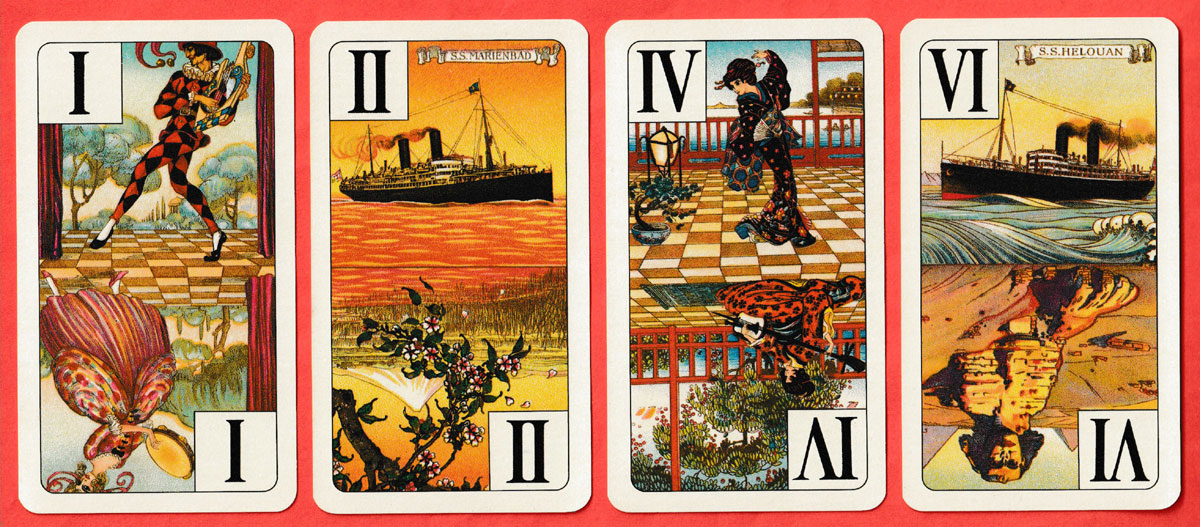
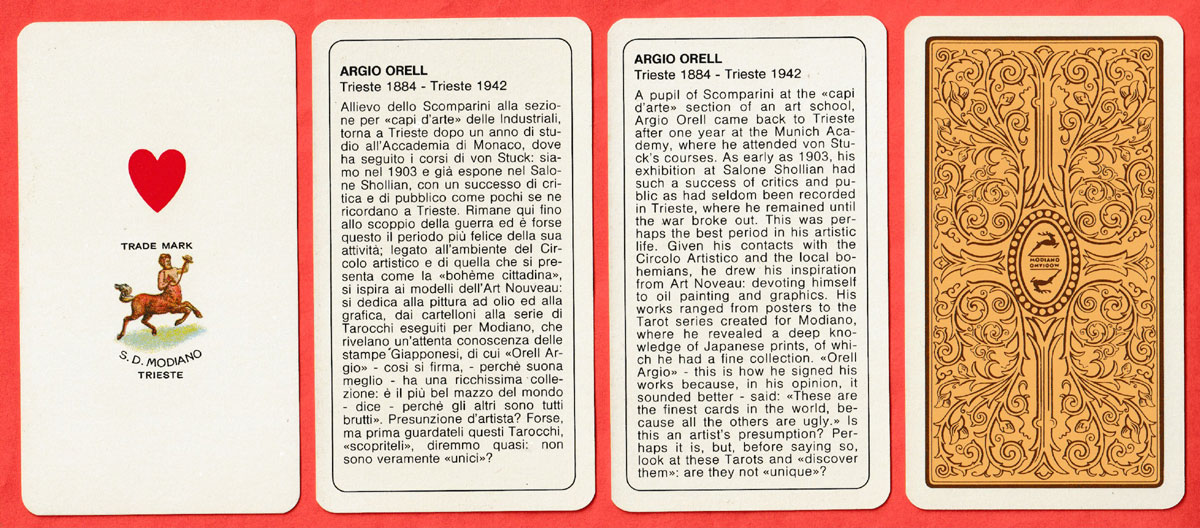
Above: Alan Tarot Deck designed by Argio Orell and made by Modiano, Trieste, Italy, 1981. 78 cards + 2 extra cards + 48-page booklet in English, in drop-lid box. Size: 62 x 100 mm.
Where does the name ‘Alan’ come from? ‘Alan’ is in fact the name of an Italian astrologist, Mauro Boldi, who presumably provided the text for the accompanying booklet, suggesting that the cards can be used for divinatory purposes. However, that was not the original purpose. The cards were intended for the game of Tarock.
In this reviewer’s opinion, this pack remains one of the most beautiful ever created.
Reference
Kaplan, Stuart R. The Encyclopedia of Tarot, Vol. I. New York, NY, USA: U.S. Games Systems, Inc.; 1978. p.316.

By Roddy Somerville
France • Member since May 31, 2022
Roddy started collecting stamps on his 8th birthday. In 1977 he joined the newly formed playing-card department at Stanley Gibbons in London before setting up his own business in Edinburgh four years later. His collecting interests include playing cards, postcards, stamps (especially playing cards on stamps) and sugar wrappers. He is a Past President of the Scottish Philatelic Society, a former Chairman of the IPCS, a Past Master of the Worshipful Company of Makers of Playing Cards and Curator of the WCMPC’s collection of playing cards. He lives near Toulouse in France.

Activity for Alan Tarot Deck
Sign in to comment or save this article.

Related Articles

Tarot de los Angeles
Tarot de los Angeles is a 78-card pack featuring angels and other celestial beings, which works more...
Modiano Napoletane Cards
From Trieste with Pride – a 150th Anniversary Edition of the Neapolitan Pattern.
Czech National Patterns by S.D. Modiano
Modiano produced cards with the Prague and Trappola patterns in the early 20th century.
Austrian Tarock by S.D. Modiano
Modiano’s Austrian Tarock with country scenes has been in production for over 100 years.

Morgan-Greer Tarot
Based on the knowledge, wisdom and interpretation of Paul Foster Case and Arthur Edward Waite.
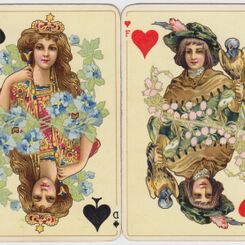
Art Nouveau playing cards from Italy
from the Armanino factory in Genoa
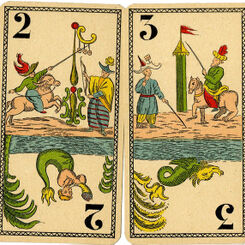
Oriental Scenes tarock
Trumps have oriental scenes on one end of the card, and mermaids, mermen, assorted sea serpents and ...
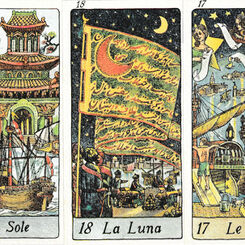
Venetian Tarot
Scenes from the history of Venice on a set of the major arcana.
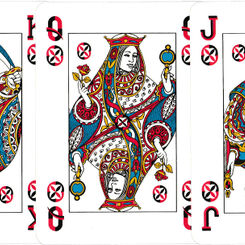
Il Quinto Seme
An Italian pack with a fifth suit of “amici” (“friends”).
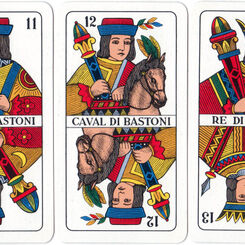
Triestine Pattern
The Triestine pattern is derived from the Venetian (Trevisane) pattern but with its own characterist...
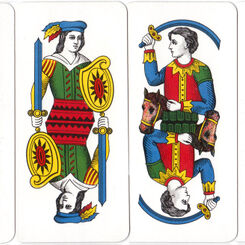
Primiera Bolognese
Primiera Bolognese by Modiano, c.1975
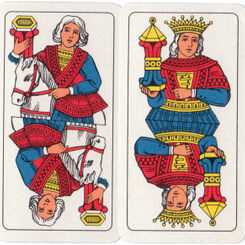
Bergamasche Pattern
Bergamasche Pattern by Modiano, 1970s.
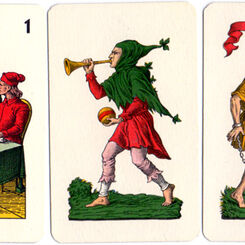
Tarocco Siciliano
The highly individual Sicilian Tarot has the Italo-Portuguese suit system with straight, interlockin...
Jugendstil Tarock
‘Jugendstil Tarock’ was designed by Ditha Moser and first published by Albert Berger and Josef Glanz...
World Bridge
‘World Bridge’ produced by Modiano in Trieste, Italy, since around 1950.
Tarocco Piemontese | Piedmontese tarot
The double ended version of the Piedmontese Tarot evolved during the second half of the nineteenth c...
XV Century Italian Playing Cards
Cards from a pack of an early form of north Italian playing cards, with the swords back-to-back and ...
Tarocco Milanesi by Lamperti (Milan) c.1850
Tarocco Milanesi by Lamperti (Milan) c.1850
Sicilian Pattern
The Sicilian pack has a similar composition to the Neapolitan pack, and is small and squat in appear...
Hand-Painted Tarocchi Cards
Hand-painted Tarocchi cards sometimes known as ‘Charles VI tarot’, North Italy, 1475-1500.
Most Popular
Our top articles from the past 60 days


Victoria Celeste
26 April 2026, 17:08SavedSaved this article to vix likes!