


World Bridge
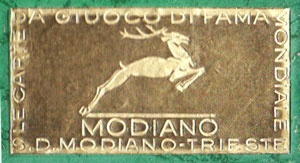
‘World Bridge’ produced by Modiano in Trieste, Italy, since around 1950.
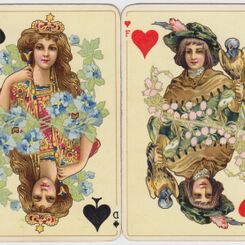
These fanciful designs in Art Nouveau style with oriental flavour were originally created as part of a tarock deck by Argio Orell (1884-1942) as a commission from the Austrian-Lloyd Steamship Line. They were first produced in chromolithography by S. D. Modiano in Trieste, Italy, in c.1910. The cut down 52-card version shown here with large indices and titled ‘World Bridge’ has been published by Modiano since around 1950. The tax stamp on the Ace of Diamonds on this copy is dated 1953. The Queen of Spades holds a cigarette, perhaps because Modiano also manufactured cigarette paper.
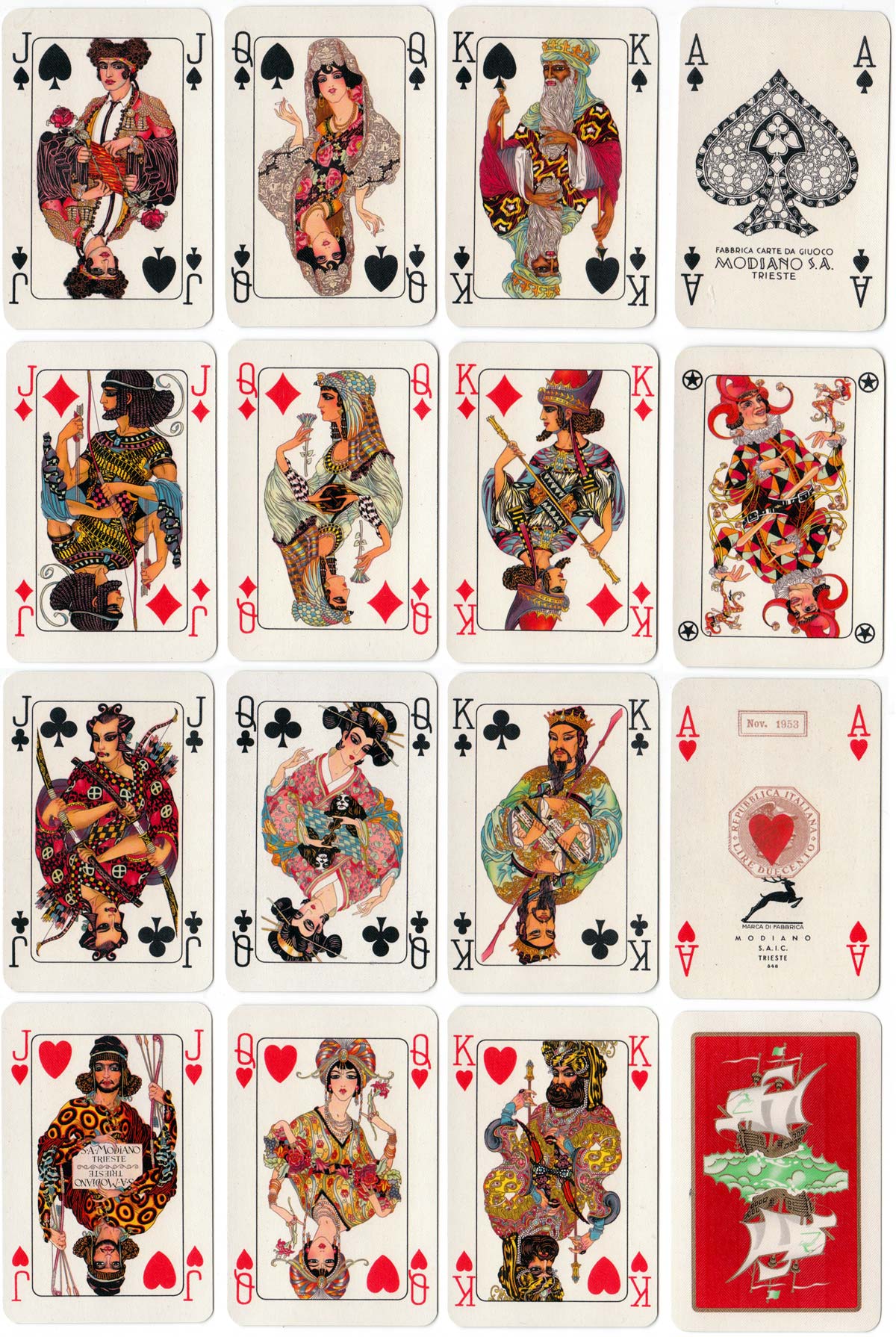
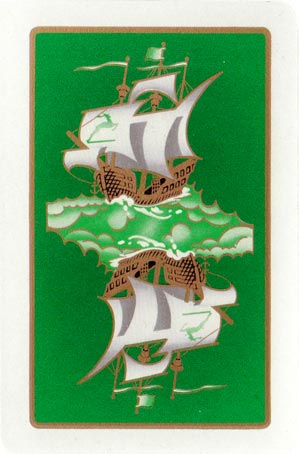
Above: ‘World Bridge’ by Modiano, c.1953. This 52-card deck was originally designed as a tarock deck by Italian artist Argio Orell (1884-1942) as a complimetary deck for passengers of a cruise ship line in 1910. The court cards feature people in richly detailed costumes in the exotic taste of the time in which it was created, representative of four cultures: the Orient for Clubs, Spanish for Spades (with a moorish king), Arabian for Hearts and Egyptian for Diamonds. Persia, India and the entire Asian region to far-eastern Japan are represented as part of Austrian-Lloyd Steamship Line's passenger itinerary. The tarock deck was re-printed in 1981. Images courtesy Rex Pitts.

By Rex Pitts (1940-2021)
United Kingdom • Member since January 30, 2009
Rex's main interest was in card games, because, he said, they were cheap and easy to get hold of in his early days of collecting. He is well known for his extensive knowledge of Pepys games and his book is on the bookshelves of many. His other interest was non-standard playing cards. He also had collections of sheet music, music CDs, models of London buses, London Transport timetables and maps and other objects that intrigued him.
Rex had a chequered career at school. He was expelled twice, on one occasion for smoking! Despite this he trained as a radio engineer and worked for the BBC in the World Service. Later he moved into sales and worked for a firm that made all kinds of packaging, a job he enjoyed until his retirement. He became an expert on boxes and would always investigate those that held his cards. He could always recognize a box made for Pepys, which were the same as those of Alf Cooke’s Universal Playing Card Company, who printed the card games. This interest changed into an ability to make and mend boxes, which he did with great dexterity. He loved this kind of handicraft work.
His dexterity of hand and eye soon led to his making card games of his own design. He spent hours and hours carefully cutting them out and colouring them by hand.

Activity for World Bridge
Sign in to comment or save this article.

Related Articles
Modiano Napoletane Cards
From Trieste with Pride – a 150th Anniversary Edition of the Neapolitan Pattern.
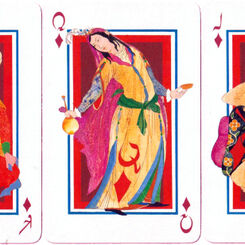
Persian Courts
Encapsulation of Persia’s rich heritage as conceived by Spanish artist Violeta Monreal.
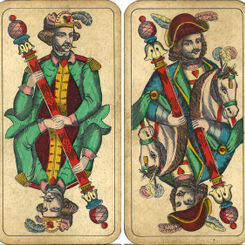
Czech National Patterns by S.D. Modiano
Modiano produced cards with the Prague and Trappola patterns in the early 20th century.
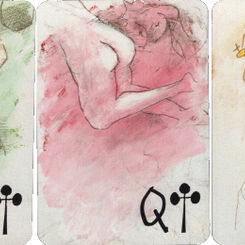
Emilio Tadini playing cards
Beautiful dreamlike playing card designs by Emilio Tadini.
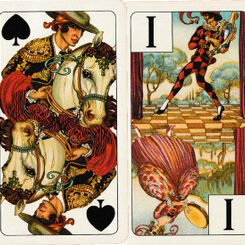
Alan Tarot Deck
Reprint of a Tarock pack originally designed by Argio Orell for the Austrian Lloyd shipping company....
Art Nouveau playing cards from Italy
from the Armanino factory in Genoa
Il Quinto Seme
An Italian pack with a fifth suit of “amici” (“friends”).
Liberty
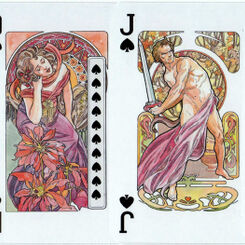
Liberty playing cards designed by Antonella Castelli, published by Lo Scarabeo, 2003.
Pinocchio
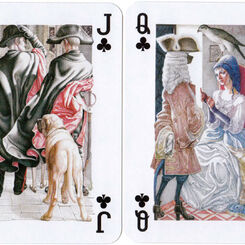
Pinocchio fairy tale playing cards illustrated by Iassen Ghiuselev for Lo Scarabeo, 2003.
Triestine Pattern
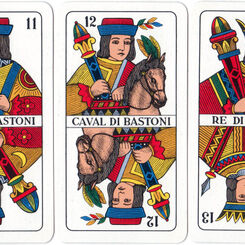
The Triestine pattern is derived from the Venetian (Trevisane) pattern but with its own characterist...
Primiera Bolognese
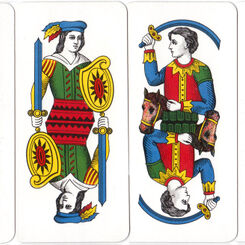
Primiera Bolognese by Modiano, c.1975
Bergamasche Pattern
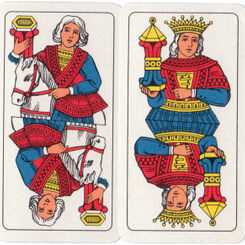
Bergamasche Pattern by Modiano, 1970s.
Tarocco Siciliano
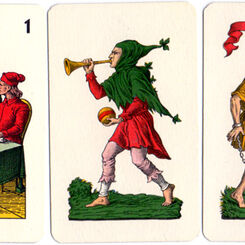
The highly individual Sicilian Tarot has the Italo-Portuguese suit system with straight, interlockin...
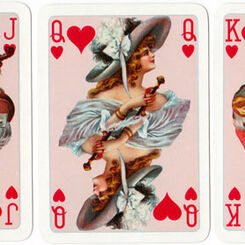
Club Bridge
Modiano’s ‘Club Bridge’ is a new edition of a stylish deck originally published in c.1895.
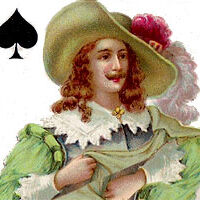
Austrian Lloyd Steamship Company
Possibly one of the most beautiful decks produced for commercial purposes, this was printed by Modia...
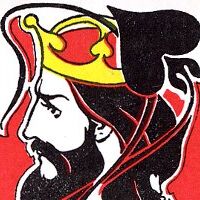
Jeu de Cartes No.1
Henri Meunier was a Belgian Art Nouveau lithographer, etcher, illustrator, bookbinder and poster des...
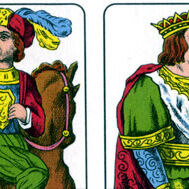
Piacentine Pattern
Piacentine Pattern, several double-ended versions.
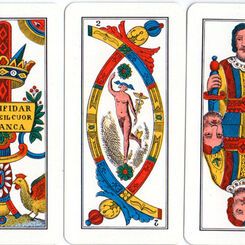
Trevisane pattern
The double-ended version of the ‘Trevisane’ pattern originated in the early 19th century.
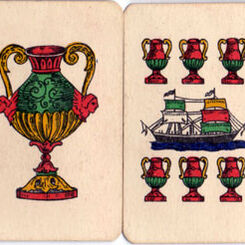
Sicilian Pattern
The Sicilian pack has a similar composition to the Neapolitan pack, and is small and squat in appear...
The History of Playing Cards
Playing cards appear in European records in the late 14th century, but their earlier history lies fu...
Most Popular
Our top articles from the past 60 days


Gino
09 September 2024, 15:04If one looks closer - the red cardback deck here is using pneumatic zig-zag texture. I happen to own it now.
Victoria Celeste
26 April 2026, 18:15SavedSaved this article to vix likes!