


Hanafuda Flower Cards
Japanese Flower Cards (Hanafuda) made by Nintendo, Japan, 2008.
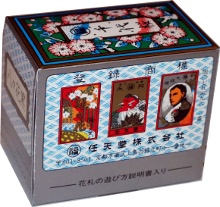
Flower Cards - Hana Fuda
Japanese Flower Cards (Hanafuda) made by Nintendo, Japan, 2008.
Japanese Hana Fuda, or flower cards, are probably the most widely known of Japanese cards. The cards are oblong and are made from pasteboard, brightly coloured, but smaller than Western playing cards. In earlier times they were printed from woodblocks and coloured using stencils. The backs are painted black and the turnover edges create the borders around the card faces. Four cards in each of the twelve suits which are named after flowers corresponding with the twelve months, plus one extra ‘Joker’ card, makes a total of 49 cards. Each card is distinct. Hanafuda decks were the very first product offered by the now-famous video game maker Nintendo.
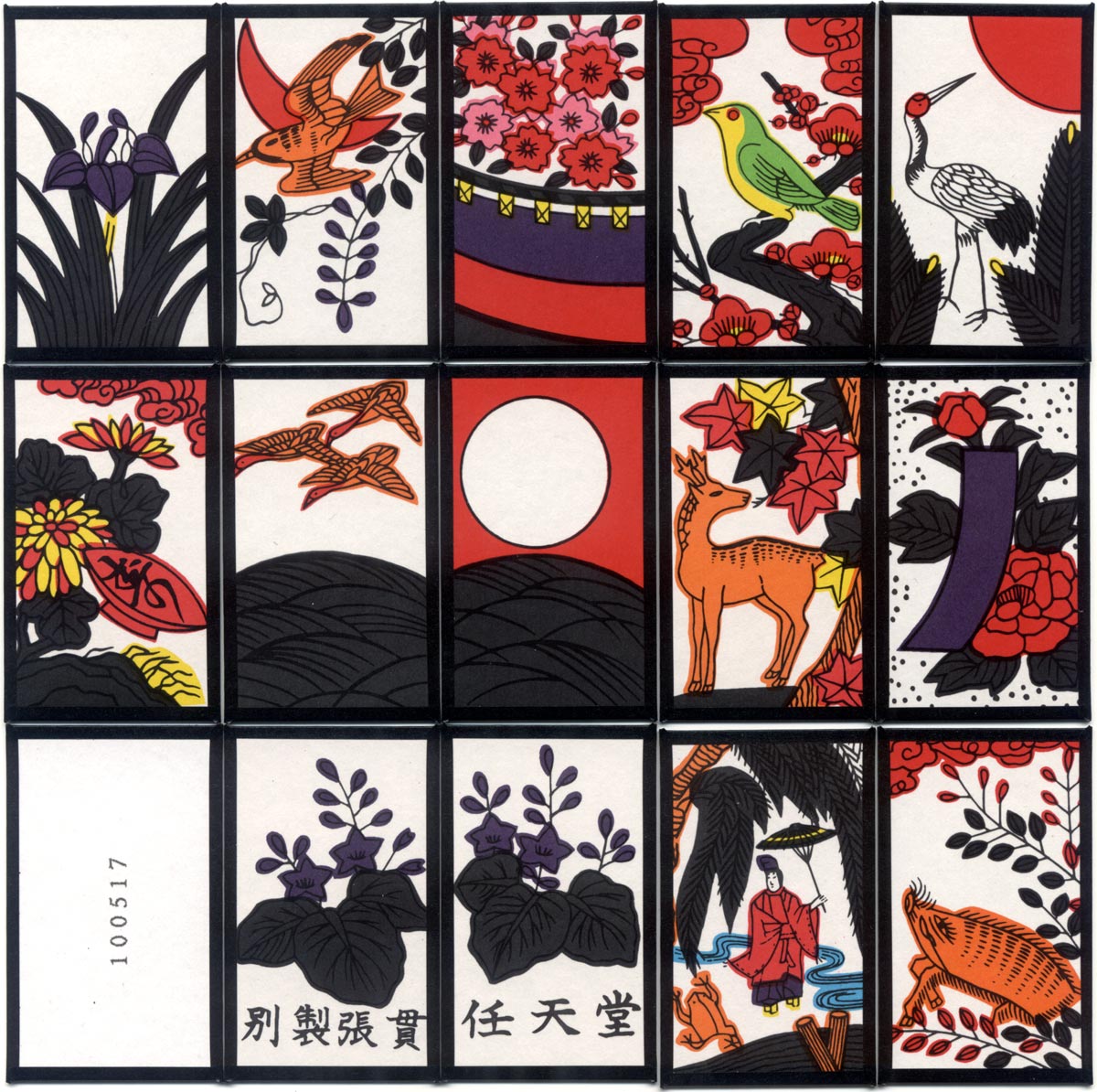
January is represented by pine trees, which, on two of the cards, are shown against a lurid sky; the third one has a grayish background, that throws the trees into strong relief, and the fourth has a setting sun flecked with light clouds, the pines barely indicated in front of it, and the greater part of the card covered with the figure of a huge white-bodied, red-eyed stork. February displays as its emblem a plum-blossom, the four cards devoted to this month bearing its flower in various positions. March has a red cherry blossom, and April the hanging tendrils of the wistaria vine. On one of the cards of this suit is a wee yellow-bird, which is flying across its surface under a crimson cloud. For May there are beautiful blue iris springing from long spiky leaves. One card shows in one of its corners part of a dock or pier and also the water out of which the flower is lifting its lovely head. June is represented by blood-red peonies, over one of which two yellow butterflies are hovering. On July's cards star-shaped leaves, some yellow, some red, and some black, are scattered over their surfaces. These leaves resemble those of our gum or liquid amber trees, but thes bear the Japanese name of hagi. On one of the cards belonging to this suit a deer is represented standing under the branches of this strangely-hued tree. This is the only figure which recalls in any way the emblems used on cards belonging to other nations, as on one of the Chinese cards is found either a deer or else Chinese characters which have been translated to mean "This is a deer".
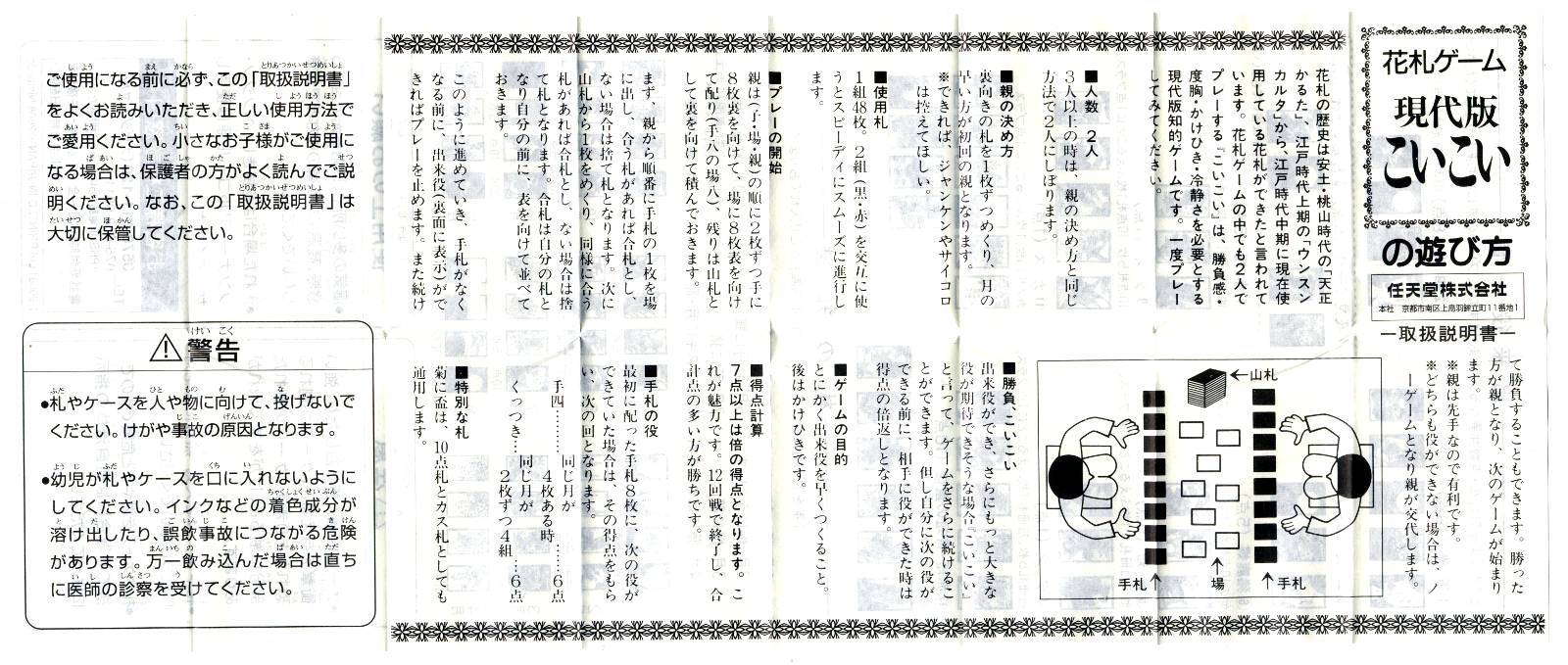
August is represented by four pictures of grass-covered mountains, in three of which they are sharply defined against a clouded blue sky, and in the fourth the sun, looking hot and sultry, beams down on a treeless hill. Three birds fly across the sky on one of these cards. September bears the Mikado's flower, a yellow and red chrysanthemum; October, a maple tree with red or yellow leaves; and on one card is a yellow boar trotting off towards the symbolic tree. November shows on one of its cards a willow sharply outlined against a leaden sky. The willows a fellow-card look wind-tossed, and a long-tailed bird skims across the sky. A third card is covered with inky clouds, torrents of rain, and strange zigzags resembling forked lightning. The fourth card of this suit bears a quaint figure of a man rushing through the storm ander the willow trees and dropping his sandals in his haste, his head covered with a huge yellow umbrella. Streaks of lightning surround the little figure, and the storm of rain is well depicted in the picture. December bears the imperial Japanese plant kiri, and over one of these flowers hovers a beautiful red-crested silver-winged pheasant. The rules leaflet accompanying the pack is shown below. Cards courtesy Adam Wintle.
Japanese Hanafuda also comes in a version with red backs, this version being copied by Korean makers (down to the imitation turnover edges!)
See also: Japan • Kabufuda • Korean Hanafuda
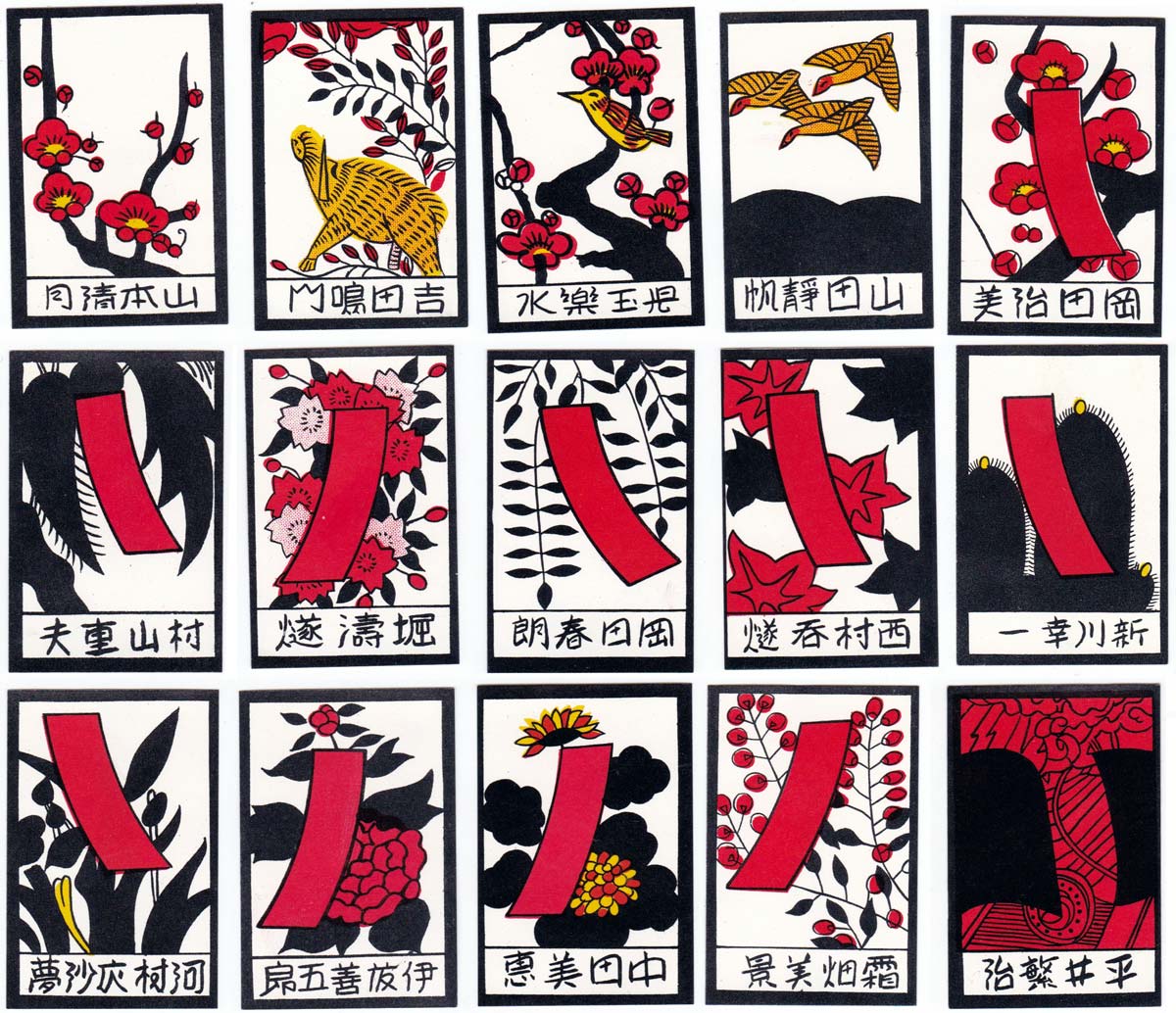
Above: Hanafuda cards on matchbox boxes. Courtesy Rex Pitts.
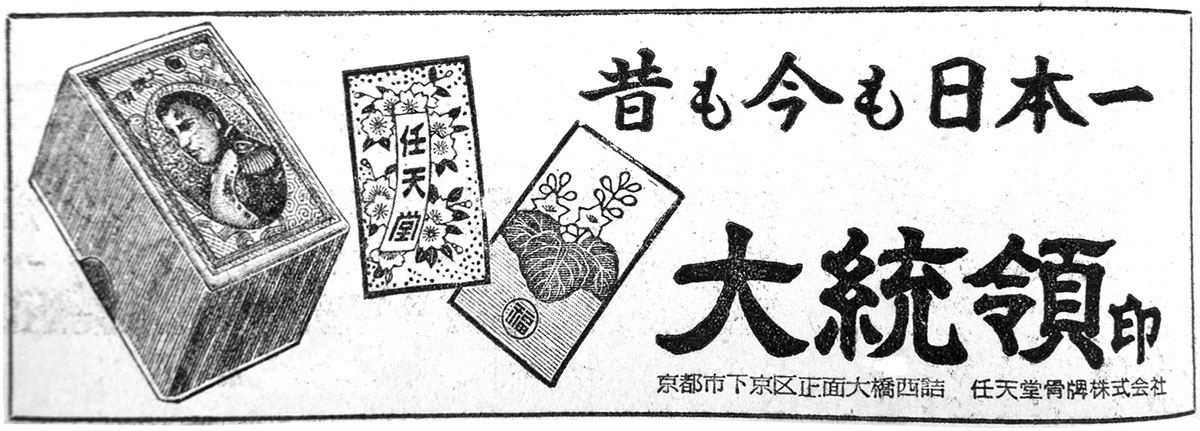
Above: Nintendo Hanafuda Flower Cards advertisement, 1950s. Napoleon is a brand used by Nintendo for their playing cards.

By Simon Wintle
Spain • Member since February 01, 1996
I am the founder of The World of Playing Cards (est. 1996), a website dedicated to the history, artistry and cultural significance of playing cards and tarot. Over the years I have researched various areas of the subject, acquired and traded collections and contributed as a committee member of the IPCS and graphics editor of The Playing-Card journal. Having lived in Chile, England, Wales, and now Spain, these experiences have shaped my work and passion for playing cards. Amongst my achievements is producing a limited-edition replica of a 17th-century English pack using woodblocks and stencils—a labour of love. Today, the World of Playing Cards is a global collaborative project, with my son Adam serving as the technical driving force behind its development. His innovative efforts have helped shape the site into the thriving hub it is today. You are warmly invited to become a contributor and share your enthusiasm.

Activity for Hanafuda Flower Cards
Sign in to comment or save this article.

Related Articles
Sumo Wrestling
Traditional Japanese Sumo Wrestling playing cards with photograph of different wrestler on each card...
Morinaga Hakuho playing cards
Artistic playing cards attributed to Morinaga Hakuho and printed by Nintendo, c.1985.
Hana-Trump トランプ
Hana-Trump cards from Japan are Hana-Fuda flower cards with miniature international playing cards in...
Kyoto Souvenir Deck
Kyoto Souvenir playing cards by Nintendo aimed at the up and coming tourist industry, 1950s.
Seiko fashion cards
Men's and ladies fashion playing cards published for the Seiko Corporation by Nintendo, Japan, 1971....
Nippon Beer
Nippon Beer brewery playing cards published by Nintendo, Japan, 1960s.
Loco Jumbo playing cards
54 different colour photographs of steam locomotives from around the world.
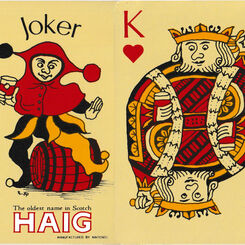
Haig Whisky
Japanese advertising pack for Haig Scotch whisky with modified international courts.
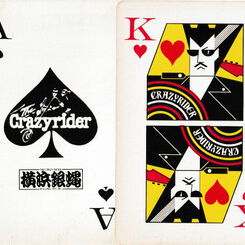
Crazyrider playing cards
Stylised portrayal of rock musicians from the 1980s.
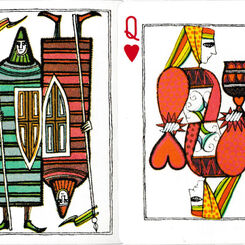
Nintendo deck with Medieval theme
Courts in medieval costume holding both French and Italian/Spanish suit-signs.
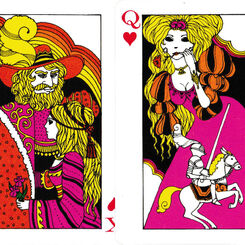
Unimol playing cards
Advertising pack for a pharmaceutical company, with brightly coloured courts.
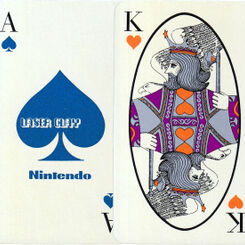
Laser Clay playing cards
Pack promoting the Laser Clay Shooting System created by Nintendo in 1973.
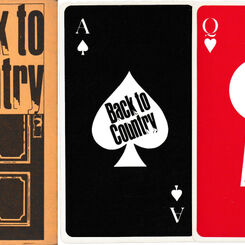
Back to Country
Advertising playing cards for a Japanese fashion house, with reversed colours.
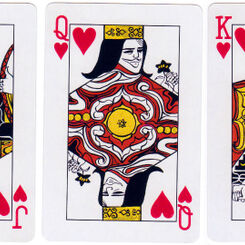
Ainu culture
A terrific deck of cards made by Nintendo c.1979 with original designs on every card showing the Ain...
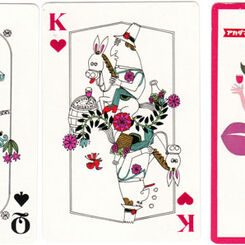
Akadama Honey Wine by Nintendo
Suntory Akadama Honey Wine playing cards manufactured by Nintendo, Japan, c.1970.
Japanese Kurofuda 黑札
The name means “Black cards”, which is especially true of you look at the suit of batons. The horse...
Akahachi
After Mekuri games such as Unsun Karuta and Tenshô Karuta were banned by the authorities, especially...
Kabufuda
Kabufuda playing cards manufactured by Nintendo, Japan
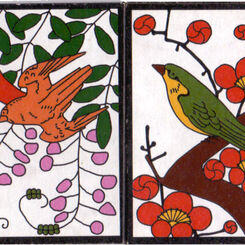
Hana Fuda - Japan
Hana Fuda playing cards hand-made by Patricia Kirk, 2003
Japanese Playing Cards
Japanese playing cards include: 'Awase' or 'matching pairs' cards and Portuguese or Spanish-derived ...
Most Popular
Our top articles from the past 60 days


Ваня Козлов (Vanya Kozlov)
19 November 2025, 09:47SavedSaved this article to Ваня Козлов's Collection