


22: Belgian Makers: Van Genechten
Van Genechten started making playing cards in c.1840 and continued until the founding of Carta Mundi in 1970.
Antoon (Antoine) Van Genechten started printing playing cards some time between 1837 and 1841 in partnership with Jacques-Edouard Glénisson. This partnership was dissolved in 1855 and Glénisson continued a separate card-making business until 1899. Van Genechten, on the other hand, continued into the twentieth century and was one of the component parts of Carta Mundi. A prolific card-maker, he has left behind many examples of his work. In addition to the traditional Turnhout version of the English single-figure courts (based on De La Rue's D3) he produced a most unusual version, which I illustrated on page 19 of this blog.
For a full list of the Van Genechten cards in my collection, click here►
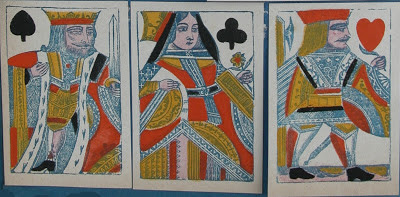
Above: Cheap grade, c.1870
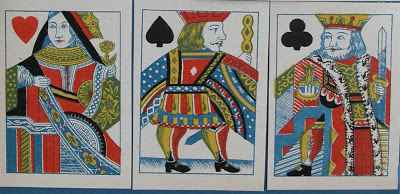
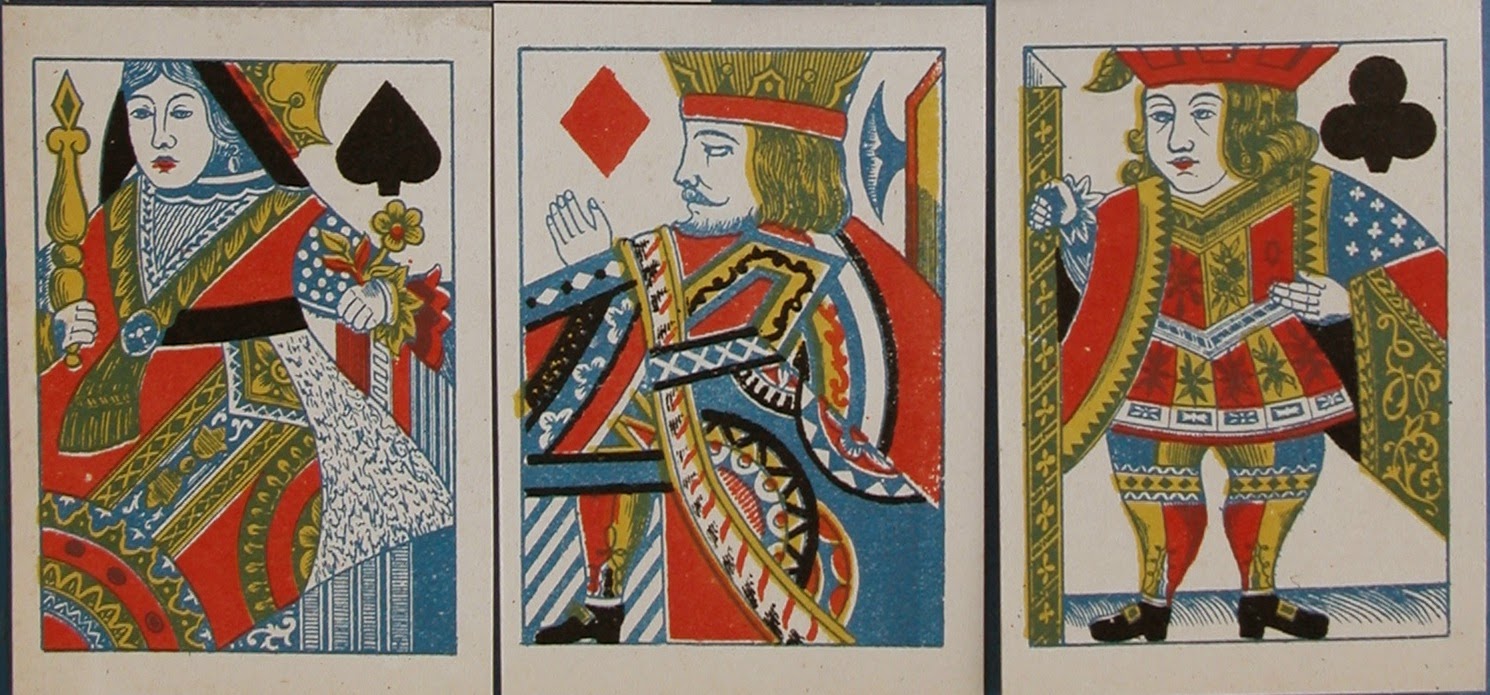
Above: A more expensive version, c.1870
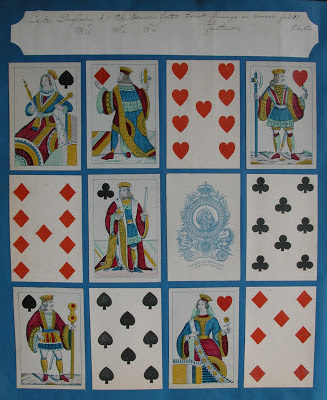
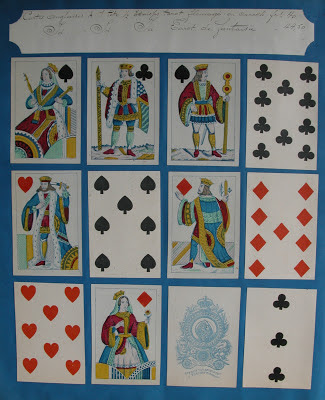
Above: From a sample book in the Turnhout Museum, c.1870
The double-ended version was considerably redrawn in the style of many continental designs with human faces. (See also Brepols' version of the design on page 21.)
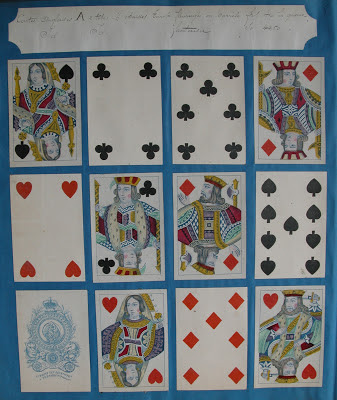
Above: From the same sample book
Note that the AS of this era is a close copy of Old Frizzle printed in blue; people sometimes think this is a rare version of the English duty ace. IT ISN'T!
He also used a different version of the single-ended courts based on De La Rue's D3, with a double-ended version, too.
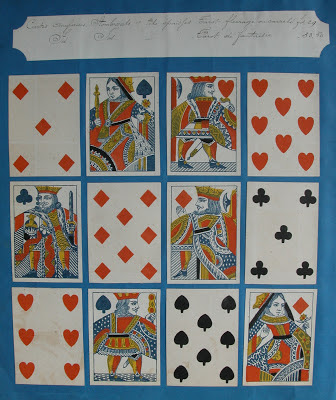
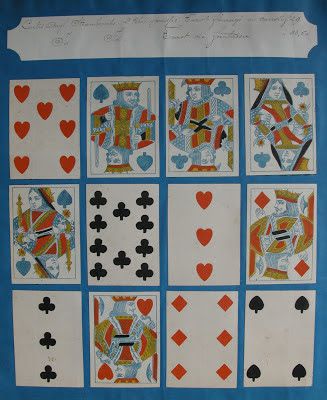
Above: From the same sample book
He even produced a turned version of the single-ended courts, which I've never seen done by any other maker.
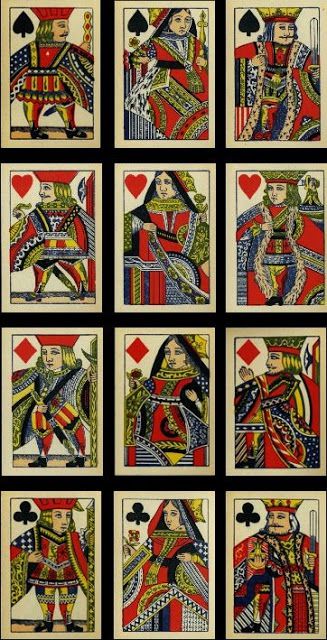
Above: Turned, c.1880. He also used De La Rue's double-ended D4.1 as a model.
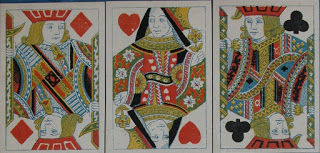
Above: c.1875
And he used Reynolds' single-figure courts (R1) and made a double-ended version of these. Note that, as was quite common in Europe at the time, double-ended courts are made from single-ended courts cut in half with the head half printed both ends. (For a full pack using these double-ended courts, see page 53.)
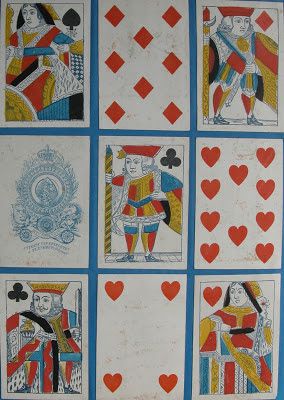
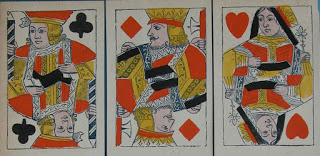
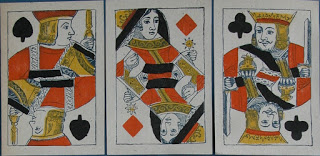
This is quite an extraordinary range of designs to have available all at the same time. Slightly later his version of De La Rue's D4.1, shown above with fancy decorative additions, was used in a lot of cheaper packs as well, and he did a triplicate version, too.
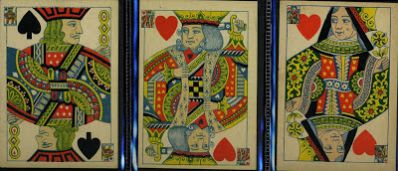
Above: c.1880
He also turned six of the courts of this design and produced packs with or without four indices, with or without round corners.
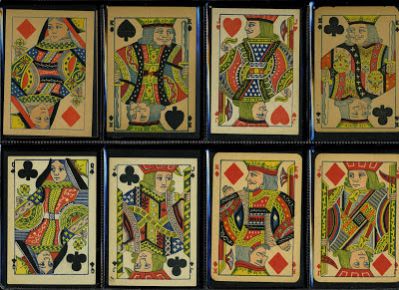
Above: c.1880-1900
Much later, in the 1930s, he was using a copy of De La Rue's last design (D9), which had been discontinued in England in the late 1920s.
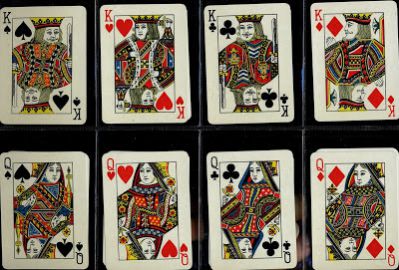
In the 1930s Van Genechten was also making a lot of cards for India, as mentioned previously, and he used a completely turned version of De La Rue/Goodall's GD10 on very thick card. [See also page 22.]
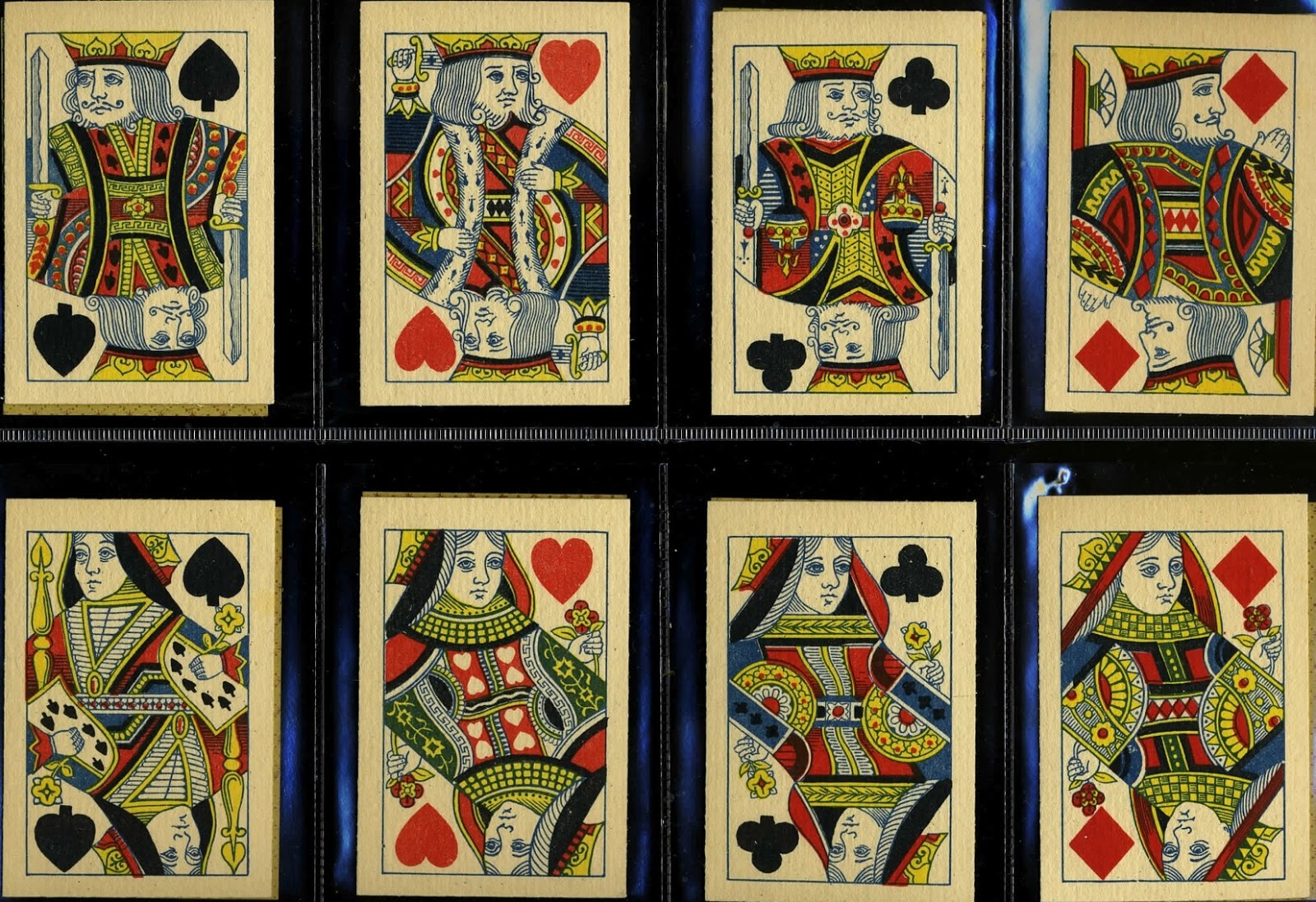
Above: c.1935
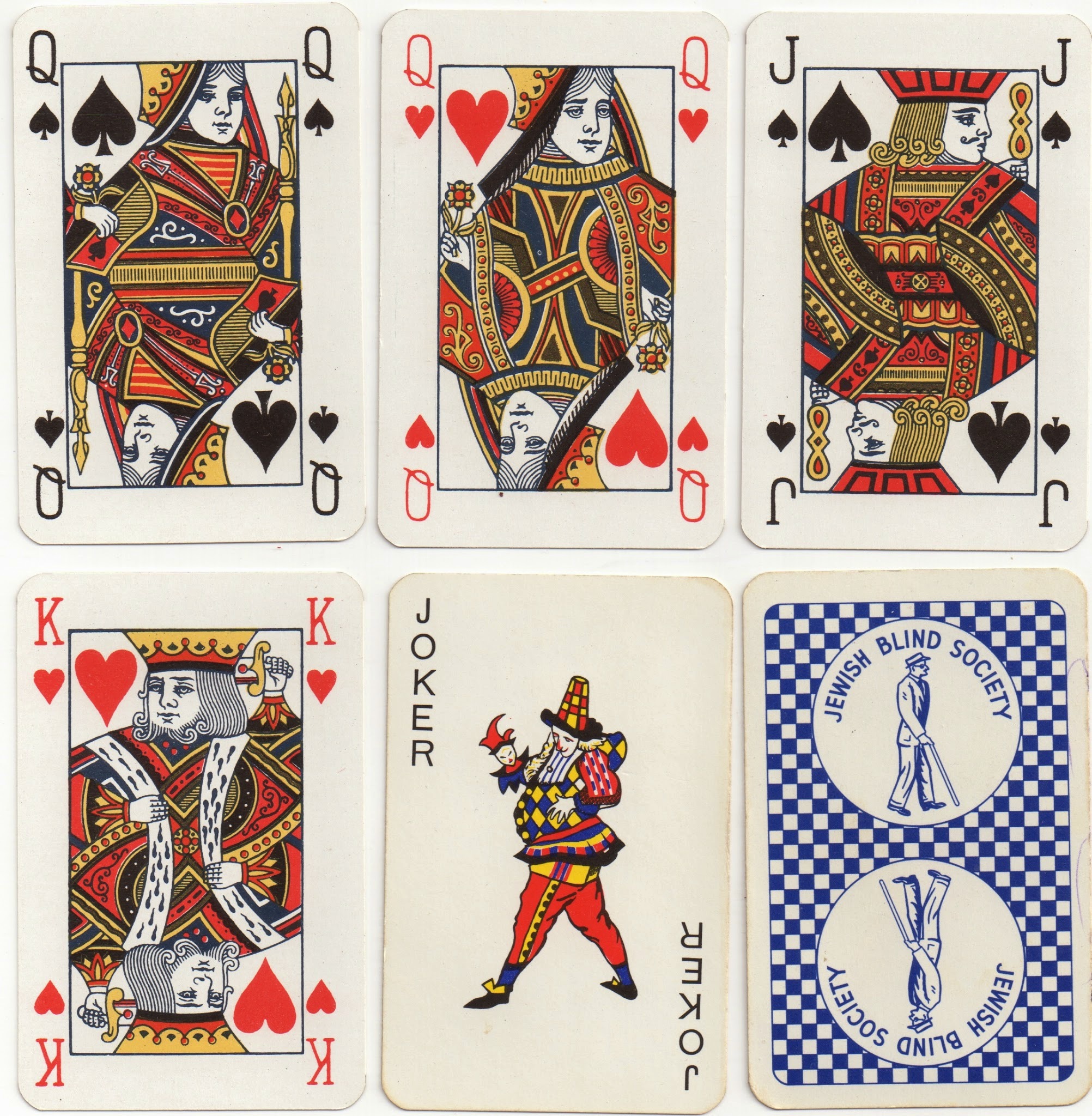
Finally, right up until the 1960s, he used a version of USPCC's US5 with turned courts to put all the pips on the left, which meant a turned QH and a normal-facing JS.
For other Belgian makers, see pages 18, 21 & 23. For some of the non-standard packs produced by Van Genechten, see the wopc website

By Ken Lodge
United Kingdom • Member since May 14, 2012
I'm Ken Lodge and have been collecting playing cards since I was about eighteen months old (1945). I am also a trained academic, so I can observe and analyze reasonably well. I've applied these analytical techniques over a long period of time to the study of playing cards and have managed to assemble a large amount of information about them, especially those of the standard English pattern. About Ken Lodge →

Activity for 22: Belgian Makers: Van Genechten
Sign in to comment or save this article.

Related Articles
Cartamundi
Cartamundi is a Belgian playing-card manufacturer formed in 1970 through the consolidation of severa...
Barok
Dutch pack from the 1950s with colourful Baroque courts, reprinted in 1983.
Jeu Quatre Empereurs
Brazilian scenic aces with emperors of Brazil, Austria and France and other dignitaries on the court...
Neptune No.105 Playing Cards
An exotic pack made by A.Van Genechten of Turnhout
Dutch costume playing cards
Dutch costume playing cards made for the Dutch market in the second half of the 19th century.
Bayer
Humorous pharmaceutical deck made by Antoine van Genechten for Bayer, c.1963.
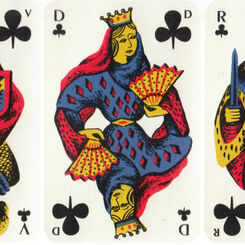
Banque Nationale de Paris, c.1962
Special deck made for La Banque Nationale de Paris by Van Genechten, Turnhout, c.1962.
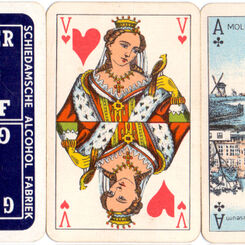
Genever Giraf
Dutch pattern advertising deck for Genever Giraf made by Van Genechten in the 1950s.
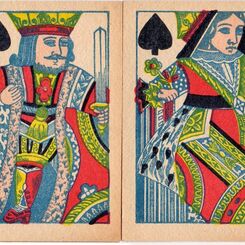
Manuf’d for L.N. Mann
Standard English pattern manuf’d for L.N. Mann by Van Genechten, c.1890.
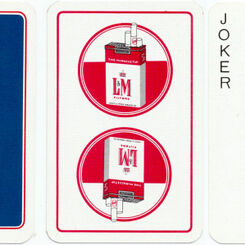
Tobacco advertising
Advertising decks made in Belgium by A. Van Genechten, 1960s.
Sport No.31
Van Genechten first registered an Ace of Spades for English playing cards in 1885 followed by the ‘S...
Dilkhus playing cards for India
Van Genechten was one of the most competent cardmakers in Turnhout and they produced almost every ki...
18: Belgian Cards: An Introduction
The card-makers of Turnhout were prolific in their output and inveterate copiers.
Van Genechten
A. Van Genechten ran a flourishing business, supplying various kinds of cards both inside the countr...
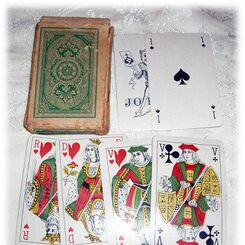
Standard Genoese
Van Genechten manufactured playing cards in various styles, including specially customised versions ...
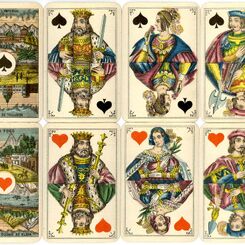
Bongoût
One of the outstanding and most popular packs made by the Turnhout cardmakers was the Bongoût type. ...
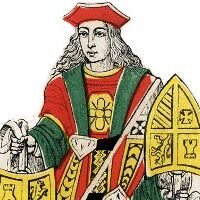
Genoese pattern
The design is purely 'Parisian' but the colouring is green, red, yellow and black. Belgium has taken...
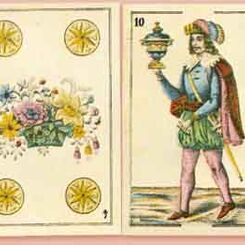
Naypes Finos made in Belgium
Belgian manufacturers were competing against Spanish makers. Features of the traditional Spanish des...
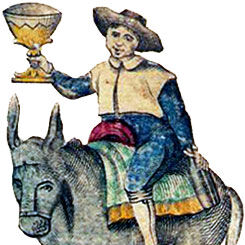
Escalada y Vidiella, Montevideo c.1860
Cards from a 40-card pack made in Belgium by Antoine van Genechten exclusively for the firm "Escalad...
Most Popular
Our top articles from the past 60 days


