


Baraja Mexicana Calendárica
Scholarly Mexican playing cards with Aztec and Maya calendar motifs.
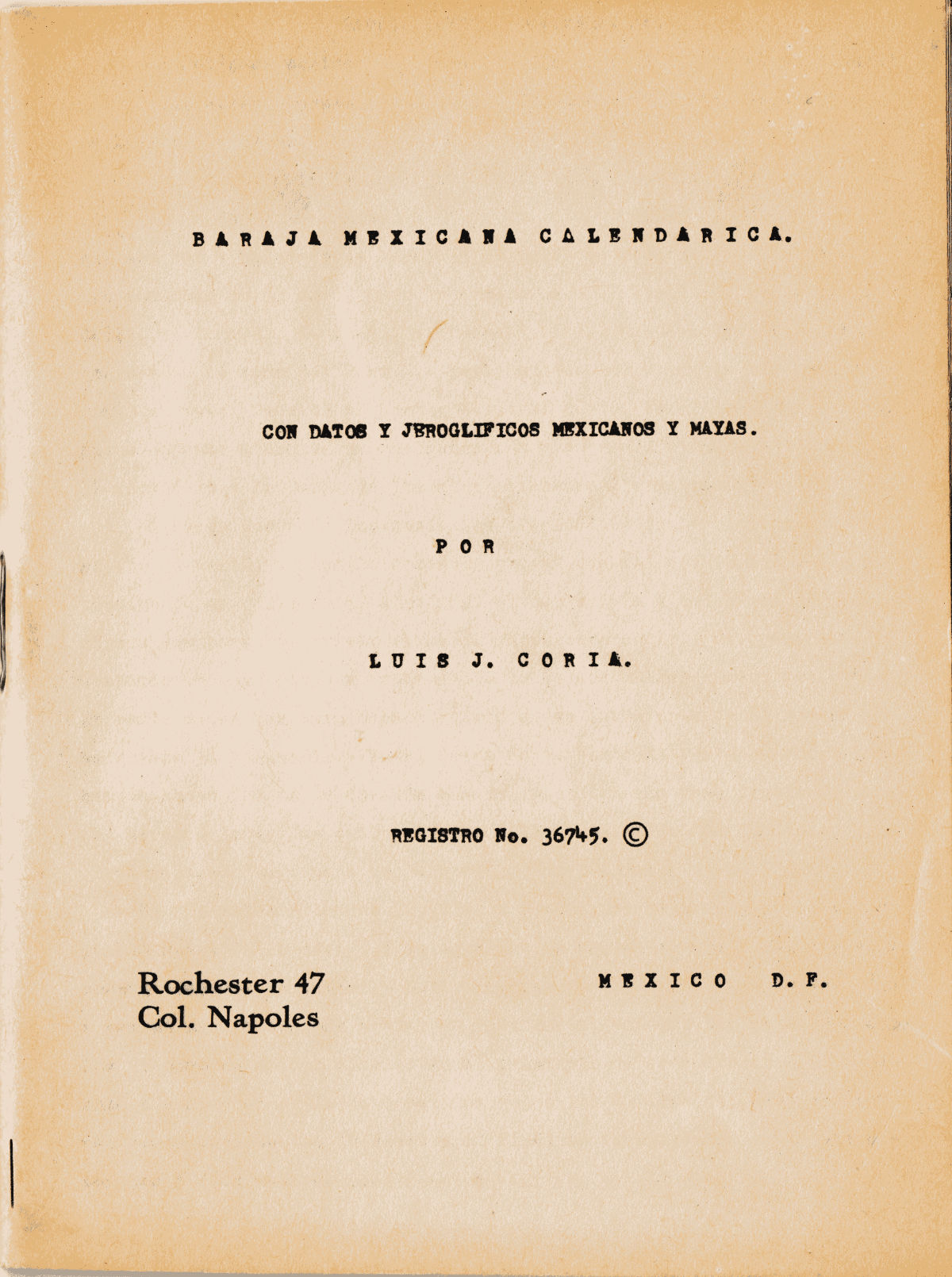
Above: title page of the booklet accompanying Baraja Mexicana Calendárica, by Luis J. Coria.
Title page of the Spanish booklet accompanying Baraja Mexicana Calendárica, by Luis J. Coria. The page gives the deck title, describes it as containing Mexican and Maya dates and hieroglyphs, and records the registration number and Mexico City address.
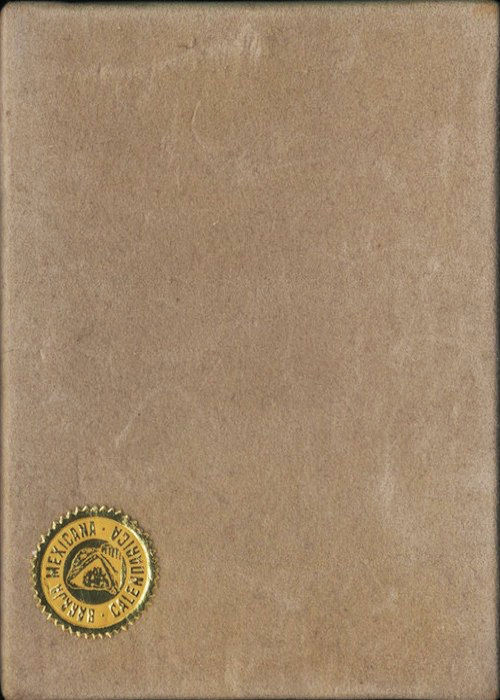
Above: velvet-covered cardboard box for Baraja Mexicana Calendárica, with circular gold title label.
Velvet-covered cardboard box for Baraja Mexicana Calendárica. The circular gold label bears the title of the deck, with a small central emblem. The box is similar in construction to Fournier boxes of the same period.
The deck follows the standard French format, with 52 cards and two jokers. It features 13 deities repeated across each suit. The jokers depict Mayahuel, the Aztec goddess of fertility, abundance, mystical intoxication and the agave plant. Each card incorporates calendar elements and hieroglyphs, linking the pack to the Aztec 52-year cycle.
The deck is available with a solid green or black back, colours of symbolic significance for the Aztecs. It also features Tonatiuh, the Aztec god of the Sun, often associated with the Fifth Sun.
The deck is presented in a single-piece velvet-covered cardboard box, similar in construction to Fournier's boxes from the same period.
Information about this deck is difficult to find, as it appears to be a scholarly self-published deck from the 1970s. Luis J. Coria created it in the Colonia Nápoles neighbourhood of Mexico City. The deck comes with a handcrafted booklet in Spanish, which presents ancient Mexican culture and calendars over roughly thirty pages. It also has an official Mexican ownership registration and is referenced by Fournier as vol. 1, page 315, #55 of Mexico.
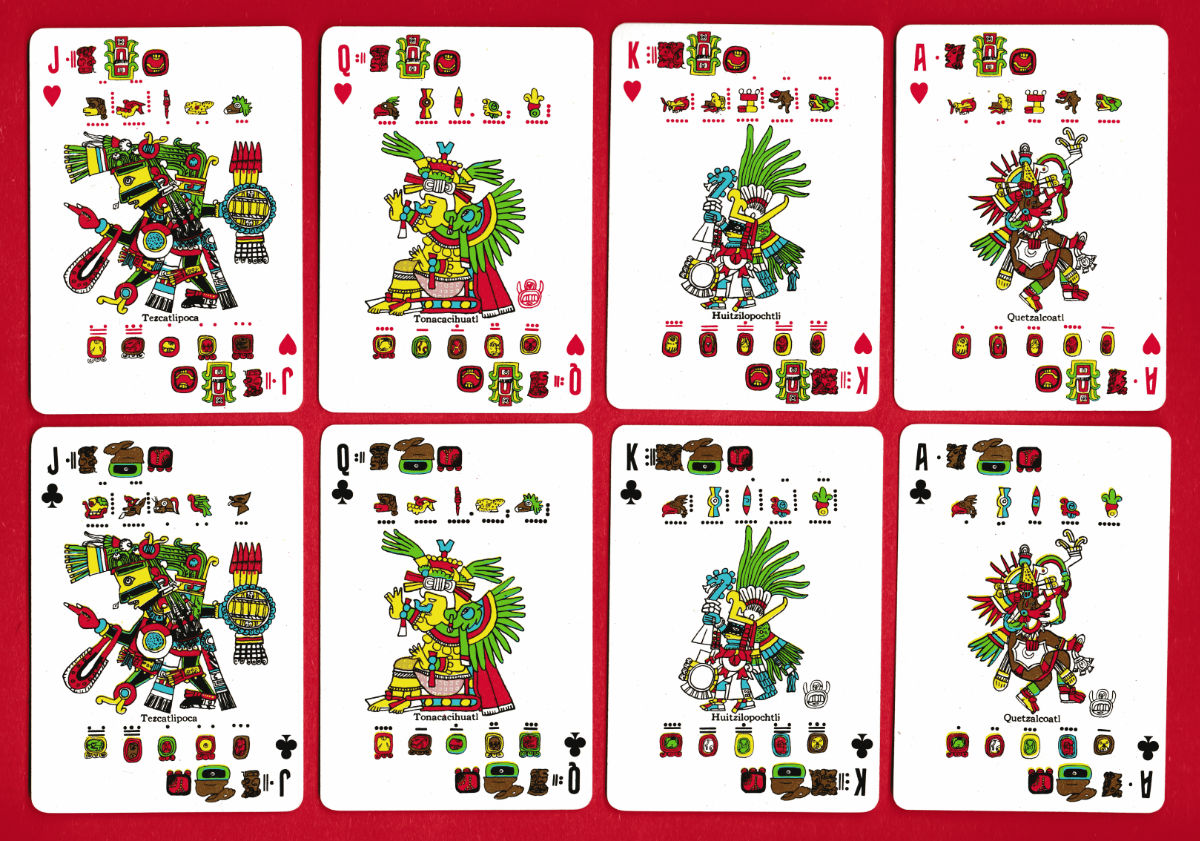
Above: Tezcatlipoca, Tonacacihuatl, Huitzilopochtli and Quetzalcoatl shown in the hearts and clubs suits, with calendar glyphs repeated above and below each card.

Above: The same deities return in diamonds and spades, with calendar glyphs repeated above and below each card.

Above: Number cards, Mayahuel jokers and the two back designs show the deck’s wider iconography.
References
- Luis J. Coria, Baraja Mexicana Calendárica, handcrafted booklet in Spanish
- Fournier, vol. 1, page 305, #55 of Mexico

By Vincent Bérail
France • Member since June 22, 2026
Collectionneur français de cartes à jouer de 52 cartes. Principalement des jeux non standarts des années 1950 à 2000

Activity for Baraja Mexicana Calendárica
Sign in to comment or save this article.

Related Articles
Pacific Northwest Native American Playing Cards
A bold presentation of animals in Native American artwork – with a political message.
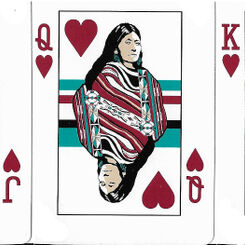
San Manuel Casino
Native American-themed playing cards used by tribal casinos.
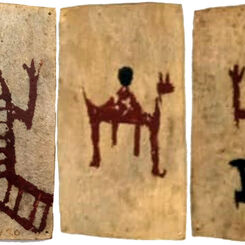
Aónikenk playing cards
Ethnographic playing cards made by members of the Aónikenk culture from Patagonia.
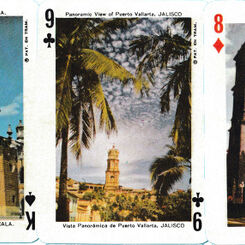
Visite Mexico
Promoting Mexican tourism with 54 different photographs in full colour.
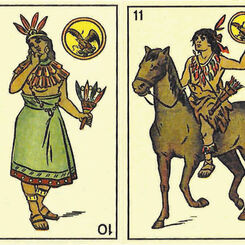
Mexican ethnic playing cards
Mexican ethnic groups depicted on playing cards by Fábrica de Naipes Cuauhtemoc.
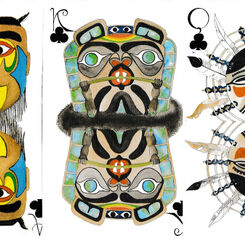
Pacific Northwest native Indian masks
Pacific Northwest native Indian masks with artwork by Margaret Parrott, USA, 1992.
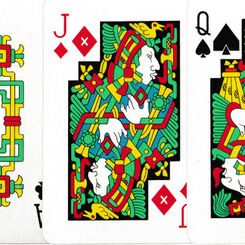
Baraja Maya
Original designs inspired by Mayan art and culture published by Fernando Güemes, Mexico.
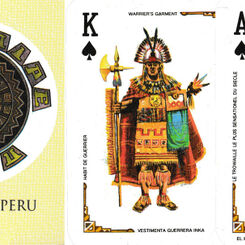
Inka Naipe Souvenir
54 colour photographs of costumes and artefacts connected with the Inca civilisation, unknown publis...
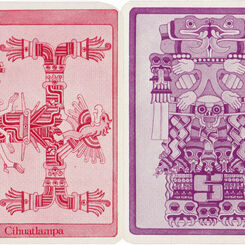
Tonalamatl
Baraja Tonalamatl Mexican Aztec playing cards based on the prehispanic Codex Borgia manuscript.
Apache cards by Tonto Naipero
Apache rawhide playing cards by ‘Tonto Naipero’, c.1871.
Ojibwa Native Indian Cards
Ojibwa Native Indian playing cards hand manufactured on birch bark in imitation of standard French /...
Iceland Mythological Playing Cards
Iceland Mythological Playing Cards designed by Sigurlinna Pétursson, 1958
Apache Playing Cards
Apache Indian Playing Cards made on rawhide, first recorded 1875.
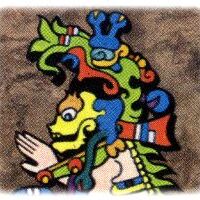
Maya Playing Cards
The designs of Mayan artists shown here give a general idea of their enormous artistic and cultural ...
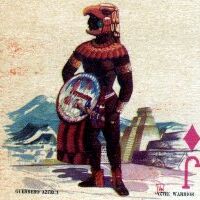
Aeronaves de Mexico
Special pack for Aeronaves de Mexico S.A., designed by Ramón Valdiosera Berman, mid-1960s.
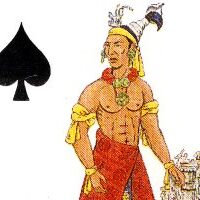
Mexican Poker
Mexican Poker cards made by Juegos y Fichas, S.A. de C.V., Mexico, 1991
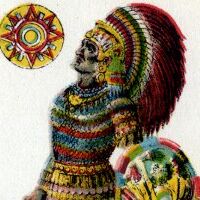
Naipes Nacionales
Naipes Nacionales designed by Manuel Bayardi and published by Clemente Jacques y Cia, Mexico c.1940....
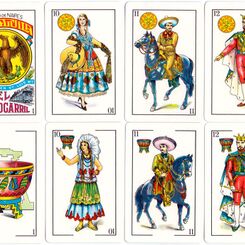
Playing Cards in Mexico
MEXICO shares a long tradition with Spain in the field of playing cards and also merges two complete...
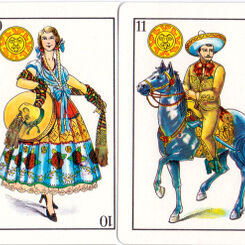
El Ferrocarril
Naipe El Ferrocarril made by La Cubana, S.A. (Fabrica de Naipes El Aguila), Mexico, c.1960
Native Indian Hand-made Cards made on rawhide
Native Indian hand-made cards made on rawhide.
Most Popular
Our top articles from the past 60 days


