


16: European Standard Playing Cards
A brief survey of the different types of standard cards to be found in Continental Europe.
There are many standard patterns in Europe that British people only come across when they are abroad (unless they are collectors), so I thought it would be useful to illustrate a number of these to help with identification. Since I no longer collect such packs, it's thanks again to Rex Pitts for supplying most of the scans.
There are basically three suit systems in Europe: French (spades, hearts, clubs, diamonds), German (leaves, hearts, acorns, bells), Italo-Spanish (swords, cups, clubs, coins). I illustrate each below.
French Type
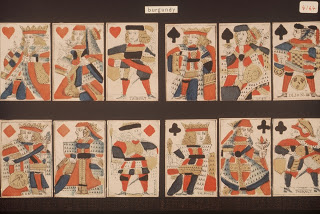
Above: French in an 18th century pack of the Burgundian pattern (no longer extant); from Sylvia Mann's collection
German/Swiss Type
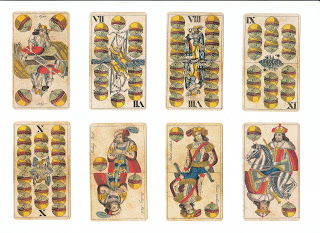
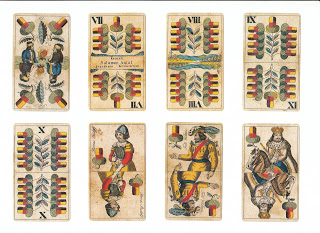
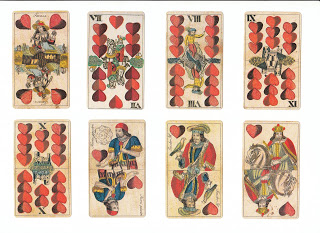
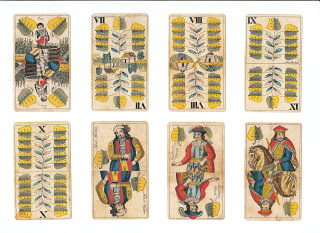
Above: German in a Four Seasons pattern (reproduced by Piatnik)
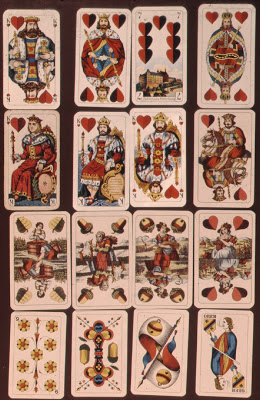
Above: A selection of German and Swiss suited cards
Note that the Swiss suits are different from the German ones in two of them: shields, flowers, acorns and bells.
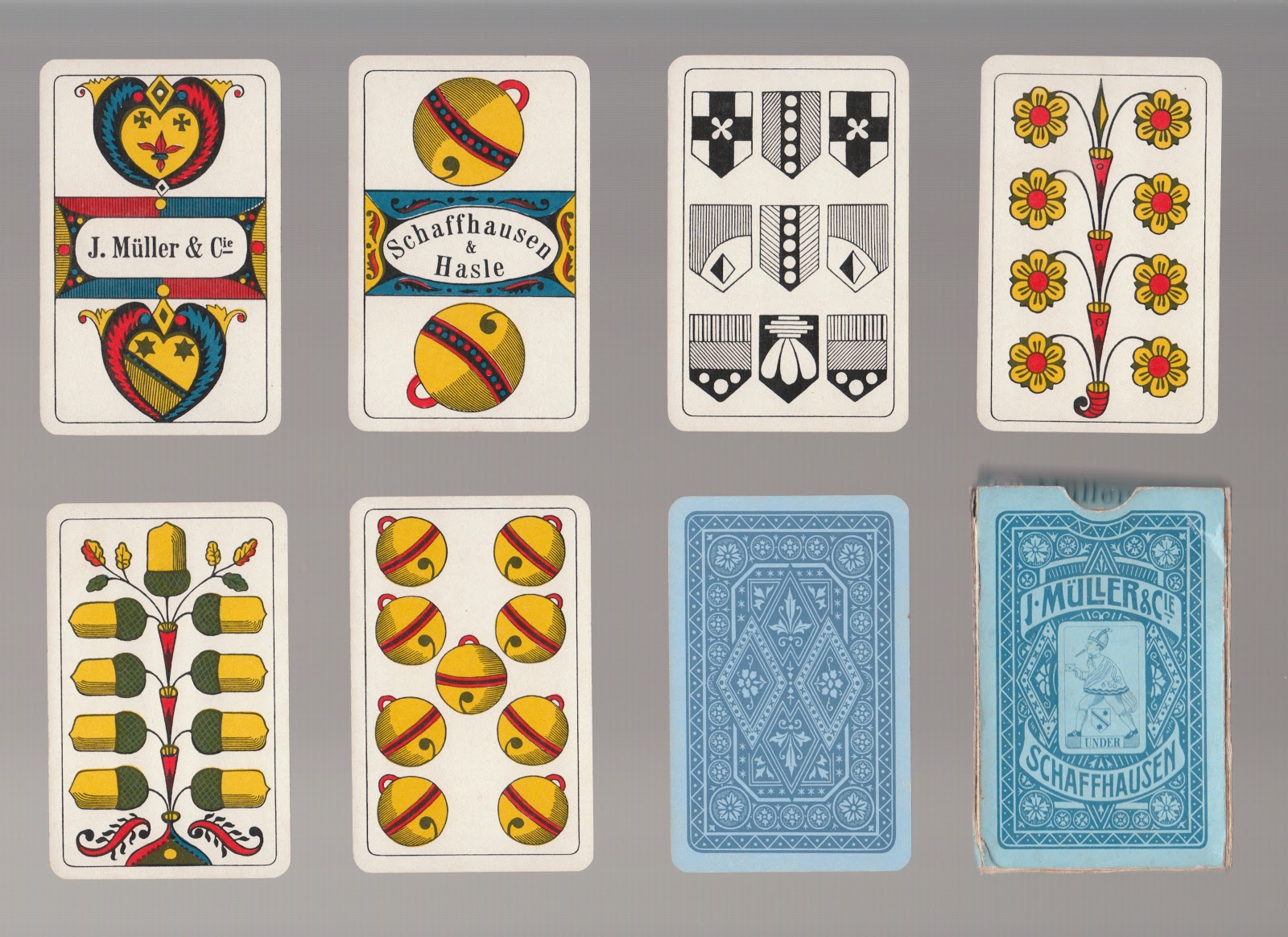
Above: Swiss Jass cards
Italo-Spanish Type
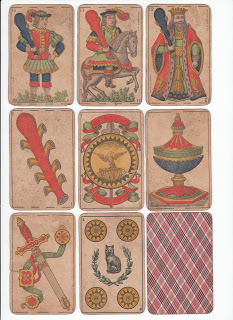
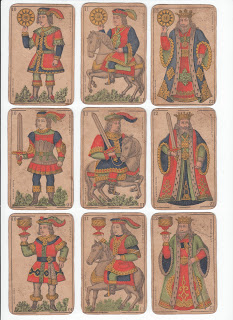
Above: Italo-Spanish in a Catalan pattern pack made in France
The Italian swords and clubs are often interlaced, whereas the Spanish ones are separated. The interlacing comes from the traditional tarot suit arrangements, though not all Italian regional patterns have this feature.
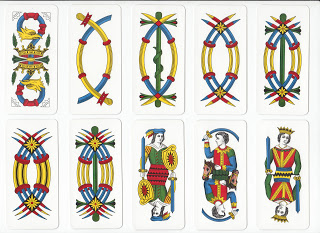
Bolognese pattern
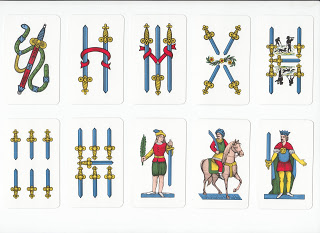
Neapolitan pattern
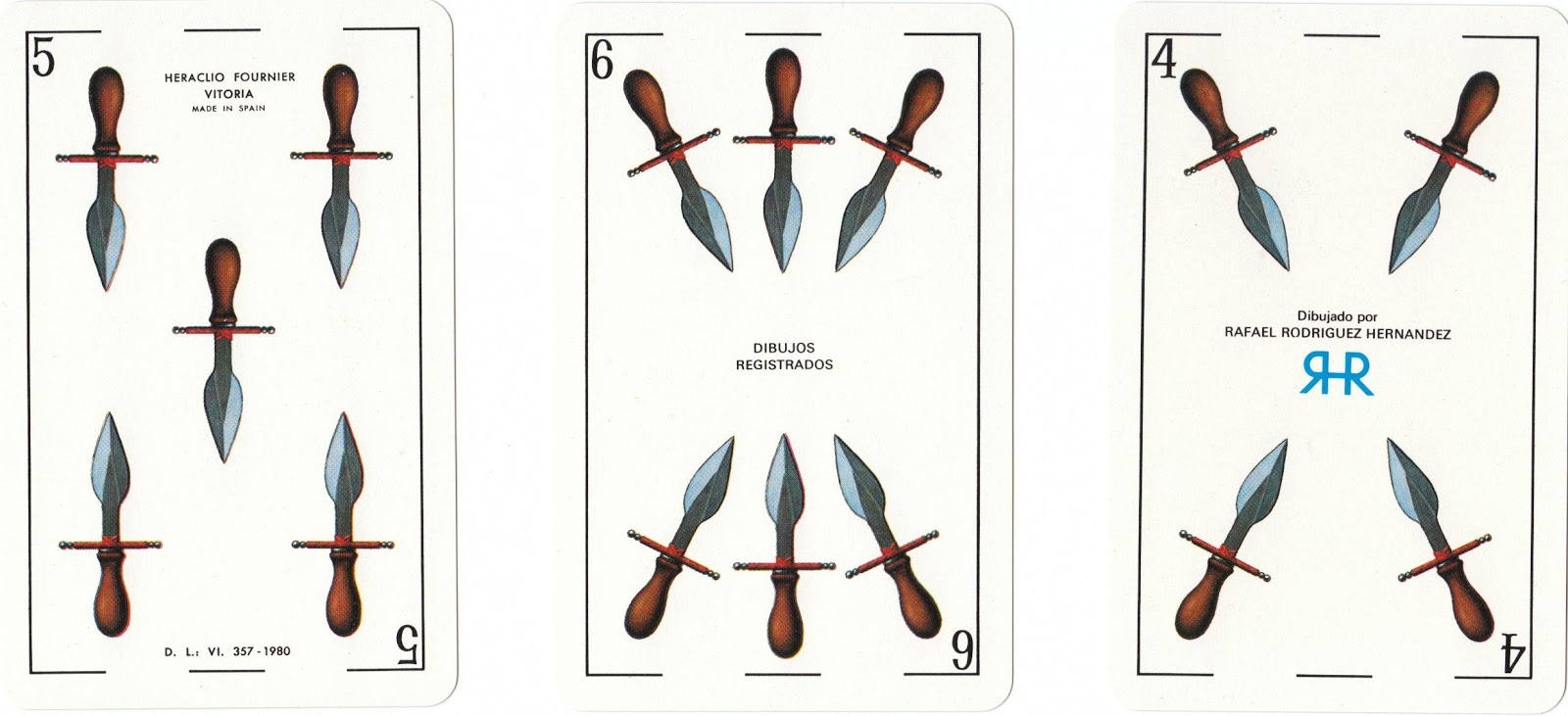
Above: Three sword cards from a Spanish non-standard pack
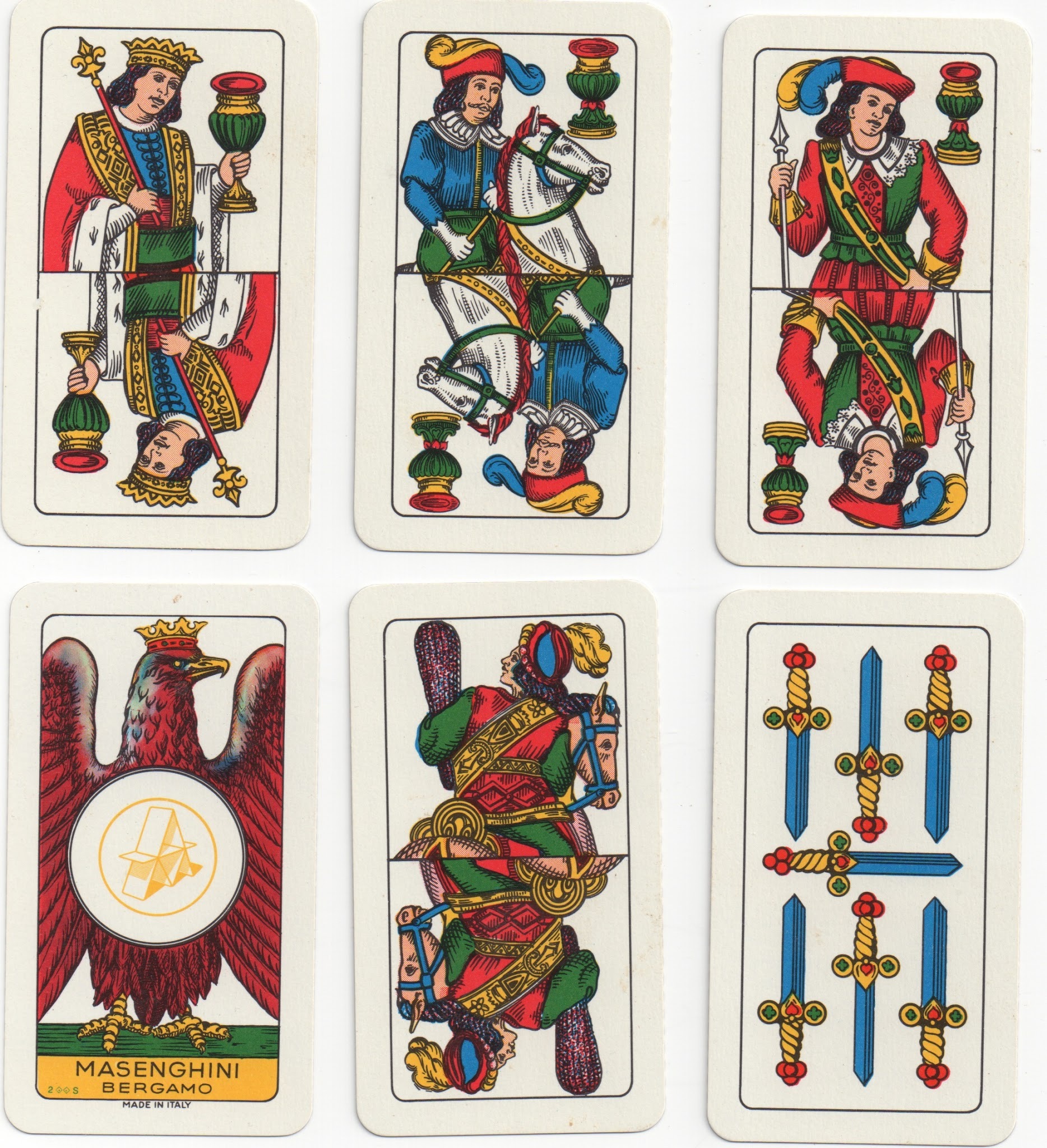
The Piacentine pattern with double-ended courts
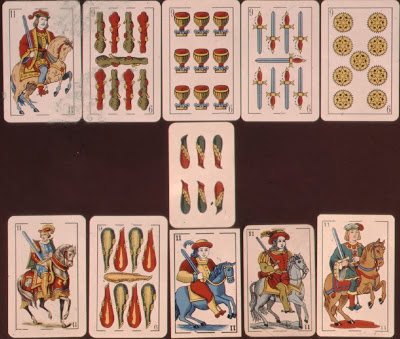
And a selection of Spanish-suited cards (Neapolitan card in the centre)
All these systems of suit signs are used in the various standard regional patterns, a few of which I illustrate on other pages. The most comprehensive treatment of standard patterns is to be found in Sylvia Mann's All cards on the table/Alle Karten auf dem Tisch (1990, Jonas Verlag).
The English names of the French suit-signs are a strange mixture: pique is replaced by the borrowing of the equivalent Spanish suit-sign spade; cœur is translated directly as heart; trèfle is replaced by the translation of the equivalent Spanish suit-sign club; and diamond is anybody's guess (the French carreau means 'a paving tile').
To finish this post I'll illustrate a few more of the French-suited standard patterns.
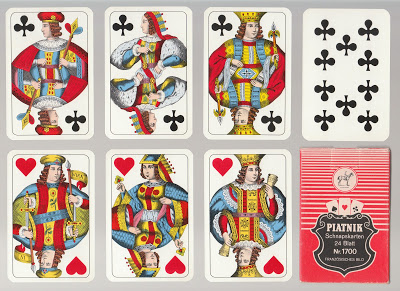
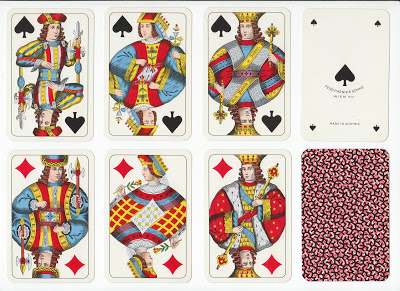
Austrian pattern A with large crowns; oddly the box refers to "Französisches Bild", the name used in Germany for the Berlin pattern (see next item)
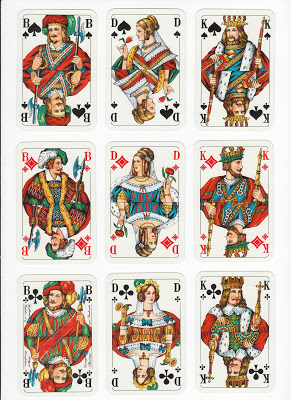
Berlin pattern, the North German version of the old Paris pattern
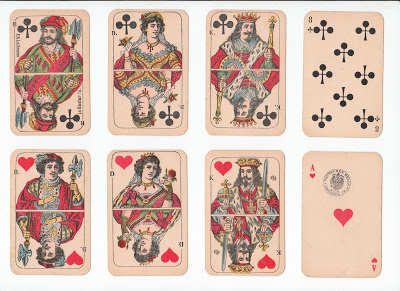
An earlier version by Lattmann, c.1900
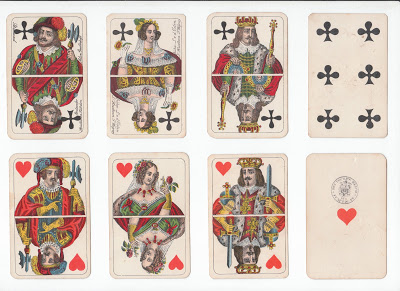
Another early version by Stralsunder Spielkarten Fabriken
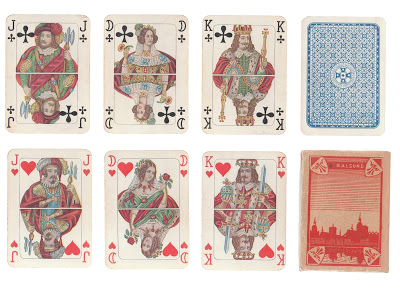
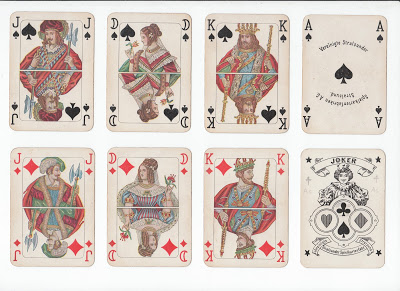
A version of the standard Berlin pattern (französisches Bild) by Stralsunder, c.1925. Note that the indices are a hybrid of English and German: K D J!!!
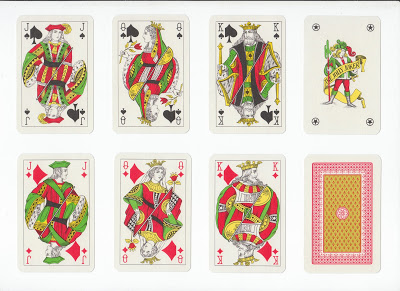
The Belgian version of the Paris pattern; this one was made by Artex, Budapest, with English indices. The same pattern is found in Genoa.
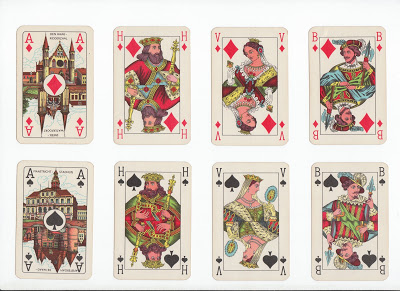
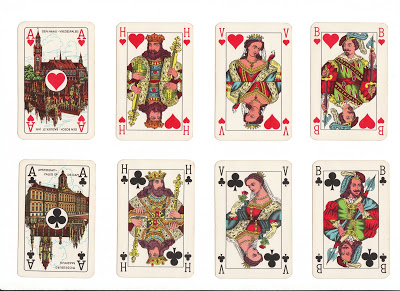
Dutch standard pattern; several of the courts are derived from the old Paris pattern
For some examples of earlier European standards with French suit-signs, see page 11. For further examples, see page 25.

By Ken Lodge
United Kingdom • Member since May 14, 2012
I'm Ken Lodge and have been collecting playing cards since I was about eighteen months old (1945). I am also a trained academic, so I can observe and analyze reasonably well. I've applied these analytical techniques over a long period of time to the study of playing cards and have managed to assemble a large amount of information about them, especially those of the standard English pattern. About Ken Lodge →

Activity for 16: European Standard Playing Cards
Sign in to comment or save this article.

Related Articles
Advice and General Knowledge for Newer Collectors
A little general knowledge goes a long way for newer collectors, helping you choose a focus and unde...
Virgil Solis
Remarkable pack of 52 animal-suited playing-cards designed and etched by Virgil Solis.
Classification of Numeral Card Designs in French-suited packs
The classification of numeral cards in French-suited packs, covering various pip designs in over 400...
Laughing Made Easy
a Victorian card game published by D. Ogilvy.
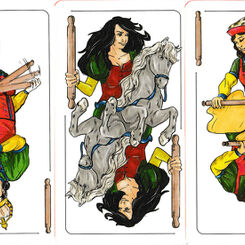
Carte Bolognesi
New designs reinforcing Bologna’s reputation as the gastronomic capital of Italy.
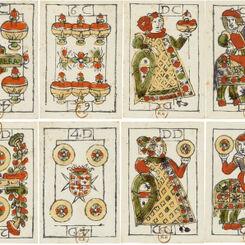
Infirrera
Italo-Portuguese-suited cards by Andrea Infirrera with the arms of Malta, 1693.
Tulsa City-County Library System Annual Report
Tulsa City-County Library System Annual Report playing cards, USA, 1983.
Stars of Country Music
Stars of Country Music playing cards with non-standard suit symbols, USA, 1995
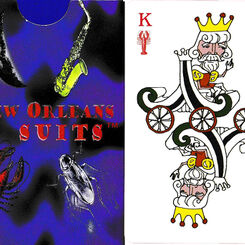
New Orleans Suits
New Orleans Suits playing cards designed by Eddie Tebbe, USA, 1999.
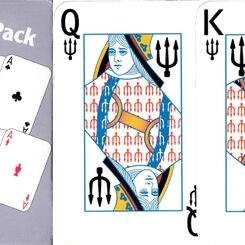
The Fat Pack
A vastly expanded pack with 8 suits for playing traditional or new games, devised by Roger Howard Bu...
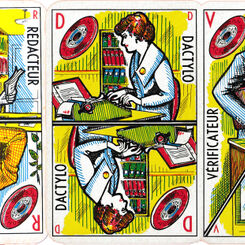
Le Burling
1960s pack from Annecy with non-standard suits all connected with the office.
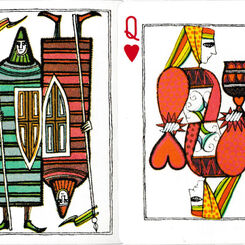
Nintendo deck with Medieval theme
Courts in medieval costume holding both French and Italian/Spanish suit-signs.
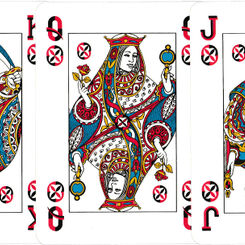
Il Quinto Seme
An Italian pack with a fifth suit of “amici” (“friends”).
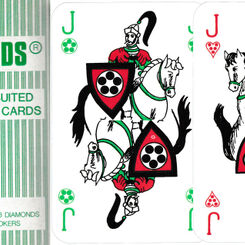
Pentacards
A five-suited set of playing cards published by Fleet and Case Games Ltd., Rainham, Kent, UK, c.1980...
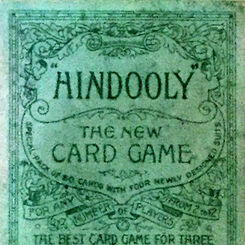
Hindooly
Hindooly published by Chas Goodall & Son Ltd with four newly designed suits, c.1904.
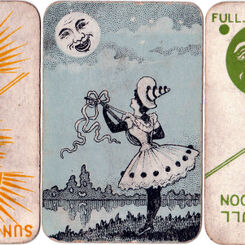
Sky
Sky card game published by Geo. Wright & Co, London, c.1905.
Baraja Marinera
‘Baraja Marinera’ designed by Francisco Javier San Juan, published by Asescoin (Madrid), 1995
Master PW Circular Cards
Master PW Circular Playing Cards: roses, columbines, carnations, parrots and hares... everyday objec...
Czech Nationalistic playing cards
During the 19th century growing nationalist sentiment led to a rejection of Austro-Hungarian culture...
The History of Playing Cards
Playing cards appear in European records in the late 14th century, but their earlier history lies fu...
Most Popular
Our top articles from the past 60 days


