

Art in Playing Cards, page 4
ENGRAVED PLAYING CARDS | |||
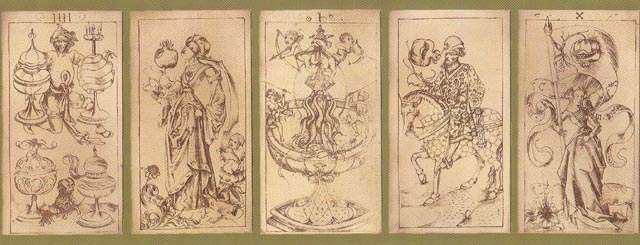
| |||
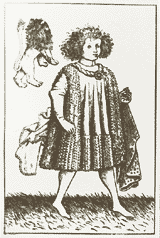 |
The earliest known engraved pictures all came from German-speaking regions, north of the Alps, starting around c.1400. Copper-engraved playing cards were also produced, employing the skills of the engraver and goldsmith, with great detail in the designs. At this time the German card makers were also indulging in a lot of experimentation with different suit systems.
See also: Tarocchi di Mantegna |
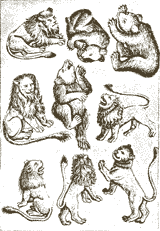 |
|
 |

By Simon Wintle
Spain • Member since February 01, 1996 • Contact
I am the founder of The World of Playing Cards (est. 1996), a website dedicated to the history, artistry and cultural significance of playing cards and tarot. Over the years I have researched various areas of the subject, acquired and traded collections and contributed as a committee member of the IPCS and graphics editor of The Playing-Card journal. Having lived in Chile, England, Wales, and now Spain, these experiences have shaped my work and passion for playing cards. Amongst my achievements is producing a limited-edition replica of a 17th-century English pack using woodblocks and stencils—a labour of love. Today, the World of Playing Cards is a global collaborative project, with my son Adam serving as the technical driving force behind its development. His innovative efforts have helped shape the site into the thriving hub it is today. You are warmly invited to become a contributor and share your enthusiasm.

Related Articles
Collectors’ Playing Cards for Sale
Some interesting playing cards for sale.

78: The Standard English pattern - Part 2, the tricky bits
There are many less straightforward aspects to the designs of the English pattern, which need carefu...
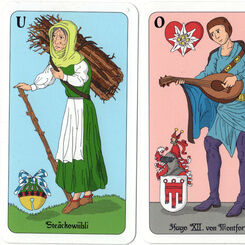
Vorarlberg Büschel Jasskarten
“Vorarlberg Büschel Jasskarten” designed by Austrian artist and typographer Konrad Hämmerle.

Solo Whist
A distinctive British trick-taking game that emerged in the mid-19th century.

77: The Standard English pattern - Part 1, the basics
A simple set of criteria for defining the standard English pattern
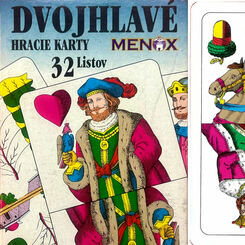
Slovak Season Playing Cards (Dvouhlavé Hrací Karty)
Slovakian edition of the Wilhelm Tell pattern found on a day trip to Bratislava.

Dr Ken Lodge
I'm Ken Lodge and ha e been collecting playing cards since I was about eighteen months old (1945). ...
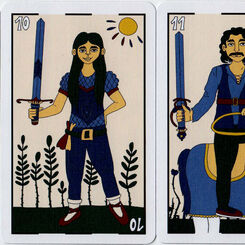
Baraja Quimera
An imaginative reinterpretation of the Spanish-suited deck in a contemporary folk-art style.
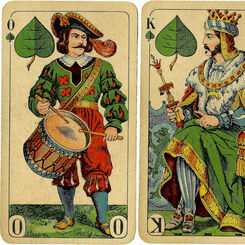
Bayerisches Einfachbild
Sample of production by the Munich branch of VASS.
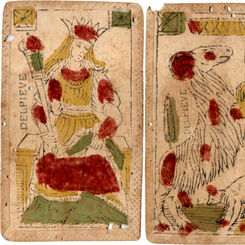
Luigi Del Pieve Minchiate
Luigi Del Pieve and the “Alli Sorte” Minchiate of Florence.
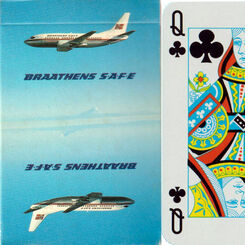
Braathens SAFE playing cards
Airline advertising pack combining international courts with horizontal images of passenger aircraft...
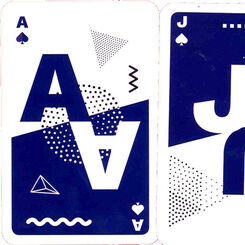
Studydrive Student Cards
Minimalist playing cards from the “Ace your studies” Studydrive learning campaign.
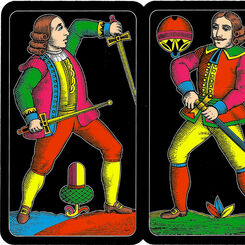
Antracit Prager Single-headed
A simple modern adaptation of a historical pattern.
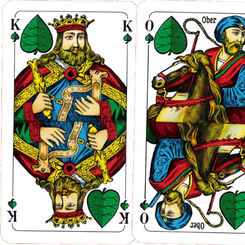
The Modern Württemberg Pattern
Early 2000s modernization based on designs from 1865 and 1926.
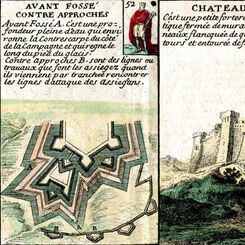
Le Jeu Des Fortifications
An innovation from the time of Louis XIV by Gilles de la Boissière.
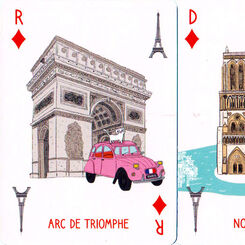
Paris Souvenir
Coloured drawings of the principal tourist attractions found in Paris, notably the Eiffel Tower.

Crowley Thoth Review
An intriguing study of Aleister Crowley's Thoth Tarot¹, painted by Lady Frieda Harris during WW2.
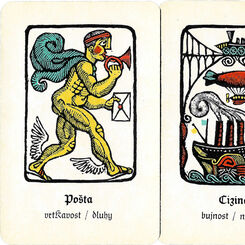
Zdeněk Mézl's Fortune Telling cards
A thematic deck from Czechoslovakia.
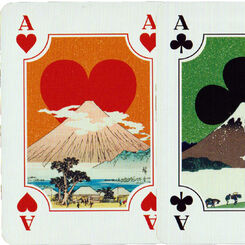
Estampes japonaises
Traditional Japanese prints adapted for playing cards with certain additions.
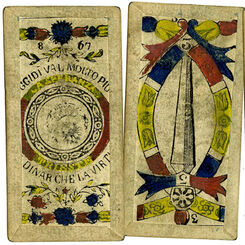
Giovanni Battista Marcovich
An early example of the Triestine pattern.
Most Popular
Our top articles from the past 60 days


