


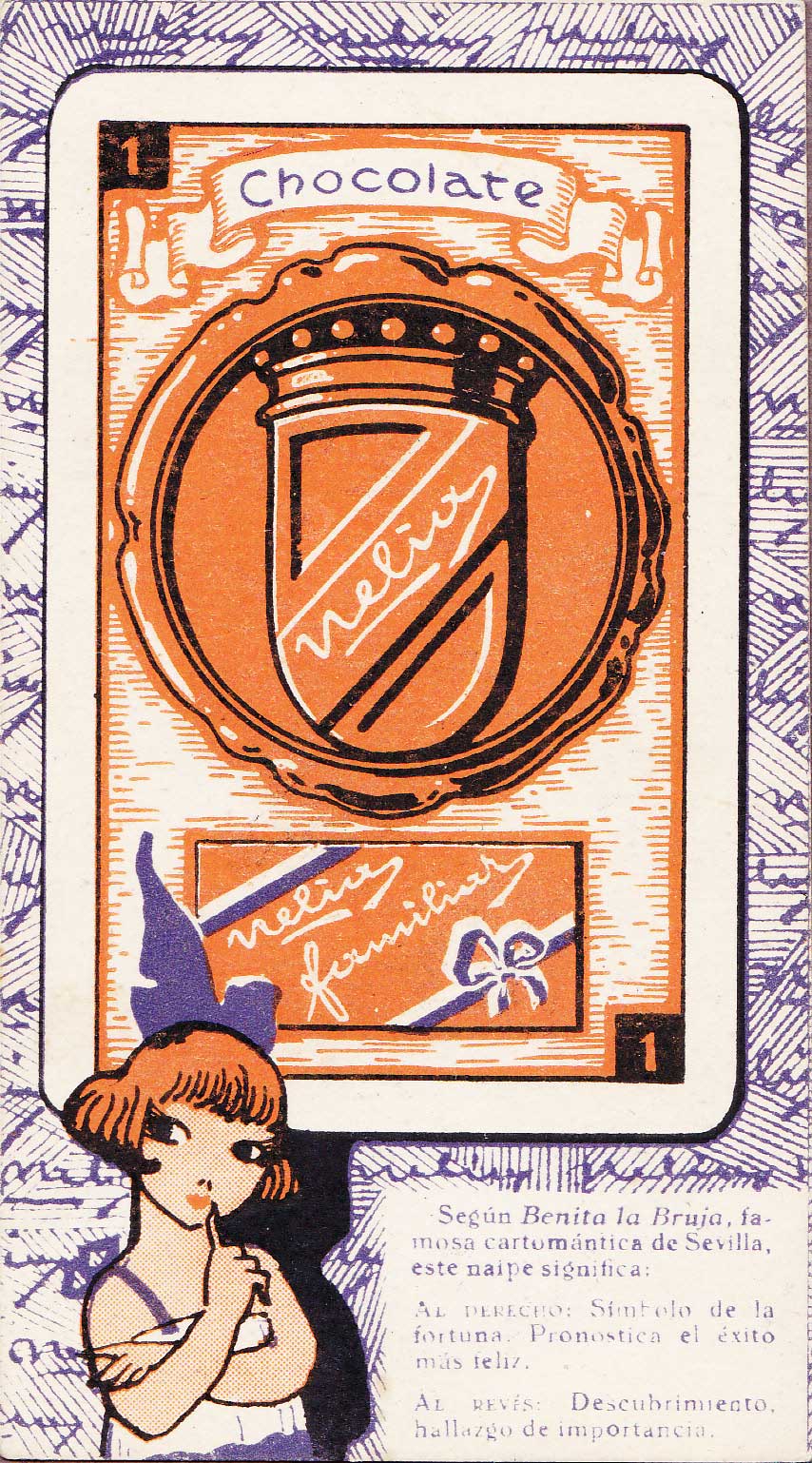
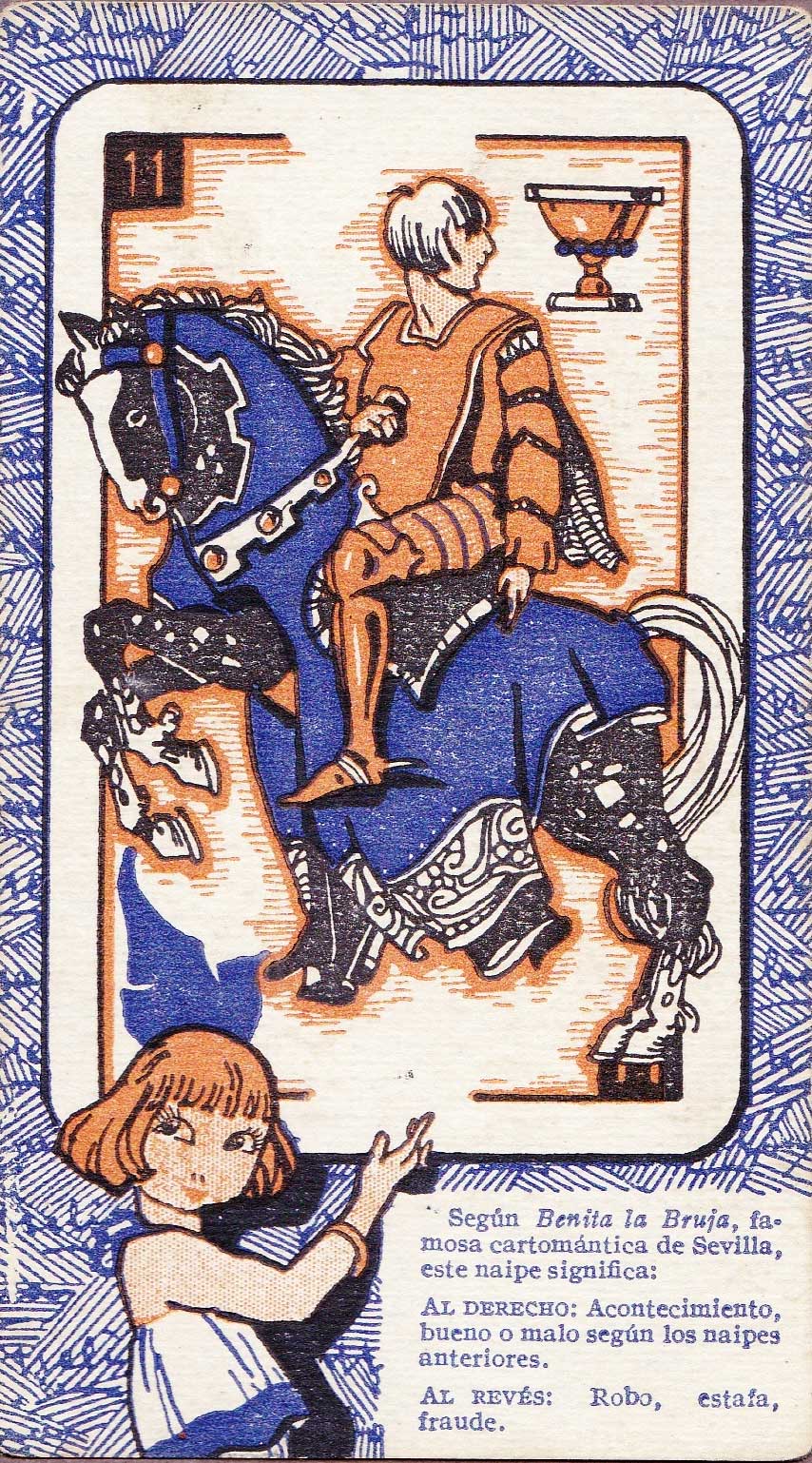
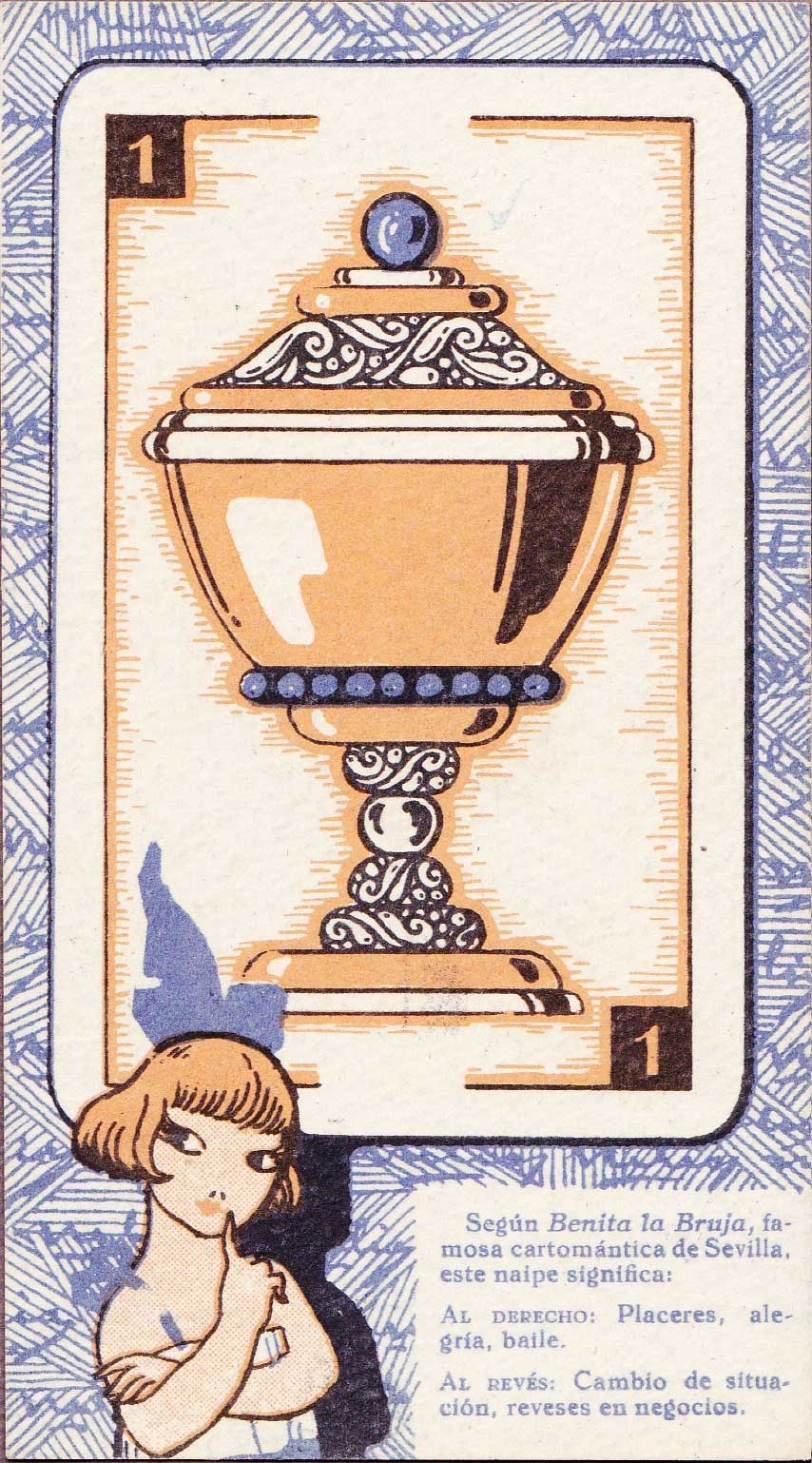
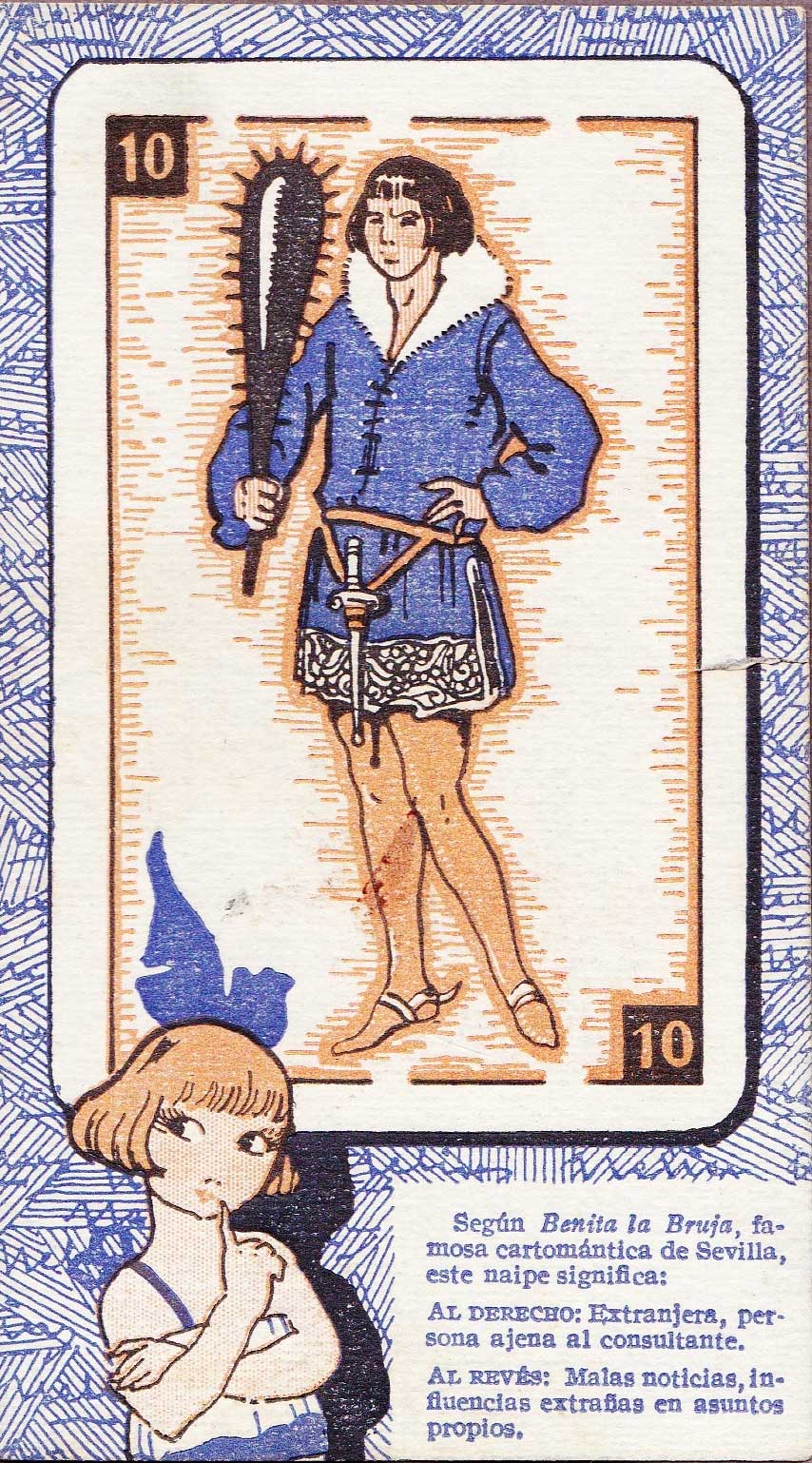
Baraja Cartomántica Chocolates Nelia
Some examples of playing cards made in Catalonia from the collection of Iris Mundus, Barcelona.
Some examples of playing cards made in Catalonia from the collection of Iris Mundus, Barcelona.
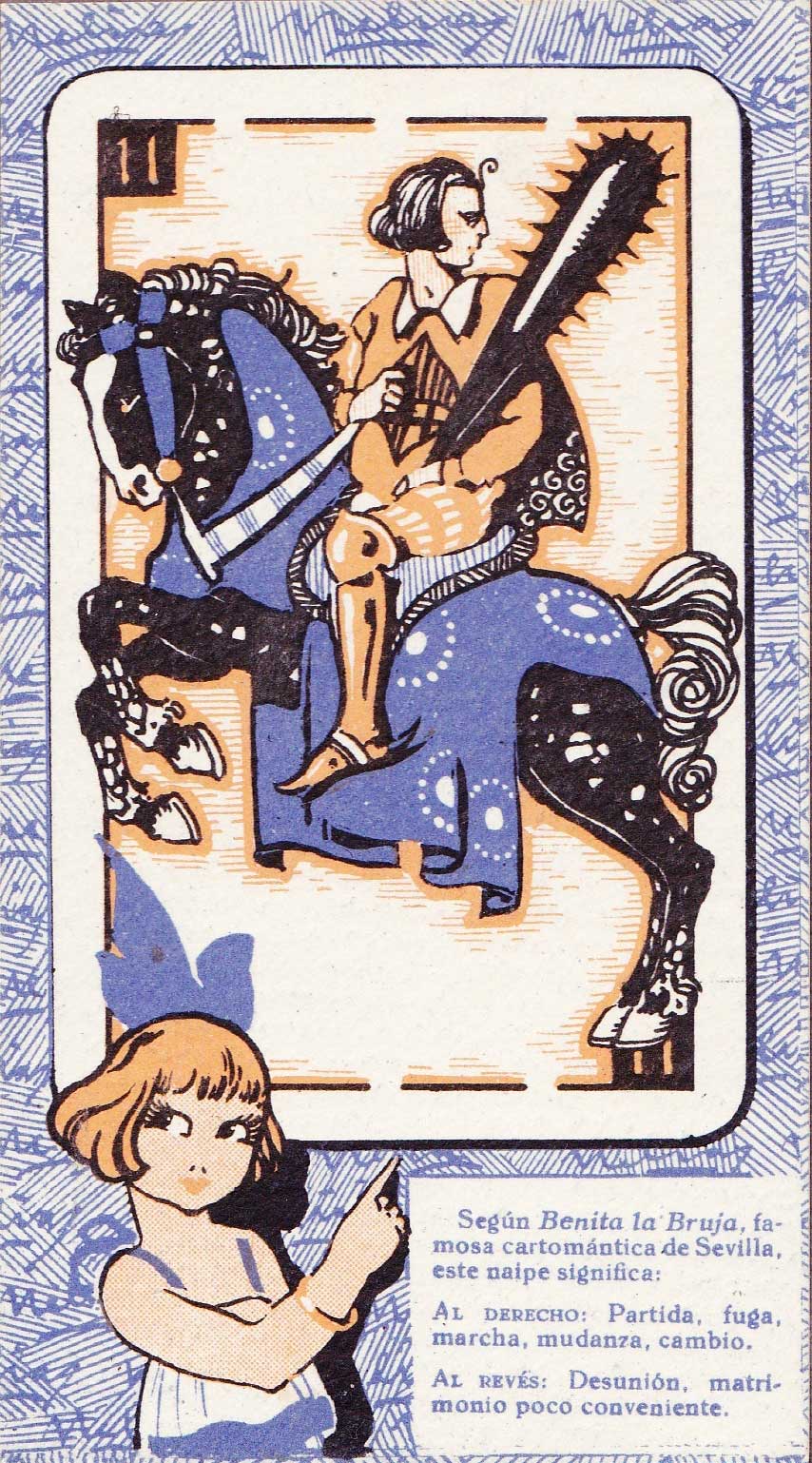
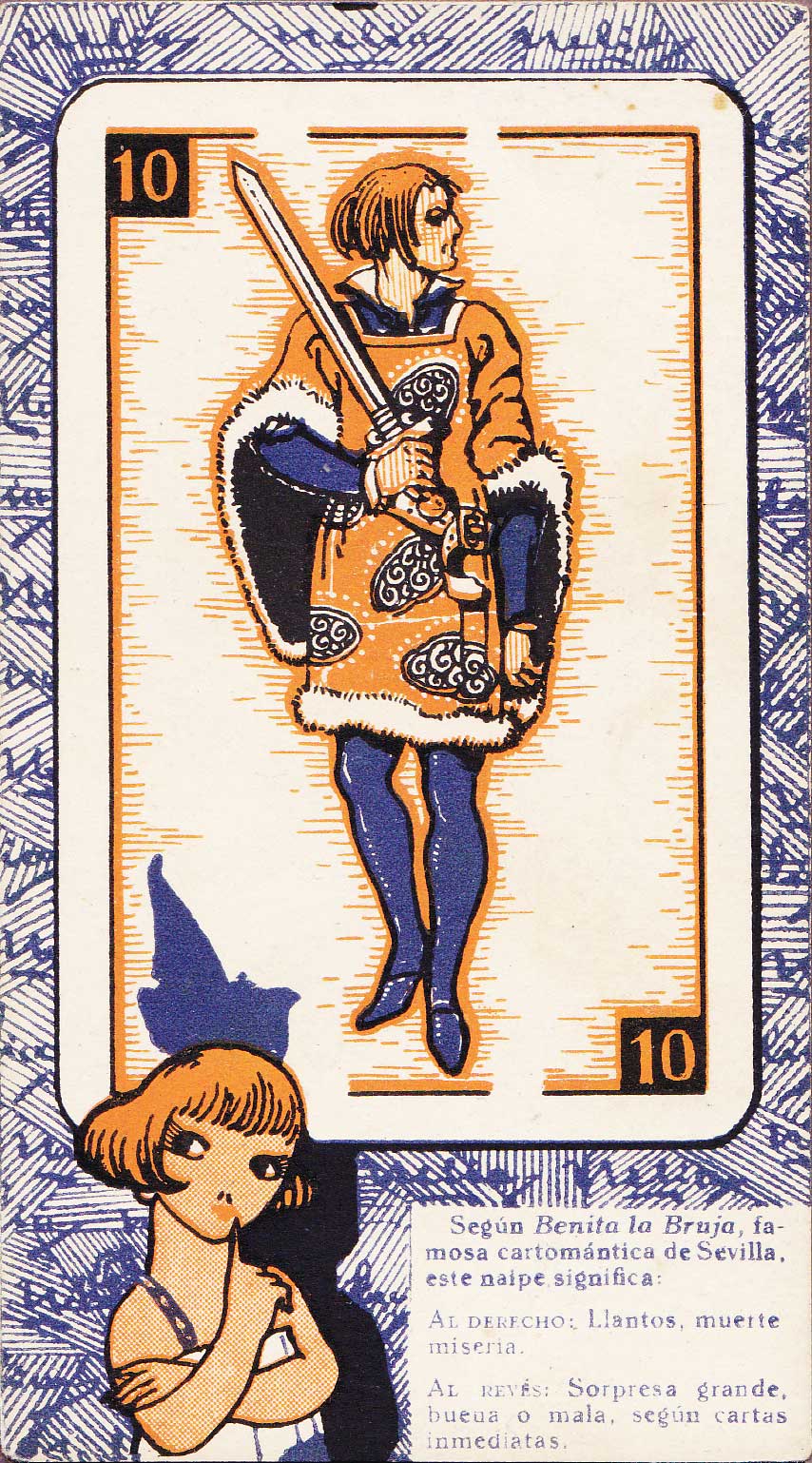
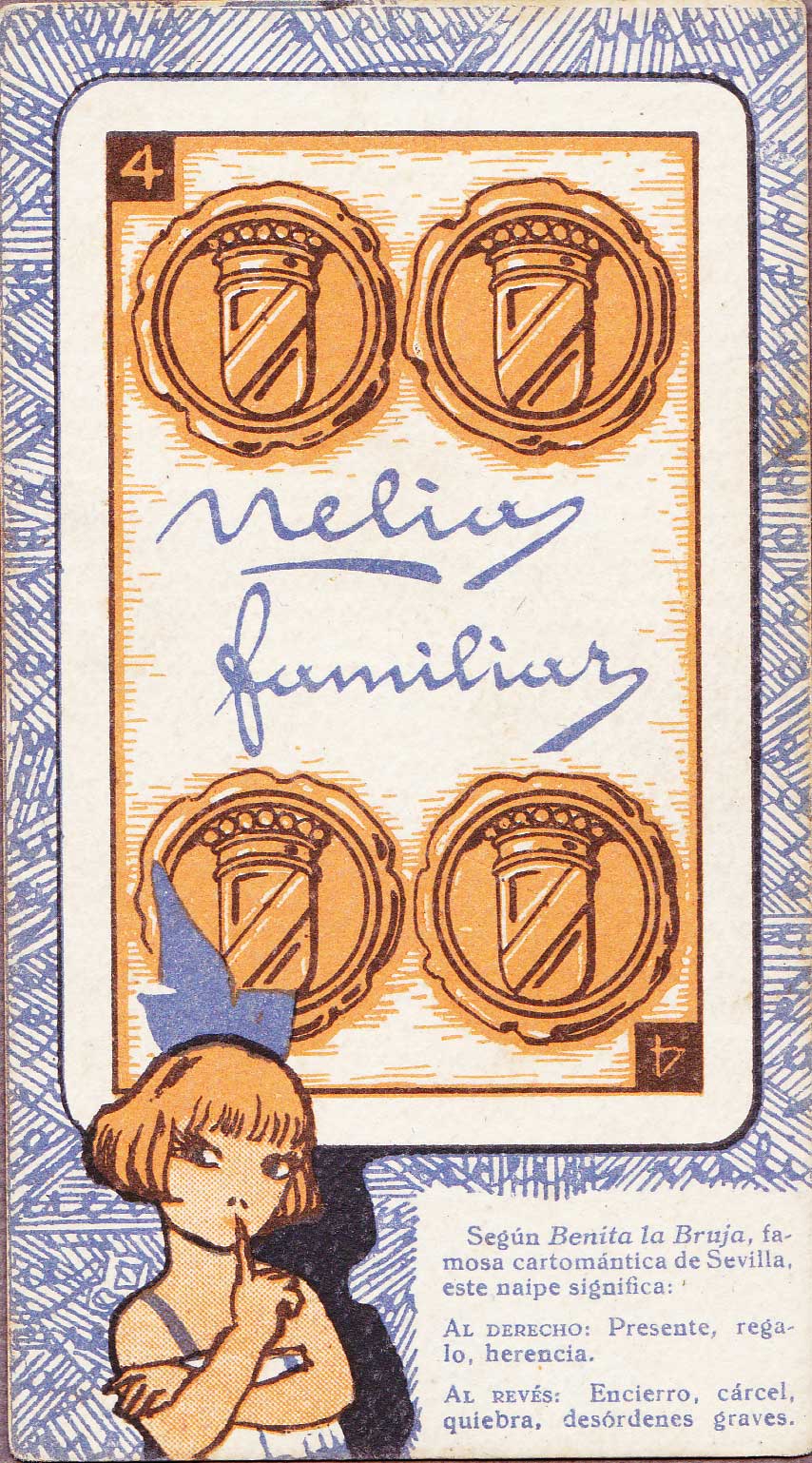
Spanish advertising playing cards, or trade cards, cover a wide range of popular topics and interests including cinema, bullfighting, boxing and, of course, football. Information was often supplied on the cards about football teams, cinema stars, famous bullfighters or in the case shown (right), fortune-telling interpretations were given. Individual cards might be inserted inside packets of products such as chocolate, or printed on the wrappers or boxes, which could be collected, traded and assembled into full packs.
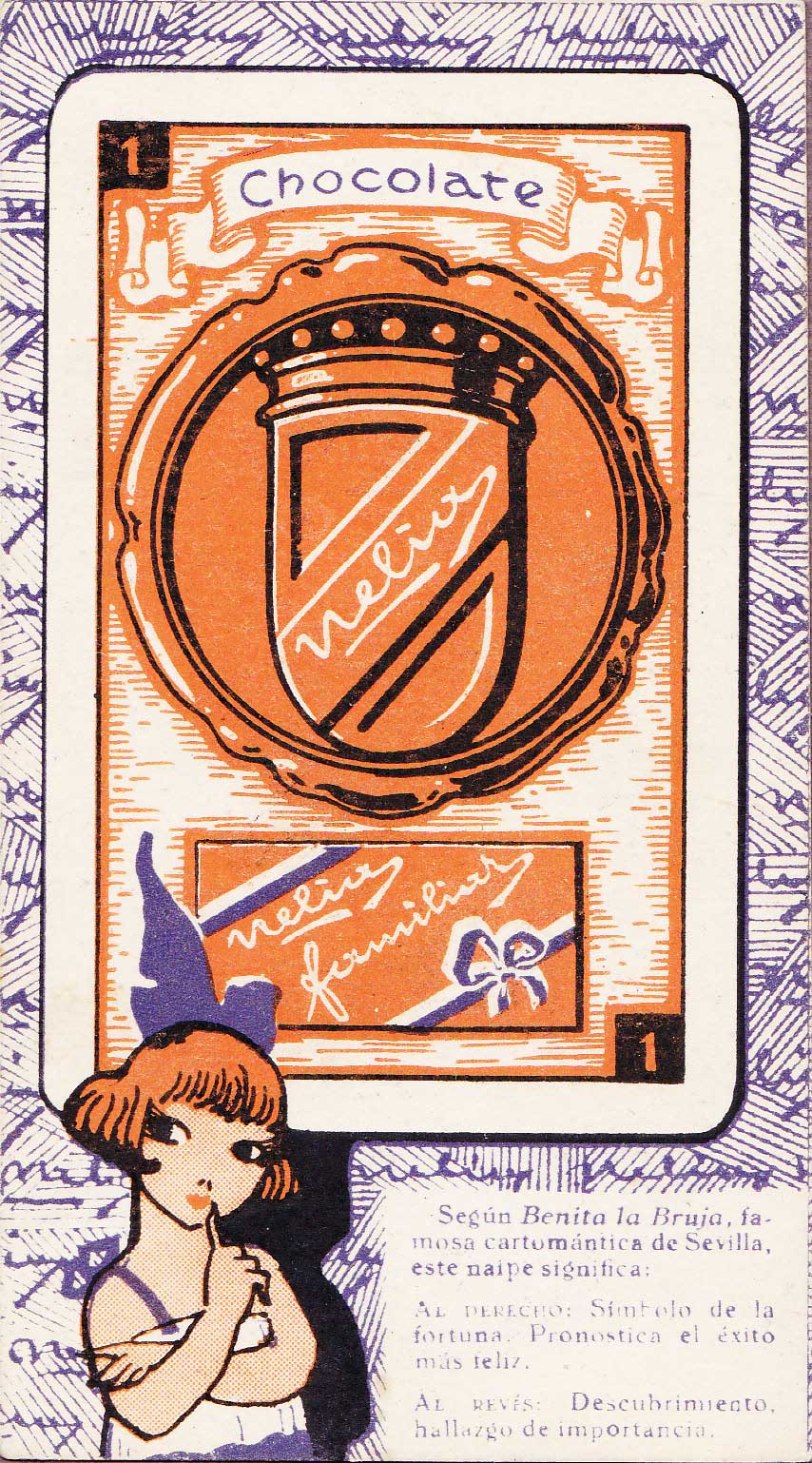
Baraja Cartomántica Chocolates Nelia
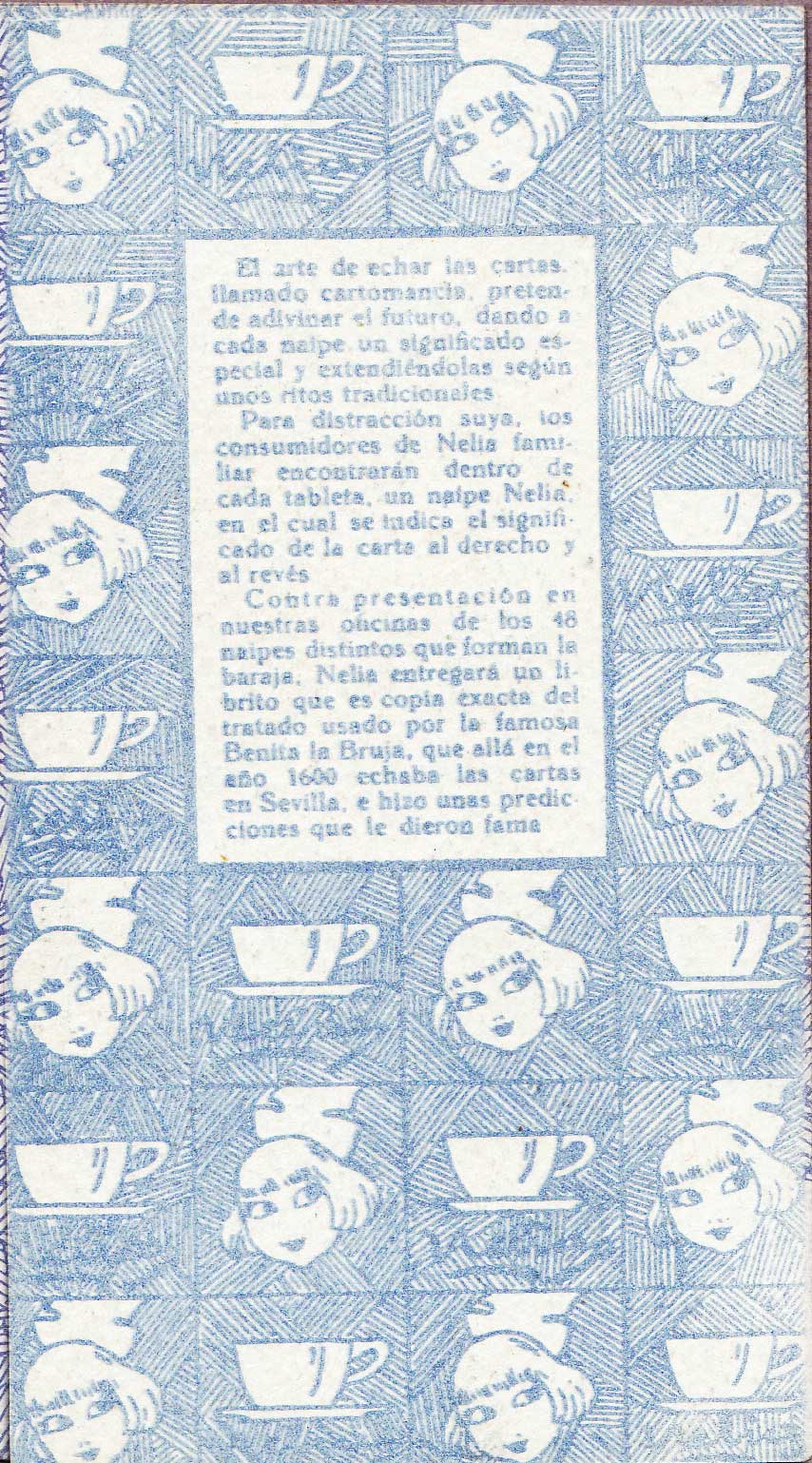
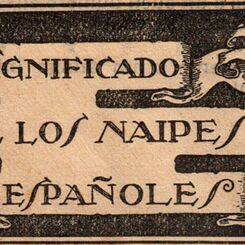
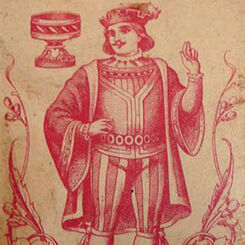
Right: Cartomancy deck published by Camil S.A., printed by Elzeviriana y Librería Camí (Barcelona) in 1932 with fantasy medieval designs. The cards were collected individually from inside packets of Chocolates Nelia. Each card features a divinatory interpretation for upright and reversed readings, provided by Benita la Bruja who sits at the bottom of the card. According to the text on the backs of the cards, Benita la Bruja was a famous card reader who lived in Seville around 1600. 48 large-size cards: 125 x 70 mm. Reference Iris Mundus 1194b.
Note: Iris Mundus was founded in Barcelona in 1965 by Neus Serrano and her husband Salvador Tena in order to pursue their passion for antiques.
• Biblioteca Digital Hispánica: Baraja cartomántica Chocolates Nelia, c.1932►
Es una colección de cuarenta y ocho naipes de cartomancia. En el recto de cada carta hay un texto relativo a su significado de Benita la Bruja. En respaldo de cada naipe hay el mismo texto explicativo: "El arte de echar las cartas...". En recto y respaldo aparece impresa la publicidad de los chocolates Nelia.
En la página 2 del libro aparecen los datos del taller: "Imp. Elzeviriana y Lib. Camí. Barna".
La baraja de naipes se acompaña de un libro "El arte de echar las cartas" de 75 p., con una introducción sobre la cartomancia, ejercicios y significado de los naipes españoles.
Two Examples of the Spanish Catalan Pattern
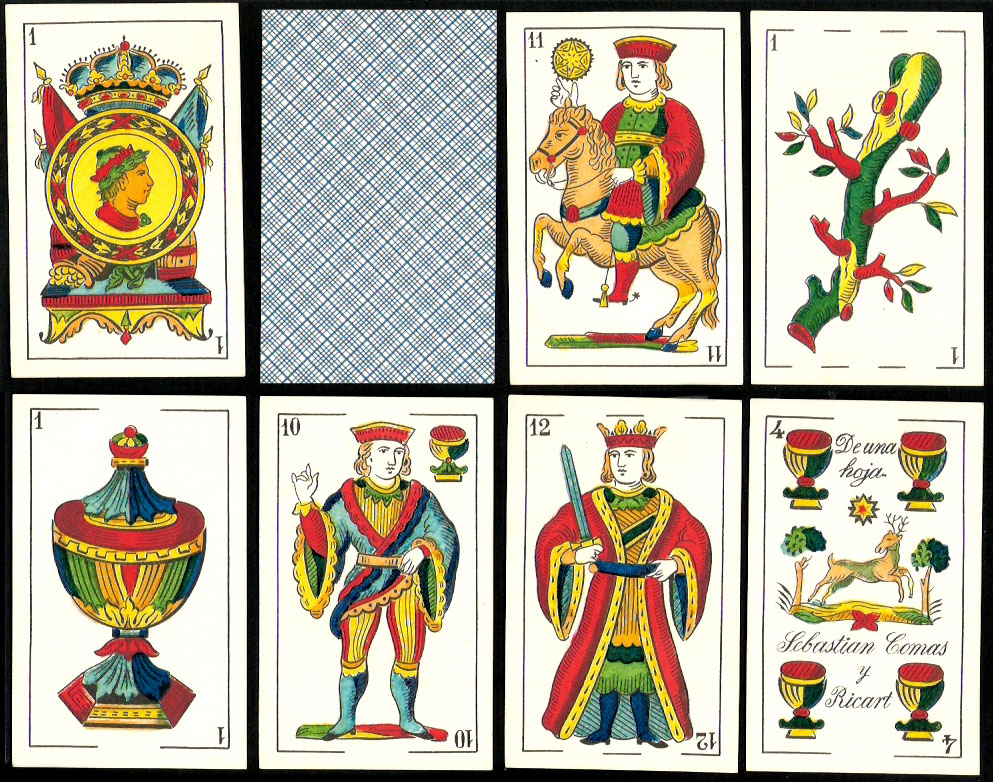
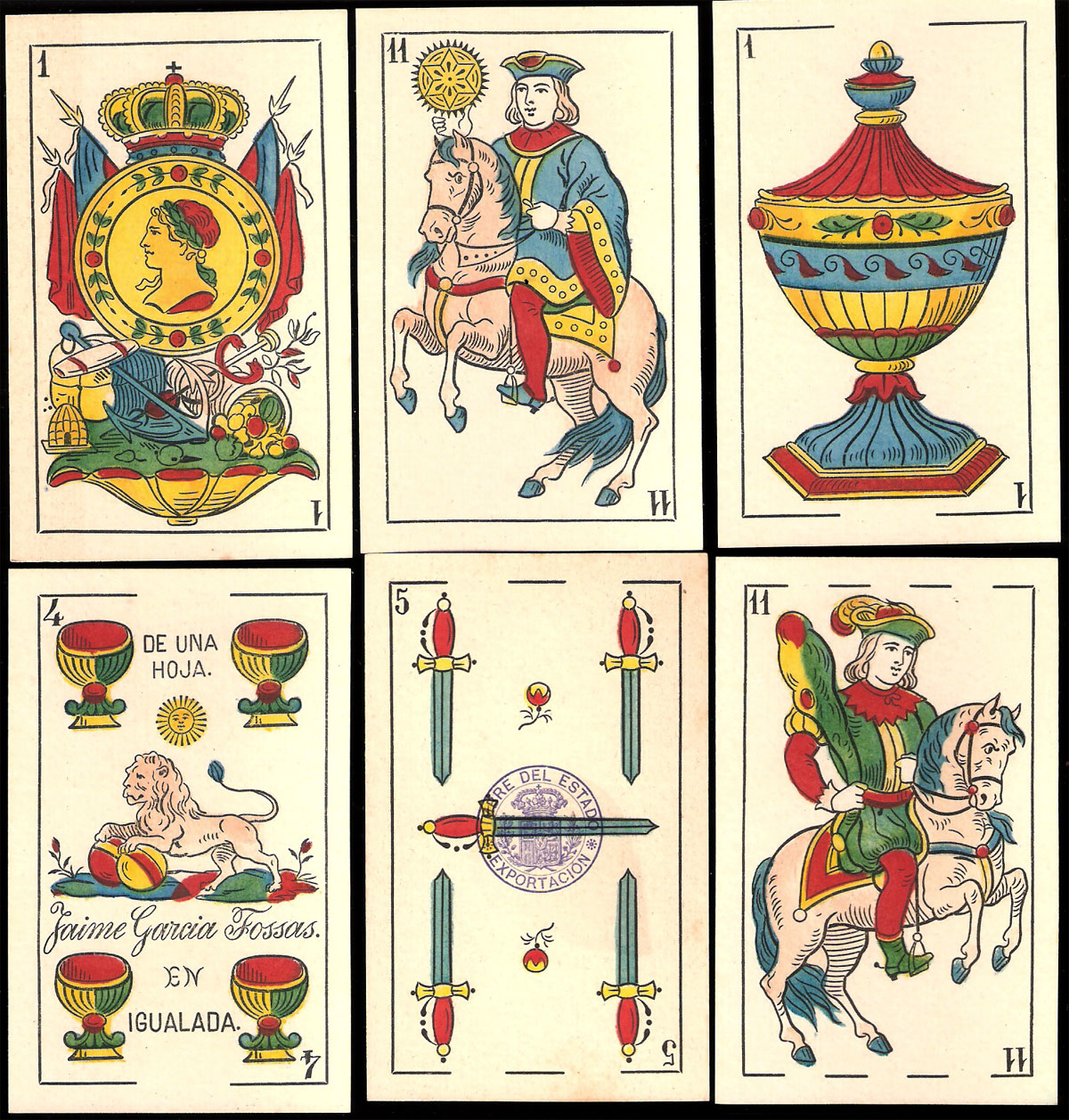
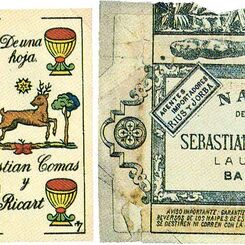
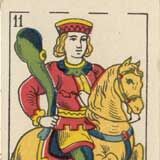
What is known today as the “Modern Spanish Catalan” playing card pattern (to avoid confusion with the French Catalan style) began to emerge with an identity of its own during the early 19th century and became fully developed by the end of the 19th century. It was primarily manufactured by makers in the Barcelona region (Sebastian Comas y Ricart, Wenceslao Guarro, Giráldez, Juan Roura, etc) but is now regarded as a standard pattern throughout Spain and beyond. Packs usually contain 40 or 48 cards.
Right: standard Catalan pattern deck manufactured by Sebastian Comas y Ricart in Barcelona c.1892. The pack is titled ‘El Ciervo’ on account of the image of a deer, or stag, on the four of cups. 48 cards. Reference Iris Mundus 1131a.
Right: standard Catalan pattern deck manufactured by Jaime Garcia Fossas (1854-1927) in Igualada (Barcelona), c.1904. The deck is titled ‘El León’ and the symbols of industry and commerce on the ace of coins include a beehive. The five of swords has the tax stamp. 48 cards. Reference Iris Mundus 1135a.

By Simon Wintle
Spain • Member since February 01, 1996
I am the founder of The World of Playing Cards (est. 1996), a website dedicated to the history, artistry and cultural significance of playing cards and tarot. Over the years I have researched various areas of the subject, acquired and traded collections and contributed as a committee member of the IPCS and graphics editor of The Playing-Card journal. Having lived in Chile, England, Wales, and now Spain, these experiences have shaped my work and passion for playing cards. Amongst my achievements is producing a limited-edition replica of a 17th-century English pack using woodblocks and stencils—a labour of love. Today, the World of Playing Cards is a global collaborative project, with my son Adam serving as the technical driving force behind its development. His innovative efforts have helped shape the site into the thriving hub it is today. You are warmly invited to become a contributor and share your enthusiasm.

Activity for Baraja Cartomántica Chocolates Nelia
Sign in to comment or save this article.

Related Articles
Pedro y los piratas
Un pequeño misterio para una gran baraja.
Le Ore playing cards
Caricatures of famous personalities from the late 1970s for the Italian magazine Le Ore.
B. Braun-Dexon®
Publicity pack promoting B. Braun-Dexon’s atraumatic needles, with non-standard courts and pips.
El Jueves playing cards
Caricatures of 52 famous Spaniards for the satirical magazine “El Jueves”.
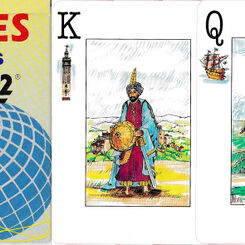
Naipes Expo ’92
Naipes Expo ’92 souvenir playing cards manufactured by Naipes Comas, 1992.
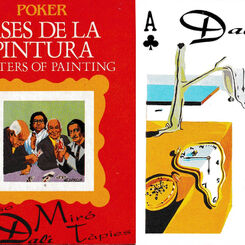
Ases de la pintura / Masters of painting
Ases de la pintura / Masters of painting playing cards made by Naipes Comas, Spain, c.1990.
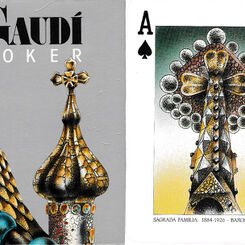
Gaudí poker
Gaudí poker playing cards illustrated by Josep Opisso, Spain, c. 1992.
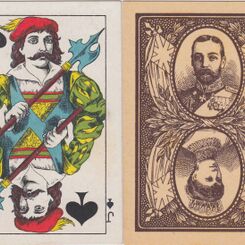
The British Royal visit to India playing cards
printed in Spain for British India in 1911.
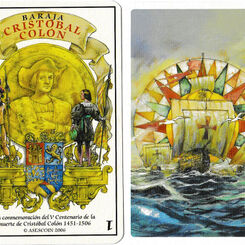
Christopher Columbus playing cards
“Baraja Cristóbal Colón” commemorating the 500th anniversary of the death of Christopher Columbus.
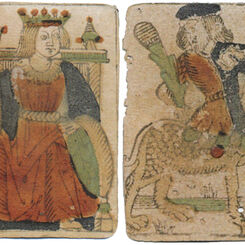
XV Century Spanish-suited playing cards
XV Century Spanish-suited playing cards with moorish influences
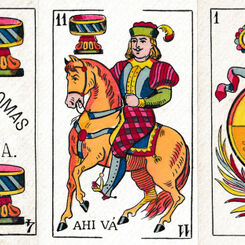
Cadiz-Catalan style pack
High-quality standard designs by Sebastián Comas y Ricart, Barcelona, Spain, 1896.
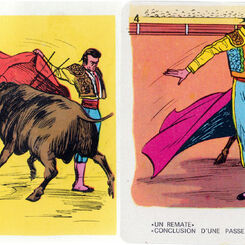
Corrida de Toros
Bull fighting card game publshed by Naipes Comas, 1969.
Lanzarote Souvenir
Souvenir of Lanzarote playing cards by NEGSA (Naipes Comas).
El Ciervo N°4
“El Ciervo” No.4 manufactured by Hija de Antonio Comas during the Spanish Civil War, with mural crow...
Naipes Samsó N°2-S
Naipes Samsó published by N.E.G.S.A. (Barcelona) c.1965.
Catalan Playing Cards
With a distinct history stretching back to the early middle ages, many Catalans think of themselves ...
Paraguayan Playing Cards
Playing Cards in Paraguay
Significado de los Naipes Españoles
Cartomantic meanings of Spanish playing cards by Benita the Witch (XVI century), published by Chocol...
Sebastian Comas y Ricart, Barcelona
“El Ciervo” standard Catalan-type pack made in Barcelona by Sebastian Comas y Ricart, c.1905-10.
Naipes Comas
Naipes Comas 1797-1992.
Most Popular
Our top articles from the past 60 days


