Catalan Playing Cards
With a distinct history stretching back to the early middle ages, many Catalans think of themselves as a separate nation from the rest of Spain.
The Modern Spanish Catalan pattern
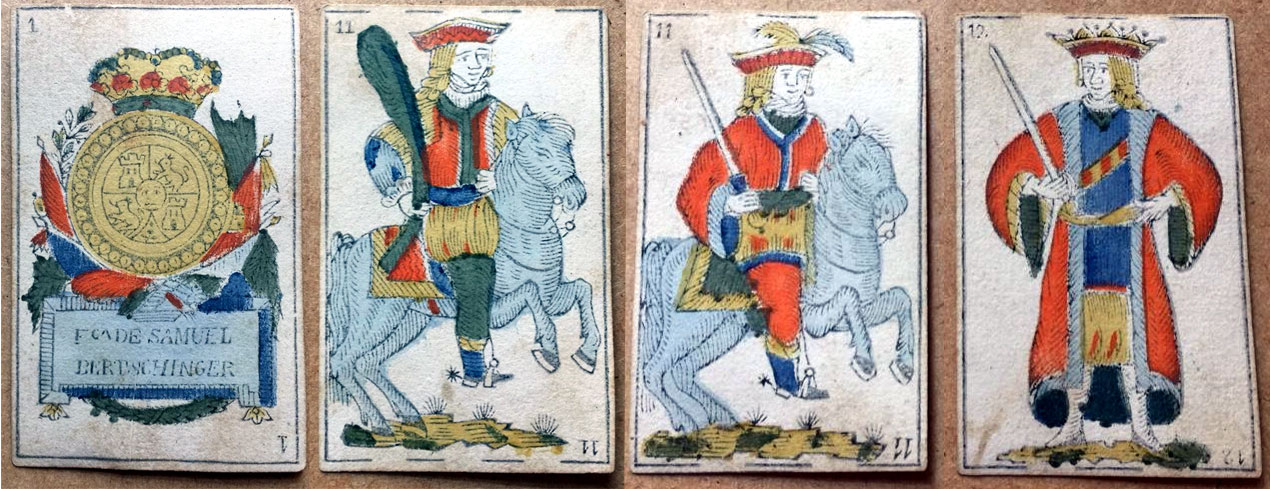
With about 16% of the Spanish population and a distinct language and culture of its own, Catalonia is one of Spain’s richest and most independent-minded regions. What is known today as the “Modern Spanish Catalan” playing card pattern (to avoid confusion with the French Catalan style) began to emerge with an identity of its own during the early 19th century and became fully developed by the end of the 19th century. It was primarily manufactured by makers in the Barcelona region (Bertschinger, Sebastian Comas y Ricart, Wenceslao Guarro, Giráldez, Juan Roura, etc) but is now regarded as a standard pattern throughout Spain and beyond. Packs usually contain 40 or 48 cards.
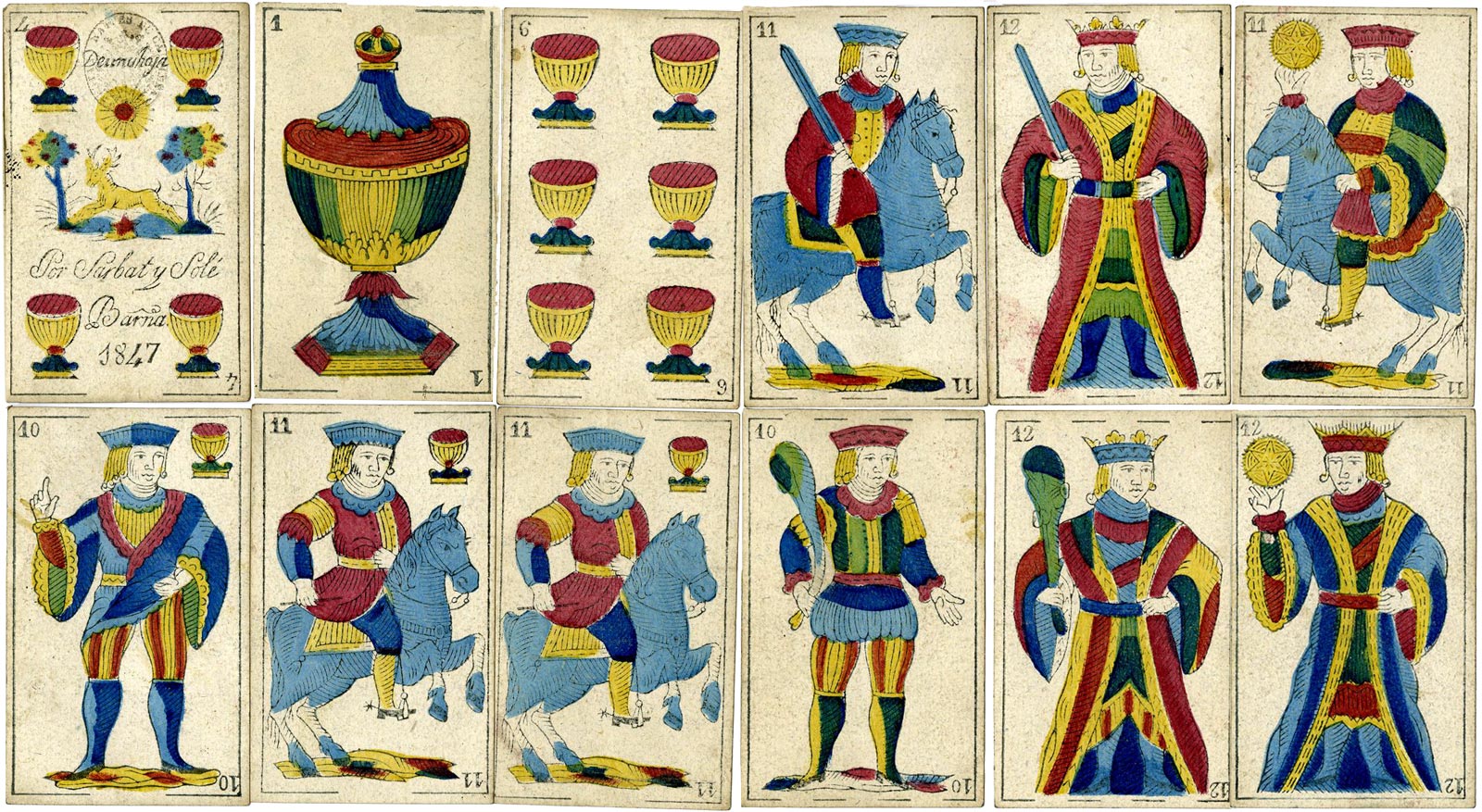
Above: Catalan pattern produced by Sarbat y Solé, Barcelona, 1847. Stencil-coloured woodcuts. © The Trustees of the British Museum • Sarbat y Solé, Barcelona, 1847►
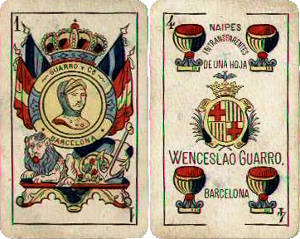
The design was exported to many South American countries (in particular Argentina, Brazil and Uruguay) and is also produced today as far afield as India and China.
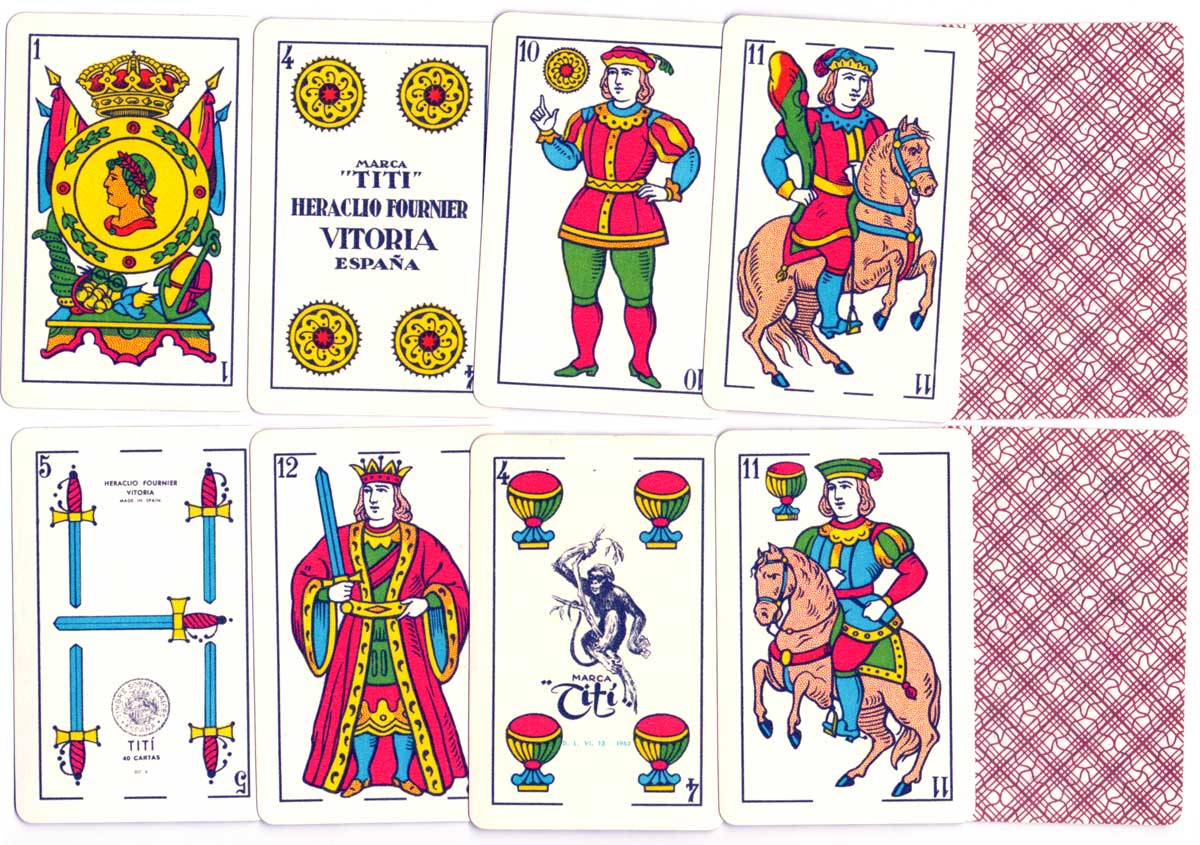
See also: Baraja Marca “Tití”→
Non-Standard Catalan playing cards
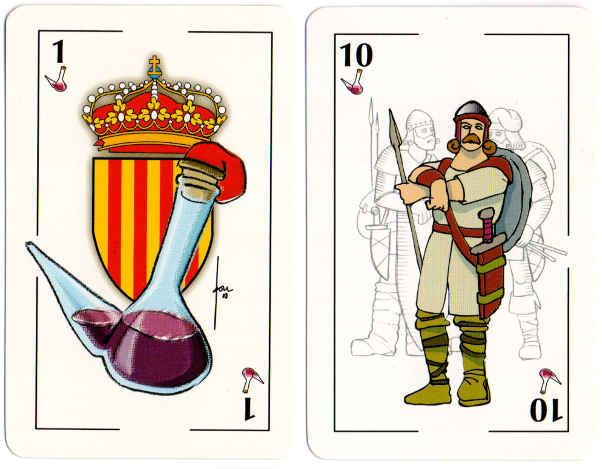
With a distinct history stretching back to the early middle ages, many Catalans think of themselves as a separate nation from the rest of Spain. During the last hundred years or so several ‘Catalan’ decks of playing cards were produced celebrating this independent national identity. Invariably these are Spanish-suited but with non-standard suit symbols associated with Catalan culture. More recently these have been tending towards a re-affirmation of Catalan people’s desire for independence (mainly the separatist Catalan Republican Left). A selection is shown below:
‘Visca Catalunya’ - 1935
‘Visca Catalunya’ playing cards, originally titled ‘Visca La Sardana’, designed by Lluís Vidal Molné (1907-1970) in 1935. Molné was particularly noted for his illustration work and these playing cards are inspired by traditional rural imagery.
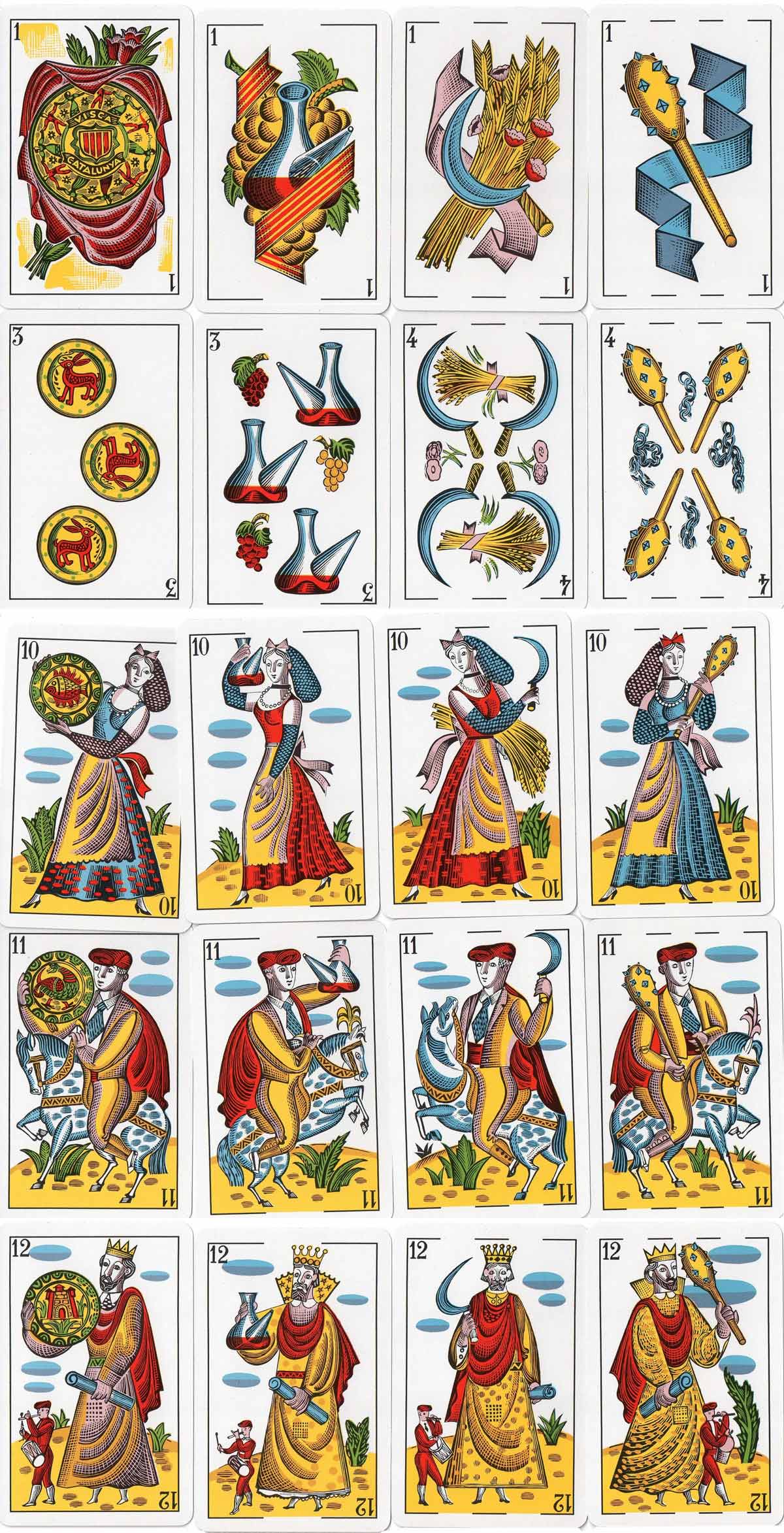
Above: ‘Visca Catalunya’ playing cards designed by Molné and first published by Heraclio Fournier in 1935. The cards are in the style of Spanish-suited cards but with non-standard symbols replacing the conventional coins, cups, swords and clubs.
‘Baraja Catalana’
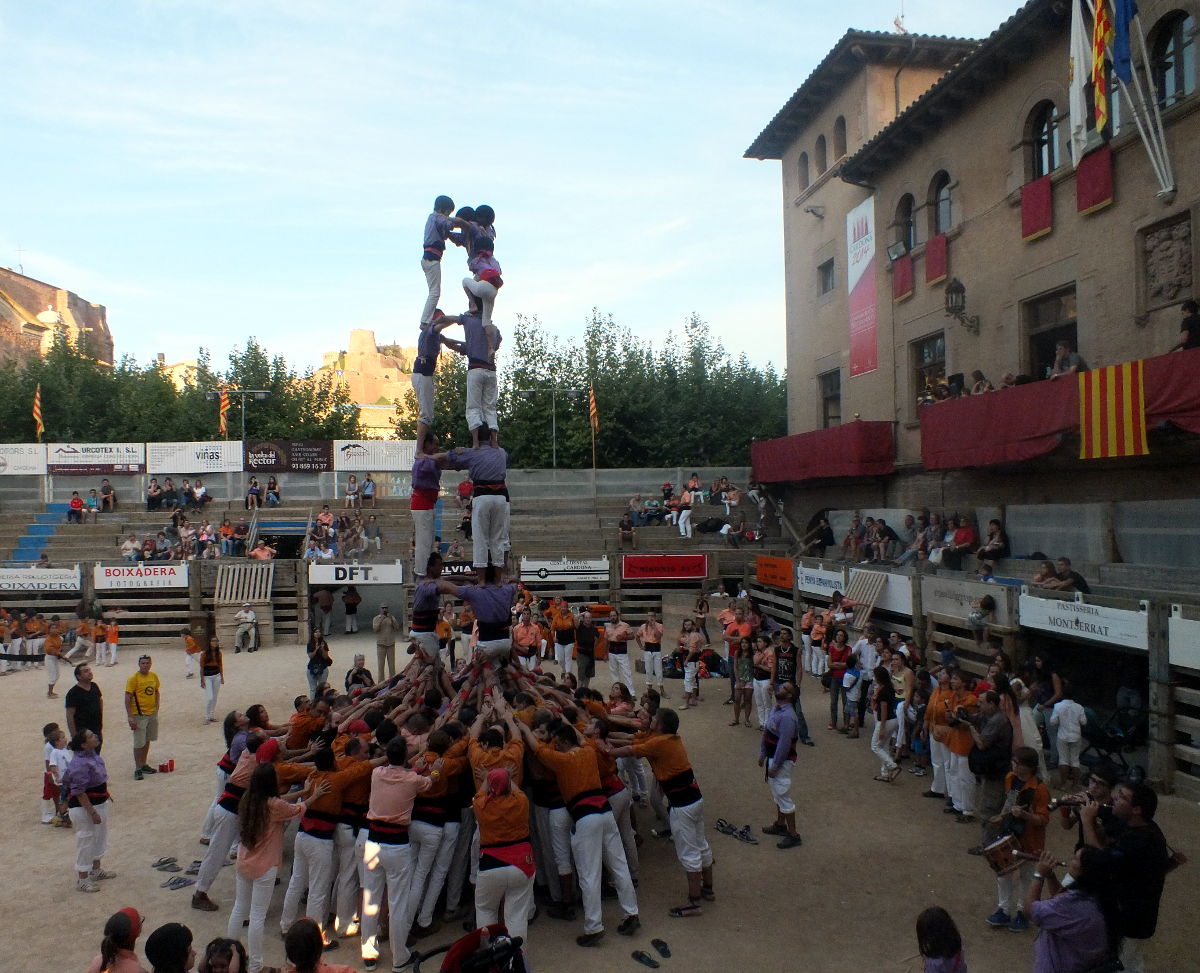
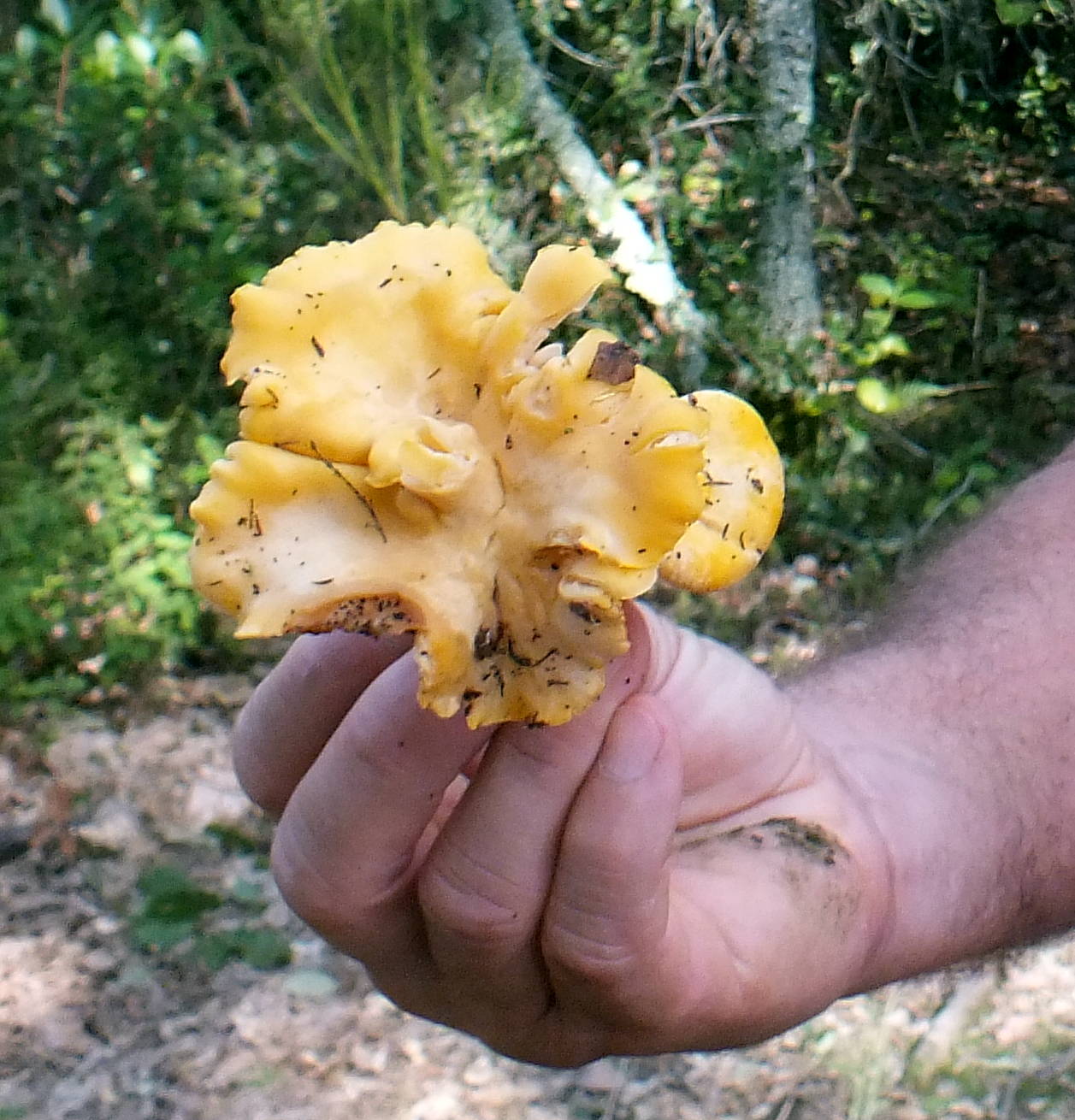
In ‘Baraja Catalana’ the four suit symbols are representative of the regional culture: barretinas (woolly hats or berets), castellers (towers), roses (Saint George) and mushrooms. Building human towers - “castells” - is a Catalan tradition originating in the 18th century which can be seen performed at local carnivals. Mushrooms are an important part in Catalan cuisine. The court cards show historical persons or attributes of the four suit symbols. The designs are slightly unusual in that there are no ‘pintas’, or border breaks, and no corner pips. Instead there are miniature outline maps of Catalunya in the corners.
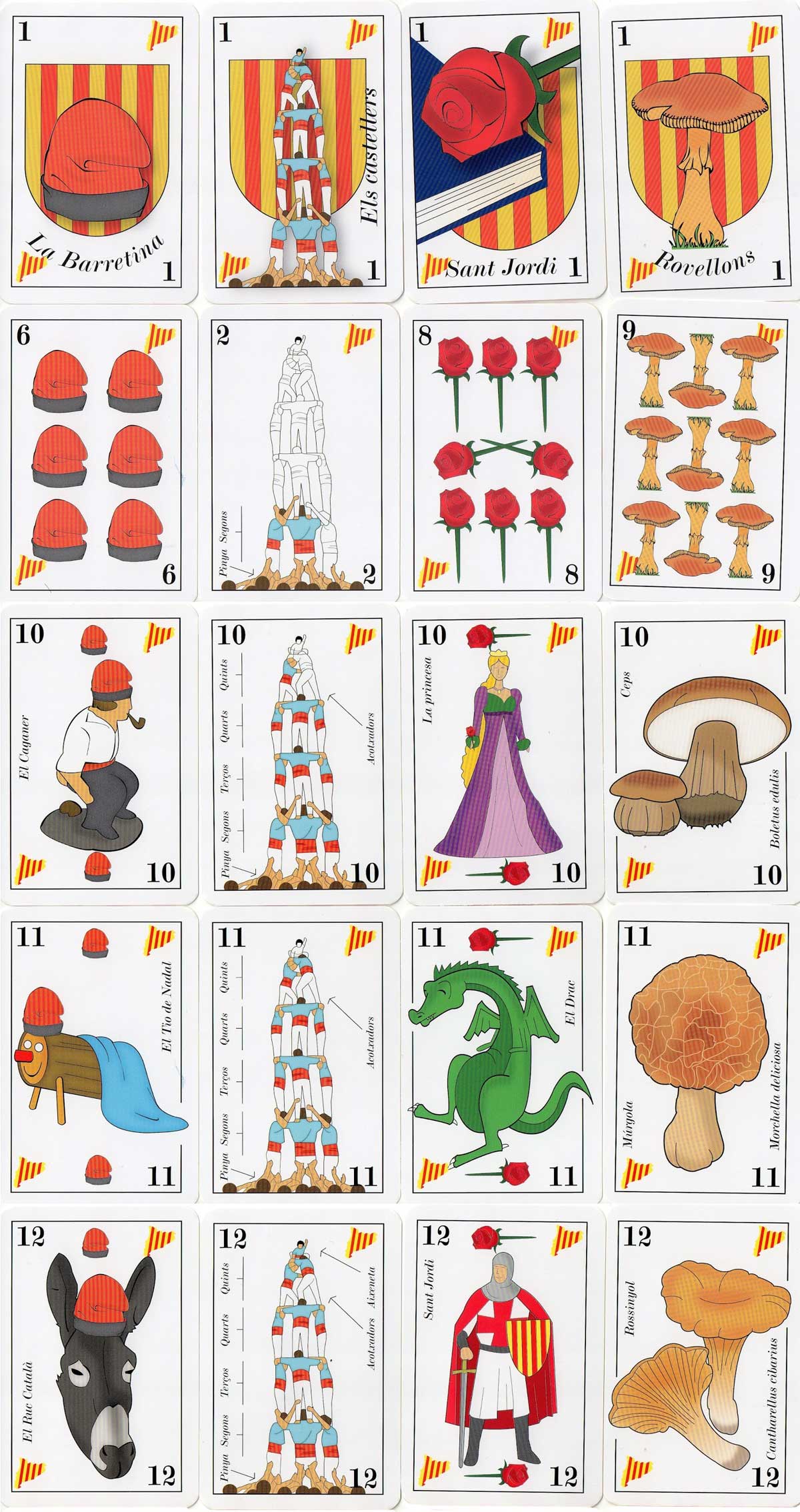
Above: ‘Baraja Catalana’ playing cards published by Varitemas (Mas-Reynals Naipes). 48 cards + 2 Jokers. The reverse shows the Catalan flag.
‘Cartes Catalanes’ - 2006
Inspired by Catalan history and folk imagery, with court cards depicting historical figures and legendary heroes in a medieval style, this deck seeks to bring Catalan culture back to life. The suit signs are based on the Spanish-suited system but with non-standard symbols.
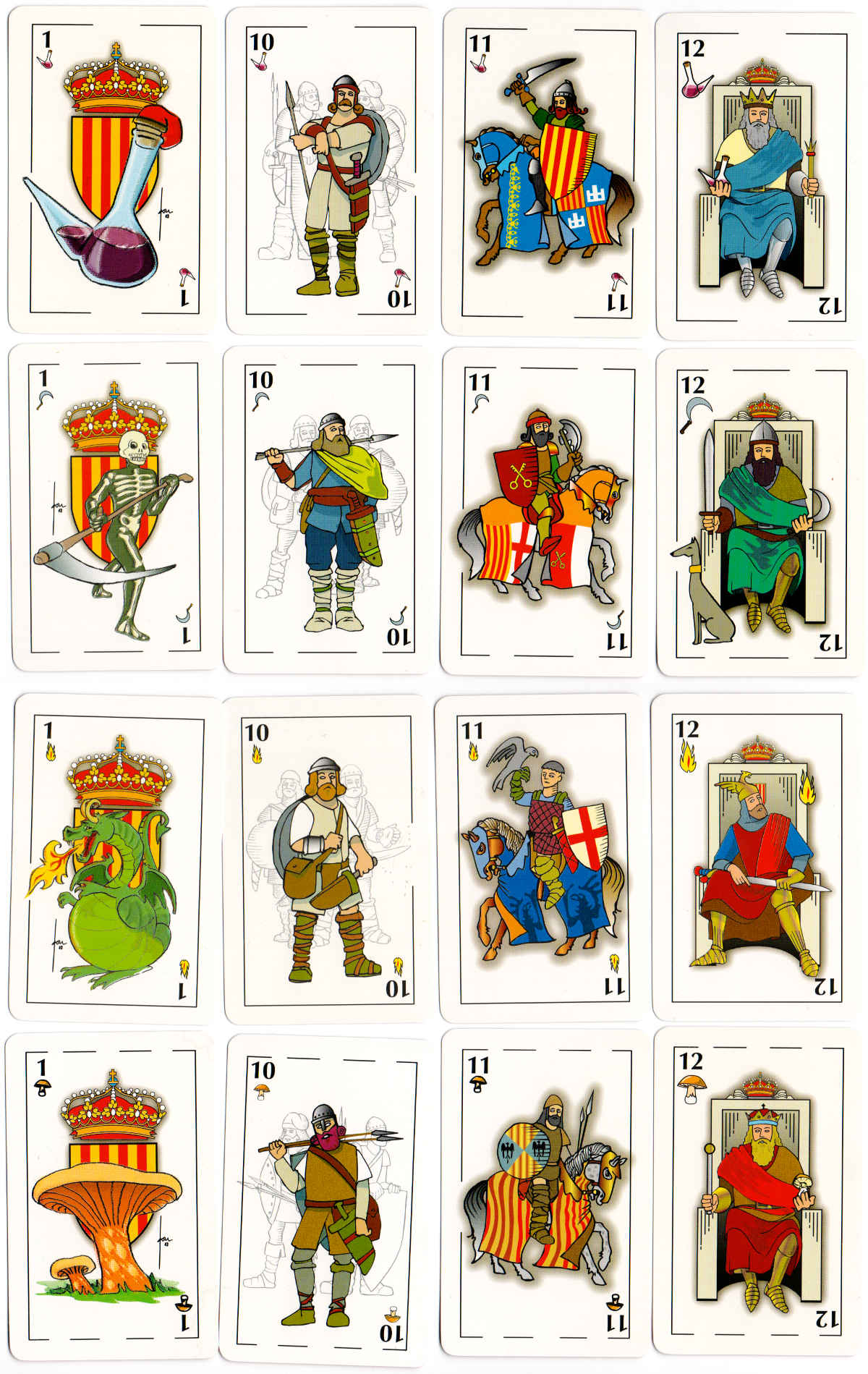
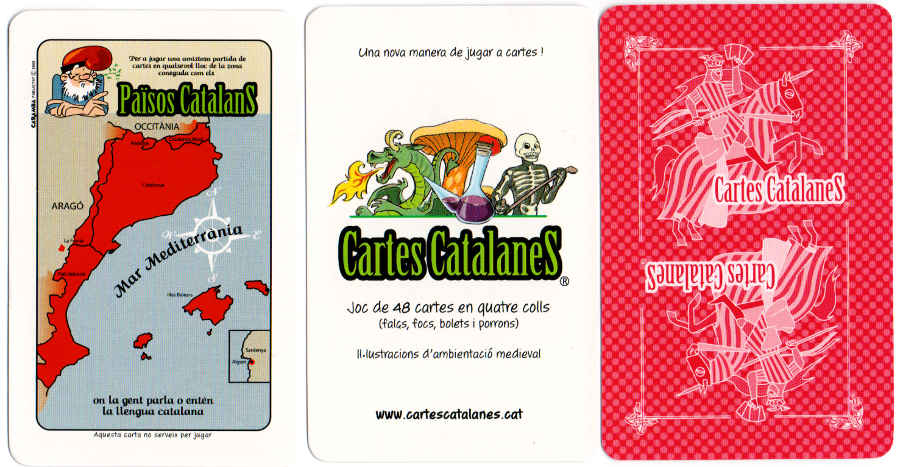
Above: ‘Cartes Catalanes’ designed by Jou Ramírez, published by Caramba Publicitat and printed by Naipes Comas (NEGSA), 2006 and many editions after that. 52 cards + 2 Jokers + title card + 4 explanatory cards in box. All the texts are in the Catalan language.
See also: La Baralla Catalana→

By Simon Wintle
Spain • Member since February 01, 1996
I am the founder of The World of Playing Cards (est. 1996), a website dedicated to the history, artistry and cultural significance of playing cards and tarot. Over the years I have researched various areas of the subject, acquired and traded collections and contributed as a committee member of the IPCS and graphics editor of The Playing-Card journal. Having lived in Chile, England, Wales, and now Spain, these experiences have shaped my work and passion for playing cards. Amongst my achievements is producing a limited-edition replica of a 17th-century English pack using woodblocks and stencils—a labour of love. Today, the World of Playing Cards is a global collaborative project, with my son Adam serving as the technical driving force behind its development. His innovative efforts have helped shape the site into the thriving hub it is today. You are warmly invited to become a contributor and share your enthusiasm.

Activity for Catalan Playing Cards
Sign in to comment or save this article.

Related Articles
Tarot Familiars
Lisa Parker’s Tarot Familiars gives the traditional 78-card tarot a distinctly gothic world of cats,...

Tarot de los Angeles
Tarot de los Angeles is a 78-card pack featuring angels and other celestial beings, which works more...
Pedro y los piratas
Un pequeño misterio para una gran baraja.
Naipes de Personajes Granadinos
Forty famous men and women with links to Granada, on a pack designed by Rubén Garrido.
El Desnudo en el Arte
The Nude in Art / El Desnudo en el Arte, Spain, 1977 (reprint 1990)
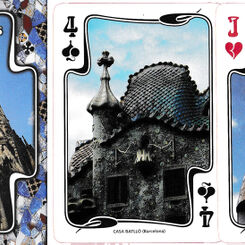
Gaudí playing cards
Gaudí playing cards with photography by Ramon Manent, Spain, 2002.
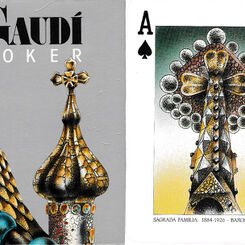
Gaudí poker
Gaudí poker playing cards illustrated by Josep Opisso, Spain, c. 1992.
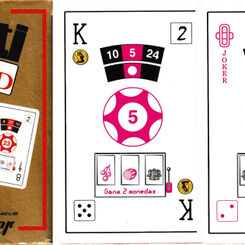
Multicard
A Spanish-suited pack with multiple uses including roulette and dice.
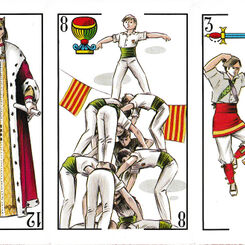
Festa Major de Vilafranca 1988
Colourful figures associated with the annual festival held in Vilafranca, Catalonia.
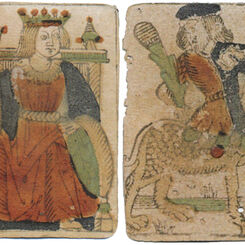
XV Century Spanish-suited playing cards
XV Century Spanish-suited playing cards with moorish influences
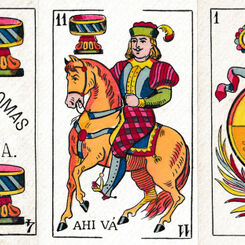
Cadiz-Catalan style pack
High-quality standard designs by Sebastián Comas y Ricart, Barcelona, Spain, 1896.
Parejas del Mundo
“Parejas del Mundo” matching pairs card game by Naipes H. Fournier, 1972.
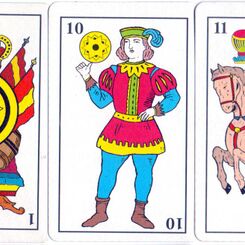
Mas-Reynals Catalan Pattern
Mas-Reynals standard Catalan pattern comes in several slightly different versions.
Lanzarote Souvenir
Souvenir of Lanzarote playing cards by NEGSA (Naipes Comas).
Naipes Samsó N°2-S
Naipes Samsó published by N.E.G.S.A. (Barcelona) c.1965.
Baraja Cartomántica Chocolates Nelia
Some examples of playing cards made in Catalonia from the collection of Iris Mundus, Barcelona.
Baraja Edad Media
Baraja Edad Media, fantasy Spanish-suited medieval playing cards published Mas-Reynals, Barcelona, 1...
Mas Reynals - Varitemas S.L.
Mas-Reynals was founded in 1989 by Miguel Mas Reynals. Since 2003 the firm trades as Varitemas S.L....
Heraclio Fournier S.A.
Founded in 1868, today it is part of Cartamundi.
Sebastian Comas y Ricart, Barcelona
“El Ciervo” standard Catalan-type pack made in Barcelona by Sebastian Comas y Ricart, c.1905-10.
Most Popular
Our top articles from the past 60 days