Naipes Comas
Naipes Comas 1797-1992.
Naipes Comas 1797-1992
Naipes Comas was originally founded in 1797 by Pedro Comas Sumilla in Mataró, province of Barcelona. The company relocated to the city of Barcelona in 1810. From 1845 a succession of Pedro Comas’ descendents continued running the business. These were: Sebastián Comas y Ricart [1845-1867] -> Cristina Montaner de Comas (Viuda de S. Comas y Ricart) [1867-1882] -> Hijos de Sebastián Comas y Ricart (Antonio y Sebastián Comas y Montaner) [1882-1892] -> Sucesores de Sebastián Comas y Ricart (Antonio Comas y Montaner, S. en C.) [1892-1911] -> Viuda de Antonio Comas (Josefa Ribó Gruchaga) [1911-1931] -> Hija de Antonio Comas (J. Comas) [1931-1954].
However, packs are known with just "Sebastian Comas" since the company name had become a successful brand in itself • see example by Sebastian Comas►
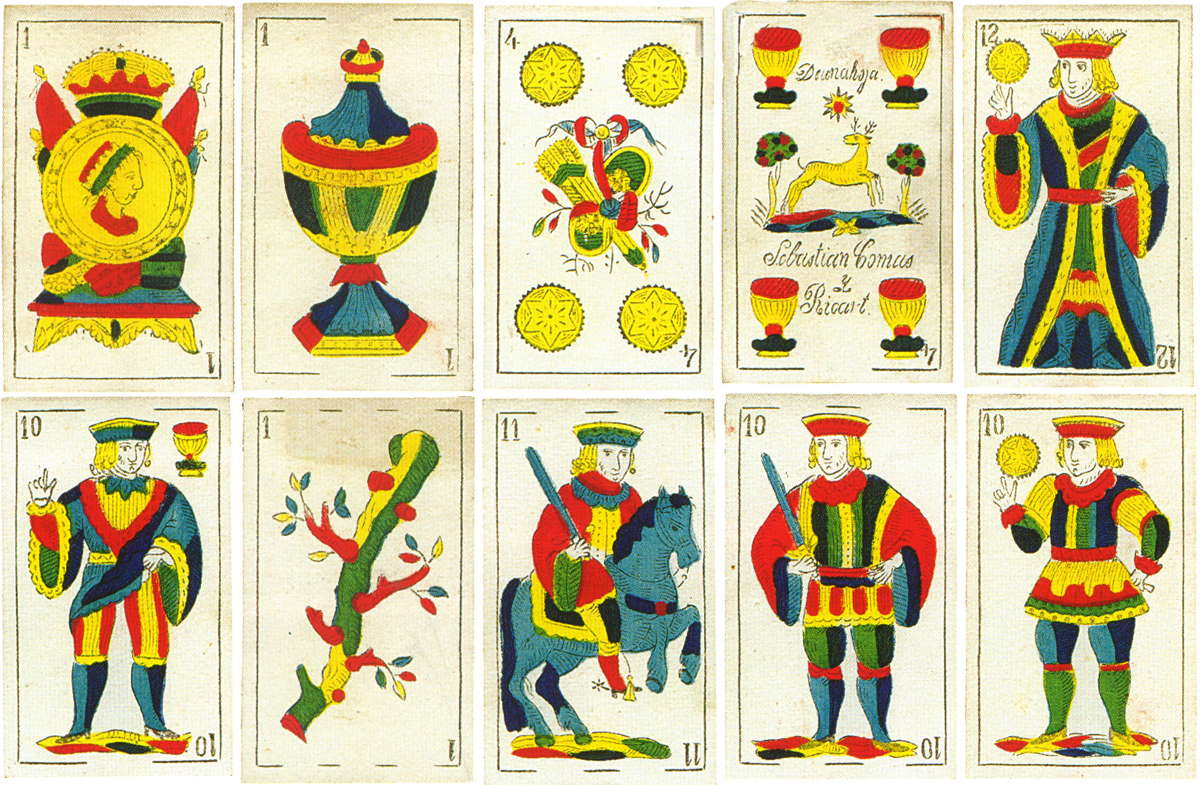
Above: early edition of Naipes “El Ciervo” Nº.3 Catalan pattern by Sebastián Comas y Ricart, c.1848. Stencil-coloured woodcut. The address on the wrapper is Plaza de S. Agustin Viejo Nº.15, Barcelona. The ace of coins has a bust in the centre and the four of coins has the quiver of arrows. See a wrapper►
In 1850 Sebastián Comas travelled to Argentina and established business relations with importers Fló Hnos in Rosario. A lot of playing cards were exported to South America (especially Argentina) and the Spanish Catalan pattern was accepted over there. At the same time he achieved improvements in the quality of Bristol card which resulted in increasing orders both in the national and South American markets. After his premature death in 1867 the company continued to prosper under the management of his widow, Cristina Montaner de Comas and then by her two sons, Hijos de Sebastián Comas y Ricart. These two brothers (Antonio & Sebastián Comas) continued to consolidate and expand the family business and introduced an improved three-ply Bristol card.
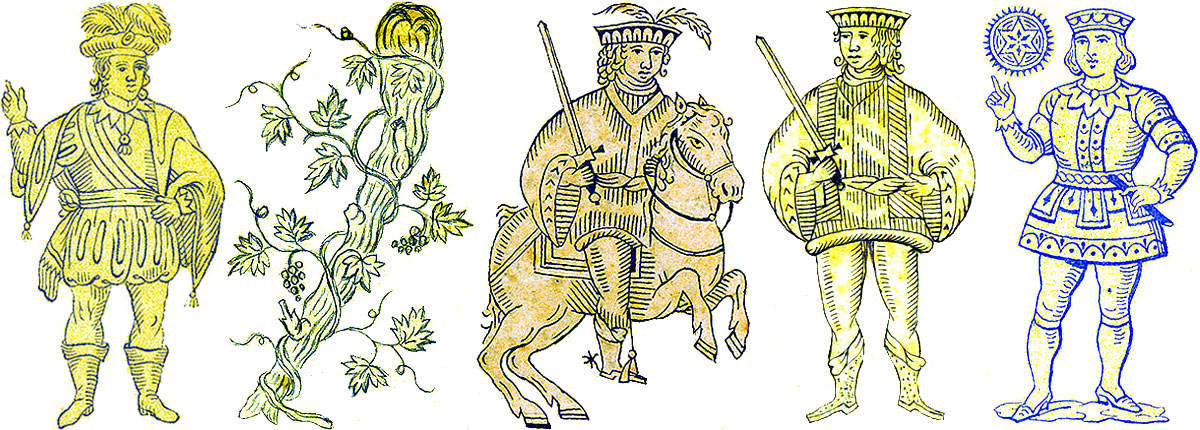
Above: in around 1880 new drawings were produced in pen and ink on oil paper for Naipes Comas by A. Plandolit.
In 1892 Antonio Comas y Montaner became the managing director. New brands were introduced (El Periquito, Escudo de Uruguay, El Carabao, El Conejo, La Golondrina, El Águila, El León, Los Dos Elefantes, El Gallo, El Ciervo etc) for the South American, Philippines and other foreign and domestic markets. In 1895 the playing card business of José Samsó y Cía was acquired, and in 1896 Cristobal Massó i Artigas was also taken over. During this period Naipes Comas reached its peak of success.
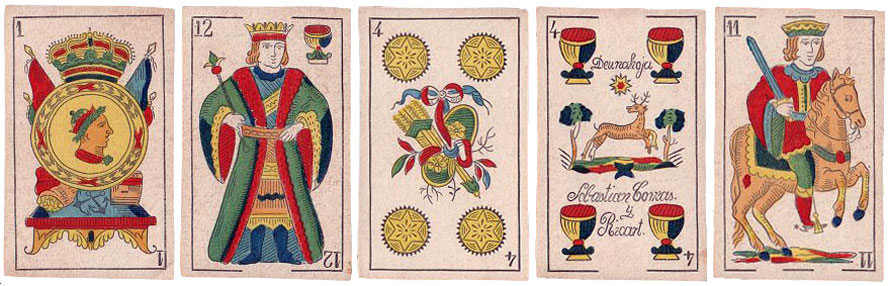
Above: “El Ciervo” Catalan pattern by Sebastián Comas y Ricart, c.1890.
English and French style playing cards were introduced in the early 20th century, followed by ‘Spanish Poker’ packs with 52 cards, giving the company a more European outlook. The advent of the Spanish Civil War and the Second World War were difficult times for trading but the company survived.
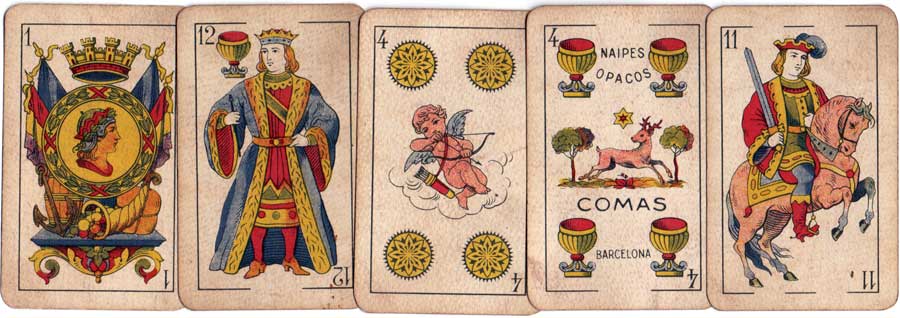
Above: “El Ciervo” No.4 manufactured by Hija de Antonio Comas during the Spanish Civil War, with mural crown and flag of the 2nd Republic on the ace of coins, c.1938 more →
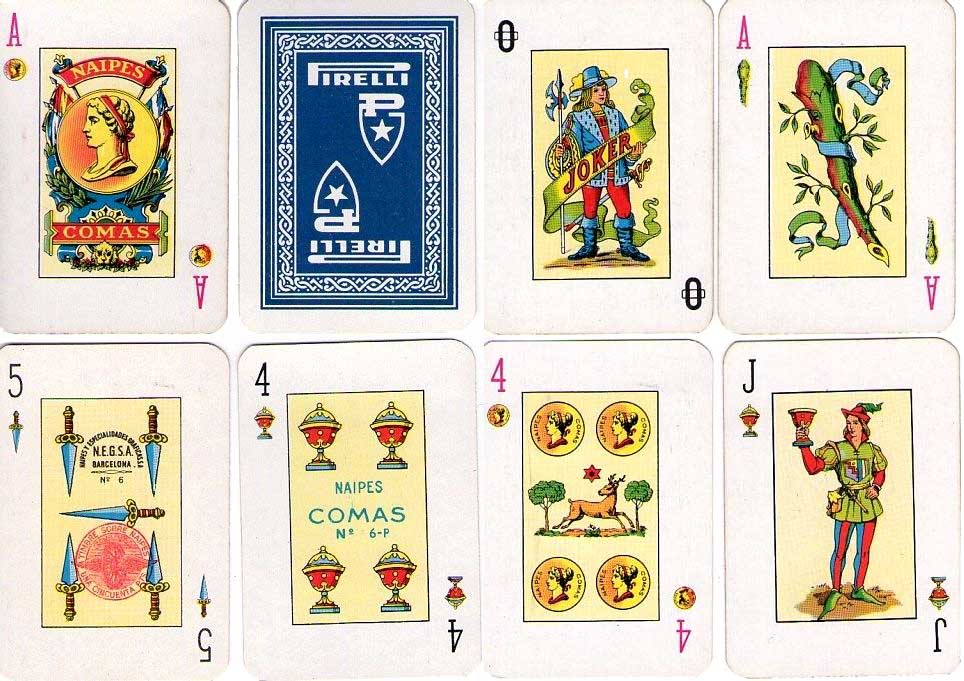
Above: “El Ciervo” No.6 Spanish-suited Poker playing cards manufactured for Pirelli by N.E.G.S.A., c.1955.
In 1954 the business became known as N.E.G.S.A. (Naipes y Especialidades Gráficas S.A.) and continued manufacturing playing cards from the factory at nº6 Cortinas Street in Barcelona until 1959, when it moved premises to Calle Sort Nº32 & 34, L’Hospitalet de Llobregat, within the Barcelona industrial belt. In 1962 Comas joined forces with a graphics company headed by Agustín Bastard Peris using the offset technique. On Sr Bastard’s death the company was acquired by Talleres Gráficos Soler based in Esplugues, in the outskirts of Barcelona, who are the present manufacturers of ‘Naipes Comas’. The range of products has been expanded even further and now includes children’s games and tarot cards.
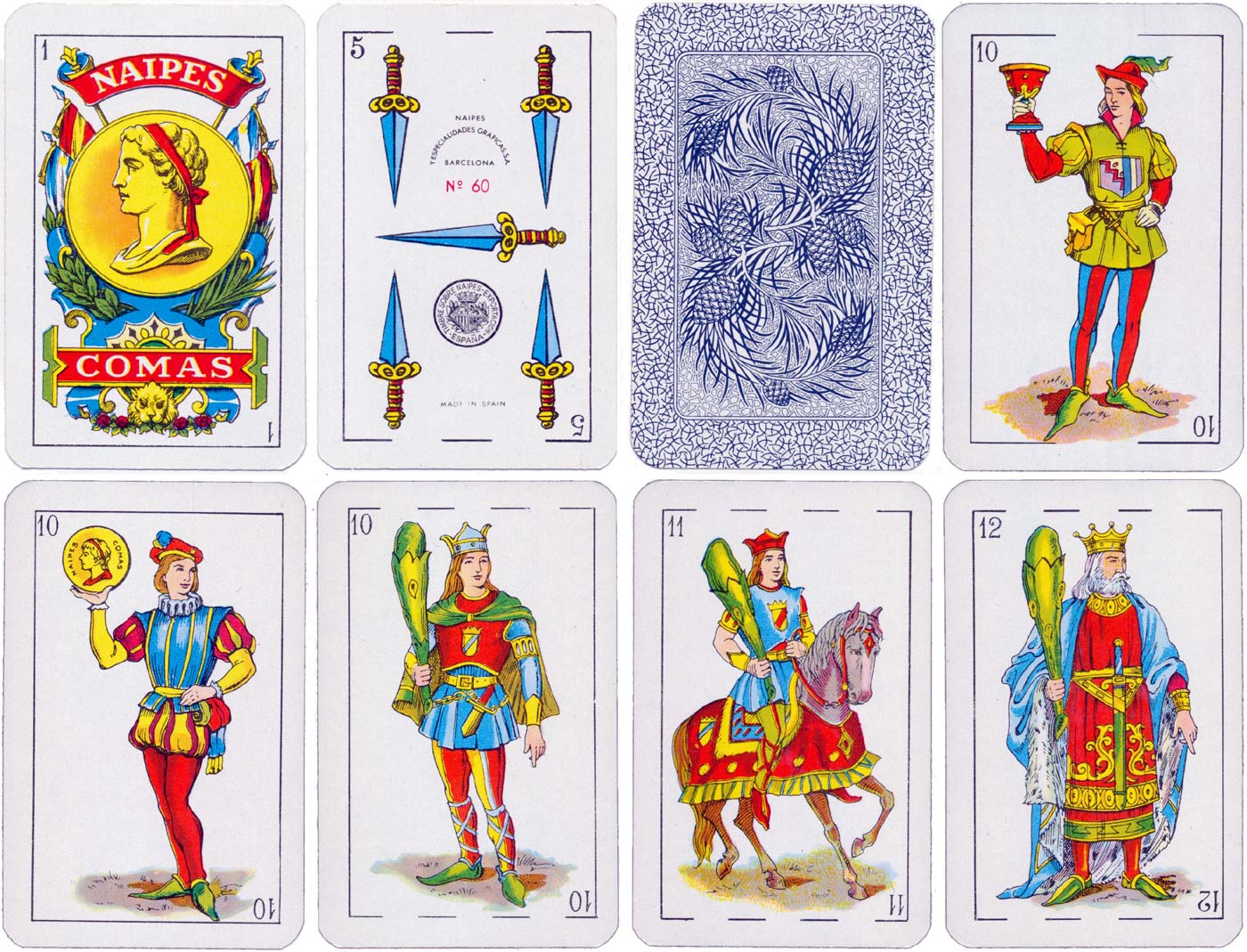
Above: Naipes Comas No.60 standard Castilian pattern, c.1965. Images courtesy Matt Probert.
REFERENCES
Tena Fuentes, Salvador: Testimoni Històric de Naipes Comas, N.E.G.S.A, 1994
Iris Mundus sales catalogues, available from irismundus@hotmail.com→
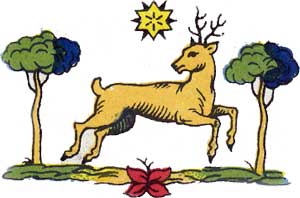
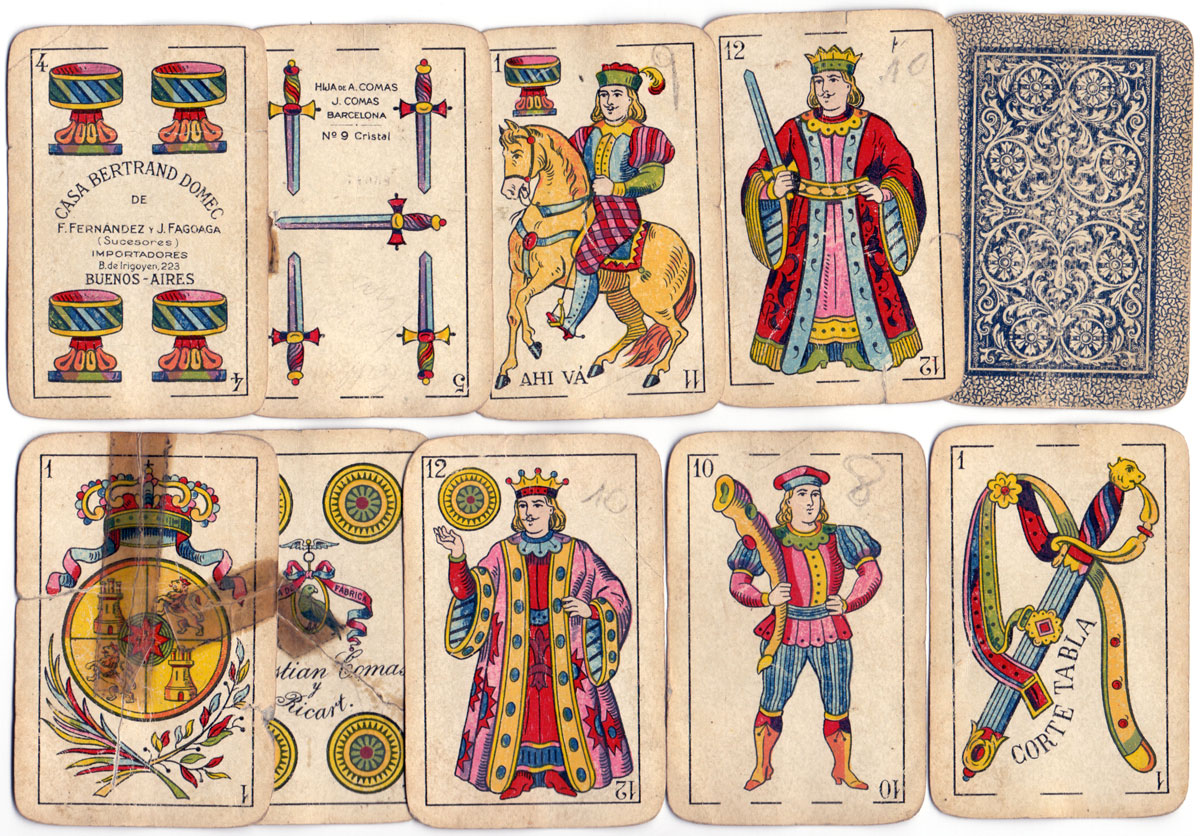
Above: “El Ciervo” Spanish Catalan playing cards.
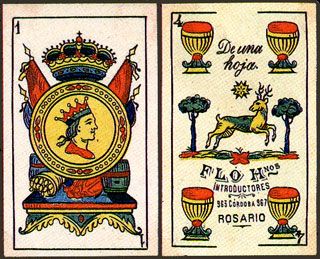
Above: Fló Hermanos in Argentina were importers of Comas playing cards since the 19th century.
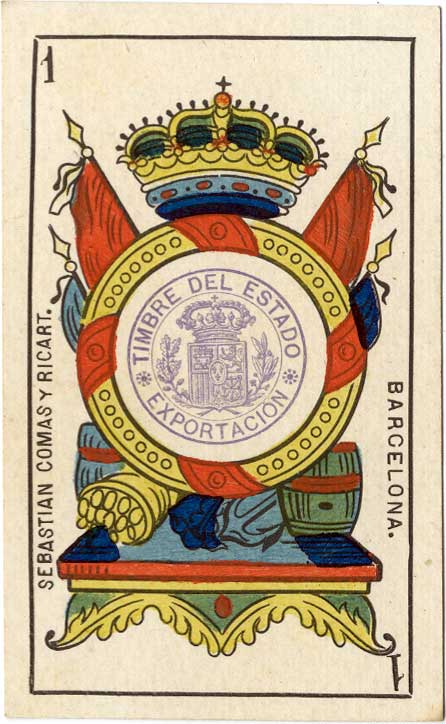
Above: Ace of Coins with exportation stamp, c.1905-1931.
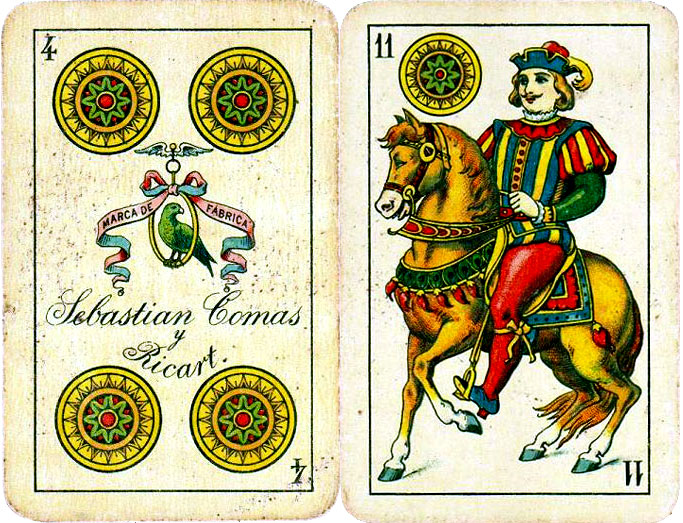
Above: “El Periquito” Spanish Catalan playing cards.
Above: Naipes “Coraza” No.9.
See also: Naipes “Cristal” No.9.
N.E.G.S.A.
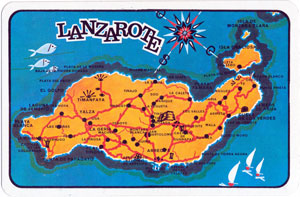
Above: Souvenir of Lanzarote, c.1966.
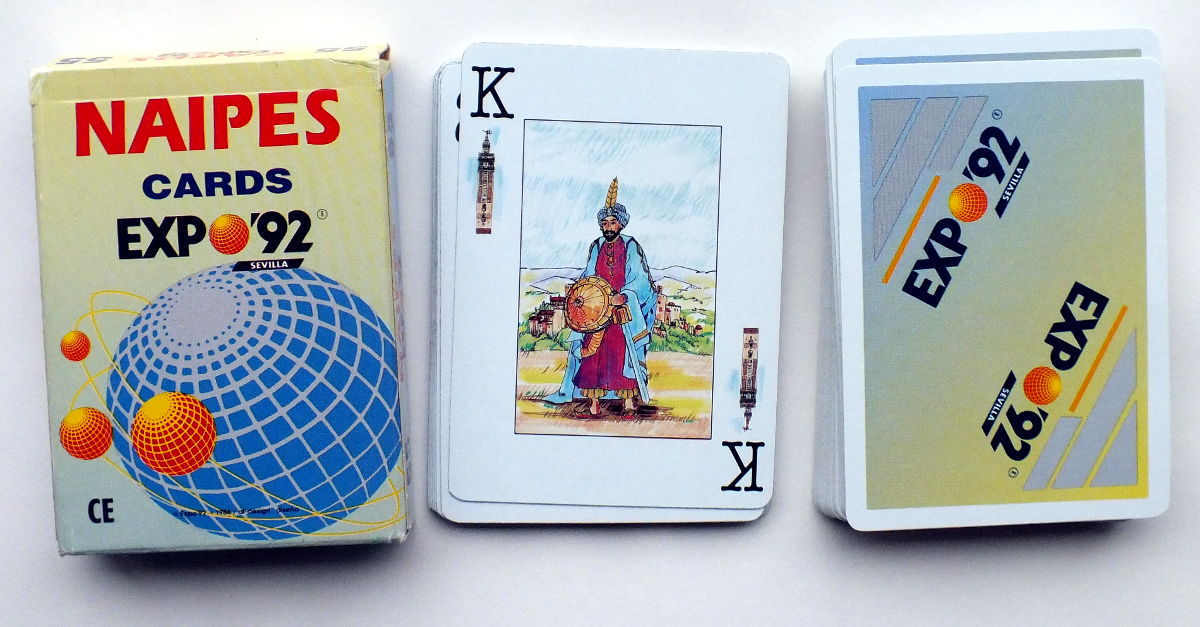
Above: “Expo’92” playing cards manufactured by Naipes Comas, 1992.
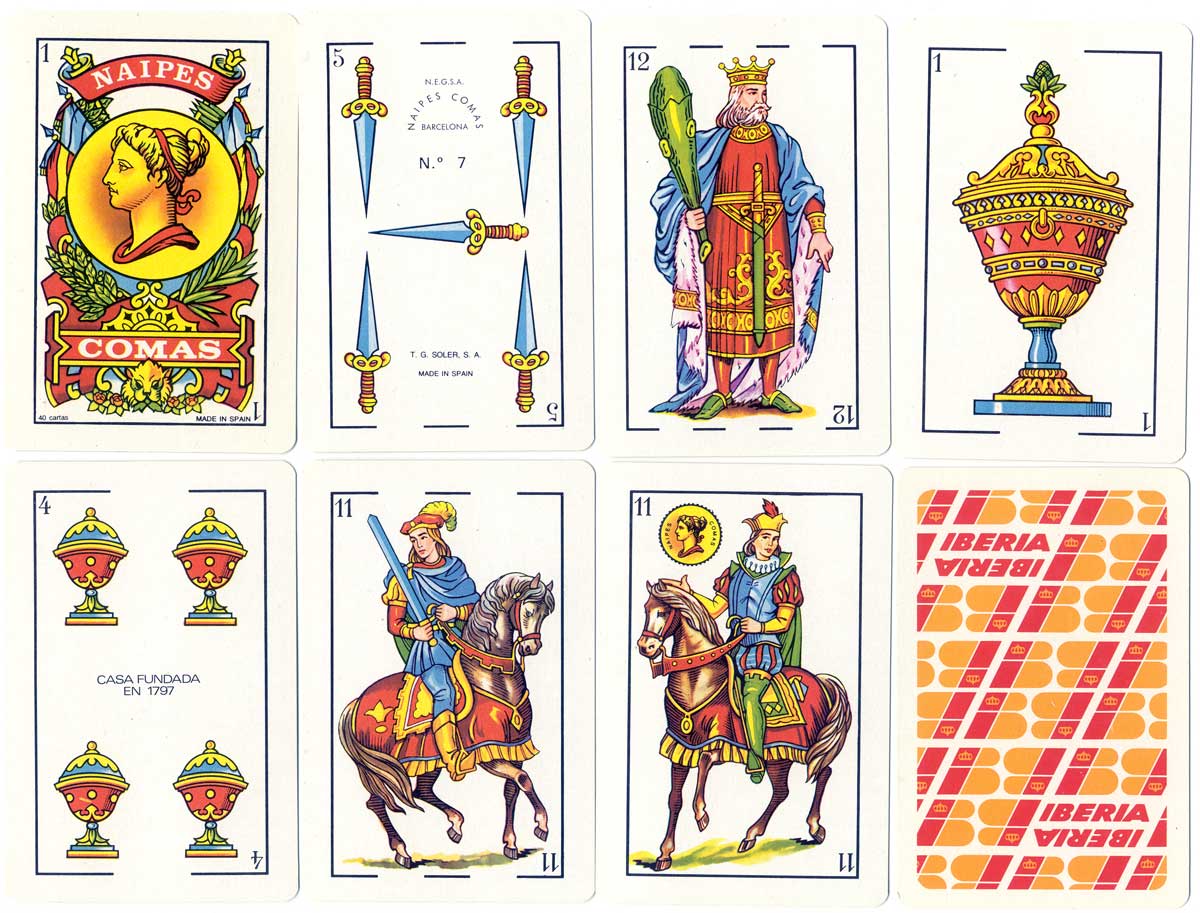
Above: No.7 Spanish deck for Iberia airlines manufactured by Naipes Comas.
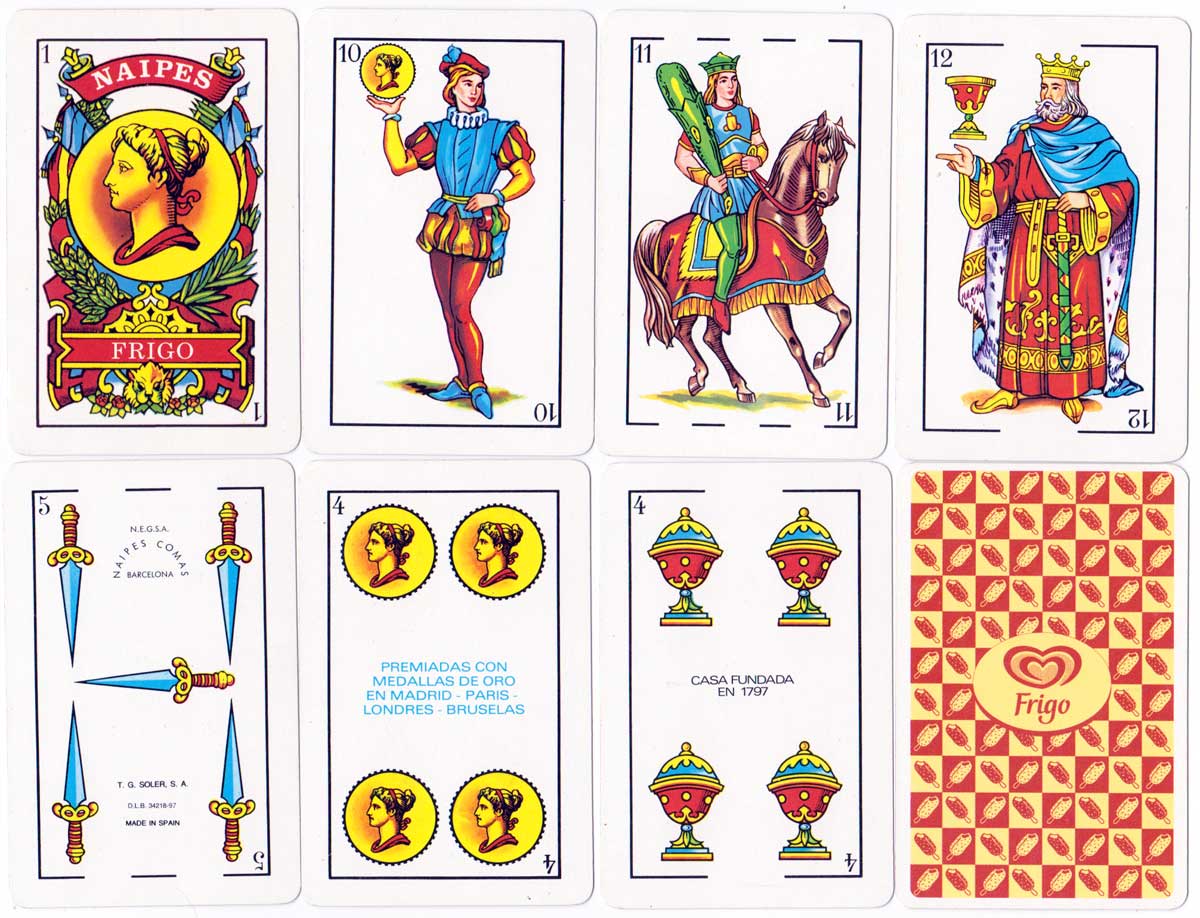
Above: “Frigo” ice cream playing cards manufactured by Naipes Comas.
Above: “Capel Vinos” playing cards manufactured by Naipes Comas, 2001.
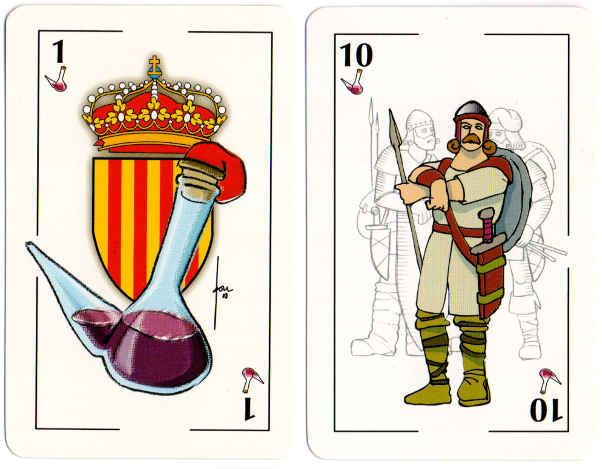
Above: “Cartes Catalanes” manufactured by Naipes Comas, 2006.
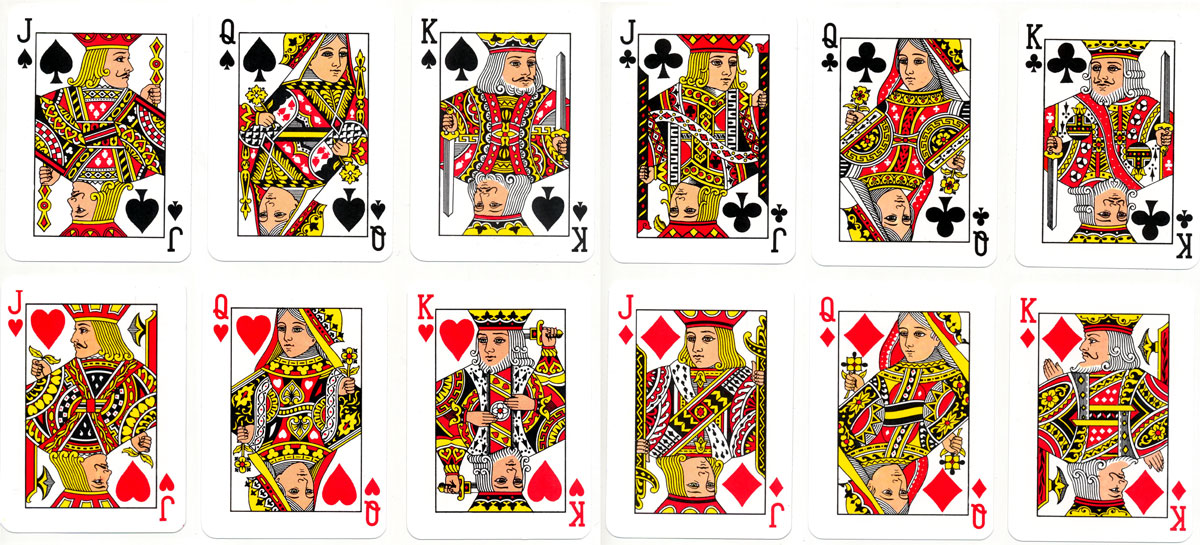
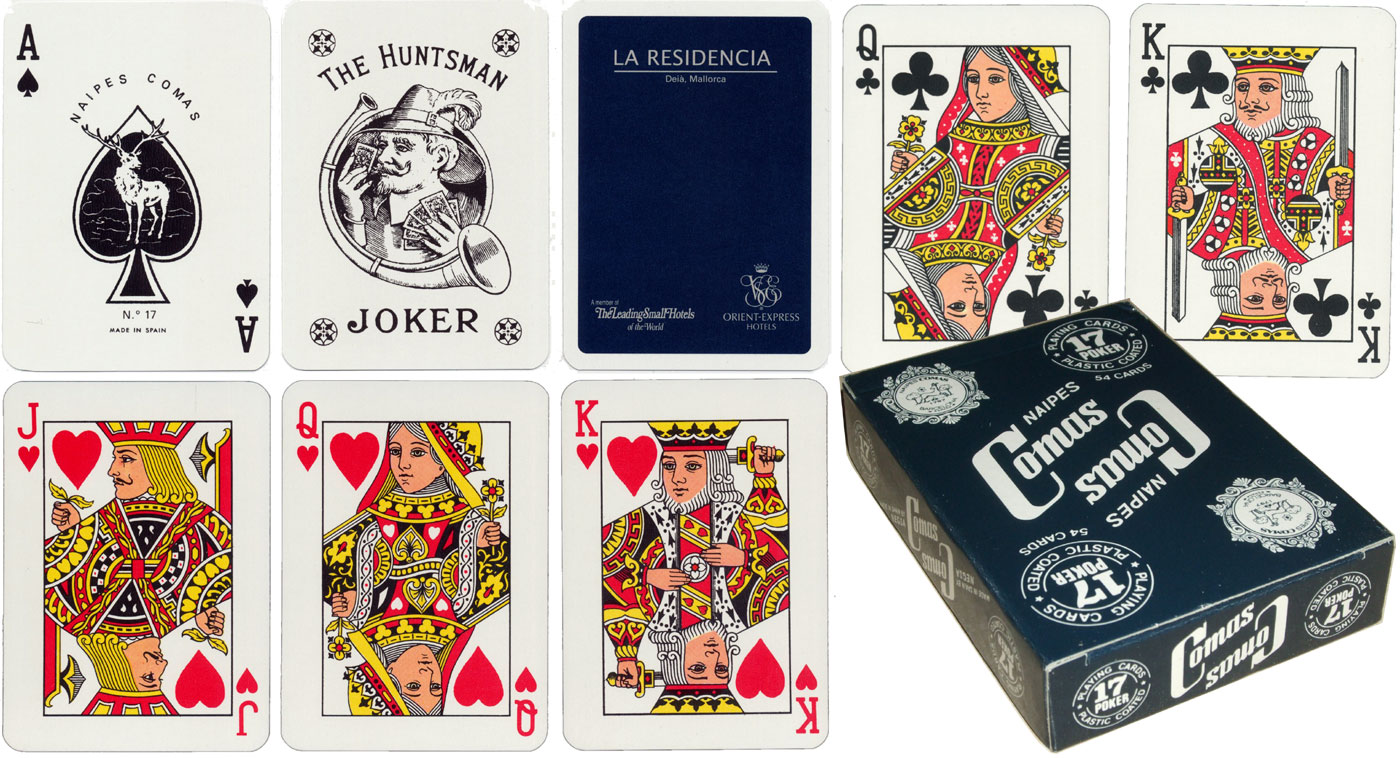
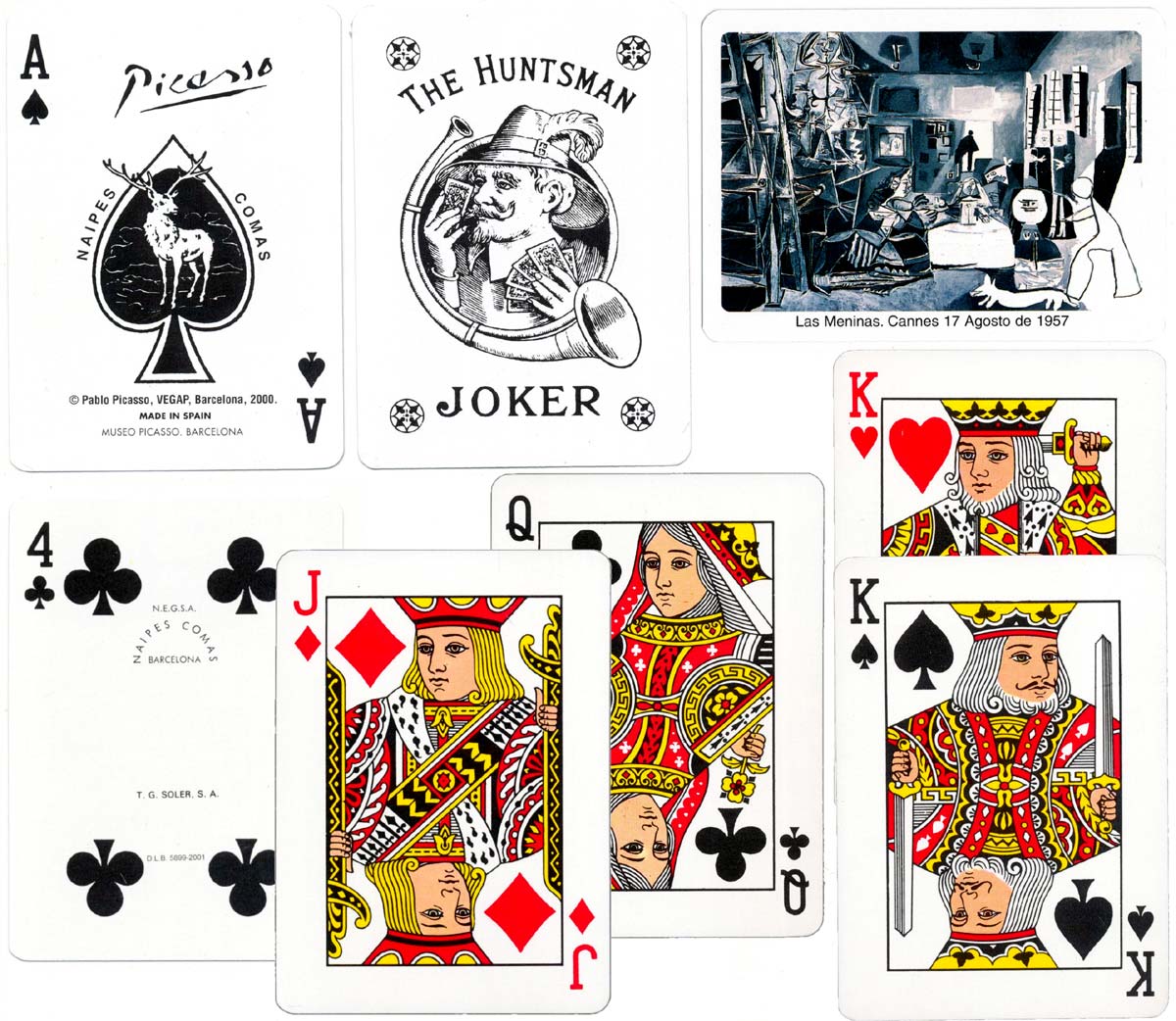
Above: N°115 by NEGSA / T G Soler SA. See also N°17 • Museo Picasso, 2000►

By Simon Wintle
Spain • Member since February 01, 1996
I am the founder of The World of Playing Cards (est. 1996), a website dedicated to the history, artistry and cultural significance of playing cards and tarot. Over the years I have researched various areas of the subject, acquired and traded collections and contributed as a committee member of the IPCS and graphics editor of The Playing-Card journal. Having lived in Chile, England, Wales, and now Spain, these experiences have shaped my work and passion for playing cards. Amongst my achievements is producing a limited-edition replica of a 17th-century English pack using woodblocks and stencils—a labour of love. Today, the World of Playing Cards is a global collaborative project, with my son Adam serving as the technical driving force behind its development. His innovative efforts have helped shape the site into the thriving hub it is today. You are warmly invited to become a contributor and share your enthusiasm.

Activity for Naipes Comas
Sign in to comment or save this article.

Related Articles
Pedro y los piratas
Un pequeño misterio para una gran baraja.
B. Braun-Dexon®
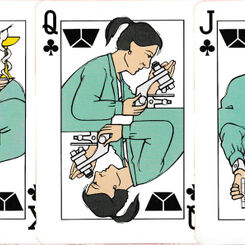
Publicity pack promoting B. Braun-Dexon’s atraumatic needles, with non-standard courts and pips.
Naipes Expo ’92
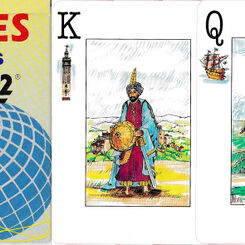
Naipes Expo ’92 souvenir playing cards manufactured by Naipes Comas, 1992.
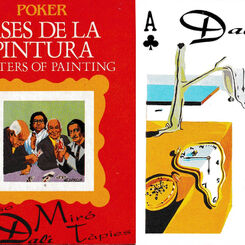
Ases de la pintura / Masters of painting
Ases de la pintura / Masters of painting playing cards made by Naipes Comas, Spain, c.1990.
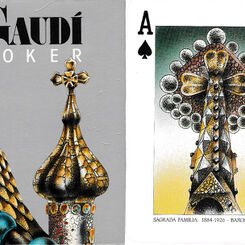
Gaudí poker
Gaudí poker playing cards illustrated by Josep Opisso, Spain, c. 1992.
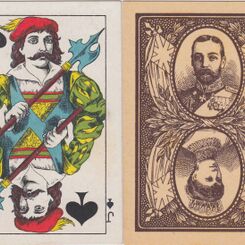
The British Royal visit to India playing cards
printed in Spain for British India in 1911.
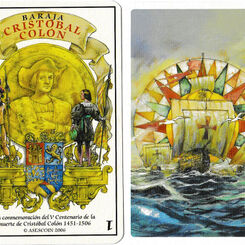
Christopher Columbus playing cards
“Baraja Cristóbal Colón” commemorating the 500th anniversary of the death of Christopher Columbus.
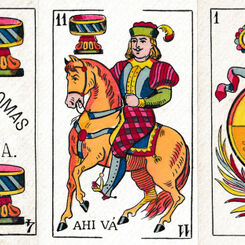
Cadiz-Catalan style pack
High-quality standard designs by Sebastián Comas y Ricart, Barcelona, Spain, 1896.
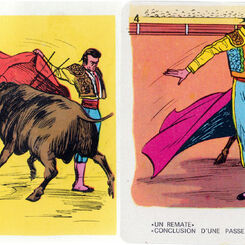
Corrida de Toros
Bull fighting card game publshed by Naipes Comas, 1969.
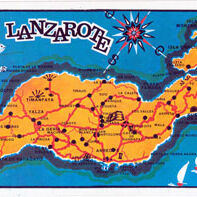
Lanzarote Souvenir
Souvenir of Lanzarote playing cards by NEGSA (Naipes Comas).
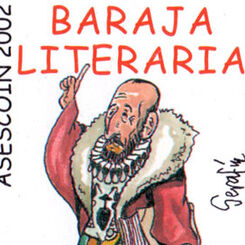
Baraja Literaria
“Baraja Literaria” Spanish pack with cartoons by Serafín, published by Asescoin and manufactured by ...
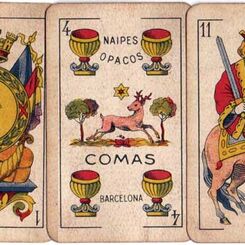
El Ciervo N°4
“El Ciervo” No.4 manufactured by Hija de Antonio Comas during the Spanish Civil War, with mural crow...
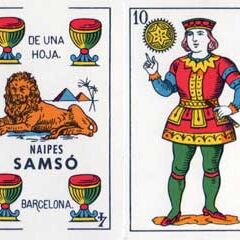
Naipes Samsó N°2-S
Naipes Samsó published by N.E.G.S.A. (Barcelona) c.1965.
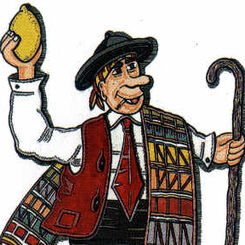
Capel Vinos
Advertising playing cards for Capel Vinos S.A., manufactured by Naipes Comas, 2001.
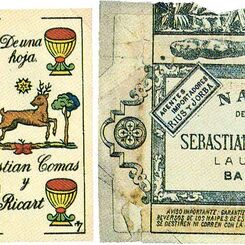
Paraguayan Playing Cards
Playing Cards in Paraguay
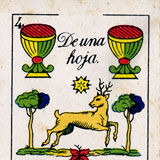
El Ciervo, c.1930
Sebastian Comas y Ricart - Hija de A. Comas “El Ciervo” Spanish Catalan pattern, c.1930.
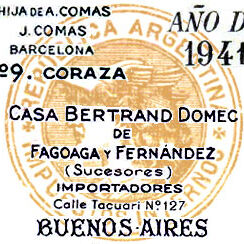
Naipes Coraza, Comas, Barcelona, 1940s
Naipes Coraza, Hija de Antonio Comas, Barcelona, 1940s.
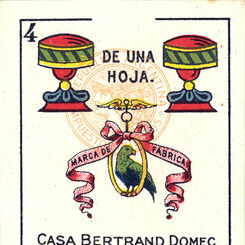
Hija de A. Comas “El Periquito”, c.1930
Sebastian Comas y Ricart - Hija de A. Comas “El Periquito” Spanish-suited playing cards for export t...
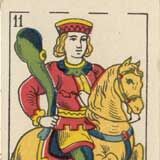
Sebastian Comas y Ricart, Barcelona
“El Ciervo” standard Catalan-type pack made in Barcelona by Sebastian Comas y Ricart, c.1905-10.
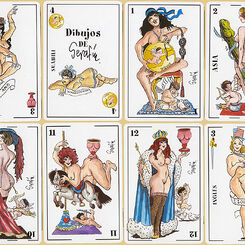
Baraja "Te Amo" cartoons by Serafín
Baraja 'Te Amo' con dibujos de Serafín en tirada de 500 ejemplares numerados, 48 naipes. Fabricado p...
Most Popular
Our top articles from the past 60 days