


Egbert Moehsnang
The suit signs and indices are clear and easily recognisable, and each suit has a different predominant colour. The juxtaposition of traditional craft techniques with abstract modern design could be seen as postmodern.
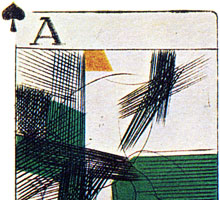
Egbert Moehsnang: ‘Abstract Bridge’
Using XV century card making technology, i.e. copperplate engraving, Egbert Moehsnang (b.1927- ) follows the tradition of master craftsmen and artists who create original playing card designs. Moehsnang allows his creative freedom full expression in these “Abstract Bridge” cards which were first produced in a limited edition of 80 hand-made sets. Later the cards were printed by AGM Müller in 1978.
It doesn't matter if you hold the cards up-side-down. The suit signs and indices are clear and easily recognisable, and each suit has a different predominant colour. The juxtaposition of traditional craft techniques with abstract modern design could be seen as postmodern i.e. based on the view that reality is not mirrored in human understanding, but is constructed as the mind tries to understand its own personal reality...
See also: Jass Allemand.
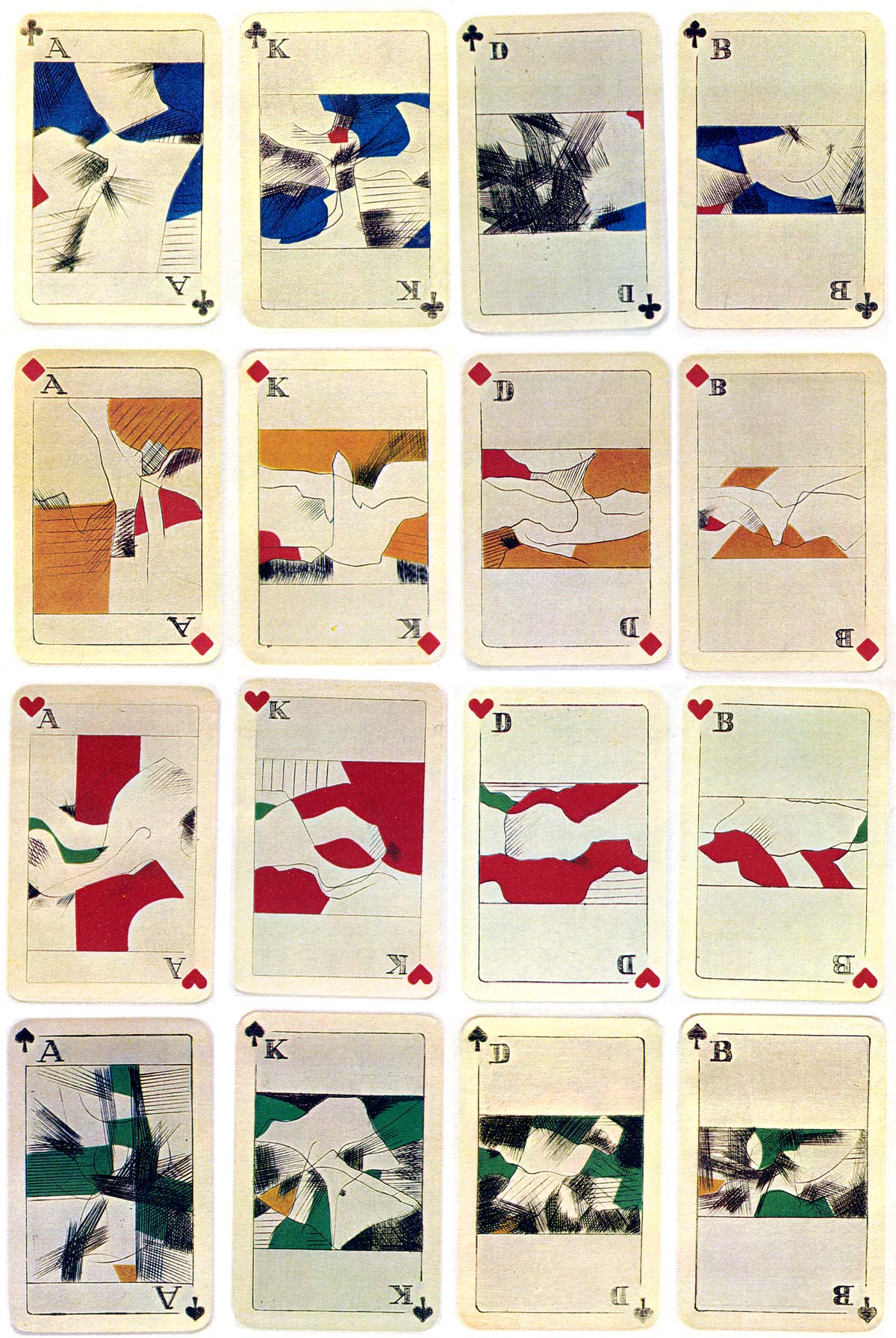
Above: “Abstract Bridge” playing cards, printed from copperplate engravings and hand-coloured with stencils by Egbert Moehsnang, c.1975.

By Simon Wintle
Spain • Member since February 01, 1996
I am the founder of The World of Playing Cards (est. 1996), a website dedicated to the history, artistry and cultural significance of playing cards and tarot. Over the years I have researched various areas of the subject, acquired and traded collections and contributed as a committee member of the IPCS and graphics editor of The Playing-Card journal. Having lived in Chile, England, Wales, and now Spain, these experiences have shaped my work and passion for playing cards. Amongst my achievements is producing a limited-edition replica of a 17th-century English pack using woodblocks and stencils—a labour of love. Today, the World of Playing Cards is a global collaborative project, with my son Adam serving as the technical driving force behind its development. His innovative efforts have helped shape the site into the thriving hub it is today. You are warmly invited to become a contributor and share your enthusiasm.

Activity for Egbert Moehsnang
Sign in to comment or save this article.

Related Articles
Para Jass
Humorous court card designs by Léon Schnyder for the Swiss Paraplegics Association.
Bourbon Bridge
Attractive, woodcut-style courts adapted for modern play.
Bischofszell
Advertising pack for the food producer Bischofszell, designed by Heinz Looser-Brenner, with non-stan...
Scheffmacher
Advertising pack for Scheffmacher, master painters in Schaffhausen, with comic designs by Fritz Bünz...
Tavaglione playing cards
Well-designed pack by Giorgio Tavaglione, with courts in medieval costume.
Joker Tell
Comic celebration of 700 years of the Swiss Confederation, 1291-1991, with designs by Roland Gazzott...
Swiss Souvenir
55 different scenic photographic views of Switzerland.
Mini Jass
Pocket-size cards with modern designs for playing the Swiss national card game, Jass.
La Compagnie de 1602
Characters from the annual festival held to commemorate the failed attempt to storm Geneva in 1602. ...
Sternenmädchens Wahrsagespiel Tarot
A colourful 1970s take on the major arcana designed by Peter Geitner, with titles in German.
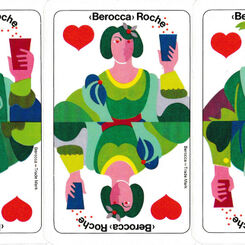
Roche
Advertising pack for the Swiss-based healthcare company.
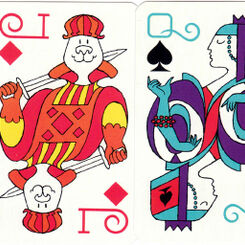
Investors Overseas Services
Investors Overseas Services, Ltd. (IOS) by A. G. Müller (Schaffhausen), c.1969.
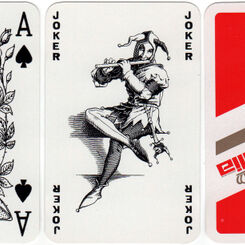
AGMüller English Pattern
AGMüller standard English pattern for the Royal Jordanian Airline, 1980s
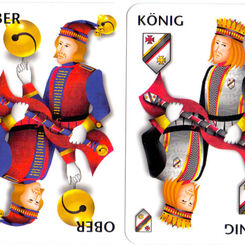
Modern Swiss-German Pattern
Modern Swiss-German Pattern by AGMüller, c.2000.
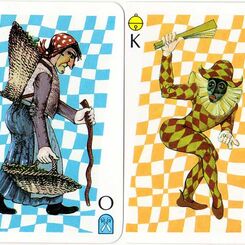
Krienser Fasnachts-Jass 1988
The Krienser Fasnachts-Jass deck was designed and published by Léon Schnyder from Kriens for the 198...
Jass Allemand
Egbert Moehsnang produced this contemporary Swiss-suited, double-ended pack, based on original XV ce...
Richard Wagner
Richard Wagner playing cards designed by Melchior Annen.
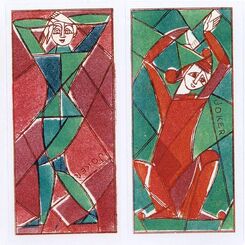
Vitrail‒Bridge, 1991
Playing cards inspired by stained glass, designed by Gertrud Kümpel-Amsler, 1991.
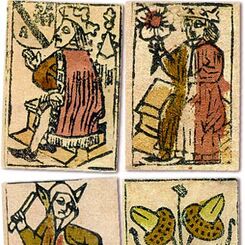
Swiss Playing Cards
The Swiss national suit system of shields, acorns, hawk bells and flowers emerged sometime during th...
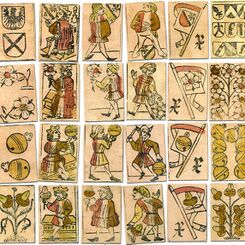
Antique Swiss Playing Cards, c.1530
The Swiss national suit system of shields, acorns, hawkbells and flowers originated sometime during ...
Most Popular
Our top articles from the past 60 days


Bustercool
10 January 2026, 06:16SavedSaved this article to cool