


Swiss French Suited Playing Cards, c.1840
French-suited playing-cards in the Paris pattern appeared in Switzerland around the end of the sixteenth century, when many Lyonnais cardmakers were driven away by heavy taxes.
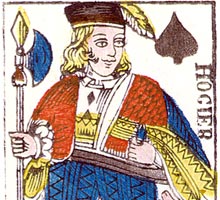
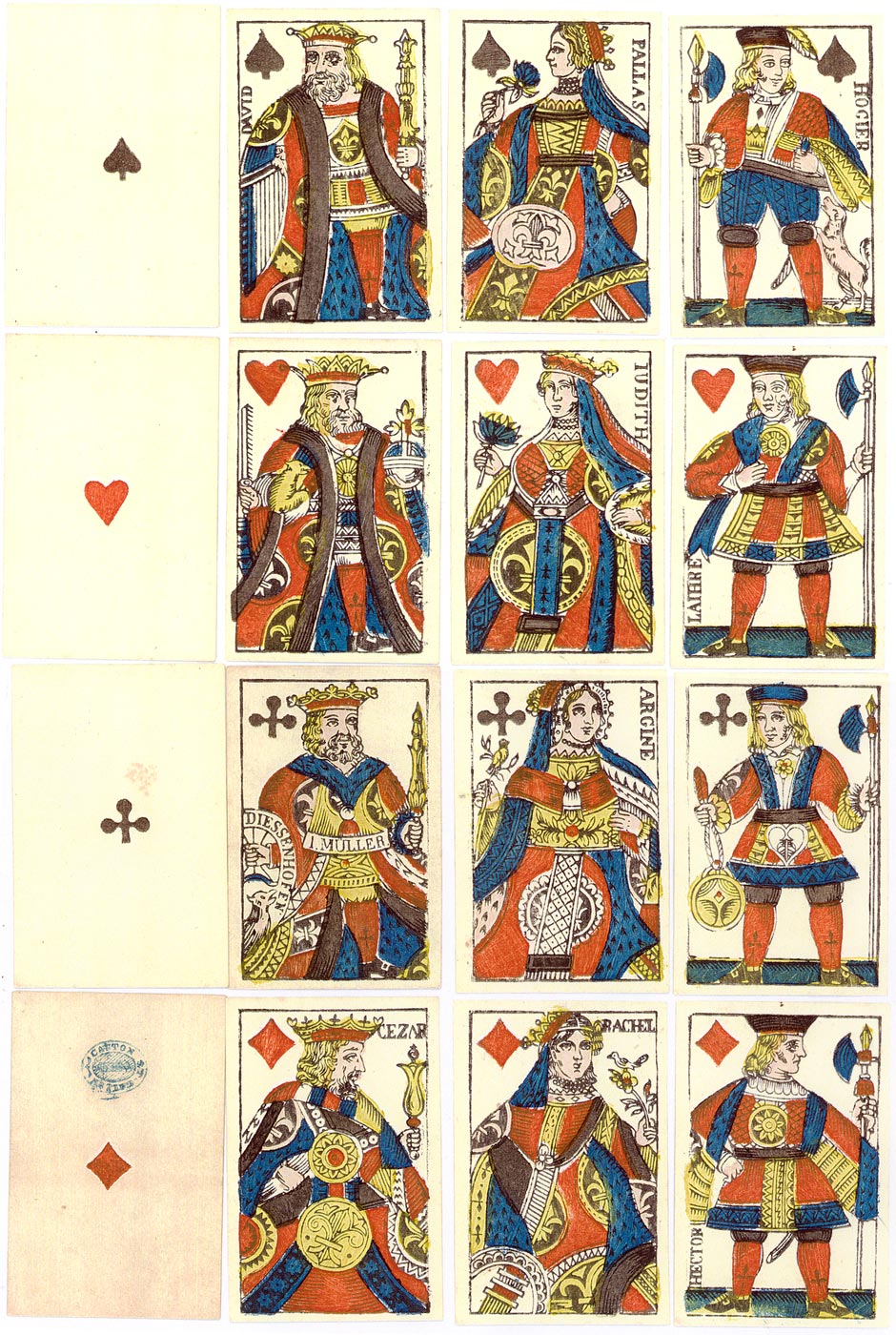
Swiss French Suited Playing Cards, c.1840
French-suited playing-cards appeared in Switzerland around the end of the sixteenth century, when many Lyonnais cardmakers were driven away by heavy taxes. The example shown here, printed from woodblocks and hand-coloured with stencils, was manufactured by J. Müller, Diessenhofen, c.1840. For some time, the cantons of Switzerland had their own tax regulations, including tax stamps for playing-cards. The example shown here is a tax stamp from the Canton of St Gallen.
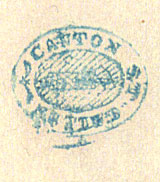
Left: enlargement of tax stamp on the ace of diamonds. For further details about Swiss tax stamps, see the website of Peter Endebrock►

By Simon Wintle
Spain • Member since February 01, 1996 • Contact
I am the founder of The World of Playing Cards (est. 1996), a website dedicated to the history, artistry and cultural significance of playing cards and tarot. Over the years I have researched various areas of the subject, acquired and traded collections and contributed as a committee member of the IPCS and graphics editor of The Playing-Card journal. Having lived in Chile, England, Wales, and now Spain, these experiences have shaped my work and passion for playing cards. Amongst my achievements is producing a limited-edition replica of a 17th-century English pack using woodblocks and stencils—a labour of love. Today, the World of Playing Cards is a global collaborative project, with my son Adam serving as the technical driving force behind its development. His innovative efforts have helped shape the site into the thriving hub it is today. You are warmly invited to become a contributor and share your enthusiasm.

Related Articles
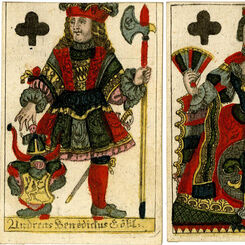
Standard French-suited Bavarian deck by Göbl
French-suited Bavarian deck by Andreas Benedict Göbl, late 18th c.
Modern Swiss-German Pattern
Modern Swiss-German Pattern by AGMüller, c.2000.
Animal Tarot
Woodblock and stencil Animal Tarot cards, probably of Swiss origin, 2nd half 18th century.

25: More Standard European Cards
A further selection of European standard patterns including various redrawings.
Jacob Holmblad c.1820
Standard woodblock and stencil deck produced by Jacob Holmblad with double-ended court cards in the ...

L. P. Holmblad c.1840
L. P. Holmblad's house pattern used from c.1840. The K♠ carries a harp as in the traditional French-...

La Española 2000 pattern
‘La Española 2000’ is a digitally re-drawn version of the original classic ‘La Española’ Spanish-sui...
Paris Pattern
The Paris pattern was established as such around the middle of the seventeenth century (based, perha...
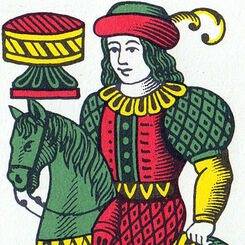
Spanish Cadiz-style pack
Traditional Spanish Cadiz-style pack manufactured by Müller & Cie, Schaffhausen, 1952.
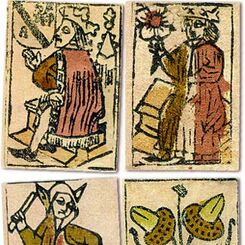
Swiss Playing Cards
The Swiss national suit system of shields, acorns, hawk bells and flowers emerged sometime during th...
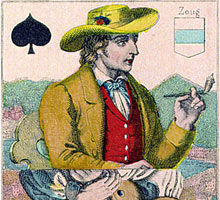
Swiss Regional Costumes Playing Cards, c.1890
This Swiss Regional Costume pack can be seen as an early form of tourist souvenir which subsequently...
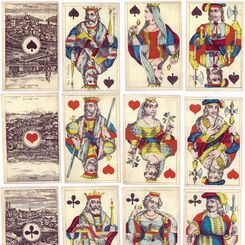
Swiss Scenic Ace Souvenir Cards, c.1850
Souvenir pack with Scenic Aces made by Müller (Diessenhofen), c.1850.
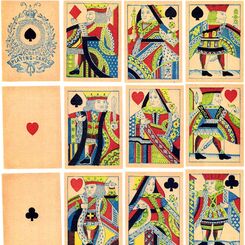
Swiss Mogul Cards, 1880-1890
English type 'Mogul' playing cards manufactured in Switzerland by John Müller for export to India, c...
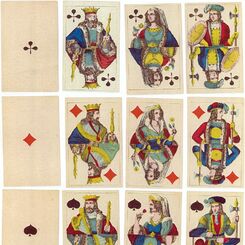
Müller (Diessenhofen), c.1840-50.
Playing Cards made by J. Müller, Diessenhofen, c.1840-50 with court cards coloured differently ...
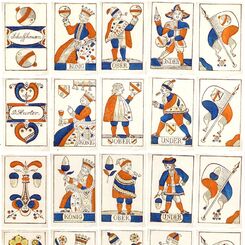
Swiss Playing Cards by David Hurter, c.1830
David Hurter had begun to build up a playing card business in Schaffhausen during the late 18th cent...
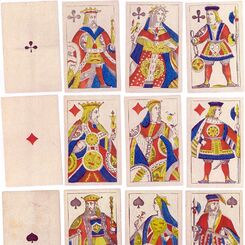
Swiss Piquet Playing Cards, c.1850-60
Piquet playing-cards made by J. Müller, Diessenhofen, c.1850-60. The full-length court cards are fol...
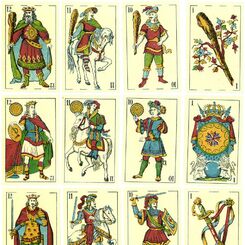
Swiss Spanish-Suited Cards, c.1875
Spanish-suited playing cards manufactured by J. Müller for export to Latin American countries, c.187...
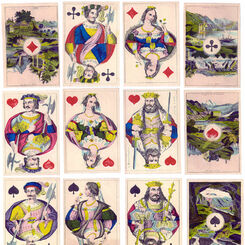
Swiss Scenic Ace Souvenir Cards, c.1860
Souvenir pack with Scenic Aces made by J. Müller (Diessenhofen), c.1860. The courts are conventional...
Small Tuscan Pattern
Small Tuscan Pattern
Standard and Non-standard Playing Cards
Standard playing cards are based upon traditional designs and are used for card games.
Most Popular
Our top articles from the past 60 days


