


Standard and Non-standard Playing Cards
Standard playing cards are based upon traditional designs and are used for card games.
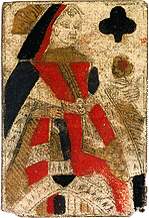
Above: standard playing card, 1700
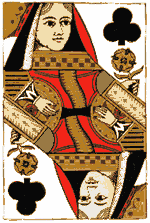
Above: standard playing card, 1865
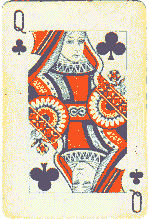
Above: standard playing card, 1935
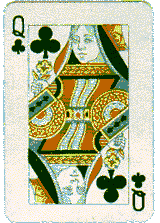
Above: standard playing card, 1965
Standard Playing Cards
Standard playing cards are those in which the court card figures are based upon traditional designs whose features do not change much over time. Players recognise the cards immediately and expect to use these for everyday card games. The number cards are arranged clearly and logically. Standard packs are made by most manufacturers, although there may be different standard patterns in different regions within a country. There are also several different national suit-systems, alternative court card hierarchies as well as the number of cards in a pack.
The illustrations (right) show how English playing card designs have evolved from full length figures, with square corners and no indices, to double-ended ones, with the addition of indices, although the same basic designs are always discernible.
During the 19th century the court cards were often flipped horizontally so that the pip sign and index lie at the top left-hand corner, to make fanning the cards more convenient.
By around 1880, rounded corners had become the accepted norm in England. The Printer and Stationer of January 1880 reported that "… it appears that most of our card manufacturers make round cornered cards now - their convenience being undeniable." However, square cornered cards were still produced until around the turn of the century.


"Life is a pack of cards.
Childhood's best cards are hearts;
youth is captured with diamonds;
middle age is conquered by a club,
while old age is raked in by the insatiable spade."
One standard pattern in particular enjoyed great success and was widely imitated - the Paris pattern. Derivatives of several other French regional patterns also became new patterns in many European countries more►
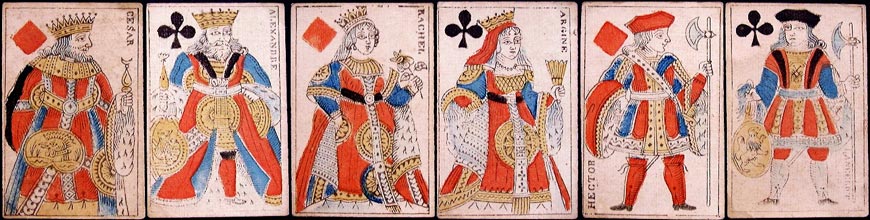
Above: the Paris pattern gave rise to many local variants in other European countries.
Advertising Playing Cards
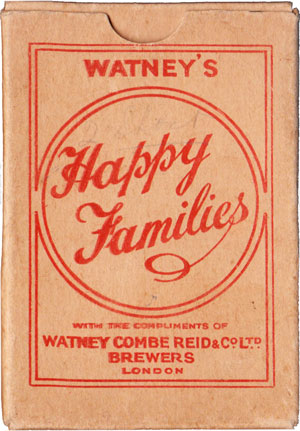
Advertising packs are often standard-pattern cards adapted for promotion: a printed back, a branded joker, or a message worked into the aces and court cards, sometimes extending to the wrapper or box. They were commonly distributed as giveaways and now sit as small, dated snapshots of commercial design and everyday consumption. See advertising.
Non-Standard Playing Cards
Non-standard playing cards are those in which the court cards, pip cards, aces and/or jokers have deviated from the traditional, 'standard' pattern and have been stylised, decorated or re-designed. For example, fantasy historical court cards, humorous cartoons, decorative aces, and so on. Sometimes the court cards are representations of political personalities. A pack of cards may be produced to honour a royal commemoration, a new tourist attraction or the next millennium. Sometimes the shape of the cards is different. These types of card are a distraction to serious card players, but often sought by collectors.
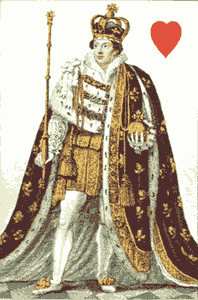
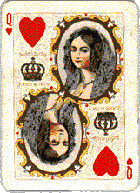
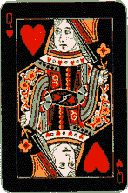
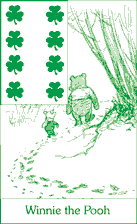
Above: non-standard English playing cards, c.1820-1999. Not so easy to recognise at first glance.
With the covergence of digital technologies towards the end of the 20th century, the cost of producing custom playing cards, i.e.non-standard, fell whilst old-fashioned technologies became obsolete. Small custom print runs became feasible with photoshopped artwork inserted easily into the printing. Thus from this point onwards non-standard cards have become cheaper to produce and are now more prevalent than standard ones.
Card Games
Most playing cards are designed to be used, and the requirements of particular games have shaped everything from pack size and suit-systems to indices, corner-rounding and the handling qualities expected by players. Many non-standard packs also begin as “game packs”, adapting the familiar structure for themed rules, children’s games, or novelty play. See Card Games.
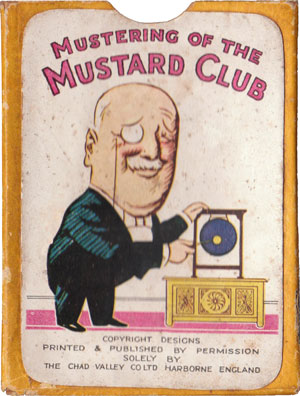
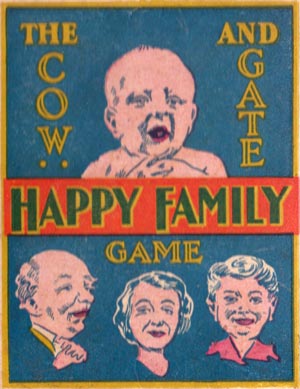
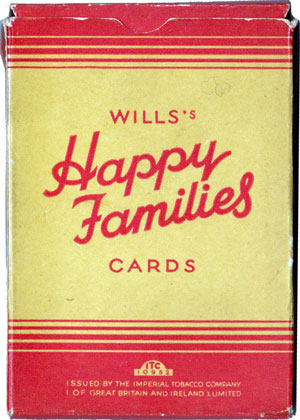
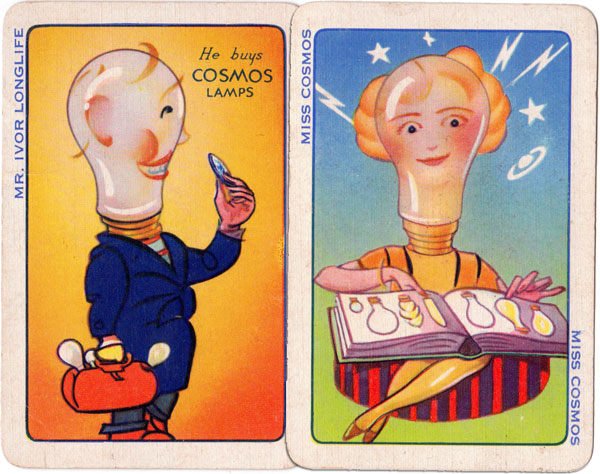
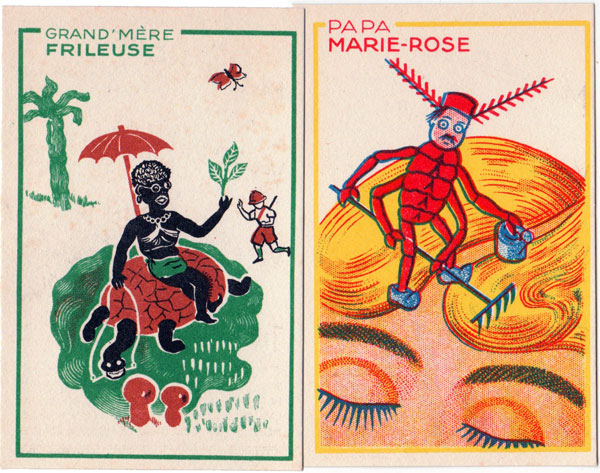
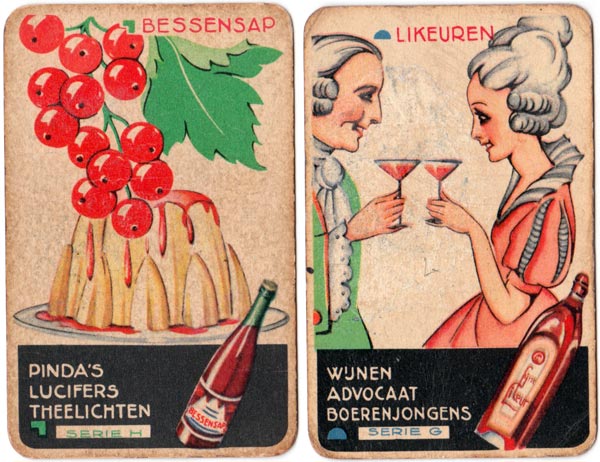
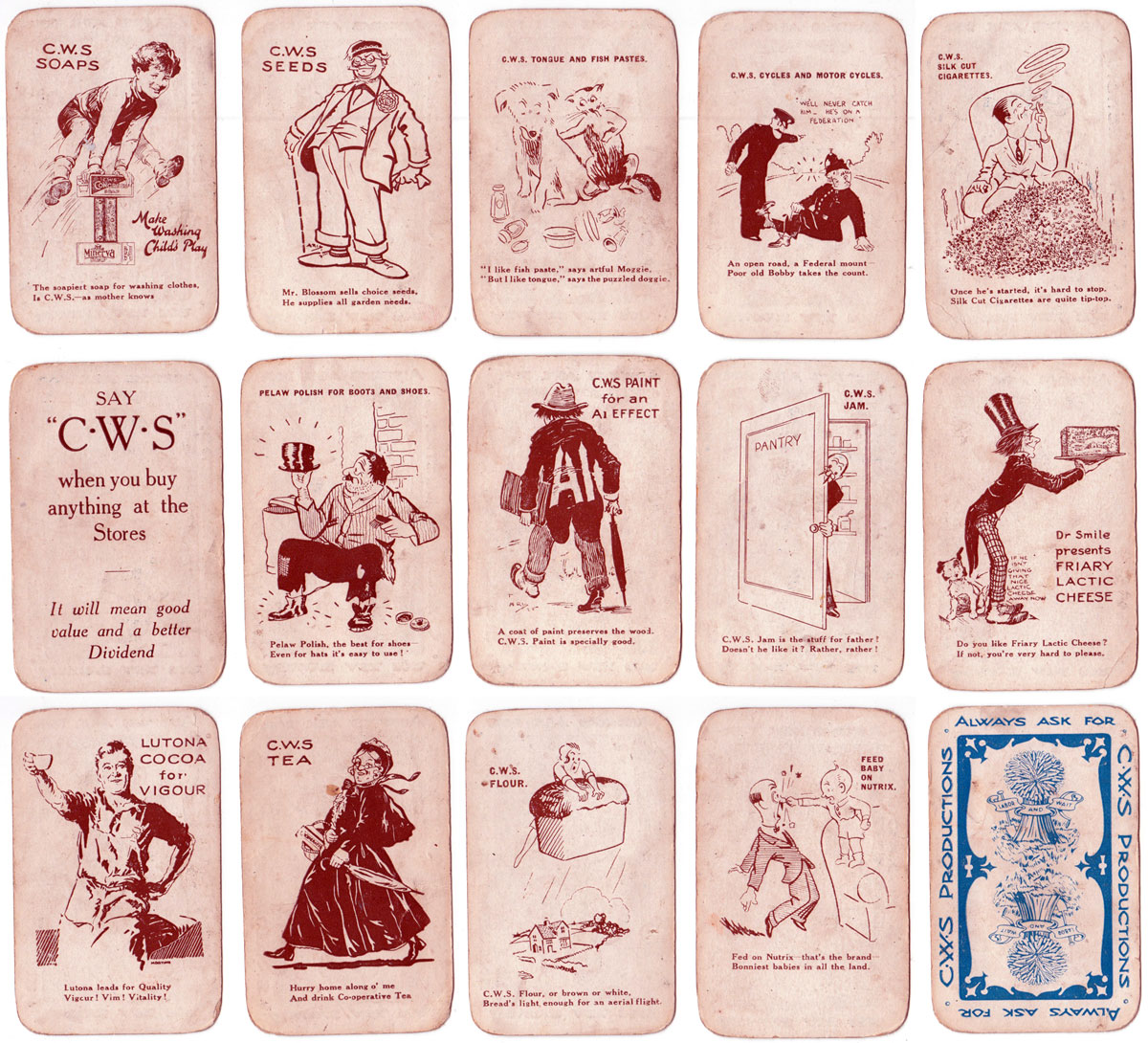
Children’s Card Games with Advertising
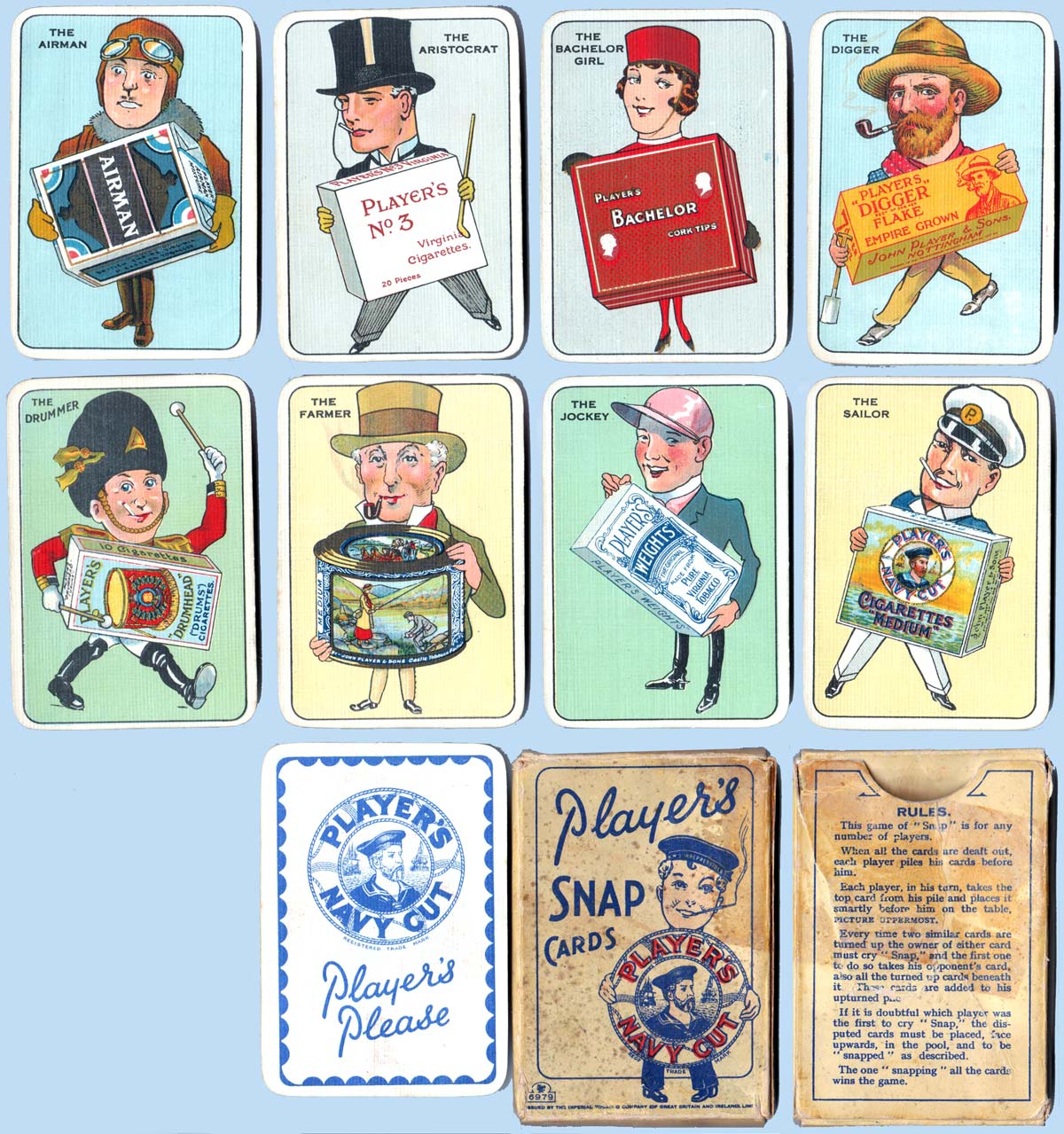
Sales incentives - from the collection of Rex Pitts
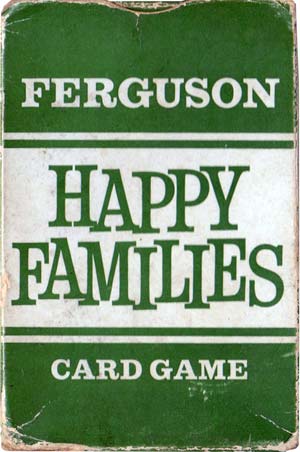
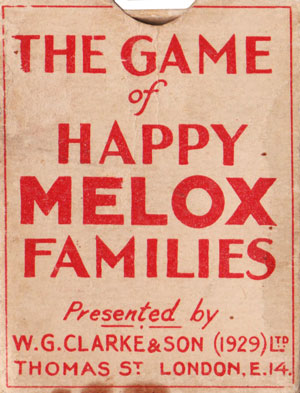
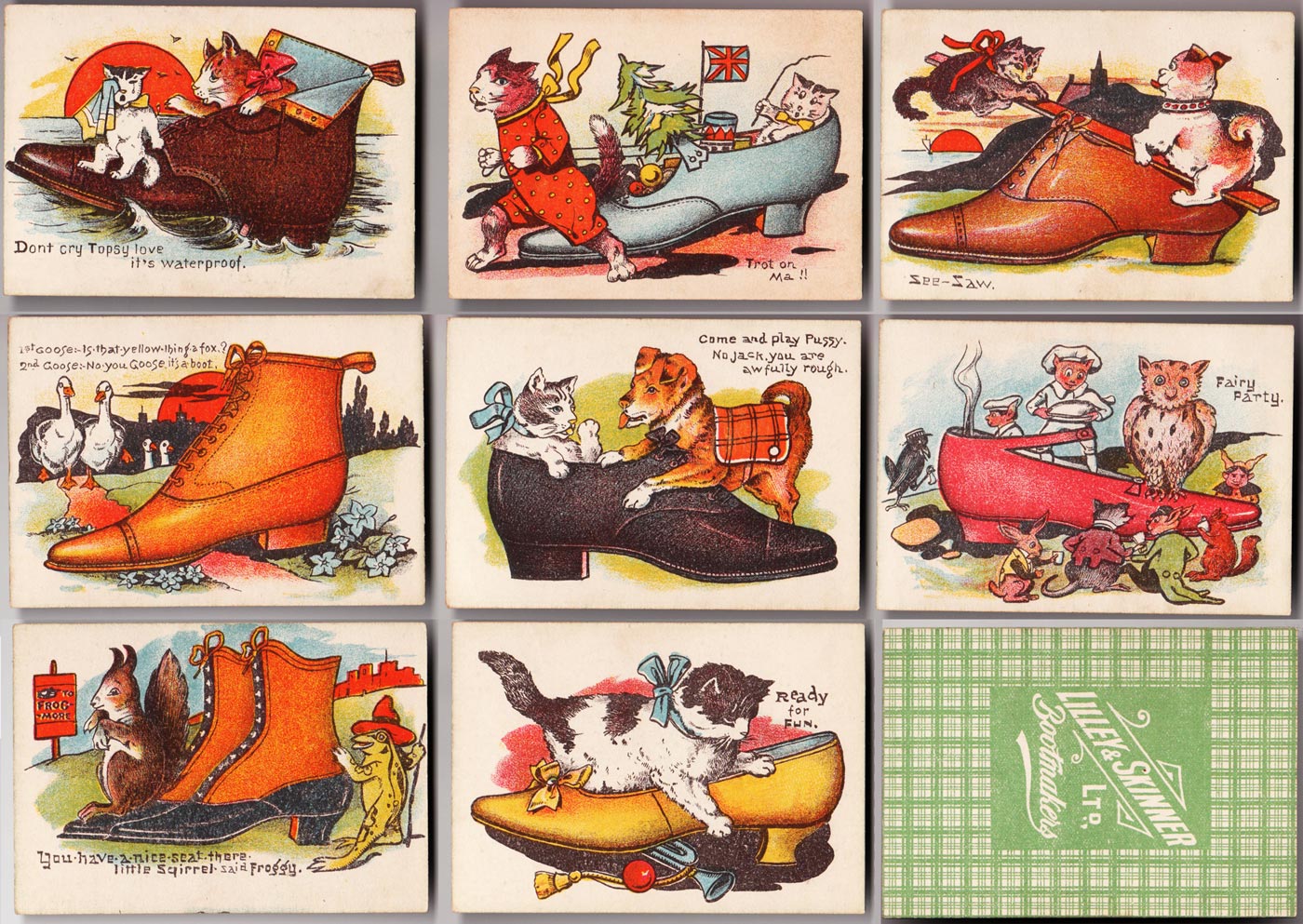
These packs sit at the overlap of cards, commerce and the small printed material made around play. They were often distributed as sales incentives, and the packaging itself – wrappers, labels and instructions – can be as informative as the cards, showing how a game was marketed, dated and intended to be used. For related articles, see ephemera and advertising.

By Simon Wintle
Spain • Member since February 01, 1996
I am the founder of The World of Playing Cards (est. 1996), a website dedicated to the history, artistry and cultural significance of playing cards and tarot. Over the years I have researched various areas of the subject, acquired and traded collections and contributed as a committee member of the IPCS and graphics editor of The Playing-Card journal. Having lived in Chile, England, Wales, and now Spain, these experiences have shaped my work and passion for playing cards. Amongst my achievements is producing a limited-edition replica of a 17th-century English pack using woodblocks and stencils—a labour of love. Today, the World of Playing Cards is a global collaborative project, with my son Adam serving as the technical driving force behind its development. His innovative efforts have helped shape the site into the thriving hub it is today. You are warmly invited to become a contributor and share your enthusiasm.

Activity for Standard and Non-standard Playing Cards
Sign in to comment or save this article.

Related Articles
Air Mauritius
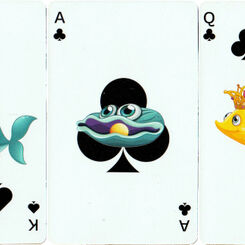
Nautical subjects aimed at a younger audience, promoting Air Mauritius.
Heartsette by Herbert Fitch & Co, 1893
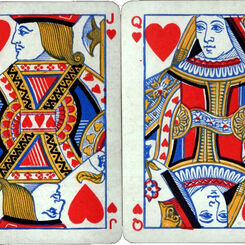
A glimpse into a busy print and design office in late Victorian London.
Gas Warm Homes
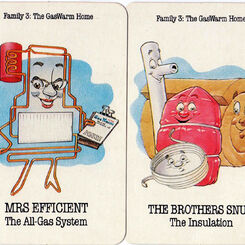
Gas Warm Homes Happy Families game published by British Gas, c.1980.
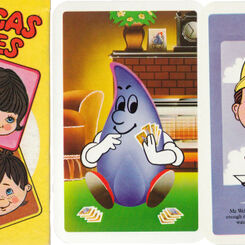
Happy Gas Families
Happy Gas Families published by British Gas, c.1985.
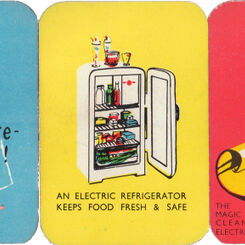
Electric Snap
Electric Snap by the South Wales Electricity Board, 1950s.
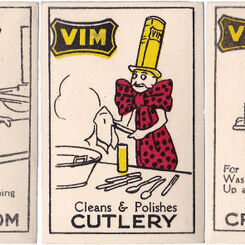
Lever Brothers miniatures
Two miniature card games promoting Vim Scouring Powder and Sunshine Soap, 1930s.
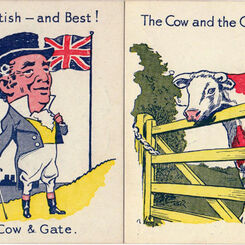
Cow & Gate ‘Snap’
Cow & Gate ‘Snap’ featuring Cow & Gate Baby Milk Food, 1935.
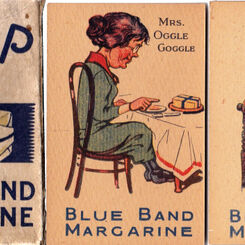
Blue Brand Snap Up
Blue Brand Snap Up published by Van den Berghs probably late 1920s.
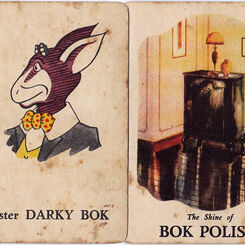
Mr Bok
The Merry Game of Mr Bok and his Happy Families, promoting Bok furniture polish, 1930s.
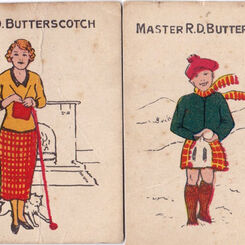
Parkinson’s Happy Families
Parkinson’s Happy Families published by Parkinson’s of Doncaster, confectioners established in the e...
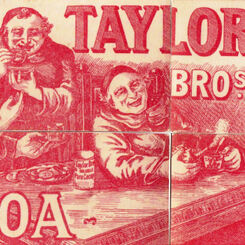
Adverto
Adverto card game published by Adverto Publishing Company of Stratford, London, c.1910.
Alphabetti Spaghetti
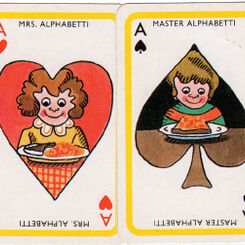
Alphabetti Spaghetti Happy Families game for Crosse & Blackwell c.1978.
56: Number cards and Chinese Crackers
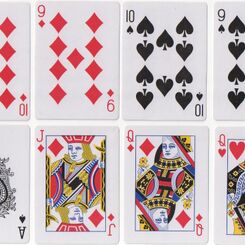
A brief look at the number cards used in standard English packs.
Children’s Vocabulary Cards
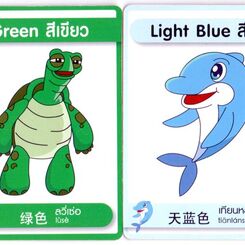
Thai Children’s Colour Vocabulary Cards promoting Ovaltine chocolate malt drink, 2016.
Lincard
“Lincard” card game invented by John William Wolf and patented in 1937.
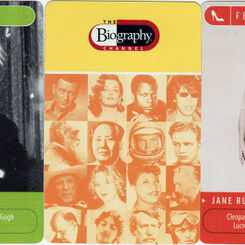
Biography Channel
The ‘Biography Channel Card Game’, 2002
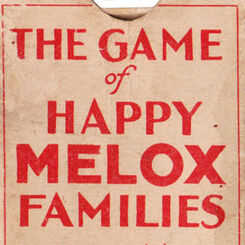
Happy Melox Families
The “Game of Happy Melox Families” was published by G. Clarke & Son of Thomas Street, London, in 192...
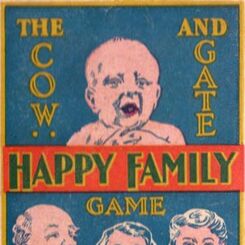
Cow & Gate Happy Family Game
Cow and Gate Happy Family game was issued around 1928 to promote nutrition products.
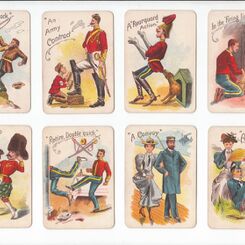
4: Some Card Games
Yet another strand of the playing card world is that of card games, packs of cards usually designed ...
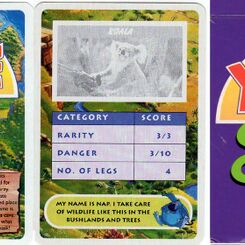
Yowie
Yowie Game Cards, a promotional item supplied by Cadbury Ltd and published by Kidcorp, c.1999.
Most Popular
Our top articles from the past 60 days


