


Standard French-suited Bavarian deck by Göbl
French-suited Bavarian deck by Andreas Benedict Göbl, late 18th c.
French-suited packs arrived rather later to Germany. 40 or 52-card packs like this are often identical in design to the minor cards of the earlier Animal tarots. Most of these single-ended court cards were based on some version of the French ‘Paris’ pattern (which were prohibited from use in France) and which also spread to Belgium, the Netherlands and influenced other Paris-derived patterns. Over time most of these became double-ended.
On the knave of clubs are the arms of Munich and the name "Andreas Benedictus Göbl".
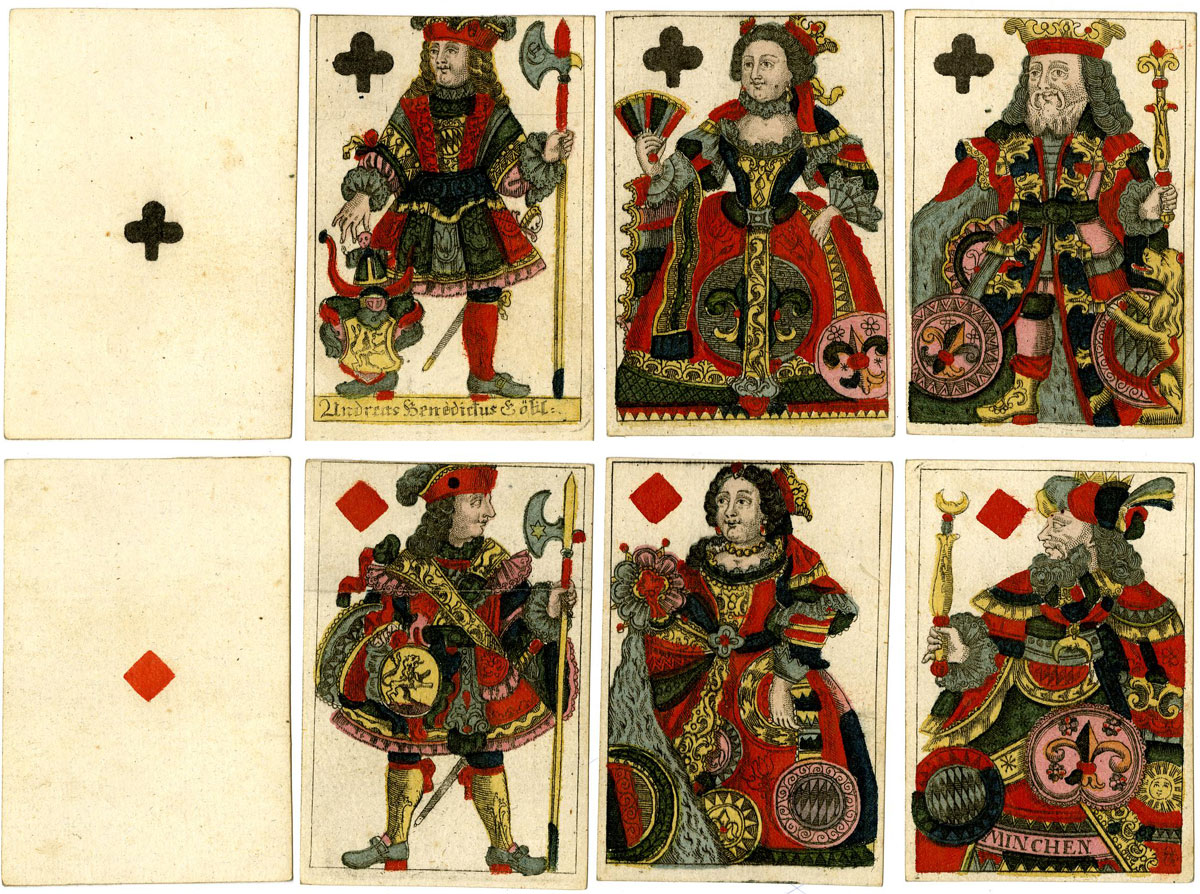
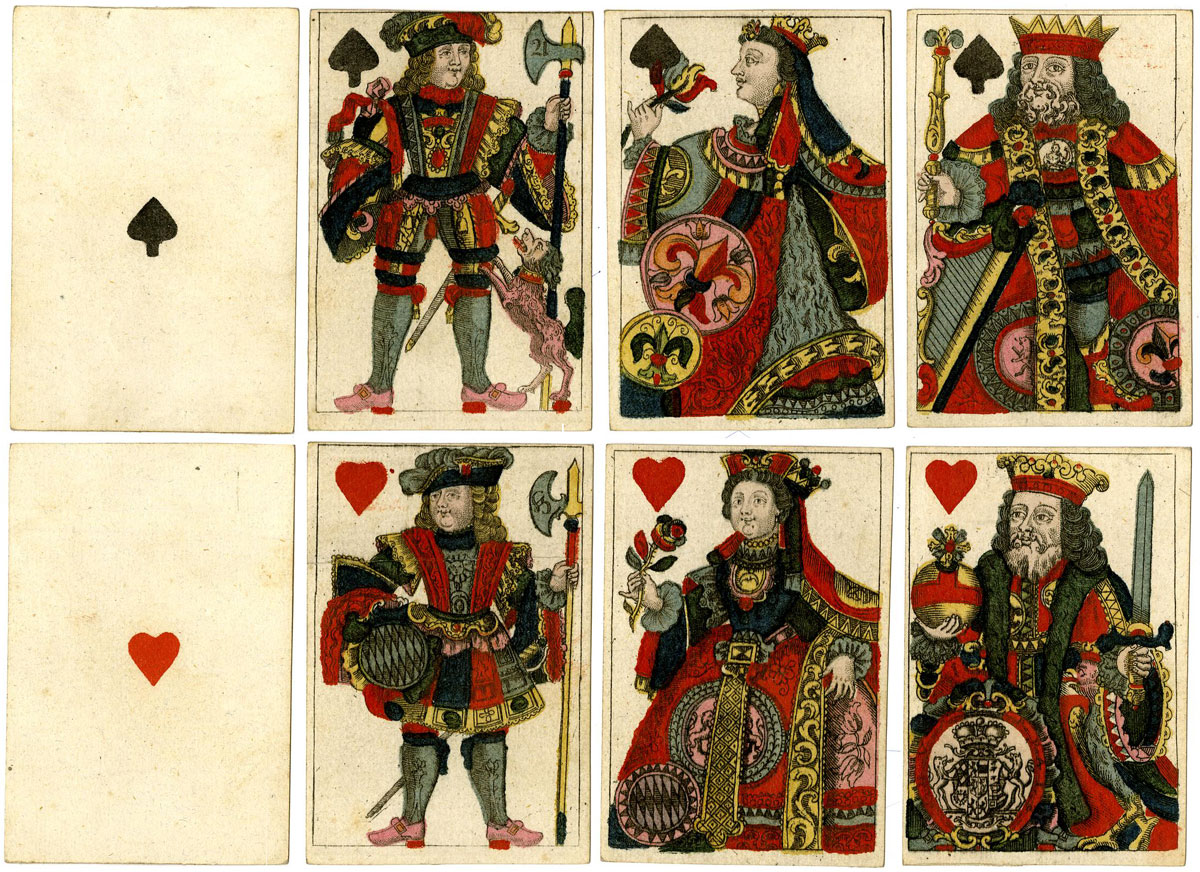
Above: standard French-suited Bavaian-type deck by Andreas Benedict Göbl, Munich, late 18th c. Hand-coloured etching, edges gilt, backs printed with a small diagonal pattern in pink, in original pasteboard case, late 18th Century. © The Trustees of the British Museum • Museum number 1896,0501.264►
The knave and queen of hearts and the queen and king of diamonds display the lozenges of the Bavarian badge; other heraldic motifs can be found including lions and fleur-de-lys. These designs influenced other European card makers and also became a legacy in the court figures of many French-suited tarot packs. See the case►
References
O’Donoghue, Freeman M: Catalogue of the collection of playing cards bequeathed by Lady Charlotte Schreiber, (German 275), Trustees of the British Museum, London, 1901 [digital version here]

By Simon Wintle
Spain • Member since February 01, 1996
I am the founder of The World of Playing Cards (est. 1996), a website dedicated to the history, artistry and cultural significance of playing cards and tarot. Over the years I have researched various areas of the subject, acquired and traded collections and contributed as a committee member of the IPCS and graphics editor of The Playing-Card journal. Having lived in Chile, England, Wales, and now Spain, these experiences have shaped my work and passion for playing cards. Amongst my achievements is producing a limited-edition replica of a 17th-century English pack using woodblocks and stencils—a labour of love. Today, the World of Playing Cards is a global collaborative project, with my son Adam serving as the technical driving force behind its development. His innovative efforts have helped shape the site into the thriving hub it is today. You are warmly invited to become a contributor and share your enthusiasm.

Activity for Standard French-suited Bavarian deck by Göbl
Sign in to comment or save this article.

Related Articles
Animal Tarot by Andreas Benedict Göbl
French-suited Animal Tarot deck produced by Andreas Benedict Göbl, Munich.
Illustrated piquet cards
Bavarian piquet cards with oriental illustrations produced by Andreas Benedict Göbl, Munich, late 18...
Most Popular
Our top articles from the past 60 days


