


Charles Bartlet
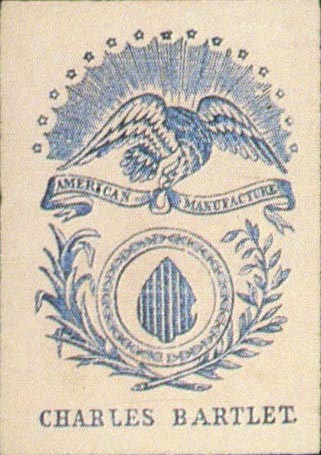
Elaborate court cards on a deck by Charles Bartlet, Philadelphia, (who was in fact Samuel Hart) c.1845-60. The pip cards are double-ended. The date may be somewhere between c.1845-65.
Playing cards by Charles Bartlet, Philadelphia
Charles Bartlet has been shown to be Samuel Hart, who was attempting to trade on the good reputation of Caleb Bartlett, who had recently ceased production, and to capture a share of the market. The courts are in the old style possibly to preserve a loyal following. Bartlet’s address in Philadelphia was the same as Harts’s in 1846-48.
The back design on this Charles Bartlet deck appears to be inspired by the work of the English card back designer, Owen Jones (1809-1874), who commenced working for De la Rue (London) in 1844 and who also produced designs for Lawrence & Cohen. The date may be somewhere between c.1845-65, when single-ended courts were still in use, while double ended numeral cards were being introduced.
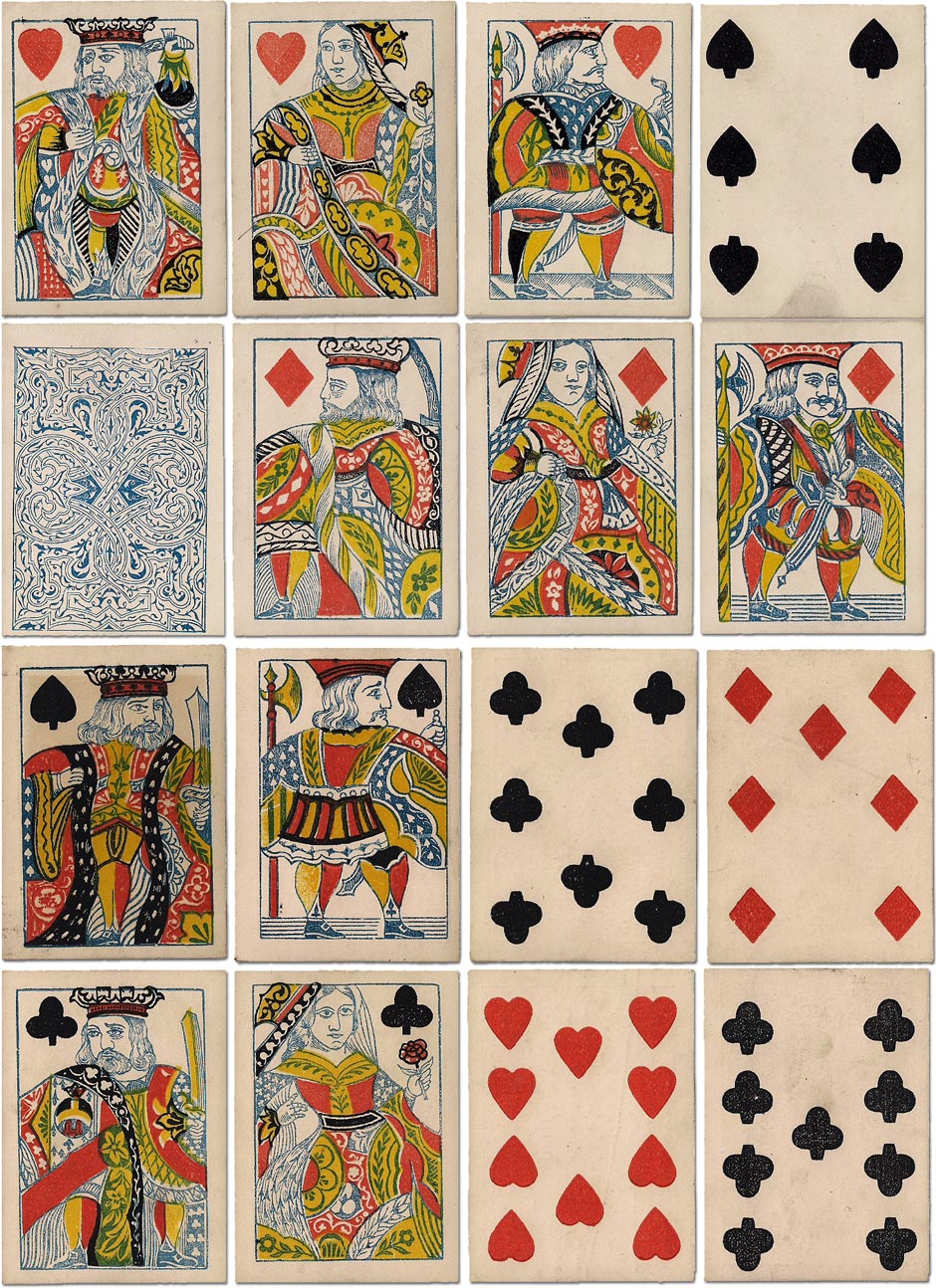
Above: very elaborate single-ended court cards on a deck by Charles Bartlet, Philadelphia, (who was in fact Samuel Hart) c.1845-60. The pip cards are double-ended. Although the court cards are printed in blue outlines, they also contain black areas. Examples have been seen with gold edges. Images courtesy Rod Starling and Michael J. Morrissey.
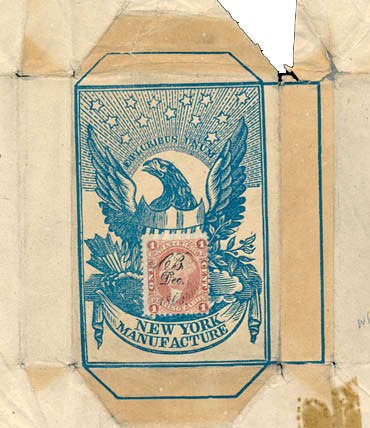
Above: a Bartlet wrapper with a script style cancel on the revenue stamp, which is identical in style to the contemporaneous Hart cancels. Notice it denotes New York manufacture. Probably a bold-faced lie. While Hart had a sales office in New York, his principal offices were in Philadelphia. This was probably just one more attempt to capitalize on the goodwill of Caleb Bartlett of New York. Image and notes courtesy Michael J. Morrissey.
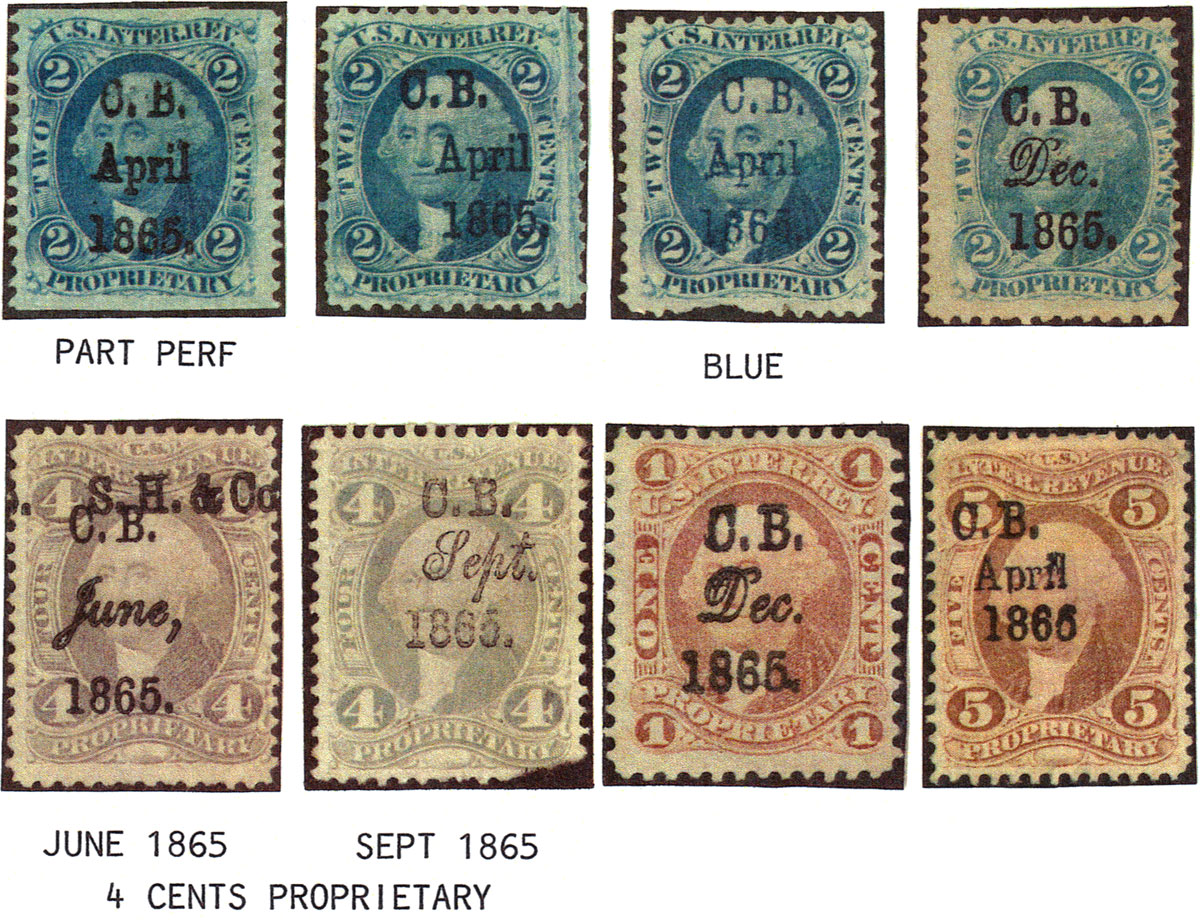
Click image to zoom
Above: Charles Bartlet revenue stamps for the years 1865 and 1866, plus a Samuel Hart stamp with C.B. overprinted dated June 1865. In 1866 Hart ordered a private die revenue stamp and no longer used the government die with his distinctive precancels. This was made feasible by the regularization of the tax to a flat 5c per pack of 52 cards irrespective of the retail price. Image and notes courtesy Michael J. Morrissey.
REFERENCES
Dawson, Tom & Judy: The Hochman Encyclopedia of American Playing Cards, U.S. Games Systems Inc., 2000
NOTE: As has been previously noted, two card manufactures with similar names produced cards in the mid 19th century. That similarity of names, Caleb Bartlett, who produced cards from 1830 to 1850 and Charles Bartlet, a pseudonym of Samuel Hart, can be the cause of some confusion when trying to affix the correct attribution to certain decks by either maker. Our listing for the Ackerman deck is a case in point. It was initially and erroneously attributed to Charles Bartlett. Card collectors should take note of the fact that the name Charles Bartlet is spelled with only one letter “T” while the name Caleb Bartlett is spelled with two letter “T’s”. The names of either maker are sometimes found on the Ace of Spades but in the case of Caleb Bartlett, his initials, C.B., are cleverly hidden on each court card, a feature that can aid in identification (from Rod Starling).

By Rod Starling (1936-2023)
United States • Member since January 09, 2013
Rod Starling was one of the founding members of the 52 Plus Joker card collectors club. He authored many articles for the club's quarterly newsletter, Clear the Decks. His collection encompasses both foreign and American decks. Rod also authored a book titled The Art and Pleasures of Playing Cards.

Activity for Charles Bartlet
Sign in to comment or save this article.

Related Articles
Mohegan Sun playing cards
Mohegan Sun playing cards published by Gemaco for Mohegan Sun casino.
75: Early American cards
An overview of some of the early cards made in the United States.
Old West Guns
Old West Guns playing cards containing information about firearms from the Old West, USA.
Bicycle Negro League Baseball Museum
Bicycle Negro League Baseball Museum souvenir playing cards, USA, 2012.
Amusements and Attractions
‘Amusements and Attractions’ playing cards showing the fun and excitement of America’s amusement par...
American Civil War playing cards
American Civil War centennial playing cards designed by Teodoro N. Miciano and published by Fournier...
The Liberty Deck
Portraits, signatures and brief biographies of the 56 men who signed the Declaration of Independence...
Wild West playing cards
Famous lawmen, gamblers, outlaws and others from the American Wild West.
Roundup
Roundup card game by Whitman Publishing, 1951.
State Historical Society of Wisconsin
Souvenir deck from the State Historical Society of Wisconsin containing photographs from museum coll...
Southern Pacific Souvenir
Southern Pacific Souvenir of the Golden West playing cards - Sunset, American Canyon and Shasta Rout...
McDonald’s Playing Cards
McDonald’s playing cards by the United States Playing Card Co., Cincinnati, c.1997
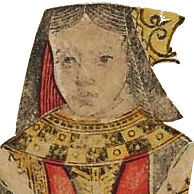
Globe Card Company
“Globe Playing Cards” patented on Oct. 6, 1874 by I. N. Richardson.
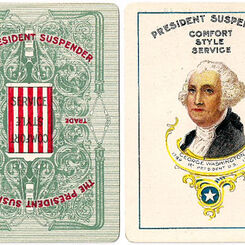
President Suspender
An historic American advertising deck for the C. A. Edgarton Mfg Company, manufacturers of the Presi...
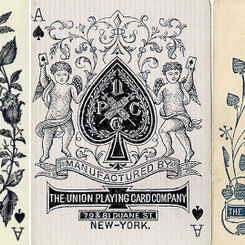
Union Playing Card Co.
Not much is known about this early manufacturer who is reckoned to have traded between c.1860s-1890s...
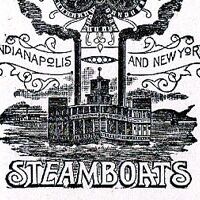
The Steamboat Brand
The theme of steamboats navigating up and down the Mississippi also extended to the cotton plantatio...
Steamboats No.99
Steamboats No.99 was one of a number of brands produced by the American Playing Card Co. of Kalamazo...
Andrew Dougherty c.1850
The idiosyncratic courts used in this deck were used by several other U.S. manufacturers, including ...
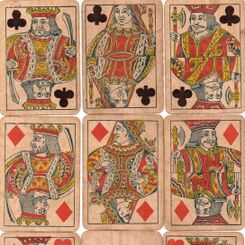
13: Some North American Cards
I deal with some of the US makers in more detail on other pages, but here is a brief introduction.
Samuel Hart, 1846-1871
Samuel Hart was a prolific manufacturer of playing cards who commenced business sometime around 1845...
Most Popular
Our top articles from the past 60 days


