


Gibson, Hunt & Son
Gibson originally took over the business of Blanchard in 1769. Gibson & Hunt operated briefly and were followed by various successors.
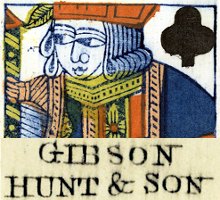

Gibson Hunt & Son, 1801-1803
29 Piccadilly, London
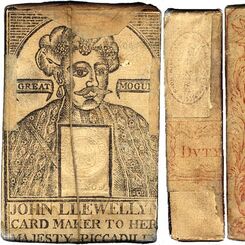
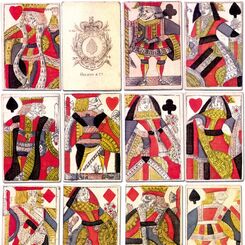
Gibson originally took over the business of Blanchard in 1769. Gibson & Hunt see Mogul wrapper operated briefly (1801-1803) and were followed successively by Hunt & Son (1804-1821), Hunt & Sons (1821-1840), Hall (& Son), Hall & Bancks and finally Bancks Brothers (1841-1889). The standard English court card male figures have curly, one-sided moustaches and details in the clothing and design are typical from this period, i.e. c.1800-c.1810.
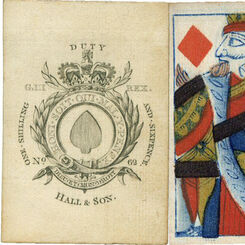
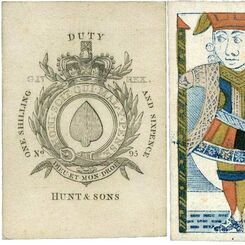
Left: 'Garter' Ace of Spades (click to zoom). There were several variations in the name on Aces of Spades around this time, and the son seems to have joined the firm in 1803/04. The backs of the cards are plain white. • See Hunt & Son Exportation ace
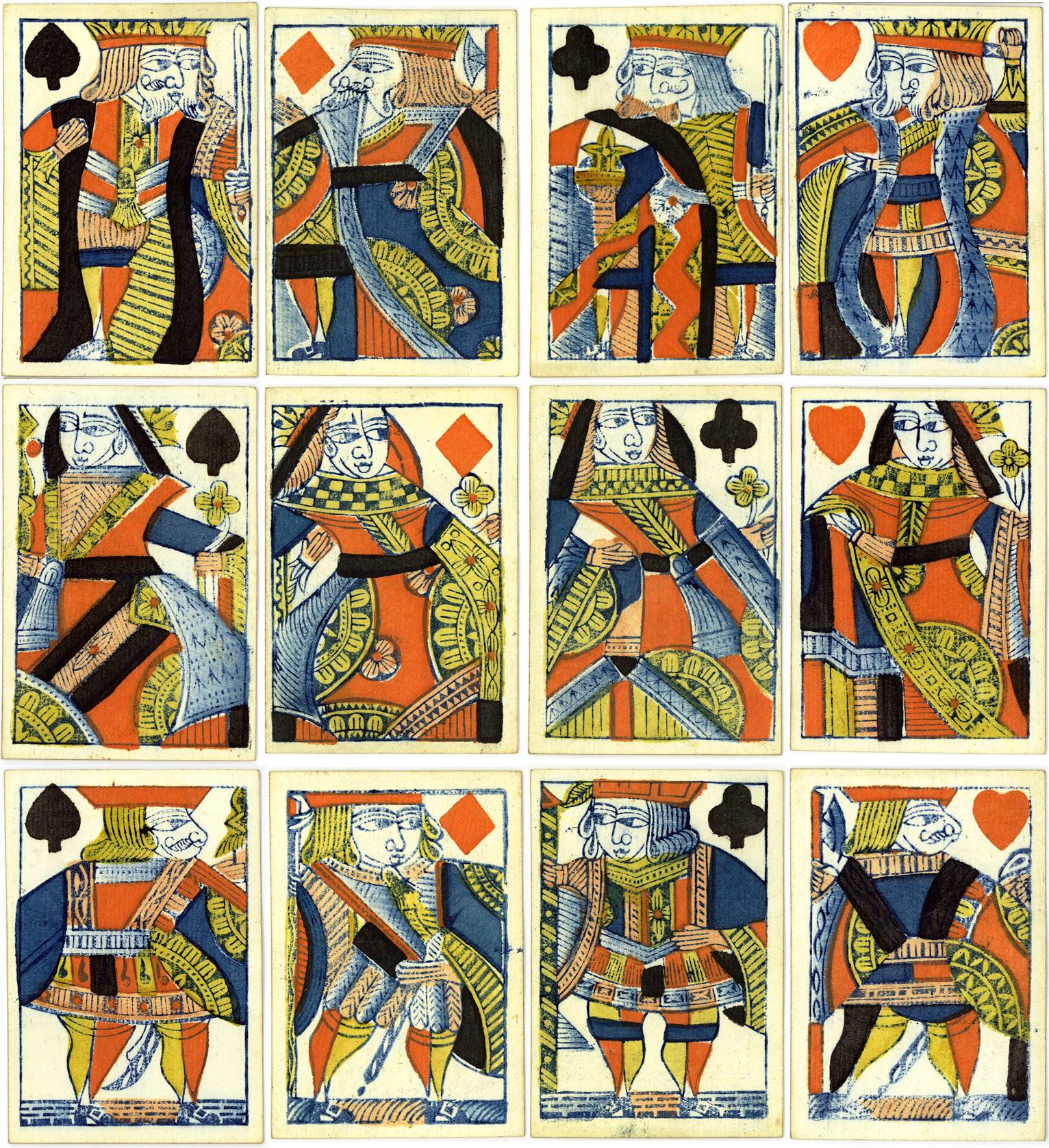
Above: Images courtesy Charles Flisher.
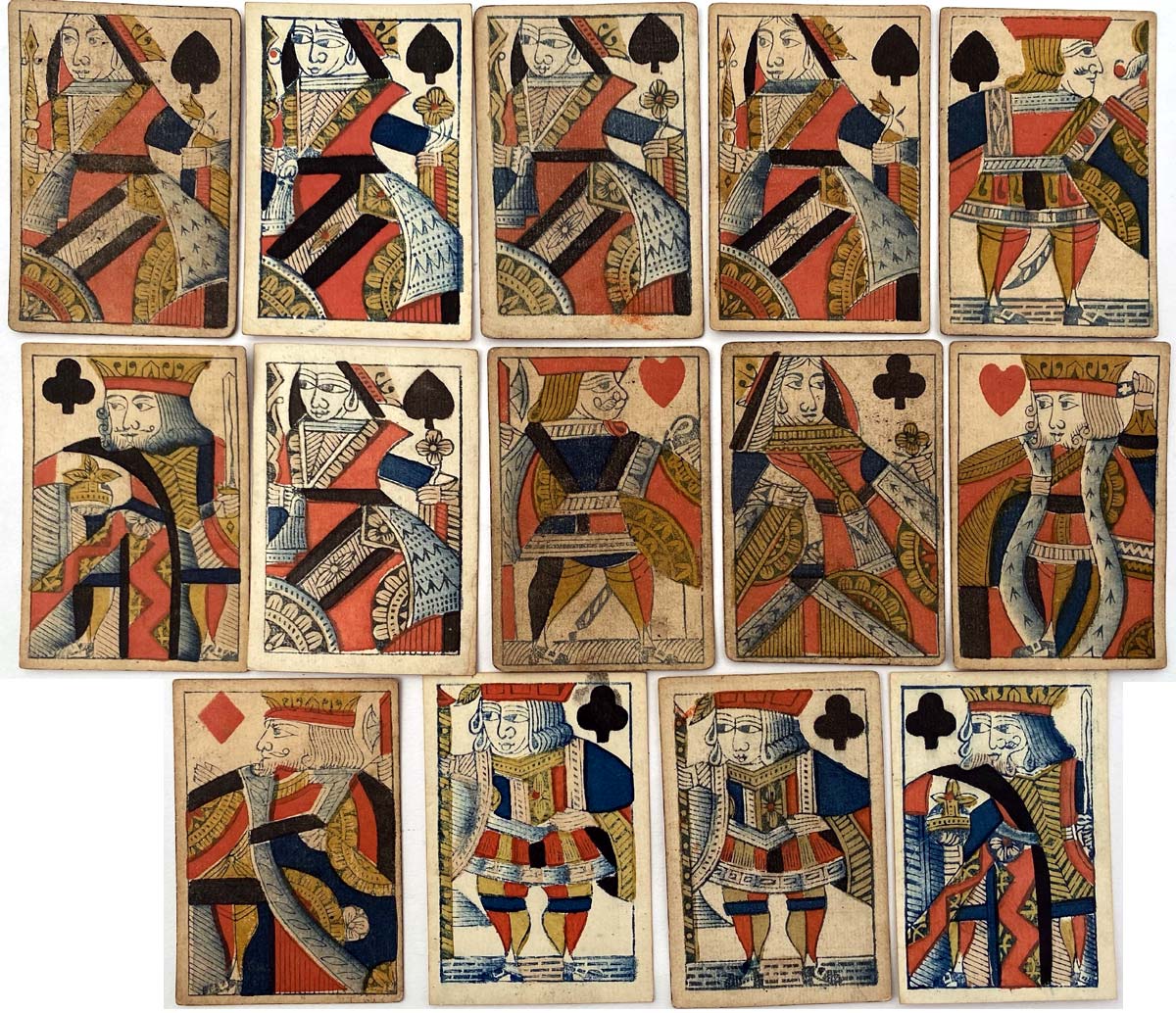
Above: assorted loose cards from different packs of the same period. Image courtesy Scott Gould.
Reference: Lodge, Ken: The Standard English Pattern (second revised and enlarged edition), Bungay, Suffolk, 2010

By Simon Wintle
Spain • Member since February 01, 1996 • Contact
I am the founder of The World of Playing Cards (est. 1996), a website dedicated to the history, artistry and cultural significance of playing cards and tarot. Over the years I have researched various areas of the subject, acquired and traded collections and contributed as a committee member of the IPCS and graphics editor of The Playing-Card journal. Having lived in Chile, England, Wales, and now Spain, these experiences have shaped my work and passion for playing cards. Amongst my achievements is producing a limited-edition replica of a 17th-century English pack using woodblocks and stencils—a labour of love. Today, the World of Playing Cards is a global collaborative project, with my son Adam serving as the technical driving force behind its development. His innovative efforts have helped shape the site into the thriving hub it is today. You are warmly invited to become a contributor and share your enthusiasm.

Related Articles
Hall & Son
Hall & Son
John Llewellyn, playing card manufacturer, London, 1778-1785
John Llewellyn, playing card manufacturer, London, 1778-1785

Denbro (Denny Brothers)
Denbro (Denny Brothers) c.1975-79
Hunt & Sons, 1820-1849
Hunt & Sons (1820-1849) was the first maker to modernise the court card designs with a complete re-d...
Hunt, 1790-1801
Packs manufactured by Hunt, c.1800.
Gibson & Co., c.1770
Standard English playing cards manufactured by Gibson & Co., c.1770.

Reynolds non-standard
Sometime around c.1850 Reynolds & Sons produced this non-standard or variant pack with courts inspir...
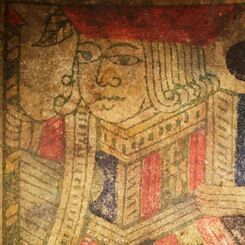
Reynolds c.1809-1885
Joseph Reynolds had been producing playing cards in the traditional method since c.1809.

Games & Print Services
Games & Print Services Limited, of Canvey Island, now part of Cartamundi.
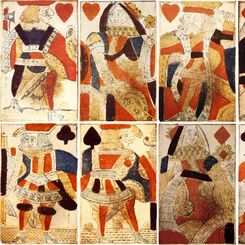
Hunt, c.1800
Standard English pattern playing cards manufactured by Hunt, c.1800.

Playing cards in Wales - Welsh playing cards
Whereas the distinctiveness of Wales is an important resource contributing to the rich texture of va...
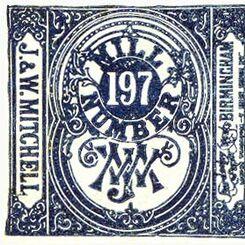
J & W Mitchell, Birmingham
This rare Victorian manufacturer made standard English playing cards for a short period during the l...
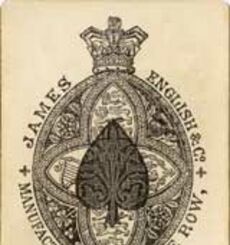
James English & Co.
Victorian Playing Cards manufactured by James English & Co., London, c.1875
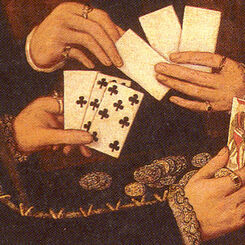
History of English Playing Cards & Games
The History of English Playing Cards dates probably from the mid 15th century
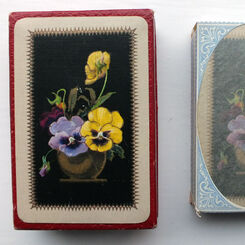
Waddington’s “Envoy“ Series
Waddington’s “Envoy“ Series.

Waddington’s Classic and Wildlife Series, 1933
Waddington’s Classic and Wildlife Series, 1933.
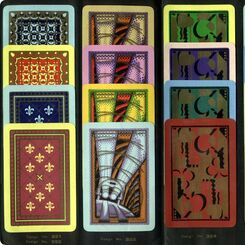
Waddington’s Varsity Series
Waddington’s Varsity Series.
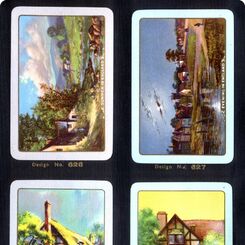
Waddington’s “Rural England” Series, 1933
Waddington’s "Rural England" Series, 1933.
Waddington’s Old Master Series, 1933
Waddington’s Old Master Series, 1933

W. H. Willis & Co
Willis & Company was formed in 1869, having been preceded by Charles Steer at the same address (80 L...
Most Popular
Our top articles from the past 60 days


