


John Llewellyn, playing card manufacturer, London, 1778-1785
John Llewellyn, playing card manufacturer, London, 1778-1785
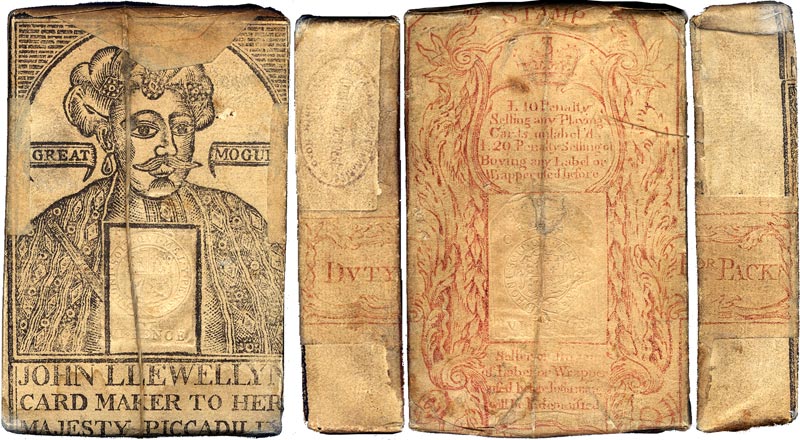
 ohn Llewellyn was a playing card manufacturer active between the years 1778-1785. During this period he traded at No. 25 Piccadilly, London. The image above shows an unopened pack of Great Mogul playing cards, in it's original wrapper, still bound with the string and showing the embossed tax stamps. 'Her majesty' would have been Queen Charlotte, wife of George III. It is not known whether John Llewellyn was a Welshman, or a descendant of a Welsh family who had moved away, but it seems likely. His name is not in the list of liverymen of The Worshipful Company of Makers of Playing Cards nor does it appear in British Library records. Little is known about him.
Right: ‘Garter’ Ace of Spades by Llewellyn, from the reign of King George III →
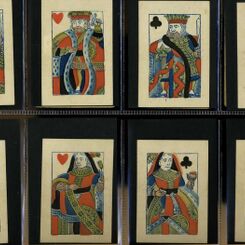
The corresponding court cards are shown below. Images courtesy Ken Lodge.
Hall took over the address (and the business?) in 1785.
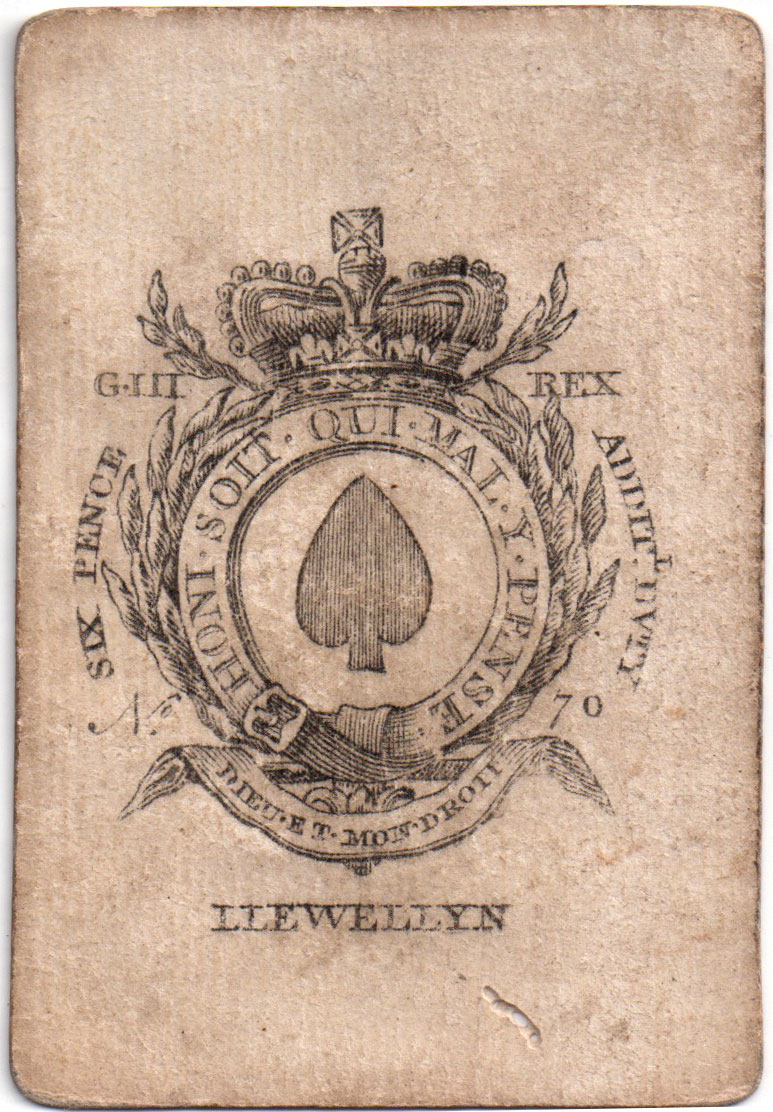
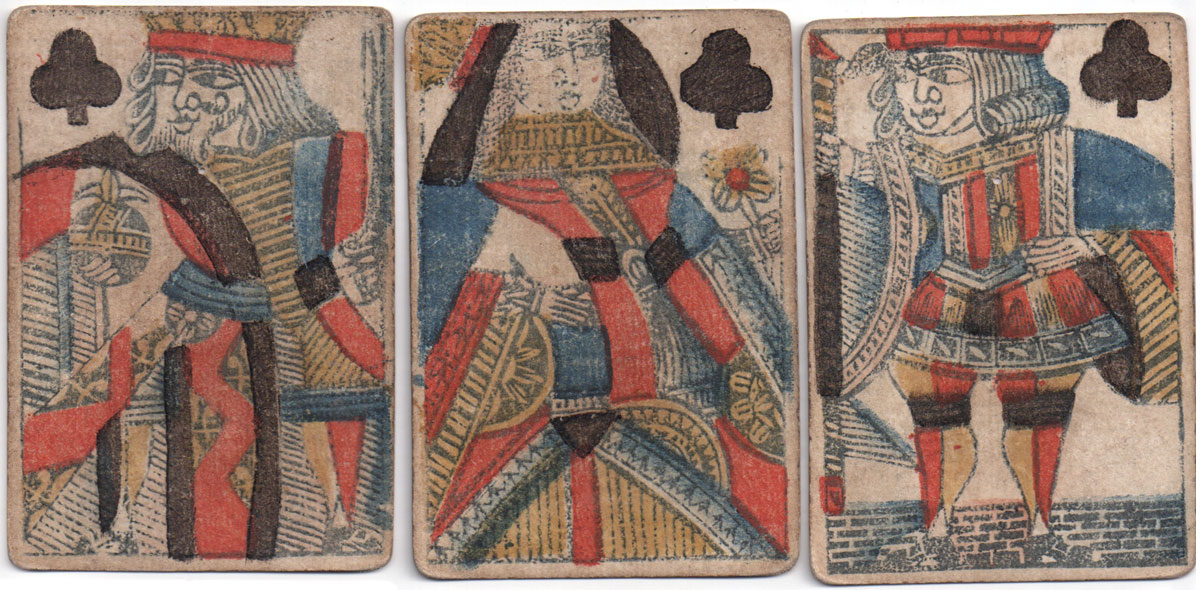
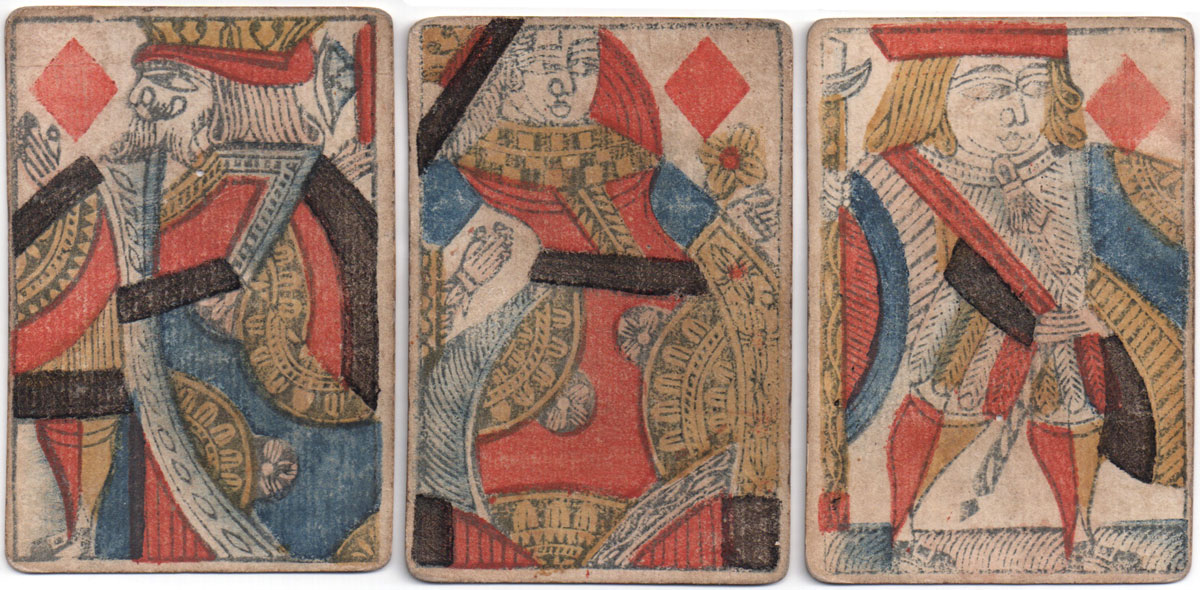
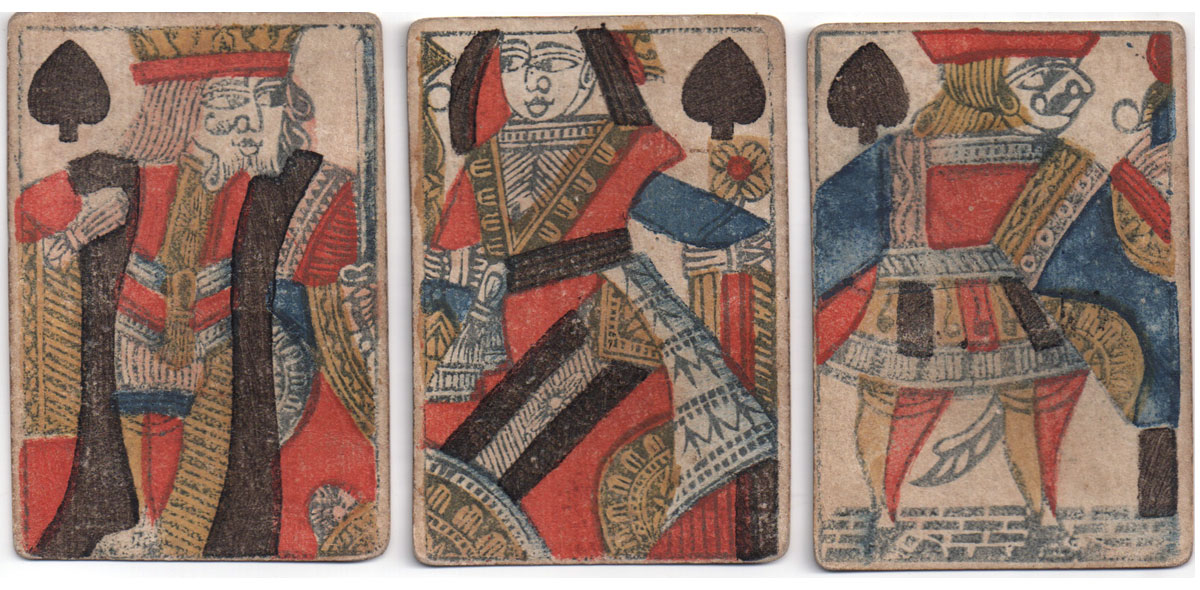
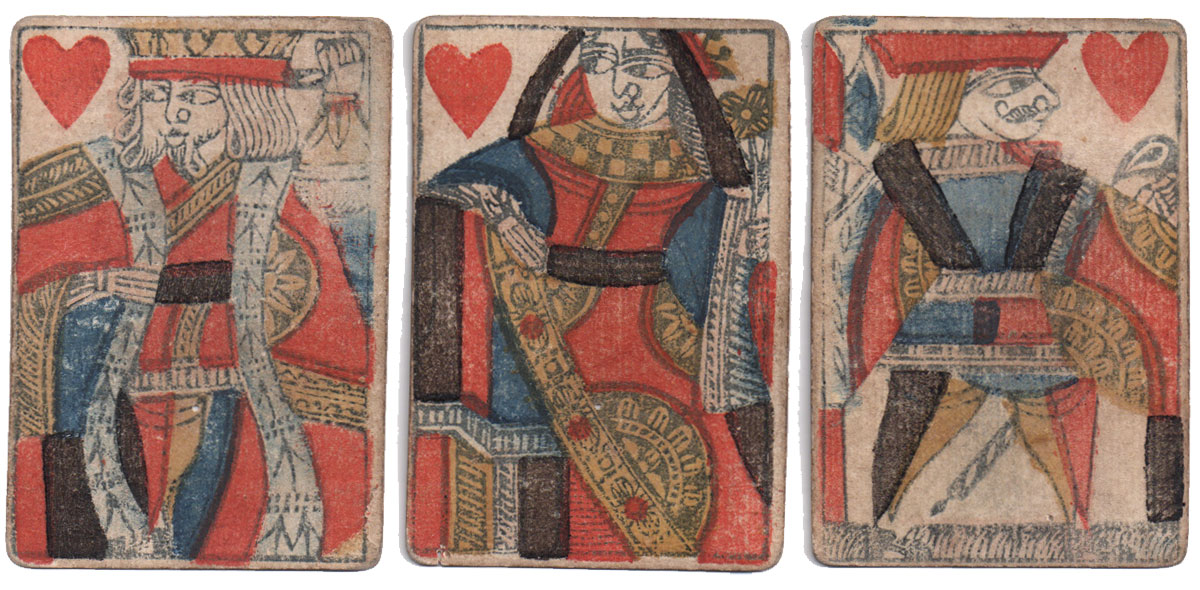
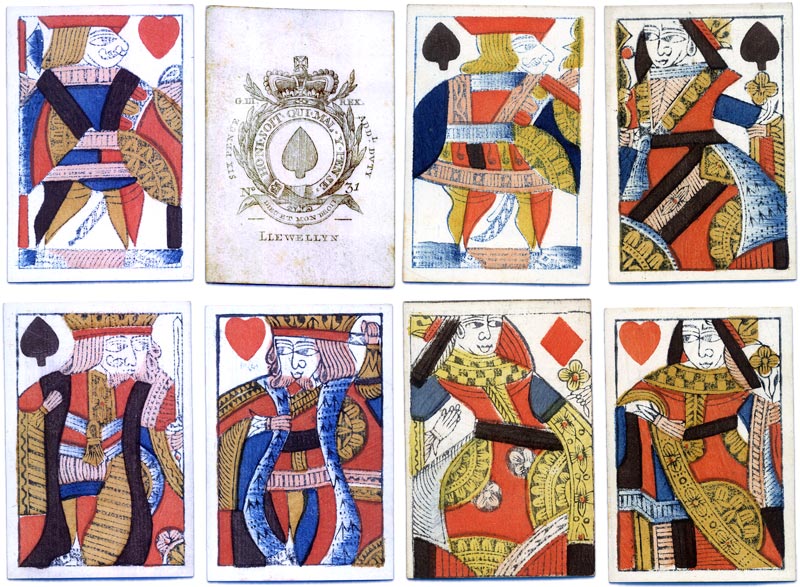
Above: the ace of spades has "six pence addl. duty" printed around the sides, which was valid from 1776-1789. The court cards are printed from woodblocks and coloured using a brush and stencils. The court card designs and ace of spades are completely standard English pattern and there is no suggestion or concession towards Welsh nationality. Some of the court cards are not stylistically consistent (eg queen of diamonds) but resemble those made by other manufacturers (i.e. Gibson/Hunt) as woodblock makers were freelance and supplied more than one customer.

By Simon Wintle
Spain • Member since February 01, 1996
I am the founder of The World of Playing Cards (est. 1996), a website dedicated to the history, artistry and cultural significance of playing cards and tarot. Over the years I have researched various areas of the subject, acquired and traded collections and contributed as a committee member of the IPCS and graphics editor of The Playing-Card journal. Having lived in Chile, England, Wales, and now Spain, these experiences have shaped my work and passion for playing cards. Amongst my achievements is producing a limited-edition replica of a 17th-century English pack using woodblocks and stencils—a labour of love. Today, the World of Playing Cards is a global collaborative project, with my son Adam serving as the technical driving force behind its development. His innovative efforts have helped shape the site into the thriving hub it is today. You are warmly invited to become a contributor and share your enthusiasm.

Activity for John Llewellyn, playing card manufacturer, London, 1778-1785
Sign in to comment or save this article.

Related Articles
Karl Gerich No. 25: “Great Mogul”
'Great Mogul' branded playing cards designed and produced by Karl Gerich.
Playing Cards: A Secret History
Playing Cards: A Secret History
71: Woodblock and stencil: the hearts
A presentation of the main characteristics of the wood-block courts of the heart suit.
70: Woodblock and stencil : the spade courts
This is a presentation in a more straight forward fashion of the work done by Paul Bostock and me in...
60: Some less common Goodall packs, 1875-95
There are some interesting packs from Goodall in the last quarter of the 19th century.
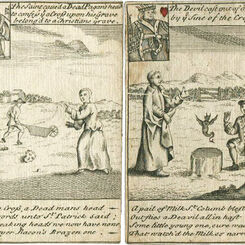
Illustrated Playing Cards, c.1740
Illustrated playing cards featuring comical engravings and rhymes about saints, c.1740.
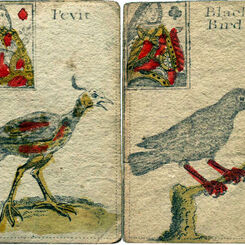
Forrest Cards, c.1750s
Hand-coloured Forrest Cards produced for “Young Gentlemen & Ladys who are Lovers of Ingenuity”, c.17...
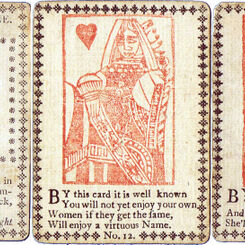
Fortune Telling playing cards
English Fortune Telling cards probably published c.1770.
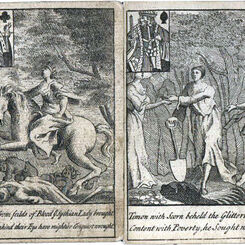
Delightful Cards, c.1723
Delightful Cards, containing variety of entertainment for young Ladies and Gentlemen c.1723.
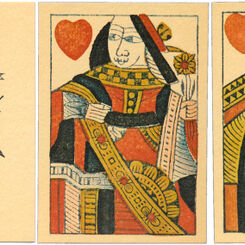
I. Hardy facsimile
Facsimile edition of 19th century I. Hardy Exportation deck complete with reproduction tax wrapper, ...
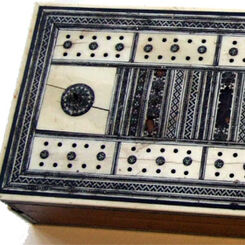
Cribbage Board Collection part 2
A collection of antique and vintage Cribbage Boards by Tony Hall, part 2
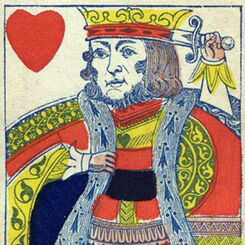
Suicide King
The King of Hearts, holding a sword behind his head, is sometimes nicknamed the “Suicide King”. He c...
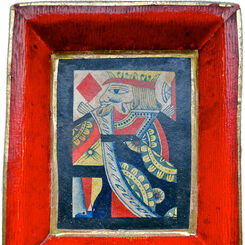
Pope Joan Trays
Some traditional Pope Joan boards comprise a circular tray, others are square, divided into sections...
19: 19th Century Breaks with Tradition - Unusual versions of the Standard English Pattern
The centuries-long tradition of English court cards was subject to misinterpretation and in some cas...
Gibson, Hunt & Son
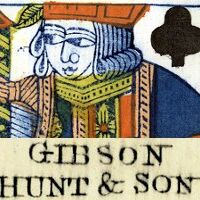
Gibson originally took over the business of Blanchard in 1769. Gibson & Hunt operated briefly and we...
Reynolds c.1809-1885
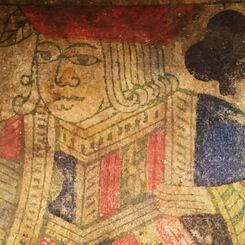
Joseph Reynolds had been producing playing cards in the traditional method since c.1809.
The History of Playing Cards
Playing cards appear in European records in the late 14th century, but their earlier history lies fu...
History of Court Cards
The court cards in English packs of playing cards derive from models produced by Pierre Marechal in ...
History of English Playing Cards & Games
The History of English Playing Cards dates probably from the mid 15th century
Early English Playing Cards
Early examples of traditional, standard English playing cards of which the best known are those of H...
Most Popular
Our top articles from the past 60 days


