


The Joker Card
The 'Joker' is believed to have been invented by American Euchre players who, when modifying the rules sometime during the 1860s, decided that an extra trump card was required.
... the ‘wild-card’, the card of opportunity
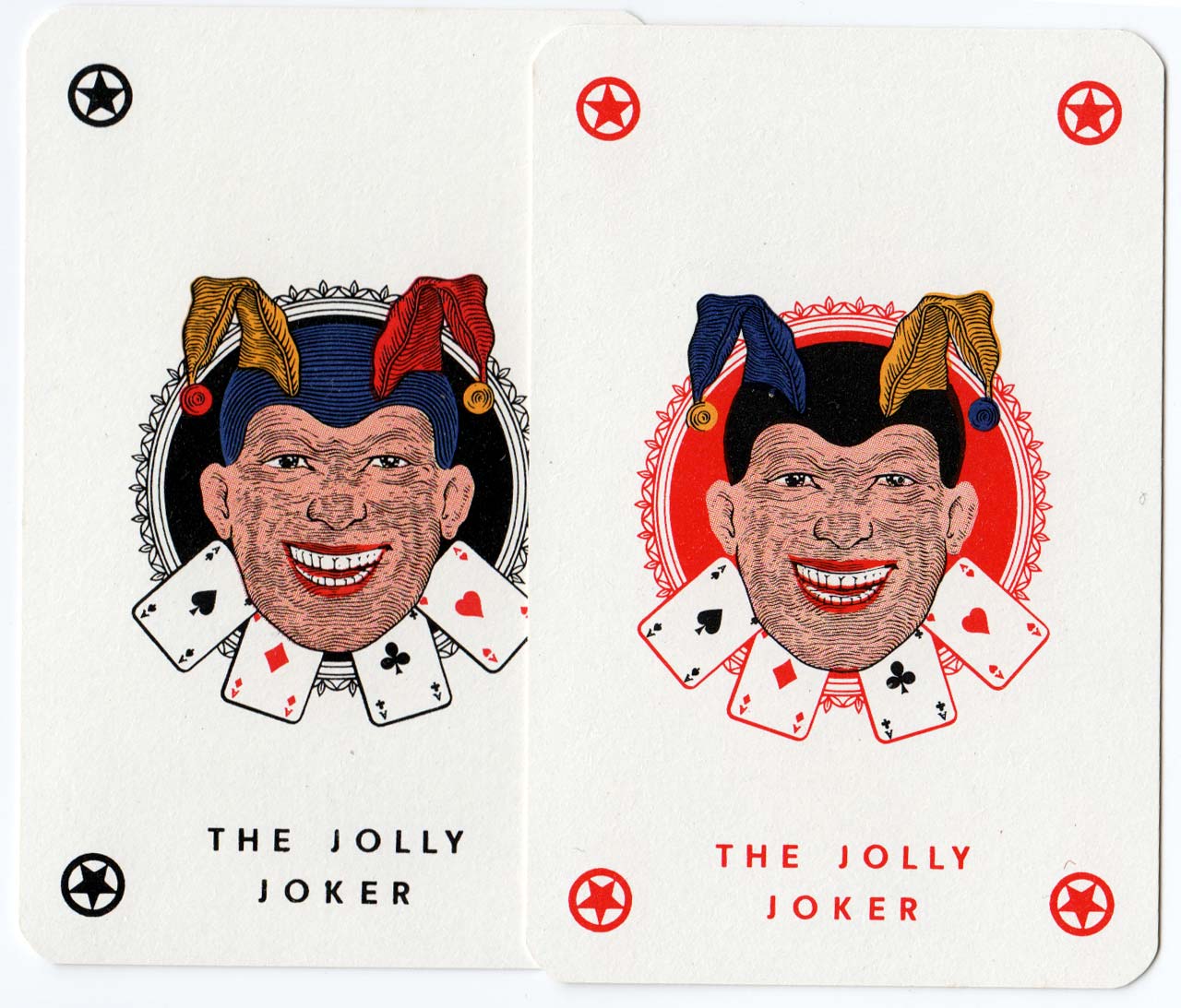
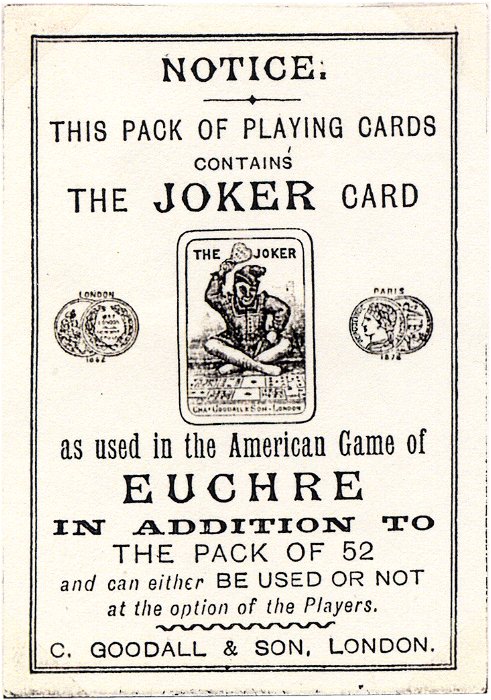 The extra “Joker” card is believed to have been invented by American Euchre players who, when modifying the rules sometime during the 1860s, decided that an extra trump card was required. Originally he was called “The Best Bower” and then later “The Little Joker” or “The Jolly Joker”. It was around this time that other innovations and improvements started to appear, such as rounded corners replacing square and various types of corner indices.
These Jokers, or extra cards, were first introduced into American packs around 1863, but took a little longer to reach English packs, in around 1880. One British manufacturer (Chas Goodall) was manufacturing packs with Jokers for the American market in the 1870s.
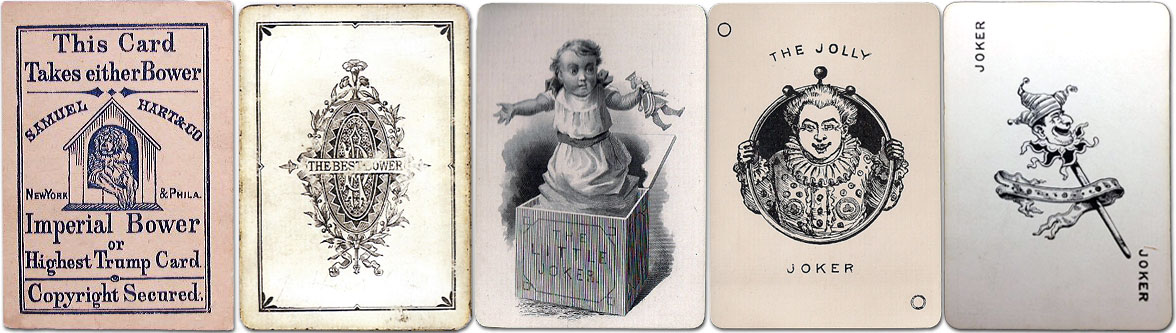
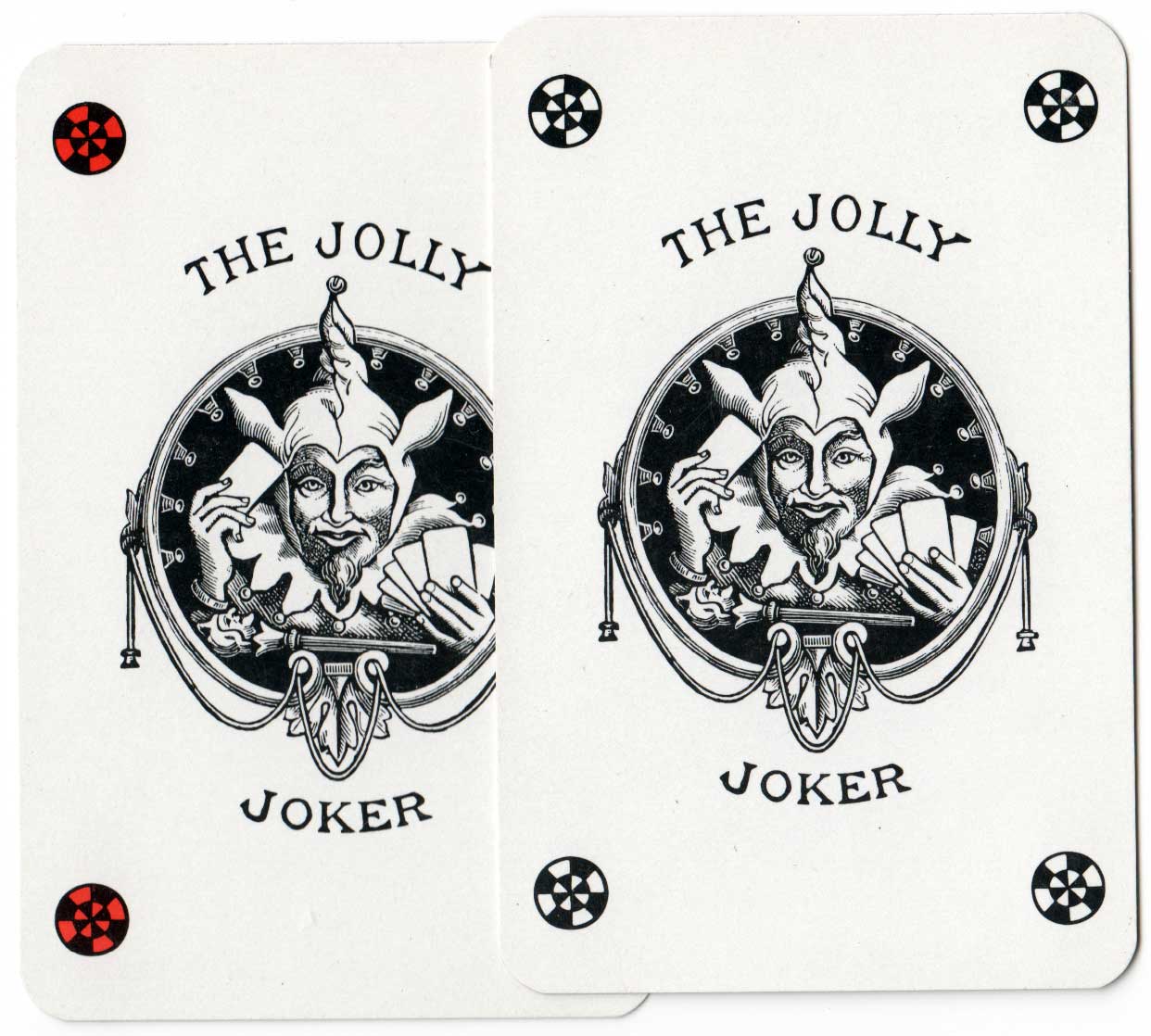
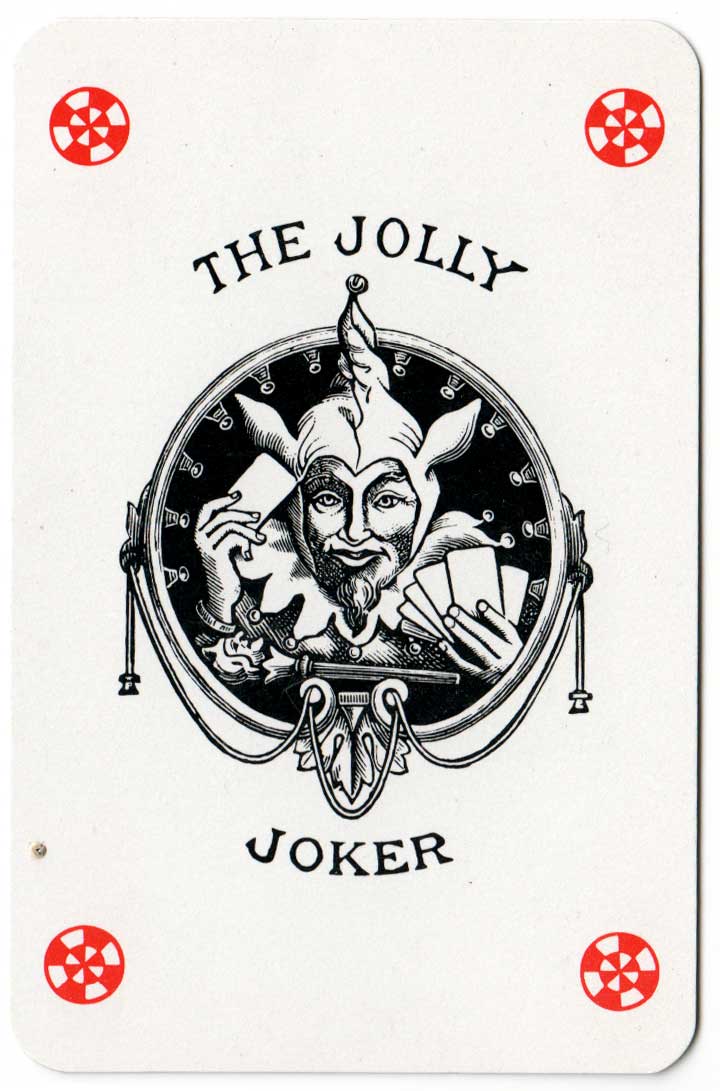
Above: early 'Bower' cards and Jokers by American manufacturers produced during the 1870s-1880s. Many of the images resemble clowns or jesters, not always ‘Jolly’; sometimes they appear slightly sinister!
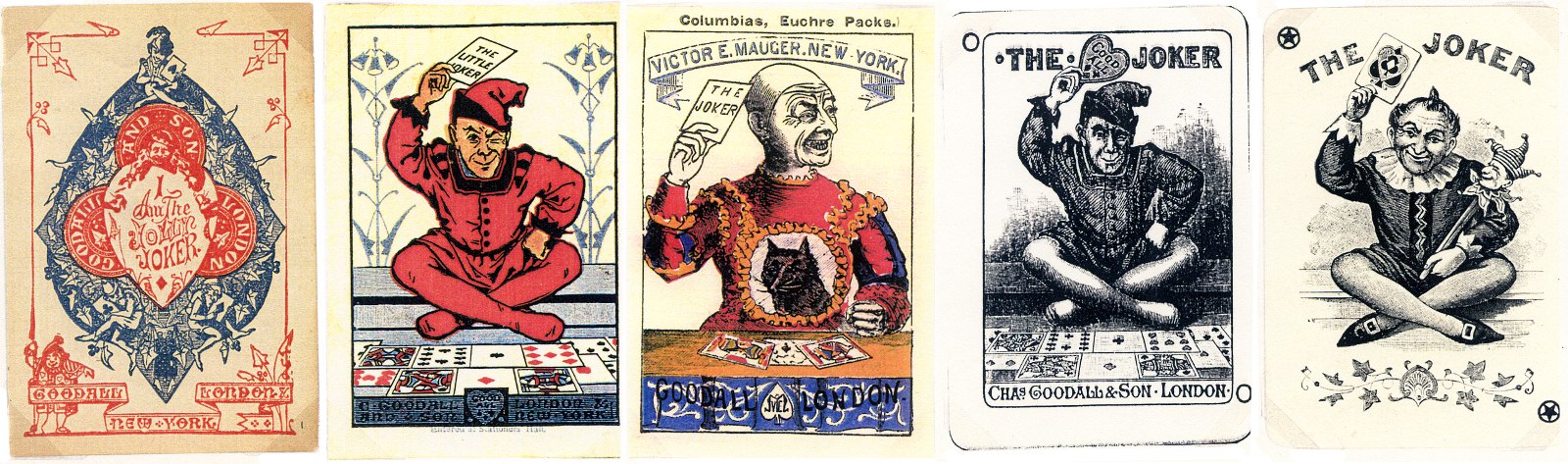
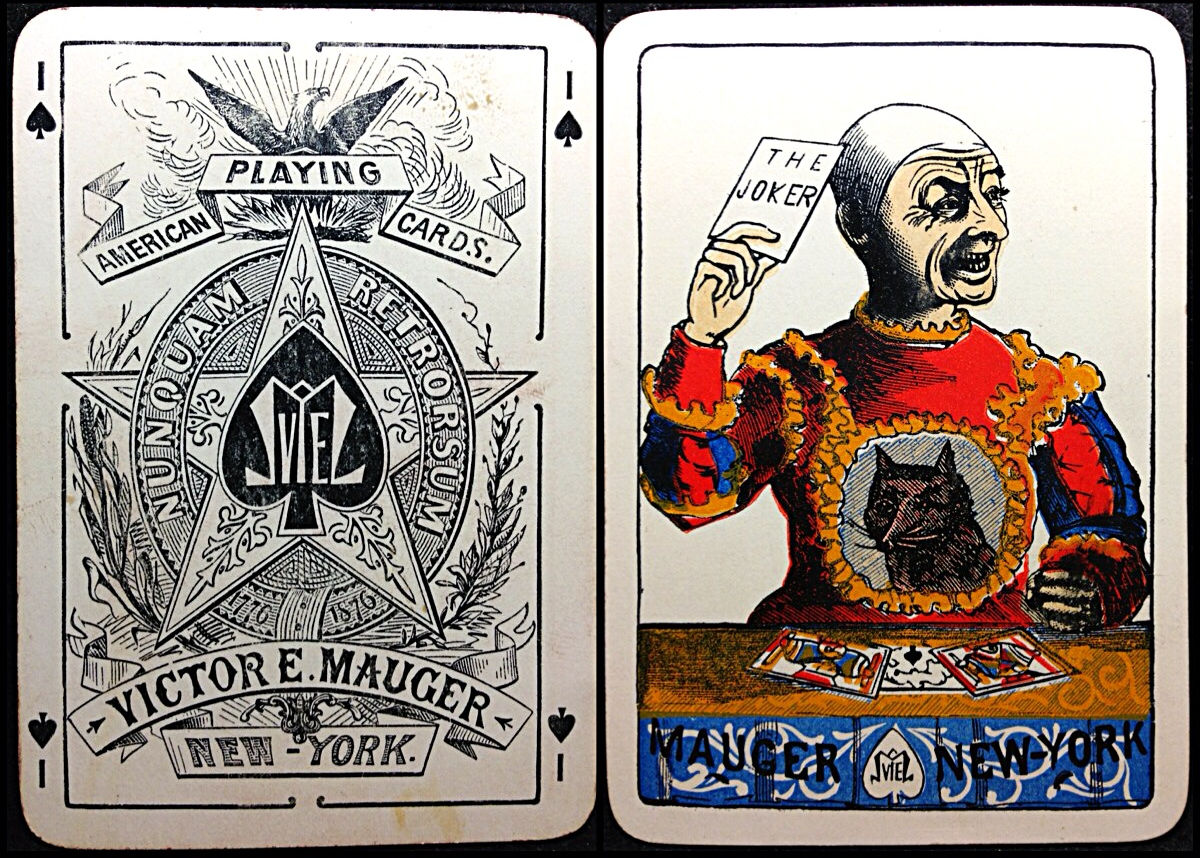
Above: early Jokers by the firm Charles Goodall & Son, London, (1821-1921) produced during the 1870s-1890s. Victor Mauger soon issued their own Joker →
According to Websters 1880 edition, Bower derives from the German Bauer (a peasant), so called because in Euchre the knave or jack of the trump suit is the highest card, known as the Right Bower, and the knave was depicted in German cards as a peasant. The second-highest trump card was the Left Bower, and this was the knave or jack of the same colour as the trump suit.
Then requiring an additional trump card we get the Imperial Bower etc.
Jokers keep the pack full of tricks. The Joker card is capable of almost anything or almost nothing, depending on the rules of the game. It has been suggested (Dianne Longley, 1999) that “the Joker is the ‘wild-card’, or the card of opportunity, not unlike the ethos of opportunity and individuality that has been the driving force behind America's pursuit of greatness.” Perhaps the Joker is so named because he is "a trickster", and the Imperial Bower trumped all other cards, thus taking the trick.
Some historians have seen the Joker as a descendant of the Fool of Italian tarot cards, and in some 19th century tarot sets the Fool was depicted as a harlequin or buffoon. However, Matt Probert disputes this, pointing out that in early European Tarot cards the "Fool" is depicted by a foolish man, and the popular depictions of the "Joker" are of characters connected with tricks, such as a jester, clown or card magician (none of which are "fools"), which makes more sense given the Joker's ability to take tricks in card games.
Some early Jokers were specially designed, along with special Aces of Spades, as part of the company’s brand identity. Hence they can also be an aid in identification. Many collectors are primarily interested in certain cards such as Aces of Spades, Jokers, court cards, unique backs, etc., and hence the Joker card has also become a collector's item in it’s own right...
• See the story behind some special Jokers►
There is also more contemporary history wherein the joker has become iconic in other ways, as in beer labels, clowns, films, tattoos and other areas of popular culture.
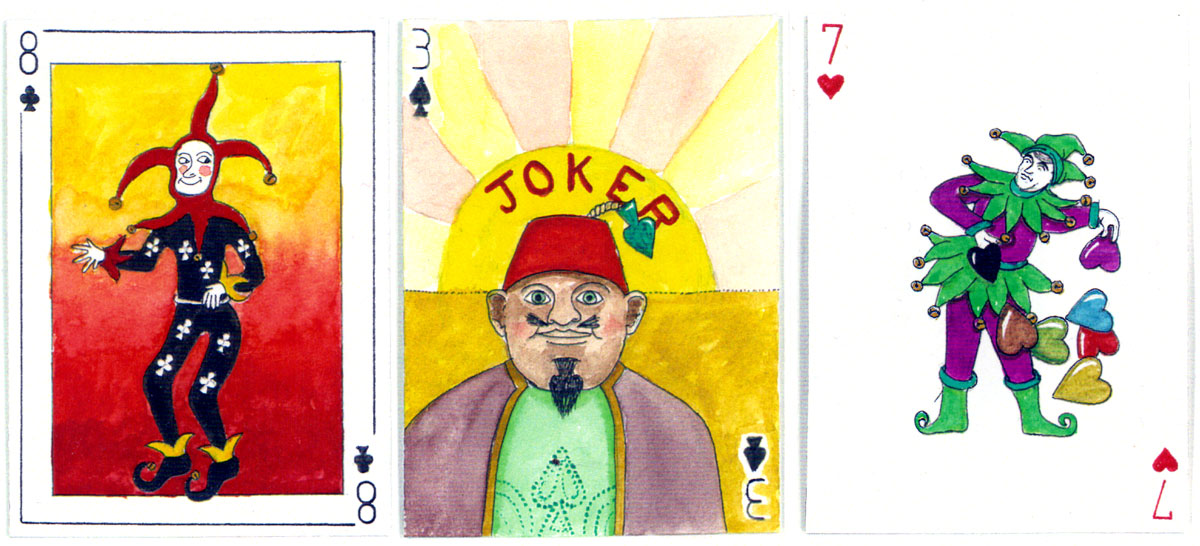
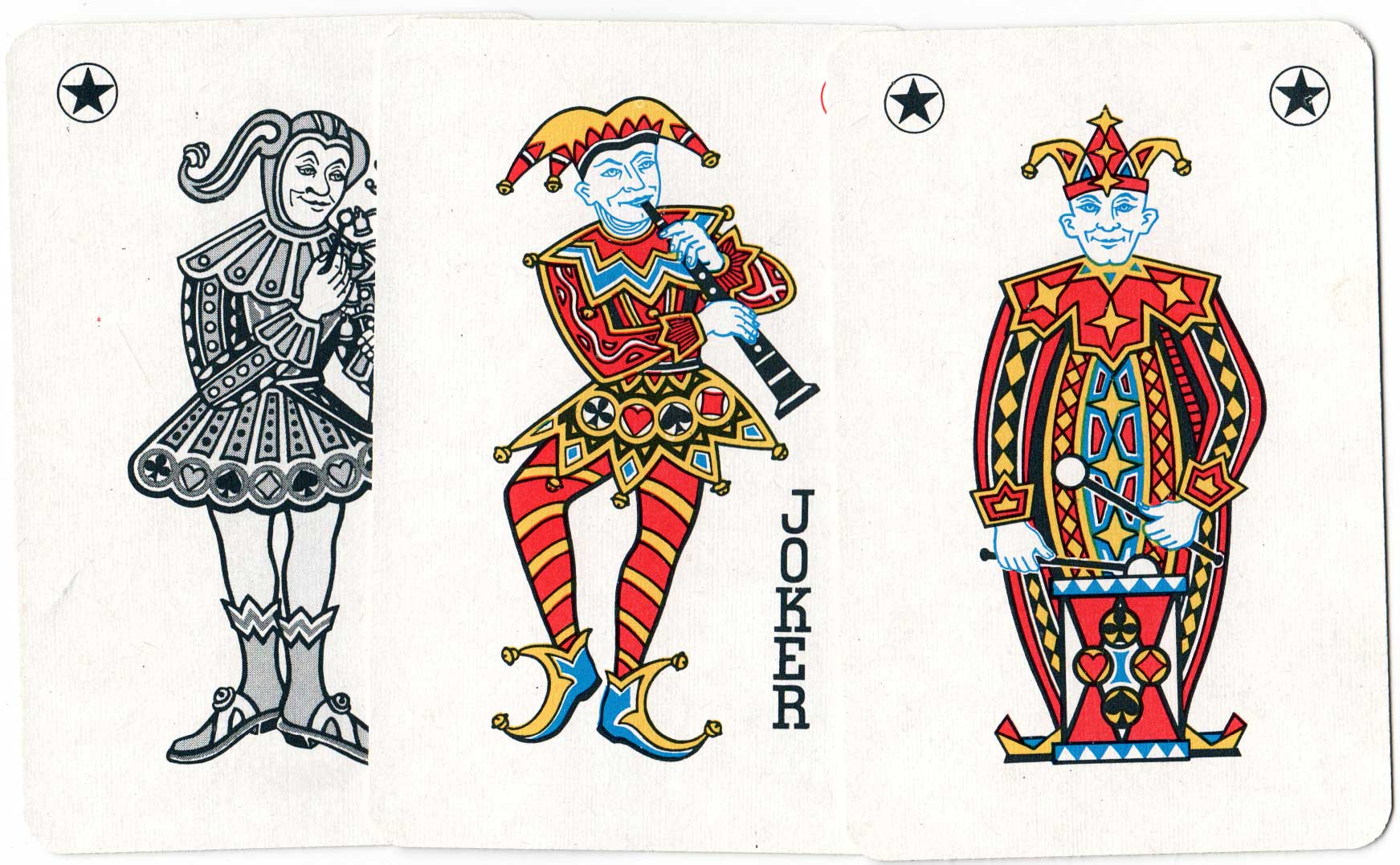
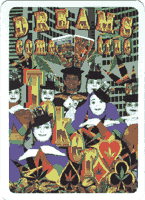
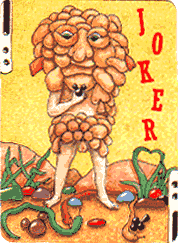
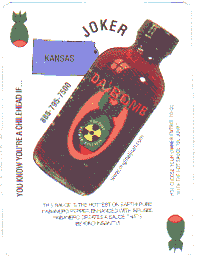
Above: 3 cards from Peter Wood’s “Jest Jokers” deck comprising 54 different Joker designs, made into a full pack of cards see more →
The Joker
by Alan Watts

The English author, public speaker, and "philosophical entertainer" Alan Watts (1915–1973) was recognised for popularising Buddhism and Eastern thoughts in the West.
In the following segment from his seminar "The Joker", Alan Watts articulates that the concept of the Joker in a story about a man who is labeled a "fool" by society. He is an outcast who is not taken seriously. However, the Joker uses his wit and humour to point out the absurdity of life and the human condition. He teaches people to not take life so seriously. In the end, the Joker's method is compared to those of the fakir, monk, yogi or guru for awakening one's consciousness.
"The joker is the card beyond role. The card that’s wild, that can be any card in the pack. It’s delivered from being a particular someone and can be an anyone. And it pops up here, and it pops up there, and it pops up here. You never know when the joker will appear.
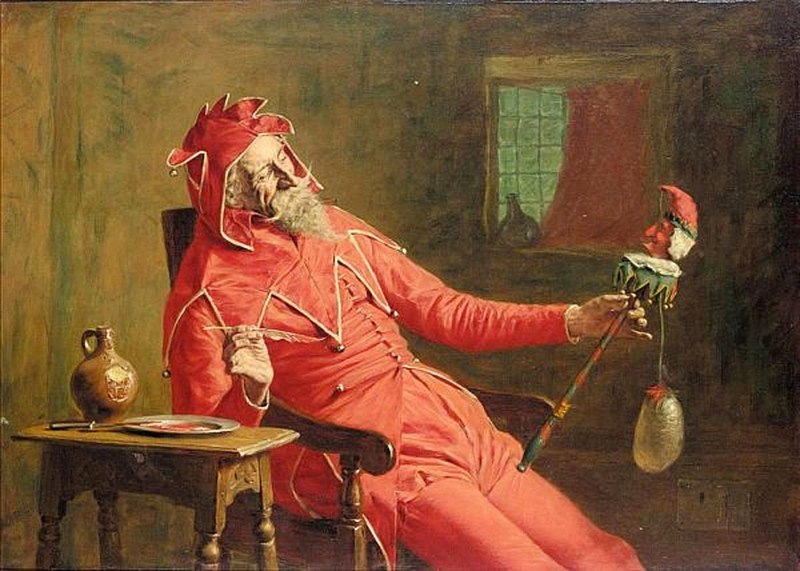
"When the joker sees a person taking his life seriously and regarding himself as extremely important, there is something a little bit funny about it and he is inclined to get the giggles."
The Fool, The Joker and The Monk
"In some ways, the fool (or the joker) and the monk have a parallel function. The monk is a person who abandons society, he is an outlaw, only he is on the upper side rather than on the lower side. As the ordinary criminal is below caste the outlaw in the sense of the monk is an abovecast. In the time of Buddha his followers wore orange robes because those were the garments of criminals. They wore the garbs of the lower outcasts but were respected as upper outcasts. In modern society it's very difficult to be in this position."
"The worst kind of criticism is the one who pokes fun... The joker doesn't outrightly deride things, he is not a slapstick comedian, he gives people the giggles about things they thought were terribly sacred and that is extremely demoralizing."
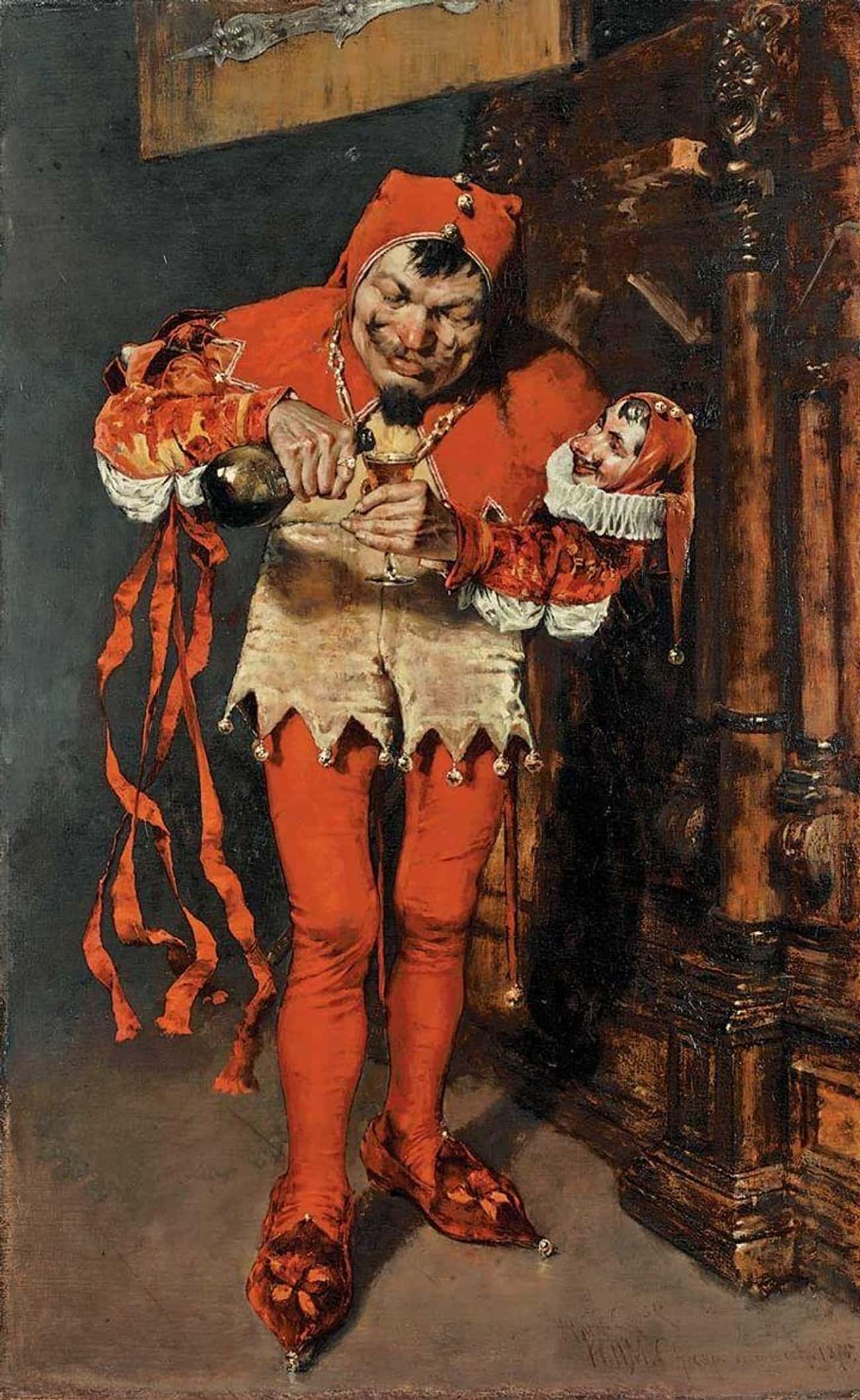
The jester in Chase's painting, fortifying himself or "keying up" with a drink before his comic antics.
"The Fool's standpoint is that all social institutions are games. He sees the whole world as game playing. That's why, when people take their games seriously and take on stern and pious expressions the Fool gets the giggles because he knows that it is all a game. Not a 'mere game' or mere entertainment, but it is not frivolous.
Read the full transcript here►The World of Jokers
In many cases the jokers are removed and binned by the players. Amateur poker schools will often open a new deck, throw the jokers in the bin, and then play with the deck. However, some are undoubtedly removed by joker collectors who later on may well sell the jokers separately.
Some images link to page showing complete pack.
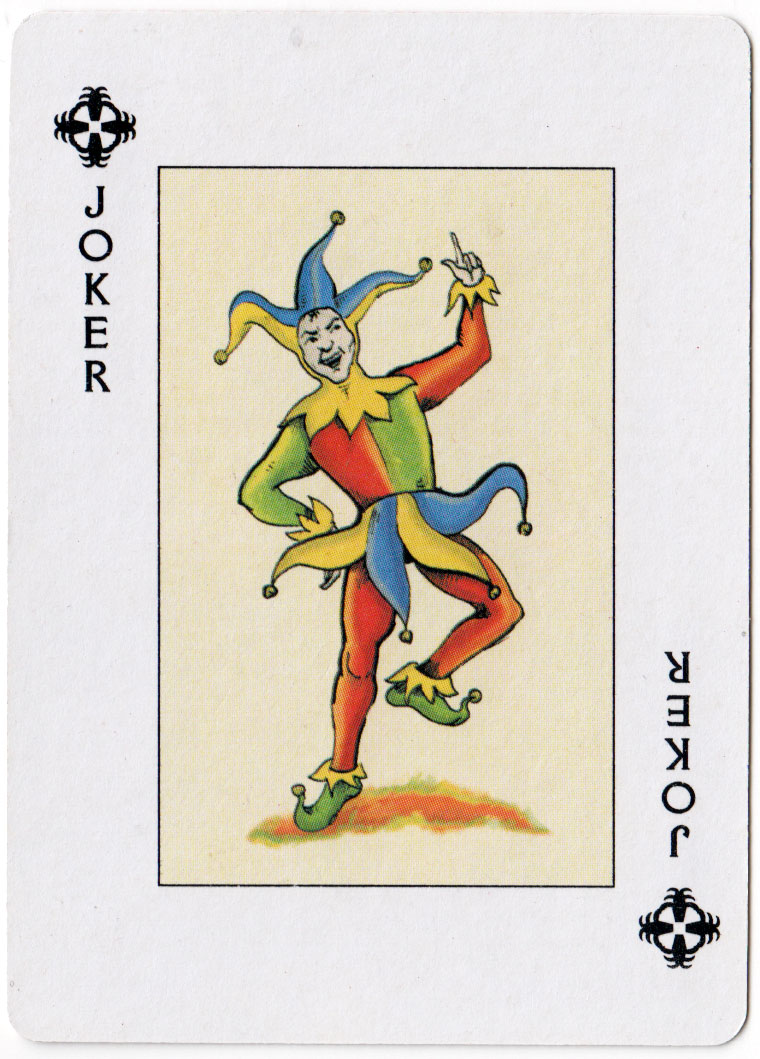
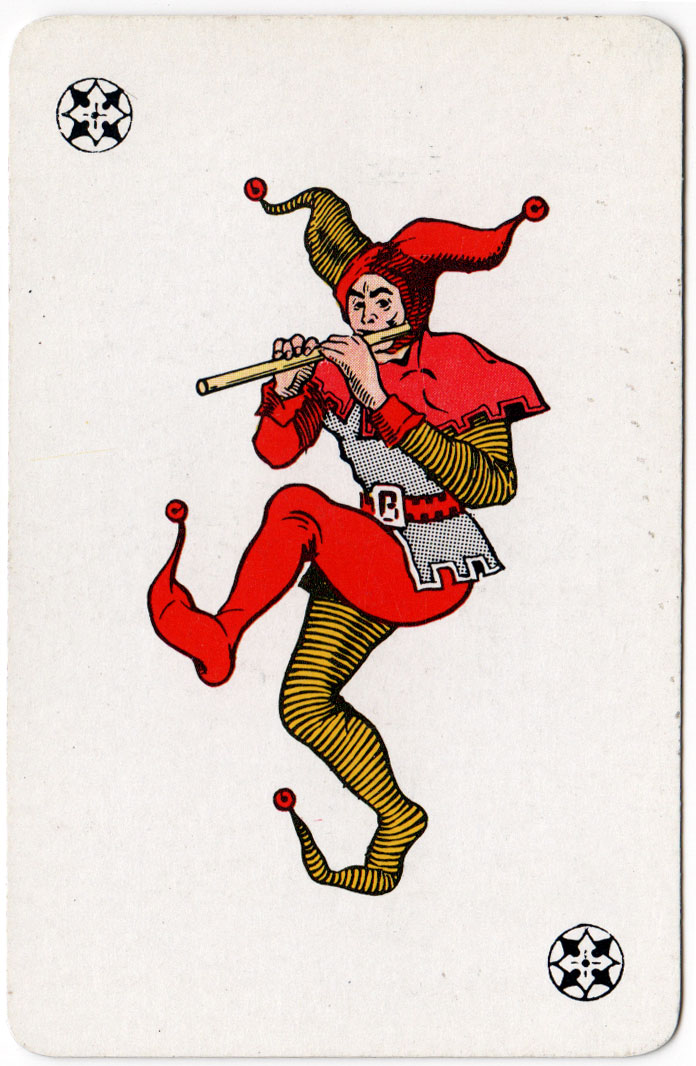
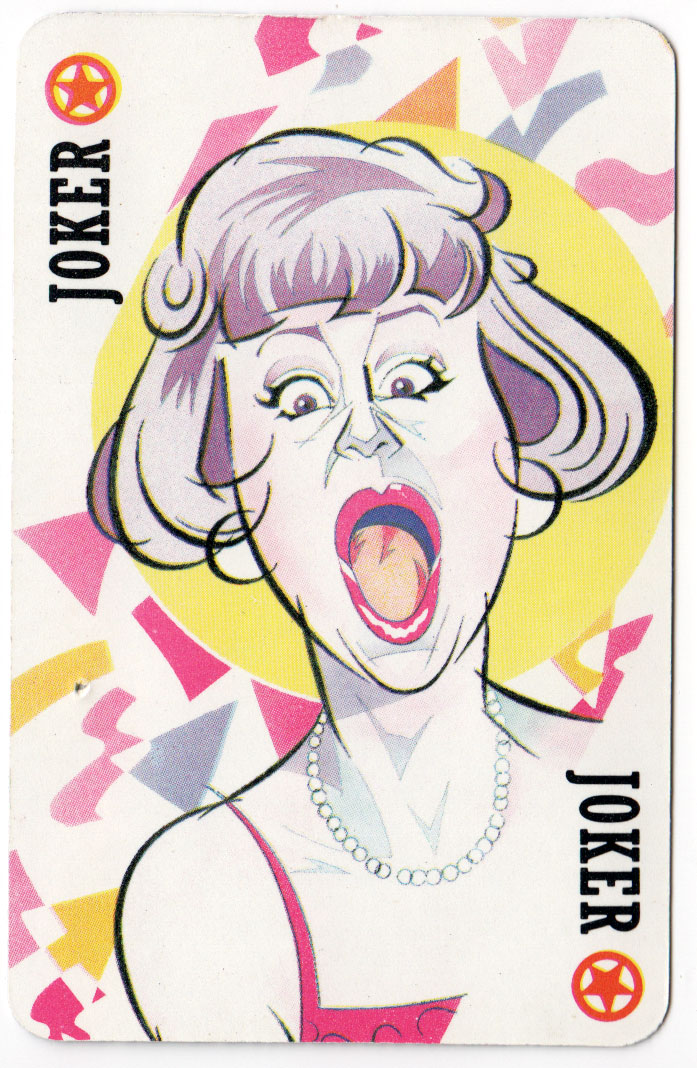
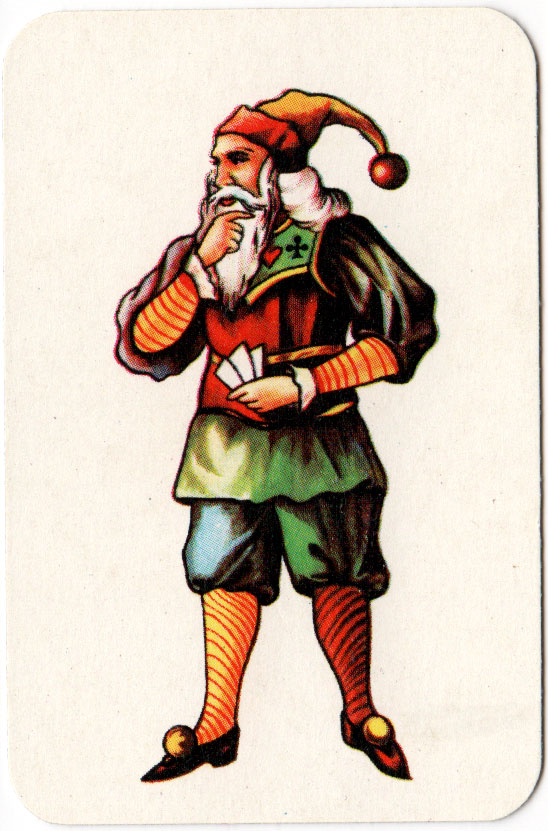
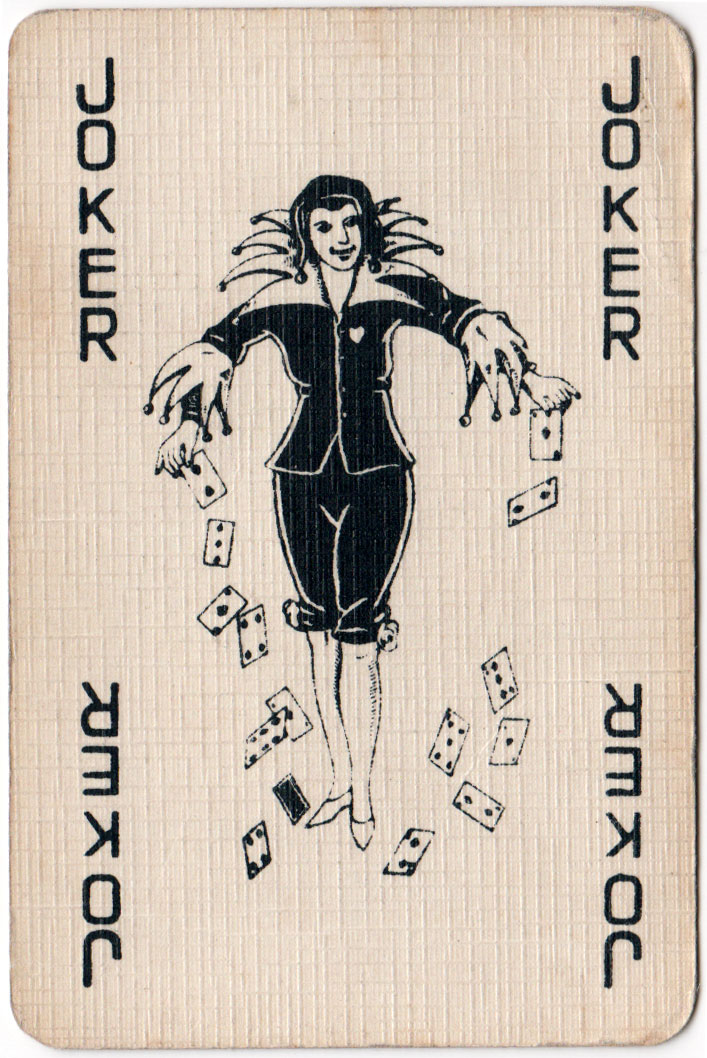

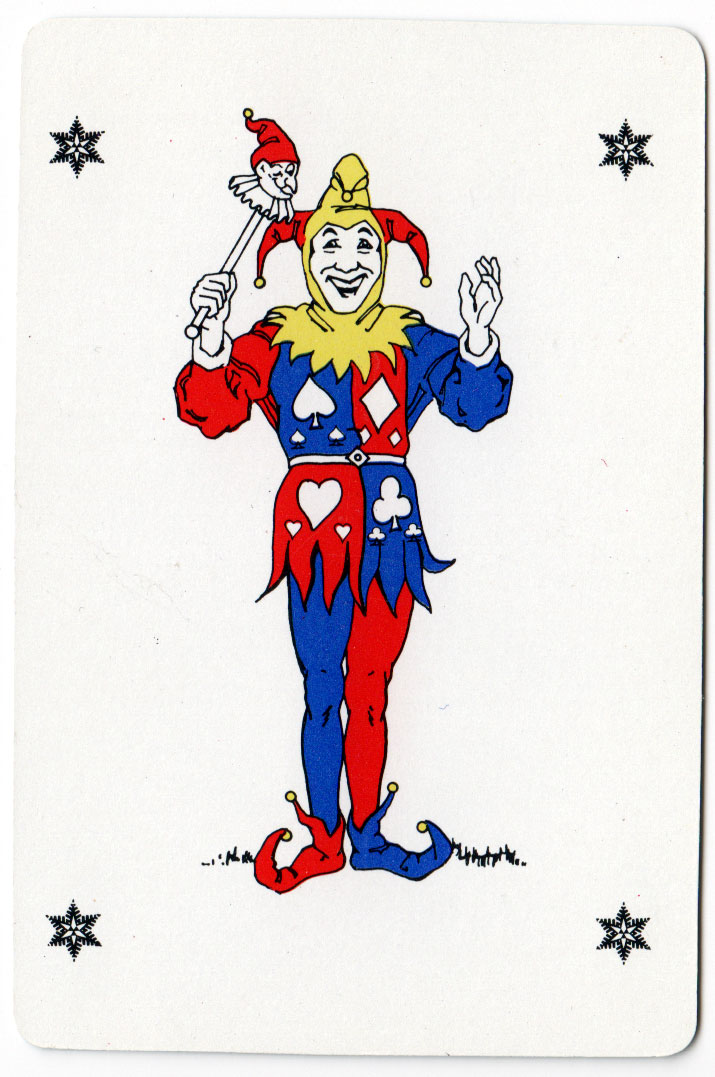
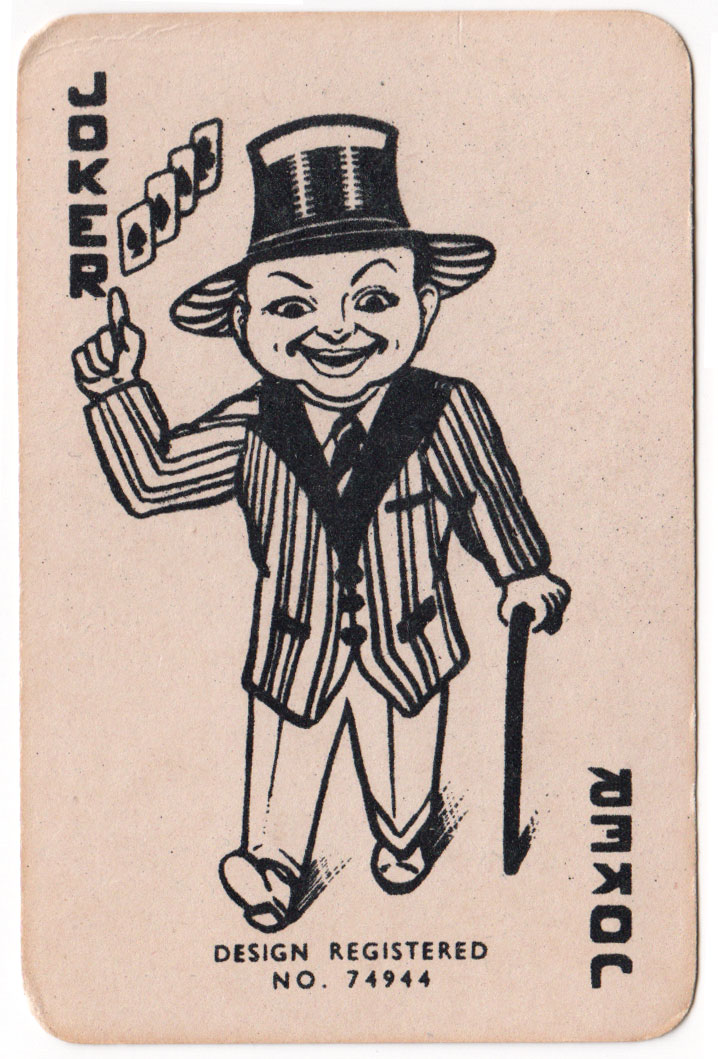
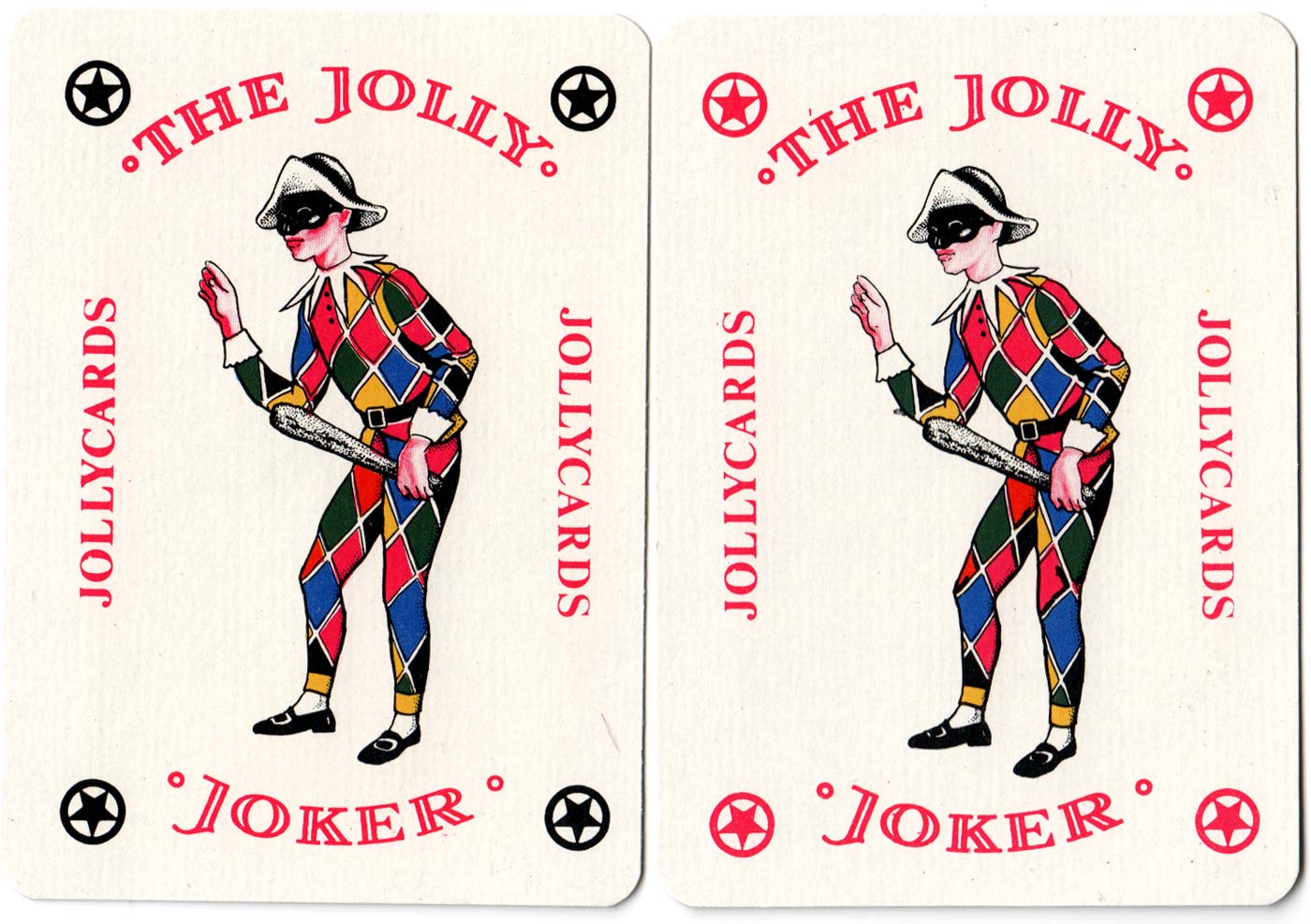
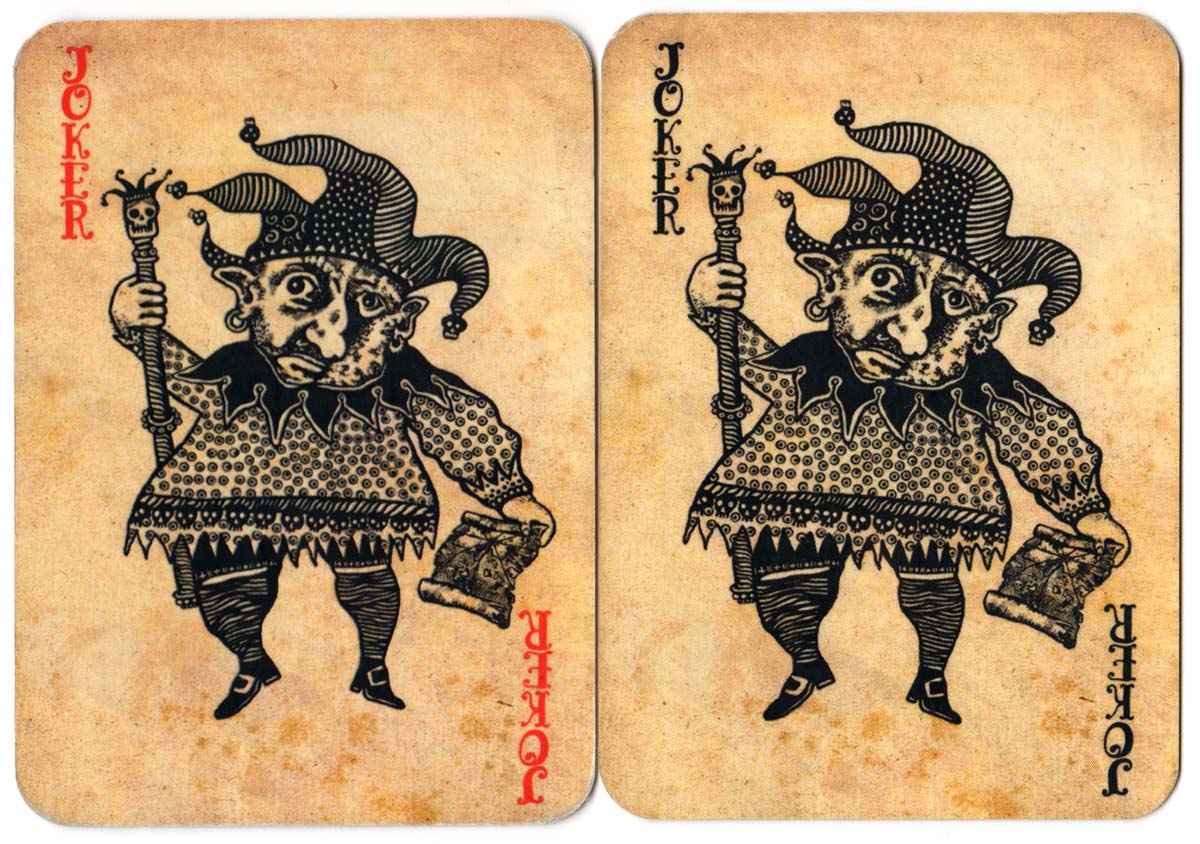
Argentina
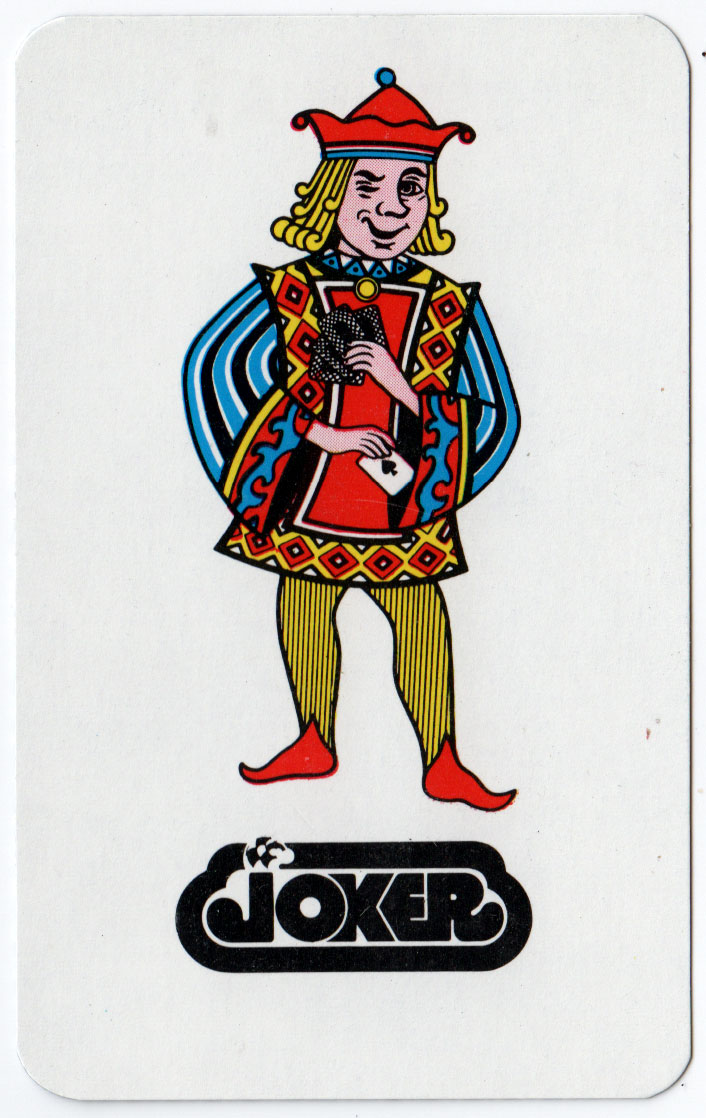
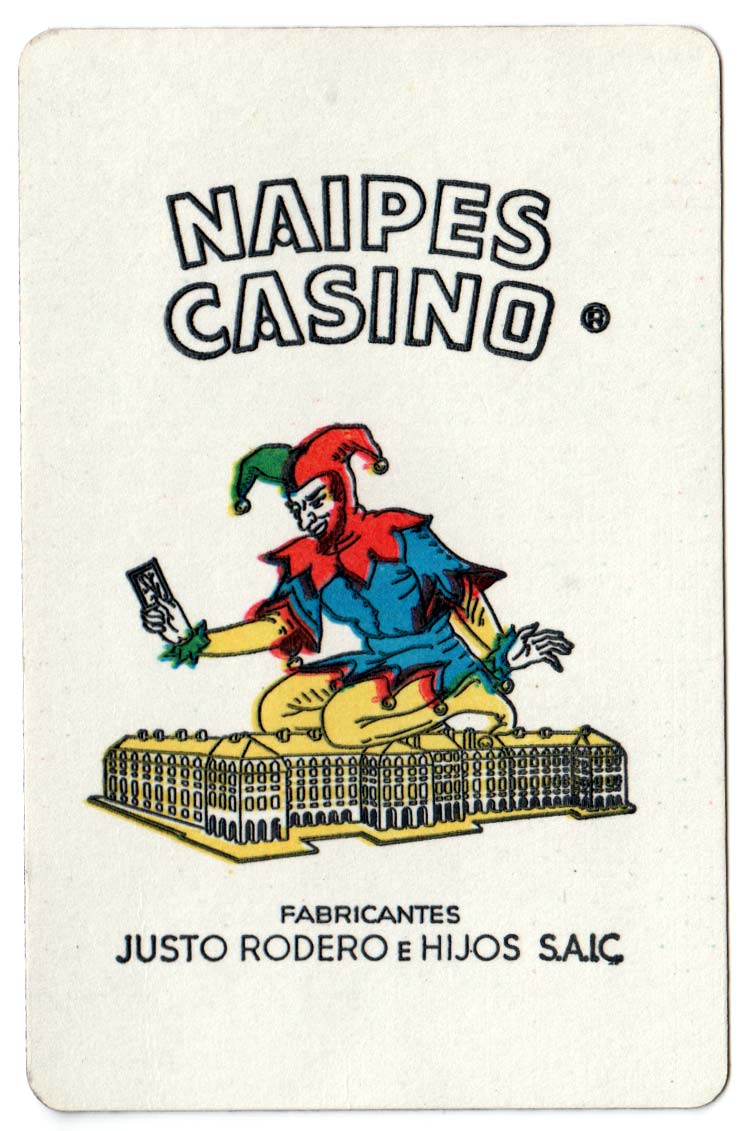
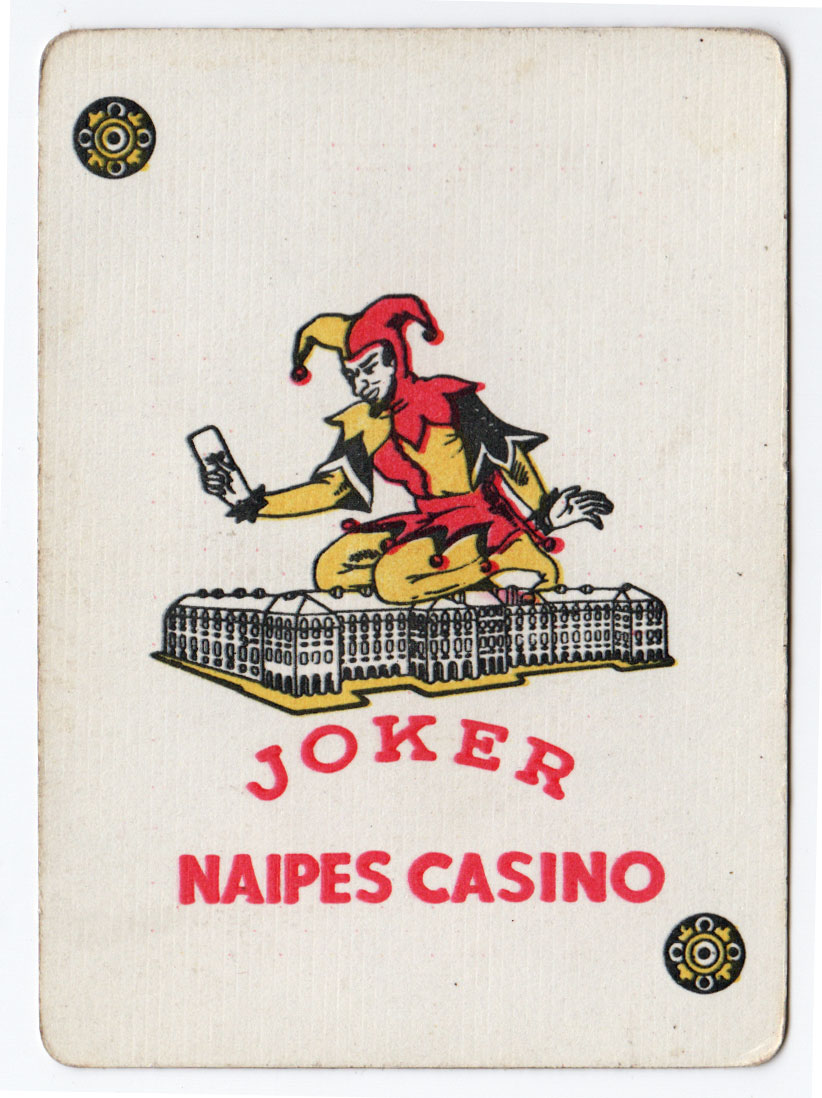
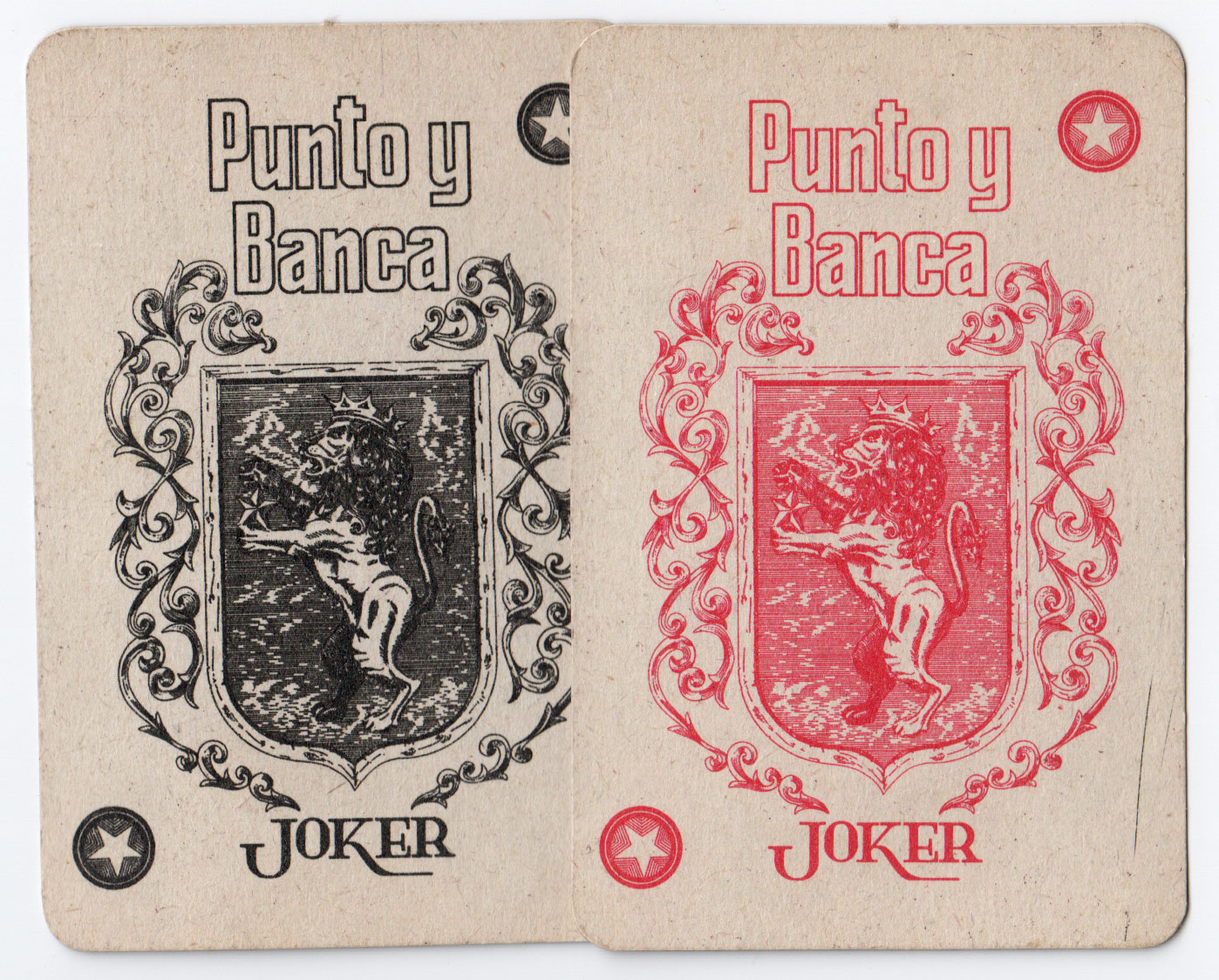
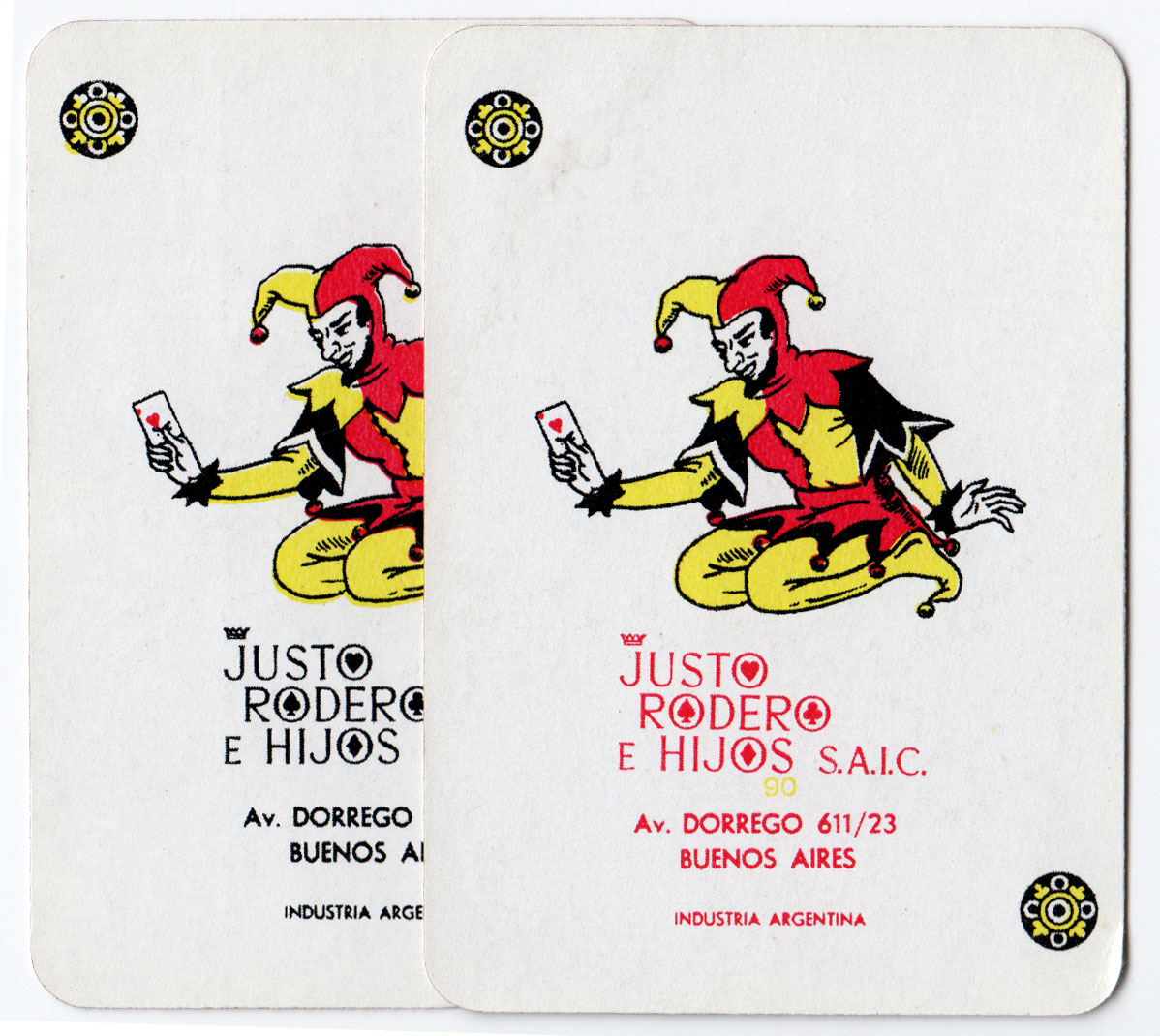
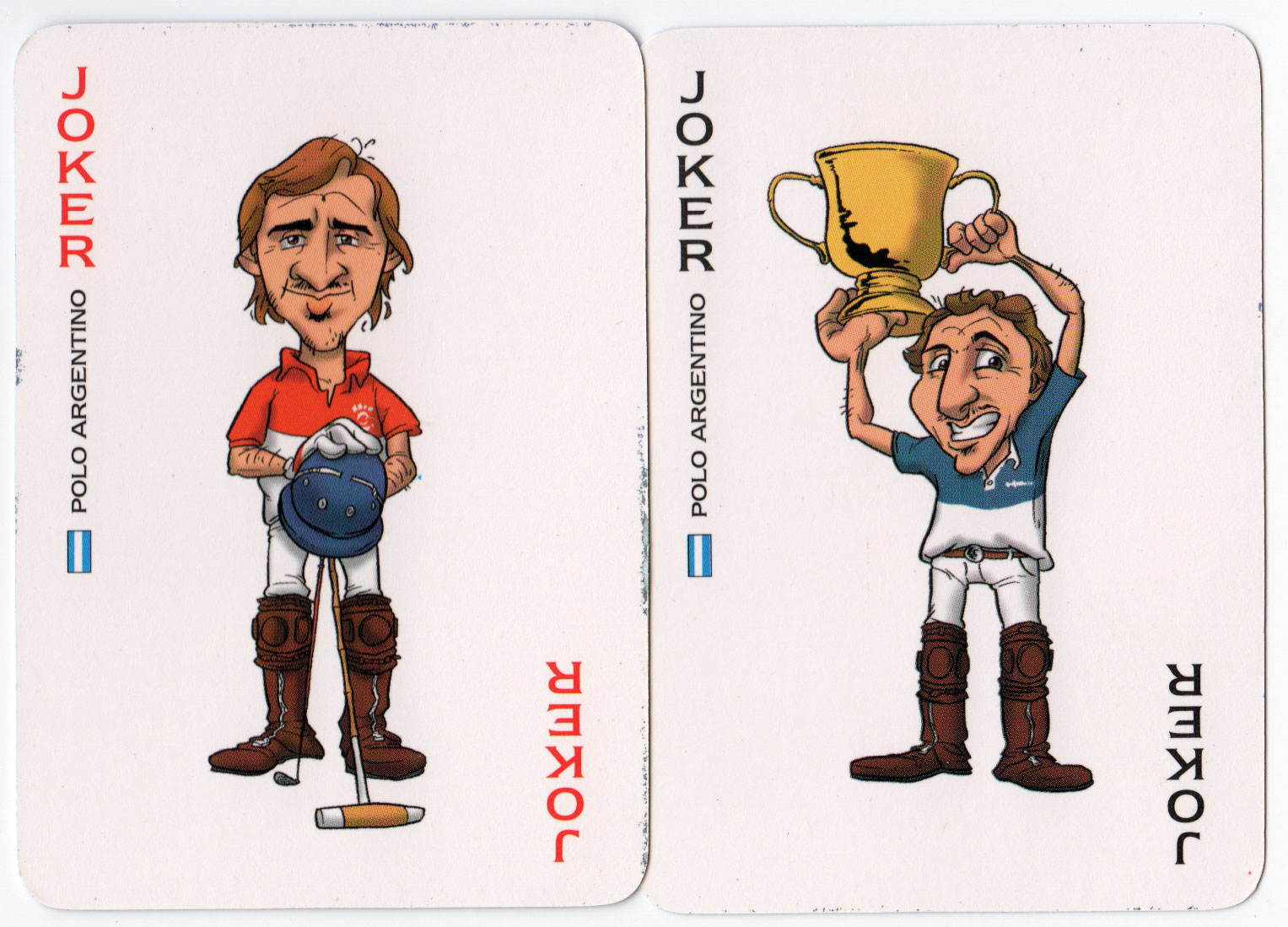
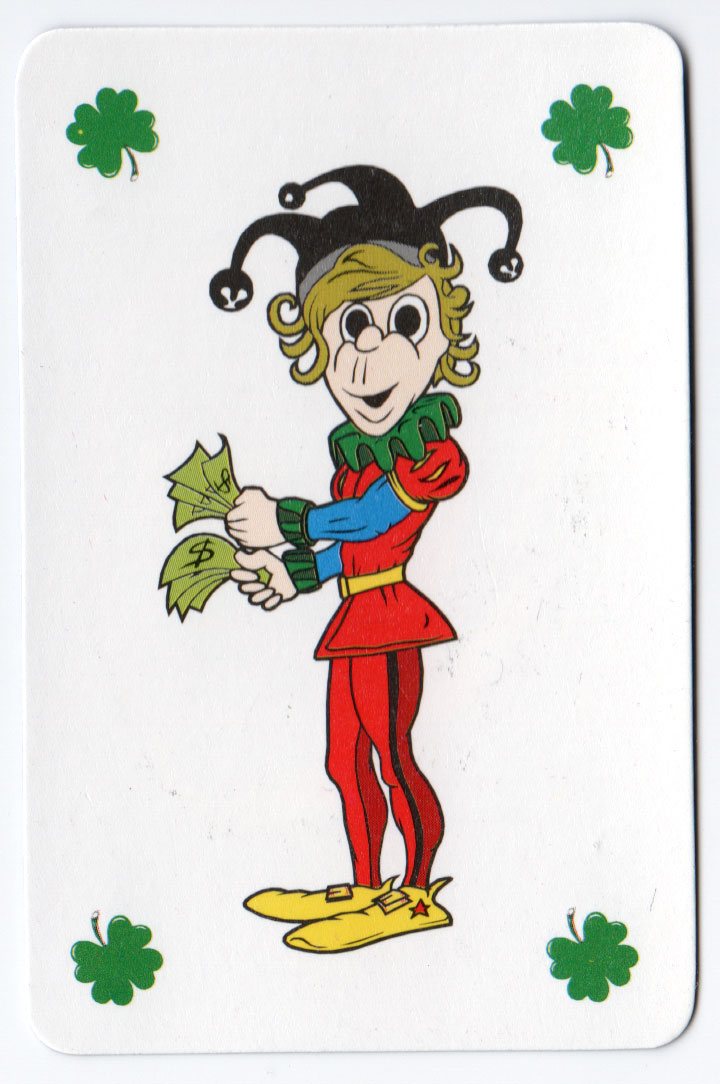
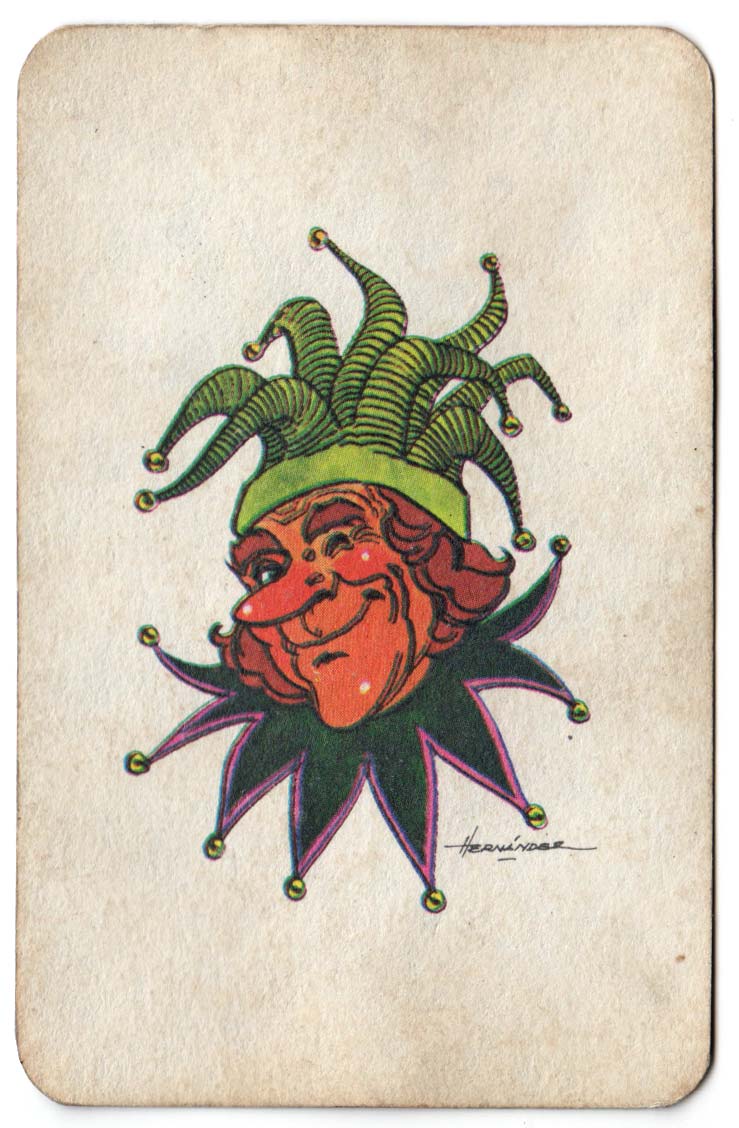
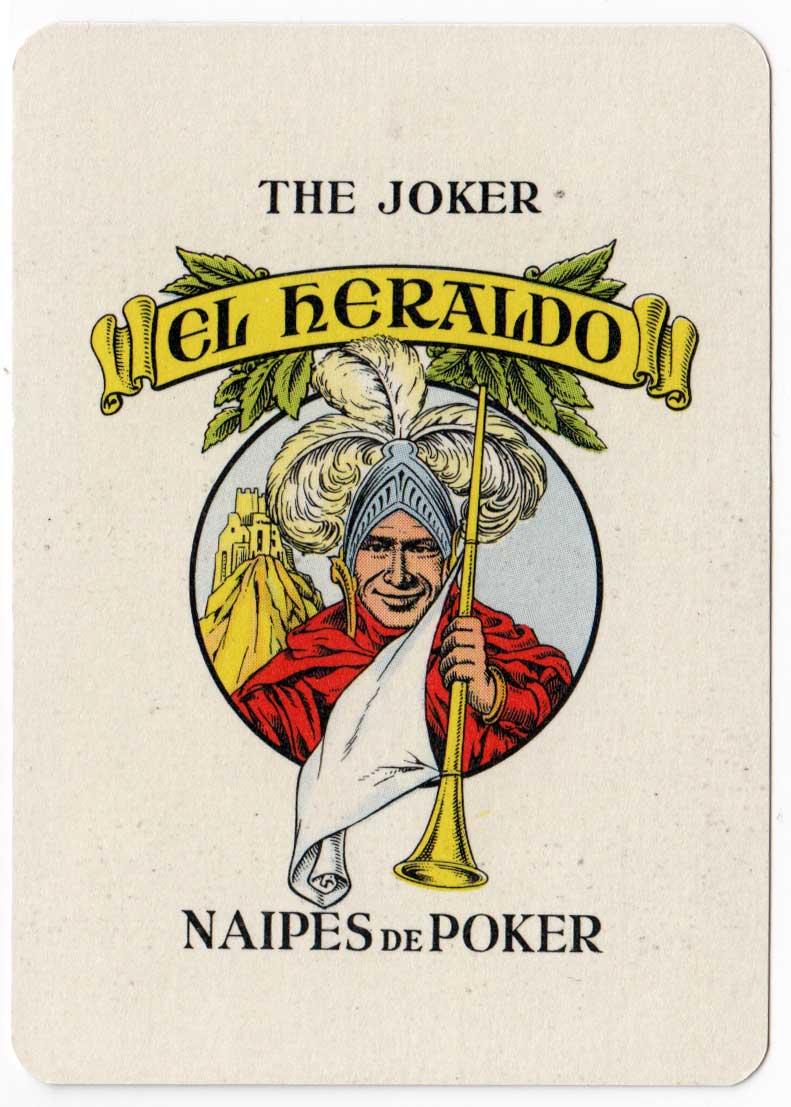
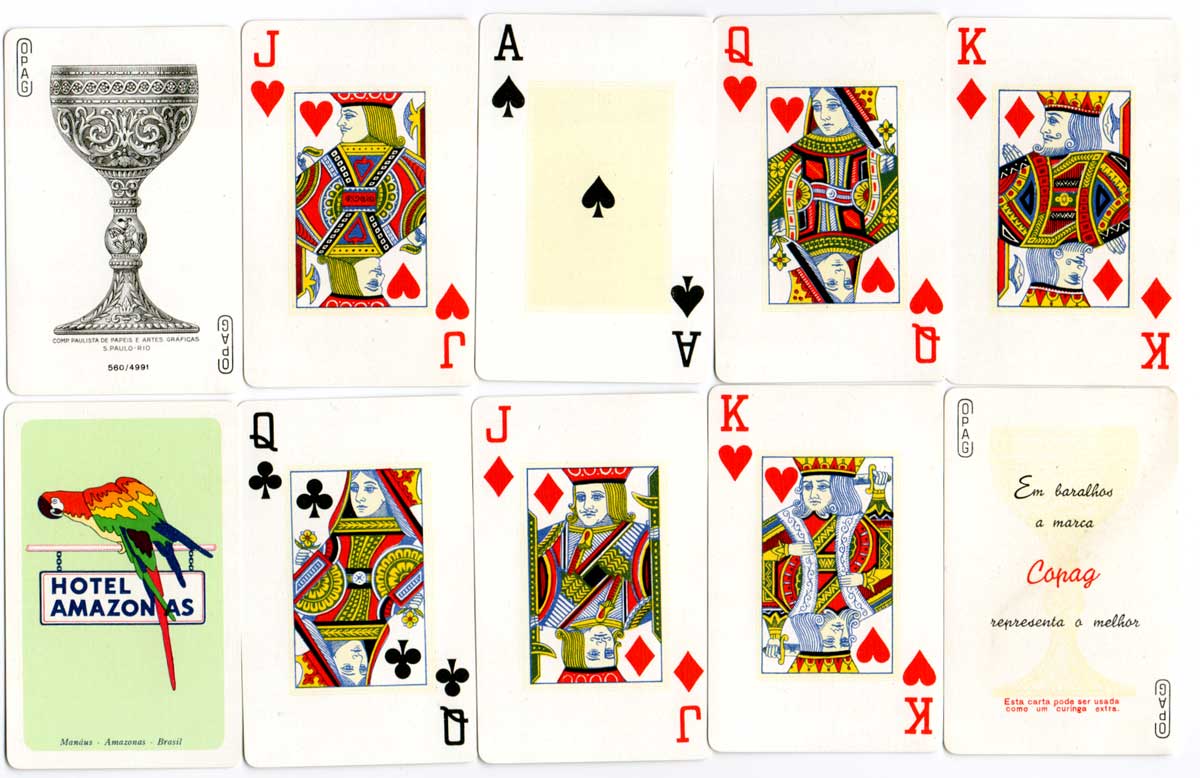
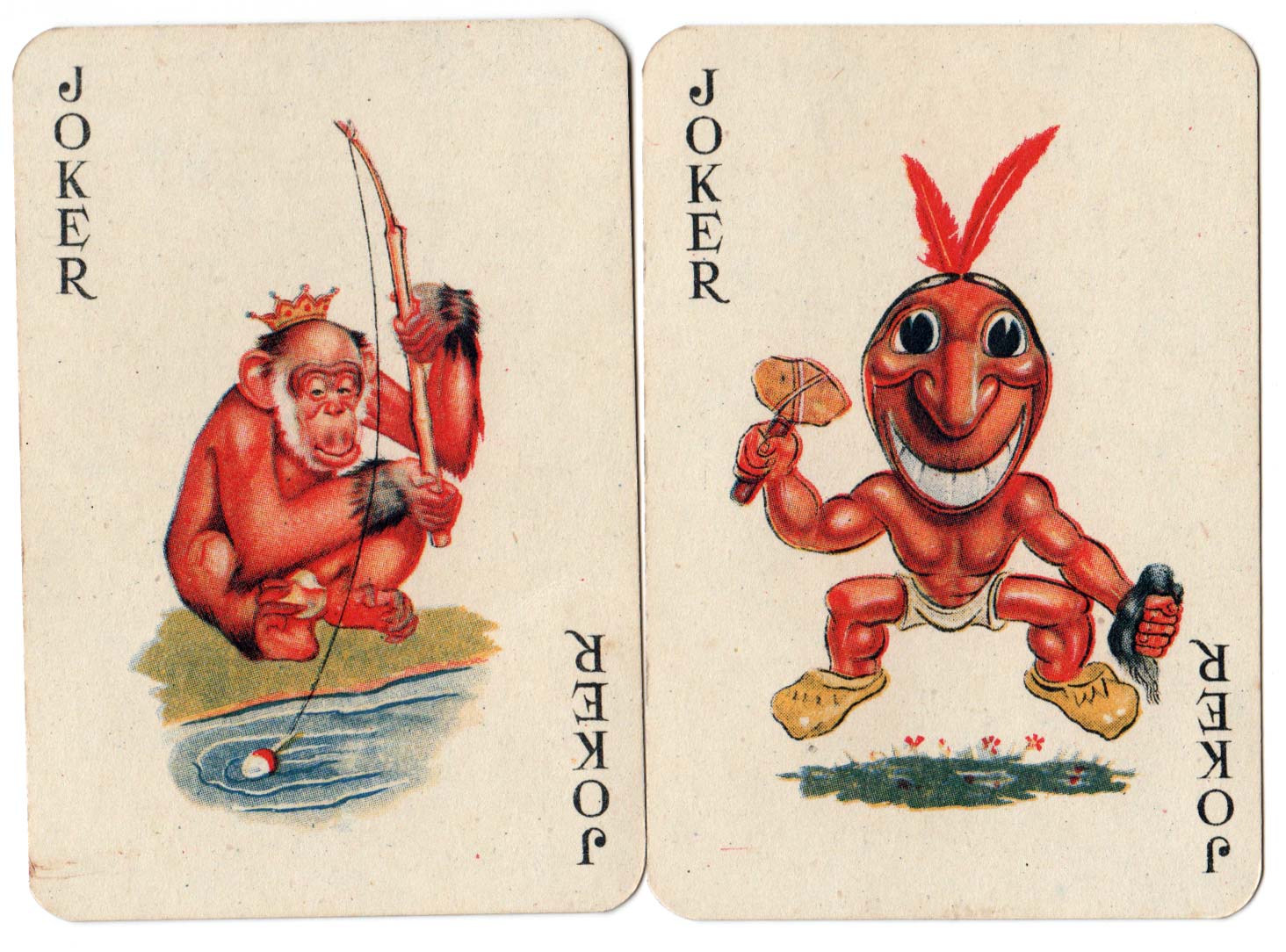
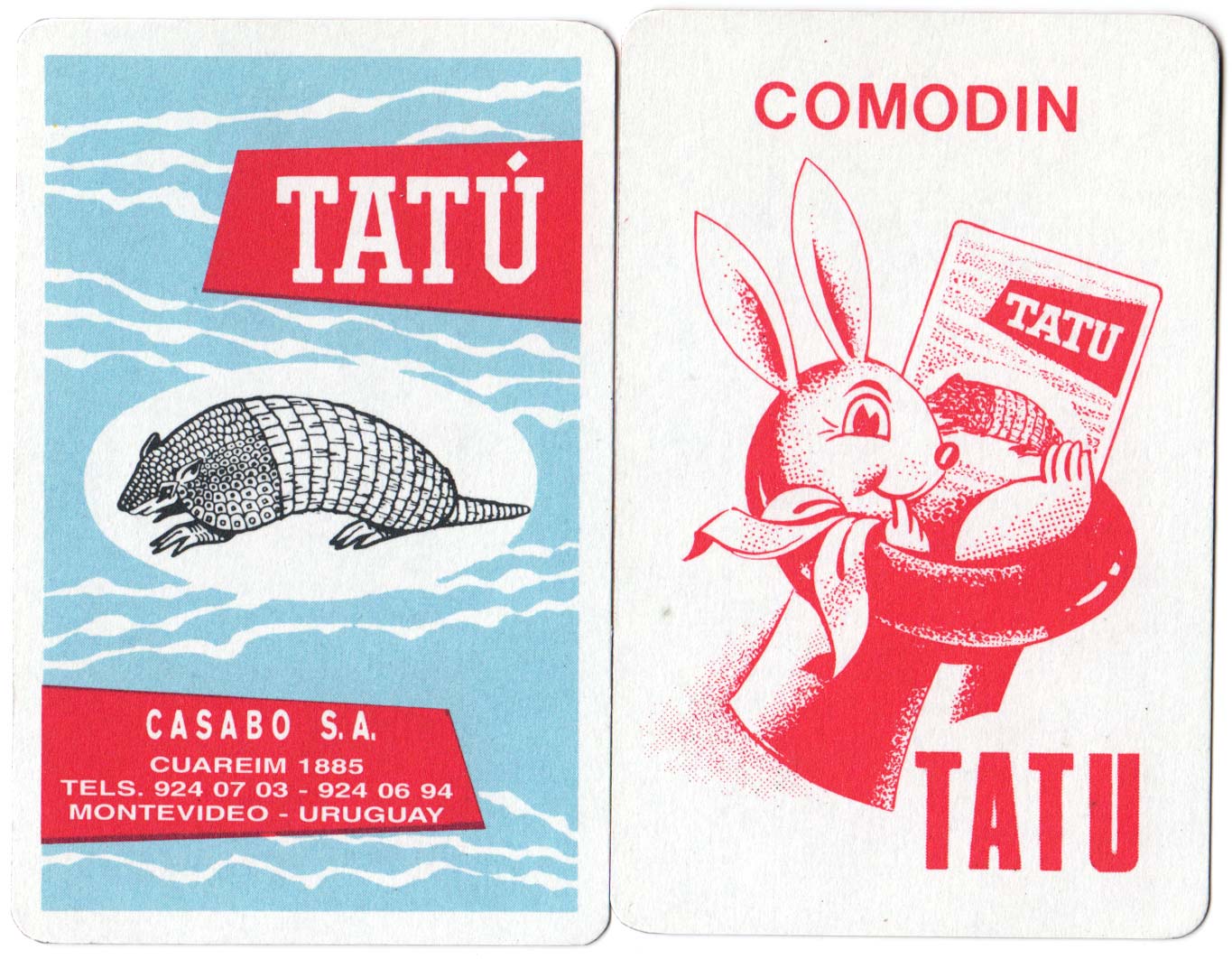
Uruguay
U.S.A.
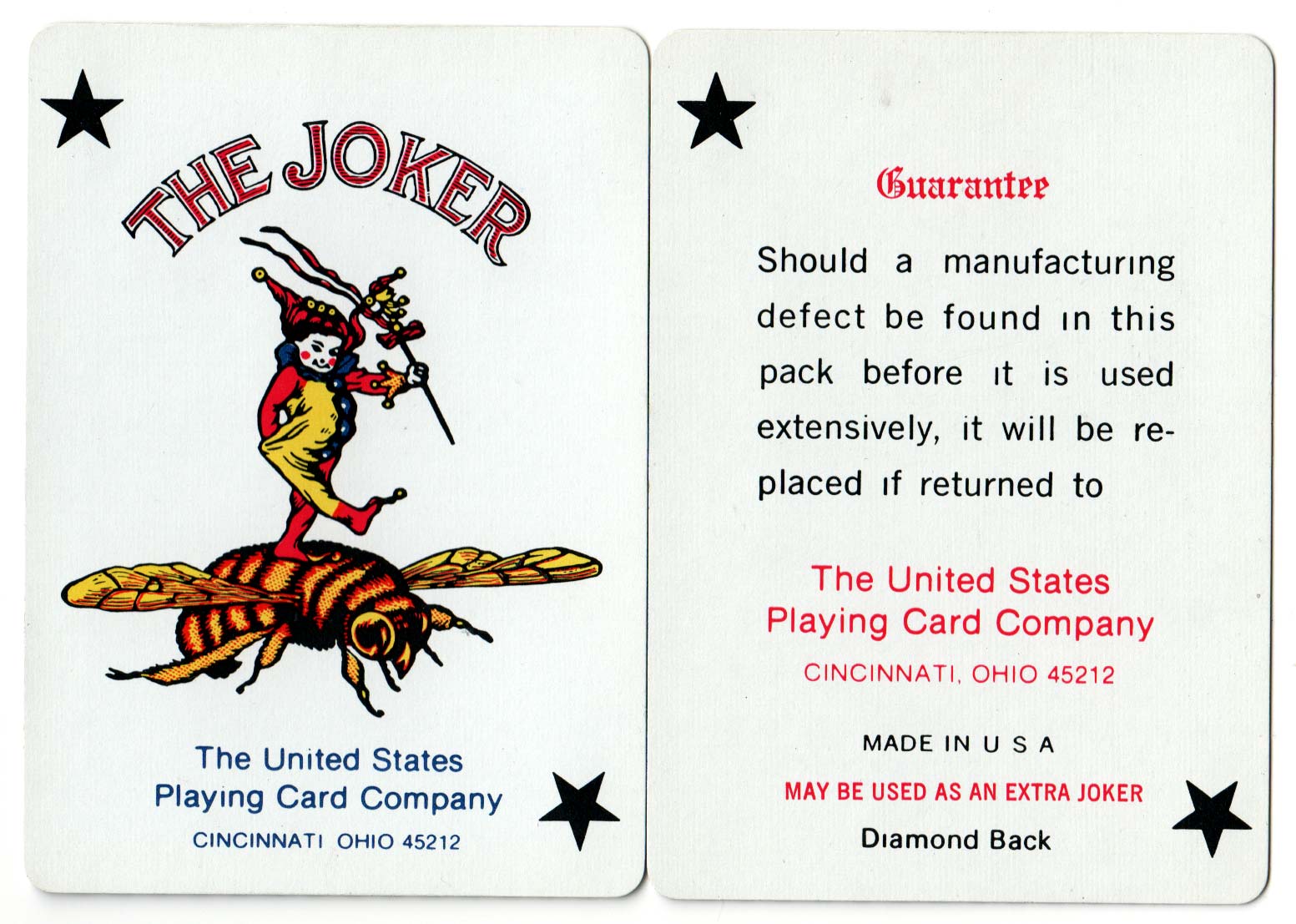
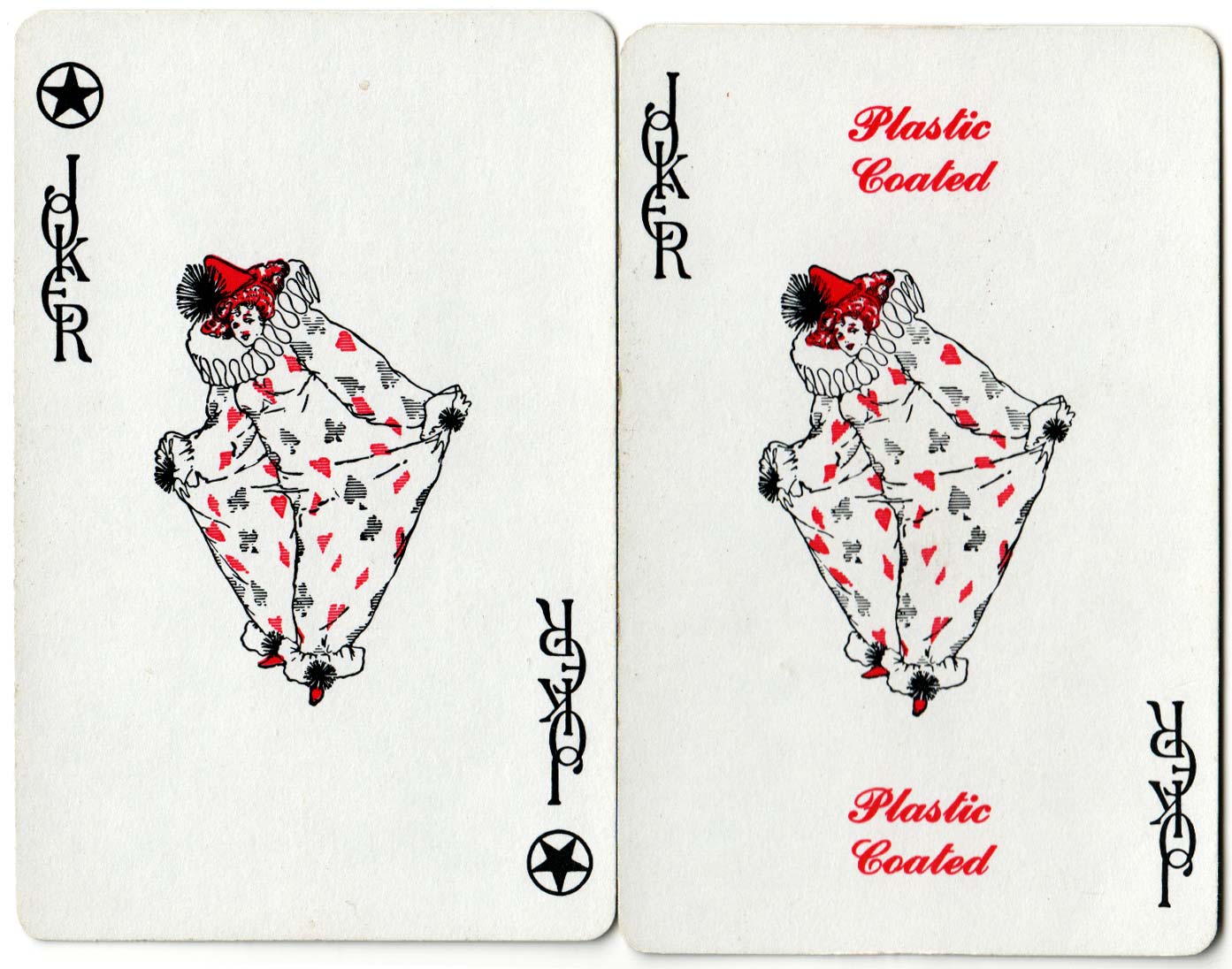
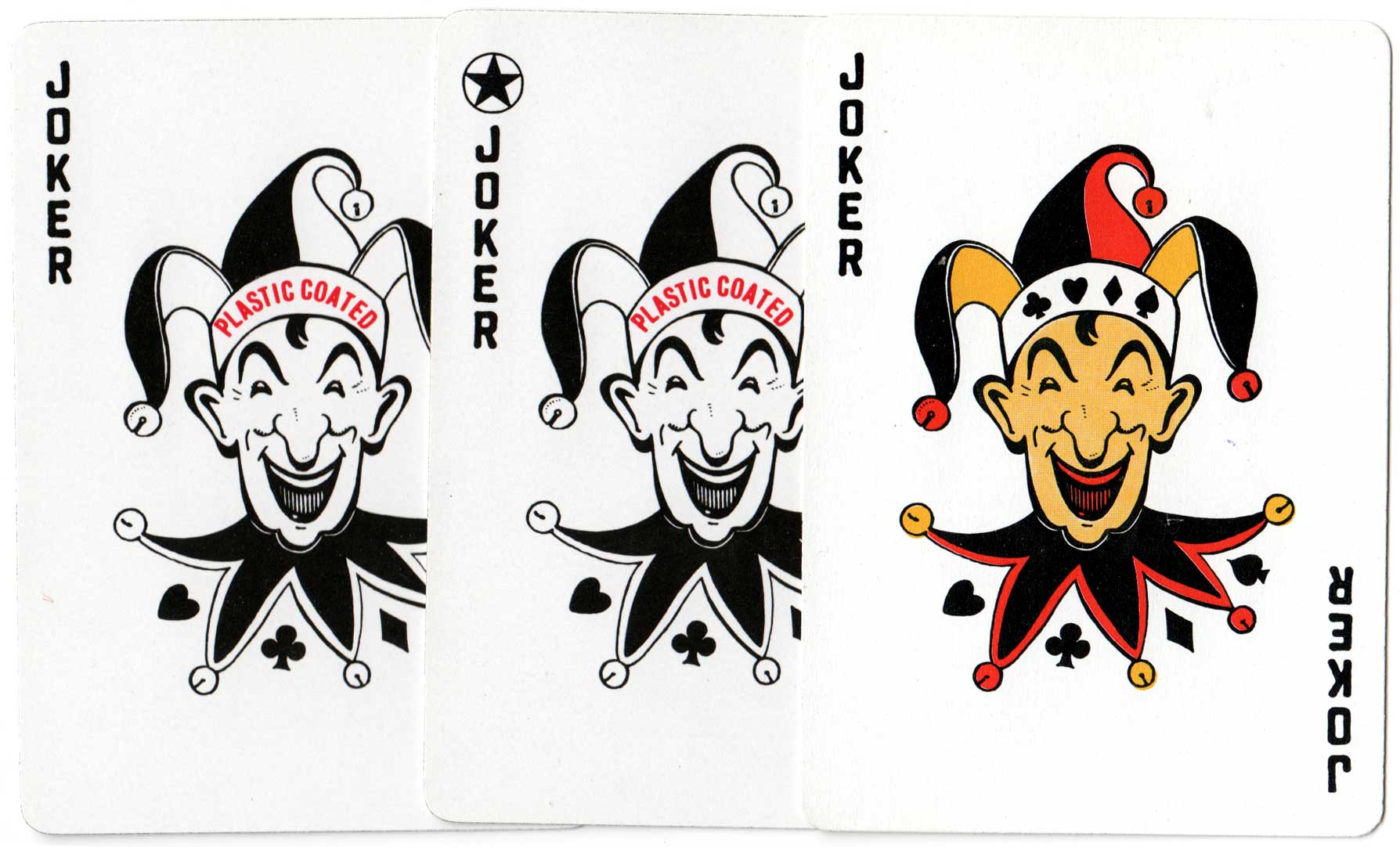
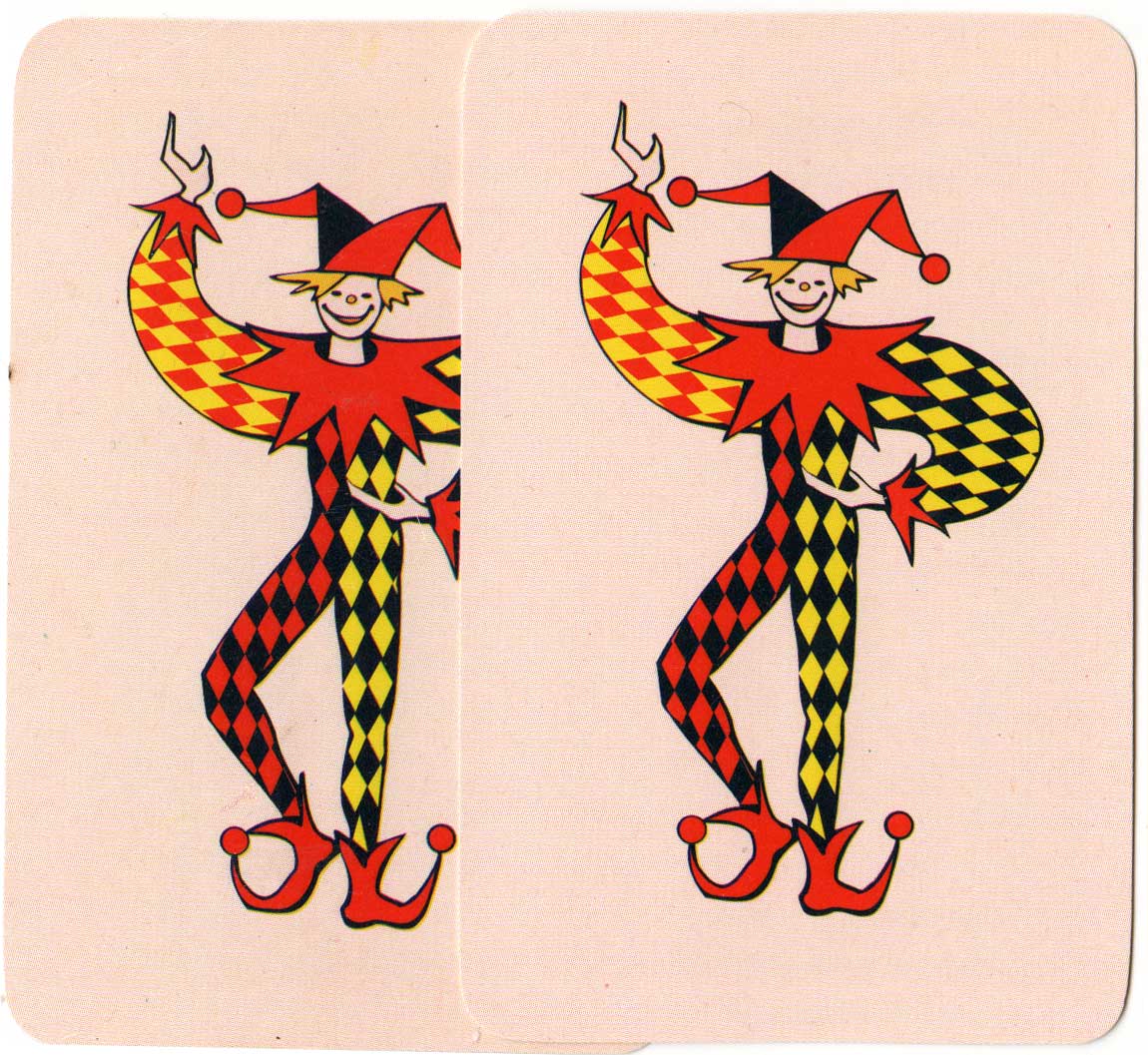
Spain
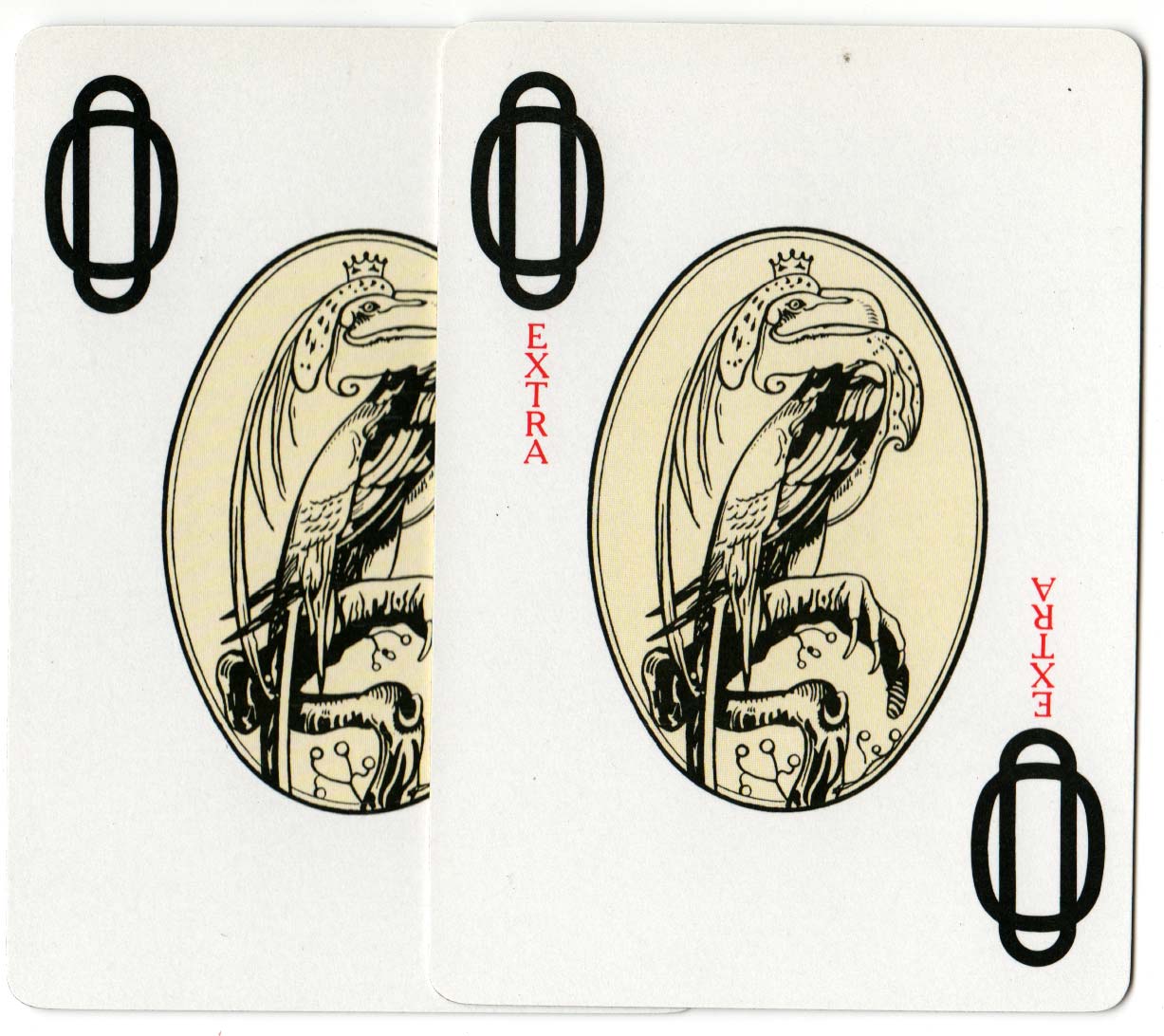
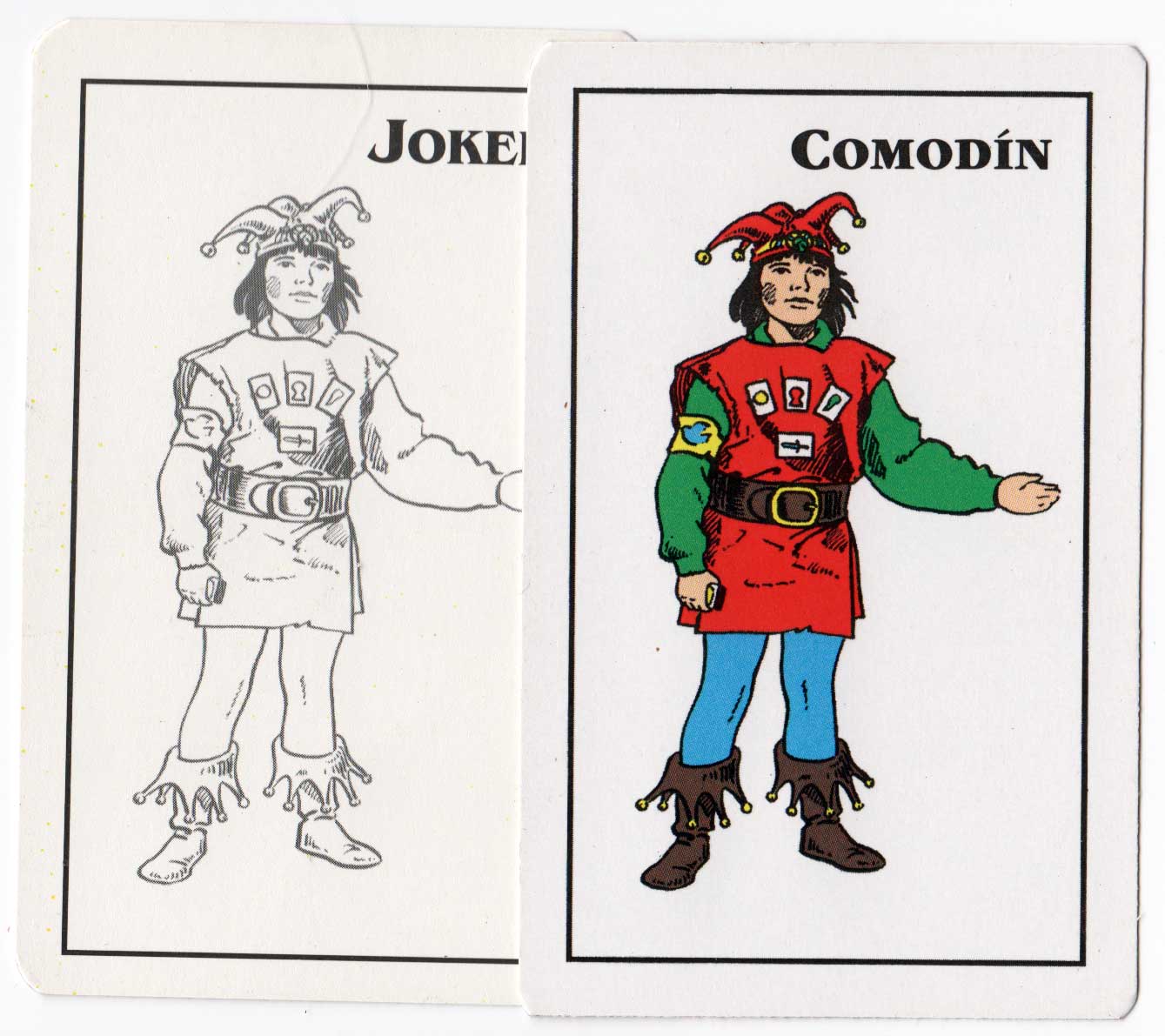
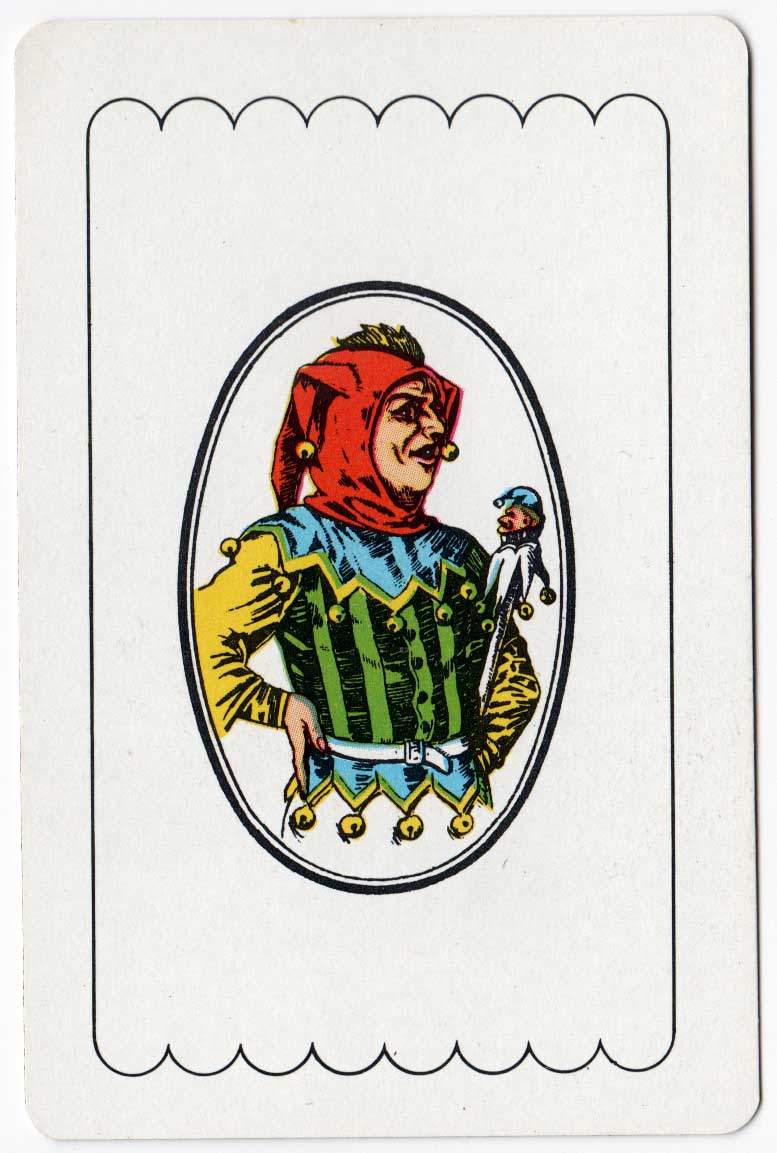
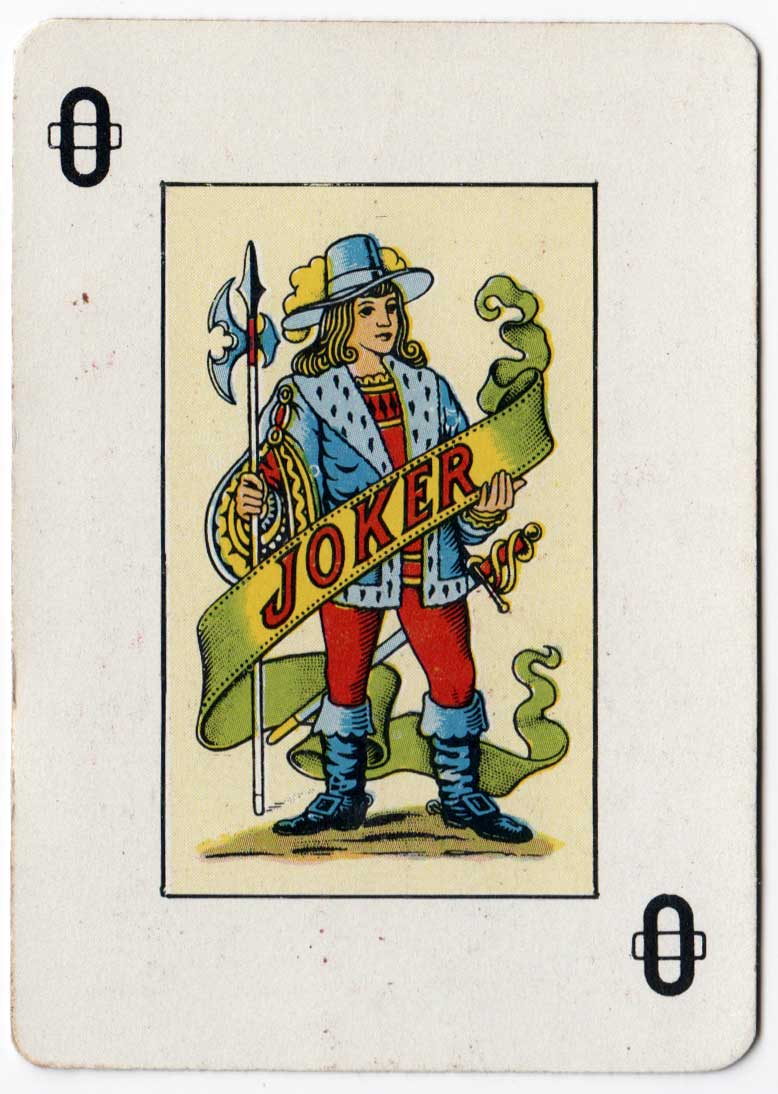
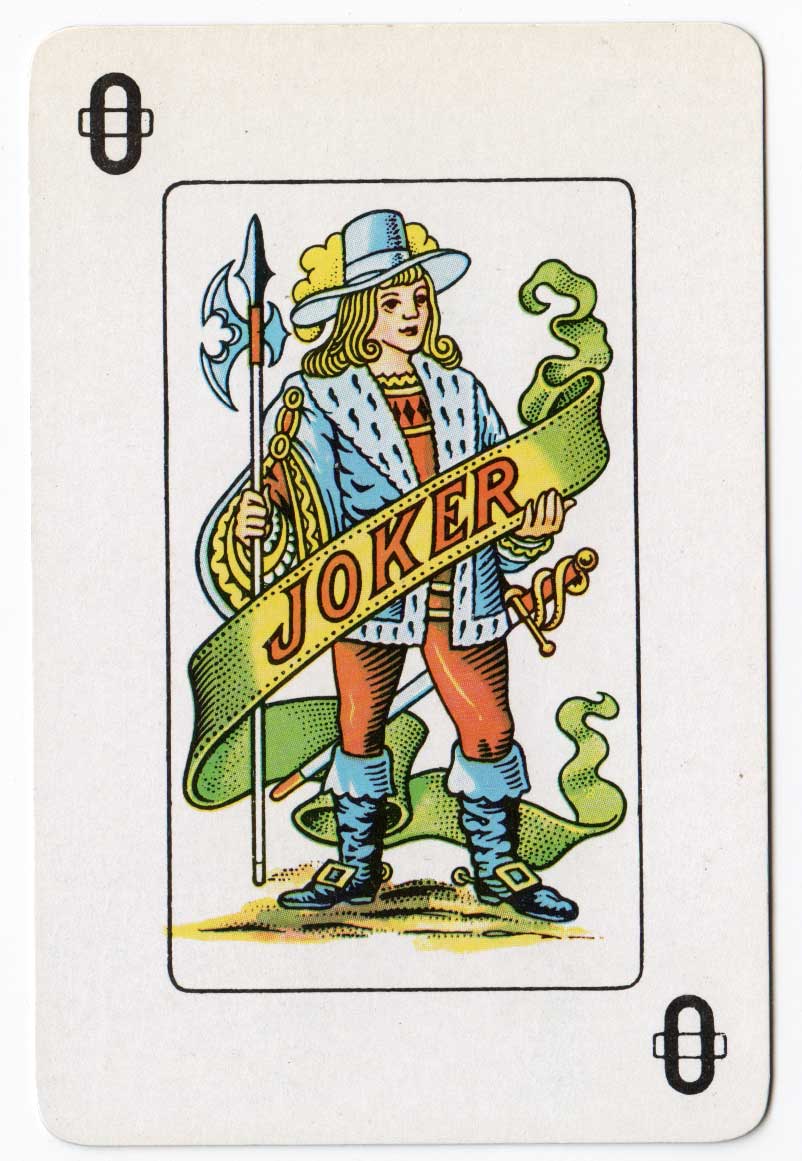
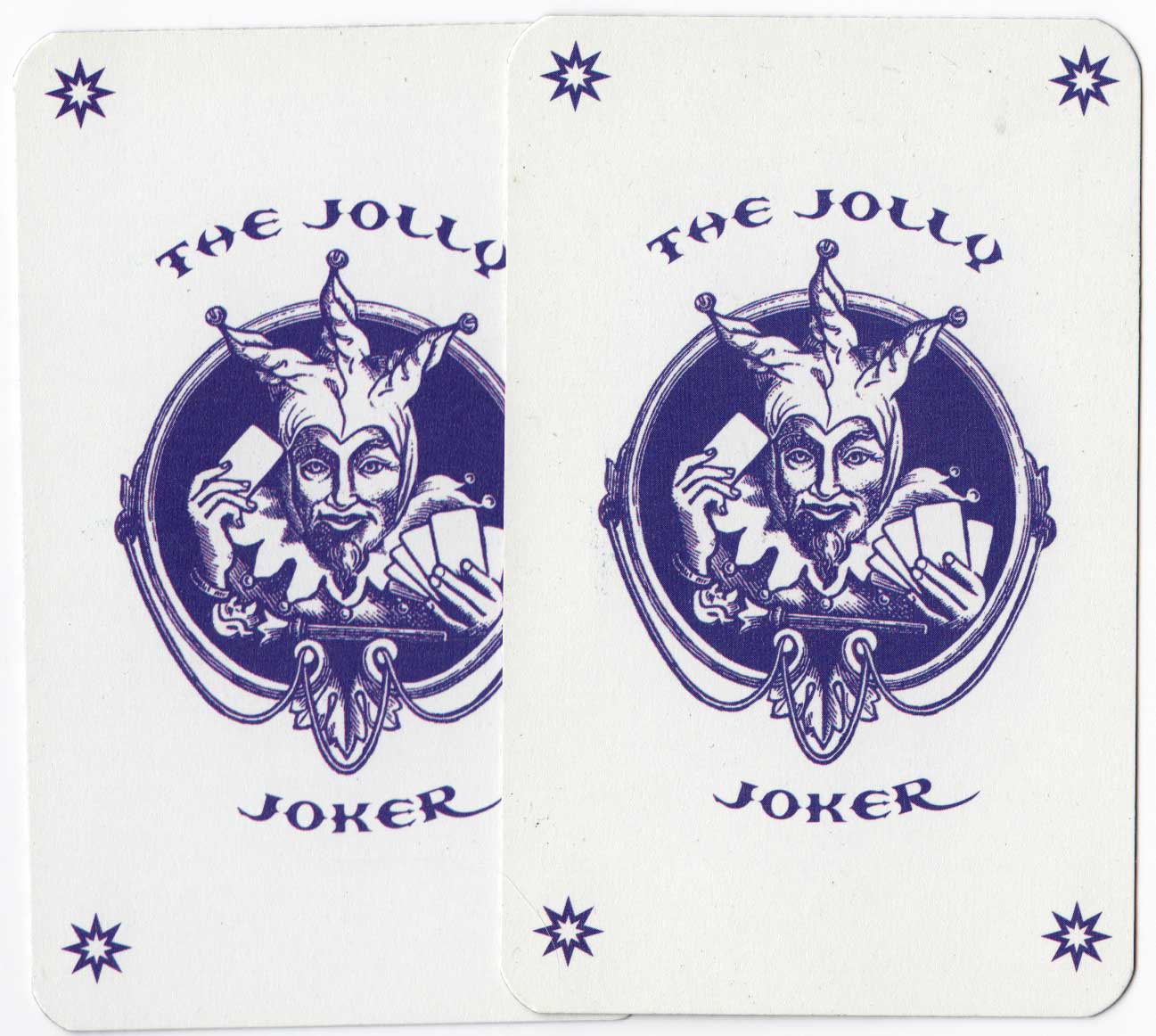
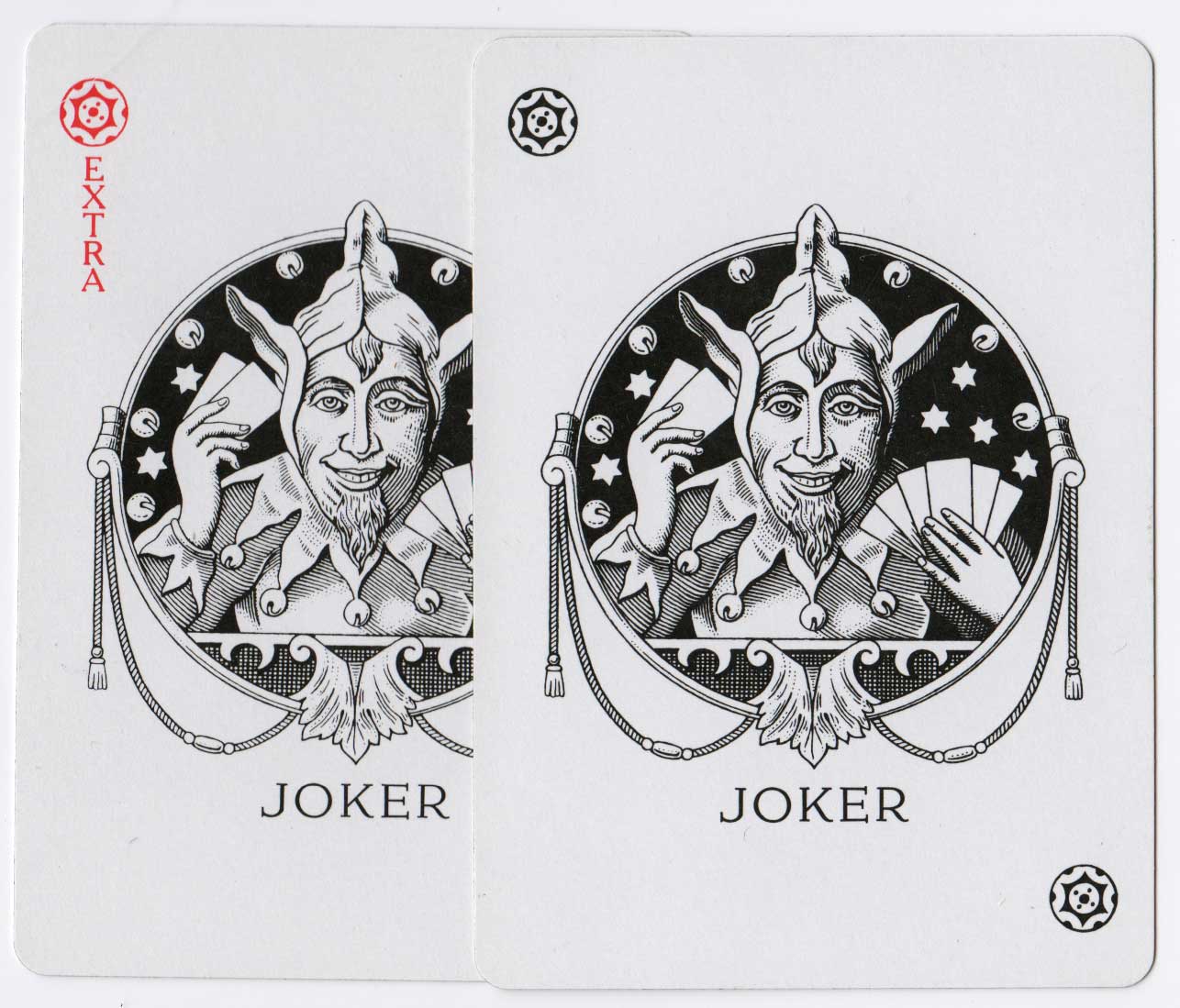
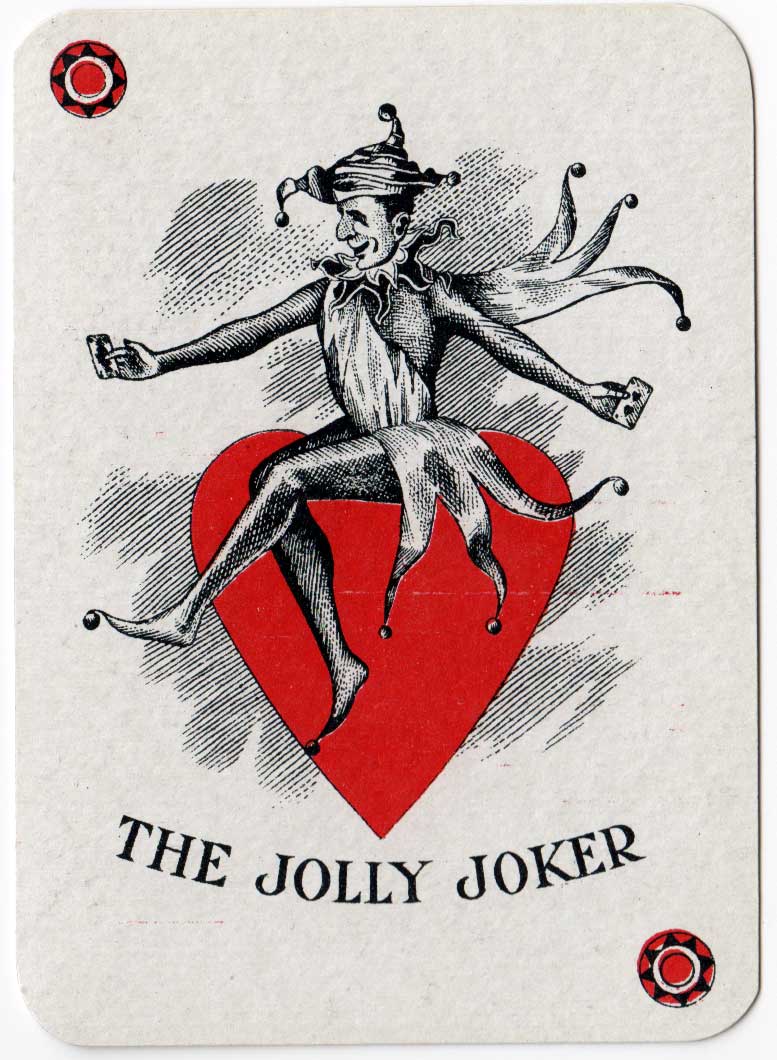
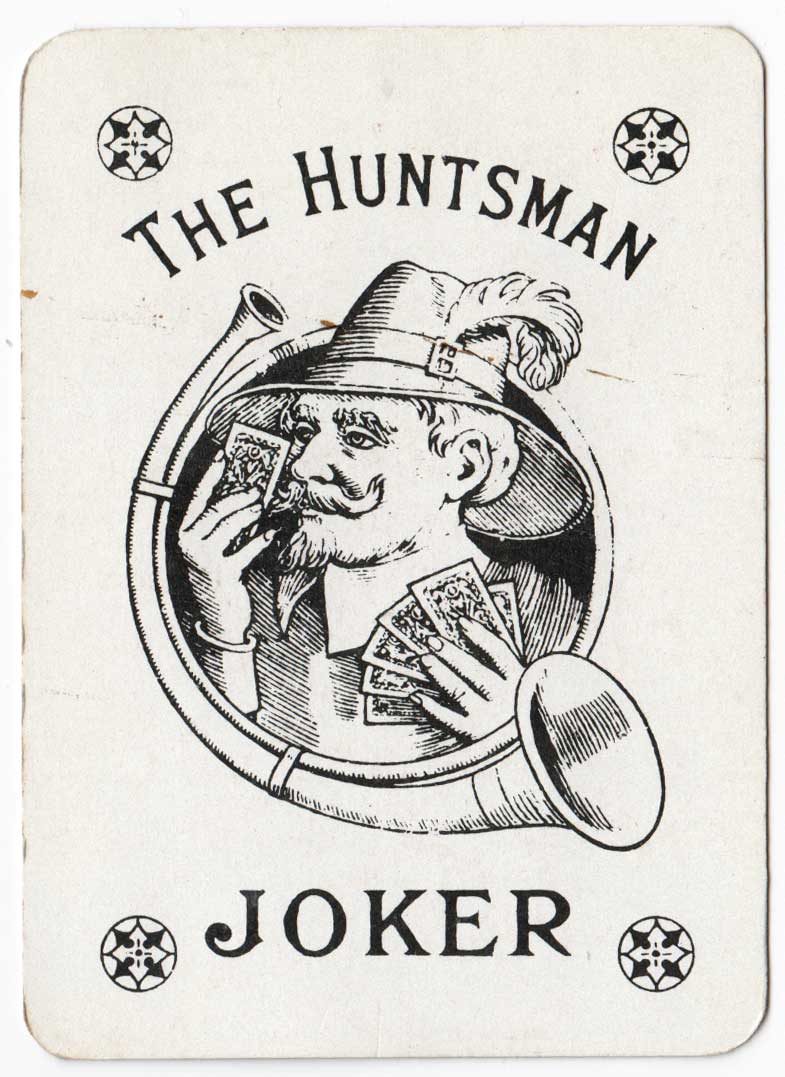
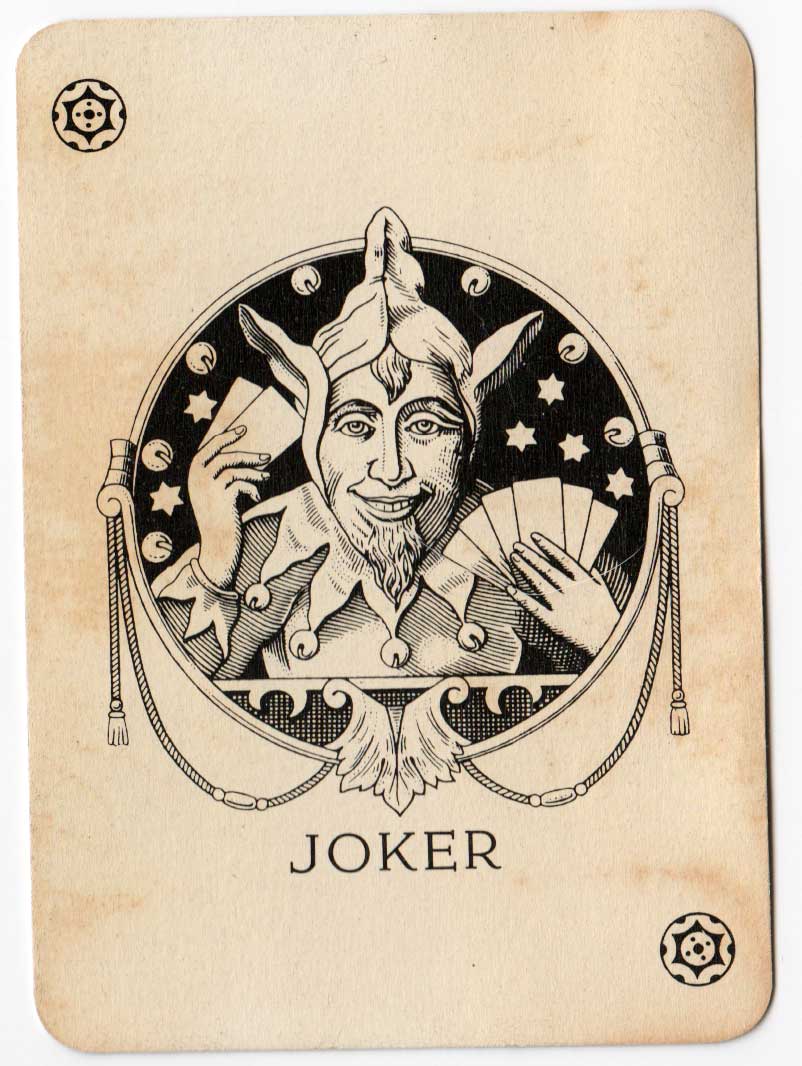
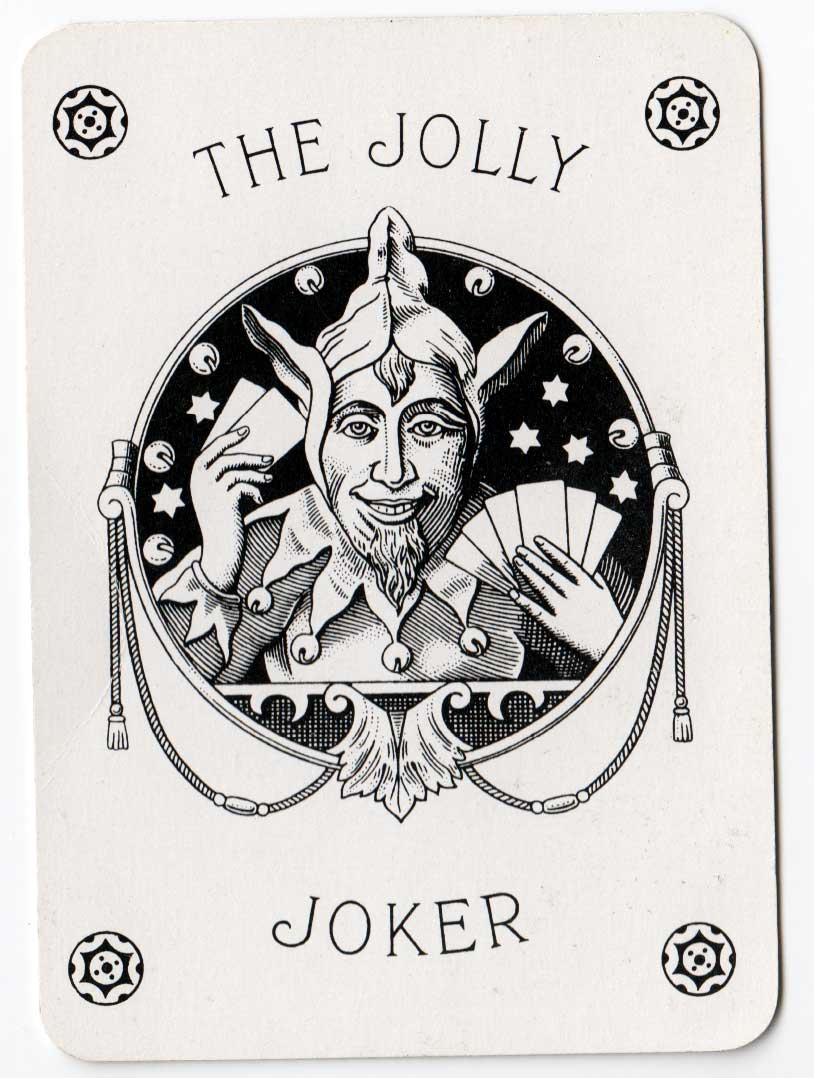
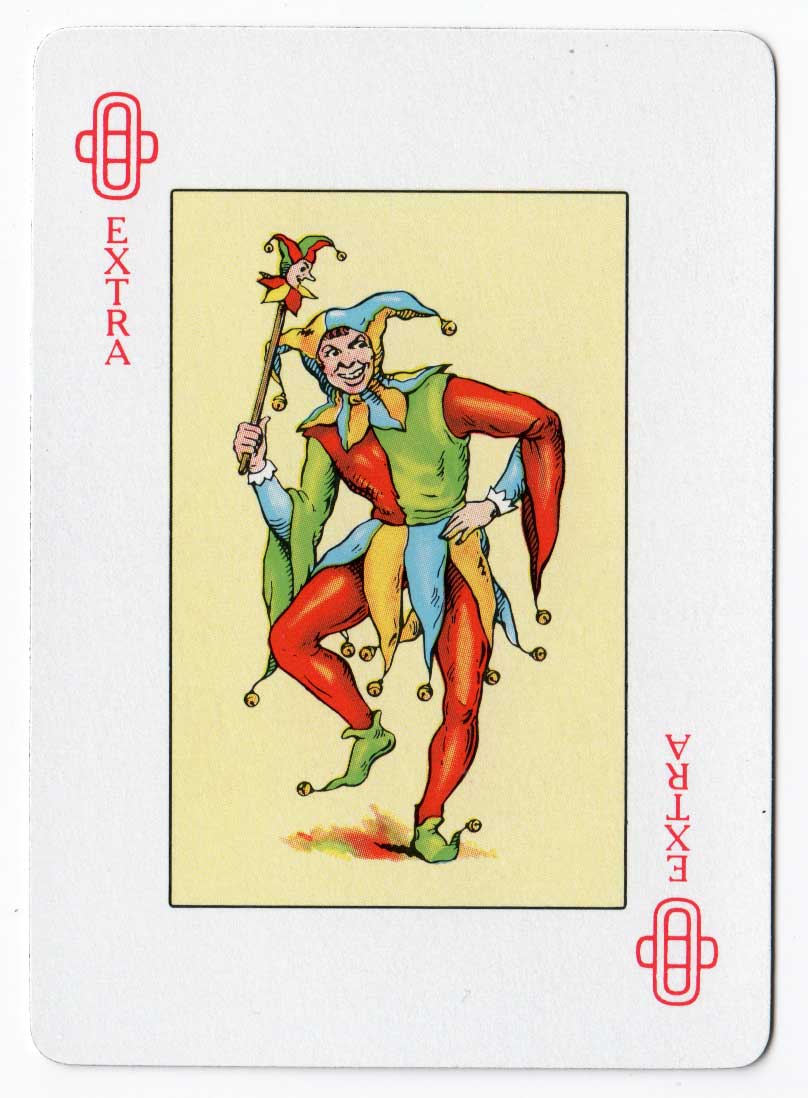
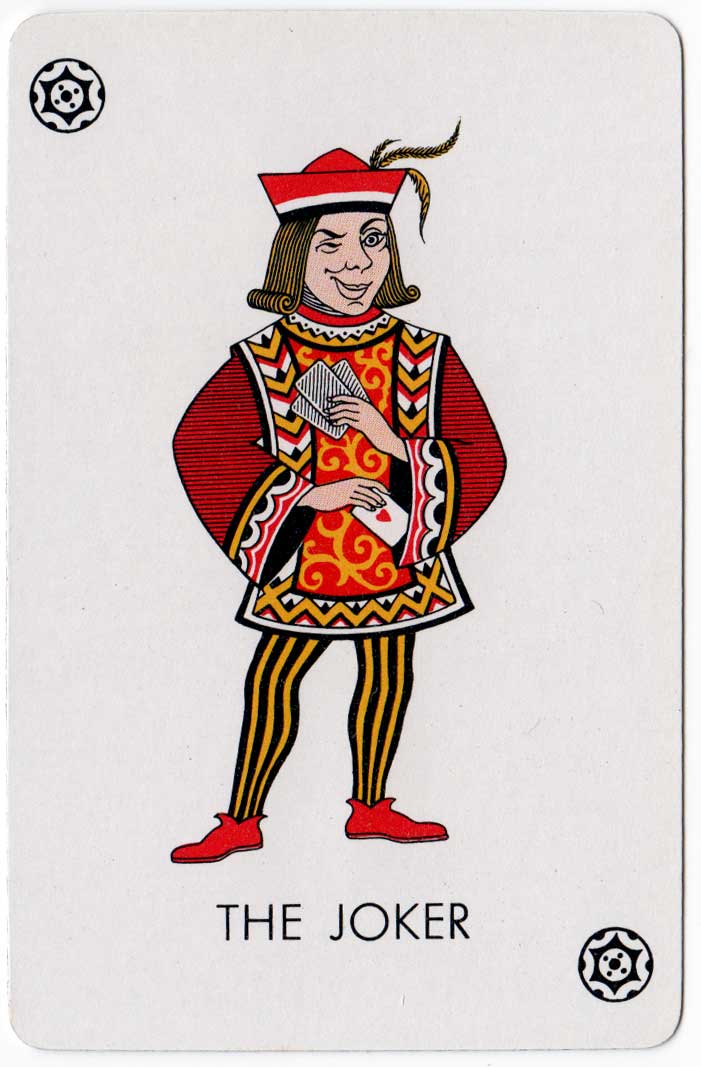
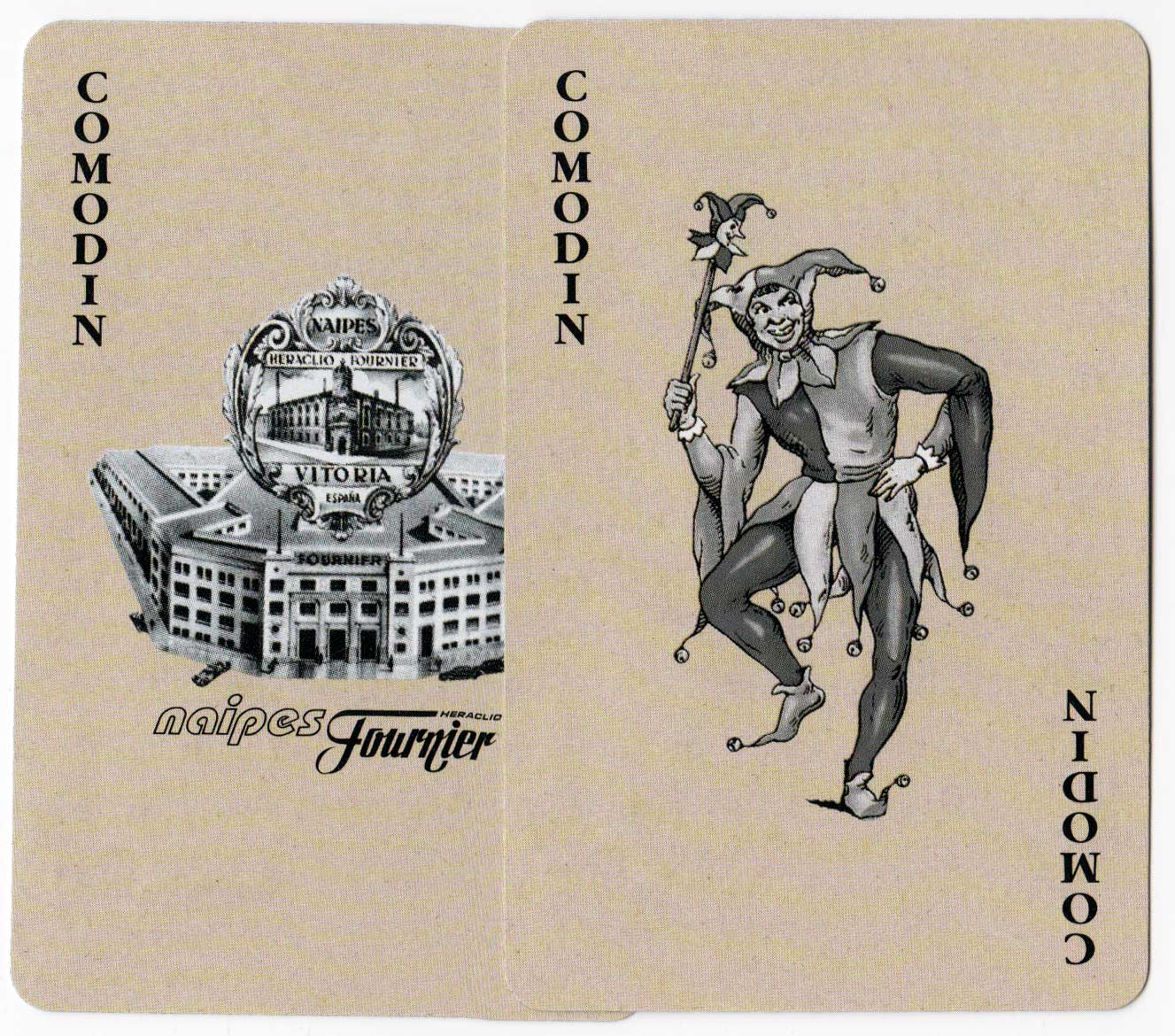
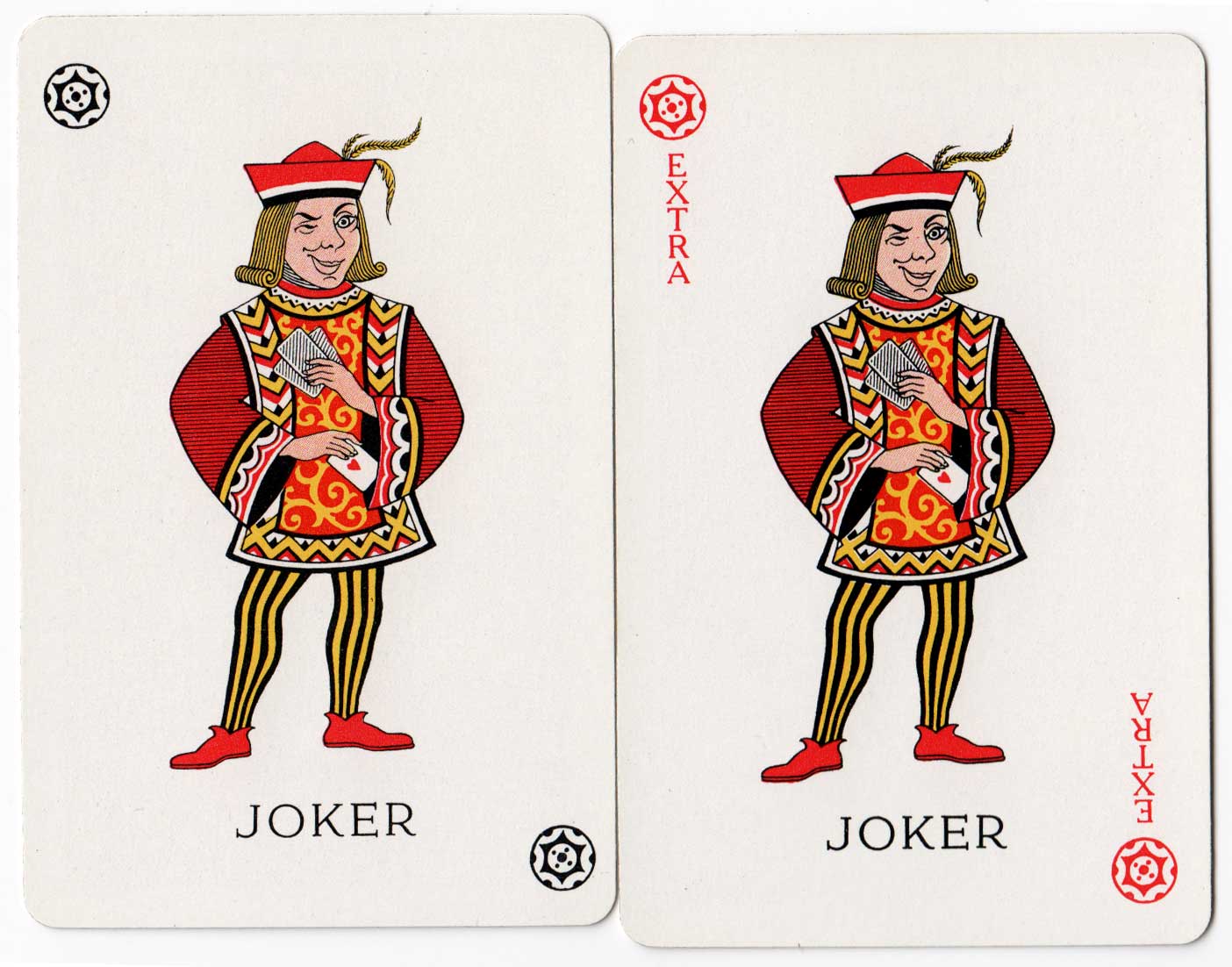
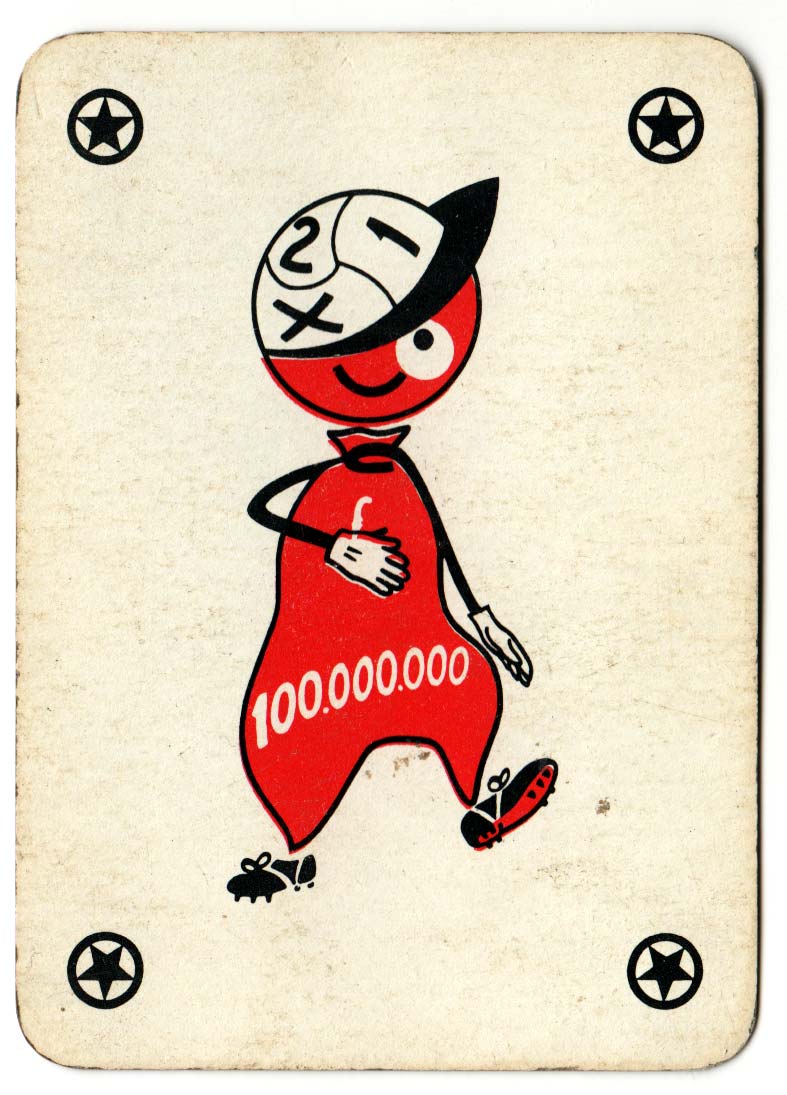
Italy
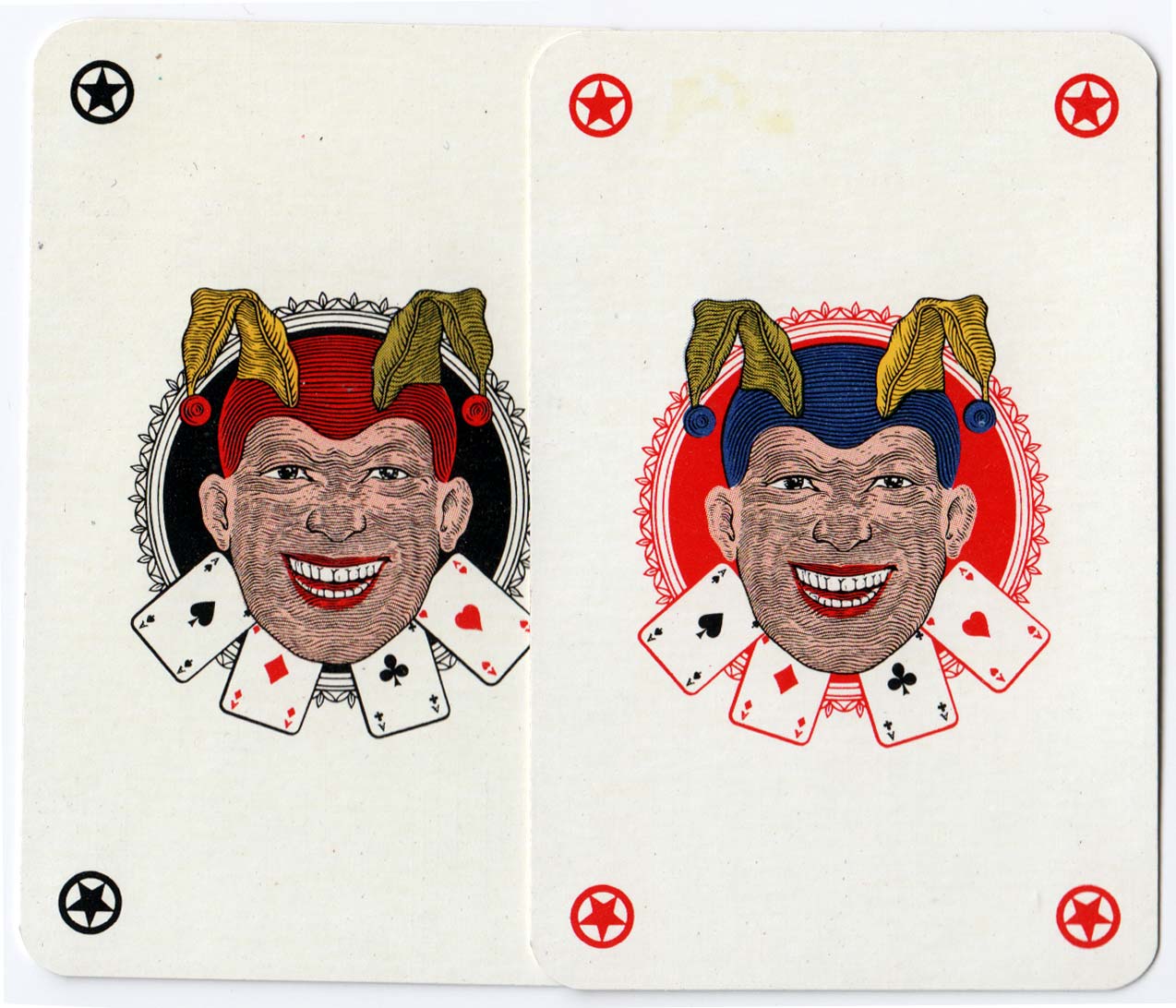
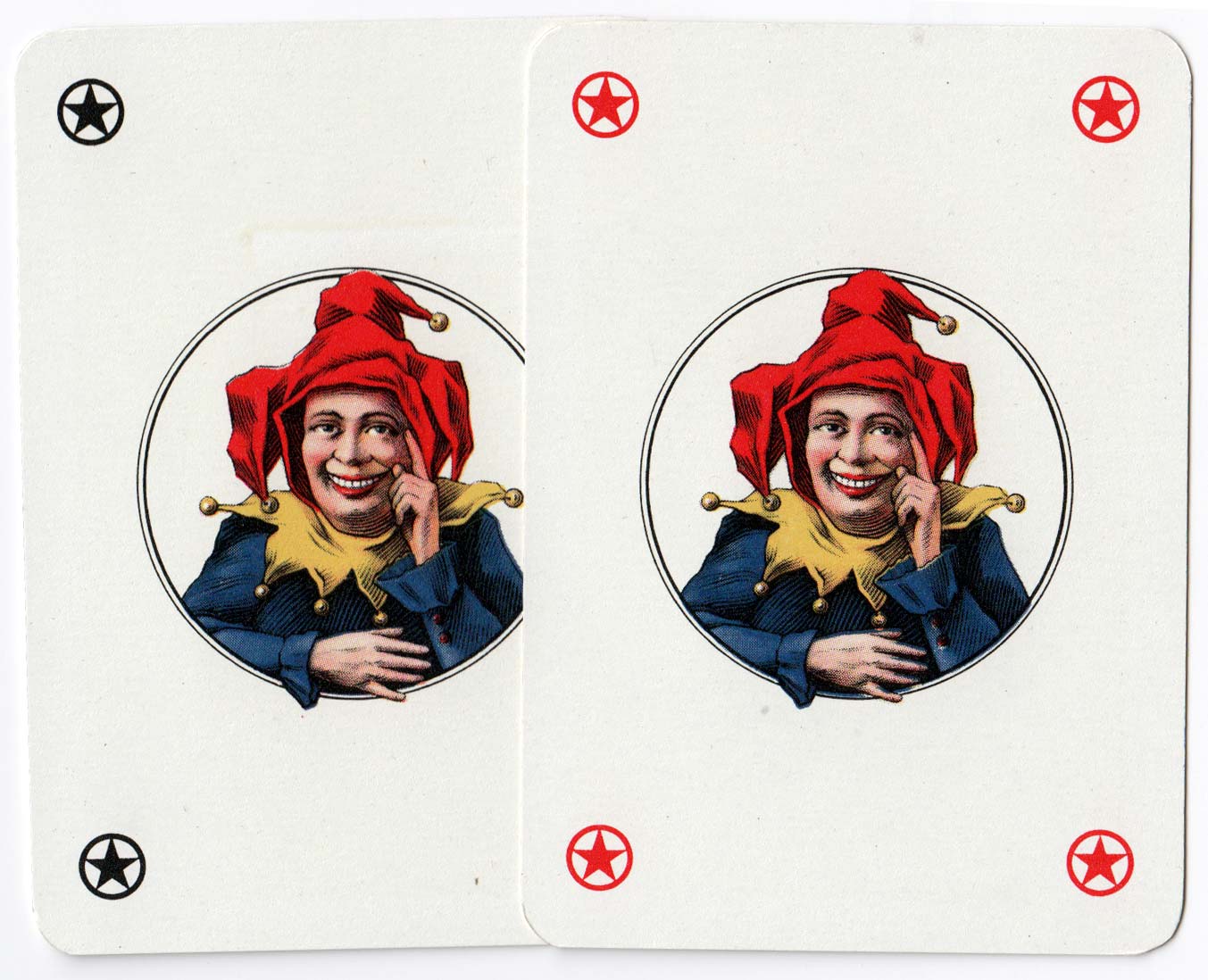
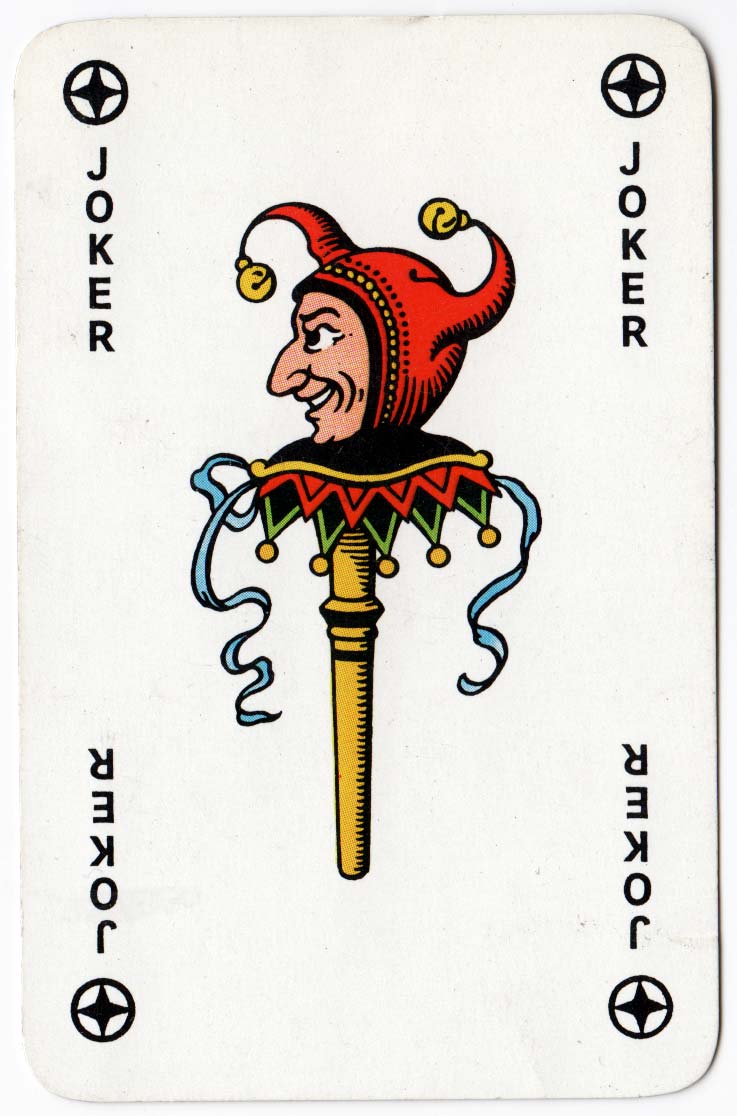
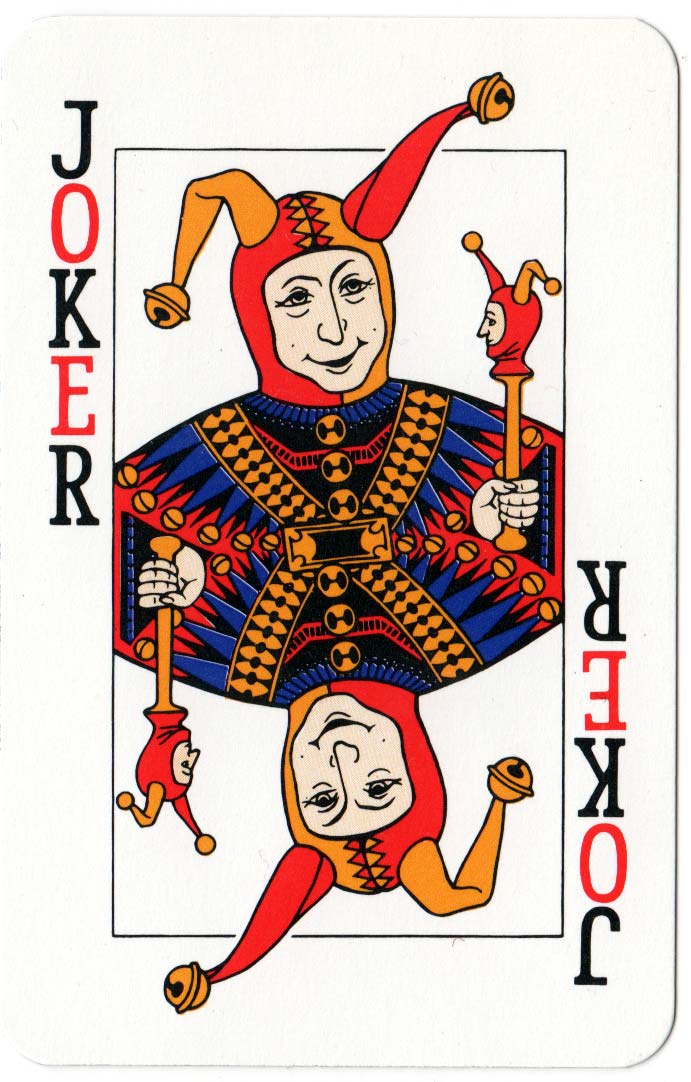
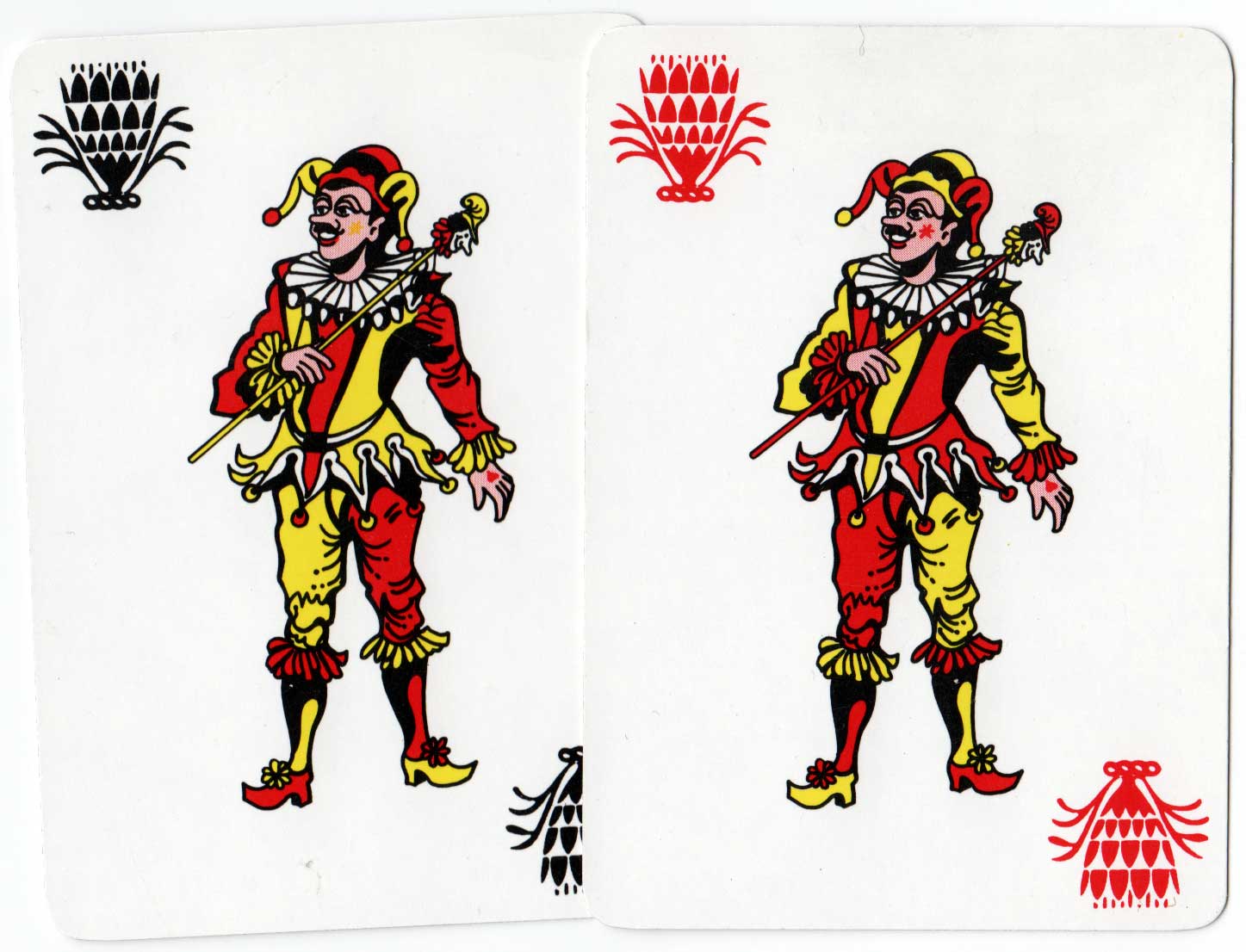
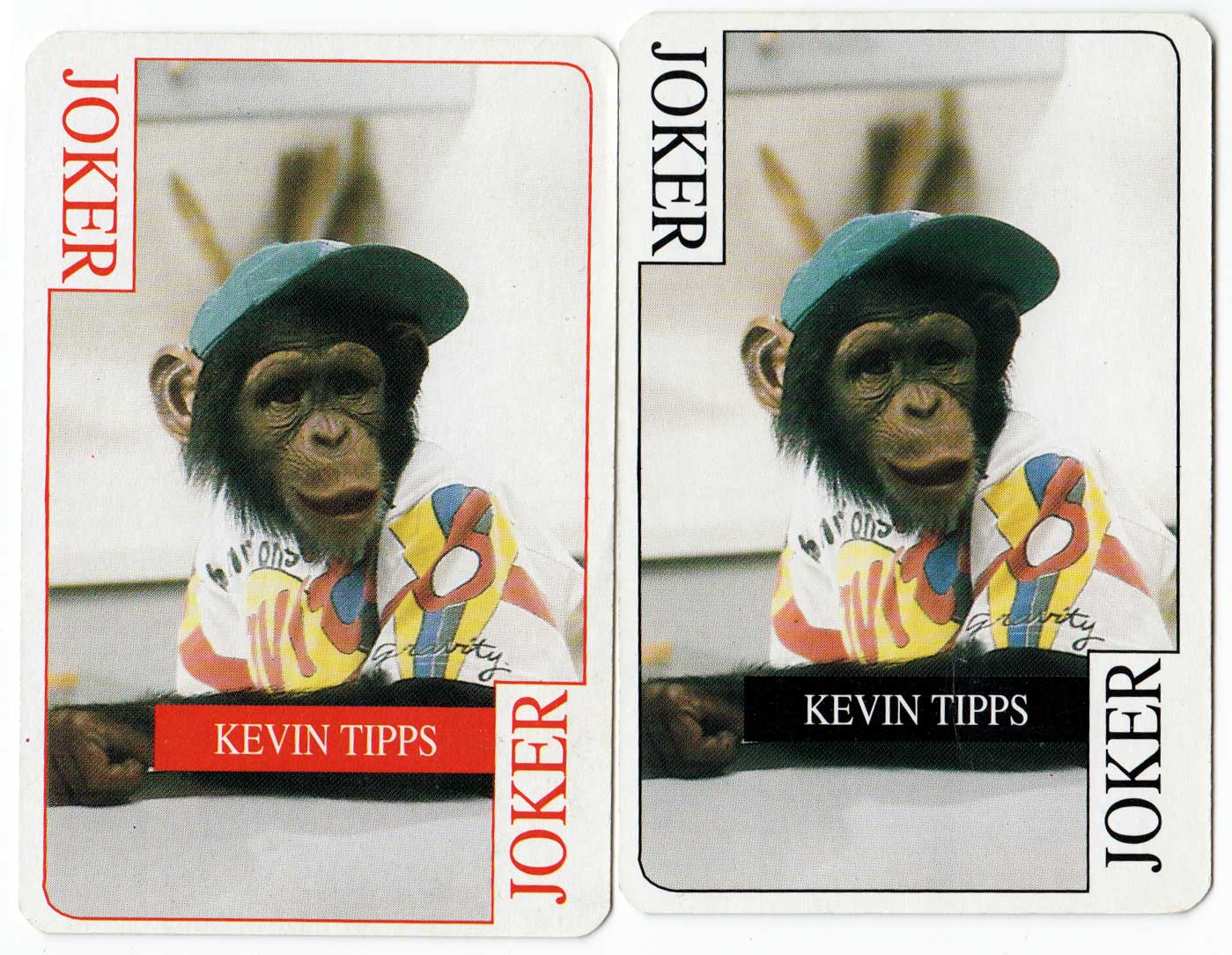
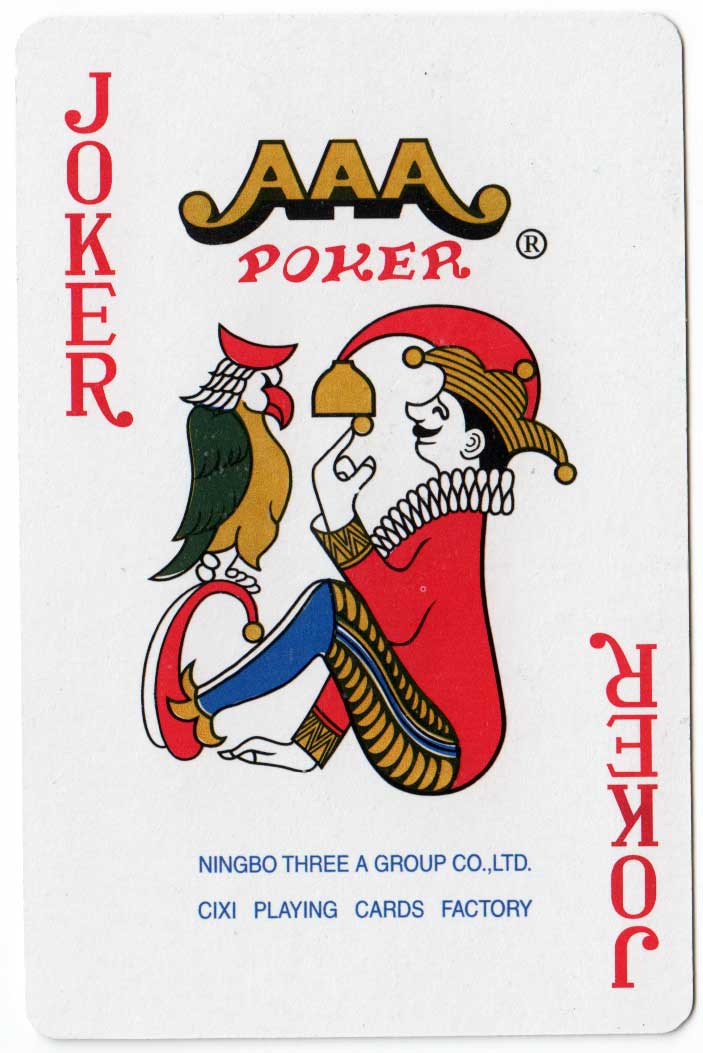
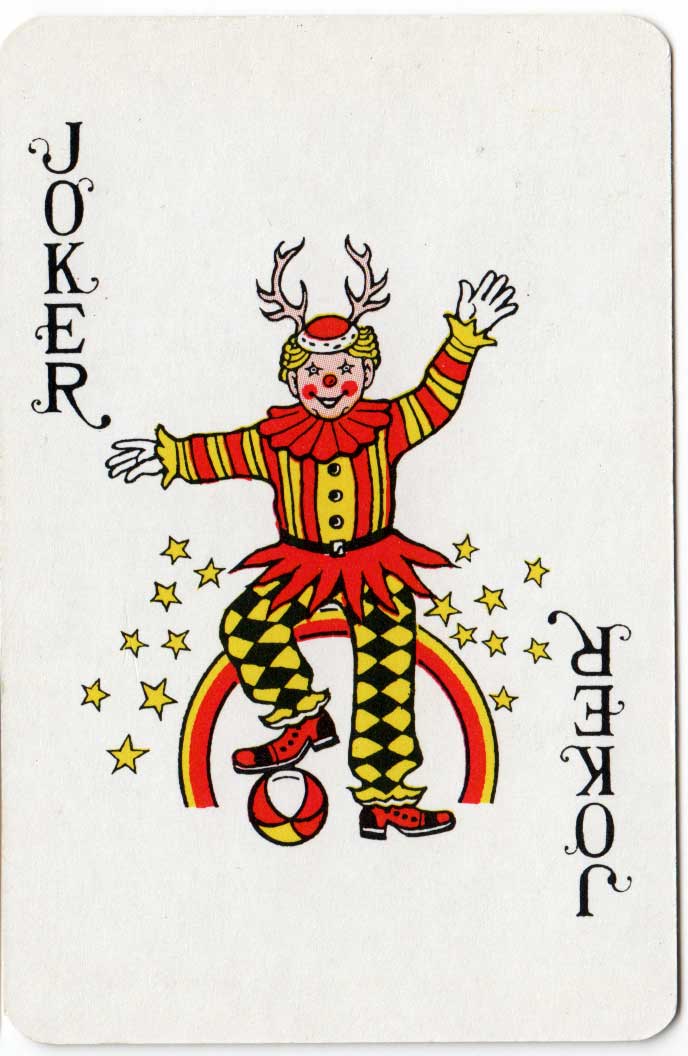
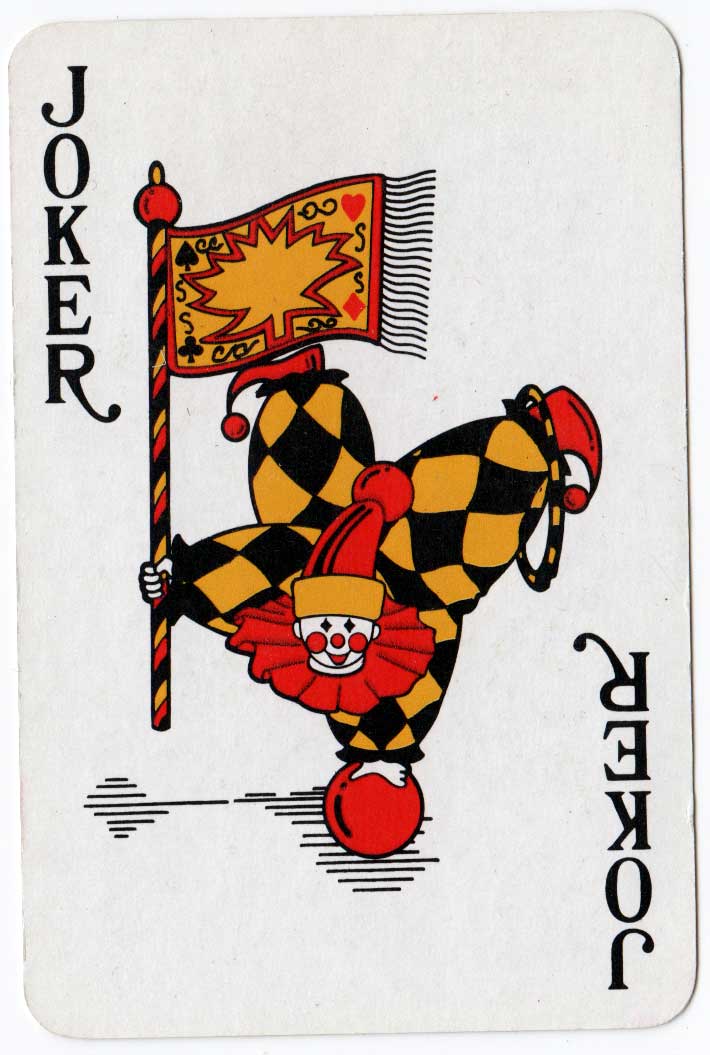
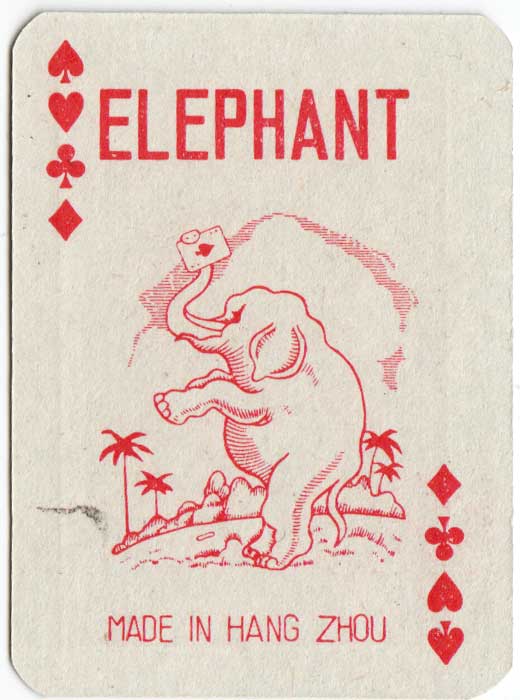
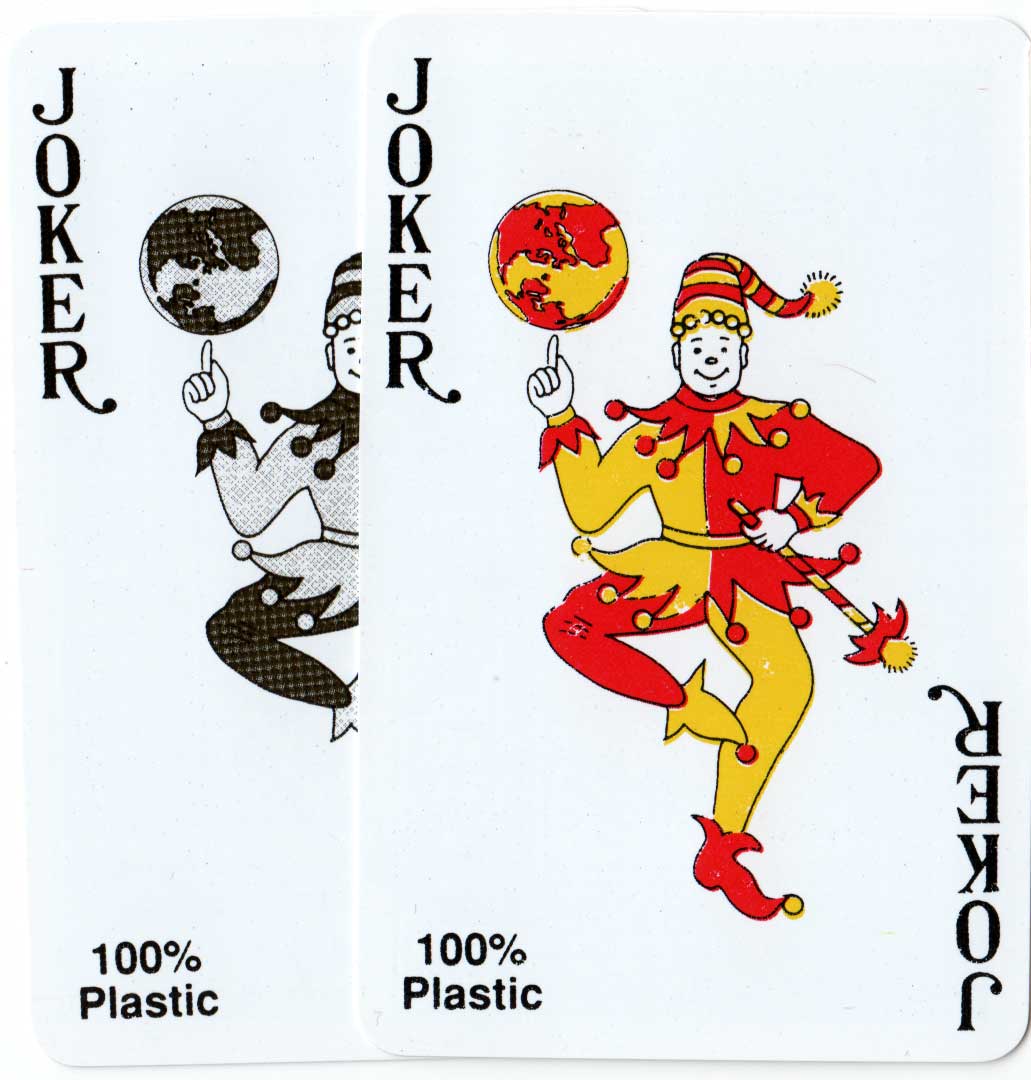
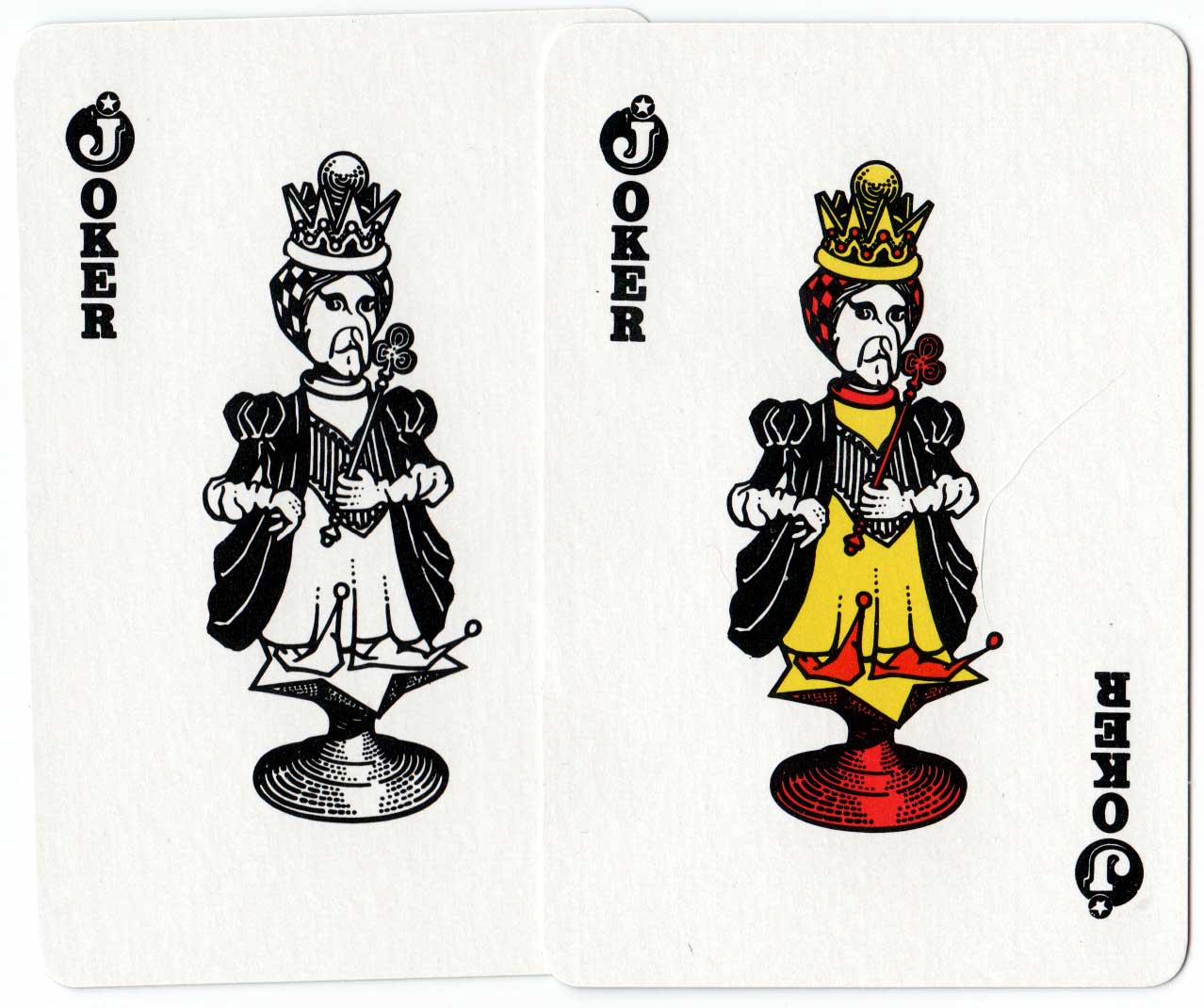
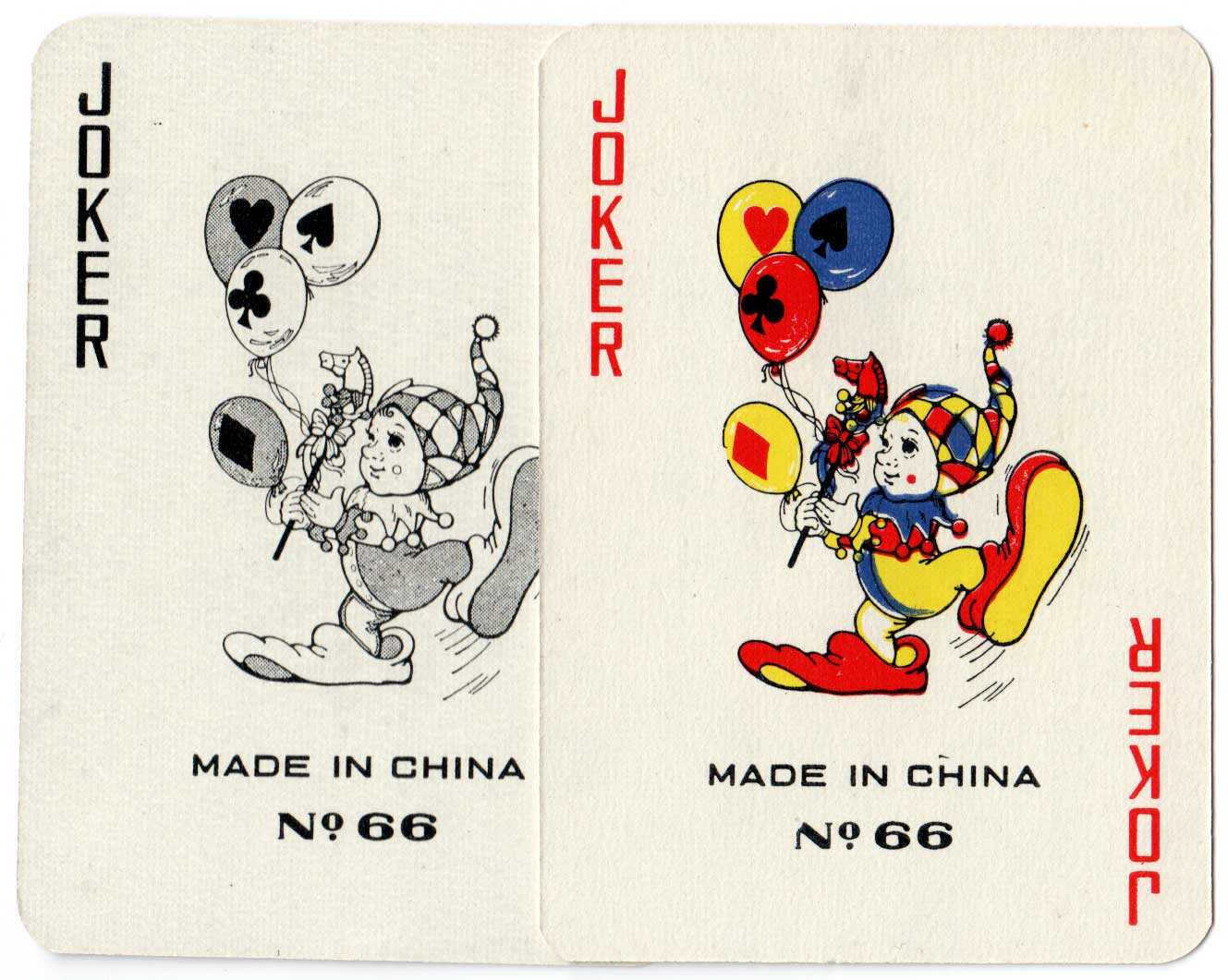
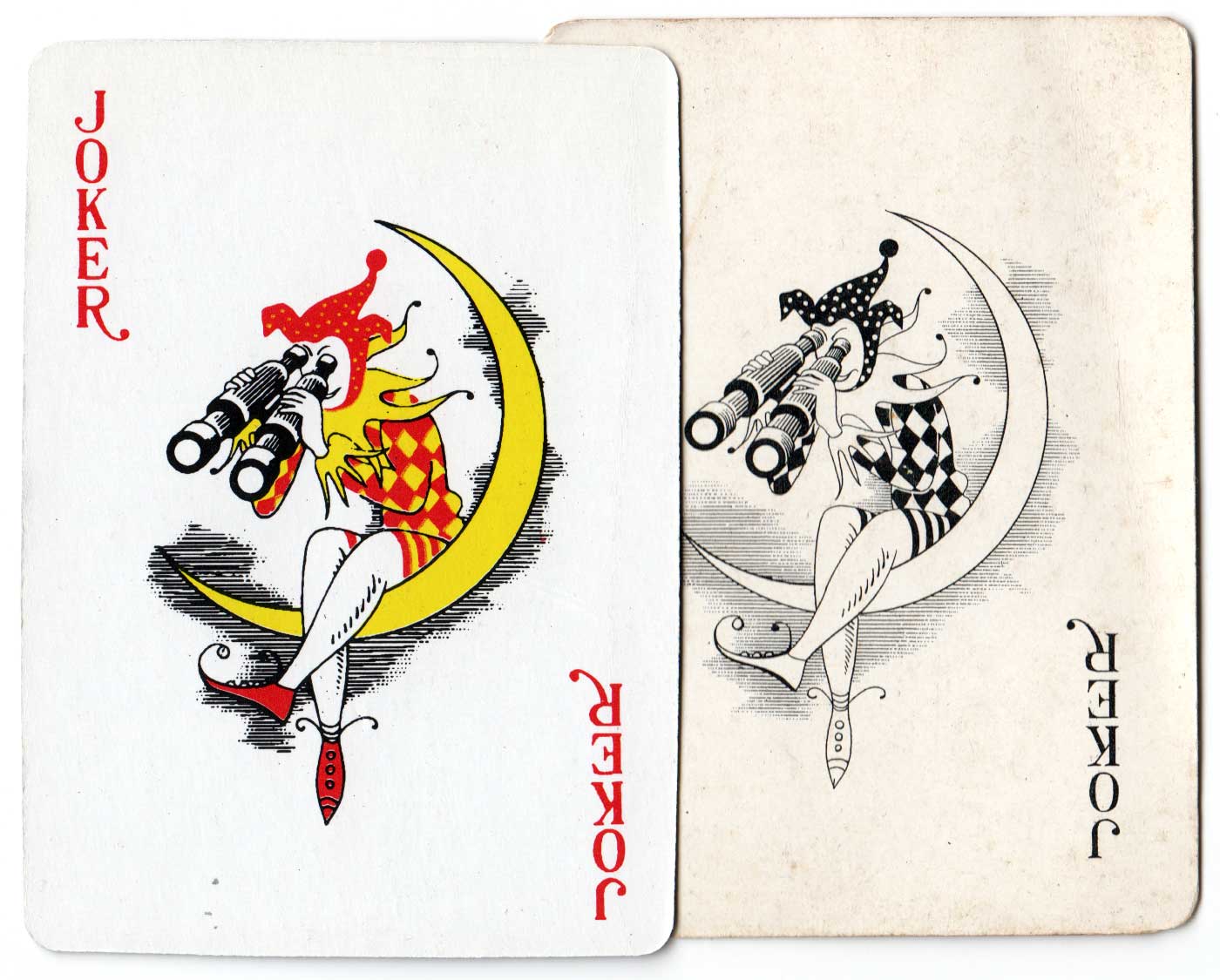
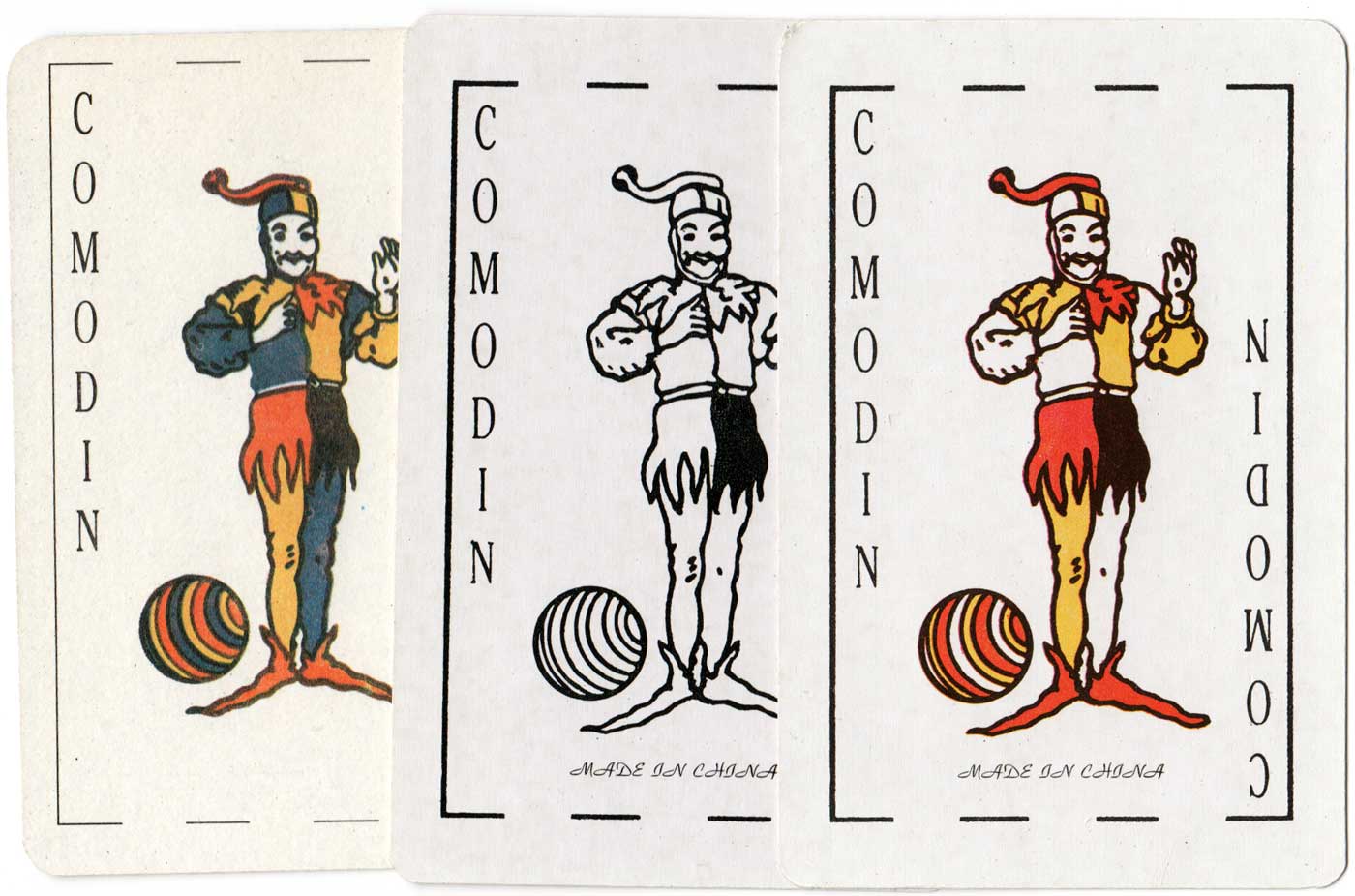
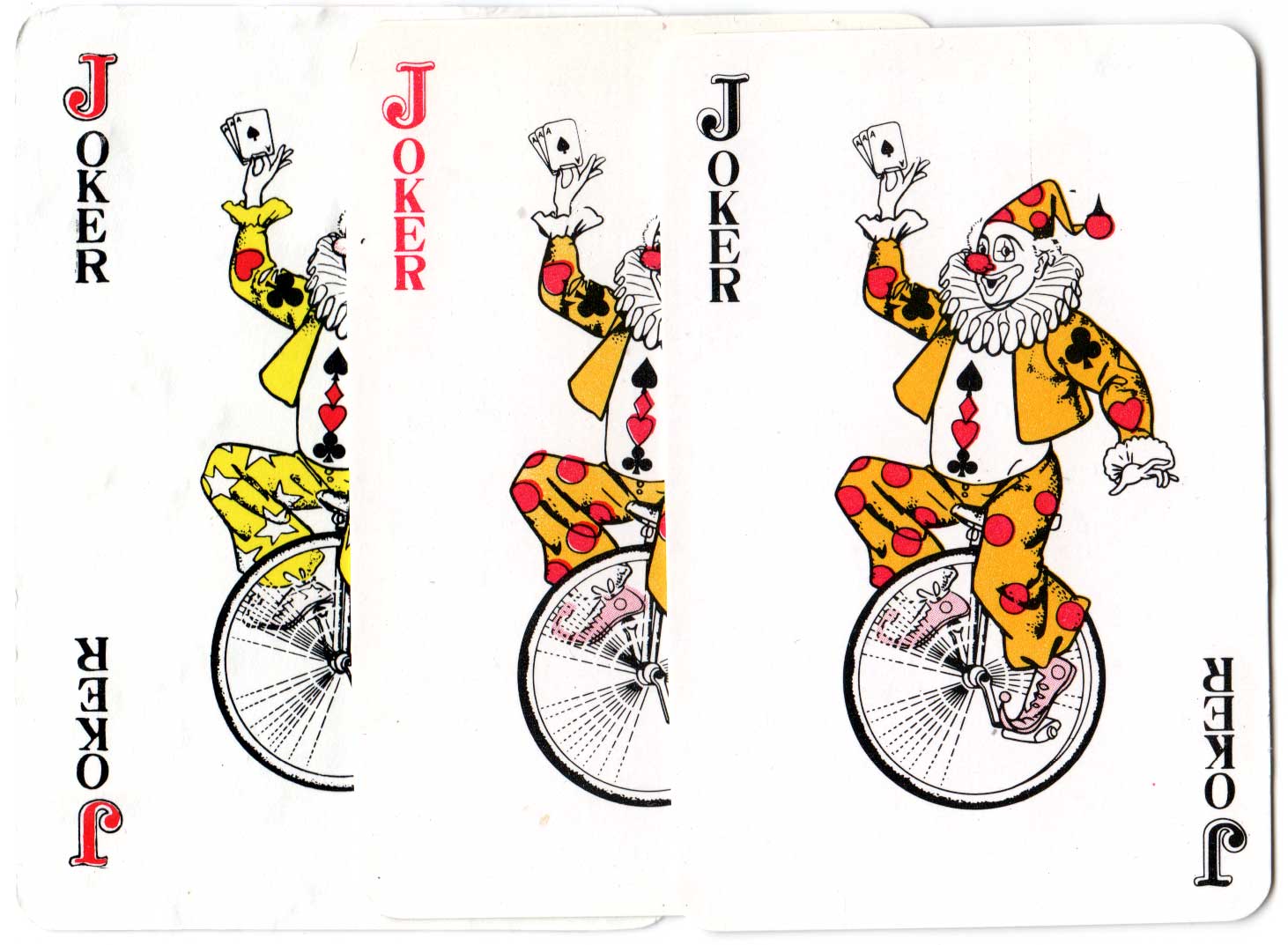
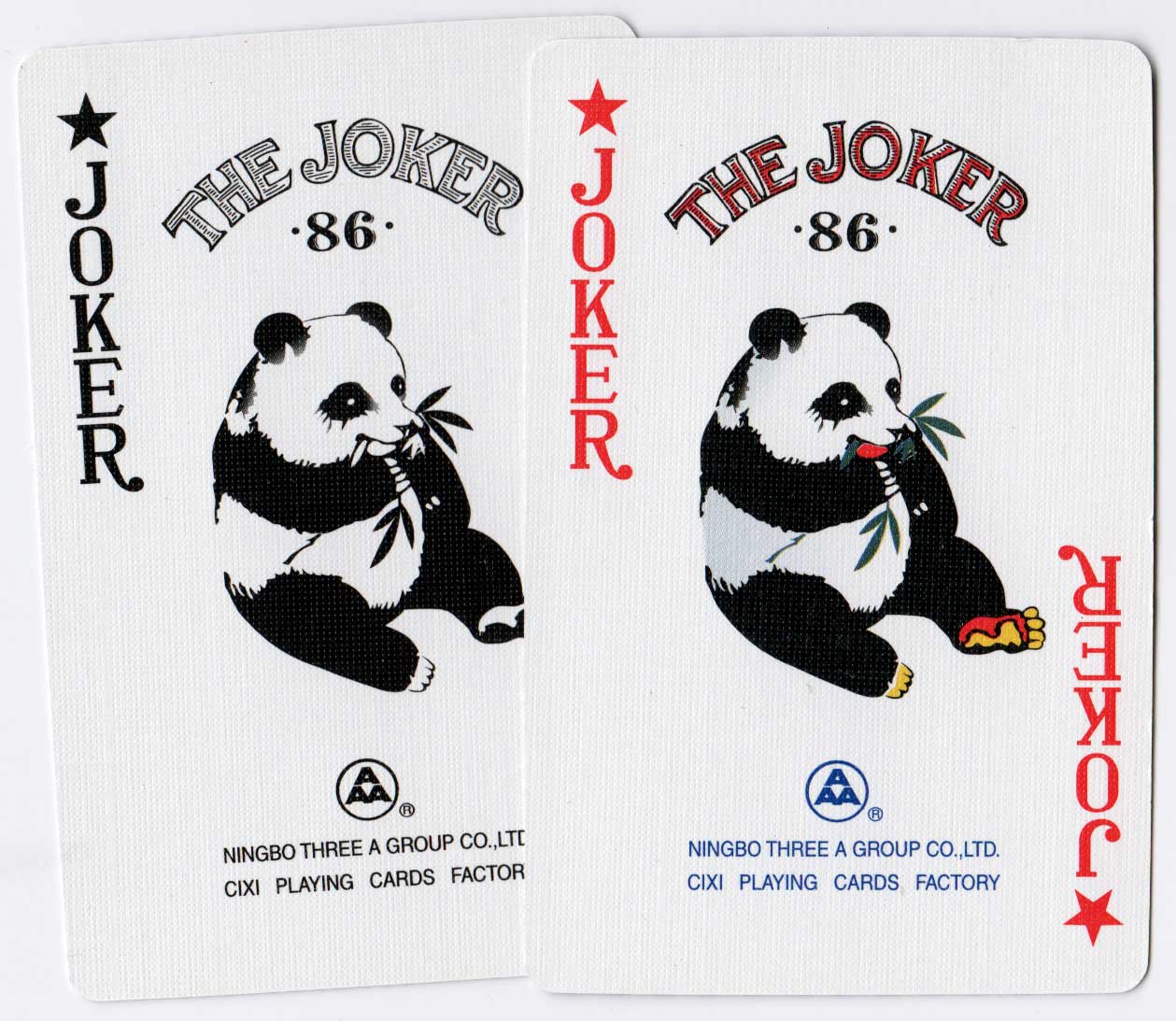
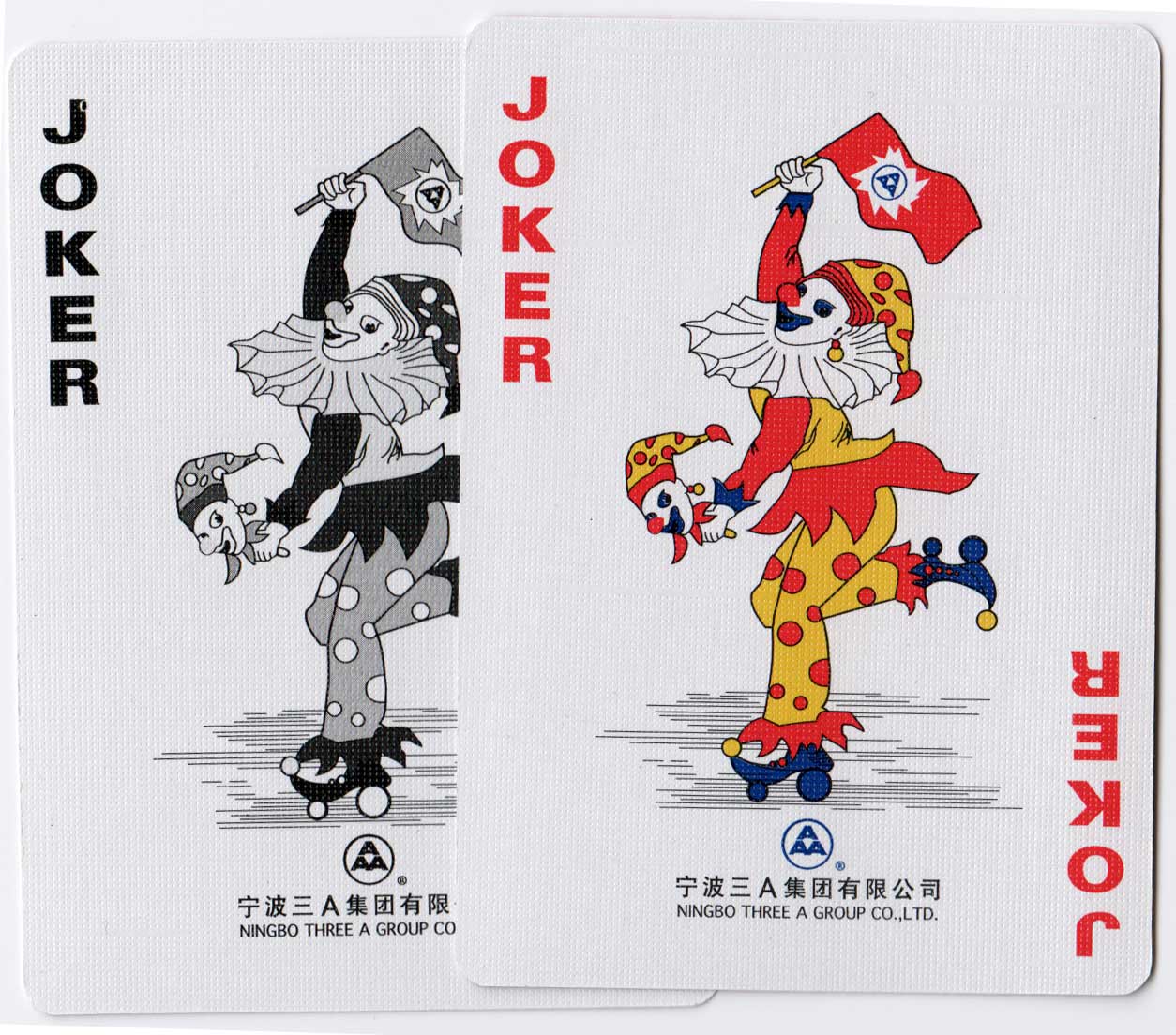
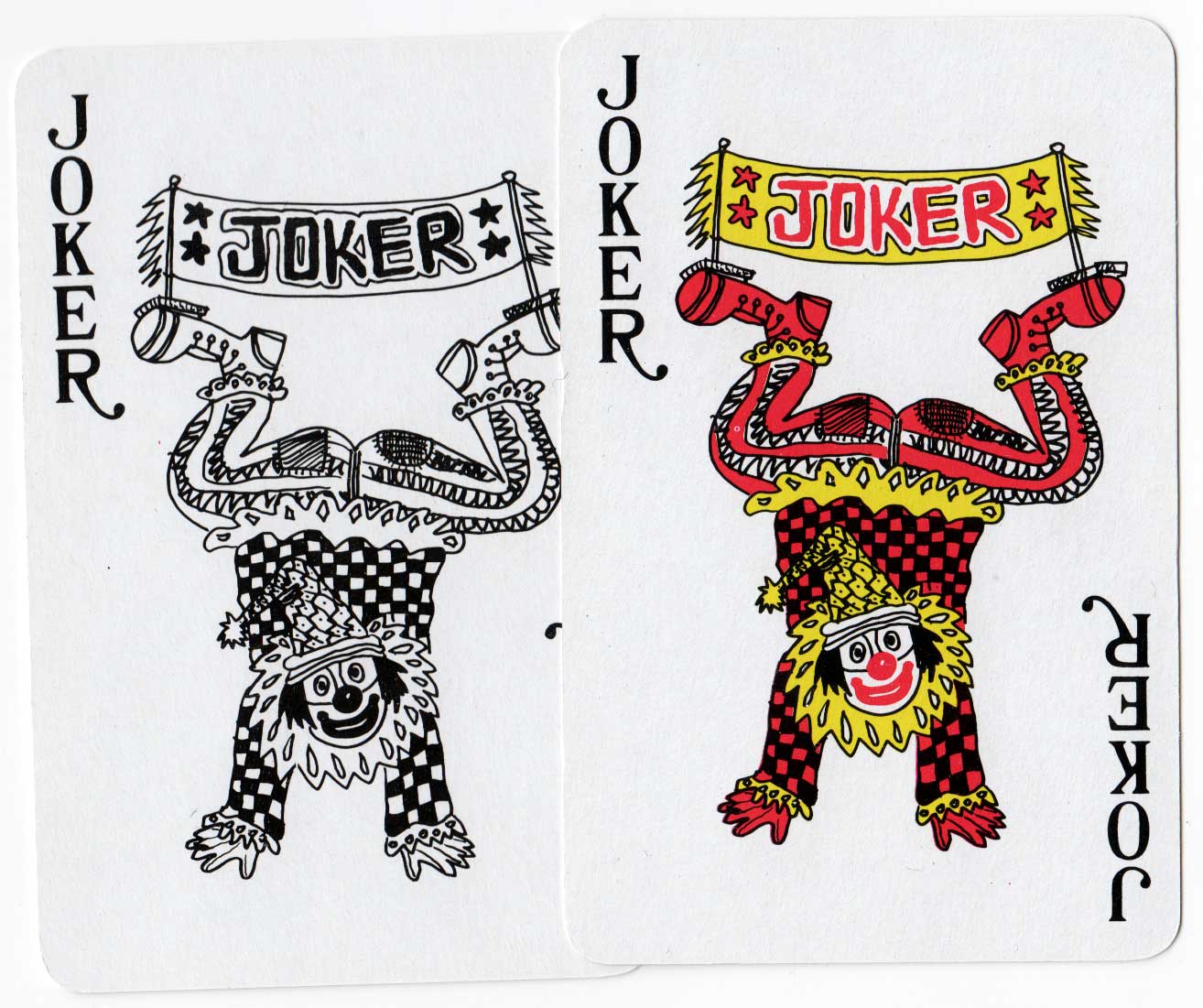
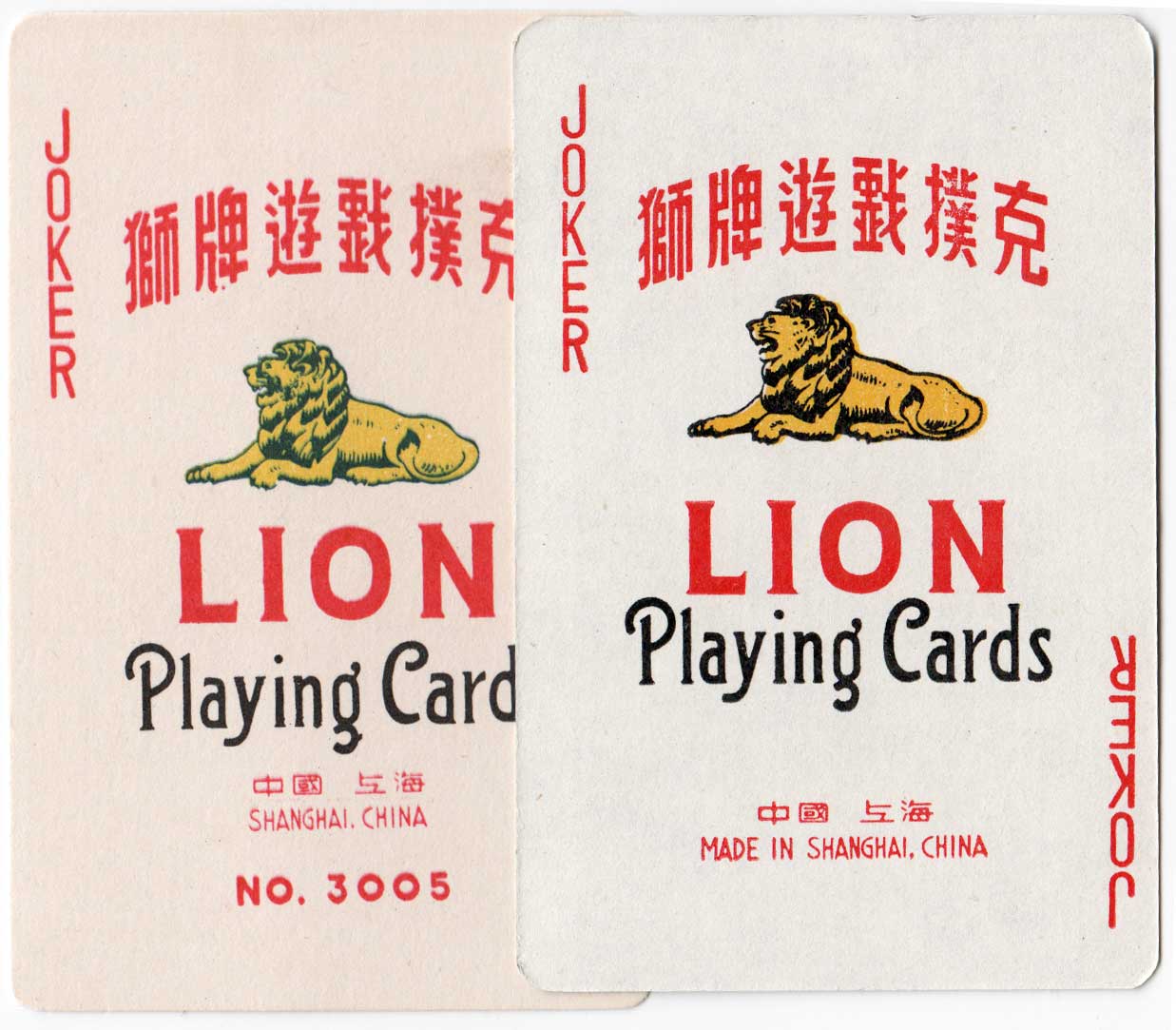
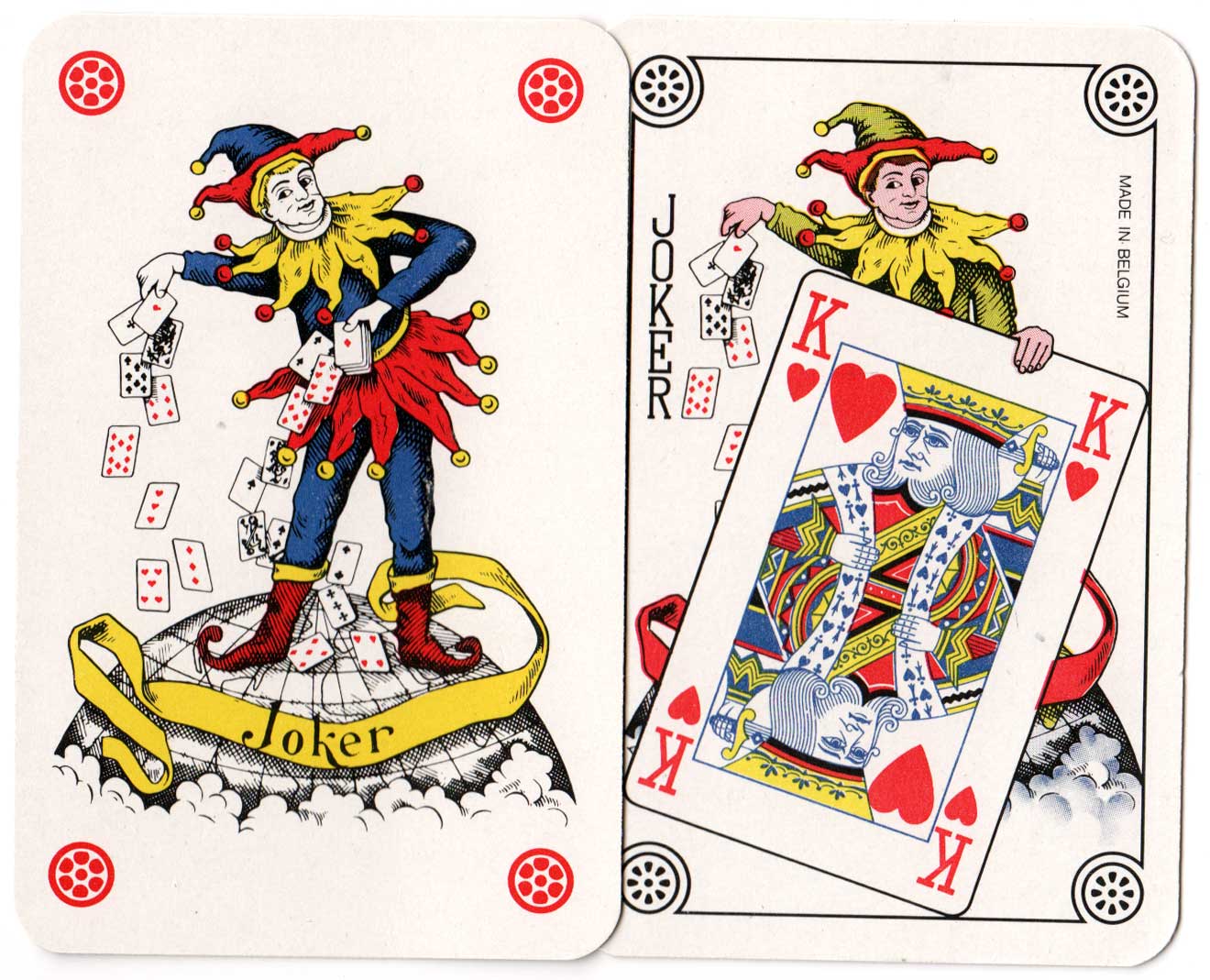
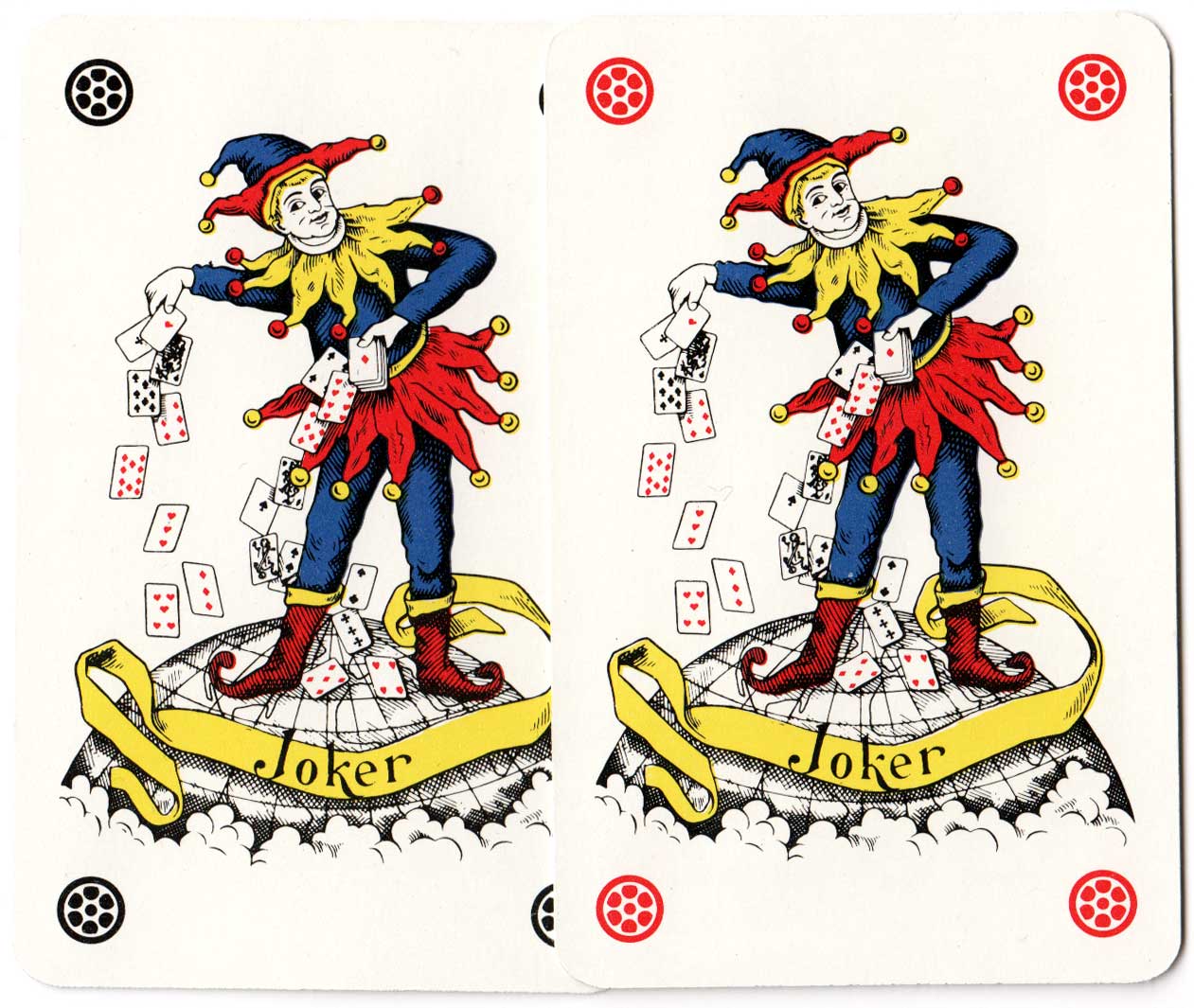
Belgium
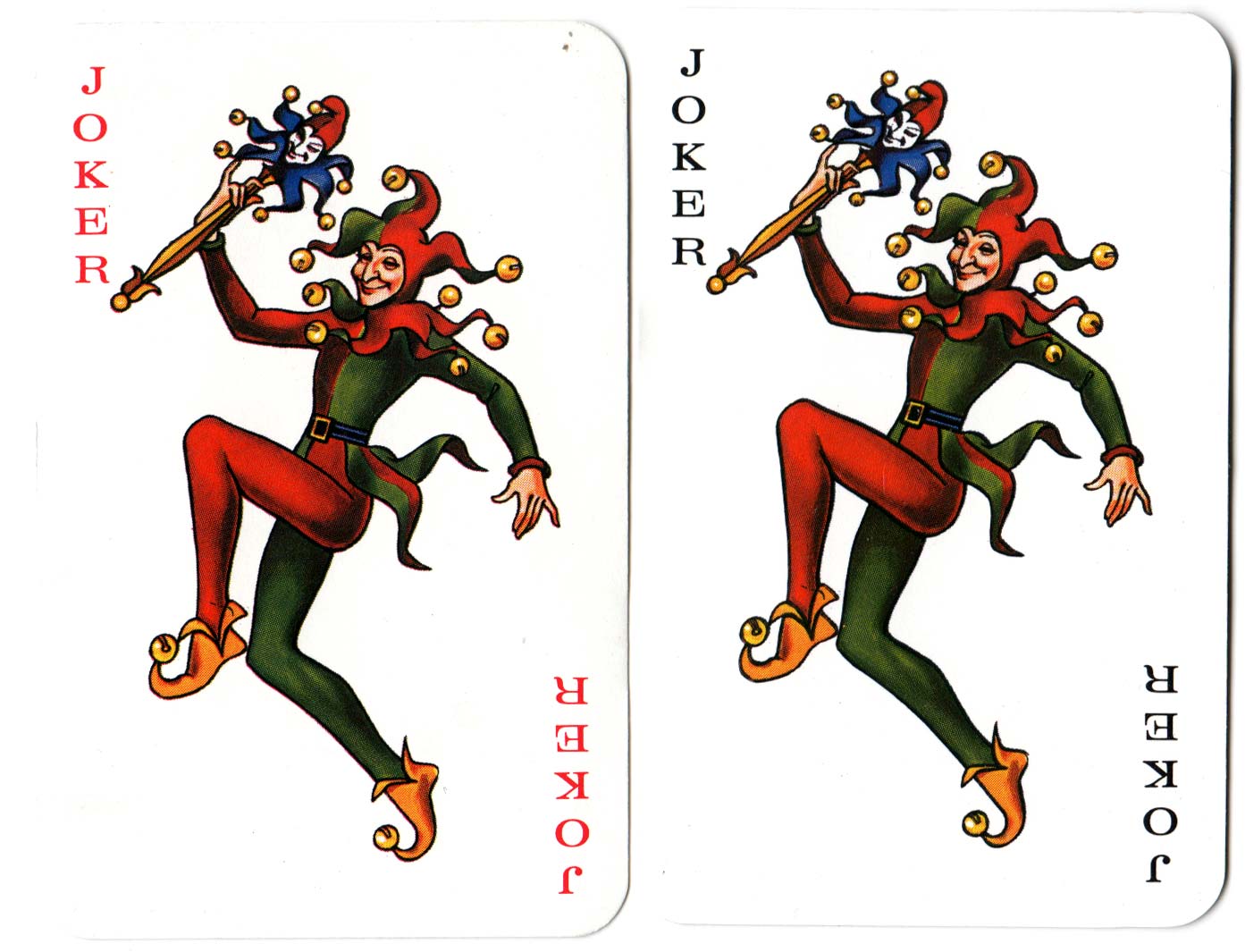
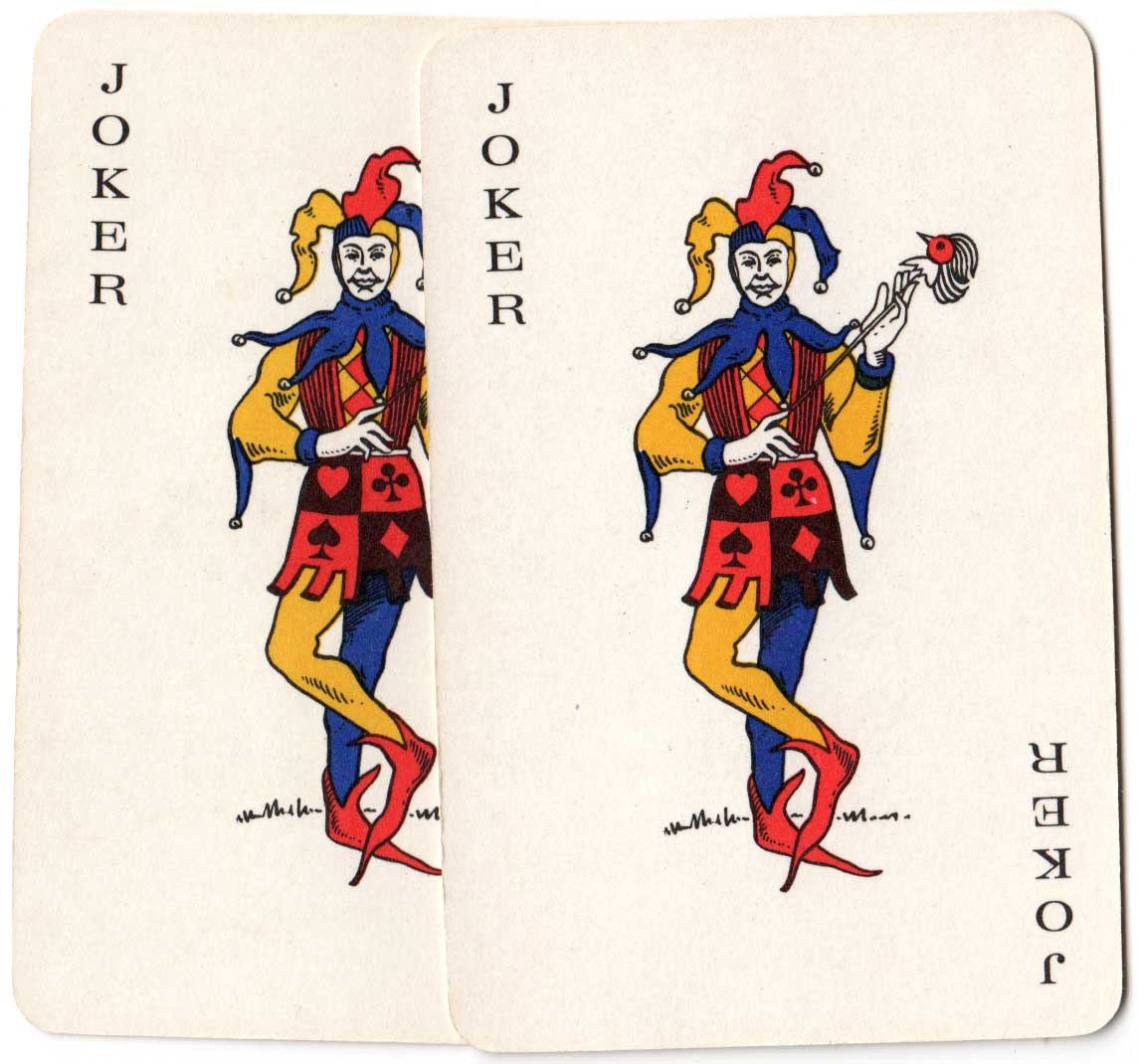
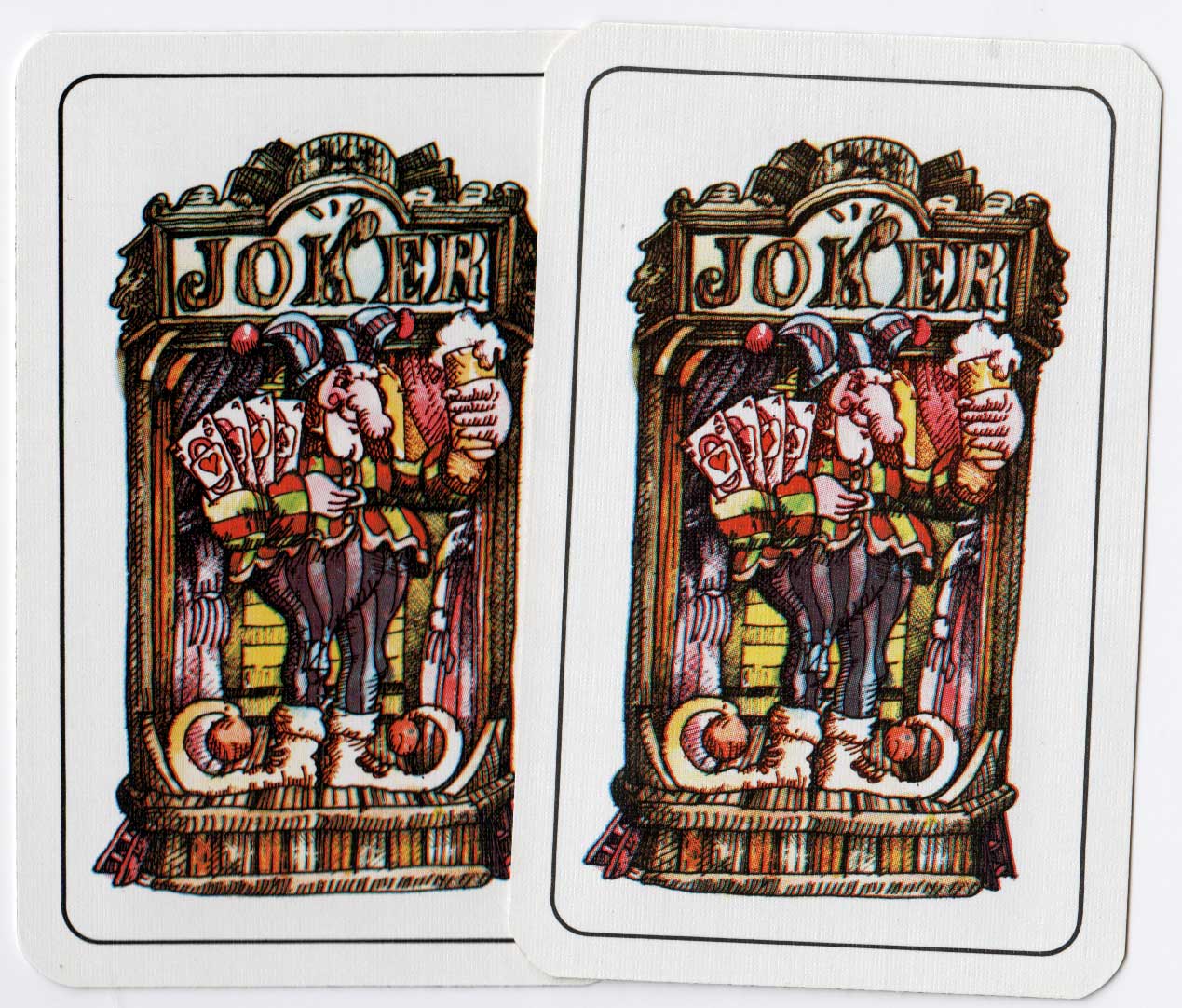
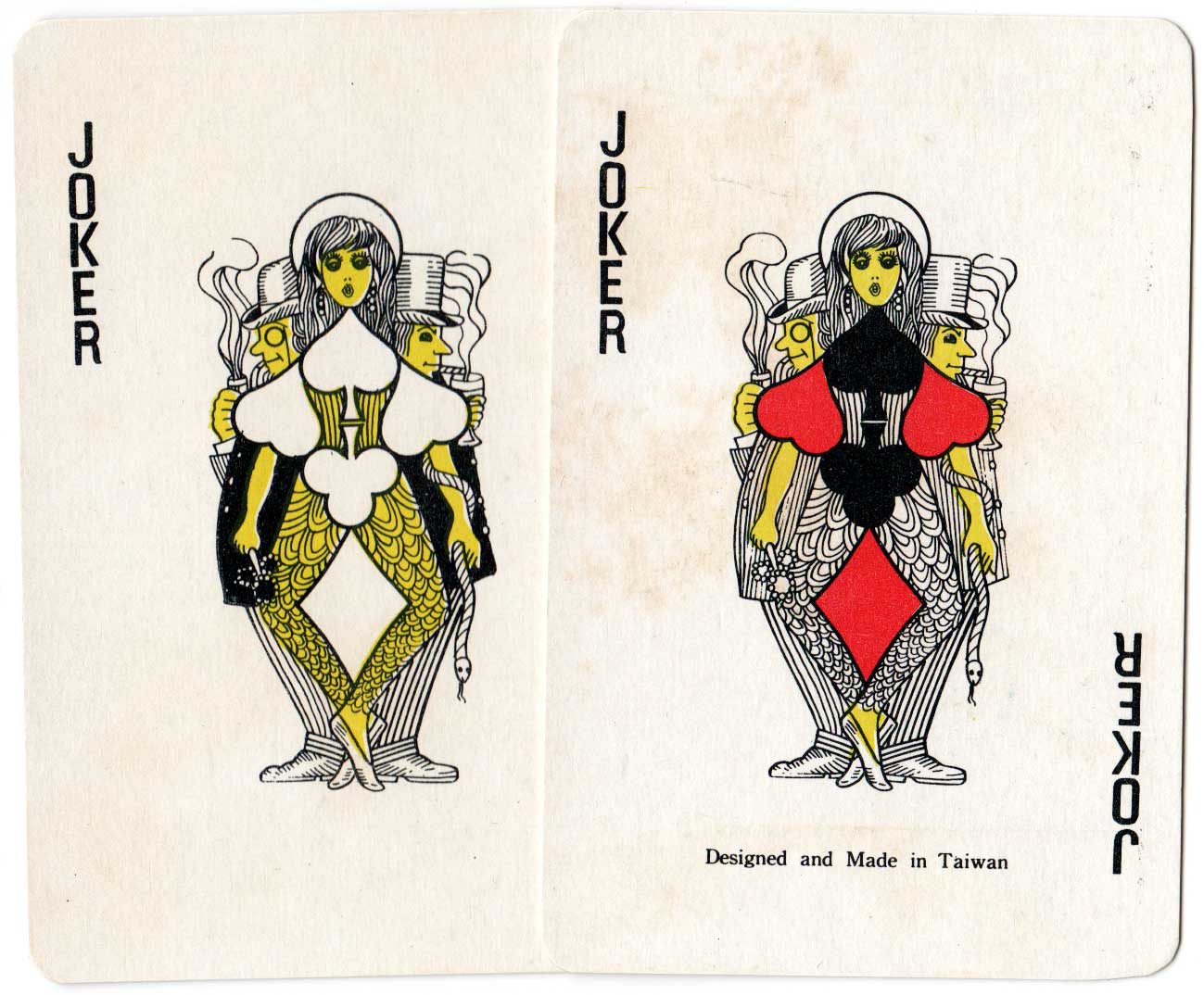
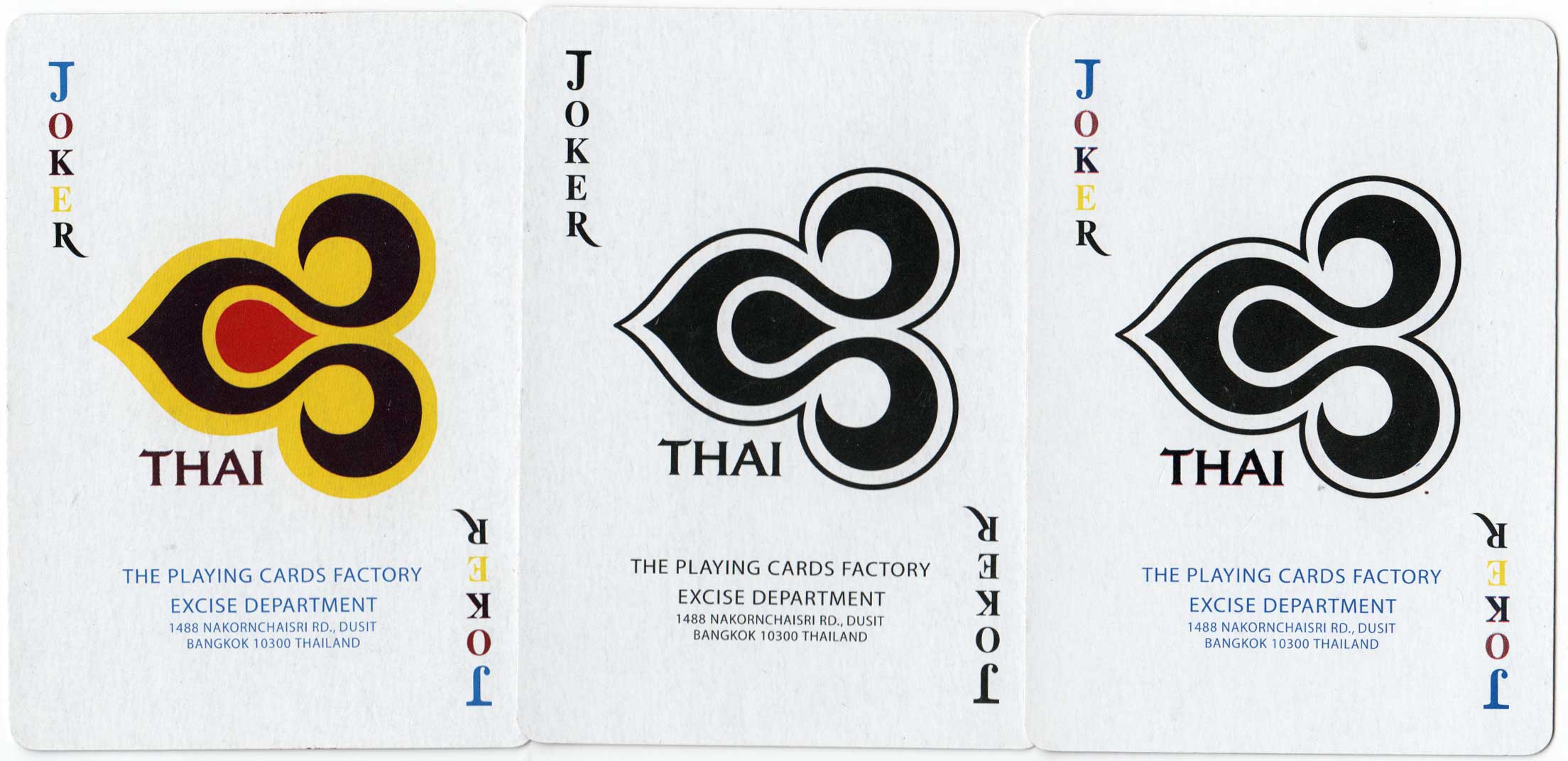
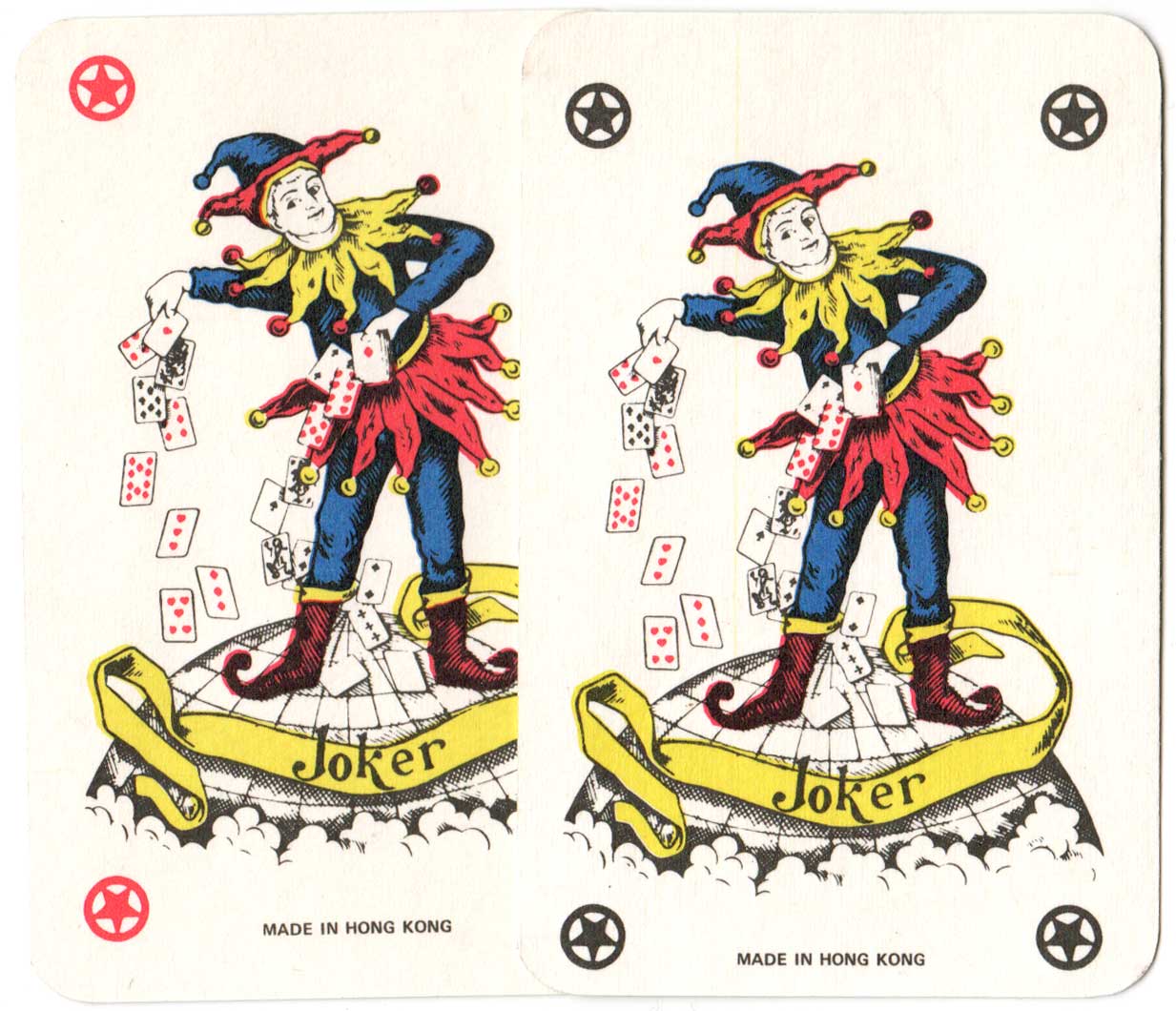
Hong Kong
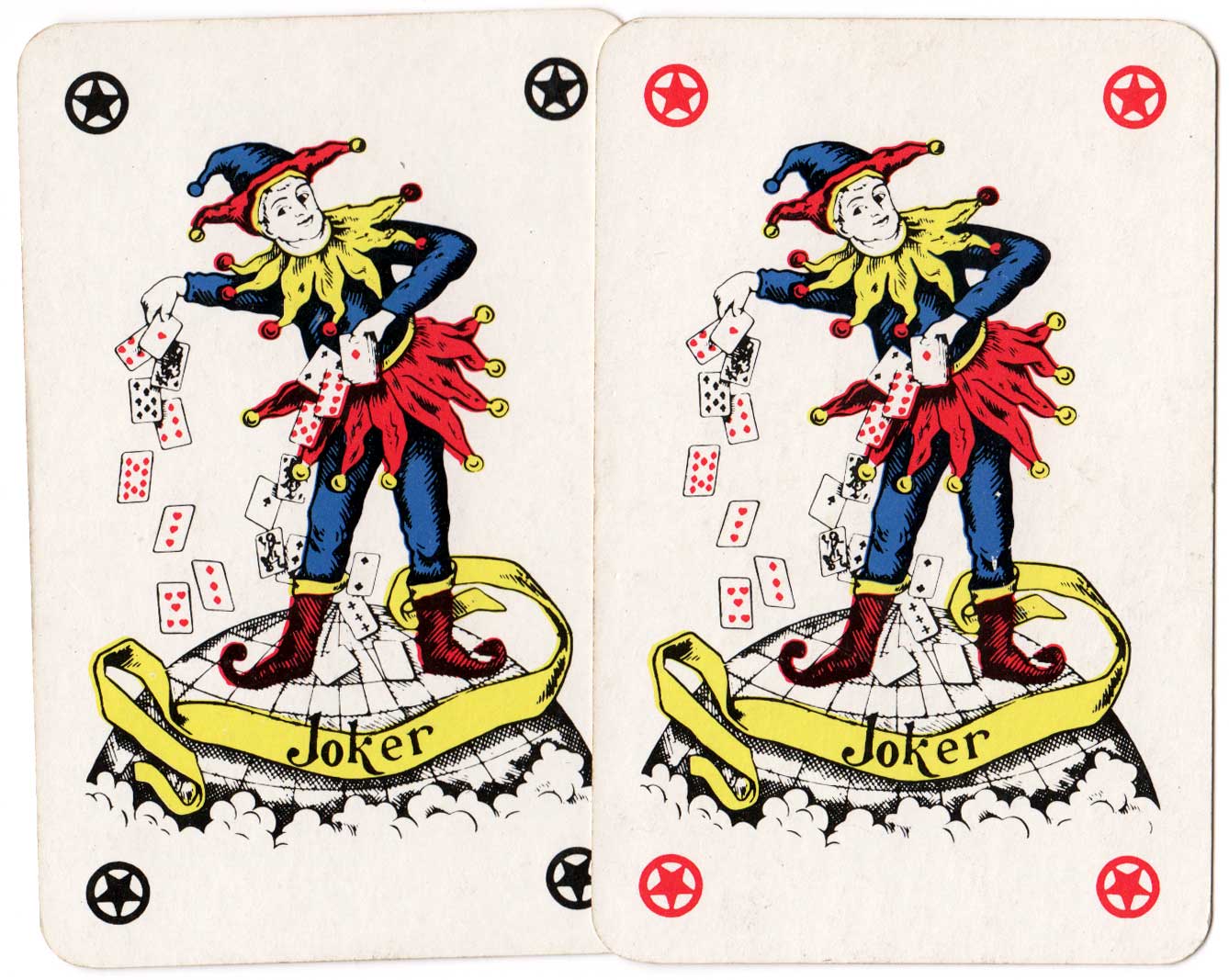
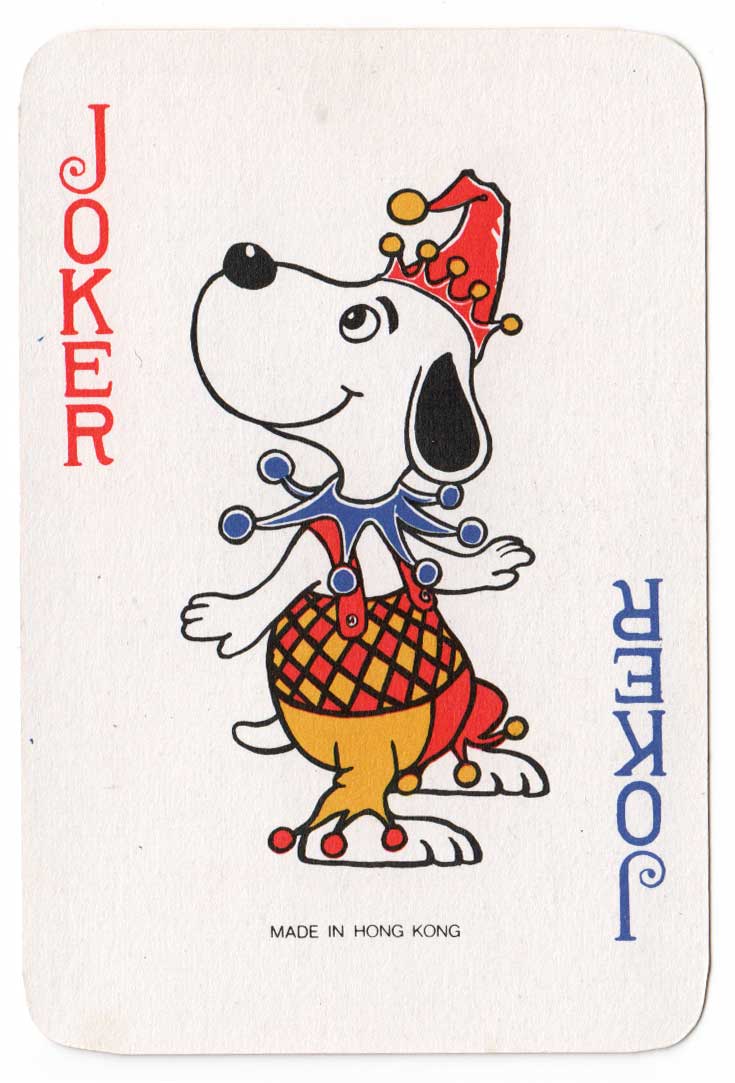
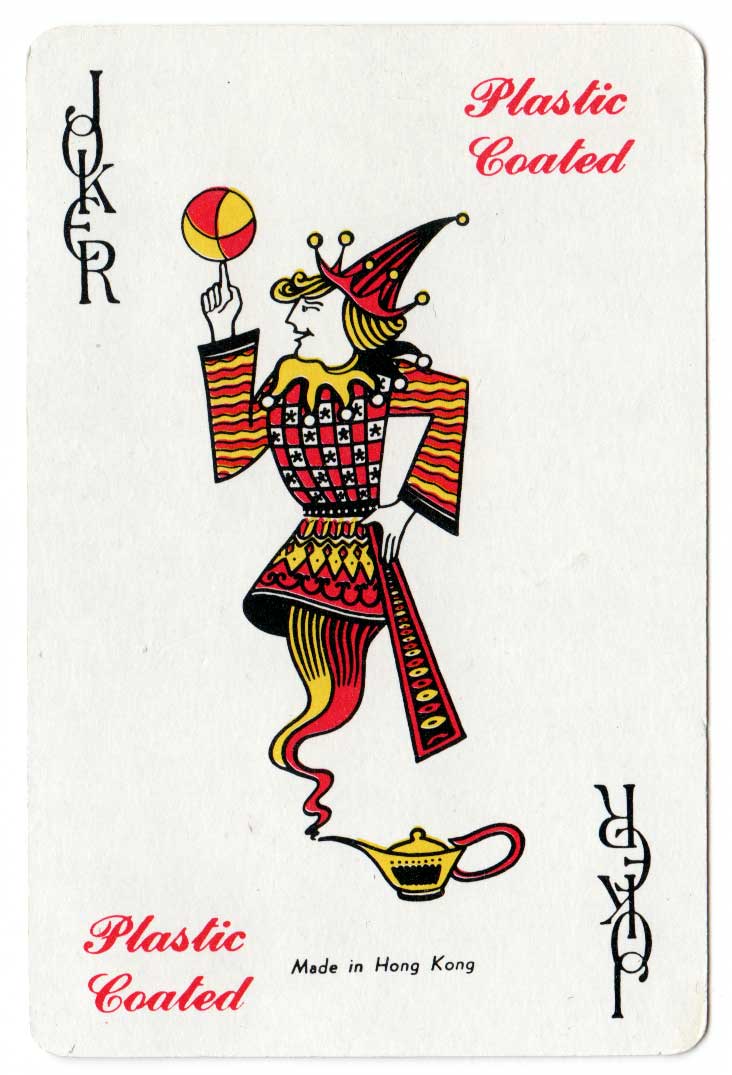
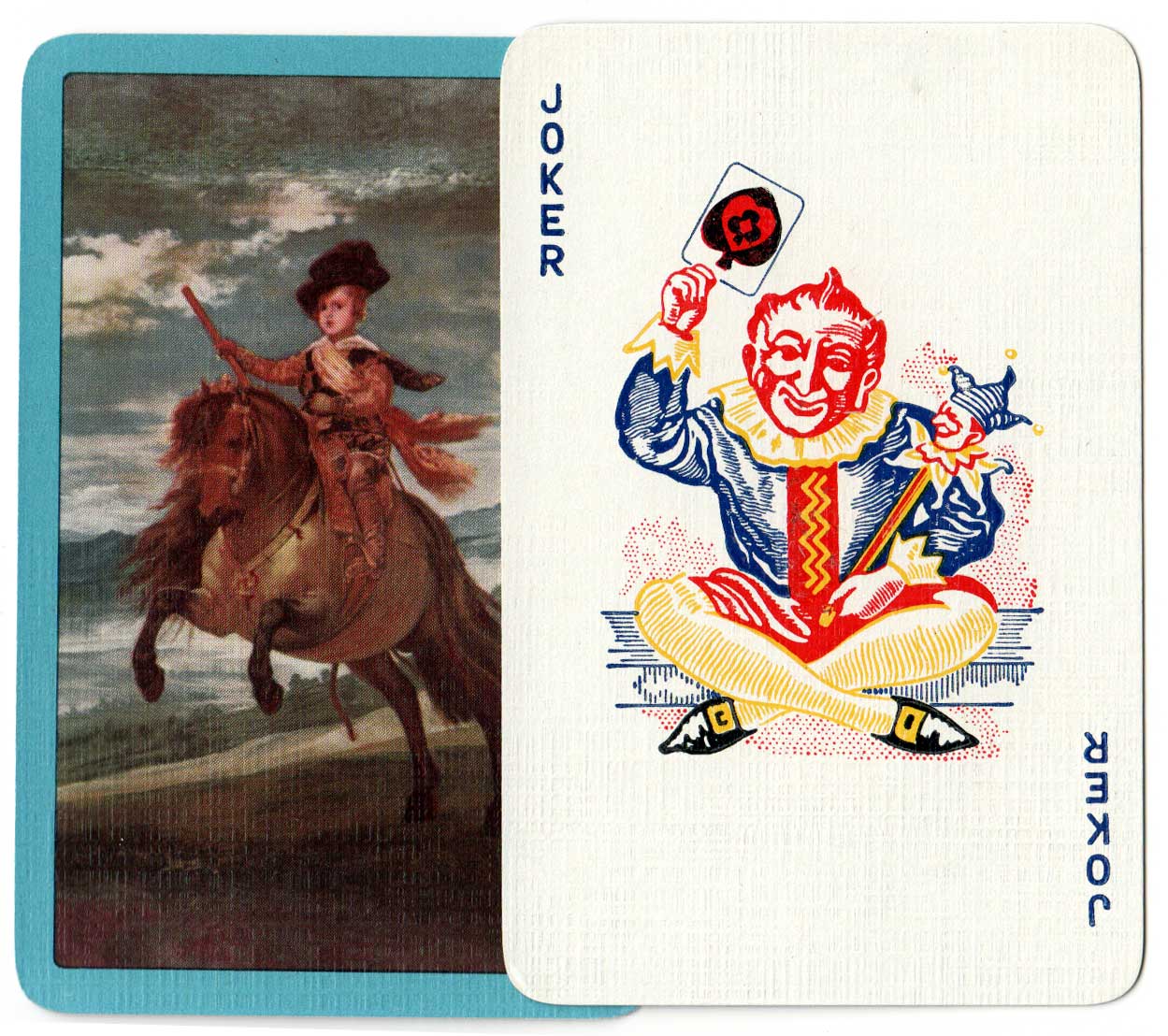
John Waddington Ltd, Leeds & London, (c.1922-1995)
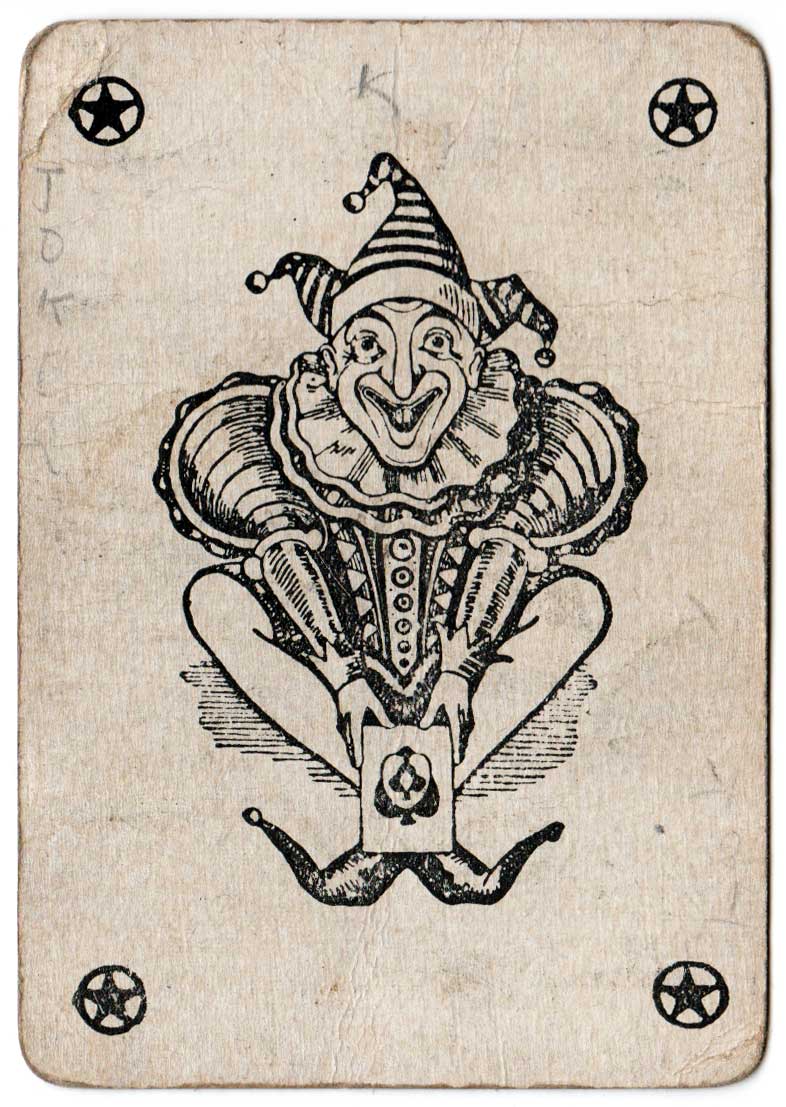
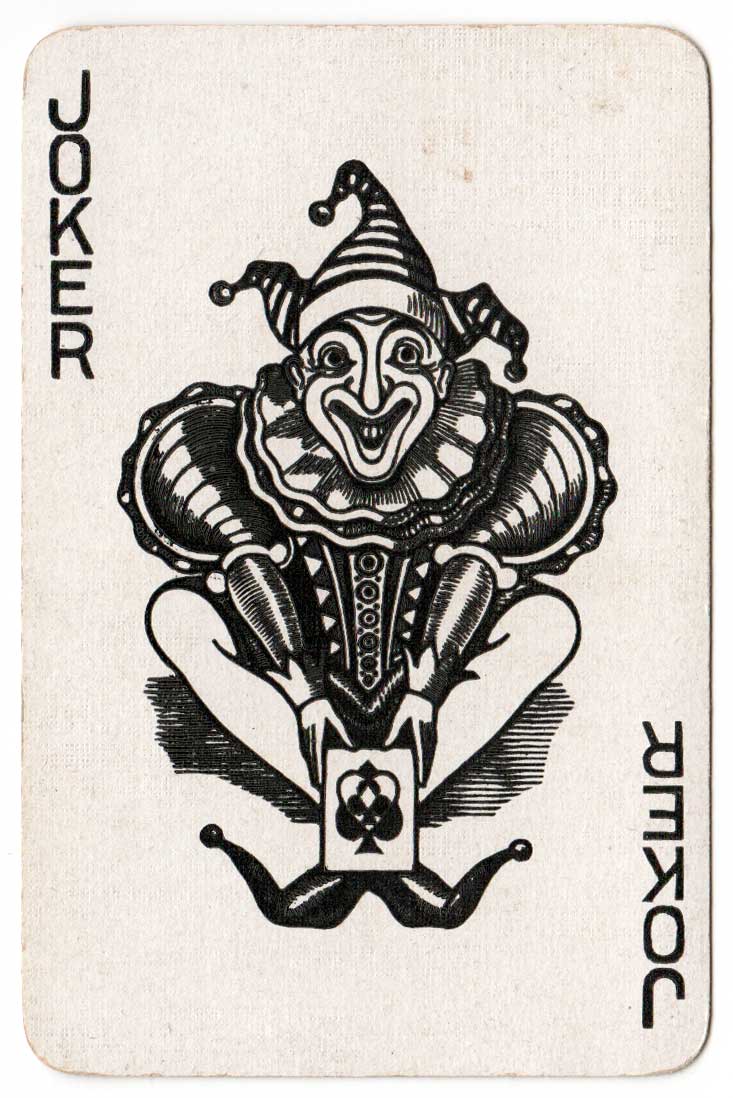
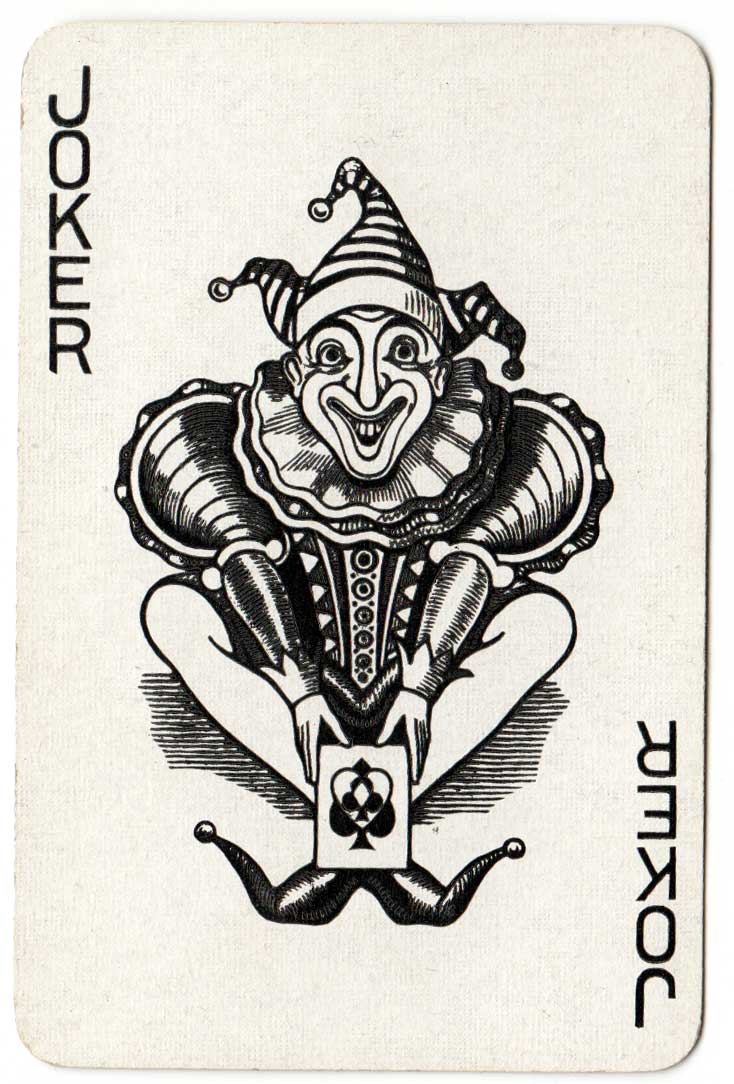
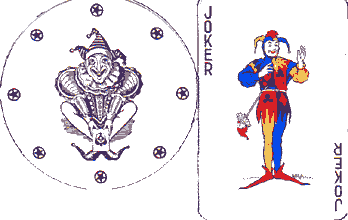
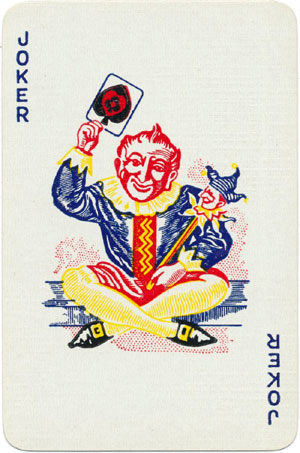
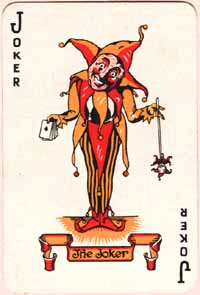
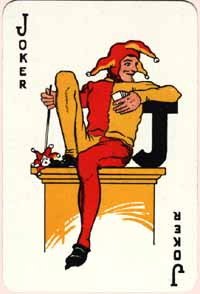
Above: Originally a general printer, John Waddington first produced playing cards in 1922. The lcross-legged joker was used until the late 1930s. In 1941 they took over the printing of De la Rue's playing cards when the latter's factory was bombed.
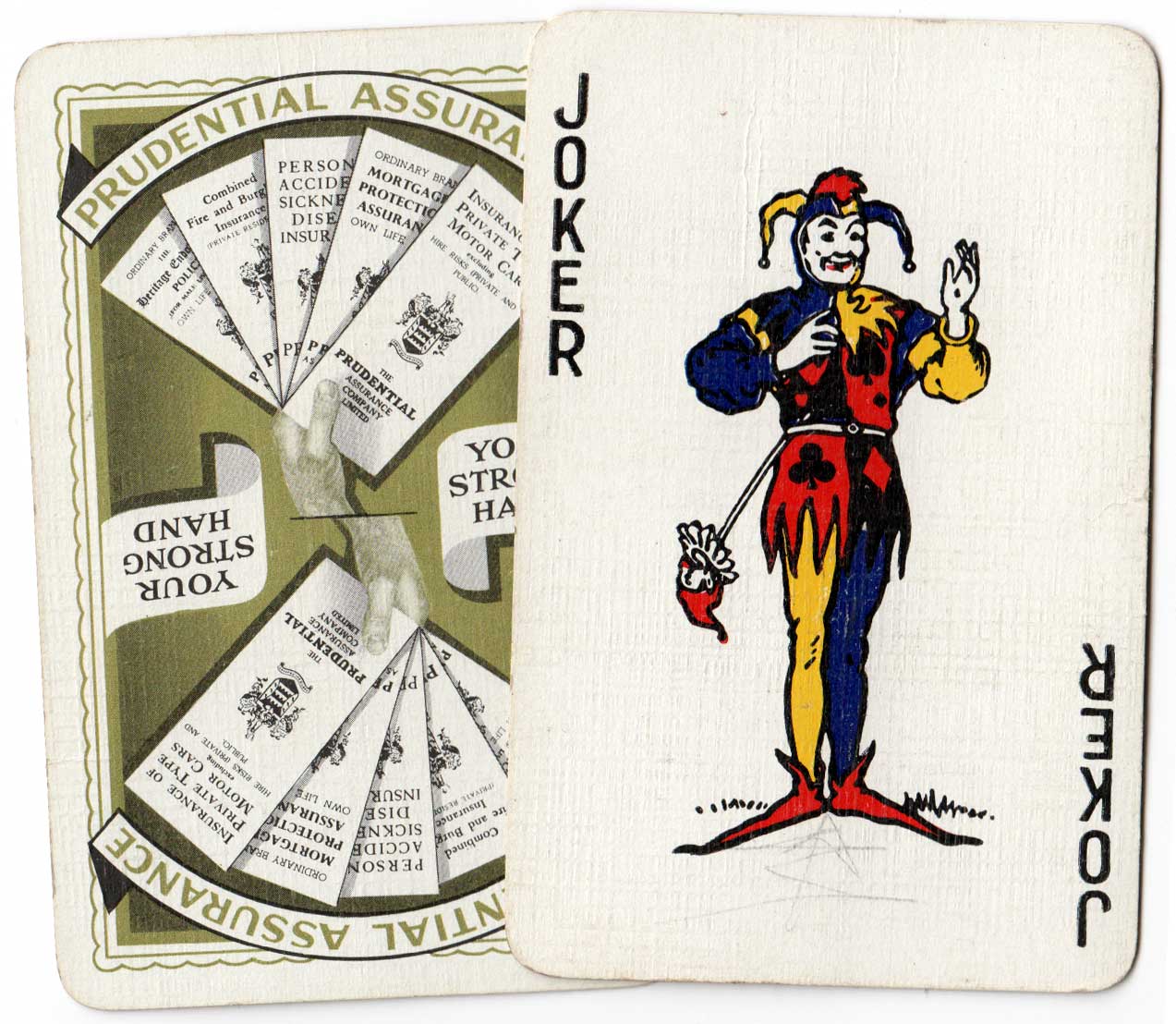
De la Rue, London, (1832-1969)
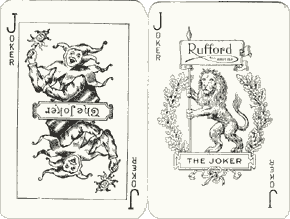
'Rufford' was a trademark for cards manufactured for Boots the Chemist, c.1930-55.
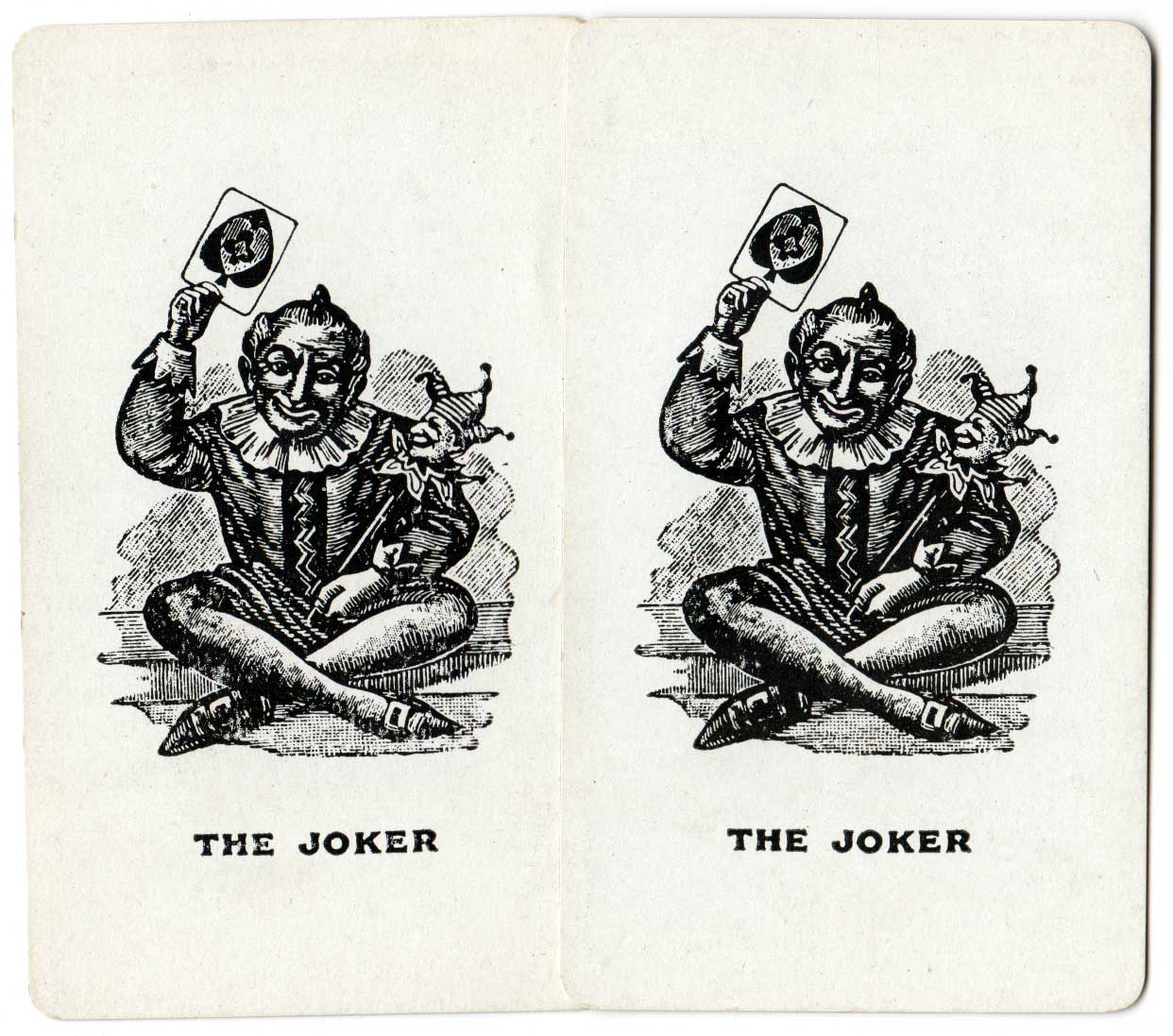
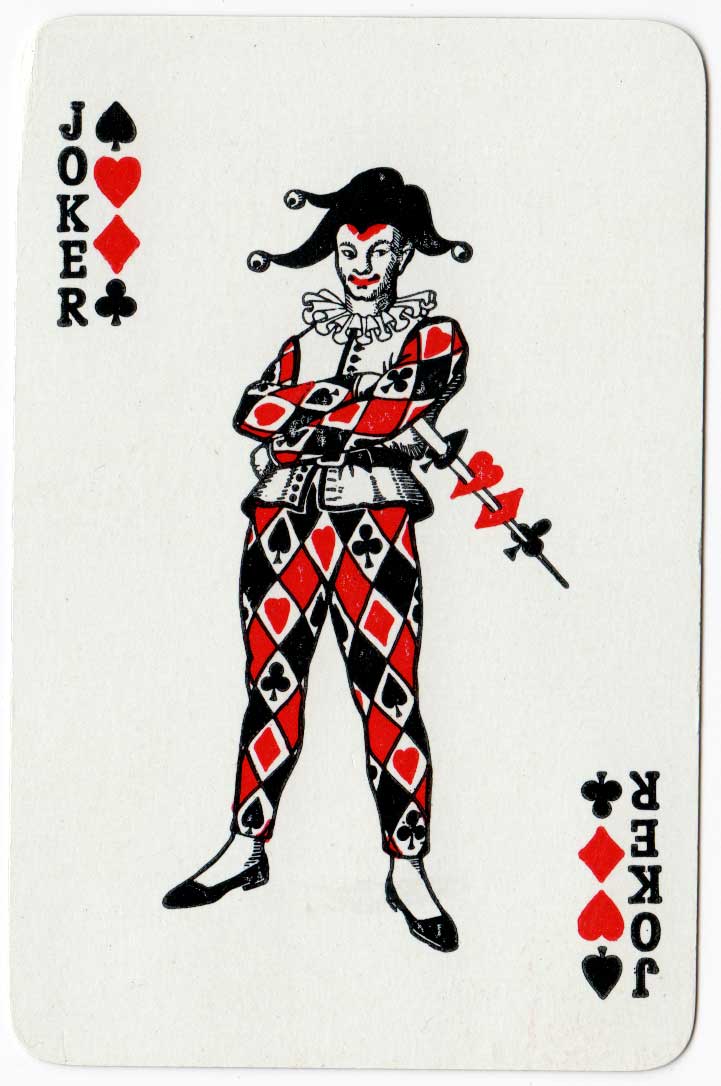
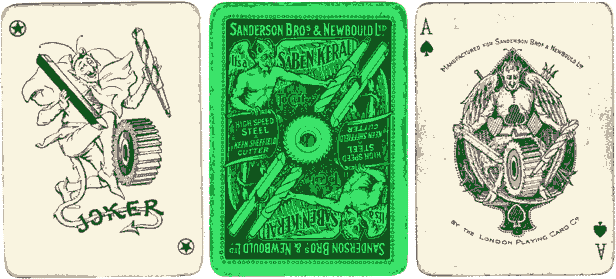
Above: Early non-standard Joker and Ace of Spades by The London Playing Card Co. (alias Goodall) for Sanderson Bros & Newbould Ltd, c.1912. 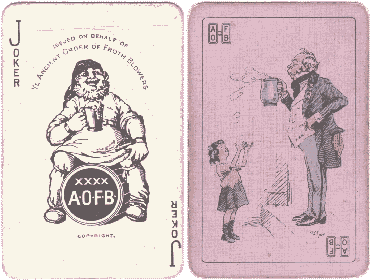
Above: Special Joker and reverse design issued on behalf of 'Ye Ancient Order of Froth Blowers', De la Rue c.1924. The back design has the signature 'G.L.S. 1924'. 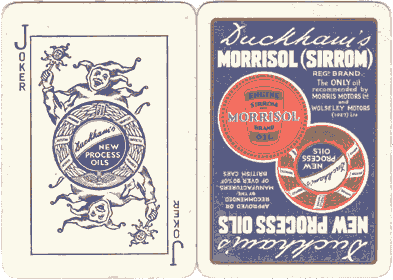
Above: Special Joker and reverse design for Duckham's motor oil, manufactured by De la Rue for Goodall, c.1925. The De la Rue standard Joker has been adapted for the purpose. 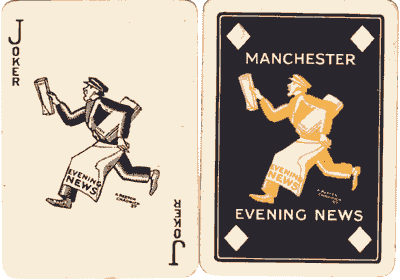
Above: Special Joker and reverse design for The Manchester Evening News, by De la Rue, c.1927. The cartoon is signed 'A. Paxton Chadwick 27' 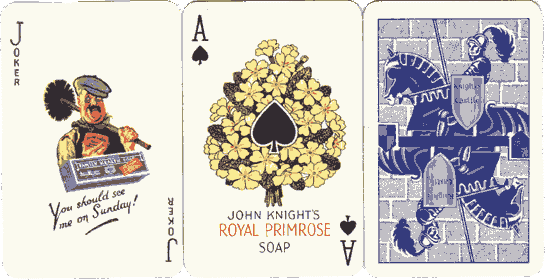
Above: Special Joker, Ace of Spades and reverse design for John Knight's Royal Primrose soap, by De la Rue, c.1926. The caption on the Joker reads 'You should see me on Sunday!' During the 1940s and 1950s, Waddington's were printing De la Rue and Goodall cards as well as their own. Each pack was manufactured with the ace of spades of each maker on the sheet, but with the same courts and jokers, so that packs could be made up for each firm and sold under their respective brand names (e.g. 'Crown', 'Viceroy' or 'No.1'). 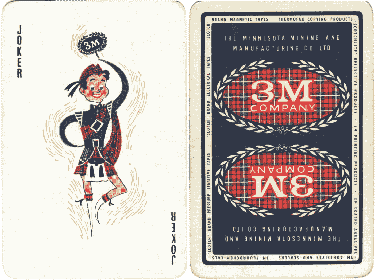
Above: Special Joker and reverse design for The 3M Company. Mardon, Son & Hall, Bristol, (c1930-35) 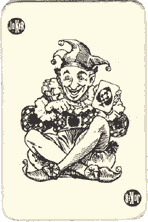
Above: A division of Imperial Tobacco, they appear to have made cards almost exclusively for the cigarette token market, which flourished during the 1930s. Some advertising packs can also be found, e.g. Players Navy Cut cigarettes. A reciprocal arrangement may have existed with Waddingtons regarding playing card production during the early 1930s. Berkshire Printing Company, (1930s) 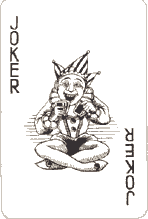
A little-known manufacturer who produced some standard and advertising packs during the 1930s, and may have been involved in the cigarette token market with Waddingtons during the early 1930s. Porterprint, Jarvis Porter, (c1935-70) 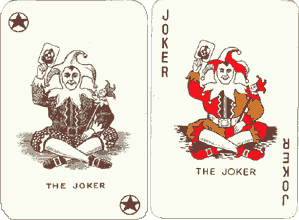
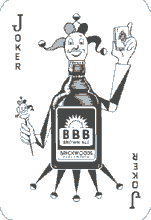
Best known for their crossword game Kan-U-Go, Porterprint also produced packs for Anderson's of Edinburgh during the 1930's (left-hand joker), as well as standard advertising packs for breweries and other firms. The special joker (right) is for Brickwoods, The Portsmouth Brewery, c.1960. From c1950-60 Porterprint also published Ba-Ka-Ree, a card game with extra jokers and extra special aces in the pack. Simon Wintle, (1987) 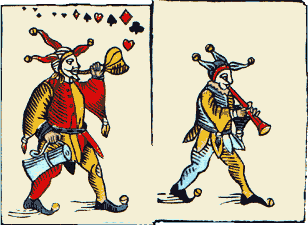
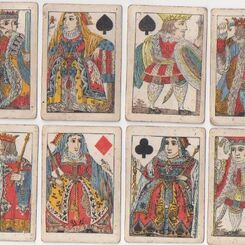
Above: Jokers from the replica of 17th century English playing cards, printed from woodblocks and hand coloured using stencils, designed and produced by Simon Wintle in 1987. Of course these "jokers" are anachronistic since jokers did not exist in 17th century packs. Woodpecker Press Ltd., (c1988-89) 
Apparantly successors to Astra Games (see above), this firm had a relatively short life and produced standard and advertising packs. Games & Print Services, Essex, (1997-2001) 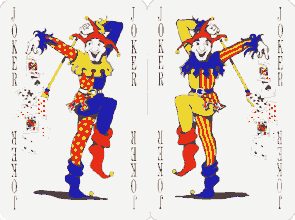
Games & Print Services produce all types of playing card, as well as game and other cards. Richard Edward Ltd, London, (1997-2001) 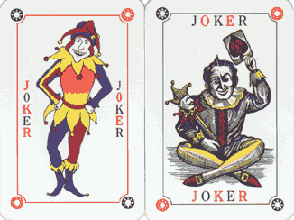
Based in London, this firm produces standard and advertising playing cards, as well as a range of other printed products. The earlier Joker has been superceded by the right-hand design, which is based upon Goodall's joker and has been re-coloured. The firm is currently re-designing its court cards, including new versions of the Goodall joker. Catherine Kelly, Dublin, (1999) 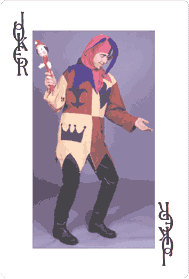
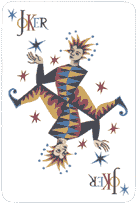
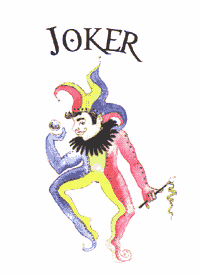
Above: Catherine Kelly created this Joker as part of a special design project entitled Safe as Houses". |
|
FURTHER REFERENCES
Matt Probert: Chinese Jokers►
Phil Neill: The-History-of-the-Joker-Card►
Phil Neill: Keying Up - The Court Jester by William Merritt Chase►

By Simon Wintle
Spain • Member since February 01, 1996
I am the founder of The World of Playing Cards (est. 1996), a website dedicated to the history, artistry and cultural significance of playing cards and tarot. Over the years I have researched various areas of the subject, acquired and traded collections and contributed as a committee member of the IPCS and graphics editor of The Playing-Card journal. Having lived in Chile, England, Wales, and now Spain, these experiences have shaped my work and passion for playing cards. Amongst my achievements is producing a limited-edition replica of a 17th-century English pack using woodblocks and stencils—a labour of love. Today, the World of Playing Cards is a global collaborative project, with my son Adam serving as the technical driving force behind its development. His innovative efforts have helped shape the site into the thriving hub it is today. You are warmly invited to become a contributor and share your enthusiasm.

Activity for The Joker Card
Sign in to comment or save this article.

Related Articles
Library Display
Three seconds to spark a love of playing cards: one collector's library display challenge.
The Dark Knight Joker Calling Cards
Joker “Calling Card” set issued in connection with the film The Dark Knight (2008).
Classification of Numeral Card Designs in French-suited packs
The classification of numeral cards in French-suited packs, covering various pip designs in over 400...
The Douce Collection
The Douce Collection of playing cards in the Bodleian Libraries, University of Oxford.

Hoyle v Foster: whose name should we remember?
Hoyle’s name is associated with the rules by which many games are played, particularly card games B...
Pinochle
I have always been intrigued by the game Pinochle.
Patience Cards and their Boxes
Patience Cards and their Boxes by Tony Hall.
69: My Collection
This is an archive list of my collection. I hope it will be of use and interest to others.
Is Card Collecting an Investment?
“Is Card Collecting an Investment?” - an article by Rod Starling.
Chinese Jokers
Chinese playing card makers have probably produced the widest variety of jokers of any single part o...
A Look Back with Hope for the Future
“A Look Back with Hope for the Future” by Rod Starling

Baggy Clown Joker
Evolution of American Bank Note Co's “Baggy Clown” Joker.
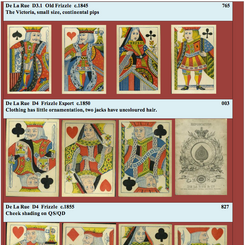
49: De La Rue in detail
A detailed presentation of the variants of De La Rue's standard cards.

Interview with Tom and Judy Dawson from 52 Plus Joker
Interview with Tom and Judy Dawson from 52 Plus Joker. Chatting about the history of playing cards, ...
Cribbage Board Collection
A collection of antique and vintage Cribbage Boards by Tony Hall
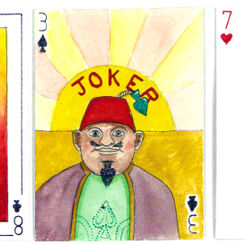
Jest Jokers
Peter Wood’s “Jest Jokers” comprising 54 different Joker designs made into a full pack of cards.
The Cardini Playing Cards
Richard Valentine Pitchford, better known as Cardini, is one of that select band of performers who b...
39: Mixed Packs
A number of mixed packs appear for sale from time to time, but it's important to sort out what is me...
35: More Design Copies
Here I want to take another widely copied design and see how individual variation by the copier can ...
2: Still Collecting Playing Cards at 80
This is a personal account of some of my experiences collecting playing cards.
Most Popular
Our top articles from the past 60 days


Paul Eaton
11 February 2023, 19:46Hi Simon,
Do you know when standard packs in (north) Germany a) started including Jokers b) transitioned to 2 and then 3 Jokers per pack?
Simon Wintle
11 February 2023, 19:52Hi Paul, thanks for the good question. I only know that the second joker was introduced after the invention of Canasta (c.1950) but not sure when German manufacturers started including 3 jokers. It may have been partly to do with uncut sheets containing 55 cards (11x5) but that's just a wild guess! Someone else will know the proper answer.
Paul Eaton
11 February 2023, 19:56Ah, that is very interesting in relation to the game of Zwicker for which 6 Joker packs were allegedly made from around the 1960s, although I'd like to corroborate that. I'm trying to trace the evolution of Zwicker from being played with 1 Joker in 1928 to 6 in the 1960s. But of course they could have used several packs to get that number of Jokers as, sadly, they will now have to do again since production of the 6-Joker packs has apparently ceased. In particular, the transition from 2 to 3 Jokers will help me date some of the variants.
John Edelson
19 November 2025, 09:47SavedSaved this article to AmusedByJokersAmI.com