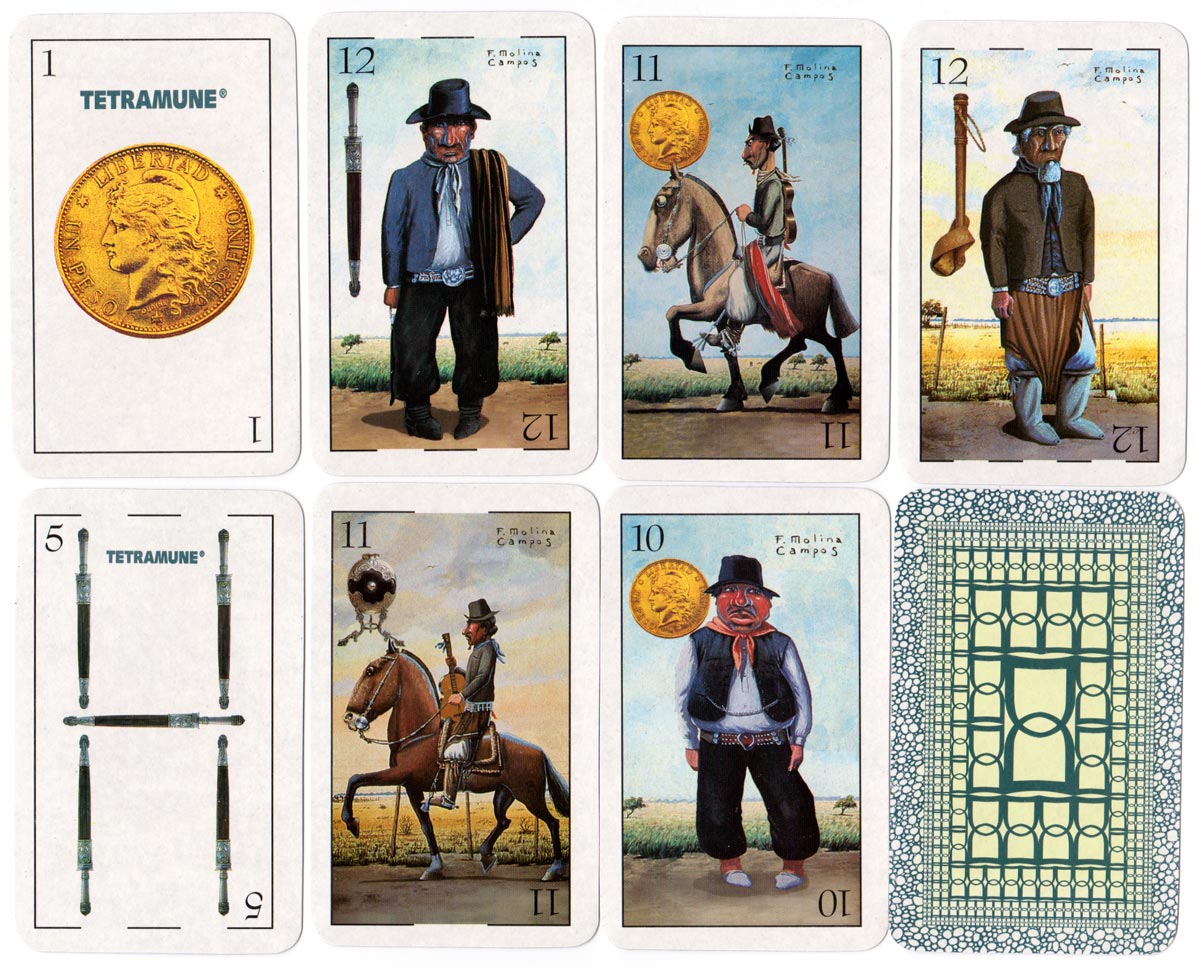
Gaucho Playing Cards
Florencio de los Ángeles Molina Campos (1891-1959) produced the artwork for his series of Gaucho playing cards from 1944 to 1958.
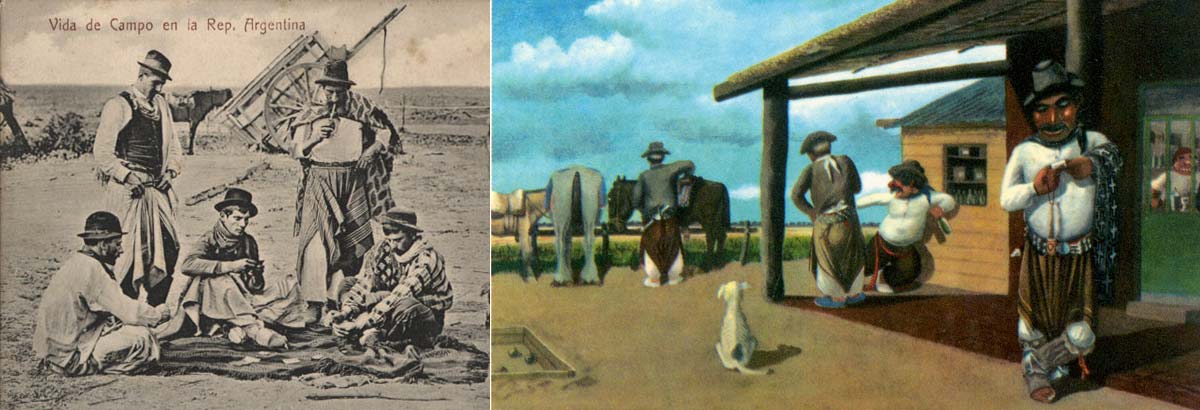
Molina Campos Playing Cards
Florencio Molina Campos habia nacido en Buenos Aires el 21 de agosto de 1891 y fallecio en su ciudad natal el 16 de noviembre de 1959. "Hizo Sonreir a Muchos Millones". El concepto del honor, de la hospitalidad, del coraje, del sacrificio, de la modestia, que Molina Campos atribuia al gaucho fueron sus propias e intimas virtudes.
Florencio de los Ángeles Molina Campos was born in Buenos Aires on August 21st, 1891. In 1926, Molina Campos displayed his first exhibition in the Sociedad Rural Argentina. In 1931, the painter travelled to Europe for the first time and displayed his work in Paris. In 1942, Molina Campos strengthened his friendship with Walt Disney and was hired to advise a team of cartoonists in three films that were going to be produced by Disney. The films were set in Argentina and were based on the artist’s work and on the landscapes they had seen. The artwork for his series of playing cards was produced from 1944 to 1958. He died in Buenos Aires on November 16th, 1959.
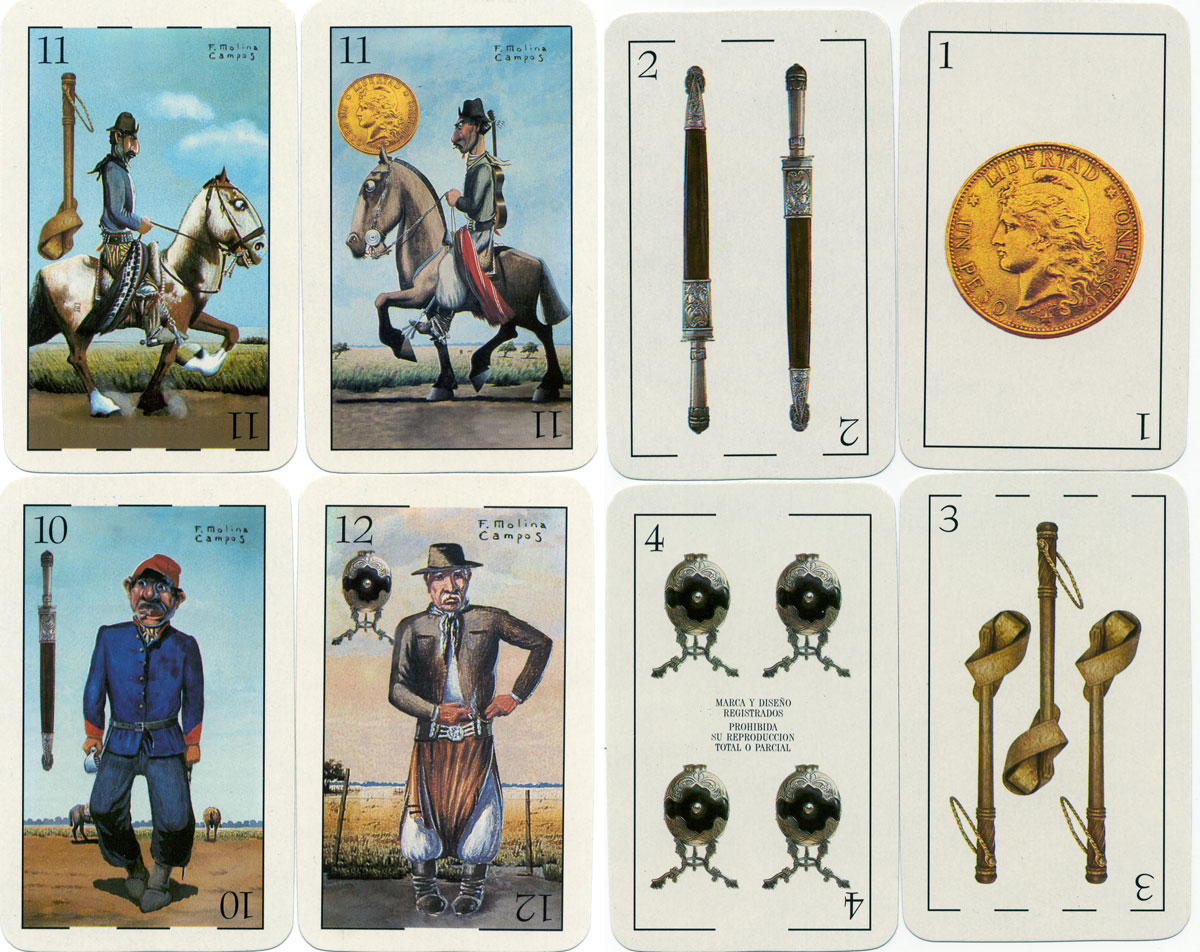
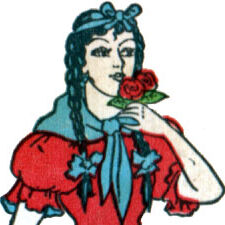
Above: eight cards from Naipes Criollos ® "Molina Campos", published by F. Molina Campos Ediciones, Silvio L. Ruggieri 2758 casa 18, C1425DLB - Buenos Aires, 2004. The court cards show characters from the artist's very popular paintings of gaucho life. The suit signs are non-standard variations on the Spanish-suit theme. Some editions with advertising slogans are also known.
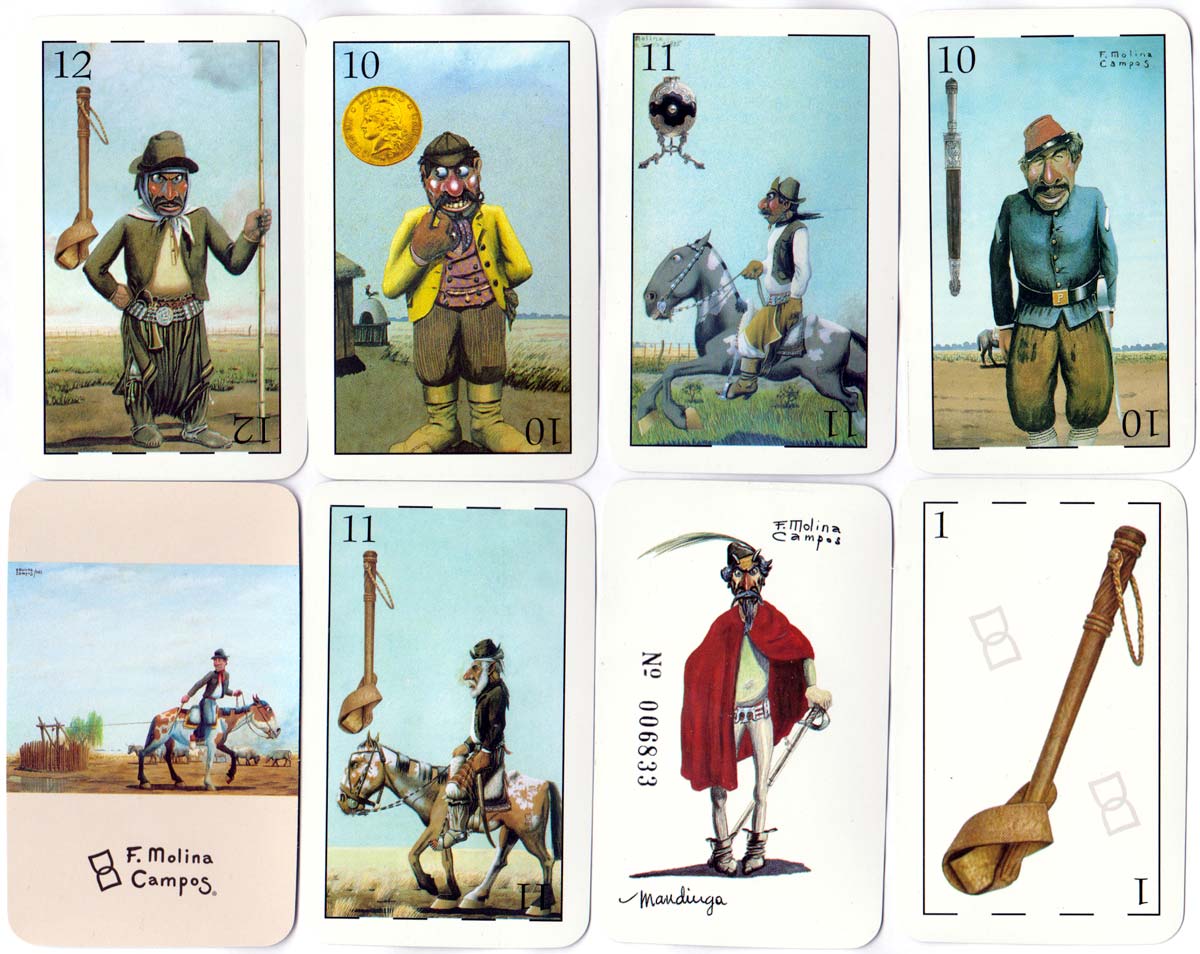
Above: cards from a later edition of Naipes Criollos ® "Molina Campos", published by F. Molina Campos Ediciones, Buenos Aires. The court cards show different characters of gaucho life from the above edition, the Jokers are numbered and sets come with a series of different back designs in a presentation box including a biographical leaflet.
Unofficial Edition
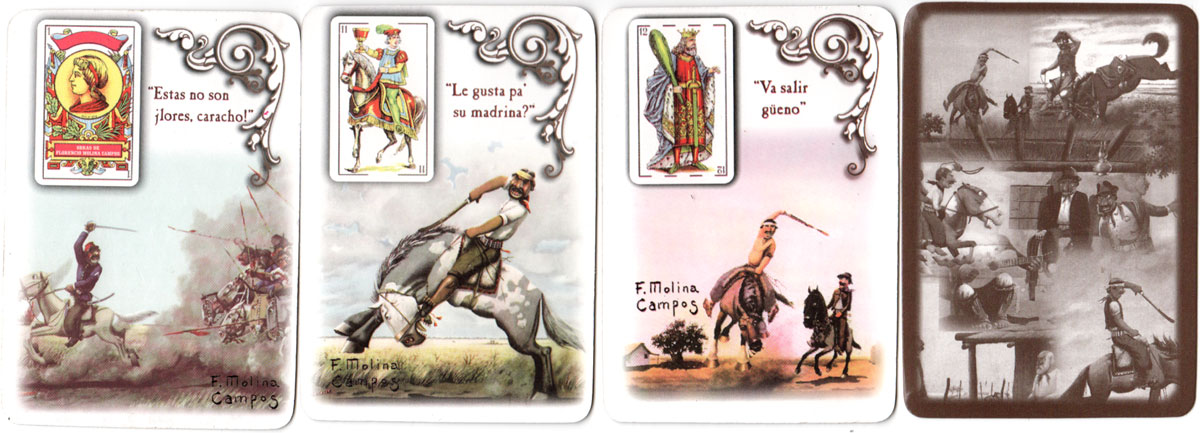
Above: Unofficial Edition of Molina Campos playing cards, anonymous publisher, 2004 more →
Naipes Casino Estilo Argentino
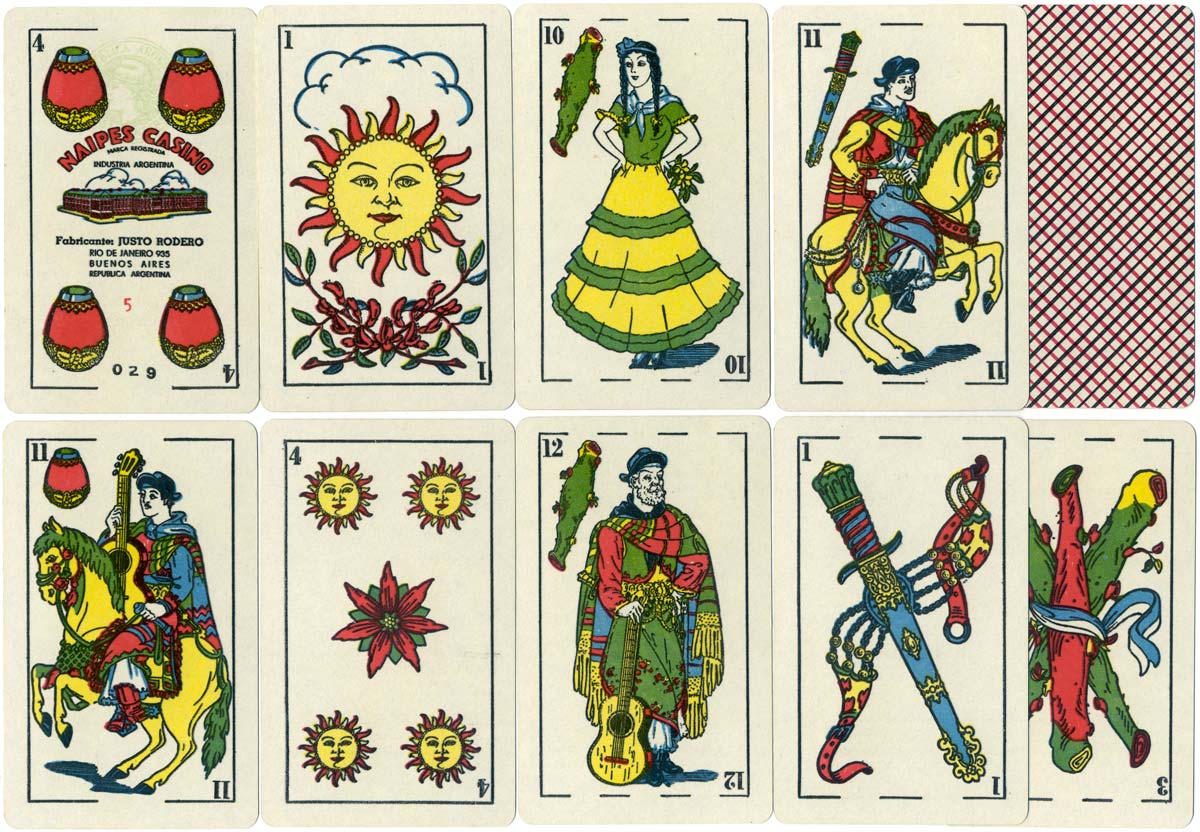
Above: Naipes Casino Estilo Argentino published by Justo Rodero, c.1955, with Gaucho suit symbols more →
Naipes Argentinos para Truco
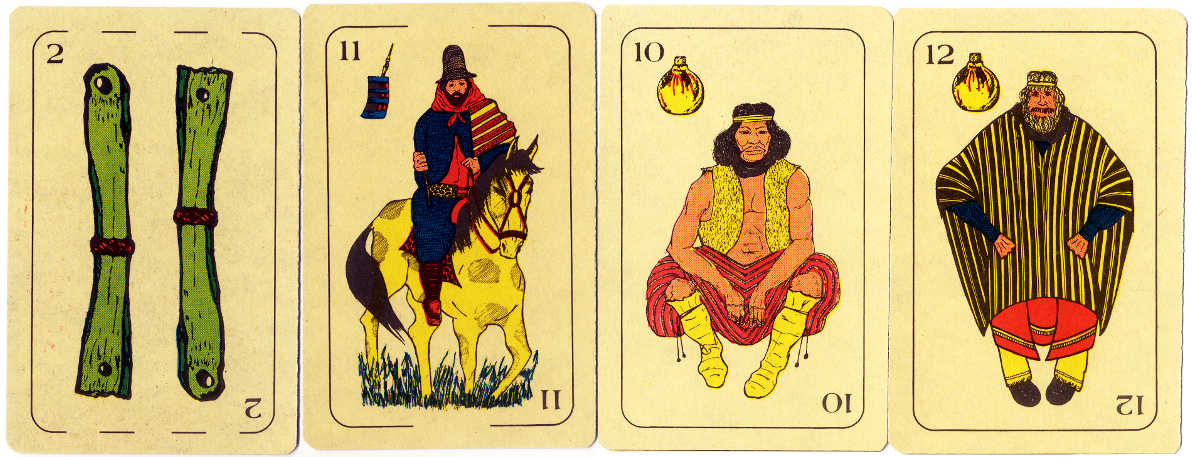
Above: Naipes Argentinos para Truco "Falta Envido" created by Alberto Soifer and printed by Adans S.A., Buenos Aires, 1982. more →
Fournier Baraja Gaucha
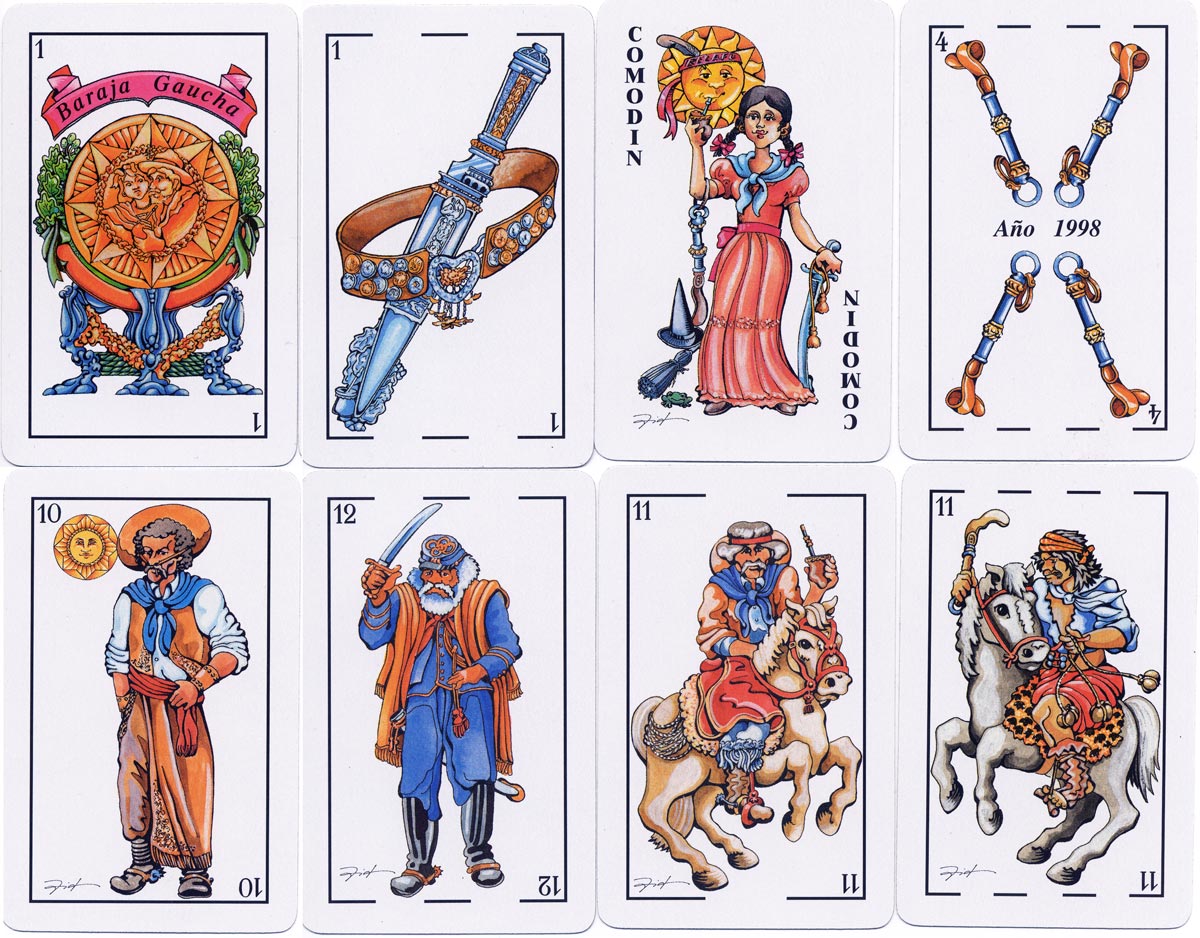
Above: Baraja Gaucha with Gaucho suit symbols published by Naipes Fournier specially for Argentina, 1999 more →
Naipes Cardón
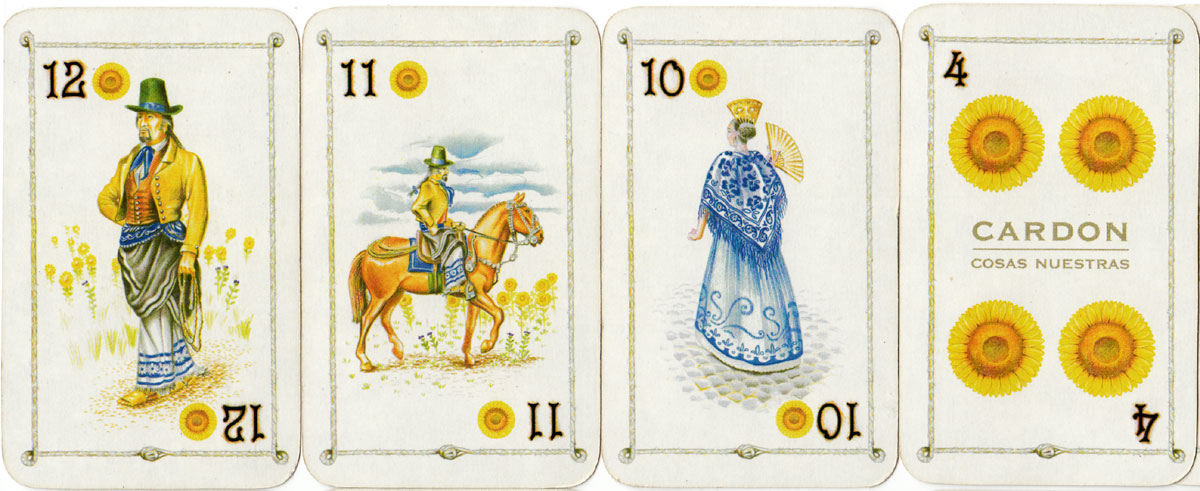
Above: Naipes Cardón designed by Mario Luis Rivero, depicting traditional Argentine culture, published in 2002 more →
Gaucho playing cards
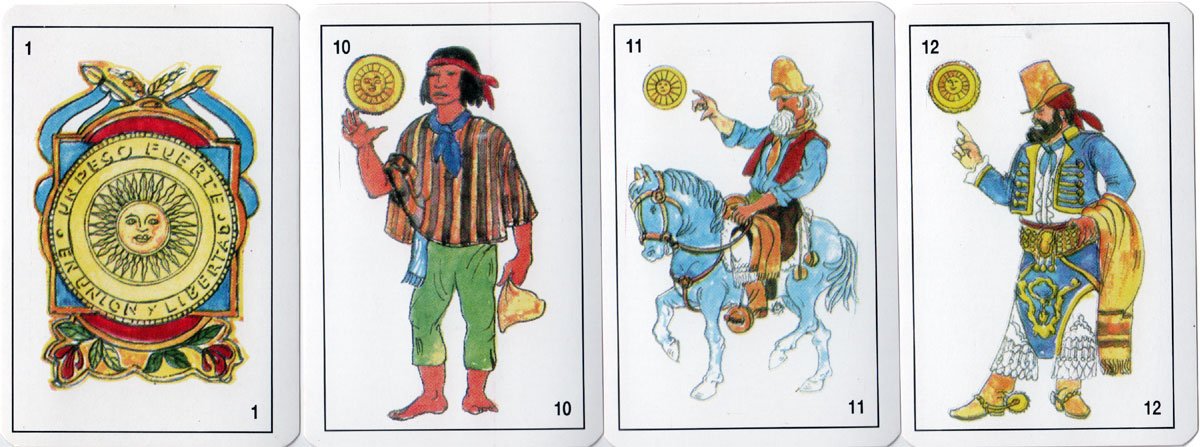
Above: Gaucho playing cards with allegorical suit symbols more →
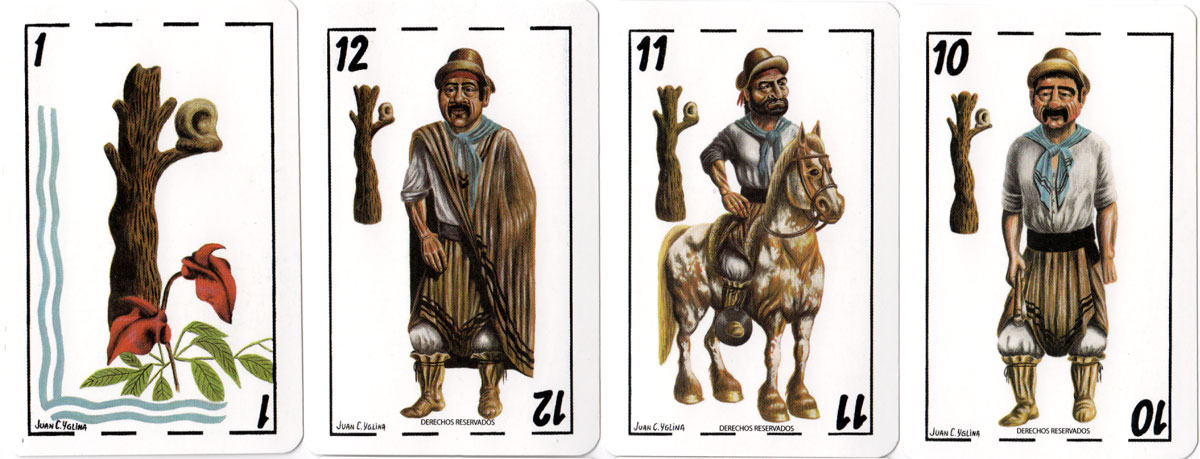
Above: Gaucho themed playing cards designed by Juan C. Yelina, 2006 more →
Other Gaucho themed packs
Songs and poems of the gaucho tradition reflect themes of love and nostalgia; many are political in nature and deal with the injustices of life.
|
|

By Simon Wintle
Spain • Member since February 01, 1996
I am the founder of The World of Playing Cards (est. 1996), a website dedicated to the history, artistry and cultural significance of playing cards and tarot. Over the years I have researched various areas of the subject, acquired and traded collections and contributed as a committee member of the IPCS and graphics editor of The Playing-Card journal. Having lived in Chile, England, Wales, and now Spain, these experiences have shaped my work and passion for playing cards. Amongst my achievements is producing a limited-edition replica of a 17th-century English pack using woodblocks and stencils—a labour of love. Today, the World of Playing Cards is a global collaborative project, with my son Adam serving as the technical driving force behind its development. His innovative efforts have helped shape the site into the thriving hub it is today. You are warmly invited to become a contributor and share your enthusiasm.

Activity for Gaucho Playing Cards
Sign in to comment or save this article.

Related Articles
Ubo cards
Traditional Ubo cards from the Philippines made from tree bark.
Race Card
‘Race Card’ playing cards published by the Concept Card Co., New Orleans, Louisiana, USA.
Traditional Nomadic Life of Mongolia
Playing cards depicting paintings of Traditional Nomadic Life of Mongolia.
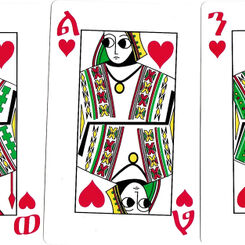
Habesha playing cards
Habesha playing cards published by “Ethiopian Reflection”
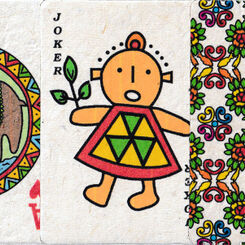
Happy Playing Cards
Cheerful, colourful designs on handmade paper from Nepal.
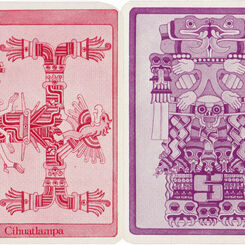
Tonalamatl
Baraja Tonalamatl Mexican Aztec playing cards based on the prehispanic Codex Borgia manuscript.
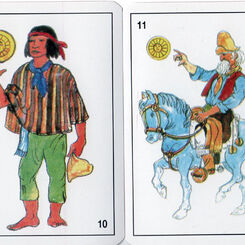
Naipes Criollos
“Naipes Criollos” Gaucho playing cards, 1995.
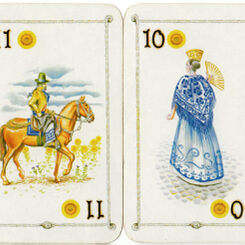
Naipes Cardón
Naipes Cardón designed by Mario Luis Rivero depicting traditional Argentine culture and identity, 20...
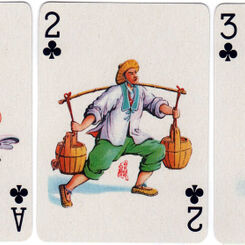
Characters of “The Water Margin”
Characters from the Chinese novel “The Water Margin” - 水滸撲克.
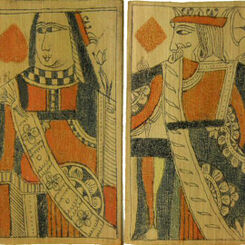
Banana Leaf Cards
English Standard pack hand drawn & coloured on banana leaf, c.1820.
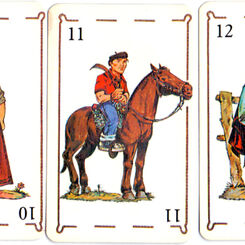
Gaucho Naipes
‘Gaucho’ Spanish-suited deck, anonymous manufacturer, made in Argentina, 2001.
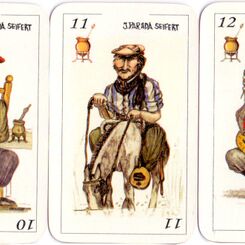
Naipe Criollo Caraí Pujol
‘Naipe Criollo Caraí Pujol’ with Gaucho designs by Julio F. Parada Seifert capturing the spirit of A...
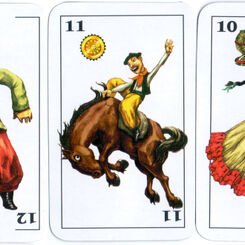
El Rodeo Talabartería
Promotional playing cards produced for ‘El Rodeo Talabartería’ specialising in leather goods and clo...
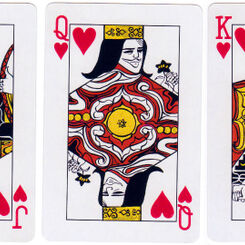
Ainu culture
A terrific deck of cards made by Nintendo c.1979 with original designs on every card showing the Ain...
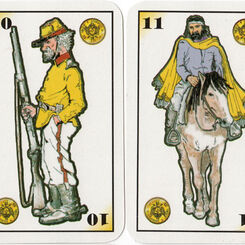
Naipes Argentinos Patagonia
“Naipes Argentinos Patagonia” with court cards depicting gauchos and native Indians, c.2000.
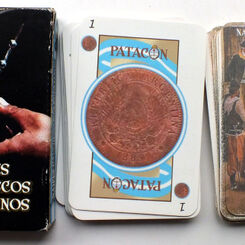
Naipes Gauchescos Argentinos
“Naipes Gauchescos Argentinos” with re-styled Spanish suit-symbols reflecting Argentinean culture, 2...
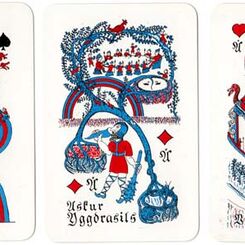
Iceland Mythological Playing Cards
Iceland Mythological Playing Cards designed by Sigurlinna Pétursson, 1958
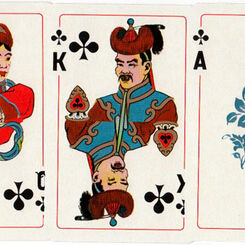
Mongol Playing Cards
Mongol Playing Cards with courts in traditional costume.
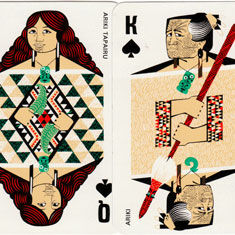
Maori
Maori themed playing cards from New Zealand depicting Maori Kings, Queens and Chiefs
Naipes Casino Estilo Argentino
Naipes Casino Estilo Argentino by Justo Rodero with Gaucho suit symbols: the mate gourd, the sun, "f...
Most Popular
Our top articles from the past 60 days