


J. Glanz Historical playing cards
Historical Theatrical playing cards manufactured by J. Glanz, c.1860.
Historical / Theatrical playing cards manufactured by Joseph Glanz, Vienna, c.1860
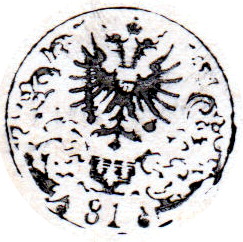
Joseph Glanz of Vienna (1849-1912) was a leading Austrian manufacturer of fine playing cards. During its lifetime the firm had acquired Max Uffenheimer and Johann Ritter & Cie but was in turn absorbed by Piatnik in 1912. These finely engraved playing cards are hand-coloured using stencils, displaying the cardmaker’s excellent craftmanship from that period. The tax stamp on the Ace of Hearts (right) was used between c.1859-1877.
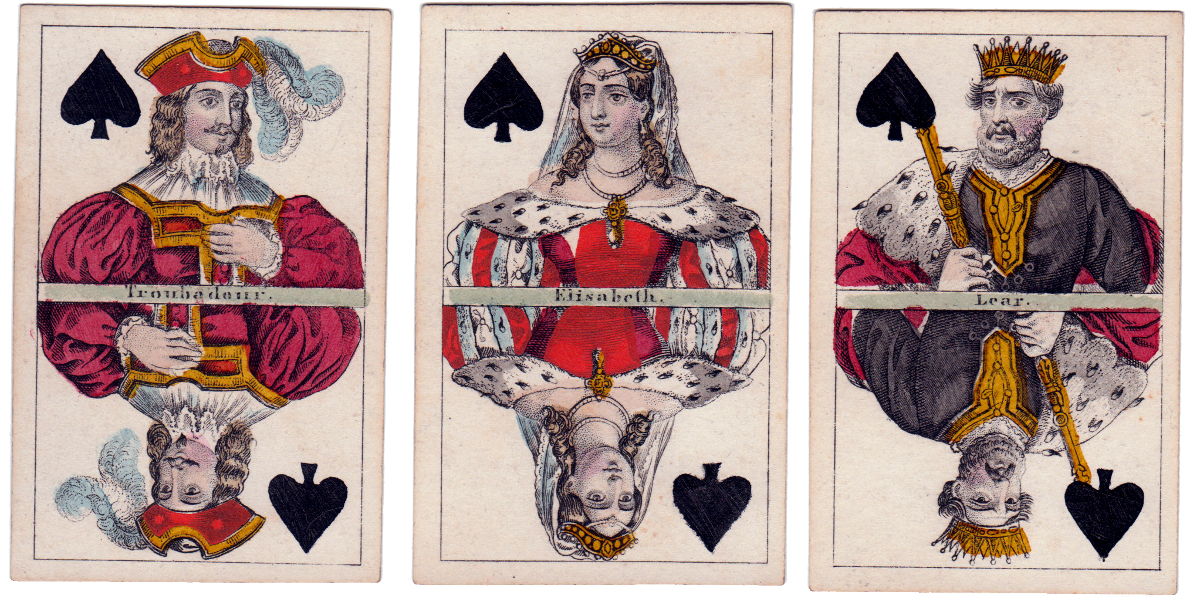
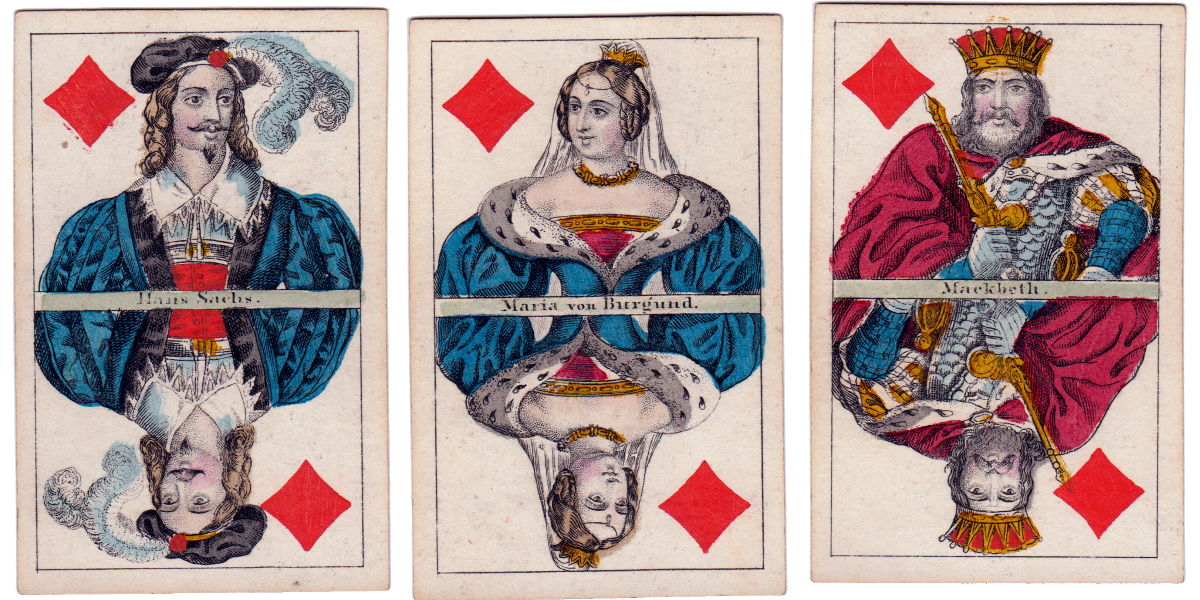
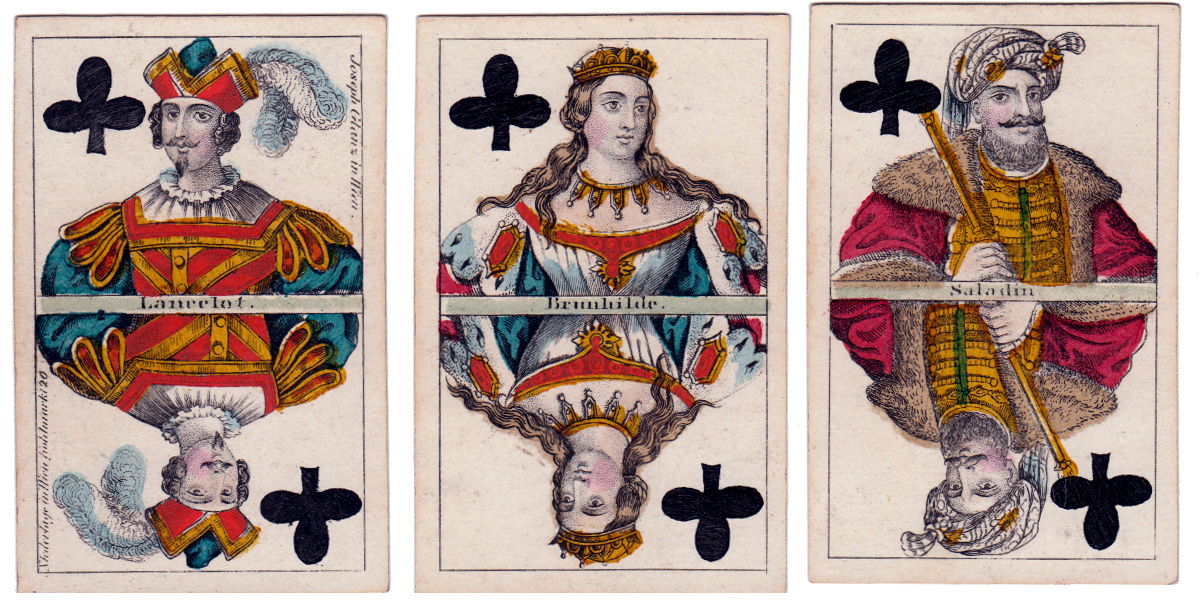
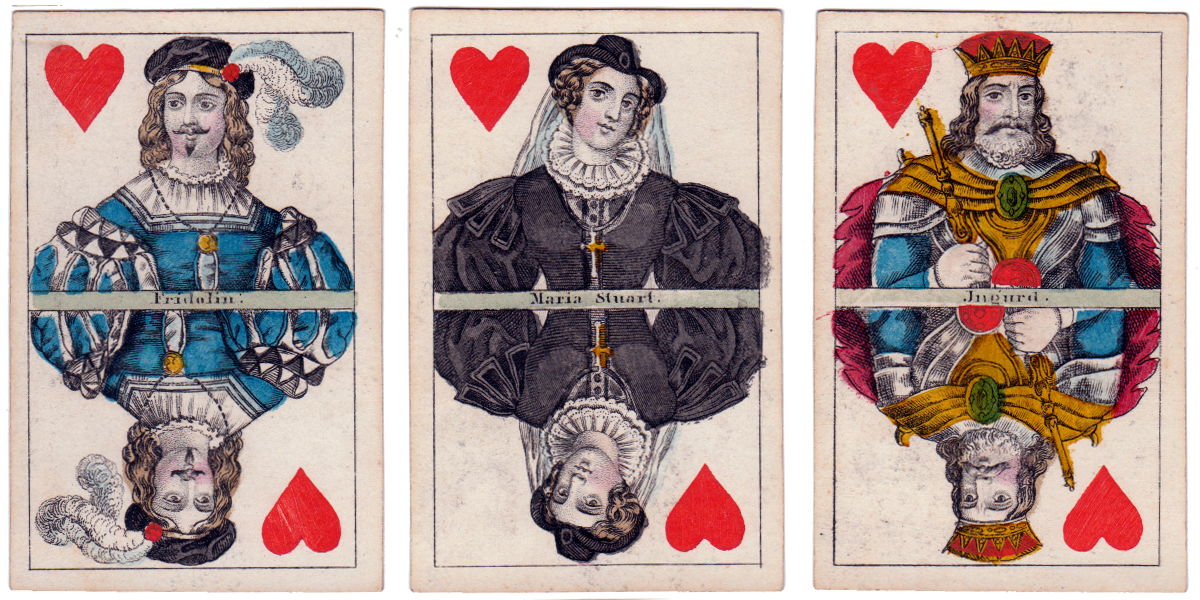
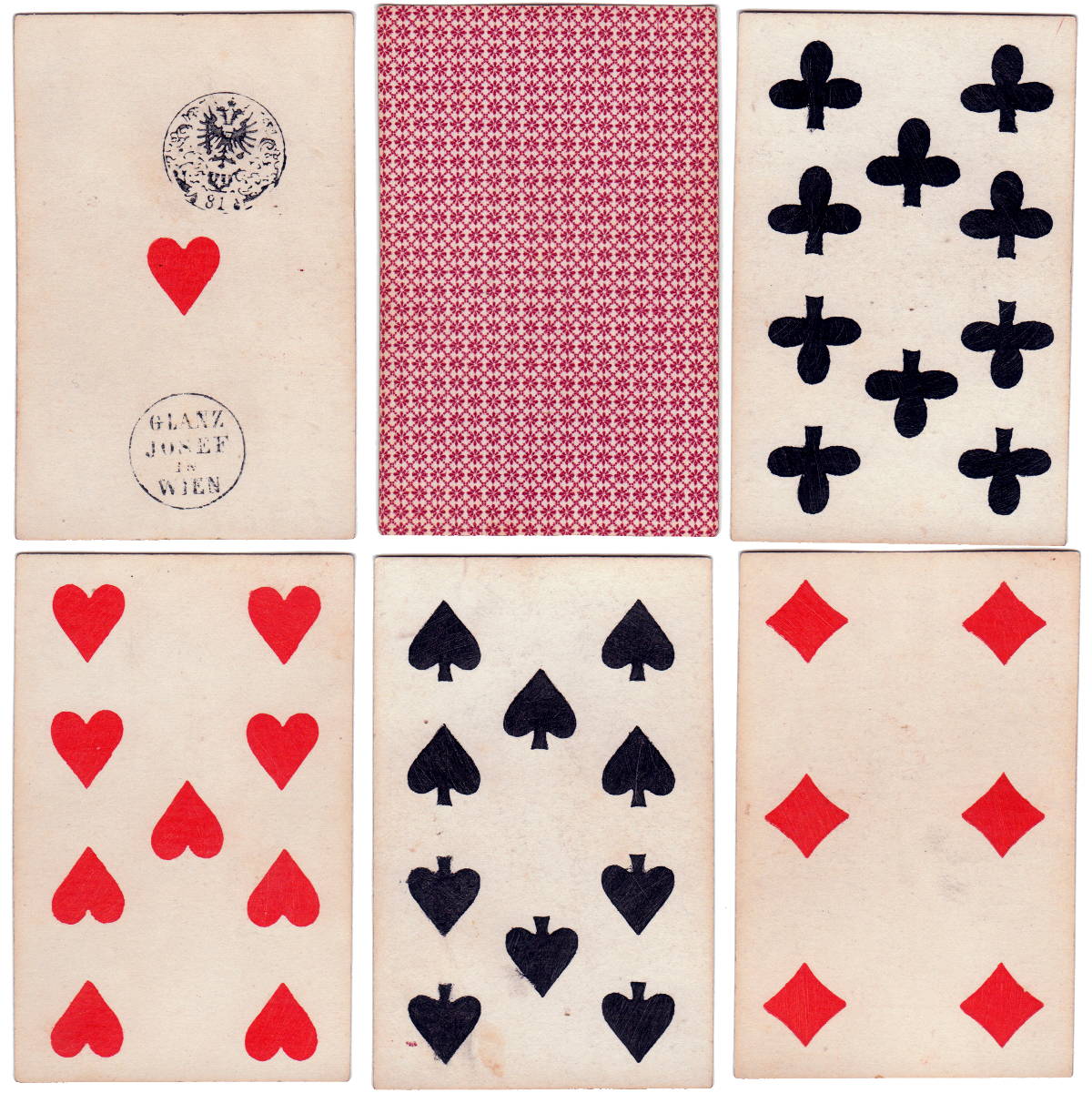
Above: finely engraved Historical Theatrical playing cards first manufactured by Joseph Glanz, Vienna, c.1860. The tax stamp on the Ace of Hearts was used between c.1859-1877. Images courtesy Rex Pitts.
Another slightly earlier example of this fine deck is preserved in the British Museum • number 1896,0501.247. The curator's notes describes the pack as having characters in historical plays on the court cards, Fridolin, Maria Stuart, Jugurd, etc. The ace of hearts bears the duty stamp and that of the maker.
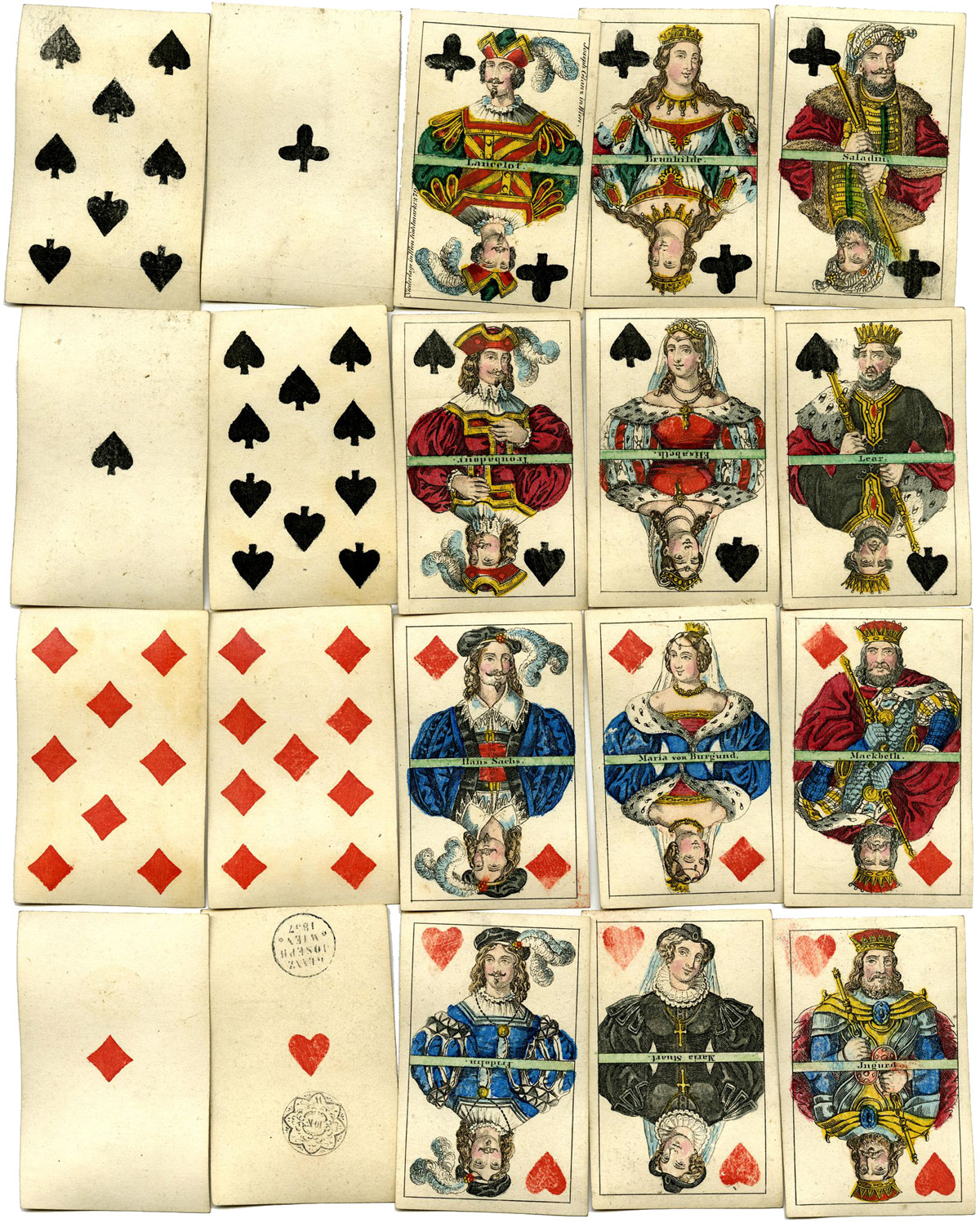
Above: Historical Theatrical playing cards manufactured by Joseph Glanz, Vienna, dated 1857 on the ace of hearts. The tax stamp on the ace of hearts was used between c.1850-1857. Backs printed with a small pattern in grey. The king of clubs has the inscription "Joseph Glanz in Wien - Niederlage am Wien Kohlmarkt No. 279". In original wrapper lettered "Patent Karten, Fein Piquet...No.6 Josef Glanz" © The Trustees of the British Museum • number 1896,0501.247►

By Rex Pitts (1940-2021)
United Kingdom • Member since January 30, 2009
Rex's main interest was in card games, because, he said, they were cheap and easy to get hold of in his early days of collecting. He is well known for his extensive knowledge of Pepys games and his book is on the bookshelves of many. His other interest was non-standard playing cards. He also had collections of sheet music, music CDs, models of London buses, London Transport timetables and maps and other objects that intrigued him.
Rex had a chequered career at school. He was expelled twice, on one occasion for smoking! Despite this he trained as a radio engineer and worked for the BBC in the World Service. Later he moved into sales and worked for a firm that made all kinds of packaging, a job he enjoyed until his retirement. He became an expert on boxes and would always investigate those that held his cards. He could always recognize a box made for Pepys, which were the same as those of Alf Cooke’s Universal Playing Card Company, who printed the card games. This interest changed into an ability to make and mend boxes, which he did with great dexterity. He loved this kind of handicraft work.
His dexterity of hand and eye soon led to his making card games of his own design. He spent hours and hours carefully cutting them out and colouring them by hand.

Activity for J. Glanz Historical playing cards
Sign in to comment or save this article.

Related Articles
Tudor Rose No. 2137
A bizarrely misnamed deck.
Japan
Piatnik’s tribute to Japanese history.
Saga aka King Arthur
Capturing the spirit of medieval legend on playing cards.
Arn de Gothia
A Swedish tale of the Crusades gets the Piatnik treatment.
Glorious America No.2174
Major figures in US history enshrined in the courts.
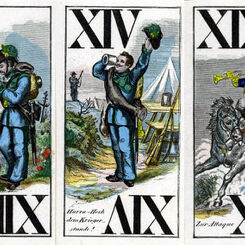
Militar-Tarock No. 38
Non-standard tarock cards combining theatrical and military themes by Joseph Glanz.
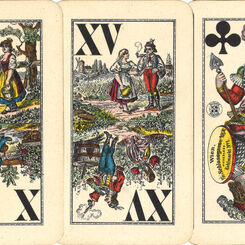
Julius Berndl and his Austrian tarock
Josef Glanz's Tarock: a classic deck with artistic innovation by Julius Berndl.
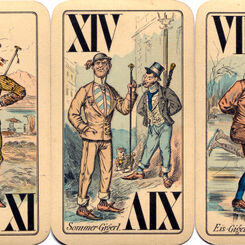
Gigerl-Tarock by Joseph Glanz
Urban Dandy caricature deck from 19th century Vienna designed by Julius Berndl.
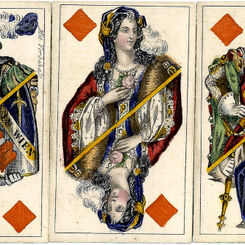
Patience by Joseph Glanz
A refined and distinctly European Patience pack by Joseph Glanz from Austria.
Ukraine playing cards
Historical figures from Ukraine’s past in a familiar Piatnik style.
Whist by Ditha Moser
Ditha Moser created this minimalist Whist deck in 1905, in the style of the Vienna Secession art mov...
Joseph Sürch, Engraver
Joseph Sürch, a prominent Viennese engraver, made significant contributions to card sheet engraving ...
Double-ended German-suited pack by Josef Glanz, Vienna.
From the British Museum collection.
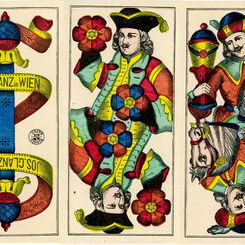
Trappola pack by Joseph Glanz
Double-ended Trappola pack by Joseph Glanz, Vienna, late 19th century.
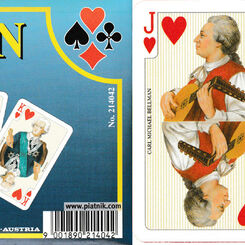
Sweden playing cards
Named characters from Swedish history.
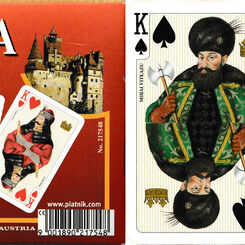
Romania playing cards
Romanian voivodes and their wives from the 15th and 16th centuries.
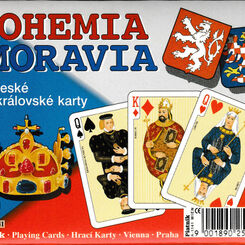
Bohemia Moravia
Historical figures from Bohemia and Moravia in Piatnik’s traditional style.
Dutch Historical playing cards
Advertising for Mopenco, the Dutch Fountain Pen King
Jugendstil Tarock
‘Jugendstil Tarock’ was designed by Ditha Moser and first published by Albert Berger and Josef Glanz...
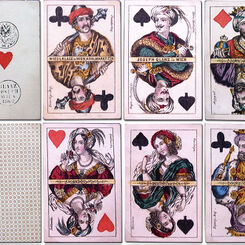
Joseph Glanz, 1862
Playing cards depicting Turkish and Greek rulers manufactured by Joseph Glanz, Vienna, Austria, 1862...
Most Popular
Our top articles from the past 60 days


