


Historical playing cards by Joseph Fetscher
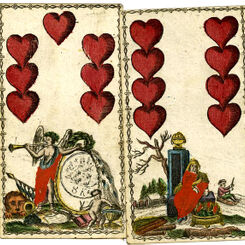
Historical playing cards by Joseph Fetscher, Munich, c.1820.
German-suited playing cards, illustrated with full-figure historical characters on the courts and vignettes on the numeral cards alluding to various events, produced by Joseph Fetscher, Munich, c.1820. “Ritter Bayard”, “Kuno von Kyberg”, “Herzog Burgund”, etc. The deuce of hearts has the arms of Munich arranged as a trophy and the 8 of hearts is lettered “Joseph Fetscher Kartenfabricant in München”. All the cards have a decorative border.
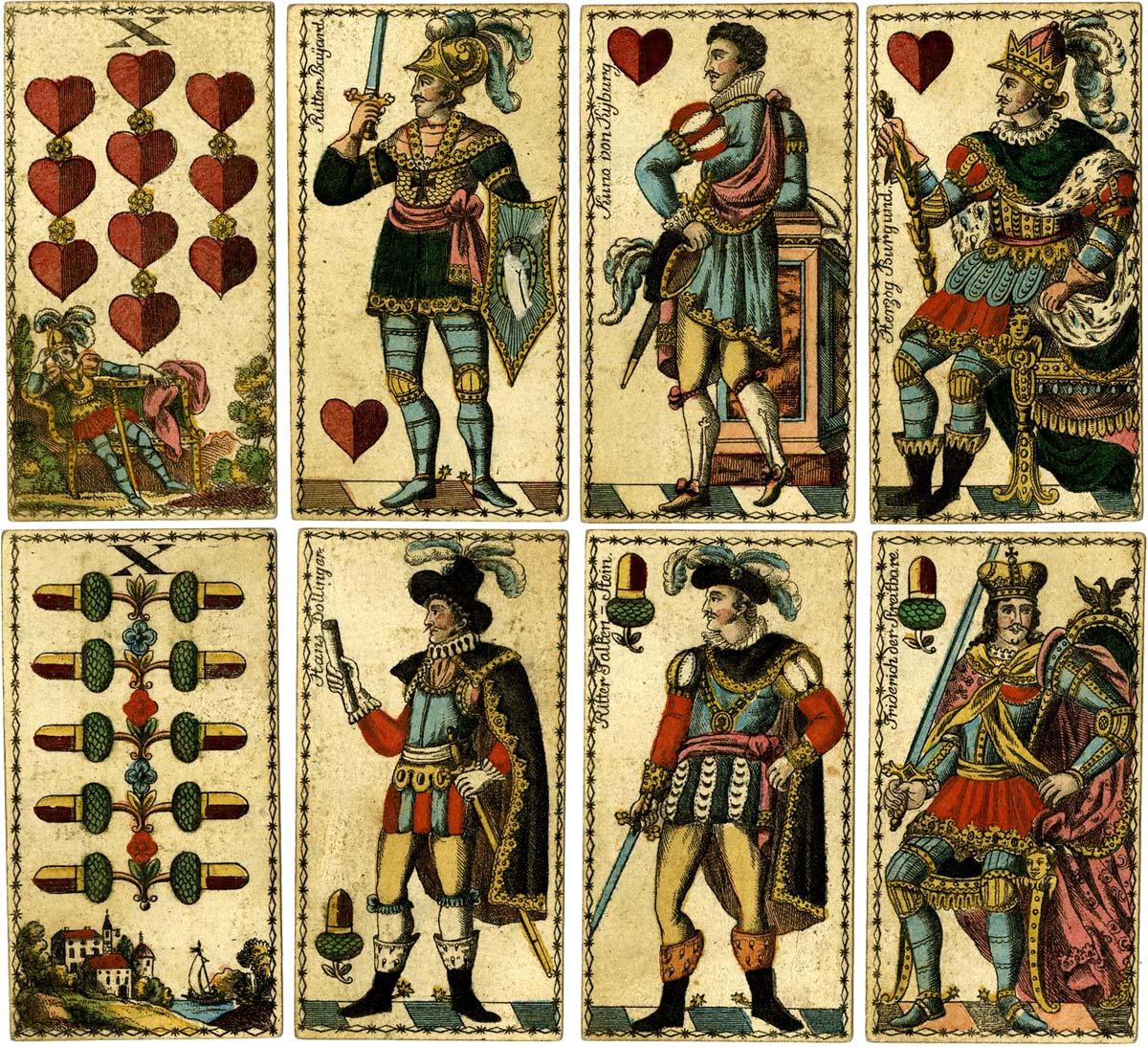
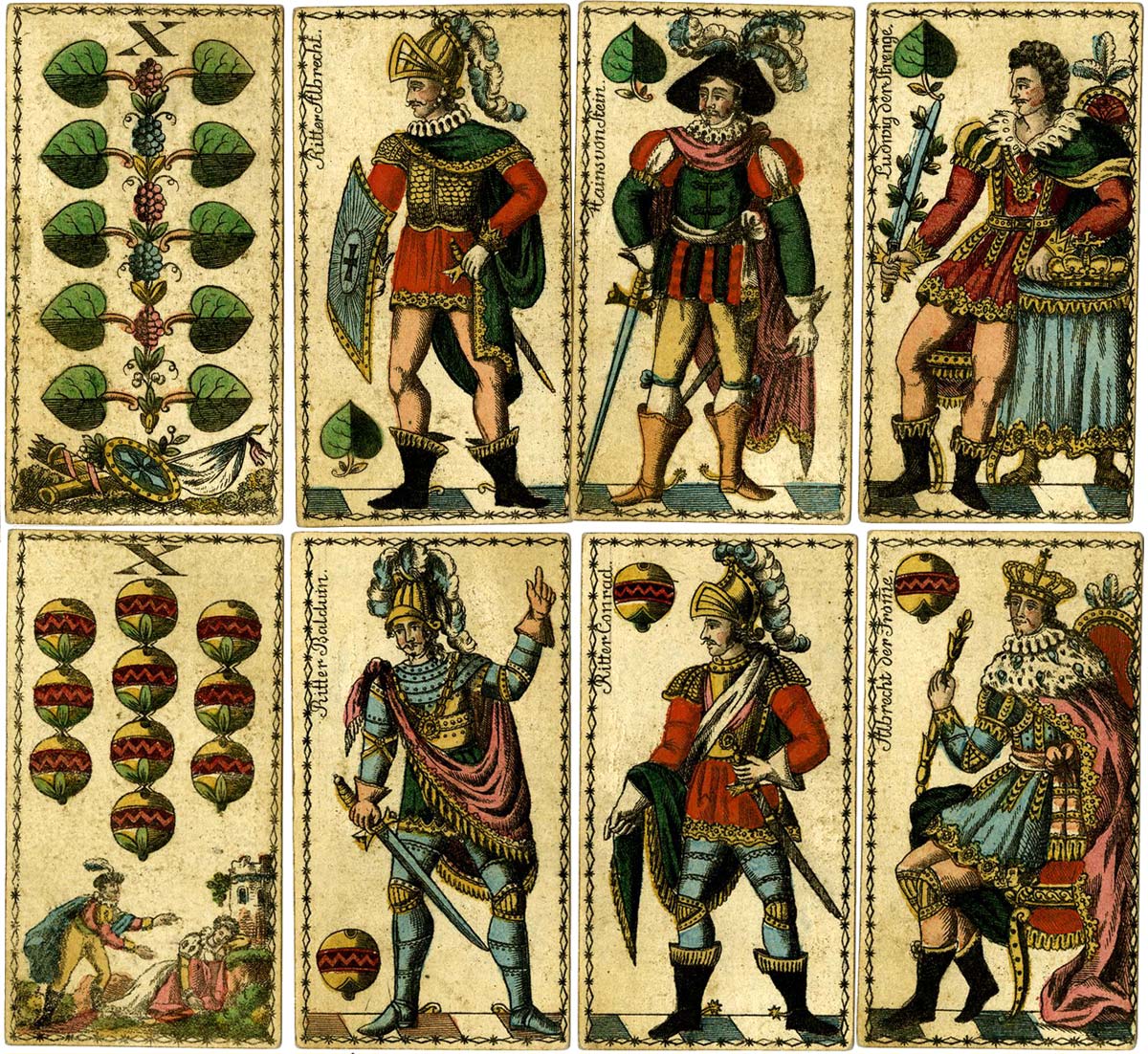
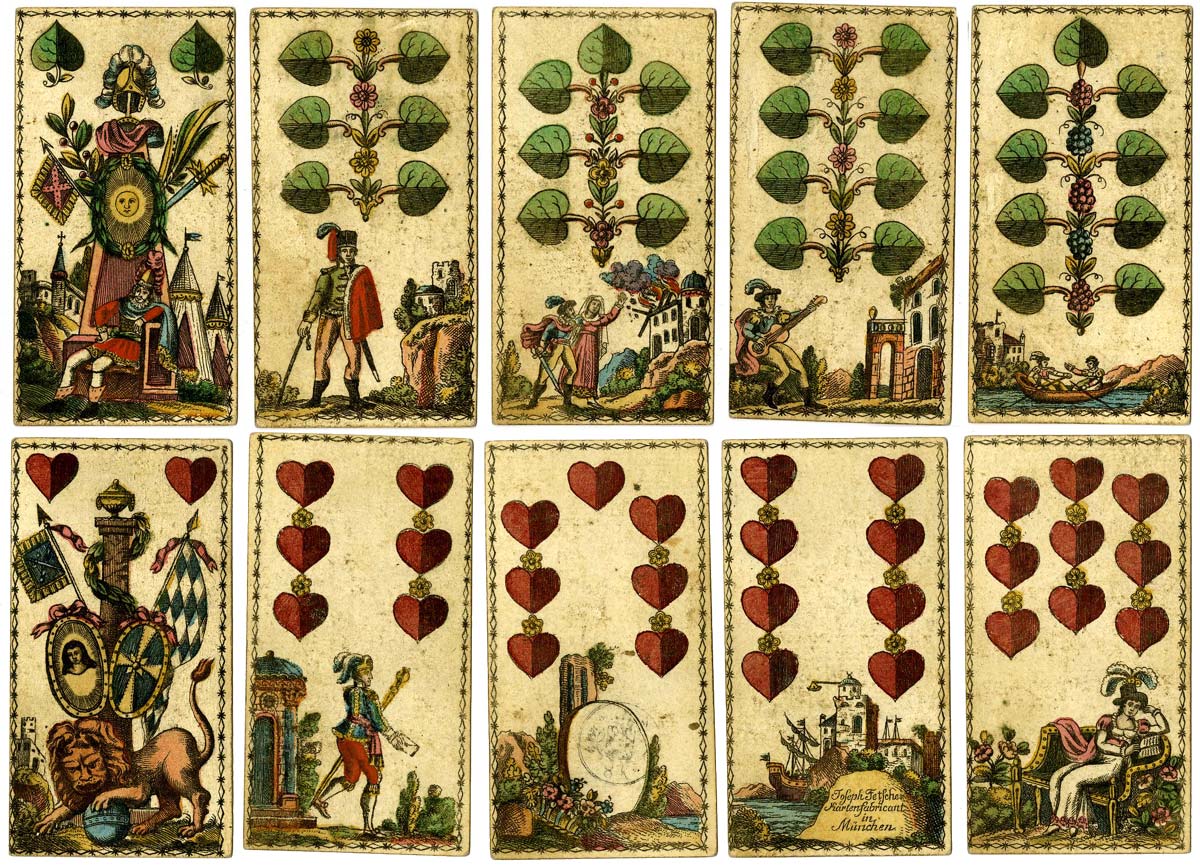
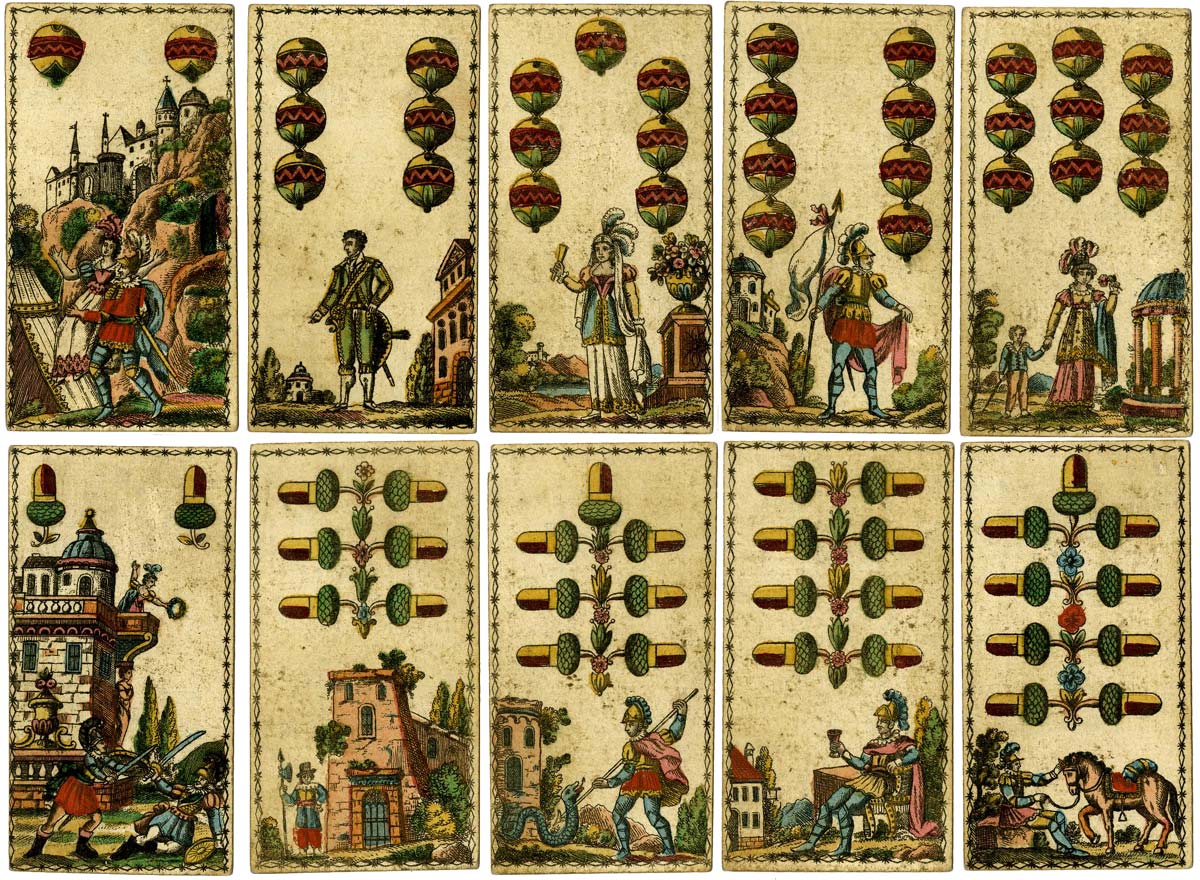
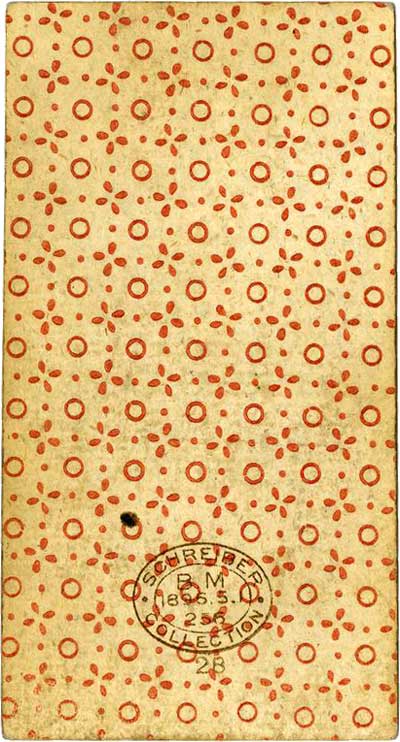
Above: Historical playing cards by Joseph Fetscher, Munich, c.1820. 36 cards, hand-coloured etching, backs printed with a pattern of red circles and stars, early 19th century. The tax stamp on the 7 of hearts was used between c.1816 to 1826. © The Trustees of the British Museum • Museum number 1896,0501.256►
References
O’Donoghue, Freeman M: Catalogue of the collection of playing cards bequeathed by Lady Charlotte Schreiber (German 23), Trustees of the British Museum, London, 1901 [digital version here]
Endebrock, Peter: playing-card pages: Tax Stamps from German States►
Bibliothèque nationale de France: Jeu de cartes allemand c.1804-1815►

By Simon Wintle
Spain • Member since February 01, 1996
I am the founder of The World of Playing Cards (est. 1996), a website dedicated to the history, artistry and cultural significance of playing cards and tarot. Over the years I have researched various areas of the subject, acquired and traded collections and contributed as a committee member of the IPCS and graphics editor of The Playing-Card journal. Having lived in Chile, England, Wales, and now Spain, these experiences have shaped my work and passion for playing cards. Amongst my achievements is producing a limited-edition replica of a 17th-century English pack using woodblocks and stencils—a labour of love. Today, the World of Playing Cards is a global collaborative project, with my son Adam serving as the technical driving force behind its development. His innovative efforts have helped shape the site into the thriving hub it is today. You are warmly invited to become a contributor and share your enthusiasm.

Activity for Historical playing cards by Joseph Fetscher
Sign in to comment or save this article.

Related Articles
Zewd Historical Deck
Ethiopian imperial history, from Tewodros II to Haile Selassie.
Figures from Romanian History
Named characters from Romanian history on a pack by Grimaud of Paris.
Saga aka King Arthur
Capturing the spirit of medieval legend on playing cards.
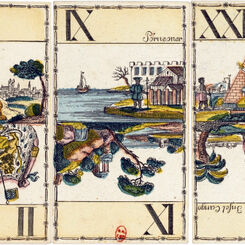
Ethnological Tarot by Joseph Fetscher
Joseph Fetscher's inventive, ethnographic tarot from Munich c.1820.
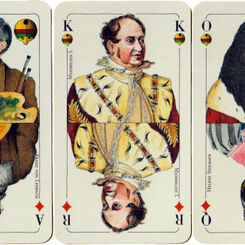
Munich is Trumps
Famous men and women associated with Munich on a pack with dual suits.
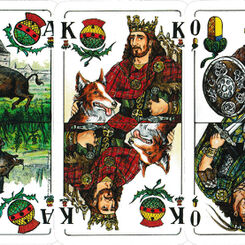
Burghausen
Historical figures and buildings to promote the town of Burghausen, with designs by Jonny Petri.
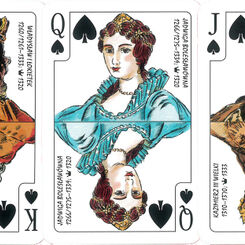
Polish Kings and Queens – red deck
Polish kings and queens plus the court jester, illustrated in a distinctive style inspired by histor...
Romania playing cards
Romanian voivodes and their wives from the 15th and 16th centuries.
Postgeschichte
A celebration of different postal systems in Germany from 1630 to 1850, with designs by Volker Hartm...
Trappola pack by Joseph Fetscher
Trappola pack published by Joseph Fetscher, Graz, 1739.
Animal Tarot by Joseph Fetscher
French-suited Natural History Tarot deck by Joseph Fetscher, Munich, c.1820.
Heathen Wars
German-suited ‘Heathen War’ playing cards published by Joseph Fetscher, Munich, c.1820.
Mythological and Allegorical tarot
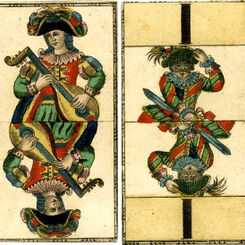
Mythological and Allegorical tarot produced by Peter Paul Fetscher junior, Munich.
Fantasy deck by Joseph Fetscher
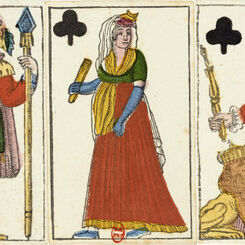
Fantasy French-suited pack produced by Joseph Fetscher, Munich, c.1825.
Miniature playing cards by Joseph Fetscher
Uncut sheet of miniature Bavarian playing cards by Joseph Fetscher.
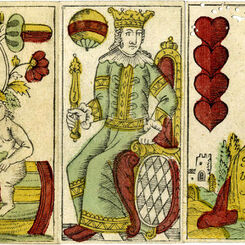
Bavaria pattern
Classic German-suited Bavarian pattern by Joseph Fetscher, Munich, early 19th century.
Dutch Historical playing cards
Advertising for Mopenco, the Dutch Fountain Pen King
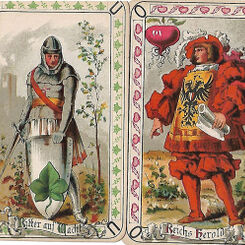
Neue Deutsche Spielkarte
Neue Deutsche Spielkarte (Reformkarte) conceived by Dr. Timon Schroeter, 1883.
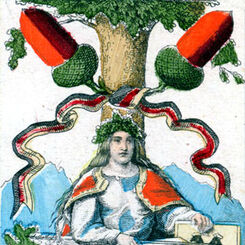
German History by Johann Conrad Jegel
Historical Deck with characters and emblematical figures published by Johann Conrad Jegel, Nürnberg,...
Dresdner Originale
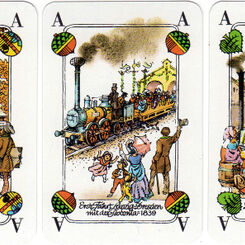
‘Dresdner Originale with scenes of Dresden, designed by Günter Schmitz, 1989.
Most Popular
Our top articles from the past 60 days


