


Cocktail
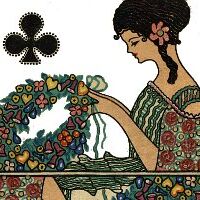
Aluminium playing cards manufactured by Häusermann United Chemical and Metal Engraving Co., Vienna, c.1925
“Cocktail” Aluminium Playing Cards
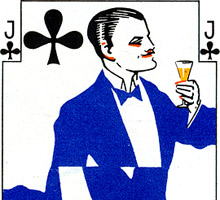
Made in aluminium by Häusermann United Chemical and Metal Engraving Co., Vienna, c.1925.
Court cards depicting typical representatives of the 1920s: Ladies looking very sophisticated in evening dress, Jacks as playboys and Kings caricatured as the bored upper class. The cards are rather heavy: the complete deck weighs around 170 gms (a normal pack weighs between 90-100 gms) and also rather slippery; handy to show off the versatility and ease of printing on aluminium, but not so useful as a practical deck to play with.
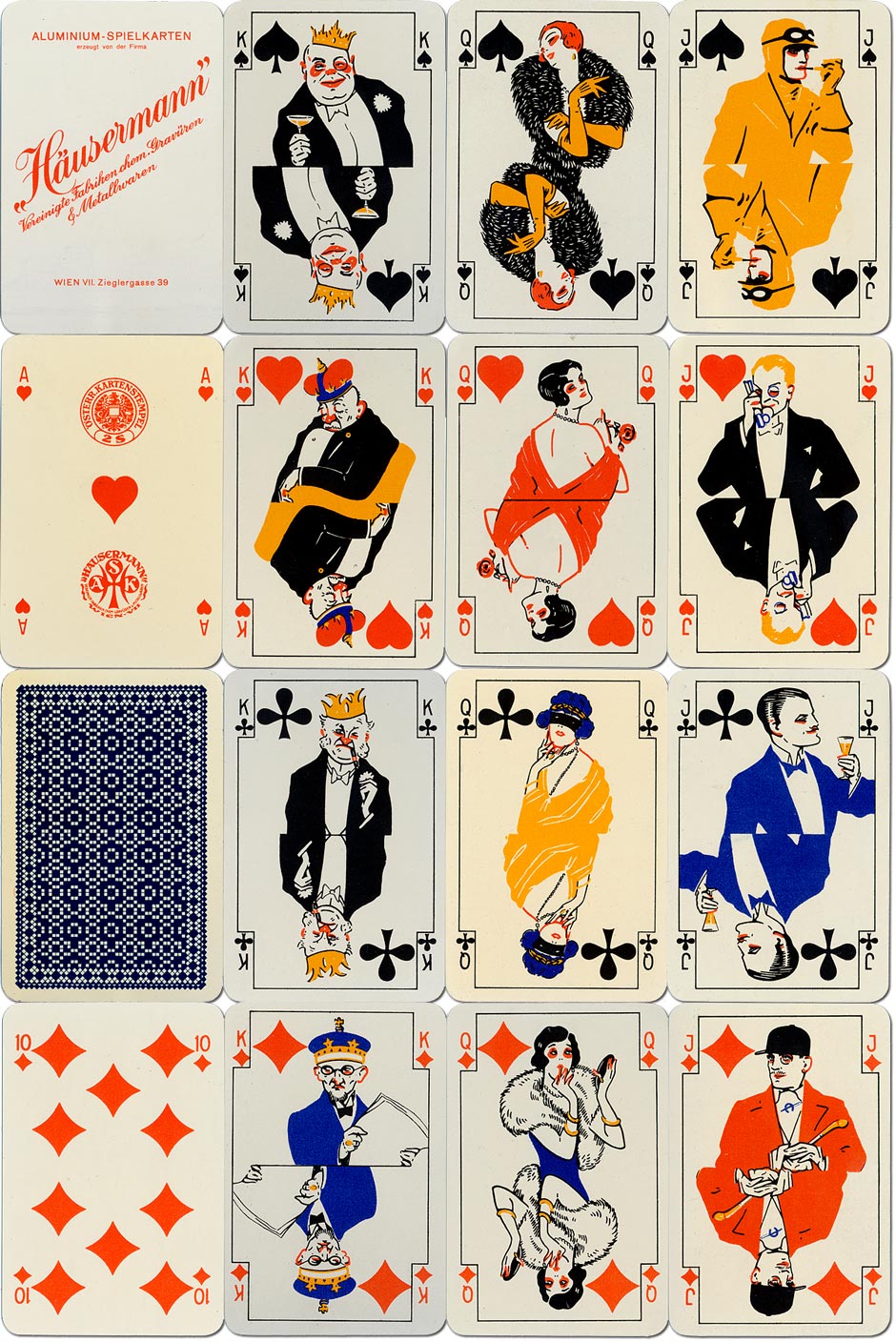
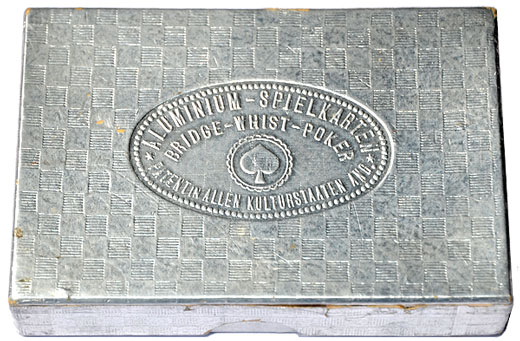
Above: aluminium playing cards manufactured by Häusermann United Chemical and Metal Engraving Co., Vienna, c.1925. The colouring on a few cards varies. Weight in box: 210gm, 52 + Joker + extra card.
REFERENCES
Segeth, Uwe-Volker: Spielkarten Jugendstil und Art Déco, Edition Christian Brandstätter, Wien, 1994
Images on this page are from the collection of Barney Townshend.

By Barney Townshend
United Kingdom • Member since October 06, 2015
Retired Airline Pilot, interested in: Transformation Playing Cards, Karl Gerich and Elaine Lewis. Secretary of the EPCS. Treasurer of the IPCS.

Activity for Cocktail
Sign in to comment or save this article.

Related Articles
Arik Brauer
An artist-led pack from Vienna’s Hilger Edition, with Arik Brauer’s fantasy imagery turned into card...
Japan
Piatnik’s tribute to Japanese history.
Vorarlberg Büschel Jasskarten
“Vorarlberg Büschel Jasskarten” designed by Austrian artist and typographer Konrad Hämmerle.
Patience by Joseph Glanz
A refined and distinctly European Patience pack by Joseph Glanz from Austria.
MITSCHKAtzen
Clever cat designs by the Austrian artist and illustrator Willi Mitschka.
Cosmopolitan № 2121 playing cards
“Cosmopolitan” № 2121 playing cards designed by Russian artist Valeri Mishin, 1996
Rococo Playing Cards
Piatnik’s Rococo style playing cards issued as “Rococo Patience”, “Luxus-Patience”, “Empire Patience...
Baroque No.2118
“Baroque” by Ferd Piatnik & Sons, Vienna, reflecting a bygone era of fashion.
Rococo No. 2130
Piatnik: Rococo No. 2130 playing cards designed by Prof. Kuno Hock, c.1975
Blue Playing Cards
“Blue Playing Cards” by Piatnik, 1960s, inspired by the Cubism art movement in which objects are ana...
Shakespeare by Piatnik
‘Shakespeare’ playing cards by Piatnik designed by the British actor Donald Burton.
France Royale Bridge
“France Royale” Bridge playing cards by Willy Mayrl depict historical characters from France’s royal...
Jugendstil Art Nouveau Bridge
“Jugendstil Art Nouveau” Bridge Nr.2136 published by Piatnik, 1980.
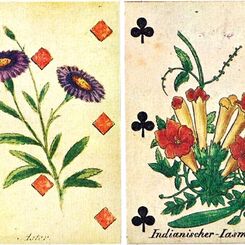
Löschenkohl’s Botanical Playing Cards
Löschenkohl produced a second copper engraved deck, the Botanical Playing Cards, in 1806. This deck,...
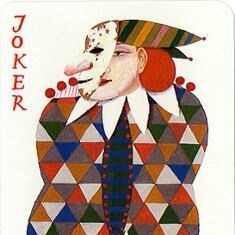
Karl Korab (Ed. Hilger)
Karl Korab was born in 1937 in Falkenstein (Lower Austria), the son of a forester. As a child he exp...
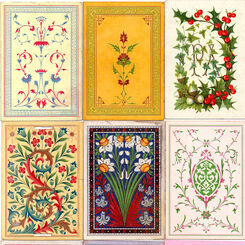
14: Back Designs
A few examples of the many interesting back designs.
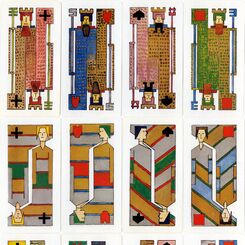
Arnold Schönberg
In around 1909 he created three sets of playing cards. His inventiveness was driven by a passion for...
Waisenfond
Intended to attract donations on behalf of the Imperial Royal Austrian Military Widows’ and Orphans’...

Cashmere
Bernhard Altmann is from the “The House of Cashmere” and these playing cards honour their best known...
The History of Playing Cards
Playing cards appear in European records in the late 14th century, but their earlier history lies fu...
Most Popular
Our top articles from the past 60 days


mixhead
27 January 2026, 19:10SavedSaved this article to mixhead's Collection