Leonor Fini
The originality of Leonor Fini's work is evident in these playing card designs. The imagery of her paintings was loosely based on dreams and this led her to be associated with the Surrealists...
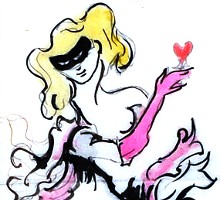
Leonor Fini (1908 - 1996)
Leonor Fini was born in Buenos Aires, Argentina, and raised in Trieste, Italy. As a girl she'd been expelled from three schools for her wayward behaviour, but she loved to paint and draw and persuaded her mother to let her study art. She started her studies in Milan, but knew that Paris was the place to be. In Paris she became a sensation as both an artist and a personality and was admired for her paintings, illustrations, theatre designs and, above all, her flamboyant bohemian lifestyle. The imagery of her paintings was loosely based on dreams and this led her to be associated with the Surrealists, although she preferred to remain independent of any conventions. The originality of her work is evident in these playing card designs.
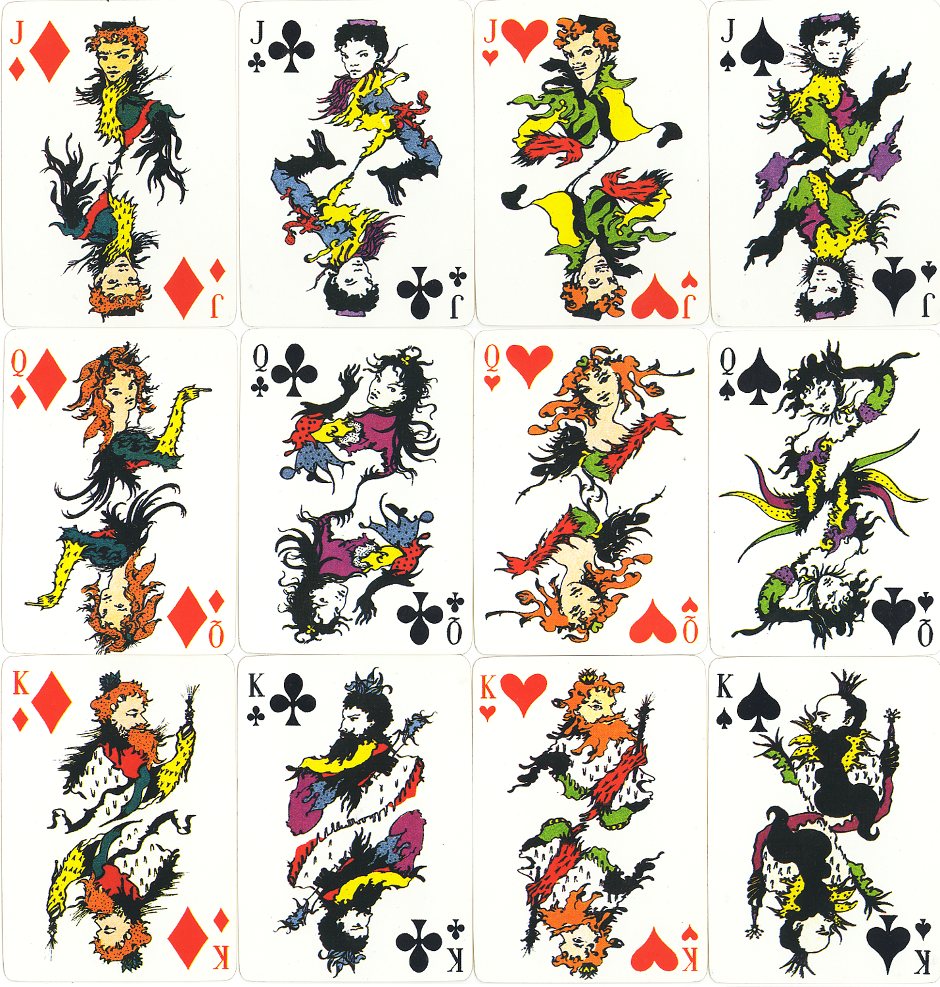
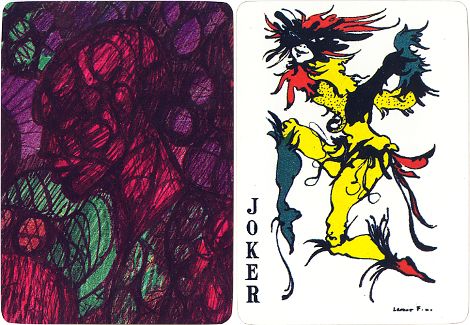
Above & Right: playing cards designed by Argentinian artist Leonor Fini, c.1950. Each of the face cards Jack, Queen, King and a Joker have fanciful, double-ended designs, the lines full of energy and the colours bold and bright, especially in the sketches she made for the playing cards. The designs are typical of Fini's work of this period. The cards have gilt edges. The backs have a "sponge" pattern in green or purple. Images courtesy Barney Townshend.
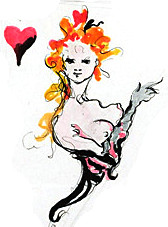
Leonor Fini was equally adept at etching, drawing, watercolor and oil painting. Many of her paintings feature strong, beautiful women (often resembling herself) in ceremonial or provocative situations.
REFERENCES
"Leonor Fini: surreal thing" The Daily Telegraph online.
Note from Roddy Somerville
The original pack does date from 1949 or 1950 but, confusingly, the cards illustrated above are from a later reprint. As you will see from my scans of some of the original cards (below), they were printed on off-white, almost cream card rather than white. The colours were more subtle and nuanced (11 colours were used, I believe) than in the reprint (which was my reason for never buying the reprint!). The original back design was not the one you show (please see below). As far as I know, both single and double packs were issued originally, both using a sideways telescopic box. Barney has an original pack in a different box which may have been a more upmarket version or possibly one that was specially made to house the pack.


Above: playing cards designed by Argentinian artist Leonor Fini, c.1950.
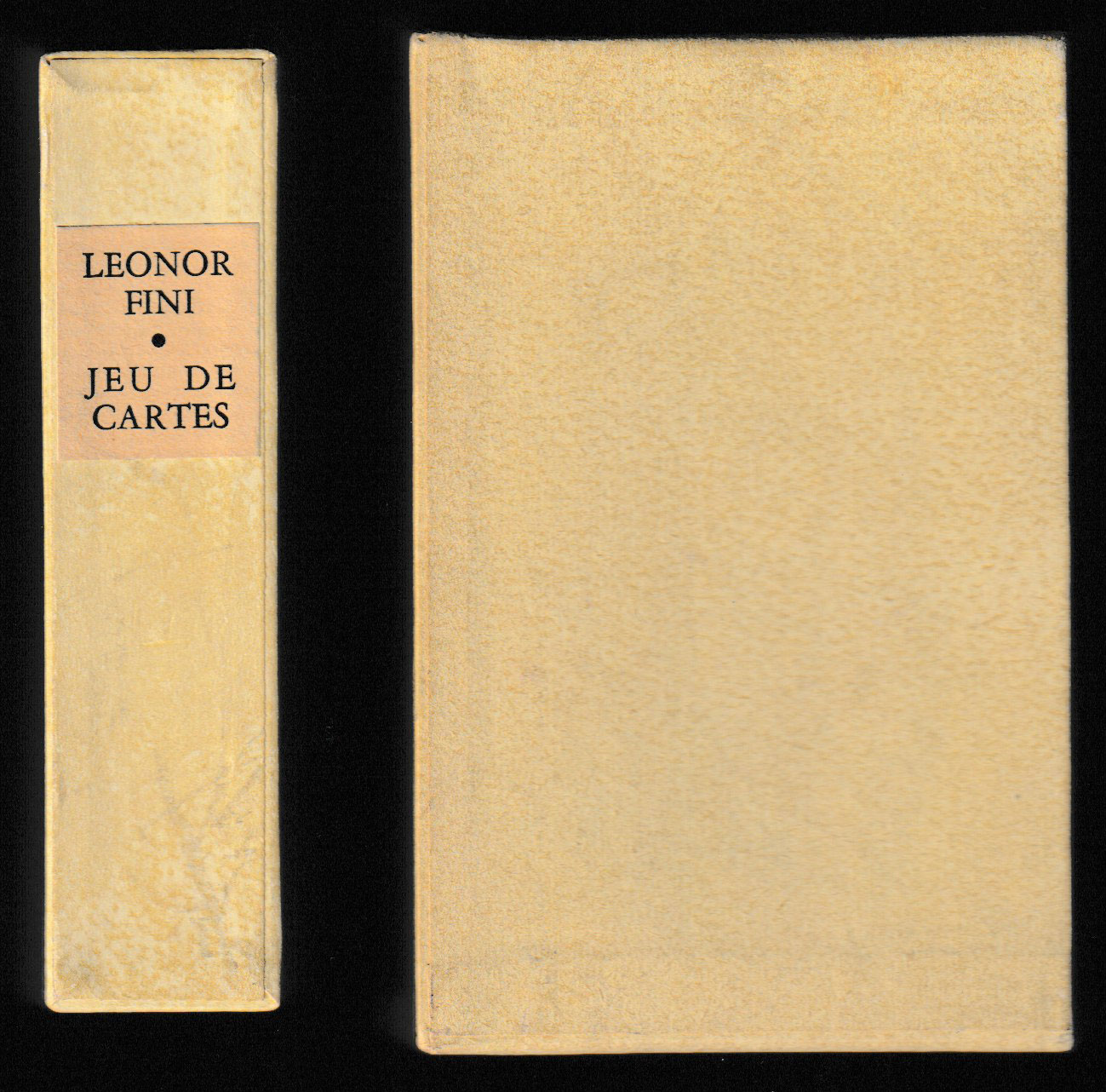
I believe the original pack had 52 cards, 1 Joker and 1 blank card. The cards are gilt-edged. The size is 63 x 89 mm. See the box► - R.S

By Barney Townshend
United Kingdom • Member since October 06, 2015
Retired Airline Pilot, interested in: Transformation Playing Cards, Karl Gerich and Elaine Lewis. Secretary of the EPCS. Treasurer of the IPCS.

Activity for Leonor Fini
Sign in to comment or save this article.

Related Articles
Pendleton playing cards
Pendleton playing cards inspired by indigenous American artwork, USA, 2019.
Naipes Garaycochea
Humorous playing cards designed by Carlos Garaycochea, Buenos Aires, c.2002.
Naipe Criollo Caraí Pujol
‘Naipe Criollo Caraí Pujol’ with Gaucho designs by Julio F. Parada Seifert capturing the spirit of A...
Truco “Únicos”
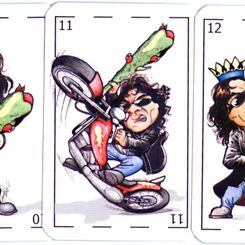
Naipes Truco “Únicos” with caricatures of national celebrities designed by Gerardo N. Perez, 2006.
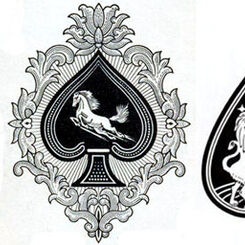
Modern Aces of Spades
Many modern aces of spades are anonymous so that, in the absence of any other information, the colle...
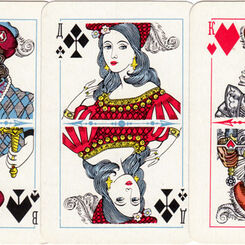
Russian Opera Scenes
Russian Opera & Theatre Scenes playing cards first published by the Colour Printing Plant (USSR, Rus...
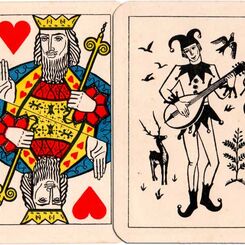
Anonymous Dutch deck, 1940s
Anonymous Dutch deck, 1940s
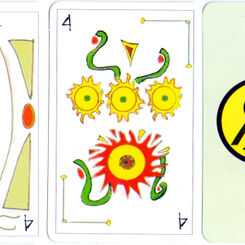
Naipe Estilo Español “Siglo XXI”
Naipe Estilo Español “Siglo XXI” created by Florencia Marotta, 2005.

Estelares
Naipes Estelares playing cards manufactured by Luis A. Fourvel y Cia., Buenos Aires, early 1950s.
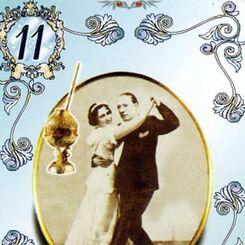
Naipes Tango by Arco Iris
Naipes Tango by Producciónes Gráficas Arco Iris, 1999.
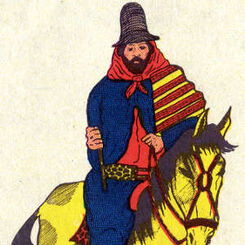
Falta Envido
Naipes Argentinos para Truco "Falta Envido" created by Alberto Soifer with Gaucho courts and variant...

Le Jeu de Marseille
Having deconstructed traditional, bourgeois playing card symbolism they produced new, liberated desi...
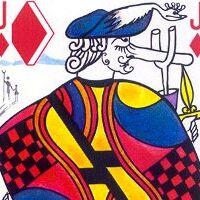
Salvador Dalí
Based on the standard French ‘Paris’ pattern, Dalí composed his playing card figures out of geometri...
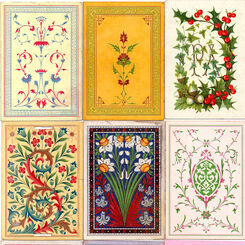
14: Back Designs
A few examples of the many interesting back designs.
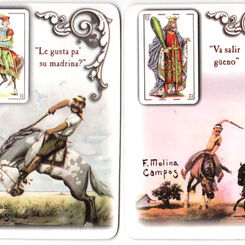
F. Molina Campos
Unofficial Edition of Molina Campos playing cards, anonymous publisher, 2004.
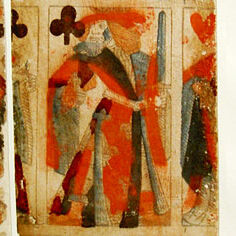
Regarding the designs of playing cards
The quality of playing card designs often deteriorates with time…
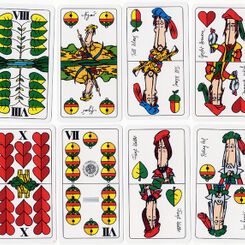
Balázs Pál Nagy's Tell No. 3306 Playing Cards
Balázs Pál Nagy Tell 3306
Balázs Pál Nagy's Playing Cards
Balázs Pál Nagy's Playing Cards
The History of Playing Cards
Playing cards appear in European records in the late 14th century, but their earlier history lies fu...

Queen of Hearts
“Queen of Hearts” by Josie Callipari, winner of the Brian Tucker Accounting Desert Fantasia Award 20...
Most Popular
Our top articles from the past 60 days