Gedimino Stulpai
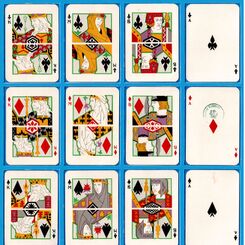
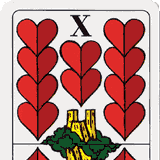
Gedimino Stulpai playing cards made in Lithuania by Spindulys Printing Co., Kaunas, depicting Lithuanian national symbolism.
Gedimino Stulpai - Columns of Gediminas
‘Gedimino Stulpai’ playing cards made in Lithuania by Spindulys Printing Co., Kaunas, depicting Lithuanian national symbolism, c.1930.
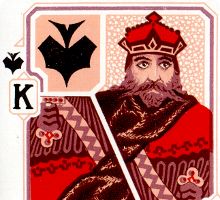
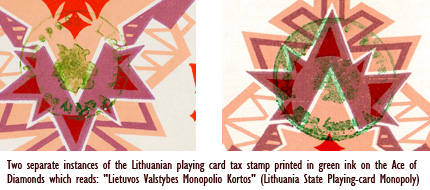
Gediminas is regarded as the founder of Vilnius, the modern capital of Lithuania. The Columns of Gediminas are one of the earliest Lithuanian symbols. During the period between World War I and World War II they were used by the Lithuanian Republic as a minor state symbol, e. g. on Litas coins and military equipment. The interesting designs in these playing cards include people in national costumes with an Art Deco style. The index signs are placed down the side of the card. The official playing card tax stamp can be seen printed in green ink (slightly blurred) on the Ace of Diamonds which reads: "Lietuvos Valstybes Monopolio Kortos" (Lithuania State Playing-card Monopoly).
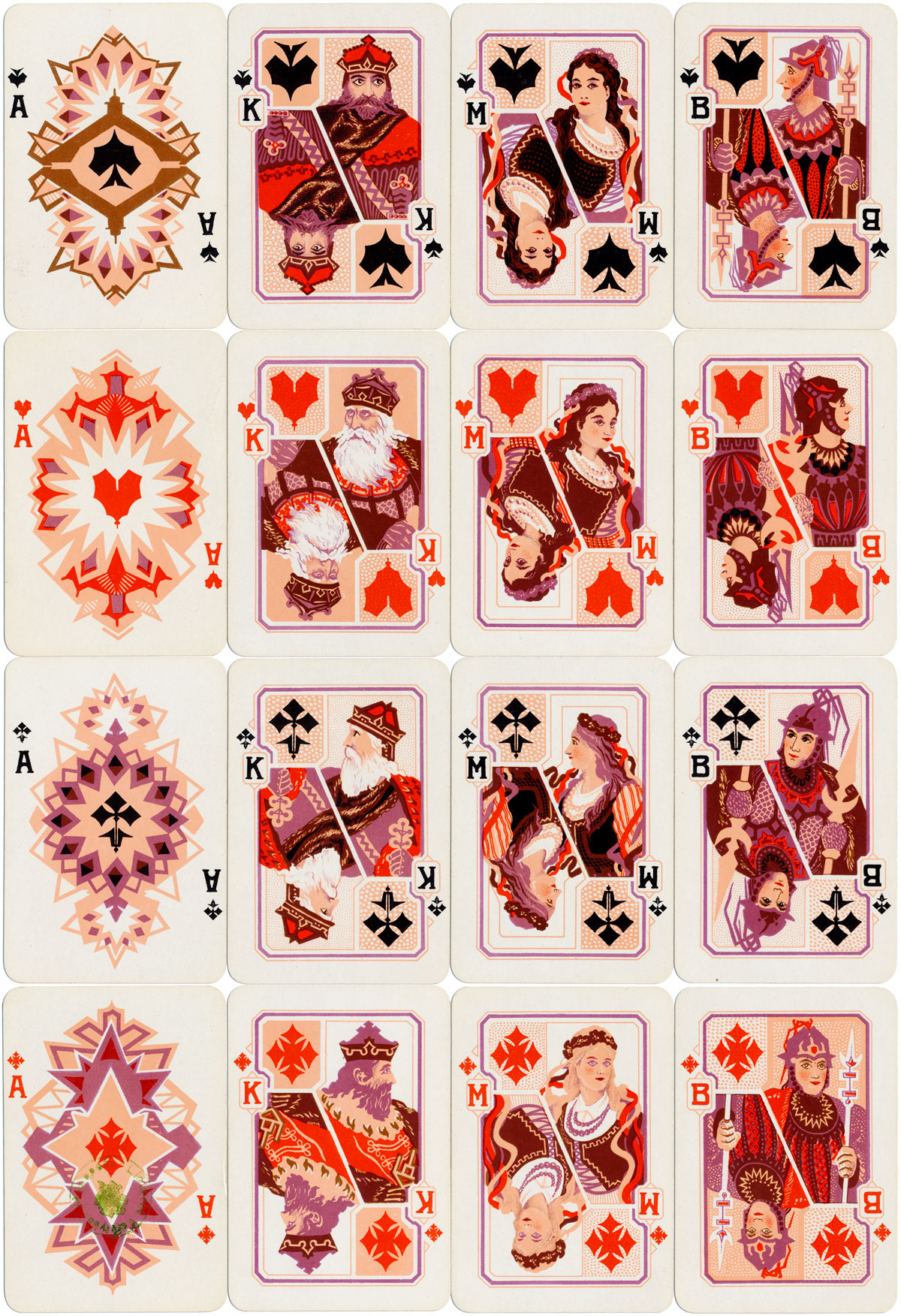
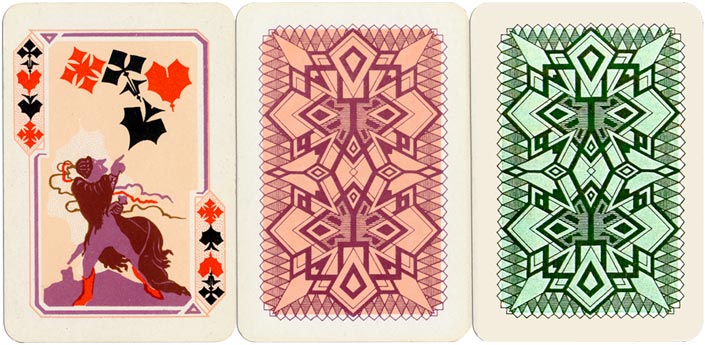
Above: Gedimino Stulpai playing cards made in Lithuania by Spindulys Printing Co., Kaunas, depicting Lithuanian national symbolism including variations on the trident in the suit symbols. The Kings appear to depict Gediminas himself. The back designs contain Columns of Gediminas motifs in a stylised pattern. All images courtesy Barney Townshend.

By Barney Townshend
United Kingdom • Member since October 06, 2015
Retired Airline Pilot, interested in: Transformation Playing Cards, Karl Gerich and Elaine Lewis. Secretary of the EPCS. Treasurer of the IPCS.

Activity for Gedimino Stulpai
Sign in to comment or save this article.

Related Articles
Balearic Souvenir Cards
Mediterranean Souvenir deck by Rioba Studio, Pollença, Mallorca.
Neue Deutsche Spielkarte
Neue Deutsche Spielkarte (Reformkarte) conceived by Dr. Timon Schroeter, 1883.
51: Some modern variations
A brief survey of some current variations in the standard English pattern.
Modern Aces of Spades
Many modern aces of spades are anonymous so that, in the absence of any other information, the colle...
Monsters
A collective of artists known as Monster Illustration produced a deck entitled “Monsters” in 2004.
Carl Arnold Transformation
Transformation playing cards designed by Carl Johann Arnold (1829-1916), the court artist for King F...
Anonymous Dutch deck, 1940s
Anonymous Dutch deck, 1940s
Transformation of Playing Cards
The best-known fantasy playing cards are Transformation cards, in which figurative scenes are drawn ...
19: 19th Century Breaks with Tradition - Unusual versions of the Standard English Pattern
The centuries-long tradition of English court cards was subject to misinterpretation and in some cas...
14: Back Designs
A few examples of the many interesting back designs.
Lithuanian Playing Cards
During the 20th century Lithuanian printers produced striking playing cards containing Lithuanian sy...
Pilys
'Pilys' playing cards ('Castles') manufactured in Lithuania by Spindulys Printing House, Kaunas, c.1...

Vaivorykste (The Rainbow)
Vaivorykštė ('the Rainbow') playing cards manufactured in Lithuania by Spindulys, 1930s. The deck ha...
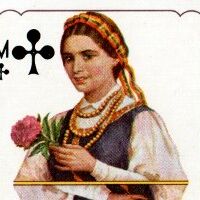
Istorinės
Istorinės Historical Deck from Lithuania manufactured by Spindulys Playing Card Manufactory, Kaunas,...
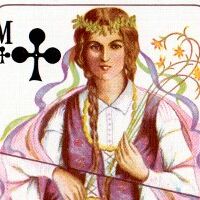
Kunigaiksciai
Kunigaiksciai ('Dukes') playing cards published by Spindulys Printing Co., Kaunas, Lithuania during ...
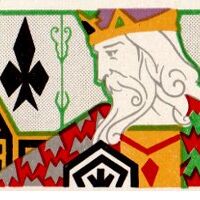
Klubams
Klubams (for the clubs) playing cards manufactured in Lithuania by Spindulys Printing House (Kaunas)...
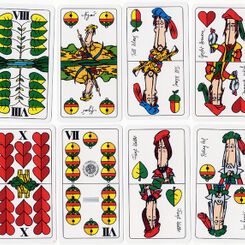
Balázs Pál Nagy's Tell No. 3306 Playing Cards
Balázs Pál Nagy Tell 3306
Balázs Pál Nagy's Playing Cards
Balázs Pál Nagy's Playing Cards
The History of Playing Cards
Playing cards appear in European records in the late 14th century, but their earlier history lies fu...
Queen of Hearts
“Queen of Hearts” by Josie Callipari, winner of the Brian Tucker Accounting Desert Fantasia Award 20...
Most Popular
Our top articles from the past 60 days