


Gipsy Fortune Telling Cards
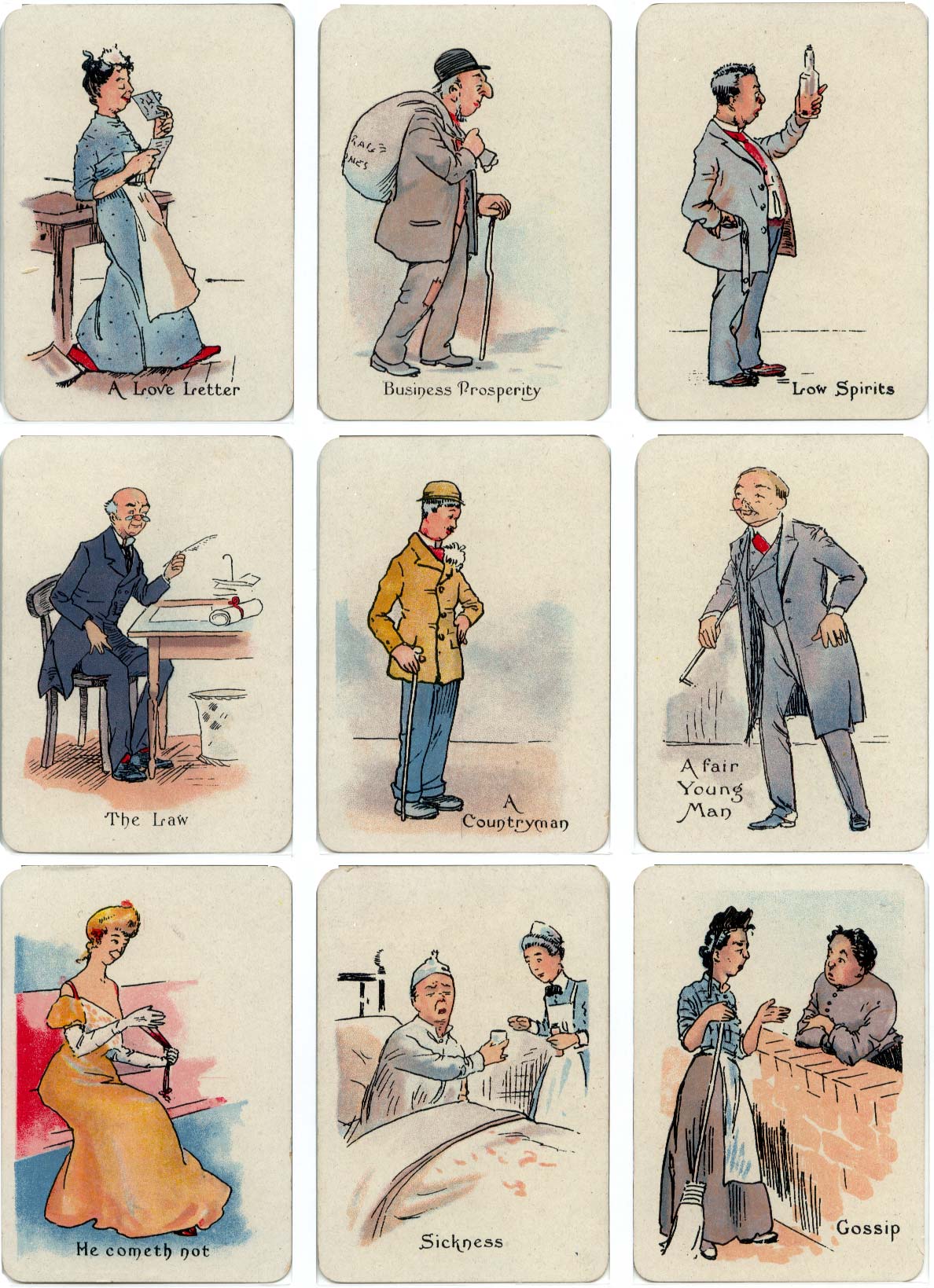
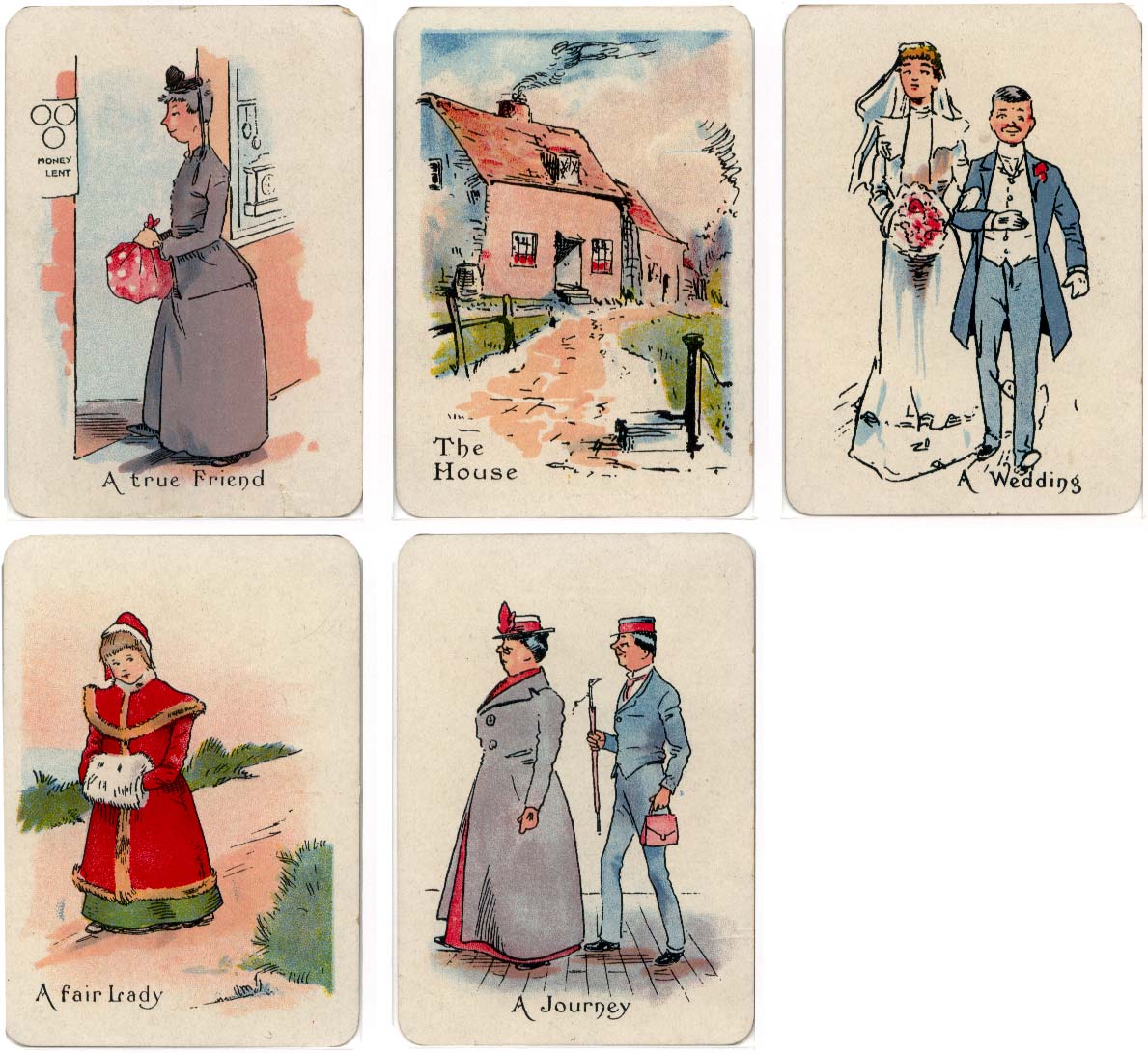
“Gipsy” fortune-telling cards with original artwork by Hylton Cock, published by Thomas de la Rue & Co Ltd., c.1910.
The “Gipsy” fortune-telling cards with original artwork by Hylton Cock were published by Thomas de la Rue & Co Ltd in c.1910. The pack comes in a stiff slide-box embellished with gold on dark green, and contains thirty-three cards, thirty-two of which are illustrated in colour with designs of various meanings. The thirty-third card is left blank and represents the person whose fortune is being told.
The cards have no suit symbols or numbers, just a title. At least two different back designs are known. The same images were also published as “The Wizard Fortune Telling Cards” by Milton Bradley Co (Springfield, USA) in 1908 with plain cream backs.
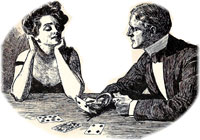
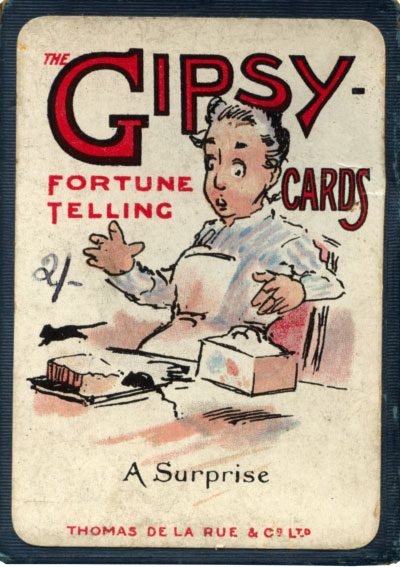
The Edwardian artwork, from just after the Victorian era, reflects the historical character and visual culture of the beginning of the 20th century when traditional values were still in place but modernity was about to emerge. The instructions included with the cards state that “it must be remembered that fortune tellers do not pretend that a pack of cards can of itself tell a person’s fortune, the claim invariably being that the medium tells the fortune and uses the cards as his instruments.”
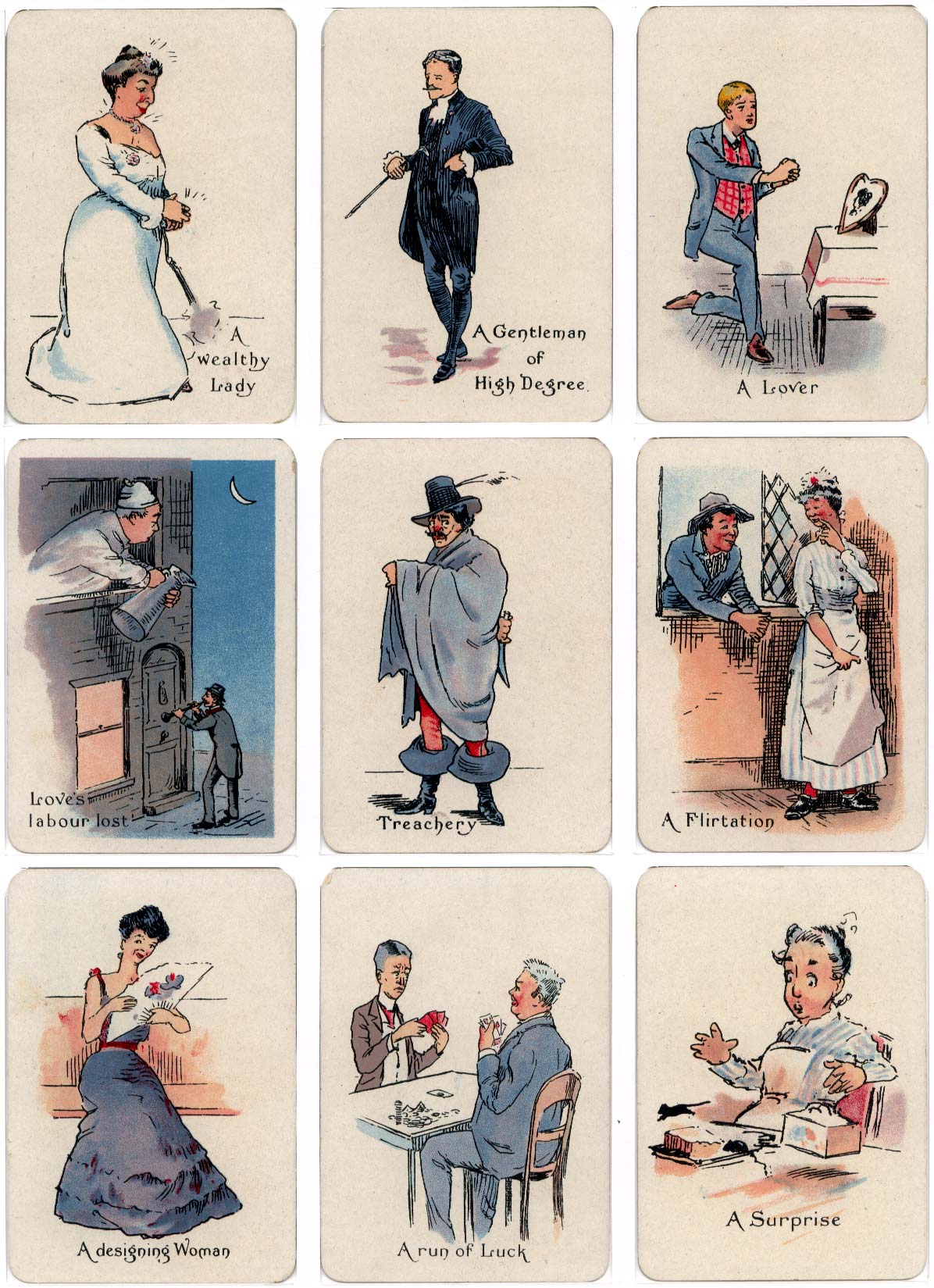
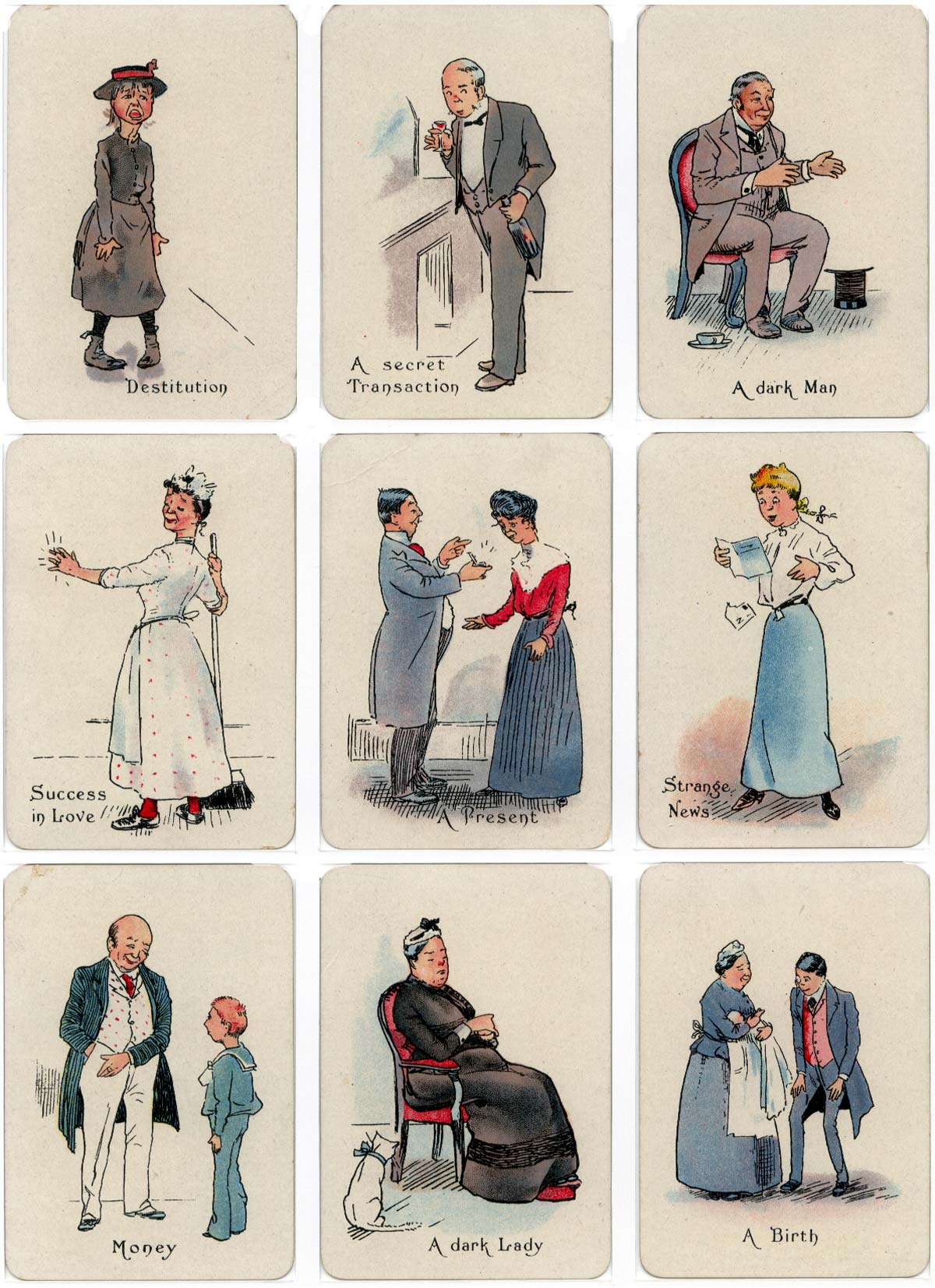
Above: “Gipsy” fortune-telling cards with original artwork by Hylton Cock published by Thomas de la Rue & Co Ltd., c.1910. Images courtesy Rex Pitts.

By Rex Pitts (1940-2021)
United Kingdom • Member since January 30, 2009
Rex's main interest was in card games, because, he said, they were cheap and easy to get hold of in his early days of collecting. He is well known for his extensive knowledge of Pepys games and his book is on the bookshelves of many. His other interest was non-standard playing cards. He also had collections of sheet music, music CDs, models of London buses, London Transport timetables and maps and other objects that intrigued him.
Rex had a chequered career at school. He was expelled twice, on one occasion for smoking! Despite this he trained as a radio engineer and worked for the BBC in the World Service. Later he moved into sales and worked for a firm that made all kinds of packaging, a job he enjoyed until his retirement. He became an expert on boxes and would always investigate those that held his cards. He could always recognize a box made for Pepys, which were the same as those of Alf Cooke’s Universal Playing Card Company, who printed the card games. This interest changed into an ability to make and mend boxes, which he did with great dexterity. He loved this kind of handicraft work.
His dexterity of hand and eye soon led to his making card games of his own design. He spent hours and hours carefully cutting them out and colouring them by hand.

Activity for Gipsy Fortune Telling Cards
Sign in to comment or save this article.

Related Articles
Hand-drawn transformation cards, c1875
A complete set of hand-drawn transformation cards from c1875, using a standard De La Rue pack.
Prophet Fortune Telling Cards
Prophet Fortune Telling Cards copyright and made by Thomas de la Rue & Co., 1933.
67: Adverts and related material after 1900
The final page of material relating to playing cards from British periodicals.
Georgian Fortune Telling Cards
Georgian Fortune Telling Cards, c.1800.
Fortune Telling playing cards
English Fortune Telling cards probably published c.1770.
49: De La Rue in detail
A detailed presentation of the variants of De La Rue's standard cards.
The ‘Mystic’
The ‘Mystic’ Fortune Teller card game by Clifford Toys.
Iddy Umpty
“Iddy Umpty” card game based around learning to read the Morse Code Alphabet. by Thomas de la Rue & ...
Empire Card Company: Star Playing Cards
The “Star” special pack of playing cards manufactured by Thomas De la Rue under their Empire Card Co...
Pneumatic c.1960-1965
De la Rue were producing Pneumatic cards with the “special graining for ease of handling” as late as...
Rufford Playing Cards
Rufford playing cards is one of several brand names used by Boots for their stationery department, a...
Draughts League Medals
Arthur Charles Prince worked for De la Rue as a playing card cutter and later was promoted to superv...
Paramount Film Stars
Promotional playing cards for the Paramount film company with film stars on the court cards.
14: Back Designs
A few examples of the many interesting back designs.
5: De La Rue
In December 1831 Thomas de la Rue was granted his patent for printing playing cards by letterpress.
Pneumatic Playing Cards
The surface of the cards was slightly grooved by being rolled on prepared plates, so that there were...

De La Rue Continental
During the latter part of the nineteenth century De La Rue produced two special packs of cards for t...
De La Rue
De La Rue introduced letter-press printing into playing card production and his patent was granted i...
Amalgamated Playing Card Co., Ltd
Agreement had been reached between Waddington's and De La Rue during the second world war for Waddin...
Significado de los Naipes Españoles
Cartomantic meanings of Spanish playing cards by Benita the Witch (XVI century), published by Chocol...
Most Popular
Our top articles from the past 60 days


